DD
MM
YYYY

PAGES

DD
MM
YYYY

spot_img

PAGES

Home Blog Page 3802

Thank God For Digital Law Reports

0

I was in court yesterday and as I was addressing the court in counter to my opponent’s argument, I suddenly needed a fresh case as an authority to back up my argument and I quickly typed the topic in question into my online law report while I was still on my feet addressing the court and I was immediately fed with a plethora of cases relating to the issue at hand which I was able to use dislodge my opponent’s counter argument. 

This scenario got me thinking about how difficult and mechanical life must have been for lawyers before the advent of online law reports. Just imagine me on that spot trying to flip through the pages of bogus law reports in search of a relevant case as a counter to my opponent’s point, whilst still on my feet. I would have wasted so much time of the court and I could even be cited for contempt. 

It will therefore be fair to say that one of the best things that have happened that has helped in the advancement and development of the law practice in Nigeria is the advent of online case and law reports. I can not even begin to imagine how difficult and primitive life was with lawyers in Nigeria in the 50s up till the early 2010s before technology became popular and lawyers began to adopt and utilize online case reports in Nigeria. 

Just imagine the time that was spent (wasted) glossing through different hard copies of bogus and voluminous law reports in search of one case as an authority to back up an argument; how many briefs can you as a lawyer be able to work on in a day if you have to always dash in and out of the library to read through pages of hard copies of cases? 

Let us not even forget the cost these digital law reports have saved lawyers. A set of hard-copy foreign law reports currently costs about four million naira while a set of hard-copy local law reports costs over a million niara. How many lawyers can be able to afford that, especially young lawyers starting up their practice or indigent lawyers?

You can just type the topic you need a case to back up on online law reports and in nanoseconds, you are fed with a plethora of cases for you to choose from. The digital law report can even summarize a case for you if you need the summary of the case and refer you to other cases if you need more.

I was telling a senior lawyer friend about digital law reports and how much they have made law practices easier, cheaper and more interesting. I told him that now, he does not necessarily need to go to the library and flip through voluminous law reports just to read through a case when he can just type in the case in his online law report and in nanoseconds he can see the whole law report but he told me that if it is not a hardcopy, whatever he reads doesn’t feel like he has read about it. 

This is the case with many lawyers of older generations who are conservatives. They will find it difficult adapting and adopting to technology. The prefer the rigorous work of flipping through the pages of the hard copy law reports; that gives them the feeling of being “the law” but technology is here and has penetrated the law practice and the earlier lawyers adopt the better. There is even a technology that helps lawyers arrange and sort through their case files on the cloud instead of stacking the whole shelf with papers.

Kudos to Law Pavilion which took the lead in providing digital law reports for legal practitioners in Nigeria, kudos to Nigerian Weekly Law Report (NWLR), the leading (hard copy) law report in Nigeria that has decided to follow the leading of technology and adapt some of their law reports into electronic format. Kudos to every other law report that is going digital as well; you all have made life easier and cheaper for lawyers in Nigeria. 

Central Bank of Nigeria (CBN) Greenlights Africa Stablecoin Consortium (ASC) to Launch cNGN Stablecoin in February, Meme Moguls (MGLS) Presale Impacts Market Sentiment

0

In a landmark move for the African country, the Central Bank of Nigeria (CBN) has approved Africa Stablecoin Consortium’s (ASC) cNGN Stablecoin to launch in February. Elsewhere in the market, Meme Moguls (MGLS) is creating a bullish buzz during an ongoing presale event of its native token. Let’s unpack these two exciting developments in further detail.

Africa Stablecoin Consortium (ASC) and cNGN Stablecoin Launch

The Africa Stablecoin Consortium (ASC) has been granted permission by the Central Bank of Nigeria (CBN) to test its cNGN stablecoin in the regulatory sandbox. cNGN is scheduled for launch on February 27, 2024.

The cNGN token is pegged on a 1:1 ratio with the Nigerian Naira. To ensure its stability and reliability, the cNGN is backed by Naira reserves that are securely held in specified commercial banks.

It’s worth noting that the cNGN is designed to function in tandem with the eNaira, the Central Bank Digital Currency (CBDC), rather than replace it. For example, the cNGN stablecoin boasts interoperability with Bantu, BNB Smart Chain, and other blockchains.

As the largest economy in Africa, Nigeria has been at the forefront of the continent’s digital transformation journey. With a large unbanked population and a growing reliance on mobile payments, the country is ripe for innovative financial solutions.

The cNGN is primarily designed to make it easier for Nigerians to send money abroad to family or for business purposes. It also offers a viable alternative to traditional remittance service providers, which are known for their high fees and lengthy processing times.

Now, those living outside of Nigeria can send money back to their home country via the cNGN stablecoin with significantly lower fees and quicker transaction times. This will greatly benefit the Nigerian diaspora, as well as businesses that rely on international payments.

Meme Moguls: Transforming Play-to-Earn Gaming

Meme Moguls redefines the play-to-earn landscape by seamlessly merging the appeal of meme culture with the intricacies of stock market trading in a virtual setting. The main premise is to learn about stock trading while having fun in a competitive environment.

What makes Meme Moguls stand out is its diverse range of engaging and profitable gameplay options. Players can engage in friendly rivalries through private competitions, dive into the thrill of global tournaments, or challenge themselves in the “Beat the Market” mode, pitting their investment savvy against market trends.

Players who win these games are rewarded with MGLS tokens and rare NFTs that can be sold for cash or used in the in-game marketplace. The rarest NFTs include additional gaming perks, like improved spreads and increased leverage.

The Meme Moguls experience doesn’t stop at competition. The platform expands into “Moguls World,” an immersive metaverse brimming with additional activities like token mining, participation in liquidity pools, and staking opportunities.

The MGLS Presale Buzz

MGLS tokens can be bought during the presale before the game is launched. Starting at $0.0019 in the first phase, MGLS has risen by 90% to a current price of $0.0036 in phase five of the presale. The price will keep increasing as the presale moves through each phase.

Adding to the buzz is the announcement from the team that they will be awarding $10,000 to a presale participant at the end of each stage. This has caused a surge in interest and investment as players aim to be the lucky winner.

Analysts comment that Meme Moguls presents a unique P2E model that combines fun, education, and rewards. Such a beneficial combination has resulted in predictions of 100x for MGLS as it makes its way to the market.

Visit Meme Moguls

As Official Rate (N1,482/$1) Exceeds Black Market Rate (N1,460/$1), Nigeria Should Declare A Currency State of Emergency

1

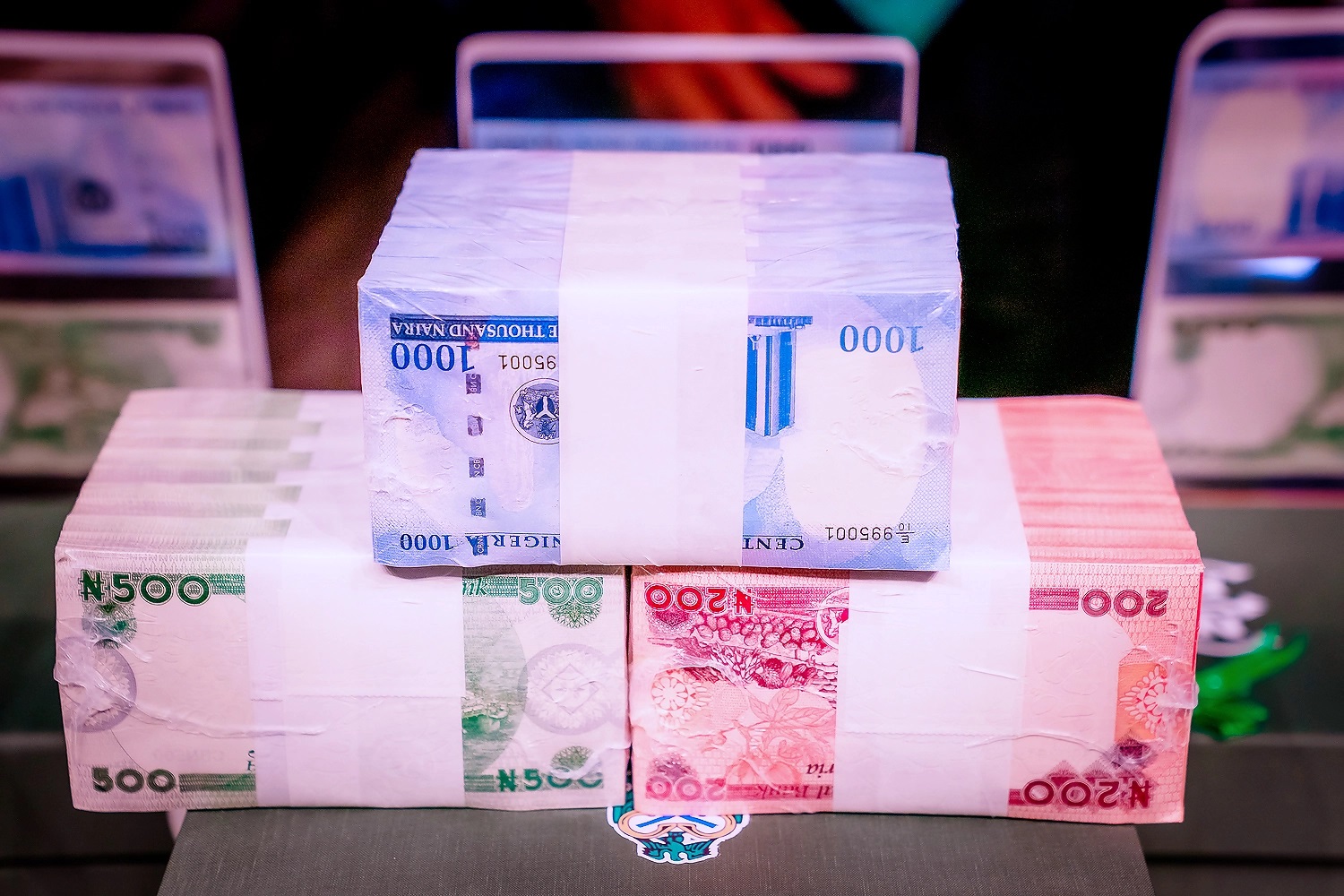
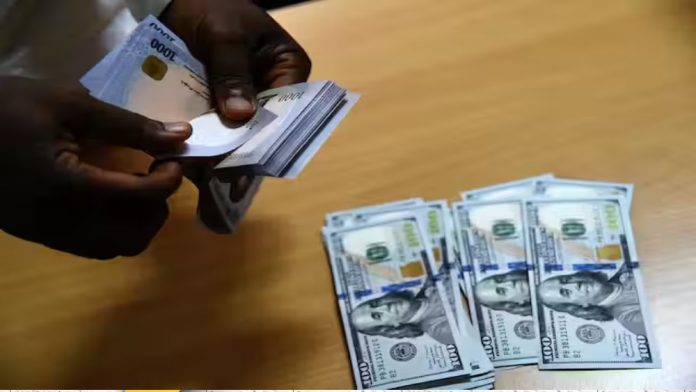
History was made yesterday in Nigeria: “In a surprising turn of events on Tuesday, the foreign exchange market experienced an unusual occurrence as the naira reached N1,482/$1 on the Nigerian Autonomous Foreign Exchange Market (NAFEM). This marked a significant increase compared to the parallel market rate, which remained anchored at N1,460/$1, maintaining the rate from the previous day.”

Yes, the official rate rose above the black market rate. So, if the official rate is ahead of the black market, we can all agree that some asymmetric endogenous factors are deeply at play here.  Simply, the official demand was so high that the supply side crashed, moving price to a new equilibrium point in the supply-demand curve of Naira/USD.  I think a state of emergency is due right now to save Naira.

(I suspect that Dangote Refinery is mopping all available USD to import crude oil since it cannot rely on Nigeria now, creating more pressure on the Naira. That is a reverse osmosis which could be sustained since you cannot shut down the refinery now that it is firing. The firm possibly went to the official market to buy at all costs.)

If indeed it is true that Dangote Refinery is sourcing crude oil from outside Nigeria,  it would be a major own-goal for Nigeria: “Dangote Refinery, Africa’s largest refinery, is set to begin crude oil import from the United States in February…According to reports from Bloomberg, Trafigura Group has brokered a deal to supply Dangote Refinery with 2 million barrels of WTI Midland crude expected to be delivered by the end of next month, marking the first instance of the refinery purchasing non-Nigerian crude.”

Good People, it may be time for the president to address the nation on what is going on because basic economics does not work in Nigeria anymore. As that happens, I commend the central bank for the new policy on foreign currency exposure by banks (see directive). That call is necessary because USD, Euro and GBP are making banks have great parties, even as those same currencies could destroy them if there is a flip. So, making sure they stay within 20% of net open position (NOP) is a nice call by the apex bank.

Naira’s Fall to N1,482/$1 in NAFEM suggests A Move for Convergence by the CBN

0

In a surprising turn of events on Tuesday, the foreign exchange market experienced an unusual occurrence as the naira reached N1,482/$1 on the Nigerian Autonomous Foreign Exchange Market (NAFEM). 

This marked a significant increase compared to the parallel market rate, which remained anchored at N1,460/$1, maintaining the rate from the previous day.

The official NAFEM window, which closed at N1,482.57, reflected an N133.95 loss or a 9.94 percent decline from the previous rate of N1,348.62. This shift in the exchange rates has caught the attention of market participants, prompting speculation about the central bank’s potential move towards the convergence of the naira.

Data from the Financial Markets Dealers Quotations (FMDQ) website revealed a notable increase in daily turnover, reaching $72.33 million on Tuesday, a 12.50 percent rise from the $64.29 million recorded on Monday. The spot rates recorded for the day ranged from the highest at N1,531/$1 to the lowest at N789/$1, indicating increased volatility in the market.

The drastic fall in the exchange numbers in NAFEM indicates a possible devaluation for the naira’s convergence by the CBN especially considering that the official rate has been dangling around N890 per dollar.

Mrs. Hakama Sidi-Ali, the Acting Director of the CBN’s Corporate Communications Department, said on Monday that the apex bank has implemented reforms to streamline and unify multiple exchange rates, foster transparency, and reduce arbitrage opportunities.

The Lagos-based FMDQ said in a notice to financial market operators that the change to the pricing methodology “aims to address recent fluctuations and challenges encountered in the Nigerian Foreign Exchange.” The measures will ensure “rates accurately reflect market conditions while upholding price formation and transparency,” it said.

The central bank has for long been pointing accusing fingers at speculators, whom it believes their report of inaccurate figures is impacting the naira’s performance in the FX market.  

“The NAFEX [NAFEM] fixing and closing rates were weighed down by trades going through at off-market levels’” Samir Gadio, head of Africa strategy at Standard Chartered Plc told Bloomberg. “What is clear at this point is that these off-market trades are not factored in anymore, hence the jump in NAFEX.”

In a circular published Monday, the CBN said it had become aware of traders reporting “inaccurate and misleading information,” including under-reporting of transaction pricing, which affected the exchange rate.

“Deliberate attempts to create price distortions by reporting false transaction details amounts to market manipulation which will not be tolerated and will henceforth face sanctions,” the central bank said. It added that it is “committed to a well-functioning and transparent market” conducted on a willing buyer, willing seller basis, with prices quoted and displayed transparently.

While the CBN has not commented on the strategy shift, analysts have faulted the idea that speculators are responsible for the naira free.

“Blaming speculators for falling Naira is like Arsenal fans blaming Man City for Arsenal not winning the league last season,” Kalu Aja, a financial analyst humorously said.

Analysts say the answer to Nigeria’s FX crisis is tied to adequate liquidity of the dollar, to fill the gaps orchestrated by the scarcity – such as Nigeria’s inability to fulfill its financial obligations involving matured FX forwards with banks and repatriation of trapped revenue of multinational companies operating in Nigeria.

The central bank said it recently released $500 million, targeting the backlog of verified foreign exchange transactions spanning various sectors. This latest action comes on the heels of an earlier payment of approximately $2.0 billion to settle outstanding commitments in crucial sectors such as manufacturing, aviation, and petroleum. This includes payment of $61.64 million to members of IATA, who have more than $700 million in earnings trapped in the country.

While the depreciation has been “very significant,” dollar supply from the central bank will need to improve for the naira to stabilize or even strengthen, Gadio said. Currency inflows from portfolio investors would follow, further supporting the naira, once short-term interest rates rise significantly, he added.

Investors have reportedly expressed doubt about Nigeria’s foreign reserve, said by the CBN to be around $33 billion. They argue that if the amount of the foreign reserve is correct, the nation will not be struggling to repatriate funds to multinational companies. 

The CBN said last year that it’s looking to secure $10 billion to clear Nigeria’s FX backlogs, which the Minister of Finance Wale Edun has fingered as a major contributor to the FX crisis.


The new CBN directive on foreign currency exposure; download here.

As the naira hits N1,520/$1, Experts call for new approach

0

The Nigerian naira has continued on its downward spiral, depreciating further to N1,520.123 against the dollar in the parallel market on Wednesday, according to data from the trading platform Naira Rates.

This marked a substantial decline from the N1,482.75 per dollar recorded in the official foreign exchange market (NAFEM) just a day earlier, representing a staggering N38 depreciation in less than 24 hours.

Tuesday’s depreciation was noteworthy as it marked the first instance, post-COVID-19, where the official exchange rate surpassed the parallel market rate. The parallel market had traded at N1,470 per dollar on Monday, up from N1,425.

The economic policies of President Bola Tinubu’s government were cited as a significant factor contributing to the further downward slide of the naira. The decision to float the currency, coupled with the scrapping of fuel subsidies and consolidation of multiple foreign exchange windows into the single Nigerian Autonomous Foreign Exchange Market (NAFEM), reportedly led to a drastic 98 percent depreciation in the naira’s value, according to a report by PwC.

Efforts by the federal government to boost foreign exchange liquidity have not been entirely successful. Late last year, the Nigerian National Petroleum Company Limited (NNPCL), on behalf of the government, secured a $3.3 billion emergency loan from the Import and Export Bank (Afreximbank) to address forex volatility.

Nigeria is currently grappling with over $7 billion in forex backlogs, further intensifying the naira’s free fall and creating an investment phobia for the nation’s economy. The Central Bank of Nigeria (CBN) has acknowledged disbursing over $2.5 billion to tackle the country’s FX challenges, including the recent release of $500 million announced on Monday to address the backlog of verified foreign exchange transactions across various sectors.

Despite these efforts, the backdrop of FX volatility has continued to impact severe economic consequences, with inflation surging to 28.20 percent in December. This has unleashed economic hardship on the Nigerian people, leading to a significant depletion of spending power since the FX reforms were introduced in June last year.

Facing this dire situation, economic experts have suggested proactive measures to address the economic challenges. Oluseun Onigbinde, Director of BudgIT and ForeFront, proposed the following measures to mitigate the impacts.

Emergency Fund Seeking: Exploring options such as securing an emergency fund from entities like Gulf Sovereign Wealth Funds, the International Monetary Fund (IMF), and global banks to curb the economic downturn.

Optimizing Onshore Oil Production: Implementing strategies to enhance onshore oil production and, if necessary, issuing new licenses to optimize the utilization of oil resources.

Rapid Non-Oil Export Strategy: Developing and implementing a swift strategy to boost non-oil exports, capitalizing on the current economic climate for diversification.

Fiscal Tightening: Exercising fiscal discipline by gaining control over public spending and reforming government culture, especially in addressing issues within the budget.

FX Policy Review: Reassessing the existing flexible foreign exchange (FX) policy and considering adjustments to certain metrics. Further details on this aspect may require additional data.

These proposed measures aim to stabilize the economic situation, enhance revenue streams, and address fiscal and monetary policies to promote economic resilience and sustainability.