DD
MM
YYYY

PAGES

DD
MM
YYYY

spot_img

PAGES

Home Blog Page 381

4 Meme Coins to Consider as PEPE Coin Drops to 33rd Position on CoinMarketCap

0

Recent data shows that PEPE (PEPE) has slipped in the CoinMarketCap rankings, now sitting at #33 in live standings. This drop indicates other projects may be rising faster, causing PEPE to lose ground. With retail attention shifting, investors are increasingly turning toward newer meme assets that offer more than just viral branding. Four standouts — Little Pepe (LILPEPE), SPX6900, Bonk (BONK), and Pudgy Penguins’ PENGU — are positioning themselves to capture capital rotating out of PEPE.

Little Pepe (LILPEPE): Meme Layer 2 With Utility

Among meme coins, Little Pepe (LILPEPE) is breaking the mold by attempting what others have not: pairing meme culture with a dedicated Layer-2 blockchain. The idea is simple but powerful — build infrastructure optimized for meme tokens, not just speculation.  With sniper-bot resistance, ultra-low fees, and a Memes Launchpad for creators, Little Pepe turns meme trading into a fairer, faster, and more engaging experience. The presale is now in Stage 13 at $0.0022 per token, with more than $26.5 million raised and over 95% of its allocation already sold.  The hard cap is set at $28.77 million, and listings are expected to be priced at $0.003, providing presale participants with an immediate upside. Beyond the numbers, the tokenomics are structured to reward long-term engagement, with allocations of 26.5% for the presale, 30% for chain reserves, 13.5% for staking rewards, and 0% tax on trades. This ensures liquidity, stability, and fairness for holders. With its playful roadmap and a development team experienced in scaling meme projects, Little Pepe is positioning itself as both credible and community-driven. If it succeeds, it could emerge as the most serious meme-layer play since Shiba Inu’s breakout in 2021.

SPX6900 (SPX) Rockets Back Toward Key Levels

While LILPEPE is making headlines in presale markets, SPX6900 is staging a remarkable rebound in live trading. The token surged 32% in 24 hours to $1.25, bouncing off its weekly lows of $0.90, which coincided with historical support. Whale activity has been the key driver, and SPX6900 has boosted visibility through sports sponsorships — most notably at the Windsurf World Cup — while Coinbase recently confirmed that SPX is on its listing roadmap, pending contract activation. This dual push of cultural branding and institutional accessibility gives SPX a strong tailwind. With whales backing it, October could be the month it regains its summer highs.

Bonk (BONK): Solana’s Community Engine

Bonk (BONK) remains the Solana community’s flagship meme token and continues to serve as a retail gateway into the Solana ecosystem. Born from airdrops that re-energized Solana users, BONK has since evolved into a meme brand of its own, with consistent liquidity and trading activity. Its relevance is closely tied to Solana’s resurgence. When SOL prices rise, BONK volumes spike, reinforcing its role as a proxy for community engagement. This cycle, BONK is positioned as the Solana equivalent of Shiba Inu — not just a speculative token, but a meme with embedded cultural value. As retail traders seek affordable ways to capitalize on Solana’s momentum in 2025, BONK could see further upside.

Pudgy Penguins (PENGU) Bounces From Support as Key Catalysts Align

Finally, Pudgy Penguins’ PENGU token has reawakened after forming a double-bottom pattern at $0.026. The reversal setup was confirmed with a 14% rally, supported by strong fundamentals behind the broader Pudgy brand. The Pudgy Penguins NFTs remain among the best performers in the NFT space, generating $3.4 million in weekly trading volume with a stable floor price. That success continues to spill into PENGU, especially with mainstream integrations such as Swivul accepting PENGU payments. Utility is also expanding. The launch of Pudgy Party, a mobile game with token rewards, adds gamified engagement. At the same time, September recorded 50 billion Pudgy meme views, giving PENGU unrivaled brand visibility. What’s generating the most speculation, however, is the potential approval of a PENGU ETF, rumored to be under review this month. Approval could bring billions in institutional liquidity, while rejection could prompt short-term volatility.

Conclusion

PEPE’s decline to 33rd position highlights how quickly the meme coin hierarchy can shift. Little Pepe, with its Layer-2 foundation and presale momentum, leads the charge as the most credible new contender. SPX6900 is proving its resilience with whale-backed rebounds, BONK continues to thrive as Solana’s community engine, and PENGU combines NFT dominance with token growth.

For more information about Little Pepe (LILPEPE) visit the links below:

Website: https://littlepepe.com

Whitepaper: https://littlepepe.com/whitepaper.pdf

Telegram: https://t.me/littlepepetoken

Twitter/X: https://x.com/littlepepetoken
5,963 Ways to Win: Why Spartans Crypto Games Are Rewriting Online Casino History

0

Imagine logging in to find every game you’ve ever wanted, all waiting for you in one place. That’s exactly what Spartans offers. With 5,963 Spartans Casino online games, this isn’t your average betting site. It’s an entire world built for players who want everything, from classic blackjack to live roulette, crash games, and game-show events that feel like television spectacles. The sheer number isn’t just impressive; it’s unmatched in the crypto betting space.

What makes it even better is how smooth it feels. There’s no need to hop between sites or apps, just log in, pick your game, and dive in. New providers are constantly being added, which means the catalogue you see today might look different tomorrow. The jackpots are live, the volatility is high, and the wins are instant. Spartans crypto games are built to keep you playing, not waiting.

The Mega Library That Never Sleeps

The heart of Spartans is its insane variety. With over 43 game providers, players get access to studios known for blockbuster slots, high-stakes poker rooms, and cinematic live dealer tables. Each section feels like its own universe, whether you’re spinning reels in a fantasy-themed slot or watching a roulette wheel spin in real time with a live host. These Spartans Casino online games cover every mood and playstyle.

The platform’s design makes exploring easy. Everything loads fast, runs smoothly, and pays out instantly when you hit big. Every day brings new additions, crash games, card games, and themed jackpots with crypto-exclusive features. There’s always something new to test your luck and skill. The real win here isn’t just the payout; it’s the experience of having a global casino in your pocket, always updating, always alive with fresh options.

Live Shows and Crash Modes Redefined

If you’ve ever dreamed of game show energy meeting crypto betting, this is where it happens. Spartans has taken interactive casino entertainment to another level with its live game show lineup. These Spartans crypto games aren’t just for clicking; they’re for watching, cheering, and reacting in real time. Imagine spinning a massive wheel hosted by a live presenter or catching bonus rounds that multiply your stake before your eyes.

And then there’s the crash zone, fast, high-volatility, and impossible to look away from. You bet, watch the multiplier climb, and cash out before it crashes. It’s part instinct, part nerve, and pure excitement. These modes have become fan favorites because they combine crypto-level speed with instant decision-making. That’s what makes Spartans Casino online games so addictive: the constant rush of being one click away from an instant win.

Multilingual and Crypto-First

Spartans isn’t just global in reach; it’s built for a global player base. The platform currently runs in English and will soon launch in Spanish, opening doors to millions more players. This multilingual rollout shows how quickly the platform is growing, and why it’s becoming the go-to name in crypto gaming. Players across regions can now play, bet, and chat without friction.

Payments are even more seamless. Forget the delays and declined cards of traditional platforms. Spartans’ crypto-only wallet system means deposits and withdrawals are instant, no waiting, no paperwork. You can send in BTC, ETH, USDT, or other top tokens and see your balance update right away. When you win, you cash out just as fast. Every second saved is a second earned. That’s the spirit behind Spartans crypto games, play hard, win fast, and move freely.

The Future Keeps Expanding

The real FOMO isn’t missing a single jackpot; it’s missing this entire moment. Spartans is adding new providers, new volatility levels, and fresh tournaments every week. What’s available today, all 5,963 titles, is already a record-breaking collection, but it’s just the start. Players who join now get to watch it grow in real time, unlocking exclusive promotions and limited-time bonuses before the next expansion wave hits.

Each update widens the gap between Spartans and traditional casinos. The games get smarter, faster, and more rewarding with every integration. So if you’re planning to “check it out later,” you might be late to the next big streak. The leaderboard changes daily, and every click could mean your name at the top. These aren’t just Spartans Casino online games; they’re evolving, living worlds waiting to be played.

The Final Word: Spartans Crypto Games and the Future of Play

Right now, Spartans crypto games represent more than a digital casino; they’re a living, breathing arcade for the new era of gaming. With nearly six thousand titles, live hosts, instant crypto payouts, and a multilingual future ahead, Spartans feels less like a platform and more like a movement. The numbers alone tell a story few can match, but it’s the experience that seals it.

If you’ve been waiting to find the one casino that truly offers everything in one click, the wait’s over. The jackpots are live, the spins are real, and the next record-breaking addition could drop any hour. Log in, load up, and see what 5,963 chances to win really feels like. This isn’t just an online casino; this is Spartans crypto games, and it’s the biggest show in town.

Find Out More About Spartans:

Website: https://spartans.com/

Instagram: https://www.instagram.com/spartans/

Twitter/X: https://x.com/SpartansBet

YouTube: https://www.youtube.com/@SpartansBet

World Bank Projects Nigeria’s Debt-to-GDP Ratio to Drop Below 40%, Amid Concerns Over Renewed Borrowing Risks

0

The World Bank projects that the country’s public debt will fall below 40 percent of GDP for the first time in more than a decade.

The development marks a notable shift for Africa’s fourth-largest economy, which has faced years of fiscal strain driven by weak oil revenues, heavy borrowing, and high cost of governance.

The projection, contained in the World Bank’s October 2025 Nigeria Development Update (NDU) titled “From Policy to People: Bringing the Reform Gains Home,” attributes the improvement to steady economic growth, stronger fiscal management, and a raft of structural reforms aimed at stabilizing public finances.

According to the NDU, Nigeria’s economy grew by 3.9 percent year-on-year in the first half of 2025—up from 3.5 percent during the same period in 2024—driven largely by gains in services, agriculture, and non-oil industries.

The World Bank forecasts that growth will rise modestly from 4.2 percent in 2025 to 4.4 percent in 2027, buoyed by private-sector recovery, improved power supply, and gradual reforms in the oil and gas sector. The country’s foreign reserves have also risen above $42 billion, while its current account surplus now stands at 6.1 percent of GDP—figures boosted by non-oil exports and reduced reliance on imported petroleum products.

On the fiscal side, despite lower crude prices, Nigeria’s federal deficit is projected at 2.6 percent of GDP in 2025—broadly unchanged from 2024. More importantly, public debt is expected to decline from 42.9 percent to 39.8 percent of GDP, marking the first drop in over ten years.

However, the development—though welcomed by the government—has drawn cautious reactions from economists, who warn that Nigeria’s renewed appetite for external borrowing could quickly reverse these gains. On Tuesday, President Bola Tinubu wrote to the House of Representatives seeking approval to raise $2.347 billion from the international capital market to fund part of the 2025 budget deficit and refinance Nigeria’s maturing Eurobonds.

The president also requested approval for the issuance of a $500 million debut sovereign Sukuk bond to fund critical infrastructure projects across the country. The new borrowing plan comes despite the administration’s earlier claims that removing fuel subsidies would increase revenue, reduce borrowing, and free up funds for capital projects.

Economists say the move signals a troubling return to the country’s old borrowing pattern that had driven its debt-service burden to unsustainable levels before the current reform efforts. Nigeria’s debt-service-to-revenue ratio peaked at nearly 98 percent in 2022, forcing the government to rely on overdrafts from the Central Bank and external loans to meet obligations.

There is concern that while the headline debt-to-GDP ratio looks good, the real issue is the government’s rising debt-service costs, which crowd out capital spending and social programs. If this trend continues, Nigeria risks slipping back into the same debt-servicing trap it’s trying to escape.

The World Bank’s Senior Economist for Nigeria, Samer Matta, echoed similar caution, warning that inflation remains “the biggest tax on the poor.” Although inflation is projected to ease gradually under the Central Bank’s tight monetary stance, food prices continue to climb, with poor households spending up to 70 percent of their income on food.

World Bank Country Director for Nigeria, Mathew Verghis, praised the government’s reform efforts but stressed that “macroeconomic stability alone is not enough.” He said the true test of success would be whether Nigerians begin to feel tangible relief in their daily lives, especially the poor and vulnerable.

According to the NDU, food inflation has become one of the gravest challenges to household welfare. Between 2019 and 2024, the cost of a basic food basket rose fivefold, eroding purchasing power and deepening poverty levels even amid improving fiscal metrics. The report urges the government to sustain reforms that promote inclusive growth, strengthen public services, and protect the most vulnerable.

In its May 2025 edition, the World Bank had projected that Nigeria’s inflation would average 22.1 percent for the year, as the Central Bank’s monetary tightening begins to anchor expectations and restore investor confidence. But analysts insist that without fiscal restraint and revenue diversification, Nigeria’s recovery may be short-lived.

The Nigeria Development Update remains one of the World Bank’s flagship publications, offering biannual assessments of the country’s macroeconomic landscape and reform progress. While the current edition strikes an optimistic tone, it underscores a growing concern among experts that Nigeria’s road to sustainable recovery will depend less on projections and more on sound economic policies and the government’s ability to kill its ferocious debt appetite.

Anthropic to Expand Global Footprint With First India Office in 2026 Amid Soaring AI Demand

0

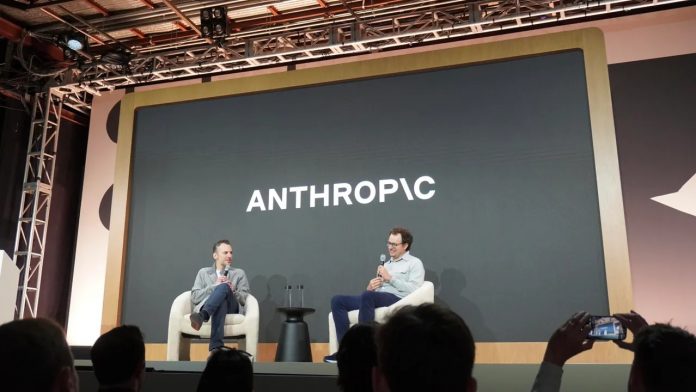
Anthropic, the artificial intelligence company backed by Google’s Alphabet and Amazon, has announced plans to open its first office in India next year — a move that underscores how the South Asian nation has become the new frontier for American AI companies seeking global growth.

The new office, set to open in early 2026 in Bengaluru, will serve as Anthropic’s second Asia-Pacific hub after Tokyo. The expansion comes amid India’s accelerating adoption of AI technologies and China’s AI policies, which have seen the government tighten control over data and restrict access to Western AI platforms.

Co-founder and CEO Dario Amodei is scheduled to visit India this week to meet with public officials and corporate partners, signaling Anthropic’s intent to deepen local partnerships and strengthen its foothold in the region. The company, valued at about $183 billion, said the Indian office will serve as a base for research, enterprise collaboration, and product localization.

As China doubles down on government-backed AI infrastructure — promoting its own models like Baidu’s Ernie Bot and Tencent’s Hunyuan, while effectively cutting off access to American AI systems such as OpenAI’s ChatGPT, Anthropic’s Claude, and Google’s Gemini — global tech companies have turned to India as their preferred expansion ground.

India, now home to nearly one billion internet users, offers an open digital market with democratic regulation, a young, tech-savvy population, and a thriving startup culture. These conditions have made it an ideal destination for U.S. firms navigating geopolitical tension between Washington and Beijing.

Anthropic’s flagship product, Claude, has emerged as one of the fastest-growing AI assistants in India. The company revealed that India is now its second-largest consumer market, behind only the United States.

Claude’s strong coding and reasoning capabilities have made it especially popular among Indian developers and enterprises deploying AI for customer service, analytics, and software automation. Anthropic offers both free and paid versions of Claude in the market, but has not yet introduced local currency pricing, a move that analysts say could follow once the company establishes its Bengaluru office.

OpenAI, backed by Microsoft, formally registered as a legal entity in India in 2025 and also plans to open its first Indian office in New Delhi later this year. The company has already been in talks with Indian IT firms and educational institutions to integrate ChatGPT Enterprise into their systems, offering affordable subscription rates.

Meanwhile, Google’s Gemini and AI startup Perplexity are aggressively expanding in the Indian market. Both have rolled out free access to premium AI tools, aiming to capture users in a price-sensitive ecosystem while leveraging India’s enormous user base to refine their models.

China’s Walls vs. India’s Openness

This surge of American AI investment in India comes as Washington continues to tighten export restrictions on advanced chips and AI technologies to China, forcing U.S. companies to diversify their global reach. India’s openness to collaboration, paired with its growing digital infrastructure, has made it a strategic partner in the AI supply chain.

China’s government has launched massive efforts to build state-backed AI infrastructure, funding domestic chipmaking and encouraging the use of homegrown language models trained under censorship controls. The country has effectively blocked U.S. AI platforms, including ChatGPT, Claude, and Gemini, while mandating strict state review of AI content.

India’s rise as a global AI hub is supported by a booming tech workforce exceeding 5 million, robust digital infrastructure, and one of the fastest-growing startup ecosystems in the world. The government’s AI Mission 2030 seeks to position the country as a leader in responsible AI research and deployment, emphasizing collaboration with global firms.

Anthropic’s Global Push

Anthropic’s expansion into India follows its announcement last month to triple its international workforce, as it races to meet global demand for its Claude 3 AI models. The company’s partnerships with both Amazon Web Services and Google Cloud give it access to vast cloud infrastructure, essential for scaling operations in new markets like India.

AWS has integrated Anthropic’s Claude models into its Bedrock AI platform, while Google has made Claude available through Vertex AI, giving enterprise clients flexibility in deploying advanced models. This dual alignment with two major cloud providers could prove critical to Anthropic’s ambitions in India, where cloud adoption is growing across finance, healthcare, and manufacturing.

Anthropic’s Bengaluru office is expected to focus on AI research, enterprise integration, and regional expansion, with hiring to begin in 2025.

EU Unveils €1bn ‘Apply AI’ Strategy to Boost Artificial Intelligence Across Key Industries

0

The European Commission has unveiled a €1 billion ($1.1 billion) plan aimed at expanding the use of artificial intelligence across critical industries, marking one of the bloc’s boldest efforts yet to close the widening technological gap with the United States and China.

The plan, announced Wednesday in Brussels, forms the core of the EU’s “Apply AI” strategy — an initiative designed to accelerate AI integration across the economy, foster homegrown innovation, and reduce Europe’s dependence on foreign technologies.

The move also reflects Europe’s growing anxiety over its lagging position in the global AI race, as U.S. companies like OpenAI, Google, and Microsoft, and Chinese counterparts such as Baidu, Alibaba, and Tencent, dominate AI development, cloud computing, and chip production.

“AI Made in Europe” Vision

European Commission President Ursula von der Leyen said the plan represents a turning point for the continent’s digital future, reiterating her vision for “AI made in Europe.”

“I want the future of AI to be made in Europe,” von der Leyen declared in a statement. “AI adoption needs to be widespread, and with these strategies, we will help speed up the process. We will drive this ‘AI first’ mindset across all our key sectors, from robotics to healthcare, energy, and automotive.”

The Apply AI initiative follows an earlier April 2025 action plan aimed at easing the heavy compliance and cost burdens of the EU’s AI Act, the world’s first comprehensive regulation on artificial intelligence, which came into force in August 2024.

While the AI Act positioned Europe as a global leader in AI governance, critics say it also slowed innovation, with startups warning that strict rules and documentation requirements made it difficult to compete with their U.S. and Chinese peers.

A Push to Catch Up

The new strategy is part of a broader effort by the European Union to reignite its technological competitiveness and stimulate industrial adoption of AI, an area where the bloc has been struggling.

According to data from the European Investment Bank, AI investment in the U.S. outpaces Europe’s by nearly five times, and China now produces the majority of the world’s AI patents. While American firms dominate generative AI and cloud infrastructure, Europe remains fragmented — lacking large-scale computing resources and unified industrial coordination.

To address these gaps, the Apply AI plan focuses on targeted industrial transformation, seeking to integrate AI tools into sectors that anchor Europe’s economy and employ millions of workers.

Target Sectors and Measures

The European Commission identified ten sectors where AI adoption will be accelerated: healthcare, pharmaceuticals, energy, mobility, manufacturing, construction, agri-food, defense, communications, and culture.

Under the plan, Europe will:

  • Establish AI-powered medical screening centers to improve healthcare diagnostics and disease detection;
  • Develop “agentic AI” systems — autonomous and adaptive models — for manufacturing, climate analysis, and drug development;
  • Support AI-driven tools in renewable energy management, aimed at optimizing power grids and reducing emissions;
  • Promote AI integration in agriculture and food production to enhance food security and resource efficiency.

The initiative will also connect startups with industry partners and research institutions to ensure that AI breakthroughs move quickly from the lab to real-world deployment.

Funding and Private Sector Role

The €1 billion funding will come primarily from the Horizon Europe and Digital Europe programs. The Commission expects member states and private investors to match the EU’s contribution, potentially doubling the total investment to around €2 billion.

The goal is not only to provide financial backing but also to stimulate private innovation ecosystems that can rival the scale of Silicon Valley or Shenzhen.

The push for AI independence aligns with the EU’s long-standing ambition for “strategic autonomy” — the ability to operate technologically and economically without overreliance on external powers.

In recent years, the bloc has found itself squeezed between the U.S. tech dominance and China’s rapid AI expansion, with both superpowers using AI to project global influence. European policymakers believe that building sovereign AI capabilities is now a matter of economic security as much as innovation.

Trade tensions with the United States — particularly over subsidies, data localization, and cloud computing access — have deepened the EU’s determination to invest in domestic AI infrastructure. At the same time, the bloc is cautious about Chinese AI systems, which raise security and ethical concerns over data privacy and state surveillance.

Europe’s challenge lies in balancing innovation with regulation. While the AI Act has been praised for setting global ethical standards, business leaders warn that overregulation could hinder the region’s ability to compete with the fast-moving ecosystems of the U.S. and China.

The Apply AI plan seeks to counter that perception by pairing strict oversight with tangible economic incentives. Brussels hopes the initiative will help rebuild investor confidence, attract top AI talent, and spur the next generation of European AI startups capable of competing globally.