DD
MM
YYYY

PAGES

DD
MM
YYYY

spot_img

PAGES

Home Blog Page 3846

Optimism to distribute unclaimed funds from first airdrop

0

Optimism, the layer 2 scaling solution for Ethereum, has announced that it will distribute the unclaimed funds from its first airdrop to the community. The airdrop, which took place in July 2022, was meant to reward early adopters of the Optimism network with its native token, OPT. However, due to technical issues and low awareness, only about 40% of the eligible wallets claimed their tokens within the deadline.

The Optimism token is used to pay for transaction fees on the Optimism network, as well as to participate in governance and staking. The project decided to distribute 1% of its total supply of 10 billion OPT to users who interacted with Optimism-compatible applications before July 1, 2021. The airdrop was based on a snapshot taken on June 25, 2021, and each eligible user received 0.25 OPT per transaction.

The Optimism team decided that instead of burning or keeping the remaining 60% of the tokens, they would redistribute them to the users who participated in the network’s activity since the launch. This includes users who deposited, withdrew, or interacted with any smart contracts on Optimism. The team believes that this is a fair and transparent way to reward the loyal and engaged community members who have supported the network’s growth and development.

The distribution will take place in two phases. The first phase will start on September 20, 2023, and will last for one month. During this phase, users can claim their tokens by connecting their wallets to the Optimism dashboard and following the instructions. The amount of tokens each user will receive will depend on their proportional share of the network’s activity.

The second phase will start on October 20, 2023, and will last for six months. During this phase, users who did not claim their tokens in the first phase will have a second chance to do so, but with a 10% penalty. The penalty will be used to fund future airdrops and community initiatives.

According to CoinGecko, OPT rose from $0.18 on September 15 to $0.42 on September 18, a 133% increase in three days and currently trading at $1.35 per token. The token also reached a new high on September 17, shortly after the airdrop announcement. The trading volume of OPT also surged from $1.2 million to $8.9 million in the same period, indicating a high demand and interest in the token.

The Optimism token surge is a sign of the growing popularity and adoption of layer-2 solutions for Ethereum, as the network faces high congestion and fees due to its limited scalability. Optimism is one of the most anticipated and promising projects in this space and has attracted support from major players such as Uniswap, Synthetix, Chainlink, and Coinbase. With the launch of its token and the expansion of its ecosystem, Optimism is poised to become a key player in the future of Ethereum scaling.

The Optimism team hopes that this distribution will increase the adoption and usage of the network, as well as foster a strong and vibrant community around it. They also encourage users to stake their OPT tokens in the Optimism DAO, which will allow them to participate in the governance and decision-making of the network. The team believes that by giving more power and voice to the users, they can create a more decentralized and secure layer 2 solution for Ethereum.

The airdrop distribution is expected to last for several weeks, as the project is sending out batches of tokens every day. Users can claim their tokens by connecting their wallets to the Optimism gateway and following the instructions on the website. The project also warned users to beware of scams and phishing attempts and advised them to verify the official sources before claiming their tokens.

Japan’s JPEX suspends some operations amid Liquidity Crisis

0

In a shocking announcement, JPEX, one of the largest cryptocurrency exchanges in Japan, has decided to suspend some of its trading services and increase its transaction fees due to a severe liquidity shortage. The exchange cited “unprecedented market volatility” and “regulatory uncertainty” as the main reasons for its drastic measures.

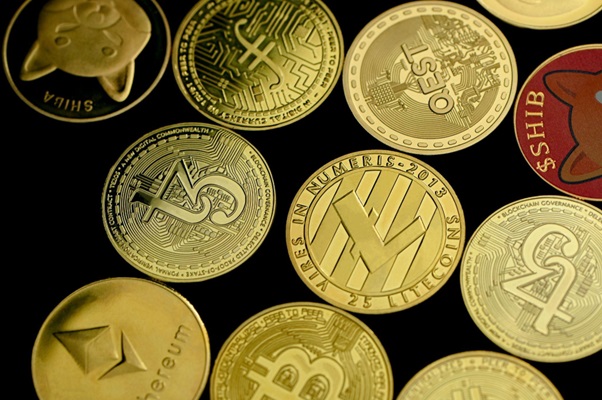
According to a press release issued by JPEX on Monday, the exchange will temporarily halt the deposits and withdrawals of several cryptocurrencies, including Bitcoin, Ethereum, Litecoin, and Ripple, starting from October 1st. The exchange will also increase its trading fees by 50% for all pairs, effective immediately. The exchange did not specify when these measures will be lifted but said it will “monitor the situation closely and resume normal operations as soon as possible”.

The announcement came as a shock to many JPEX users, who expressed their frustration and anger on social media platforms. Some users accused the exchange of mismanagement and fraud, while others demanded compensation and refunds. Some users also speculated that the exchange might be facing insolvency or legal troubles, as it has been under investigation by the Financial Services Agency (FSA) since last year for alleged violations of anti-money laundering regulations.

JPEX is not the only exchange that has been struggling with liquidity issues in recent months. Several other exchanges in Japan and around the world have also reported difficulties in meeting the surging demand for cryptocurrencies, especially after the massive rally in August and September. The volatility and uncertainty in the crypto market have also been exacerbated by the regulatory crackdowns in China, South Korea, and other countries.

Addressing the liquidity crisis is a critical challenge for the crypto industry, as it affects not only the profitability and stability of the market, but also the innovation and adoption of the technology. There are several possible solutions to improve liquidity in the crypto space, such as:

Liquidity pools: Liquidity pools are smart contracts that hold a reserve of two or more tokens and allow users to exchange them at a fixed rate based on their relative supply and demand. Liquidity pools provide a decentralized and automated way of providing liquidity to the market, as anyone can contribute to the pool and earn fees from the trades. Examples of platforms that use liquidity pools are Uniswap, Balancer, and Curve.

Liquidity aggregators: Liquidity aggregators are platforms that connect multiple sources of liquidity, such as exchanges, brokers, OTC desks, and liquidity pools, and offer users the best available price and execution for their trades. Liquidity aggregators reduce the friction and cost of trading across different venues and increase the efficiency and transparency of the market. Examples of platforms that use liquidity aggregators are 1inch, Paraswap, and Matcha.

Liquidity mining: Liquidity mining is a process that rewards users for providing liquidity to a platform or protocol, usually in the form of governance tokens or fees. Liquidity mining incentivizes users to participate in the market and increase its depth and activity. Examples of platforms that use liquidity mining are Compound, Aave, and SushiSwap.

These solutions are not mutually exclusive and can complement each other to create a more liquid and robust crypto market. However, they also come with their own challenges and trade-offs, such as security risks, governance issues, regulatory uncertainty, and scalability limitations. Therefore, it is important for the crypto industry to continue to explore new ways of enhancing liquidity, while also addressing the existing problems and risks.

Liquidity is not only a technical or financial issue, but also a social and cultural one. Liquidity reflects the level of trust, participation, and collaboration among the crypto community. By improving liquidity, we can not only improve the performance and resilience of the market, but also foster a more inclusive and diverse crypto ecosystem that can unleash the full potential of blockchain technology.

The liquidity crisis poses a serious challenge to the growth and stability of the crypto industry, as it undermines the trust and confidence of investors and users. It also highlights the need for more robust and transparent regulation and oversight of crypto exchanges, as well as better risk management and customer protection practices. As the crypto market matures and evolves, it is imperative that exchanges adapt and innovate to meet the changing needs and expectations of their customers.

The Big X (Twitter) Mistake with Monetization, and The Problem of Rigged X Engine Optimization

1

X (yes, Twitter) is broken. It is broken because people have rigged the monetization system. In the past, I used to get value for my business research on Twitter where I could type something, and get some views about that topic.

But today, the results I get are totally uncorrelated with my search. Why? They have taken XEO (X Engine Optimization) to a new level. Simply, you can write any nonsense and hashtag trends so that when people search those trends, you show on the search, and by showing on the search, if you are a monetized account, you make money when those visitors see ads!

So, consider this tweet or whatever it is called now: “We are traveling to Umuahia tomorrow for the group meeting #Obama Biden Ukraine INEC  …”. You can list and tag unrelated things, which are trending at that time. Now, when people search for “INEC”, this post shows up. Notice that this post has nothing to do with INEC.

Why is this happening? Incentives. People want more visitors for those monetizing their accounts, and they’re pushing noise into the platform to bring traffic. Without the money, this would not have happened. They would have focused on hashtagging Umuahia alone! Elon Musk and team must fix this, because its search is broken.

Comment on Feed 

Comment 1: This is not completely the case.

The issue with deliberately misplaced hashtags has been a thing before Musk took over and long before monetization was activated.

The Twitter Trend Table has always been a powerful section of the app, and long before Musk came in, users will do anything to appear on the trend table, and in many cases where they could not, they just simply place the trending tags for the day in their tweets to drive more traffic and visibility to their post.

(The trend table gives informal communities with similar interest, geography, and activity pattern a sense of what the top conversation for the day is. And it drives tons of traffic to the top 10 tags on it daily.)

It’s something that has been prominent and I have personally been irritated by before Musk took over.

If anything, maybe the behaviour just got worse since you can now earn from those views.

Comment 1R: This is correct. However, like Ndubuisi Ekekwe opined, X or Twitter is completely broken. I had mentioned this earlier on that oftentimes trends lead you to totally unrelated posts. It used to be there in the pre-Musk era but it is now completely a metastasized cancer.

Comment 1R: Your last paragraph is what’s happening actually. The behavior has changed because of monetization. People will do anything now to get that.

My Response: Great point there. I think it is the scale that is the issue now as there is a clear monetary incentive to do it 

External Funding Routes of Early-Stage Enterprises and their Impacts on the Venture Ecosystem

0

Bootstrapping a business with personal funds often proves to be a very herculean task if at all that is possible. Hence, how to secure and leverage external funding opportunities invariably constitutes a focal question in the heart of start-ups or emerging entrepreneurial firms.

Over the years, several corporate financing structures have developed, providing external funding for entrepreneurs or businesses in their early stages. These include Angels, Venture Capitals, Accelerators, Incubators and government grants or public funds. Business owners could choose any one of these alternatives based on their prevailing capital structure, model and stage.

Although each funding structure has its own targeted business or corporate investees, they collectively shape the investment ecosystem as a whole.

Accelerators

Accelerators focus mainly on early-stage enterprises or start-ups and provide them with contextual support in addition to financial support. In other words, Accelerators provide not only financial support but also mentorship, education, and networking services to enhance and accelerate the growth of early-stage entrepreneurial firms.

Accelerators are more likely to provide contextual support than financial investment as they target highly precarious firms in their early stages which do not particularly interest other institutional investors; especially the VCs. Therefore, Accelerators prefer to invest in firms that VCs think have low profitability.

Accelerators started to wax strongly in the investment ecosystem following the establishment of Y-Combinator in 2005. Since the founding of Y-Combinator other star accelerators like Techstars, and 500 startups have developed. Studies have shown that Accelerators not increase the survival probability of entrepreneurial firms and provide higher and faster returns on investment compared to VCs; they also influence the making of an effective venture ecosystem.

Angel Investors

Angel investors provide early-stage entrepreneurial firms with both financial and technical support to scale. Angel investors are often highly experienced in management and they seek to have appreciable managerial influence on the businesses they are funding. Studies have shown that most angel investors are former entrepreneurs and business managers who are investing their wealth in firms as a way of giving back to society. Therefore, unlike other investor types that are motivated by high returns, angels are motivated by the growth of the funded firms.

Venture Capitalists

Venture Capital is an equity-based financing provided to small businesses or start-ups with high or long-term growth potential. Generally, Venture Capitalists prefer to invest in relatively more mature early-stage entrepreneurial firms characterized by high industry-knowledge and technology as well as the capacity to generate profit by selling shares or initial public offerings. Most VCs concentrate in specific industries where they have expertise and can be able to mitigate risks.

In addition to providing finance support, VCs can also provide mentorship and networking opportunities to the funded companies. Funding decision in VC usually takes more time compared to other investor types because it involves a more painstaking vetting and profiling of potential investees. A type of VC funding called Micro-VC makes investments on a small scale and increases its contextual support for targeted firms, similar to accelerators, to avoid high investment risk.

Incubators

Incubators manage early-stage companies through different developmental phases until the companies have the wherewithal in terms of finances, physical structures and human resources to function independently. Incubators’ support to early-stage companies can include; office space, administrative functions, education and mentorship, access to investors and capital and ideation. These may involve a fee on or an equity stake in the business. Unlike Accelerators that focus on established early-stage businesses, incubators focus on concepts that have yet to transition into a full-fledged business.

Relationship between Investment Types, Behaviours and Performance

Early-stage firms that could access one or more of the aforementioned external funding should have higher survivability and liquidity compared to early enterprises that could not access any of those investment supports. However, studies have shown that investment behaviour and performance can differ according to these investment types.

Choi and Kim (2018), analyzes over 30,000 investment data involving Accelerators, Angels, and Venture Capitalists from the CrunchBase database and discovers that the performance of Accelerators differs from that of Venture Capitalists, but is similar to that of Angels. The study shows that while Accelerators’ investees perform well post funding, Venture Capitals’ investees perform well in terms of survivability.

Resource:
Yunsoo Choi and Dohyeon Kim (2018). The effects of investor types on investee performance: Focusing on the seed accelerator. Cogent economics & finance

Telecom Investment in Nigeria Records Significant Increase, Rises From $38b to $77b in Q2 2023

0

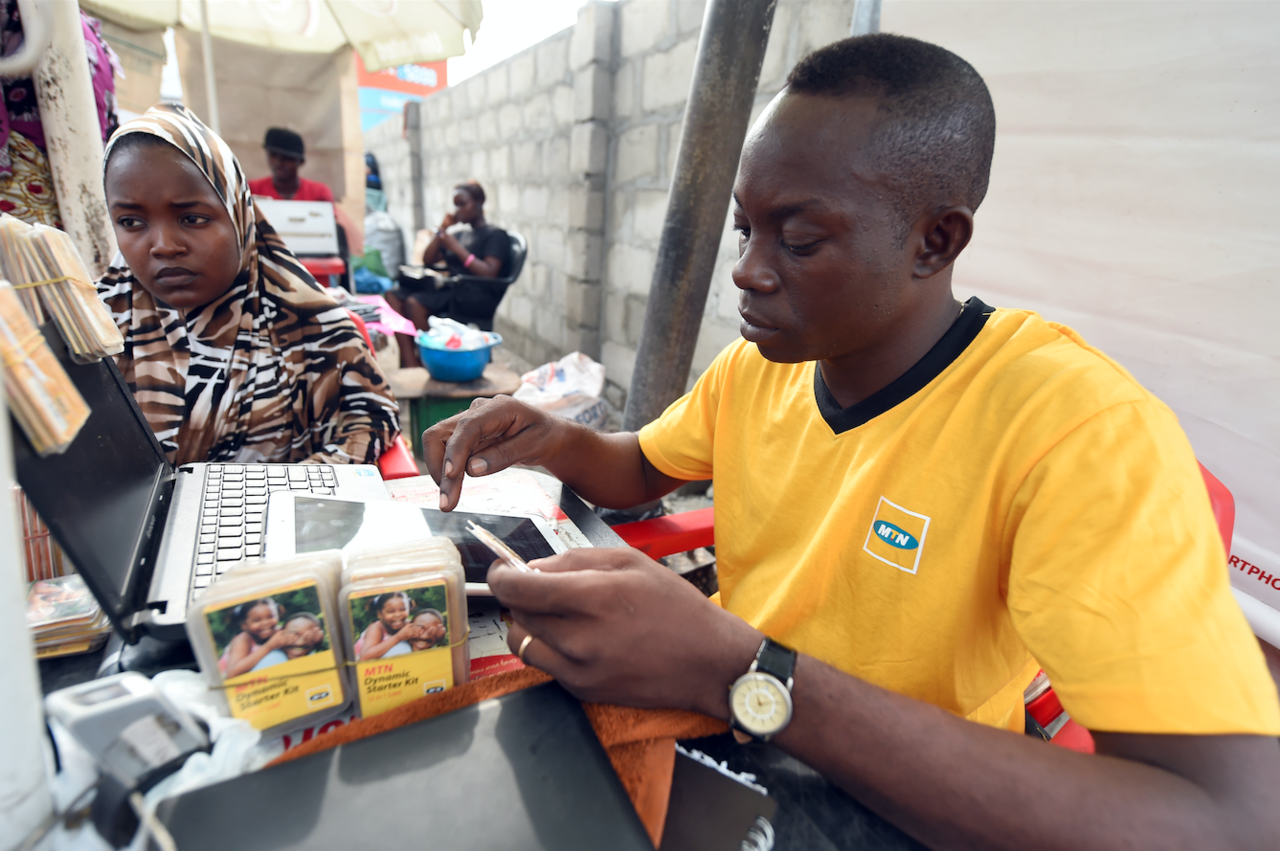
Nigeria’s telecom investment is reported to have recorded a significant increase in the second quarter (Q2) of 2023, rising from $38 billion to $77 billion.

This was disclosed by the Executive Vice Chairman of the Nigerian Communications Commission (NCC), Prof. Umar Danbatta who lauded the milestone during a media chat with media industry stakeholders in Kano.

According to Prof. Danbatta, the telecom sector contributed 16 percent to Nigeria’s Gross Domestic Product (GDP) during this period, (Q2) 2023.

In his words,

“From about eight percent contribution to GDP in 2015, when I came on board as the EVC of NCC, quarterly GDP has increased significantly to reach its current threshold of 16 percent and this has continued to positively impact all aspects of the economy”.

Prof. Danbatta lauded his leadership as NCC boss while disclosing that through the effective implementation of NCC’s mandates, the telecommunications industry in Nigeria has achieved remarkable milestones under his watch.

“While we acknowledge the challenges encountered by the industry, we have also witnessed explosive growth, improved regulatory standards, and digital innovations that have garnered global recognition”, he said.

While disclosing impressive statistics that have characterized his leadership at NCC from 2015 to date, the Danbatta said that active telephone subscribers had increased from less than 150.7 million to 218.9 million, representing a teledensity growth of 115.70 percent from 107.87 percent in 2015.

Through stimulating broadband infrastructure across the country, he said broadband penetration, which stood at 6 percent in 2015 has increased significantly to 47.01 percent as of July 2023, enhancing over 89.73 million subscriptions on 3G, 4G, and 5G networks in the country.

Additionally, general internet subscriptions have reached 159.5 million up from less than 100 million in 2015.

“Also, from an 8 percent contribution to the Gross Domestic Product (GDP) in 2015, telecommunications sector now contributes 16 percent quarterly to the Nigerian economy as of the second quarter of 2023.

“Besides, following the authorization of more telecommunications companies to operate in Nigeria’s telecoms sector, the investment profile has increased tremendously from $38 billion in 2015 to $75 billion currently and this keeps growing daily. From the sales of Fifth Generation (5G) C-Band Spectrum, the NCC has generated over $847.8 million for the Federal Government”, he said.

While the NCC is still faced with a number of challenges such as multiple taxation, vandalism, and securing equitable Right of Way (RoW) from governmental stakeholders, the commission remains committed to ensuring that there is a sustained growth trajectory.

As the national target to achieve 70 percent broadband penetration by 2025 is receiving significant attention, the NCC has promised to achieve a broadband penetration of 50 percent before the end of 2023.