DD
MM
YYYY

PAGES

DD
MM
YYYY

spot_img

PAGES

Home Blog Page 385

Bernstein Initiates Coverage on Figure Technologies (FIGR)

0

Analysts at Bernstein Research launched coverage of Figure Technologies (NASDAQ: FIGR), a blockchain-based lending platform, with an “Outperform” rating and a $54 price target. This implies approximately 35% upside potential from the stock’s closing price of $40 on Friday, October 3, 2025

Following the note, FIGR shares rose about 6% in early trading on Monday, reaching around $42.76. Bernstein positions Figure as a pioneering force in tokenizing real-world assets (RWAs), particularly in the credit markets, drawing parallels to how stablecoins revolutionized payments.

The firm argues that blockchain tokenization will “digitize and disintermediate” the $2 trillion+ U.S. consumer lending market by enabling faster, more efficient transactions without heavy reliance on intermediaries

Figure holds ~75% share of the $17 billion tokenized private credit market, making it the dominant player. Overall, ~$33 billion in RWAs excluding stablecoins are currently tokenized on blockchains, with private credit leading the charge.

Figure’s Provenance blockchain and Connect marketplace transform traditional “balance-sheet heavy” lending into a “capital-light” model. This reduces operating costs by over 90% and loan turnaround times by ~75%, allowing investors direct access to tokenized consumer loans.

Bernstein forecasts 30% annual revenue growth, from $341 million in 2024 to $754 million by 2027. Earnings are expected to quadruple to $427 million, with margins expanding from 30% to 57%

Founded in 2018 by former SoFi CEO Mike Cagney, Figure originated $5.1 billion in home equity line of credit (HELOC) loans in 2024, capturing 13% of the non-bank market. Analysts predict this share will grow to 25% by 2027, with tokenization extending to equities and other assets

At current levels, FIGR trades at ~19x EV/2027 EBITDA and 30x P/E—a premium multiple justified by its first-mover advantage, profitability, and exposure to the booming RWA tokenization trend. The $54 target suggests a ~$11.5 billion market cap

Figure went public in early September 2025, pricing its IPO at $25 per share and raising nearly $788 million at a $787.5 million valuation. Shares have since surged ~75%, reflecting strong market enthusiasm for blockchain’s role in traditional finance.

This coverage aligns with a wave of bullish initiations from firms like Goldman Sachs, Piper Sandler, and Mizuho, underscoring Figure’s potential as “the Nasdaq of blockchain-based lending.”

The $54 price target implies ~35% upside from the October 3, 2025, closing price of $40, signaling strong confidence in Figure’s growth. The 6% stock price increase to ~$42.76 on October 6 reflects immediate market enthusiasm.

Trading at ~19x EV/2027 EBITDA and 30x P/E, Figure commands a premium due to its first-mover advantage in tokenized lending. Investors may see this as validation of its high-growth potential, though some may question the rich valuation.

Combined with bullish coverage from firms like Goldman Sachs and Piper Sandler, Bernstein’s note could attract more institutional and retail investors, potentially driving further stock gains.

Bernstein’s framing of Figure as a leader in tokenizing real-world assets (RWAs) underscores blockchain’s growing role in transforming the $2 trillion+ U.S. consumer lending market. This could accelerate institutional adoption of blockchain for credit products.

Figure’s Provenance blockchain and Connect marketplace reduce reliance on traditional intermediaries, cutting costs by over 90% and loan turnaround times by ~75%. This efficiency could pressure legacy lenders to adopt similar technologies or lose market share.

With ~$33 billion in tokenized RWAs excluding stablecoins and Figure’s 75% share of the $17 billion tokenized private credit market, the firm is well-positioned to capture growth as tokenization extends to equities and other assets.

Bernstein’s forecast of 30% annual revenue growth from $341M in 2024 to $754M by 2027 and earnings quadrupling to $427M with 57% margins highlights Figure’s scalable, capital-light model. This could make FIGR a compelling growth stock.

Figure’s 13% share of the non-bank HELOC market in 2024, projected to reach 25% by 2027, positions it as a leader in a high-demand segment, especially as home equity lending grows amid high interest rates.

Figure’s dominance in tokenized private credit gives it a head start, but competitors may emerge as blockchain adoption grows. Established fintechs or banks could challenge Figure if they invest heavily in similar platforms.

While blockchain offers efficiency, regulatory scrutiny of tokenized assets and decentralized finance (DeFi) could pose challenges. Figure’s ability to navigate regulations will be critical to maintaining its edge.

Figure’s success could inspire other fintechs to integrate blockchain, accelerating the convergence of traditional finance and DeFi. This may lead to new business models and investment opportunities.

Bernstein’s view of Figure as “the Nasdaq of blockchain-based lending” suggests tokenized platforms could redefine capital markets, making them more accessible, liquid, and efficient. This could attract significant capital inflows to blockchain-focused firms.

The projected growth of tokenized RWAs could shift investor attention toward companies like Figure, driving capital toward blockchain innovators and potentially creating a new asset class.

Achieving 30% revenue growth and 25% HELOC market share requires flawless execution, including technological reliability and customer adoption. High interest rates or economic slowdowns could dampen demand for HELOCs, impacting Figure’s growth trajectory.

Bernstein’s bullish outlook reinforces Figure’s position as a trailblazer in blockchain-based lending, with significant implications for its stock performance, the adoption of tokenized assets, and the evolution of credit markets. Investors may see FIGR as a high-growth opportunity, but risks like regulation and competition warrant caution.

A Foray into BNY Mellon’s Push into Tokenized Deposits and Blockchain Payments

0

The Bank of New York Mellon (BNY Mellon), the world’s largest custodian bank managing $55.8 trillion in assets under custody, announced it is actively exploring tokenized deposits as a means to modernize its massive payments infrastructure.

This initiative, reported widely in financial and crypto media, represents a significant step toward integrating blockchain technology into traditional banking, enabling faster, more efficient cross-border and real-time transactions.

BNY Mellon is testing tokenized deposits—digital representations of customer funds backed by commercial bank money—that can be transferred directly over blockchain networks. This would allow clients to execute payments with near-instant settlement, 24/7 availability, and reduced costs, bypassing some limitations of legacy systems.

The bank’s Treasury Services division already processes about $2.5 trillion in payments daily, making this a high-stakes experiment with potential to reshape global fund flows.

Carl Slabicki, Executive Platform Owner for Treasury Services, emphasized that the project addresses “legacy technology constraints” and aligns with efforts to enhance instant and cross-border payments. It starts with internal ecosystem transfers but aims to expand across broader financial markets as standards evolve.

BNY Mellon’s move fits into a wave of tokenization adoption by major institutions. In July 2025, BNY Mellon partnered with Goldman Sachs to launch tokenized money market funds (MMFs) on a private blockchain, providing clients with real-time settlement and round-the-clock access.

The bank has teamed up with Ripple to custody the RLUSD stablecoin, handling on-chain reserve management and supporting regulated blockchain transactions. BNY Mellon is among over 30 banks working with SWIFT on a shared blockchain ledger for instantaneous cross-border payments.

BNY’s push is fueled by a pro-crypto U.S. regulatory environment, including stablecoin hearings where BNY’s Caroline Butler testified in March 2025. With 41% of institutions already holding crypto (per BNY surveys), expect further expansions like multi-chain custody and tokenized bonds.

This isn’t just hype—it’s reshaping payments for the digital era, potentially unlocking $10T+ in tokenized markets by 2030. This “push” reflects a strategic shift toward integrating traditional finance (TradFi) with decentralized technologies, driven by regulatory clarity under the Trump administration and growing institutional demand for tokenized assets.

This isn’t isolated—JPMorgan piloted its JPMD tokenized deposit token on Coinbase’s Base blockchain in June 2025, while HSBC offers tokenized deposit services for corporate cross-border transfers. In Europe, nine banks are developing a MiCA-compliant euro stablecoin.

These efforts signal a regulatory thaw boosting confidence in digital assets. The announcement has sparked bullish sentiment in crypto circles, with X (formerly Twitter) users highlighting its implications for adoption and assets like XRP due to Ripple ties.

Posts describe it as “massive for traditional finance going on-chain” and a “regulated internet of value,” though some note the tension between innovation and centralization.

This exploratory phase could accelerate the tokenization of real-world assets (RWAs), which have seen on-chain values peak at $29 billion recently. For BNY Mellon, it positions the bank as a bridge between TradFi and DeFi, potentially capturing more crypto custody demand without aggressive deposit grabs, as noted by CEO Robin Vince.

However, challenges like interoperability standards and regulatory alignment remain. As Slabicki put it, this is about “making it easier to move deposits and payments across ecosystems.”

Gold Smashes $4,000 As Investors Flee To Safety, Goldman Sachs Raises Dec 2026 Forecast To $4,900 Per Ounce

0

Gold surged past $4,000 per ounce for the first time on Tuesday, underscoring the rush by investors worldwide toward safe-haven assets as economic turbulence, geopolitical risk, and sticky inflation continue to erode confidence in traditional markets.

Gold futures traded at $4,005.80 per ounce in early deals, marking an extraordinary 51 percent gain since the start of the year. The rally reflects a confluence of global factors—from heightened geopolitical risk and monetary uncertainty to growing skepticism about the U.S. dollar and government debt.

The surge comes as President Donald Trump’s trade policies and attacks on the independence of the Federal Reserve unsettle investors already grappling with a volatile global economy. Washington’s stiff sanctions on Russia have further accelerated a global diversification away from U.S. Treasurys, with China and other countries aggressively stockpiling gold to shield their reserves from potential financial sanctions.

Central banks have remained some of the most aggressive buyers in recent quarters, collectively accumulating hundreds of tons of gold as part of a long-term shift toward de-dollarization. Goldman Sachs projects that central banks will continue to purchase an average of 80 metric tons in 2025 and 70 tons in 2026, particularly among emerging markets seeking to reduce exposure to Western currencies.

Retail investors, meanwhile, have joined the stampede. With inflation showing no signs of cooling, and following the Federal Reserve’s rate cut in September that made bonds less attractive, gold has become the preferred hedge. The market is anticipating at least two additional rate cuts before year-end, adding further momentum to the metal’s rally.

“Debt instruments are not an effective store of wealth,” said Ray Dalio, founder of Bridgewater Associates, at the Greenwich Economic Forum in Connecticut. He advised investors to allocate “something like 15% of your portfolio in gold,” calling it “the one asset that does very well when the typical parts of your portfolio go down.”

Even with gold’s dazzling rise, analysts remain divided on whether the momentum can last. Bank of America urged caution, warning that prices could be approaching “uptrend exhaustion,” potentially leading to a short-term correction in the fourth quarter.

Still, others see more upside. Goldman Sachs raised its December 2026 forecast to $4,900 per ounce, up from $4,300, citing robust Western exchange-traded fund (ETF) inflows and sustained central bank demand.

“We see the risks to our upgraded gold price forecast as still skewed to the upside on net, because private sector diversification into the relatively small gold market may boost ETF holdings above our rates-implied estimate,” Goldman said.

Spot gold was trading around $3,960 per ounce as of 1:30 a.m. GMT after hitting a new high of $3,977.19 earlier in the day. Western ETF holdings, according to Goldman, have “fully caught up” with rate-driven expectations, indicating steady rather than speculative inflows.

The metal’s meteoric climb this year has been fueled by four reinforcing forces: unrelenting central bank buying, a weaker U.S. dollar, booming ETF inflows, and heightened demand from investors seeking insulation from rising trade and geopolitical tensions.

“In contrast, noisier speculative positioning has remained broadly stable. Following the large September increase, the level of Western ETF holdings has now fully caught up with our U.S. rates-implied estimate, suggesting the recent ETF strength is not an overshoot,” Goldman said.

With the global economy entering a period of elevated uncertainty and investors bracing for further monetary easing, gold once again has become a darling store of value.

CBN Issues New Guidelines For Agent Banking, Mandate PoS Operators to Use One Terminal

0

The Central Bank of Nigeria (CBN), in line with its mandate to ensure financial system stability and promote financial inclusion, has released new guidelines governing the operations of Agent Banking in Nigeria.

The revised framework seeks to establish minimum operating standards, enhance service delivery, and promote responsible market conduct among agent banking operators.

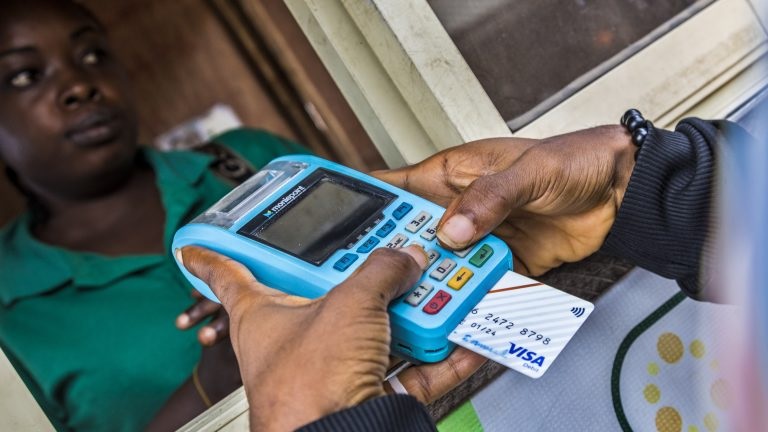
According to a circular signed by Musa I. Jimoh, Director of the Payments System Policy Department, the CBN now requires Point-of-Sale (PoS) operators to operate exclusively with one terminal. Under the new directive, a PoS operator must be appointed directly by a financial institution and is permitted to offer agent banking services solely for one principal within a specified period.

This means that PoS operators currently using multiple platforms to serve customers will now be required to choose one financial partner, whether a commercial bank, non-interest bank, payment service bank, microfinance bank, mobile money operator, or super-agent.

The guidelines also detail the framework for agent banking relationships. As outlined in the circular:

  • Agents must be exclusive to one principal only.
  • Agents can belong to the network of only one super agent at a time.
  • A super agent may contract with multiple principals but must execute separate agency agreements with each.
  • Every principal or super agent must obtain approval from its Board of Directors before entering into any agent banking relationship.

In addition to operational standards, the CBN established eligibility criteria for individuals seeking to become agents. Prospective agents must demonstrate the ability to perform the permissible activities listed in the guidelines, provide mandatory information as required, and obtain authorisation from relevant authorities where applicable. Individual agents must also be at least 18 years old and of sound mind.

The guidelines disqualify certain individuals and entities from being appointed as agents, including:

  • Persons or entities with non-performing loans within the past 12 months;
  • Individuals declared bankrupt or companies that have filed for insolvency;
  • Persons convicted of fraud, dishonesty, or related offences;
  • Those whose BVN has been watch-listed or blacklisted;
  • Individuals or entities who have violated CBN’s agent banking guidelines or any Nigerian law.

To allow for a smooth transition, the apex bank has granted PoS operators a compliance period until April 1, 2026, to align their operations with the new directive. The CBN emphasized that the new rules aim to strengthen Nigeria’s agent banking framework, ensure accountability, and enhance consumer trust in the expanding digital financial services ecosystem.

The new CBN rules on Agent Banking in Nigeria come at a time when Agent Banking has emerged as one of the most transformative developments in the country’s financial landscape over the past decade. It represents a crucial bridge between traditional banking institutions and millions of unbanked and underbanked Nigerians, particularly in rural and semi-urban areas where physical bank branches are scarce.

The concept of agent banking was formally introduced in Nigeria in 2013, when the CBN issued the Guidelines for the Regulation of Agent Banking and Agent Banking Relationships. Initially, adoption was slow due to infrastructural limitations, lack of awareness, and trust issues.

However, several factors have fueled its rapid growth over time. These include;

1. Fintech Innovation – Companies such as OPay, Moniepoint, Paga, and PalmPay revolutionized the space by empowering small-scale entrepreneurs to become agents.

2. Government and CBN Support – The CBN’s financial inclusion strategy aimed to bring 95% of Nigerians into the formal financial system by 2024, positioning agent banking as a key enabler.

3. COVID-19 Pandemic – During the COVID-19 pandemic, which necessitated lockdowns, agent networks became vital for cash access and digital payments, accelerating adoption.

4. Expansion of Mobile and Internet Penetration – Increased smartphone usage and data access supported the growth of digital and agent-based financial services.

Today, Nigeria boasts one of the largest agent banking networks in Africa, with over 2 million registered agents spread across urban centers and rural communities. Major fintech players dominate the ecosystem, offering not just payment services but full-fledged micro-banking capabilities.

As agent banking continues to surge across Nigeria, providing financial access to millions and driving financial inclusion, a troubling side effect has emerged: a rise in fraudulent activities. What was once hailed solely as a success story in financial innovation is now facing credibility challenges due to growing reports of fraud, cybercrime, and unethical practices within agent networks.

The Central Bank of Nigeria (CBN) and financial institutions have expressed increasing concern over this trend, recognizing that unchecked fraud could erode public trust and undermine the progress made in deepening financial inclusion.

According to NIBSS’s “Fraud in the Nigerian Financial Services” report, over 26% of total fraud incidents in 2024 were traced to PoS and agent banking transactions. The rise aligns directly with the rapid expansion of agent networks, a case of opportunity meeting vulnerability.

Industry insiders reveal that the sheer number of unregistered or poorly trained agents has worsened the situation. In many cases, fraudsters register as agents under fake identities, or genuine agents engage in dishonest practices.

To curb the rising fraud in agent banking operations in Nigeria, the CBN has continued to enforce laws and issue guidelines to mitigate these fraud cases. Through regulatory vigilance, technology-driven oversight, consumer protection, and collaboration with industry stakeholders, the apex bank continues to strike a balance between innovation and security.

Streamex Stock Surges on GLDY Stablecoin Announcement

0
NASDAQ

Streamex Corp. (NASDAQ: STEX), a vertically integrated commodity tokenization company, announced on October 6, 2025, an upcoming pre-sale for GLDY, its new institutional-grade gold-backed stablecoin.

This news triggered a sharp rally in STEX shares, which climbed more than 30% intraday on Monday before settling around 20-25% higher by close, reflecting strong market enthusiasm for the product.

The move aligns with growing interest in real-world asset (RWA) tokenization, particularly gold-linked digital assets that bridge traditional finance and blockchain. Up to $100 million USD, with potential expansion to $1 billion in the near term.

Yield: Up to 4.0% annualized, paid in physical ounces of gold via gold-leasing mechanisms—transforming non-yielding gold holdings into an income-generating asset. Pre-sale opens to qualified investors on or before November 10, 2025.

Reports indicate a $200,000 USD threshold for participation, emphasizing its institutional focus. The company plans to co-invest at least $5 million USD, signaling strong internal confidence and balance-sheet alignment.

GLDY is designed as a physically backed bullion token, offering the stability and capital preservation of gold alongside blockchain-enabled liquidity and yield. As CEO Henry McPhie noted, it addresses a key pain point for the $400+ billion gold ETF market: “Instead of paying to hold gold, investors can get paid to hold gold.”

This positions GLDY as a compliant, scalable alternative for portfolio managers seeking diversified commodity exposure without storage costs or illiquidity. STEX, which debuted via a reverse merger with BioSig Technologies in May 2025, has now gained over 60% since listing.

Retail sentiment on platforms like Stocktwits flipped to “bullish” with elevated chatter. On X discussions exploded post-announcement, with users highlighting the 4% yield and institutional targeting. Posts from influencers and news aggregators emphasized the “gold-backed revolution” and potential to disrupt traditional gold products.

This launch taps into the booming RWA sector, where tokenized commodities like gold are projected to grow amid economic uncertainty and rising crypto adoption. GLDY’s yield feature could attract yield-hungry institutions wary of fiat stables or zero-yield treasuries.

For STEX investors, it’s a validation of the company’s pivot to on-chain commodities, potentially fueling further upside if the pre-sale fills quickly. Qualified investors can register interest via Streamex’s site.

The announcement of Streamex’s $100M pre-sale for GLDY, a gold-backed stablecoin with a 4% yield, carries significant implications across multiple dimensions, from stock market dynamics to the broader adoption of tokenized real-world assets (RWAs).

The 20-25% surge in STEX shares reflects strong market confidence in GLDY’s potential to capture institutional demand. Successful pre-sale execution could drive further upside, especially if the $1B expansion target is met, signaling robust revenue potential.

High volatility is likely, as STEX’s recent reverse merger and pivot to blockchain-based commodities make it a speculative play. Regulatory scrutiny of tokenized assets or delays in GLDY’s rollout could pressure shares.

GLDY’s success could establish STEX as a leader in RWA tokenization, potentially attracting partnerships with major financial institutions or blockchain networks like Base and Solana, boosting its valuation.

GLDY’s 4% yield, paid in physical gold ounces, directly challenges the $400B+ gold ETF market, which typically charges storage fees and offers no yield. This could shift capital from traditional vehicles to tokenized alternatives.

The $200K minimum investment targets high-net-worth individuals and institutions, potentially accelerating mainstream acceptance of crypto-native assets in portfolios.

GLDY competes with existing gold-backed tokens like Tether’s XAUT and Paxos’ PAXG. Its yield feature and institutional focus could carve out a niche, but differentiation will hinge on custody transparency and blockchain reliability.

GLDY’s launch reinforces the trend of tokenizing real-world assets, which could drive broader blockchain adoption as investors seek stable, yield-generating alternatives to volatile cryptocurrencies.

By operating on scalable chains like Base and Solana, GLDY could enhance these networks’ visibility and transaction volumes, benefiting their ecosystems. A high-profile stablecoin like GLDY may attract increased scrutiny from regulators, especially regarding compliance, custody audits, and investor protections, potentially shaping future RWA frameworks.

Amid economic uncertainty, GLDY’s yield-bearing gold exposure could appeal to risk-averse investors, diverting capital from bonds or fiat stablecoins. GLDY’s institutional-grade design could accelerate the convergence of traditional finance and decentralized finance, encouraging banks and asset managers to explore blockchain-based products.

The pre-sale’s success depends on attracting sufficient institutional capital by November 10, 2025. Failure to meet the $100M target could dampen investor confidence. Established players in the gold-backed stablecoin space and traditional gold investment vehicles may limit GLDY’s market share.

A stronger dollar or declining gold prices could reduce demand for gold-linked assets, impacting GLDY’s appeal and STEX’s growth trajectory. For investors, GLDY represents a high-potential but speculative opportunity tied to STEX’s ability to execute and the broader RWA trend.

For the crypto ecosystem, it’s a step toward mainstreaming tokenized assets, potentially reshaping how commodities are held and traded. Keep an eye on pre-sale updates, institutional uptake, and regulatory developments, as these will dictate GLDY’s impact.