DD
MM
YYYY

PAGES

DD
MM
YYYY

spot_img

PAGES

Home Blog Page 3857

The central Debate in crypto is “modular” vs “monolithic” Blockchain

0

One of the most important questions that the crypto community faces today is how to design blockchains that can meet the diverse and evolving needs of users, developers, and validators. There are different approaches to this challenge, and they can be broadly categorized as “modular” or “monolithic”.

Modular blockchains are those that focus on a specific function or use case and rely on interoperability with other blockchains to provide a full range of services. For example, Celestia is a modular blockchain that aims to provide scalable data availability for any application, while delegating computation and state management to other chains. Modular blockchains can benefit from specialization, efficiency, and flexibility, but they also face trade-offs in terms of complexity, coordination, and security.

Monolithic blockchains are those that aim to provide a comprehensive platform for any kind of application, without depending on external networks. For example, Solana is a monolithic blockchain that claims to offer high performance, low cost, and rich functionality for a wide range of use cases. Monolithic blockchains can benefit from simplicity, convenience, and security, but they also face trade-offs in terms of scalability, adaptability, and diversity.

There is also a middle ground between modular and monolithic blockchains, which can be seen as “hybrid” or “general-purpose”. For example, Ethereum is a hybrid blockchain that offers a flexible and programmable platform for various applications, while also supporting interoperability with other chains through bridges and sharding. Hybrid blockchains can benefit from versatility, compatibility, and innovation, but they also face trade-offs in terms of performance, cost, and governance.

The debate between modular and monolithic blockchains is not a binary one, but rather a spectrum of design choices and trade-offs. There is no one-size-fits-all solution for blockchain architecture, as different applications may have different requirements and preferences.

The crypto community should embrace the diversity and experimentation that these approaches offer and collaborate to find the best solutions for the common goals of decentralization, security, and usability.

One of the most important and contentious topics in the blockchain space is the question of how to design a system that is scalable, secure, and decentralized. There are two main approaches that have emerged: modular blockchains and monolithic blockchains. Modular blockchains, also known as sharded or layer-2 blockchains, are composed of multiple independent chains that communicate with each other through a common layer-1 chain.

Monolithic blockchains, also known as single-chain or layer-1 blockchains, are based on a single chain that processes all transactions and data. Both approaches have their advantages and disadvantages, and there is no clear-cut answer to which one is better.

The main trade-off between modular and monolithic blockchains is the balance between scalability and security. Scalability refers to the ability of a system to handle a large number of transactions and users without compromising performance or efficiency. Security refers to the ability of a system to resist attacks and ensure the validity and integrity of transactions and data.

Modular blockchains achieve higher scalability by dividing the workload among multiple chains, but this also introduces more complexity and potential points of failure. Monolithic blockchains achieve higher security by having a single source of truth and consensus, but this also limits the throughput and capacity of the system. Depending on the application and the requirements, different trade-offs may be acceptable or desirable.

“Data availability sampling” will allow blockchains to be verifiable on hardware devices

One of the biggest challenges facing blockchain technology is scalability. How can we ensure that millions of transactions can be processed quickly and securely without compromising the core principles of decentralization and trustlessness?

Many solutions have been proposed, such as sharding, layer 2 protocols, and rollups, but they all come with trade-offs and limitations. I want to introduce you to a novel concept that could revolutionize the way we verify blockchain data: data availability sampling.

Data availability sampling is a technique that allows anyone to check the validity of a large amount of data using only a small sample of it. The idea is based on the assumption that if a random subset of the data is available, then the whole data is available with high probability.

This means that instead of downloading and validating the entire blockchain, which could take hours or days on consumer hardware, like smartphones, you only need to download and validate a few random chunks of it, which could take seconds or minutes.

How does this work in practice? Imagine that Alice wants to send some tokens to Bob using a blockchain that supports data availability sampling. Alice creates a transaction and broadcasts it to the network. The transaction is then included in a block by a validator, who also commits to a Merkle root of the block data.

The Merkle root is a cryptographic hash that summarizes the entire block data in a compact way. The validator also publishes a proof of custody, which is a way of proving that they have the full block data and are not hiding or tampering with it.

Now, anyone who wants to verify the block can use data availability sampling. They can request a few random chunks of the block data from the validator or other peers, and check that they match the Merkle root. If they do, then they can be confident that the block is valid, and that Alice’s transaction was executed correctly. If they don’t, then they can raise an alarm and reject the block.

Data availability sampling has several advantages over existing solutions. First, it reduces the bandwidth and storage requirements for verifying blockchain data, making it possible to run full nodes on consumer hardware, like smartphones. This means that we can have more users participating in the network and securing it, without sacrificing decentralization or performance.

Second, it improves the security and privacy of blockchain transactions, as users do not need to reveal which transactions they are interested in or rely on third parties to validate them. Third, it enables new applications and use cases that require fast and cheap verification of large amounts of data, such as decentralized file storage, streaming, gaming, and machine learning.

Data availability sampling is not just a theoretical idea. It is already being implemented and tested by several projects in the blockchain space, such as Ethereum 2.0, Polkadot, Near Protocol, and Coda Protocol. These projects are using different variations and optimizations of data availability sampling to achieve their scalability goals and offer new features to their users.

Data availability sampling is a game-changing innovation that will allow blockchains to be verifiable on consumer hardware, like smartphones, which means we can have our abundance without sacrificing our decentralization. It is one of the most exciting developments in blockchain technology and I encourage you to learn more about it and try it out for yourself.


Google’s Restructuring Continues: Hundreds Laid Off Across Divisions, Fitbit Co-founders Exit

0

In a move possibly aimed at optimizing resources and aligning with its core product priorities, Alphabet’s Google has announced a significant round of layoffs, impacting multiple teams within the tech giant.

The restructuring includes the departure of Fitbit co-founders James Park and Eric Friedman, signaling a broader effort to cut costs and streamline operations.

Google confirmed that the layoffs will span various teams, with significant cuts in its Voice Assistant unit, the hardware team responsible for Pixel, Nest, and Fitbit, as well as the augmented reality (AR) team. Additionally, the central engineering team, a vital part of Google’s innovation engine, will see the elimination of hundreds of roles.

The Fitbit acquisition in 2021 for $2.1 billion was initially seen as a strategic move to strengthen Google’s presence in the health and fitness tracking market. However, the departure of Fitbit co-founders and the simultaneous layoffs in the hardware division suggest a shift in focus or a consolidation of product lines.

“Throughout the second half of 2023, a number of our teams made changes to become more efficient and work better, and to align their resources to their biggest product priorities. Some teams are continuing to make these kinds of organizational changes, which include some role eliminations globally,” a Google spokesperson who spoke to Reuters said.

Despite the acknowledgment of organizational changes, the spokesperson did not disclose the exact number of roles affected. The lack of transparency raises concerns among employees and industry observers about the scale of the restructuring and its potential impact on Google’s overall workforce.

The layoffs coincide with a broader industry trend where major tech companies, including Microsoft, are investing heavily in generative artificial intelligence (AI) technology. Google, too, had announced plans last year to integrate generative AI capabilities into its virtual assistant, aiming to enhance functionalities such as trip planning and email management.

The ongoing evolution of AI technology, exemplified by the success of OpenAI’s ChatGPT, has become a focal point for major tech players. However, it is essential to analyze whether the layoffs at Google are linked to a shift in priorities, technological advancements, or broader market dynamics.

This restructuring follows Alphabet’s announcement in January 2023, revealing plans to cut 12,000 jobs, constituting 6% of its global workforce. As of September 2023, Alphabet employed 182,381 people globally, and the recent layoffs raise questions about the company’s overall direction and its commitment to specific projects and divisions.

The departure of Fitbit co-founders adds another layer to the narrative, emphasizing the need for a closer examination of Google’s changing business strategy and its implications for both employees and the tech industry at large.

The job market is expected to react to these developments as the fate of the affected employees and the broader implications on Google’s competitiveness remain uncertain.

In a post on X (Twitter), the Alphabet Workers Union described the job cuts as “another round of needless layoffs.”

“Our members and teammates work hard every day to build great products for our users, and the company cannot continue to fire our coworkers while making billions every quarter,” the union wrote. “We won’t stop fighting until our jobs are safe!”

Google lays off hundreds of workers – LinkedIn News

Google has joined Amazon and a slew of other U.S. businesses in announcing layoffs this week as it looks to cut costs and redirect resources towards artificial intelligence. The search giant said it cut hundreds of jobs on Wednesday across multiple divisions, including workers on Google’s digital assistant, hardware and engineering teams; the co-founders of Fitbit will also be leaving. It comes just as fellow tech giant Amazon said it would cut hundreds of jobsfrom its Twitch streaming service, Prime Video and MGM studios. Both companies are reversing some of their pandemic hiring sprees.

  • Alphabet cut 12,000 jobs, or about 6% of staff, last January, and Amazon cut more than 25,000 jobs in 2023.
  • Other recent layoffs include video game product maker Unity Software, which is letting go of some 1,800 people, per Reuters, and Duolingo, which is eliminating 10% of its contractor positions as artificial intelligence takes on some of their work, according to Bloomberg.
  • A court adviser said Thursday that Google’s roughly $2.7 billion EU antitrust fine should be upheld.

CBN Appoints New CEOs for Union Bank, Keystone Bank, and Polaris Bank Amidst Board Dissolution

0

The Central Bank of Nigeria (CBN) has taken decisive action by dissolving the boards and management of three major banks – Union Bank, Keystone Bank, and Polaris Bank. This significant move, announced on Wednesday, has been followed by the immediate appointment of new executive officers to steer the banks back to compliance and stability.

In an official circular released on January 10, 2024, the Acting Director of Corporate Communication, Sidi-Ali Hakama, revealed that the new executives will take charge with immediate effect. The appointments are as follows:

Union Bank:

Yetunde Oni — Managing Director/Chief Executive Officer
Mannir Ubali Ringim — Executive Director
Keystone Bank:

Hassan Imam — Managing Director/ Chief Executive Officer
Chioma A. Mang — Executive Director
Polaris Bank:

Lawal Mudathir Omokayode Akintola — Managing Director/ Chief Executive Officer
Chris Onyeka Ofikulu — Executive Director

The CBN justified its drastic action, citing a myriad of concerns such as regulatory non-compliance, failures in corporate governance, and engagement in activities threatening financial stability.

Mrs. Sidi Ali Hakama, the Acting Director of Corporate Communications at the CBN, emphasized the necessity of this intervention, pointing to the banks’ non-compliance with the provisions of the Banks and Other Financial Institutions Act, 2020.

“This action became necessary due to the non-compliance of these banks and their respective boards with the provisions of Section 12©, (f), (g), (h) of the Banks and Other Financial Institutions Act, 2020. The Bank’s infractions vary from regulatory non-compliance, corporate governance failure, disregarding the conditions under which their licenses were granted, and involvement in activities that pose a threat to financial stability, among others,” she said.

Furthermore, the Central Bank alluded to the involvement of the banks in activities that pose a threat to financial stability, disregarding the conditions under which their licenses were granted. The move follows a detailed investigation, with the Special CBN Investigator, Jim Obazee, summoning Titan Trust Bank’s chairman, Babatunde Lemo, for questioning in December 2023 regarding Titan Trust Bank’s acquisition of Union Bank of Nigeria Plc (UBN).

The investigative report suggested the use of proxies by a former CBN Governor, Godwin Emefiele, to establish Titan Trust Bank and acquire Union Bank. Titan Trust Bank, in response, issued a press release denying any wrongdoing.

A leaked report by the Special Investigation on the Central Bank of Nigeria and other entities also made allegations of financial and legal irregularities within the CBN during Godwin Emefiele’s leadership. This has raised questions about the overall stability and transparency within the financial regulatory institution.

The newly appointed CEOs and Executive Directors will now face the arduous task of restoring the banks’ reputations, ensuring compliance, and rebuilding investor confidence. The ramifications of these swift actions by the CBN are likely to have a profound impact on the affected banks’ operations, financial health, and standing in the Nigerian banking sector.

South Africa’s Lawsuit Against Israel Over Gaza War: A Complex Legal Battle with Global Implications

0

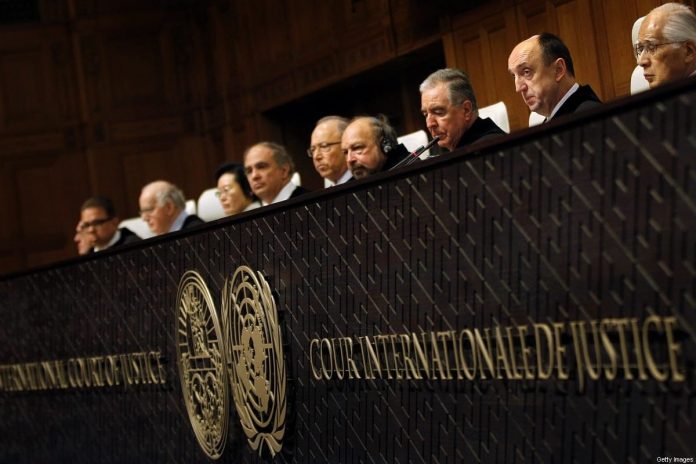
Amidst the escalating conflict between Israel and Hamas, South Africa has boldly stepped onto the international stage by bringing a case against Israel to the United Nations’ International Court of Justice (ICJ).

According to AP, South African lawyers are arguing that the recent Gaza war is not merely an isolated event but rather part of a protracted history of oppression against the Palestinian people by Israel.

Adila Hassim, a prominent South African lawyer, emphasized the urgency of the situation during the court proceedings, urging the ICJ to issue binding preliminary orders on Israel, including an immediate cessation of its military campaign in Gaza.

“Nothing will stop the suffering except an order from this court,” Hassim said.

The Health Ministry in Gaza, controlled by Hamas, reports that over 23,200 Palestinians have been killed by Israel’s offensive. Approximately two-thirds of the casualties are women and children, and the death toll does not distinguish between combatants and civilians.

“Mothers, fathers, children, siblings, grandparents, aunts, cousins are often all killed together. This killing is nothing short of destruction of Palestinian life. It is inflicted deliberately. No one is spared. Not even newborn babies,” added Hassim.

South African Justice Minister Ronald Lamola further expanded the scope of the case, contending that the violence and destruction in Palestine and Israel did not originate with the recent conflict but have deep roots in decades of systematic oppression and violence. Leading the South African delegation, Vusimuzi Madonsela drew poignant parallels between Israel’s actions and South Africa’s own history under apartheid.

The African National Congress, South Africa’s governing party, has consistently drawn comparisons between Israel’s policies in Gaza and the West Bank and the apartheid regime that persisted until 1994.

In response to South Africa’s allegations, Israeli Prime Minister Benjamin Netanyahu issued a video statement vehemently denying charges of genocide. Netanyahu asserted that Israel has no intentions of permanently occupying Gaza or displacing its civilian population, framing the conflict as a defensive measure against Hamas terrorists.

“Israel has no intention of permanently occupying Gaza or displacing its civilian population,” he said. “Israel is fighting Hamas terrorists, not the Palestinian population, and we are doing so in full compliance with international law.”

The legal dispute has garnered global attention, with demonstrations held outside the court by both pro-Israeli and pro-Palestinian groups. The United States, a staunch ally of Israel, dismissed the case as “meritless.” Secretary of State Antony Blinken, during a visit to Tel Aviv, criticized the lawsuit, deeming it “galling” and highlighting ongoing threats from groups like Hamas, Hezbollah, and Iran.

“It is particularly galling, given that those who are attacking Israel — Hamas, Hezbollah, the Houthis, as well as their supporter Iran — continue to call for the annihilation of Israel and the mass murder of Jews,” he said.

The ICJ, tasked with resolving disputes between nations, has never before held a country responsible for genocide. The case hinges on the genocide convention established in 1948 after World War II, with both Israel and South Africa being signatories to this convention. The ICJ came close to such a ruling in 2007 when it found Serbia in violation of preventing genocide during the Srebrenica massacre.

South Africa seeks interim orders for an immediate halt to Israel’s military actions, and a decision from the ICJ is expected in the coming weeks. Should the ICJ rule in favor of South Africa, it could set a groundbreaking legal precedent with far-reaching implications for international relations. However, given the intricate geopolitical dynamics, the outcome remains uncertain.

Adding to the complexity of the situation, Israel is set to face additional legal scrutiny on the international stage. In the upcoming month, the ICJ will convene hearings to address a United Nations request for a non-binding advisory opinion on the legality of Israeli policies in the West Bank and East Jerusalem.

The lawsuit has the potential to strain the relationship between Israel and South Africa further. The historical comparisons drawn by South Africa between Israeli actions and its own apartheid past introduce a layer of complexity to diplomatic ties. Despite Israel’s usual skepticism towards international tribunals, it has dispatched a robust legal team to defend its military operations.

The unfolding legal battle at the ICJ hangs the Israel-South Africa relationship in the balance. Analysts believe that the resolution of this case has the potential to shape future international responses to conflicts and alleged acts of genocide, influencing how nations handle their commitments to human rights and international law amidst geopolitical conflicts.

Cut Cost of Governance by 60%, Not Entourage – Obi tells Nigerian Govt

0

In response to the Nigerian government’s recent decision to cut down on the size of official entourages for international and local travel by 60%, the presidential candidate of the Labour Party (LP), Peter Obi, has emphasized the need for a more comprehensive approach to cost-cutting in governance.

The former Anambra State governor expressed his views through a statement on his verified X handle on Wednesday.

The move to reduce entourages was announced by the presidential spokesperson, Ajuri Ngelale, as part of the administration’s efforts to implement cost-cutting measures. This decision will impact the entourages accompanying the President, Vice-President, First Lady, ministers, and heads of government agencies.

However, Peter Obi believes that this measure “is just scratching the surface” and will result in only a negligible saving. He contends that the focus should be on a 60% reduction in both the number of official overseas trips and the size of delegations. Furthermore, Obi stresses the need for a broader 60% reduction in the total cost of governance at the federal level.

In his statement, Obi asserted, “The just announced 60% cut in the size of federal official entourages on travels is one positive step towards the reduction of cost of governance and a way of halting wastage.

“But this measure is just scratching the surface as it is limited in scope and can only lead to a very negligible saving. We are yet to be told how much savings this will amount to.

“While this modest step may be somewhat commendable, what is desirable should be both a 60% reduction in federal official overseas trips as well as a 60% reduction in the size of delegations.”

Highlighting the economic impact of such measures, Obi emphasized the need to revise the 2024 budget to eliminate wasteful and unnecessary items. He argued that arbitrary cuts in entourages are insufficient without addressing the larger issue of overall government expenditure.

“This is the level of cost-cutting and savings that can meaningfully impact the present state of the economy. This level of cut in the cost of government should lead to substantial savings,” Obi stated. He urged that the resulting savings should be redirected towards funding the productive sectors of the economy and critical social investments, particularly in education, healthcare, and poverty alleviation.

Moreover, the two-term former Anambra State governor called for transparency in communicating the financial implications of the reduced entourage sizes. He stated, “It is not enough to announce arbitrary cuts in the size of federal official entourages. The nation needs to be informed of how much the measure will save and where such savings will be applied.”

While acknowledging the positive step taken by the government in cutting entourages, Obi’s response points to the urgency for more comprehensive and impactful measures to address the economic challenges facing the country.

“Most importantly, it is not enough to announce arbitrary cuts in the size of federal official entourages. The nation needs to be informed of how much the measure will save and where such savings will be applied,” he said.