DD
MM
YYYY

PAGES

DD
MM
YYYY

spot_img

PAGES

Home Blog Page 3860

Should I Get an MBA Or Not? (Determining If It’s Right for You)

0

Earning a Master’s in Business Administration has helped many professionals enhance their careers, increase compensation, and lead to promotion in places.

MBA is a course that offers you the skills and knowledge required to start a new business.

Many enterprises are seeking MBA-qualified individuals for various leadership positions.

But, the dilemma of whether I should get an MBA or not remains. After all, pursuing an MBA degree costs a lot of fortune. An MBA from a top business school is estimated at around $100,00.

The cost is not the only factor! There is a substantial amount of time and workforce spent getting the degree!

Further, you’ll have to work hard on getting admission, searching for the best programs and schools, and preparing essays with the help of professional college paper services and more.

Therefore, you need to be wise and make a good decision for yourself.

So, to help you on this matter, we have prepared this article.

Here, we will discuss everything about the MBA, from its description to pros to cons to its alternatives and every other factor.

By the end of the article, you’ll have every important information to decide for yourself.

Let’s start!

What is an MBA Degree?

Master’s in Business Administration (MBA) is a course work that involves a broad spectrum of business-related topics from accounting to statistics to economics to management and entrepreneurship.

The course is designed to help students prepare for work in financial positions, prepare them for management positions, or even a founder of a startup company.

Excelling your ideas and knowledge on a solid foundation, and this business school provides them through the MBA program.

MBA programs are designed as full-time and part-time based on the wants and needs of students pursuing them.

Full-Time Vs. Part-Time MBA Programs

When pursuing their MBA degree, individuals can select from these two routes.

The first is a full-time program, and the other is a part-time program.

Throughout MBA results in the same way, there are some areas where one can have better flexibility than the other.

A full-time student will find working while they go to school challenging. That is why an MBA is popular among students who have earned their Bachelor’s degree in a similar business subject and can still afford to study full-time on campus.

The part-time MBA program has two departments: Executive MBA (EMBA) is designed and developed for students who typically are 32 and 42. This program is expensive; they can expect their employer to bear it.

Esle, the regular part-time MBA is for students who work full time and manage to take the program. They tend to be around 24 to 35 years old, taking classes after work, in the evening, or on weekends.

Tip: An essay becomes a must for any type of program to enhance your acceptance so you might want to do the best essay writing!

Pros and Cons of an MBA Degree

Pursuing an MBA is worth the expense, time, and effort when a graduate works in a business-related field, whether in management or as a company founder. For one who prefers working outside the industries, an MBA might only be that worthy of a course if it’s a management or leadership role.

It’s important to understand that each MBA degree differs. Many colleges and universities are offering MBA courses.

If the student earns a degree from a respectable program, it might be more worthy than expected.

Recruiters and hiring managers are not likely to view an MBA earned through unknown or online-only educators.

While a course is a way to enhance your skills, you can’t expect to ideally own a leadership position.

Here are a few pros and cons of pursuing an MBA program:

Pros Cons
MBA degree helps you earn a higher salary. Just having a degree doesn’t make you an ideal person for hire.
Owning an MBA degree can separate you from your competitors if you earn it from a top-tier school. Going to an online or unknown MBA program will not get you noticed.
MBA program gives you the necessary skills and knowledge to advance in your field. An MBA isn’t worth the time and effort if you don’t intend to work in business or management.

Thoughts of MBA Degree Program Alumni

GMAC (Graduate Management Admission Council) issues various research reports on how graduates from business schools rate their experience before and after the completion of the program.

The survey results of the MBA program are encouraging.

The 2018 Alumni Perspectives Survey Report shows that 96% of MBAs considered their degree good and excellent, offering an outstanding value, and only 4% were said to not have their expectations met.

An important note is that an MBA degree’s return on investment (ROI) has decreased, given the investment costs and tuition associated with it.

It’s important to note that each MBA degree is created differently. So, you need to choose your program and school thoughtfully.

How To Decide If an MBA Is Right for You? (4 Steps)

Earlier in this article, we mention every small detail of the MBA course, its overview, pros, cons, and thoughts of MBA program alumni.

But, because the cases differ, one way to approach this big decision is by breaking it into a few manageable questions.

We have explained four different steps for you to promptly consider your options and use your answer to influence the decision you’ll be making and decide if MBA right for me!

1.   What’s Your Personal Circumstance?

Under what circumstances did you decide to pursue an MBA degree? Is it for your career growth? Or is it just because someone mentioned it’s a ladder to earning a higher salary?

There are tons of questions to ask yourself, like:

  • Do I have enough budget to pursue an MBA from a respectable school?
  • Will I be able to cover all my tuition fees? Will my employer cover a small portion of it?
  • What’s my family situation? What would be my availability to take an in-person, full-time MBA?
  • Where am I located? Do I need to move?
  • Is this really the right time of my life to pursue an MBA?

If your personal need aligns with your professional goals, an MBA could be worth taking.

It’s a two-year-long program, so you should be able to visualize where you’ll be in two years! You should view it in a bigger picture and see what it has for you.

2.   What Are Your Professional Goals?

Usually, MBA programs are for enhancing your professional life. You might not be taking it just for fun. So, the next step is considering your professional goals and how an MBA impacts them.

You’ll either have to take two years off or balance your work and the courses.

Consider these questions:

  • What is my current business skill set? How does an MBA help?
  • Why do I want to pursue an MBA?
  • Am I happy and satisfied with your current job?
  • Where do I see myself after pursuing this degree?
  • What particular skill do I want to gain through the MBA program?

3.   Explore Your Options

As we mentioned earlier, various programs, universities, and schools offer them, both part-time and full-time.

Among the options available, only some may fit your exact needs.

So, it’s important to explore your options.

  • Do I need an MBA in a full-time or a part-time program? Which would align perfectly with your situation?
  • Should I enroll in an in-person, online, or blended MBA program?
  • Are there any options for financial aid? Is my employer offering me benefits for the program?

4.   Assess the Big Picture

After considering all these factors, you must also understand your personal circumstances, goals, and MBA options.

These all bring you back to three main final questions:

  • Why do I want to pursue an MBA?
  • What type of MBA program best suits me?
  • Do the benefits of the program outweigh the investment made into it? In terms of money, time, effort?

Wrapping Up

Earning an MBA program helps you enhance your career path and help you land a high-paying, reputable job.

But you should pay attention to the expense, time, and effort required to complete this 2-year program.

The program is only offset if you earn MBA from a top-tier business school that helps you sort your career path.

Despite the expenses, many alumni have considered owning this degree to be beneficial for them.

Further, a few alternatives are available if an MBA seems too much.

In the end, you’re to decide if you want to be getting an MBA or not!

Consider all the important points before moving ahead with your final decision.

Beyond the traditional Banks on Funding

0

“Cash is king” is a statement of fact that most entrepreneurs will easily relate with. I dare say that every adult, who is already responsible for one bill or the other, can also relate and agree with it.

In business, cash is so important that it could be the reason a business crumbles. In some cases, funding (another name for cash) could even be the reason a business idea never gets off the ground. Or maybe the reason a business gets stuck in one stage and is unable to scale. To put it simply, funding is crucial for turning innovative ideas into successful businesses. .

While traditional banks have long been a go-to source for business financing, the modern entrepreneur has a plethora of alternative funding options at their disposal. These alternatives offer more flexibility, accessibility, and tailored solutions, making them particularly attractive for startups with unique business models or social missions.

Let’s look at some of them and how today’s entrepreneurs can find them useful.

Peer-to-Peer Lending: Bridging the Gap

Peer-to-peer (P2P) lending platforms have emerged as a dynamic alternative to traditional bank loans. P2P lending connects borrowers directly with individual lenders or groups of investors, cutting out the middleman and often leading to more favorable terms. This method is particularly beneficial for startups that may have difficulty obtaining loans from conventional banks due to lack of credit history or unconventional business models.

Banks are mostly not that adventurous in the kind of businesses they offer funding to, and the simple reason is that they have to be more careful with customers’ money. Individual lenders or group of investors may be more open to unconventional business models, especially if it is in line with their investing direction.

Startups with novel concepts can leverage P2P lending to appeal to a community of backers / investors who share their enthusiasm and vision. This form of lending encourages a sense of engagement and support among investors, potentially leading to longer-lasting relationships. Additionally, P2P lending platforms tend to be more flexible in terms of loan amounts and repayment schedules, accommodating the varying needs of startups. Entrepreneurs will get to see more benefits in this path when they chose to explore it.

Microloans: Small Funds, Big Impact

Microloans have gained traction as a solution for startups in need of smaller sums of money to kick-start their ventures. These loans, typically ranging from a few hundred to several thousand dollars, are provided by microfinance institutions or community development organizations. The accessibility and reduced documentation requirements of microloans make them an attractive option for entrepreneurs who may not qualify for larger bank loans because of the stage they find themselves at the moment.

Startups with unique business models or social missions often find microloans advantageous due to their focus on supporting underserved and marginalized communities. Additionally, the mentorship and training often provided by the microfinance institutions can help these startups navigate challenges and build sustainable businesses over time.

Impact Investing: When Profit Aligns with Purpose

Impact investing represents a paradigm shift in the world of finance. Unlike traditional investing, where the primary goal is maximizing financial returns, impact investing seeks to generate positive social or environmental outcomes alongside financial gains. This funding option is particularly appealing to startups with a strong social or environmental mission at their core. And this is the direction where ‘sociopreneurs’ need to focus their efforts.

Startups with unique business models that prioritize sustainability, social responsibility, or innovation can attract impact investors who are eager to support ventures that align with their values. These investors often provide more patient capital, understanding that the process of achieving social impact may take time. This means that they are not necessarily looking to recoup their investment with 40% profit in the next two years, but are ready to derive more ROI from the impact the business makes in the community. As a result, startups can focus on their long-term missions without being solely driven by short-term financial returns.

Grants: Non-Dilutive Funding

Grants are a form of non-dilutive funding that can be a lifeline for startups aiming to make a difference. I think this is fairly common knowledge to most entrepreneurs, even though not all of them go out of their way to apply for them. Unlike loans or equity investments, grants do not require repayment or relinquishing ownership in the business. They are typically awarded by government agencies, non-profit organizations, or foundations to support projects that contribute to specific societal goals. You do not have to be a sociopreneur to access a grant though. All you need is to look out for NGOs, foundations and government projects that target the sector you operate in.

Startups with unique and impactful business models can benefit greatly from grants, as these funds can help validate their ideas and provide the necessary resources to bring them to fruition. Moreover, securing grants can enhance a startup’s credibility and attract further investment from other sources. Grants may not always come in form of cash alone. Some may also offer trainings and mentorships. Others may offer the entrepreneur some facilities and infrastructure that he needs in business.

Crowdsourcing of funds

This sort of funding would majorly involve putting your business out in the form of products that the public can invest in. We saw quite a lot of crowdfunding in 2018/19, just before the coronavirus hit the world. Unfortunately, the experience of many investors from crowdfunding may not make this a most viable option right now. Quite a number of the agritechs that adopted this method ended up defaulting on payments, and only a few had the integrity to repay the investors their capital. The news is replete with several CEOs and founders that are still on the run after the unfortunate incident.

I think the absence of a monitoring board may have left some of those entrepreneurs to squander those monies. If any modern day entrepreneur wants to adopt this again, he would need to create a structure that allows investors to monitor the company’s activities and get feedback.

And there are lots more. Please chip in any more alternative funding that I may have missed here.

In conclusion, the modern entrepreneurial landscape is replete with alternative funding options that extend beyond traditional banks. Peer-to-peer lending, microloans, impact investing, and grants offer startups with unique business models or social missions a variety of paths to secure the necessary capital. These options not only provide financial support but also enable startups to align their missions with the values of their backers, fostering a stronger sense of community and purpose. As the business world continues to evolve, entrepreneurs are empowered to explore these (and other) innovative funding avenues and pave the way for a more diverse and impactful startup ecosystem.

Navigating Life on Your Terms

0

In a world as diverse as ours, value-based perception forms the very fabric of how we interact, judge, and make decisions. It’s a concept deeply ingrained in human nature, influencing our thoughts and actions in ways often subconscious. While it’s easy to assume that our judgments are purely objective, the truth is far more intricate. Nobody holds a monopoly on these perceptions; they are shaped by a myriad of factors, often guided by the pursuit of personal advantage. This piece delves into the multifaceted nature of value-based perception, highlighting the impact it has on our lives and suggesting strategies for making the most of this complex interplay.

The Nature of Value-Based Perception

Value-based perception is the lens through which we evaluate the world around us. It involves assessing actions, ideas, and people as either good or bad, right or wrong, based on our own set of values and beliefs. But these values are far from universal; they are subjective and deeply influenced by our cultural upbringing, personal experiences, and individual aspirations. This inherent subjectivity is what renders value-based perception so complex.

The Influence of Personal Advantage

It’s intriguing to recognize that our judgments are often driven by the desire for personal advantage. We evaluate situations and individuals not solely on their merits, but on how they align with our needs and goals. This phenomenon explains why someone might perceive an action as “good” when it benefits them and “bad” when it doesn’t. This doesn’t necessarily imply malicious intent; instead, it reflects the intricate dance between our inner desires and our external interactions.

Allocating Resources for Optimal Living

Understanding the influence of value-based perception and personal advantage allows us to navigate life more strategically. Just as chess player allocates their pieces strategically across the board, we can allocate our resources—time, effort, and energy—where they matter most. This might involve embracing opportunities that resonate with our values and provide tangible benefits. By recognizing that others’ perceptions are often shaped by their objectives, we can make conscious decisions that align with our aspirations.

Crafting a Life That’s Uniquely Yours

In a world where societal norms and external pressures often attempt to shape our choices, it’s crucial to remember that it’s our life to live. Nobody else can experience it for us. Embracing the complexity of value-based perception empowers us to craft a life that aligns with our innermost desires. It’s a reminder that we have the agency to determine what brings us joy, fulfilment, and a sense of purpose.

Strategies for Navigating Value-Based Perception

  1. Self-Awareness: The journey begins with self-awareness. Reflect on your values, aspirations, and the factors that shape your perception. Understanding your motivations allows you to make conscious decisions that serve your best interests.
  2. Empathy: Just as you navigate your life based on your values, so do others. Practising compassion opens the door to understanding their perspectives. This doesn’t mean compromising your values but facilitates constructive dialogue and mutual respect.
  3. Resource Allocation: Consider your resources—time, energy, and attention—as valuable commodities. Invest in them where they align with your goals and values. Recognize that not every judgment or opportunity warrants equal attention.
  4. Open-Mindedness: Value-based perception is inherently diverse. Cultivate an open mind that embraces different perspectives. This not only enriches your understanding of the world but also encourages personal growth.
  5. Risk Assessment: Not all pursuits aligned with your values will guarantee immediate benefits. It’s essential to assess the potential risks and rewards of each endeavour, ensuring a balanced approach to decision-making.

In a world where perceptions are as diverse as the people who hold them, understanding the intricate dance between value-based perception and personal advantage is empowering. Nobody holds a monopoly on this phenomenon; it’s a universal aspect of the human experience. By embracing this complexity, we can navigate our lives more intentionally, making choices that align with our values while acknowledging the diverse motivations of those around us.

Remember, life is a canvas waiting for your unique brushstrokes. You have the power to craft a life that resonates with your aspirations, even in the face of subjective judgments. Value-based perception, when understood and harnessed, becomes a tool that propels us toward a life that’s authentically our own.

Tekedia Capital signed a term sheet to invest in a revolutionary AI-native startup i

0

This week, Tekedia Capital signed a term sheet to invest in a revolutionary AI-native startup in the domain of enterprise- and design-security. We joined hands with Y Combinator!

Next month, our Tekedia Capital Syndicate members will partake in this dance. We’re very confident that this company is part of the future as AI will transform digital security.

Tekedia Capital is building the foundation of the next Africa through entrepreneurial capitalism. To learn more and how to join our Syndicate just in time for the next investment cycle, go here.

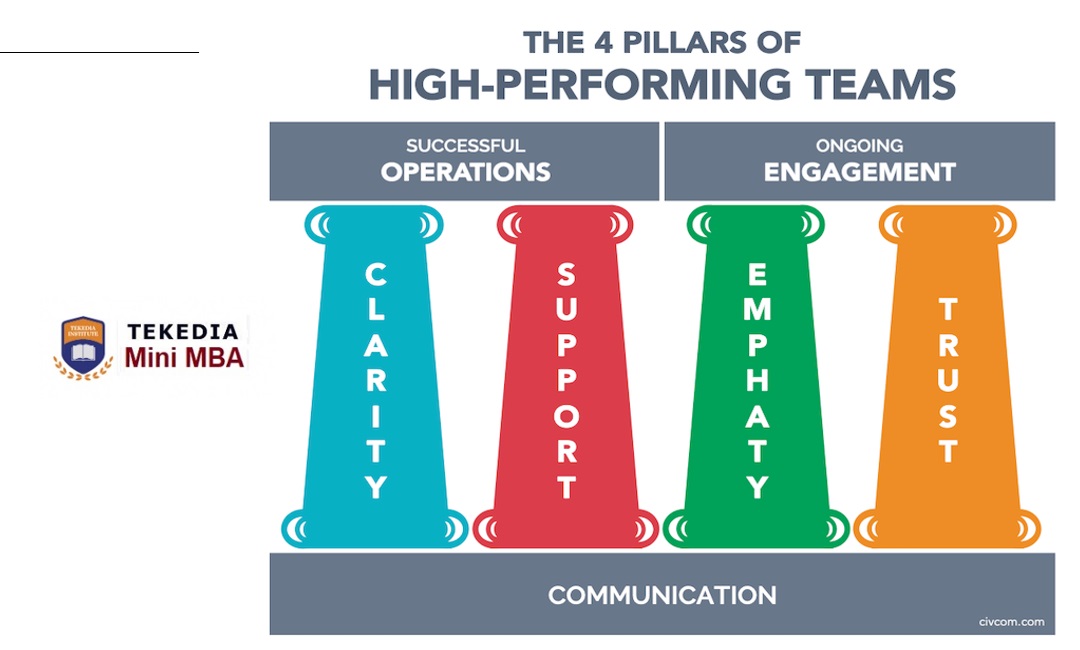
Build a high-performing team and win your market! [video]

0

Build a high-performing team and win your market! When high-performing People operate on great Processes using the best Tools, glory comes in revenue, market share and profit. #teamwork #tekediaMiniMBA