DD
MM
YYYY

PAGES

DD
MM
YYYY

spot_img

PAGES

Home Blog Page 3871

Bitcoin Mining Firms Lose $4.47 B, Litecoin Falls To $66.1 After Halving, Big Eyes Infinity’s Offers 100x Potential Returns

0

With negative reported earnings in the present bearish crypto market, the Bitcoin mining industry is battling to keep its operations running. According to recent statistics, the 16 publicly listed Bitcoin (BTC) mining businesses have lost a total of more than $4.47 billion in the last 12 months. On the other hand, Litecoin (LTC) had its third halving on August 2, 2023, at block 2,520,000, reducing the block reward from 12.5 LTC to 6.25 LTC. However, the projected surge by LTC miners and investors did not occur.

A new entrant to the space, Big Eyes Infinity (BIGINF), with massive meme coin returns, is promoting itself as a preferred alternative in a turbulent market as an alternative to losses that occurred with Bitcoin mining and Litecoin halving.

Bitcoin Mining Companies Lose Billions

In the middle of a difficult year, Bitcoin’s value fell to $15,480 from a high of $69,000 a year ago. As a result, Bitcoin mining companies are suffering, with losses totaling more than $4.47 billion over the last year. Core Scientific suffered the most losses, followed by BlackRock-owned Marathon Digital Holdings and Riot Platforms, with Canaan Inc. being the only profitable business. Bitcoin mining difficulty has reached an all-time high, leading miners to lose money from August 2022 onwards. The cost of mining exceeds the price of BTC, which has negatively influenced the industry and perhaps the entire Bitcoin ecosystem, including security and perception. The upcoming Bitcoin halving in April 2024 could further limit mining earnings unless BTC’s price climbs greatly.

<<Find More Information About BIGINF Presale>>

Amidst the declining Bitcoin mining industry, Big Eyes Infinity emerged as a profitable presale opportunity for investors with the potential for massive meme coin returns. Big Eyes Infinity is a novel presale opportunity with a four-month limited presale. Currently selling at $0.00006 in stage 1, the token is positioned to reward early investors with 6x potential when it reaches $0,00036 in stage 4. Big Eyes Infinity’s presale began with the express intention of rewarding both existing and new investors. BIGINF’s roadmap also includes an airdrop event to ensure that token distribution is fair and equitable.
Litecoin’s Second Halving Leaves Miners In Despair

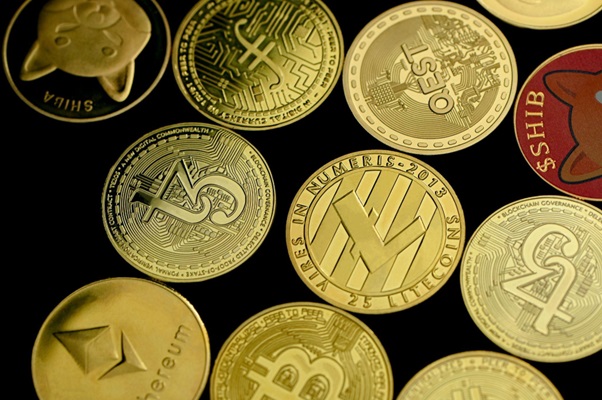
On August 2, 2023, Litecoin saw its third halving at block 2,520,000, reducing the block reward from 12.5 LTC to 6.25 LTC. However, the projected surge by LTC miners and investors did not occur. Instead, the current price trajectory is similar to the market reaction to the last LTC halving in 2019. Four years later, the LTC price is still hovering around $90 as of August 2. Although both halvings share price trends, the scale and timing of the shifts vary. In 2019, LTC fell from $141.9 to $93.38 during the halving period, then to $41.33 after 150 days, a 70.9% loss. LTC climbed from $70 to $113.23 in the current halves, then to $93.82 on halving day, and finally to $66.1 on August 23.

In contrast to Litecoin’s market losses, Big Eyes Infinity is attracting new investors due to its innovative roadmap, which includes an airdrop event. Big Eyes Infinity’s team has learned from previous mistakes and believes in transparency and fairness. BIGINF will hold an airdrop event following the presale in order to release all tokens equally and efficiently. Big Eyes Infinity’s roadmap does not feature a token-claiming approach and instead will be launched on decentralised exchanges immediately following the airdrop event for potential 100x meme coin returns.

100x Potential Meme Coin Returns

Amidst Bitcoin mining and Litecoin’s halving market losses, Big Eyes Infinity (BIGINF) has been initiated by Big Eyes Coin (BIG) for massive meme coin returns. Due to its secure and transparent features, this meme coin presale opportunity has the ability to outperform the present volatility. Big Eyes Infinity, as part of the BIG ecosystem, could be used in Big Eyes Coin’s P2E platforms.
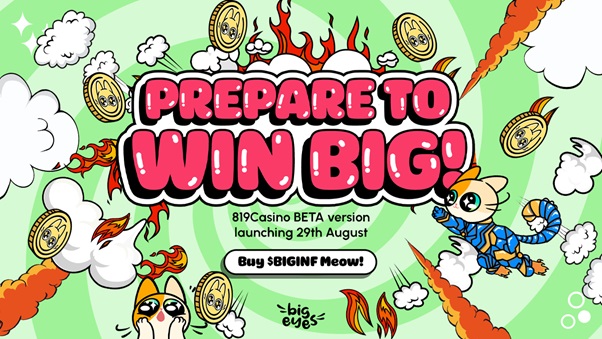
This GameFi token will be matched to BIG tokens in the gaming platform and credited to the holder’s account as a bonus. Those bonus tokens will allow the owner to earn up to 100x meme coin returns while participating in over 400 P2E games. After playing with BIGINF tokens within the gaming platform, the possessor will be able to withdraw his meme coins returns from the account.

The Last Bite

In the current volatile market where Bitcoin mining companies have lost billions, and Litecoin halving leaves miners and investors in despair, Big Eyes Infinity has come up with a unique presale opportunity and roadmap. Following the 4-month limited presale, all tokens will be airdropped for transparent distribution and utility in Big Eyes gaming platform, with the potential for 100x meme coin returns.

Big Eyes Infinity (BIGINF)

Presale: https://buy1.bigeyes.space/

Website: https://bigeyes.space/

Telegram: Contact@BIGEYESOFFICIAL

Twitter: https://twitter.com/BigEyesCoin

Twitter (Now Called X) New Privacy Policy Plans to Collect Users Biometric Data

0

X (formerly called Twitter), in its updated privacy policy, seeks to collect users’ biometric data and other personal information such as employment and education history, with their consent.

Under the revised policy which takes effect on September 29, X will request users biometric information, a move the company disclosed will help to make the platform better and enhance users experience. This feature is for only X premium users.

In its updated privacy Policy, the company wrote,

“Based on your consent, we may collect and use your biometric information for safety, security, and identification purposes.

“We may collect and use your personal information (such as your employment history, educational history, employment preferences, skills and abilities, job search activity and engagement, and so on) to recommend potential jobs for you, to share with potential employers when you apply for a job, to enable employers to find potential candidates, and to show you more relevant advertising.

“Device Information. We collect information from and about the devices you use to access X, including Information about your connection, such as your IP address, browser type, and related information. Information about your device and its settings, such as device and advertising ID, operating system, carrier, language memory, apps installed, and battery level. Your device address book, if you’ve chosen to share it with us.

“Location Information. When you use X, we collect some information about your approximate location to provide the service you expect, including showing you relevant ads. You can also choose to share your current precise location or places where you’ve previously used X by enabling these settings in your account.”

X has noted that users are in charge of whatever data they choose to give out, as no data will be collected without their consent. Users can assess, review, delete, or change their settings. Basically, they are the boss.

In a response to a Tweet that X’s updated Privacy Policy intends to use users’ data to train AI models, the company’s CEO Elon Musk debunked the news while stating that users’ data demanded are public data, not DMs or anything private, without any sinister intention.

A look at X updated policy shows the platform is set to enhance users’ experience. The company seeks to use information collected to improve and personalize products and services so that users can have a better experience, including by showing them more relevant content and ads, suggesting people and topics to follow, enabling and helping them discover affiliates.

This privacy policy has been poised to be a game changer for users on the platform. The recent expanding services of X are part of Musk’s ambition to turn the platform into an “everything app”, capable of not only posting but also for job searches and making payments, amongst others.

A Regional-Based Model Could Accelerate Nigeria’s Development

0

A Senator wrote concluding with the word “brilliant”. Yes,  this post  is making impacts and it seems many Nigerians agree with the core thesis. And not just Nigerians, many Africans agree that we have a huge problem on tribal identity which affects allegiance to the nations. If Iceland with a population of less than 400k people could have autonomy, and still participate in the market system at the continental level due to how Europe has structured its political economy, African countries languishing on ethnicism have a model to examine.

Yes, it is really possible that a centralized government we run in Nigeria may not be optimal. And the state-level model is so microcosmic that most states have no capacity to do impactful things. But at a regional level, if banded together, more could be accomplished. Of course, no matter how regional you go, the demon of corruption must still be fixed!

In 2021, I wrote: “The economic structure of North Central Nigeria is totally different from South South Nigeria – and most times, there is no variance on our policy playbooks. A balanced, nuanced policy framework which is regionally incubated and delivered by the states would be more pragmatic in the nation. Today, that economic heterogeneity is not well captured within our policy instruments. That explains why we have many challenges.

“Historically, Nigeria developed faster under a regional-based model. There is a reason for that: policies were more laser-focused on the needs of the regions, and consequently were more impactful.”

Good People, in business, if you have the wrong business model, no matter how hard working you may be, you will FAIL. I will not extend that hypothesis to political economy, but I do think that a political economic restructuring may be catalytic in Nigeria and broad Africa.

(My feed is a classroom; we share ideas here. Do not see them as agenda-based. I am a free-wheeling person who gets liberation when I write.)

Comment on Feed

Comment 1: Nice going Prof… Ndubuisi . I think it is important to retrace the building blocks of Iceland’s success in Europe, since you have used it concurrently as a case in point…

In the global collapse of 2008, The US started bailing out its banks on the failure of its sub-prime market. Many European banks had exposure to US toxic assets.
US bullied European Govts. to pressure them in doing the same with their banks.
Because of this, there was a huge global recession. Big wigs across Europe had money in Icelandic banks, and tried to bully Iceland to do the same.
Iceland, a nation as you rightly said, only 400k people, stood up to the European ‘super-core’ (at that time, the UK, France and Germany) and said no!

What followed later, showed that Icelands decision, and refusal to bow to pressure, deemed it to have acted on the right side of posterity.

So if you indeed want such an example in Africa, then look for that rare species of nation which will pursue its own vision when 53 other nations are trying to bully it into the submission representing the opposite direction.

Such nation will be your Iceland of Africa.

My Response: “So if you indeed want such an example in Africa, then look for that rare species of nation which will pursue its own vision when 53 other nations are trying to bully it into the submission representing the opposite direction.” – that is the opportunity we are asking for here. There are many nations which can do that within Nigeria. The homogenous education policy of Nigeria at the basic level makes no sense since Imo State may have a literary rate of 96% when Yobe may be at 15%. And the agric policy fails because Jigawa can be more advanced by 70%points than Abia on mechanization.  Someone will remind me that states can fix these things. Not really because they’re not autonomous at a deeper level. Unlike Iceland, none has the capacity to make its choices because everything is centralized.

Reviewing US Securities and Exchange Commission (SEC)’s Regulations on Cryptocurrencies

0

Cryptocurrencies are digital assets that use cryptography to secure transactions and control the creation of new units. They are decentralized, meaning they operate without the need for a central authority or intermediary. Cryptocurrencies have gained popularity in recent years as an alternative form of money and investment.

The US Securities and Exchange Commission (SEC) has been taking a keen interest in the cryptocurrency market lately. The agency has been issuing guidance, warnings, and enforcement actions related to various aspects of the crypto industry, such as initial coin offerings (ICOs), digital asset exchanges, custody solutions, and investment products.

The SEC’s main goal is to protect investors and maintain fair, orderly, and efficient markets. The agency has the authority to regulate securities, which are broadly defined as any investment contract or instrument that involves an expectation of profit from the efforts of others. The SEC has stated that many cryptocurrencies and crypto-related activities may fall under this definition, depending on the facts and circumstances of each case.

Regulators have postponed a decision on whether to approve exchange-traded funds that invest directly in bitcoin, sending the cryptocurrency lower. The Securities and Exchange Commission said it needed 45 more days to decide on several applications for these products, including ones from WisdomTree and BlackRock. The move followed a court ruling earlier in the weekin favor of asset manager Grayscale’s application to operate a spot bitcoin ETF, which the SEC had earlier rejected.

Crypto advocates say a spot bitcoin ETF would give consumers a cheap and safe way to trade, but SEC Chair Gary Gensler in July said the crypto market is “rife with fraud.” (LinkedIn News)

However, the SEC has also acknowledged that not all cryptocurrencies are securities, and that some may be considered commodities, currencies, or utility tokens. The SEC has not issued a clear and comprehensive framework for determining the status of different cryptocurrencies, leaving many market participants in a state of uncertainty and confusion.

However, cryptocurrencies also pose challenges for regulators, who have to balance the benefits of innovation with the risks of fraud, manipulation, and market instability. One of the main regulators in the US that oversees cryptocurrencies is the Securities and Exchange Commission (SEC), which is responsible for protecting investors, maintaining fair and orderly markets, and facilitating capital formation.

The SEC regulates cryptocurrencies based on whether they qualify as securities under the federal securities laws. A security is a financial instrument that represents an ownership interest in an entity or a contractual right to receive future payments. Securities are subject to registration, disclosure, and enforcement requirements by the SEC.

The SEC has not issued a definitive rule on whether cryptocurrencies are securities, but rather evaluates them on a case-by-case basis, applying the so-called Howey test. The Howey test is derived from a 1946 Supreme Court case that defined a security as an investment contract, which involves:

  • – An investment of money
  • – In a common enterprise
  • – With a reasonable expectation of profits
  • – Derived from the efforts of others

According to the SEC, some cryptocurrencies, such as Bitcoin and Ethereum, are not securities because they are sufficiently decentralized and do not rely on a third party to generate returns for investors. However, other cryptocurrencies, such as those issued in initial coin offerings (ICOs), may be securities if they meet the criteria of the Howey test. ICOs are a form of crowdfunding where a new project sells its own cryptocurrency tokens to raise funds.

The SEC has taken enforcement actions against several ICOs that violated the securities laws, such as by failing to register their offerings, making false or misleading statements, or engaging in insider trading or market manipulation. The SEC has also issued guidance and alerts to educate investors and market participants about the risks and responsibilities involved in dealing with cryptocurrencies.

The SEC’s regulation of cryptocurrencies is evolving as the technology and the markets develop. The SEC has expressed its openness to facilitating innovation and promoting investor protection in this emerging field. The SEC has also established a Strategic Hub for Innovation and Financial Technology (FinHub) to provide resources and information on fintech topics, including cryptocurrencies. The FinHub also serves as a platform for engaging with the public and soliciting feedback on regulatory issues.

The lack of clarity from the SEC has also created challenges for innovation and growth in the crypto industry. Many crypto startups and entrepreneurs have faced difficulties in raising capital, accessing banking services, complying with tax obligations, and operating across state and international borders. Some have opted to move their operations to more crypto-friendly jurisdictions, such as Switzerland, Singapore, or Malta.

The crypto industry and its supporters have been calling for more guidance and regulation from the SEC, arguing that it would provide legitimacy, stability, and consumer protection to the market. They have also urged the SEC to adopt a balanced and proportional approach that does not stifle innovation or impose excessive burdens on the industry.

The SEC has indicated that it is open to dialogue and collaboration with the crypto industry, and that it is working on developing a more coherent and consistent regulatory framework. The agency has also appointed a new director of its Division of Corporation Finance, who has extensive experience in the crypto space. The SEC has also established a Strategic Hub for Innovation and Financial Technology (FinHub), which serves as a resource for public engagement on fintech issues, including crypto.

The crypto industry and the SEC have a common interest in ensuring the integrity, transparency, and efficiency of the cryptocurrency market. By working together, they can foster a regulatory environment that supports innovation and protects investors.

Atiku Abubakar Calls on African Leaders to Deal With The Disease And Not The Symptoms That Birth Coups

0

Former vice president, Atiku Abubakar, has joined growing voices calling on African countries to address the fundamental issues that have fueled an uptick in coups across the continent in recent years.

In a post shared via his X­ (Twitter) social media account on Thursday, Atiku said African leaders should focus on addressing the causative factors of the coups instead of treating the symptoms.

While he condemned the coups, especially the most recent one in Gabon, he called for collective efforts for the sustainability of democracy in Africa.

“The coup in Gabon stands condemned. Democracy and democratic governance have come to stay as a preferred form of governance, and everything should be done to enthrone, nurture, and sustain it,” he said.

“As I suggested in the case of the Niger Republic, the ECOWAS and African Union authorities should open a window of diplomatic engagement that will pave the way for the soldiers to return to the barracks.”

“The latest coup brings the number of military takeovers in Central and West Africa to 8 since 2020. This is worrisome and calls for introspection.

“We may have to focus on dealing with the disease and not the symptoms that birth coups.”

On Wednesday, Gabon became the latest African country to fall to the grip of the military, escalating the spate which has been widely denounced as a threat to democratic leadership in Africa.

Democratic leadership in Africa is characterized by fraudulent elections, poor economic policies, and corruption – which have plunged the continent into abject poverty.

This leadership situation has been identified as the major cause of coups in Africa. Citizens of Gabon and Niger Republic were seen jubilating in the streets following military takeovers in the respective countries.

Mali, Burkina Faso, Sudan, Chad, Guinea, Niger and Gabon are now under military rule.

Efforts by the African Union and regional bloc – the Economic Community of West Africa States (ECOWAS) to curtail the trend have failed. ECOWAS is yet to activate military action in Niger – even after the seven-day ultimatum that it issued to the junta to restore constitutional order expires.

The bloc’s ineffectiveness has been attributed to the overwhelming support of the coups by the people, who see no difference between military and democracy.

In its response to the coup in Gabon, the U.S. called for the release of President Ali Bongo and his family, who have been in detention since the coup was executed on Wednesday, but also expressed support for the Gabonese people whose will was subverted during the presidential election.

“We urge those responsible to release and ensure the safety of members of the government and their families and to preserve civilian rule.

“In addition, we call on all actors to show restraint and respect for human rights and to address their concerns peacefully through dialogue following the announcement of election results.

“We also note with concern the lack of transparency and reports of irregularities surrounding the election. The United States stands with the people of Gabon,” the US Department of State spokesperson, Matthew Miller, said in a statement.