
DD
MM
YYYY

PAGES

DD
MM
YYYY

spot_img

PAGES

Home Blog Page 3875

Andreessen Horowitz (a16z)’s Crypto Idea List for 2024

0

The venture capital firm Andreessen Horowitz (a16z) has published its annual list of crypto ideas for 2024, highlighting the areas of innovation and opportunity in the blockchain space. The list, which is based on the insights and observations of the a16z crypto team, covers a wide range of topics, from decentralized artificial intelligence (AI) to immersive gaming experiences.

One of the main themes of the list is the convergence of crypto and AI, which the firm believes will enable new forms of collaboration, coordination, and creativity. For instance, a16z envisions a future where AI agents can autonomously interact with smart contracts, oracles, and decentralized applications (DApps) on the blockchain, creating novel use cases and value propositions. Some of the examples include:

AI-powered marketplaces that match buyers and sellers of data, compute, and algorithms, creating a more efficient and transparent data economy.

AI-driven governance mechanisms that leverage collective intelligence and machine learning to optimize decision-making and resource allocation in decentralized organizations.

AI-enhanced security solutions that leverage zero-knowledge proofs, homomorphic encryption, and secure multi-party computation to protect data privacy and integrity on the blockchain.

Here are our top 10 crypto ideas for 2024:

1. Decentralized identity: The ability to prove who you are and control your own digital identity without relying on intermediaries or centralized authorities. This will enable more privacy, security, and access to online services and platforms for billions of people around the world.

2. Web3: The next generation of the internet, powered by decentralized protocols and applications that are open, permissionless, and censorship resistant. Web3 will enable users to own and monetize their own data, content, and digital assets, as well as participate in the governance and development of the platforms they use.

3. DeFi: Decentralized finance, or the use of smart contracts and blockchain technology to create alternative financial products and services that are more transparent, inclusive, and efficient than traditional ones. DeFi will enable anyone with an internet connection to access a global and open financial system that offers more choice, liquidity, and opportunity.

4. NFTs: non-fungible tokens, or unique digital representations of anything from art and music to collectibles and gaming items. NFTs will enable new forms of creative expression, ownership, and monetization for creators and collectors alike.

5. DAOs: Decentralized autonomous organizations, or entities that are governed by a set of rules encoded in smart contracts and executed by a network of participants. DAOs will enable new ways of organizing and collaborating around shared goals and values, without the need for intermediaries or centralized control.

6. Metaverse: The collective virtual reality that encompasses all digital spaces and experiences, where users can interact with each other and with digital objects in immersive and realistic ways. The metaverse will enable new forms of socialization, entertainment, education, and commerce that transcend physical boundaries and limitations.

7. Layer 2: Solutions that aim to improve the scalability, speed, and cost-efficiency of blockchain transactions by moving some of the computation and storage off the main chain (layer 1) and onto a secondary layer (layer 2). Layer 2 will enable more users and applications to access the benefits of blockchain technology without compromising on security or decentralization.

8. CBDCs: Central bank digital currencies, or digital versions of national fiat currencies that are issued and controlled by central banks. CBDCs will enable central banks to modernize their monetary systems, enhance their monetary policy tools, and increase financial inclusion and stability.

9. Privacy: Technologies that aim to protect the privacy and anonymity of users and transactions on blockchain networks. Privacy will enable users to have more control over their personal information and data, as well as prevent unwanted surveillance and censorship by third parties.

10. Interoperability: The ability of different blockchain networks and protocols to communicate and exchange data with each other seamlessly and securely. Interoperability will enable more cross-chain collaboration, innovation, and value creation among the diverse crypto ecosystems.

Another theme of the list is the emergence of crypto-native gaming platforms that leverage blockchain technology to create immersive and interactive experiences for players. The firm predicts that crypto gaming will become a mainstream phenomenon in 2024, attracting millions of users and generating billions of dollars in revenue. Some of the examples include:

Play-to-earn games that reward players with crypto tokens or NFTs for their participation and contribution to the game economy. Metaverse platforms that enable users to create, explore, and socialize in virtual worlds powered by blockchain technology. GameFi platforms that combine gaming and decentralized finance (DeFi) to offer players new ways to earn, invest, and trade in-game assets and currencies.

The a16z crypto team concludes the list by stating that they are excited about the potential of crypto to transform various industries and sectors in 2024 and beyond. They also invite entrepreneurs, developers, researchers, and enthusiasts to join them in exploring and building the future of crypto. These are just some of the crypto ideas that we are excited about for 2024. We believe that crypto is not just a technology, but a movement that will transform the world for the better.
The State of E-Commerce and Riding Hubs in Nigeria

0

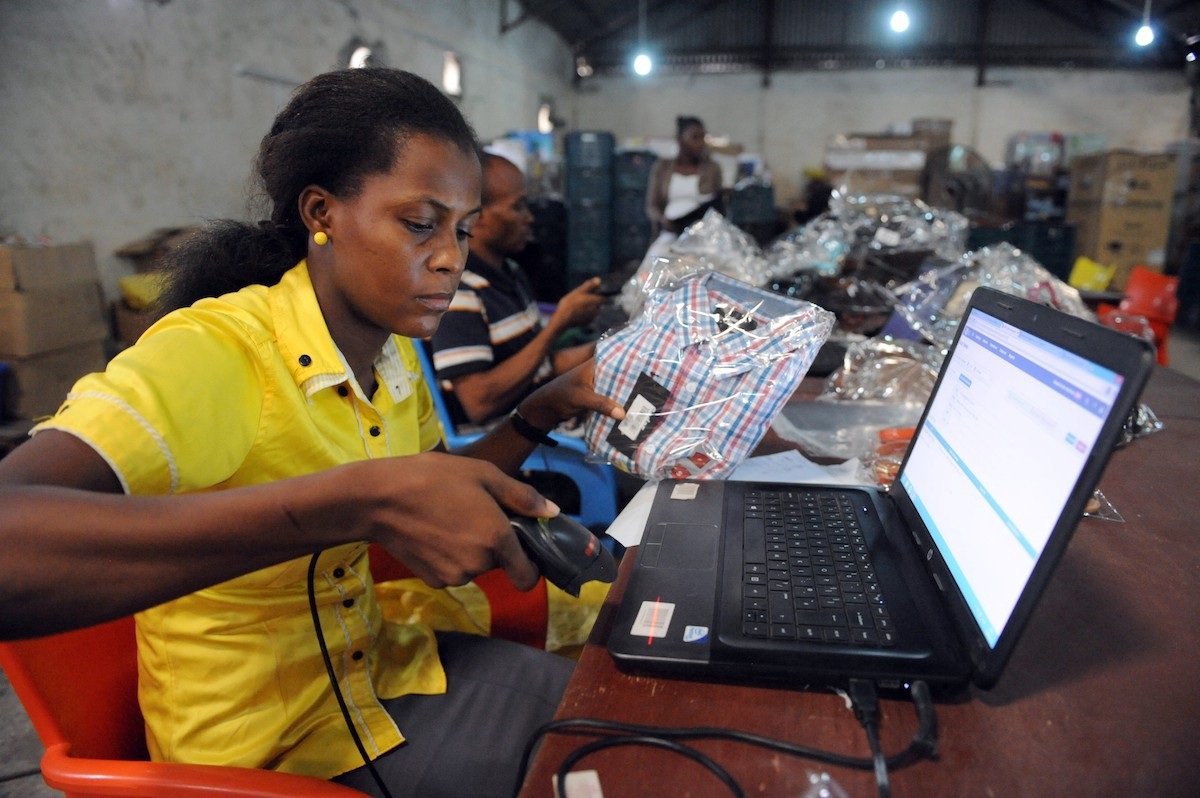
E-commerce is the buying and selling of goods and services online, and it has been growing rapidly in Nigeria in recent years. According to a report by Statista, the e-commerce market in Nigeria was worth $4.9 billion in 2020, and it is expected to reach $10.8 billion by 2025, with an annual growth rate of 17%.

One of the factors that has contributed to the growth of e-commerce in Nigeria is the emergence of riding hubs, which are platforms that connect online shoppers with riders who deliver their orders. Riding hubs offer convenience, speed, and affordability to both customers and merchants, as they reduce the need for physical stores, inventory management, and logistics costs.

Some of the leading riding hubs in Nigeria are Jumia, Konga, Gokada, Max.ng, and Opay. These platforms have different business models, target markets, and competitive advantages, but they all share a common goal: to provide seamless and reliable delivery services to online shoppers across Nigeria.

Jumia is the largest e-commerce platform in Africa, operating in 14 countries including Nigeria. Jumia offers a wide range of products and services, from electronics and fashion to groceries and travel. Jumia has its own fleet of riders, called Jumia Express, which delivers orders within 24 hours in major cities. Jumia also allows third-party sellers to use its platform and delivery network, for a fee.

Konga is another leading e-commerce platform in Nigeria, offering products in various categories such as books, health, beauty, and home appliances. Konga has a hybrid model of delivery, using both its own riders and third-party logistics partners. Konga also has physical stores, called Konga Experience Centers, where customers can pick up their orders or return them if they are not satisfied.

Gokada is a ride-hailing platform that specializes in motorcycle taxis, or okadas. Gokada operates mainly in Lagos, where it offers fast and affordable transportation to commuters. Gokada also has a delivery service, called Gokada Delivery, which allows customers to order items from online or offline merchants and have them delivered by Gokada riders.

Max.ng is another ride-hailing platform that offers motorcycle taxis and delivery services in Lagos and other cities in Nigeria. Max.ng has a unique feature called Max Business, which allows small and medium enterprises (SMEs) to access loans, inventory management, and marketing tools through its platform. Max.ng also partners with other e-commerce platforms, such as Jumia and Konga, to provide delivery services to their customers.

Opay is a mobile payment platform that enables users to pay for various services such as transportation, food, electricity, and airtime. Opay also has a ride-hailing service called Oride, which offers motorcycle taxis and delivery services in Lagos and other cities. Opay also has other services such as Ofood (food delivery), Owealth (investment), and Ocar (car-hailing).

One of the factors that has contributed to the growth of e-commerce in Nigeria is the emergence of riding hubs, which are platforms that connect online shoppers with riders who deliver their orders. Riding hubs offer convenience, speed, and affordability to both customers and merchants, as they reduce the need for physical stores, inventory management, and logistics costs.

However, e-commerce and riding hubs also face some challenges in Nigeria, such as:

– Poor infrastructure: The road network, power supply, and internet connectivity are often inadequate or unreliable in many parts of Nigeria, which affects the quality and efficiency of delivery services. For example, traffic congestion, road accidents, and power outages can cause delays or damage to the orders.

– Low internet penetration: According to the World Bank, only 42% of Nigerians had access to the internet in 2019, which limits the potential market size and reach of e-commerce platforms. Moreover, the cost and quality of internet services are also barriers for many customers and merchants who want to use online platforms.

– Security issues: Nigeria has a high rate of crime and violence, which poses a risk to both riders and customers. Riders may face robbery, assault, or kidnapping while delivering orders, while customers may receive fake or defective products or fall victim to fraud or identity theft.

– Regulatory uncertainty: The legal and regulatory framework for e-commerce and riding hubs is still evolving and unclear in Nigeria, which creates confusion and inconsistency among stakeholders. For example, there are different rules and taxes for online and offline businesses, as well as for different types of transportation modes. There are also disputes over the licensing and registration of riders and platforms.

– Customer trust: Many Nigerians are still skeptical or unfamiliar with online shopping and digital payments, which affects their willingness to use e-commerce platforms. Some customers prefer to see and touch the products before buying them or pay cash on delivery rather than online. Some customers also have concerns about the quality, safety, and authenticity of the products and services offered online.

These challenges require innovative solutions from both the public and private sectors, as well as collaboration among stakeholders.

E-commerce and riding hubs have the potential to transform the Nigerian economy and society by creating jobs, increasing access to goods and services, improving efficiency and convenience, and reducing environmental impact. As the market grows and matures, more opportunities and challenges will emerge for both existing and new players.

The state of e-commerce and riding hubs in Nigeria is dynamic and promising, as more people embrace online shopping and digital payments. However, there are also some challenges that need to be addressed, such as poor infrastructure, low internet penetration, security issues, regulatory uncertainty, and customer trust. These challenges require innovative solutions from both the public and private sectors, as well as collaboration among stakeholders.

E-commerce and riding hubs have the potential to transform the Nigerian economy and society by creating jobs, increasing access to goods and services, improving efficiency and convenience, and reducing environmental impact. As the market grows and matures, more opportunities and challenges will emerge for both existing and new players.

Elon Musk Announces Plan to Introduce Video to Spaces on X

0

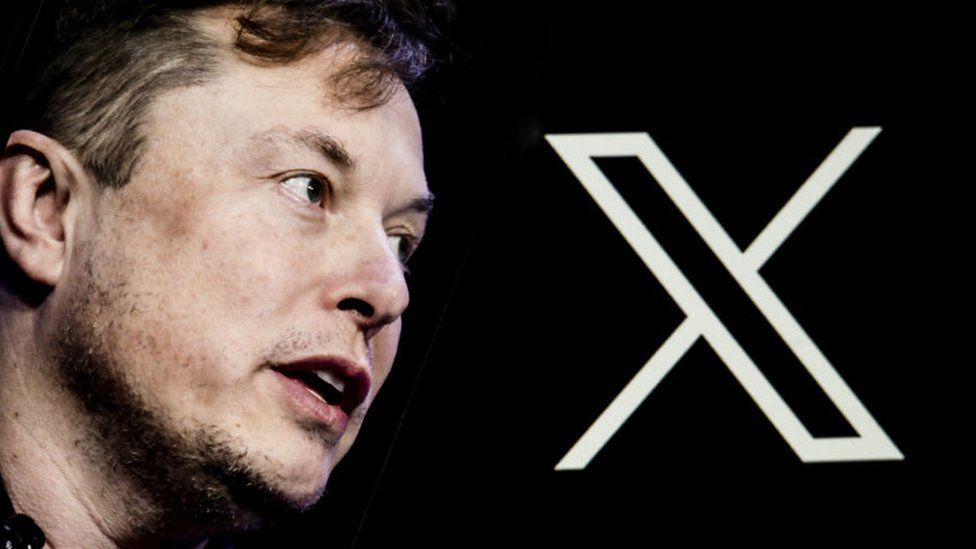
X CEO Elon Musk has announced his plan to introduce video to spaces on X.

Musk disclosed that the company plans to launch the feature by the end of the year, but certainly by early next year.

Announcing the roll-out of the feature, Musk wrote,

“From a feature standpoint, we are working on adding video to spaces. It’ll just be a simple thing where you can turn the video on or off. It’s helpful to see people’s body language as they speak. It conveys more information if you can see their face and their body language if they wish to”.

Musk further noted that if there is more than one speaker in a space session, the video feed will switch to whoever is speaking at the moment, a feature that is similar to Google Meet and other video conferencing platforms.

The X CEO made this announcement during a recent Spaces session hosted by Mario Nawfal, a Dubai-based Australian serial entrepreneur, angel investor, and speaker.

By rolling out video to spaces, X hopes to enhance user engagement on the platform. The video feature will be especially valuable for users looking to host virtual meetings, interviews, or catch-up sessions with colleagues, friends and family.

Also, the integration of video into Spaces will no doubt have a significant impact on the popularity and usage of X, as it will give it a competitive edge to compete with other video conferencing platforms such as Google Meet, and Zoom, amongst others.

By integrating this feature, X aims to keep users engaged within its platform, eliminating the need to switch to third-party apps or services for voice and video communication.

With the rise of video conferencing and the increasing demand for seamless communication, X’s introduction of video to spaces could be the potential game changer, to enhance user engagement, which will significantly impact the platform’s revenue, and enhance its position in the social media landscape.

Spaces, which was launched in December 2020, allowed users to create and join live audio conversations on various topics, with up to 10 speakers and unlimited listeners. Users can also send reactions, emojis, and direct messages during the conversations.

Ever since taking over the company in 2022, Musk has carried out instrumental changes on the platform to transform it from a microblogging platform to a social network.

He renamed the company from Twitter to X in October 2023, a move he described as one that reflects the platform’s vision of becoming an everything app, that allows users to access features such as payments, blogging, and video calls, amongst others.

The Technologies of War [video]

0

Three countries – the United States, Russia and China – define military might in both conventional and nuclear wars with a supreme industrial base which can sustain combat for years. Sure you can add the UK, Japan and the EU, but note that those “countries” do not have the economic and industrial capacities to match the US, Russia and China, for prolonged wars. Indeed, no other country except the US and China could have survived the global sanctions on Russia over Ukraine.

Simply, the strengths of modern armies are not just on hardware but economic resilience. As I watch this hardware, you will show respect to American engineering. We hope for a peaceful world but when you see what men and women have built for wars, you may ask if nations would have advanced technologically if there were no wars.

A few weeks ago, I watched a documentary of nuclear submarines, and how humans created “metal-fishes” which can swim undetected even though they are bigger than big houses. Then, as that was going on, one was reminded that some nations remain stalled on how to feed their citizens, when others deliver wonders in the pursuit of military superiority.

I am not a fan of war but when you see some techs, you show respect. This is a piece of engineering! The wealth and the tech of nations to the military might of nations.

Russia has won the first major war of the 21st century when its economy did not crash under sanctions.  Of course, it is not a match to the US, but do not think that grenades, bullets, bombers, etc will define the wars of the future alone. Russia has shown that it can grow grenades to veggies in-house and that is a war won.

Most Liked Egg Coin: Revolutionizing Crypto Investments Beyond Bitcoin and Ethereum

0

In the bustling realm of cryptocurrencies, Bitcoin (BTC) and Ethereum (ETH) have long held sway. However, a new contender is emerging, one that offers unique advantages and investment potential that surpasses even these giants. Most Liked Egg stands poised to become the most beloved crypto coin in history, a testament to the collective power of the internet. Its viral inception, sparked by the ambition to surpass Kylie Jenner’s Instagram record, has propelled it to the forefront of the crypto community’s attention.

Most Liked Egg Coin Emerges as a More Accessible and Community-Driven Alternative to Bitcoin

Bitcoin, the pioneer of cryptocurrencies, operates on a decentralized ledger called blockchain. It employs a proof-of-work consensus mechanism, requiring miners to solve complex mathematical puzzles to validate transactions. While Bitcoin is renowned for its security and store of value, its transaction speeds and scalability face limitations.

In contrast, Most Liked Egg leverages a more energy-efficient consensus model, ensuring faster transactions and lower fees. MLE’s community-centric ethos and inclusive presale model also set it apart, democratizing access to potential investors. This, combined with its high ROI potential, makes MLE a compelling choice for those seeking a more accessible and community-driven crypto investment.

Most Liked Egg Coin: Bridging Accessibility and Unity, Outshining Ethereum

Ethereum, a groundbreaking smart contract platform, revolutionized blockchain technology. It enables developers to create decentralized applications (dApps) and execute self-executing smart contracts. While Ethereum plays a crucial role in the blockchain ecosystem, its scalability issues and gas fees have been subjects of concern.

In contrast, Most Liked Egg prioritizes accessibility and unity. Its meme coin status, born from a viral phenomenon, fosters a community-driven ethos. The presale model offers tokens at remarkably low prices, potentially less than a cent, ensuring inclusivity. This democratized approach allows more participants to engage and potentially benefit from the project’s success.

Most Liked Egg Coin Unites Communities and Achieves Crypto Success

Most Liked Egg’s core mission transcends financial gains; it is a rallying cry for unity, designed to bring people closer together. This community-centric approach sets it apart from Bitcoin and Ethereum, which, while monumental in their own right, lack the same viral appeal and grassroots-driven ethos. The potential for high Return on Investment (ROI) with Most Liked Egg is unparalleled, eclipsing even the seasoned giants of the crypto world.

One of the most remarkable aspects of Most Liked Egg is its presale model. Unlike Bitcoin and Ethereum, where entry can be financially prohibitive, Most Liked Egg offers accessibility to investors at an unprecedented level. Tokens are available at prices so low that even a full cent is not required, ensuring that virtually anyone, regardless of financial capacity, can participate. This democratized approach levels the playing field and allows for the potential to reap substantial rewards with a relatively small investment.

As we look to the future of cryptocurrencies, it’s clear that the landscape is evolving. While Bitcoin and Ethereum have paved the way for the industry, Most Liked Egg represents a new paradigm. Its emphasis on community, inclusivity, and the power of viral support showcases a fresh approach to crypto success. By going beyond financial gains and focusing on unity, Most Liked Egg has the potential to leave an indelible mark on the crypto world.

In the grand scheme of crypto investments, it’s not just about the returns, but also about being part of something bigger. Most Liked Egg’s vision of unity and community-driven success is a stark contrast to the more established narratives of Bitcoin and Ethereum. While these stalwarts have their place in the crypto pantheon, Most Liked Egg offers a different, more inclusive path.

Final Thoughts

In conclusion, Most Liked Egg emerges as a standout investment choice in comparison to Bitcoin and Ethereum. Its viral appeal, community-driven ethos, and unprecedented accessibility position it as a unique player in the crypto space. While Bitcoin and Ethereum are cornerstones of the industry, Most Liked Egg represents an evolution, an opportunity to be part of a movement that celebrates unity, love, and the boundless possibilities of the digital age.


Find out more about Most Liked Egg:

Website: https://mostlikedegg.com/

Telegram: https://t.me/mostlikedeggcoin

Twitter: https://twitter.com/mostlikedegg__

Instagram: https://www.instagram.com/world_record_egg/