DD
MM
YYYY

PAGES

DD
MM
YYYY

spot_img

PAGES

Home Blog Page 3892

UK Signs Treaty with Rwanda for Asylum Seeker Deportation Despite Legal Setback

0

The British government, led by Home Secretary James Cleverly, has signed a contentious treaty with Rwanda aimed at deporting asylum seekers, despite the UK’s Supreme Court deeming the deportation scheme illegal.

Prime Minister Rishi Sunak emphasized his commitment to halting illegal migration, highlighting the newly signed treaty with Rwanda as a critical measure in the government’s resolve to decide who enters the UK and the fight against human trafficking by criminal gangs.

“I said I would stop the boats. I meant it,” Sunak said Tuesday.

“We’ve signed a treaty with Rwanda making it clear that it’s us who decides who comes to this country – not criminal gangs.”

The deportation strategy, central to the UK’s migration reduction plan, has faced significant controversy, particularly following the Supreme Court’s ruling that such actions would breach international human rights laws enshrined in domestic legislation.

Seeking to address the court’s concerns, the UK has sought to renegotiate terms with Rwanda, aiming for a binding treaty ensuring asylum seekers sent there by Britain will not face expulsion—a move intended to allay the court’s apprehensions.

For Cleverly, who assumed the role of Home Secretary just three weeks ago, this development marks a pivotal moment under immense pressure from his party and the Prime Minister to deliver on a strategy significantly challenged in the courts.

Cleverly expressed Rwanda’s commitment to refugee rights, pointing to discussions surrounding the signing of the agreement and the collaboration in addressing the global issue of illegal migration.

The treaty’s purpose is to assure the Supreme Court that Rwanda will adhere to legal processes and not repatriate asylum seekers back to their countries of origin, potentially impacting the plan to redirect thousands of asylum seekers, who arrived in the UK without permission, to Rwanda as a deterrent to Channel crossings.

In exchange for this agreement, Rwanda has received an initial payment of £140 million ($180 million) with promises of additional funding for the accommodation and welfare of deported individuals.

About the treaty: Details are sketchy about the plan. However, details made available by Home Office officials, a primary focus of the treaty revolves around preventing “refoulement,” which refers to the act of returning asylum seekers to a country where they might face persecution. The intention behind addressing this issue is to address concerns raised by the Supreme Court’s findings.

This treaty aims to ensure that Rwanda does not repatriate migrants to their home country or another location after they have arrived from the UK. It proposes the establishment of a new appeals process within Rwanda’s high court to consider exceptional cases, such as situations where individuals under this scheme have committed crimes.

The appeals process would involve British and Commonwealth judges, in addition to Rwandan judges, presiding over the hearings. Ultimately, a decision would be reached regarding whether the asylum seeker remains in Rwanda or is sent back to the UK.

For the treaty to have international legal force, it must be ratified by both the UK and Rwandan parliaments.

While this treaty signals progress in Sunak’s immigration reforms, its implementation faces the significant hurdle of gaining approval from the Supreme Court. The Prime Minister on Monday unveiled a five-point plan to reduce legal migration, but he still faces the challenge of gaining parliamentary support should the Court reconsider its earlier ruling for the treaty’s approval.

The controversial approach raises ethical and legal questions, highlighting the complex intersection of immigration policy, human rights considerations, and international cooperation. The outcome of the ongoing legal and political processes will likely shape the future of asylum and migration policies in other countries.


Qatar’s Sovereign Wealth Fund is Considering Investing $500billion in Bitcoin

3

In a surprising move, Qatar’s Sovereign Wealth fund (QSWF) has announced its intention to allocate $500 billion of its assets to Bitcoin, the leading cryptocurrency. This would make QSWF the largest institutional investor in Bitcoin, surpassing MicroStrategy, Tesla and other companies that have embraced the digital asset.

QSWF is one of the world’s largest sovereign wealth funds, with an estimated value of over $300 billion. It was established in 2005 to diversify Qatar’s oil and gas revenues and invest in various sectors, such as real estate, infrastructure, technology and healthcare. QSWF has a long-term vision and a global reach, with investments in more than 40 countries.

According to a press release, QSWF sees Bitcoin as a “strategic asset” that can enhance its portfolio performance and hedge against inflation and currency devaluation. QSWF also believes that Bitcoin has the potential to become a “global reserve currency” that can facilitate cross-border transactions and financial inclusion.

QSWF plans to acquire Bitcoin gradually over the next five years, using a dollar-cost averaging strategy to reduce market volatility and price risk. QSWF will also allocate some of its funds to Bitcoin-related companies and projects, such as exchanges, mining, custody and innovation.

The announcement of QSWF’s interest in Bitcoin has sent shockwaves across the crypto industry and the financial markets. Bitcoin’s price surged to a new all-time high of over $100,000, breaking its previous record of $69,000 set in November 2021. The market capitalization of Bitcoin also surpassed $2 trillion, making it the third-largest asset in the world after gold and the US dollar.

Many analysts and experts have praised QSWF’s decision as a bold and visionary move that will boost Bitcoin’s adoption and legitimacy. They argue that QSWF’s endorsement of Bitcoin will inspire other sovereign wealth funds, central banks and institutional investors to follow suit and allocate a portion of their assets to the cryptocurrency.

Some other large investors in Bitcoin include BlackRock, the world’s largest asset manager with over $9 trillion under management; PayPal, the online payment giant that allows its users to buy, sell and hold Bitcoin; Square, the fintech company led by former cofounder of Twitter Jack Dorsey that has invested $220 million in Bitcoin; and ARK Invest, the innovation-focused investment firm run by Cathie Wood that has bought over $1 billion worth of Bitcoin through its exchange-traded funds.

However, some critics and skeptics have questioned QSWF’s rationale and timing for investing in Bitcoin. They point out that Bitcoin is still a highly volatile and risky asset that is subject to regulatory uncertainty and security breaches. They also warn that QSWF’s massive investment in Bitcoin could create a market imbalance and a liquidity crunch that could destabilize the crypto ecosystem and the global financial system.

The new UK Immigration rules and Implications for Care Workers

0

The UK government has introduced a new points-based immigration system that will take effect from 1 January 2024. The new system aims to attract skilled workers and reduce low-skilled migration, as well as to end free movement of people from the European Union (EU).

Under the new system, anyone who wants to work or study in the UK will need to apply for a visa and meet certain criteria, such as having a job offer from an approved employer, speaking English at a required level, and earning a minimum salary threshold. The points are awarded based on the skills, qualifications, and experience of the applicant, as well as the type and level of the job offer.

The UK new five-point plan to reduce immigration as announced by Home Secretary, James Cleverly.

  1. Care workers will no longer be allowed to come to the UK with dependants.

  2. NHS surcharge to be increased by 66%.

  3. Graduate visa route to be reviewed to prevent abuse.

  4. The minimum salary needed to get a Skilled worker visa to the UK is increasing to $38,700.

  5. Shortage Occupation list to be reformed, with a reduced number of occupations.

The new system will also introduce some changes for EU citizens who want to visit, work, or study in the UK. EU citizens who want to stay in the UK for more than six months will need to apply for a visa, unless they have settled or pre-settled status under the EU Settlement Scheme. EU citizens who want to visit the UK for up to six months will not need a visa, but they will need to have a valid passport and may be asked to show proof of sufficient funds and health insurance.

The new system will not affect Irish citizens, who will continue to have the right to live and work in the UK without a visa. It will also not affect those who already have indefinite leave to remain or enter in the UK, or those who are eligible for British citizenship.

The new system is designed to create a fair and balanced immigration system that supports the UK economy and society, while ensuring that public services and welfare are protected. The government claims that the new system will make it easier for employers to recruit the talent they need, while also encouraging them to invest in training and development of the domestic workforce.

However, some critics argue that the new system will create barriers and bureaucracy for migrants and employers, and that it will not address the labour shortages in some sectors, such as health and social care, hospitality, and agriculture. They also warn that the new system will reduce the diversity and cultural richness of the UK, and that it will harm the UK’s relations with its European neighbors and other countries.

The new rules have been welcomed by some business groups and sectors, such as technology, science, and health care, who say they will help fill skills gaps and boost innovation. However, some critics and opposition parties have raised concerns about the impact of the new rules on sectors that rely on low-skilled workers, such as hospitality, agriculture, and social care. They argue that the new rules will create labour shortages, increase costs, and reduce quality of service.

The new rules are part of the UK’s post-Brexit immigration policy, which aims to end the UK’s reliance on cheap foreign labour and to restore public confidence in the immigration system. The government says the new rules will allow the UK to take back control of its borders and to decide who can come to live and work in the country.

Implications of UK Immigration Policy on Care Workers

The UK government has announced a new immigration policy that will affect care workers from overseas. Under the new rules, care workers who want to work in the UK will not be able to bring their family members with them, unless they meet certain criteria. This is a significant change from the previous system, which allowed care workers to come to the UK with their dependants, such as spouses and children.

The government claims that this policy is necessary to reduce the pressure on the public services and the housing market, and to encourage care workers to integrate into the British society. However, critics argue that this policy is unfair and discriminatory, and that it will have negative consequences for the care sector and the people who rely on it.

Care workers play a vital role in providing support and assistance to elderly and disabled people, as well as those with mental health problems and other complex needs. Many care workers come from countries such as India, the Philippines, Romania, and Nigeria, where they have acquired skills and experience that are in high demand in the UK. According to the latest figures from the Office for National Statistics, there are about 1.5 million care workers in the UK, of which 17% are non-British nationals.

The new immigration policy will make it harder for care workers to come to the UK, as they will have to meet stricter requirements, such as having a job offer with a minimum salary of £25,600 per year or having a PhD in a relevant field. Moreover, they will have to leave their family members behind, unless they can prove that they have enough funds to support them, or that their dependants have exceptional circumstances that require them to join them in the UK.

This policy will have a negative impact on both the care workers and the people they care for. For the care workers, it will mean that they will have to face separation from their loved ones, which can cause stress, anxiety, and loneliness.

They will also have to deal with the challenges of adapting to a new culture and environment, without having the support of their family network. For the people they care for, it will mean that they will have less choice and quality of care, as there will be fewer care workers available to meet their needs. They will also lose the benefit of having care workers who can speak their language and understand their culture.

The government should reconsider this policy and recognize the valuable contribution that care workers make to the UK society. Care workers should be treated with respect and dignity and be allowed to come to the UK with their dependants, if they wish to do so. This would not only benefit them personally, but also improve the quality of care for the people they serve.

Beyond Popular Products, Why Your Most Profitable Product May Not Even Be Well Known By Customers

0

What is your one oasis [the best product] in that company? And what is your double play strategy? Note that companies must not necessarily make money from their most popular or visible products. Ask Amazon (ecommerce is popular, but money comes from AWS); Samsung (Galaxy is popular, but money comes from the chip business); etc. If you focus on copying that visible and popular product without the supporting double play elements, success may not come.

In the past, business was about controlling supply to move prices. Manufacturers had control of supply but they had limited direct control on the consumers [you can control how many newspapers you produce but you have no definite control on how many people would buy]. So, winning markets was really about managing and controlling distribution as most businesses were bounded and constrained by geography, creating advantages which were largely localized [the largest newspaper in a region controlled the top news of the day].

But today, the game has shifted from control of supply to control of demand for web-anchored consumer firms. And only companies with capabilities to control demand are going to win big. Indeed, most of the greatest internet companies are simply controlling demand and that means controlling how supplies reach users and consumers.

Young People, if you plan to run an internet business, think about how you can control demand. You have already lost the power and capacity to control supply. From there, you can design a double play strategy around your one oasis. I have included a video to explain here. Read how I explained it in Harvard Business Review here

Nigeria’s COP28 1411 Delegations to UAE Steer Social Media Reaction

0

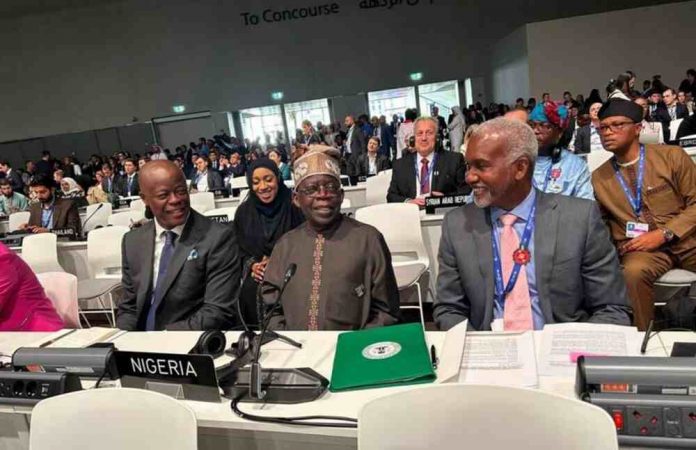
Nigeria has sent a record number of 1411 delegates to the 28th Conference of the Parties (COP28) to the United Nations Framework Convention on Climate Change (UNFCCC) in Abu Dhabi, UAE. The conference, which runs from December 4 to 15, 2023, aims to accelerate action towards the goals of the Paris Agreement and the UN Agenda 2030 for Sustainable Development.

According to the official list of participants published by the UNFCCC secretariat, Nigeria has the largest delegation among the 197 parties to the convention, followed by China with 1032 delegates and India with 892 delegates. The United States, which rejoined the Paris Agreement under President Kamala Harris, has 512 delegates, while the host country UAE has 487 delegates.

The Nigerian delegation includes representatives from various ministries, agencies, state governments, civil society organizations, academia, media and private sector. The size and composition of the Nigerian delegation have sparked mixed reactions on social media, with some users praising the country for showing leadership and commitment to tackling climate change, while others criticizing the government for wasting public funds and resources on a jamboree.

Some of the positive comments include:

  • @NaijaGreen: Nigeria is leading by example at #COP28. We are showing the world that we are serious about climate action and sustainable development. Kudos to our President and his team. #NigeriaCares

  • @EcoWarrior: I’m proud to be part of the Nigerian delegation at #COP28. We have a diverse and vibrant team of experts, activists and innovators who are ready to share our experiences and learn from others. Nigeria is a key player in the global climate movement. #ClimateActionNow

  • @AbuSalam: Nigeria has the largest delegation at #COP28 because we have the largest population and economy in Africa. We have a lot at stake and a lot to contribute. We are not here to play games. We are here to make a difference. #NigeriaLeads

Some of the negative comments include:

  • @TaxPayer: Nigeria has sent 1411 delegates to #COP28. That’s more than the population of some countries. How much is this costing us? How many flights, hotels, allowances, etc. This is a waste of money that could have been used for better things.

  • @ClimateSkeptic: Nigeria has sent 1411 delegates to #COP28. What a joke. Nigeria is one of the biggest polluters and emitters in the world. We have no moral authority or credibility to talk about climate change. We are just there to beg for money and make noise.

  • @BiafraBoy: Nigeria has sent 1411 delegates to COP28. This is another proof that Nigeria is not a nation but a contraption. How can one country have so many delegates? This is a sign of disunity and confusion. Nigeria should break up and let each region go its own way.

The Nigerian government has denied allegations that it paid for the expenses of 1411 people who travelled to Dubai for a conference. According to a report by Sahara Reporters, an online news platform, the Nigerian government spent over N3 billion ($7.3 million) to sponsor the participants, who included governors, ministers, lawmakers, civil servants, and private individuals. The report claimed that the government also paid for their flight tickets, hotel accommodation, visa fees, and other allowances.

However, the Ministry of National Orientation has issued a statement refuting the report, saying that it was false and misleading. The statement, signed by the Director of Press and Public Relations, said that the government did not sponsor everyone to the conference that FG Funded 422 Delegates to COP28 Summit, and that the rest participants paid for their own expenses.

The statement read: “The attention of the Federal Government has been drawn to a malicious and fake news item published online by Sahara Reporters alleging that the Federal Government of Nigeria spent over N3 billion to fly 1411 delegates to Dubai for a summit. The Ministry wishes to state categorically that this allegation is not only false but also malicious and calculated to tarnish the image of the Ministry and the Federal Government at large.

The Ministry also wishes to clarify that the Global Education and Skills Forum (GESF) is not a summit but a conference that brings together education stakeholders from different countries to share ideas and best practices on how to improve education outcomes.

The Ministry further wishes to inform the public that the Federal Government did not sponsor any delegate to the conference. All the participants from Nigeria paid for their own flight tickets, hotel accommodation, visa fees, and other expenses. The Ministry did not issue any travel approval or make any budgetary provision for the conference.

The Ministry therefore urges the public to disregard the fake news and treat it as a figment of the imagination of the authors. The Ministry also calls on Sahara Reporters to retract the publication and apologize to the Federal Government for peddling falsehood and misleading Nigerians.”

German vice chancellor cancels COP28 visit due to budget crisis

However, German government is facing a severe budget crisis that is jeopardizing its influence on global climate negotiations. Vice-Chancellor and Finance Minister Olaf Scholz cancelled his planned visit to COP28 in Dubai in order to focus on solving domestic problems.

The budget crisis was triggered by a dispute between the coalition partners of the SPD and the CDU/CSU, who could not agree on the level of public spending and the financing of investments in climate protection. The SPD is calling for an increase in taxes on the rich and corporations to finance the energy transition, while the CDU/CSU is calling for strict fiscal discipline and a reduction in the debt burden.

Tensions between the partners escalated last week when Scholz presented a draft for the 2024 federal budget that included an increase in the deficit and an increase in the debt brake. The CDU/CSU rejected the draft and threatened to break the coalition if Scholz did not give in. Scholz, in turn, accused the CDU/CSU of jeopardizing climate goals and ignoring social justice.

The budget crisis is also having an impact on Germany’s role at COP28, which began in the UAE on Monday. Germany is considered one of the most important players in the climate negotiations, as it is both a major emitter of greenhouse gases and a pioneer in the promotion of renewable energies. Scholz should attend the summit as a representative of the German government and meet with other leaders to discuss raising climate ambition.

However, Scholz said in a press conference that he had to cancel his visit to COP28 to focus on resolving the budget crisis. He emphasized that this does not mean a departure from Germany’s commitment to climate protection, but a necessary measure to ensure political stability in the country. He added that he was in constant contact with German Chancellor Angela Merkel, who would also attend the summit.

Scholz’s cancellation was criticized from various sides. The opposition parties, the Greens and the FDP, accused him of neglecting his responsibility for climate protection and undermining his credibility as a possible successor to Merkel. Environmental groups urged him to reconsider his decision and attend the summit to send a strong signal for climate action. The international community expressed concern about the possible consequences of the budget crisis for the climate negotiations and cooperation between Germany and other countries.