DD
MM
YYYY

PAGES

DD
MM
YYYY

spot_img

PAGES

Home Blog Page 3896

The Best Crypto Investment: SignUp Token Triumphs Over Moody’s Bank Downgrades

0

SignUp Token (SIGN) has the whole crypto world at its fingertips, with investors flocking to the asset to invest in the best crypto investment of 2023. This is after the financial services company Moody’s cut several small to mid-sized US banks off their credit ratings on Monday. As a result, there has been an increased demand for SIGN tokens as well as other crypto tokens.

Moody’s also announced that it would downgrade some of the biggest lenders and other banks in the US. This warns the whole financial industry that this move would possibly test the credit strength of the country. The company cut 10 banks and is currently contemplating downgrading six banking giants, including State Street (STT.N), US Bancorp (USB.N), Bank of New York Mellon (BK.N), and Truist Financial (TFC.N).

An Increase In Bitcoin Price

After Moody’s move, some of the best crypto investments sprouted in the market. There has been an increase in Bitcoin (BTC) demand, especially from institutional investors led by the ETF frenzy. There were also higher chances of trading volume and crypto liquidity, thanks to the launching of several stablecoins.

These past few months, the US market has become more interested in digital assets, especially cryptocurrencies, just like how many investors are curious about finding the best crypto investments. Recently, the Federal Reserve attempted to lower inflation to 2%. BTC’s inflation is currently below 1%, and investors look forward to it reducing in half in less than a year. As a result, many US institutional investors gained interest in Bitcoin as well as other digital assets, such as the new crypto presale, SignUp Token.

Signuptoken.com: What Makes This Crypto Token Special?

As BTC gains more momentum in favour of banking stocks that have struggled YTD, a new crypto presale has displayed its promising future, making it the best crypto investment in 2023. SignUp Token is a crypto presale that simply asks crypto investors to sign up with their email addresses and support the crypto project. This crypto presale is expected to flourish more, especially with the US banking sector, as well as neighbouring countries, experiencing a contraction period at the beginning of this year. Moreover, these banks have collapsed because of poor customer retention and low deposits, which resulted in investors diverting their focus to cryptocurrencies.

SignUp Token is the best crypto investment that has been turning everyone’s heads. This crypto project aims to invite you to the Millionaires Club, and your golden ticket is just one genuine email address; nothing more, nothing less. Once the project gathers 1 million loyal email subscribers, the team will release that one email that notifies you about the token launch.

One of the things that makes SignUp Token the best crypto investment in 2023 is its emphasis on a solid community. The project encourages all crypto enthusiasts not only to sign up themselves but also to refer family and friends to the crypto project. Therefore, the more people you refer, the sooner the coin launch will be! At the time of this writing, SIGN has garnered more than 7,000 subscribers, with each subscriber holding on to a profitable future.

SignUp Token offers a 72x ROI, with a starting presale price of $0.01 to a whopping $0.72 on the day of the token launch! Moreover, the crypto project has implemented a Dynamic Chart, meaning that all crypto investors will buy their tokens at a unique price sale; no price or token purchase is the same! Therefore, the more people buy tokens, the higher the prices will increase.

If you want to reap high ROI, you’ll have to act fast and sign up today, especially if you want to get the most out of that 72x ROI. Don’t wait for tomorrow. Go to Signuptoken.com and type in that email address. Follow the best crypto investment on their social media as well; you don’t want to miss out on anything. Remember, your millionaire journey begins the moment you sign up.


Signuptoken.com:

Website: https://www.signuptoken.com

Twitter: https://twitter.com/_SignUpToken_

Telegram: https://t.me/SignUpToken

Central Bank of Nigeria (CBN) Moves to Implement New Measures to Stabilize the Naira

0

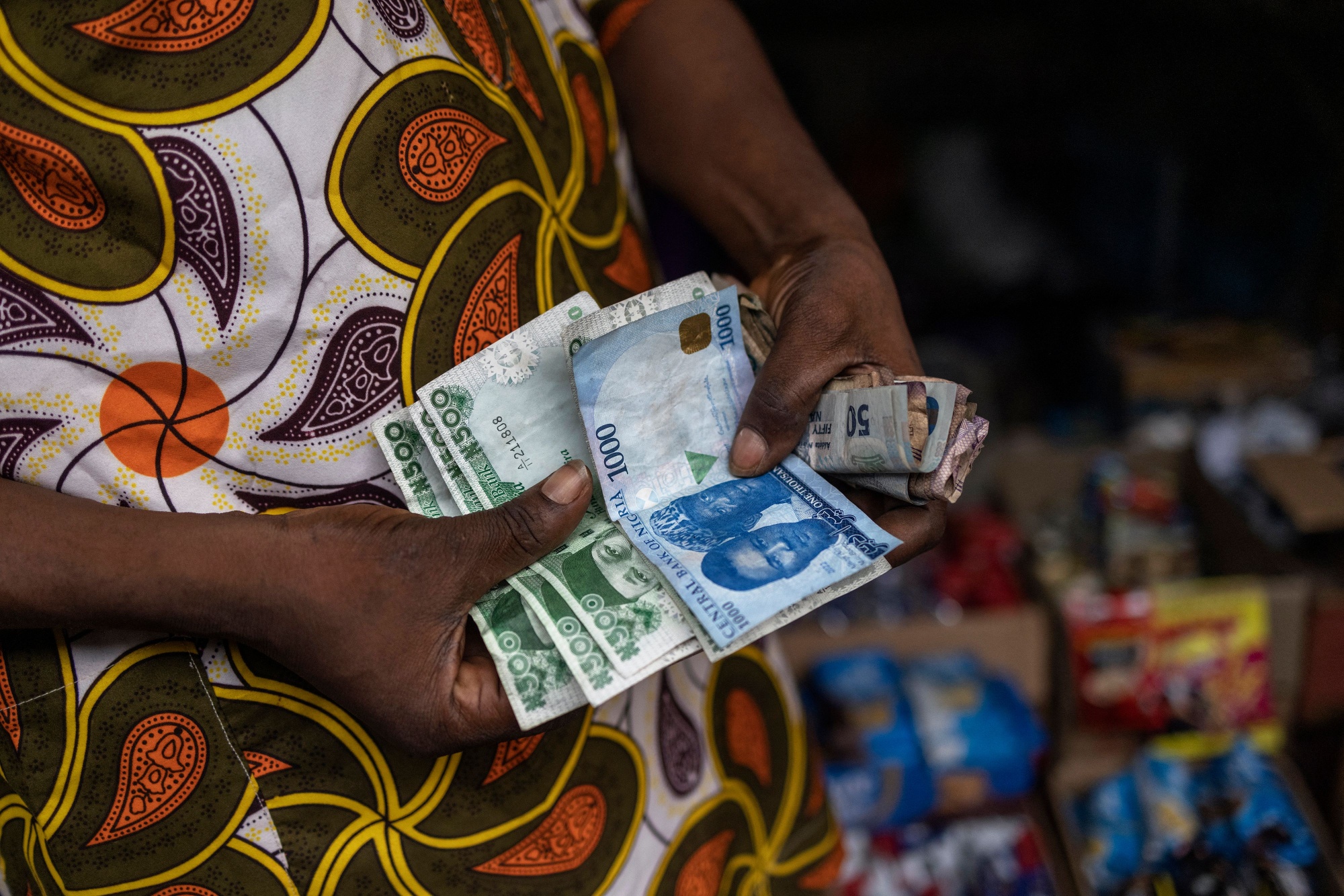
The Acting Governor of the Central Bank of Nigeria (CBN), Folashodun Shonubi, has announced that there are new measures approved by President Bola Tinubu to stabilize the fluctuating forex market.

Shonubi, who attributed the current volatility in the FX market to speculation, told journalists at the Presidential Villa, Abuja, that the move was necessitated by the president’s concern about the impact of the naira’s depreciation on Nigerians.

He mentioned that the President voiced concern about the effects on the average individual, particularly because all local economic transactions continue to be influenced by exchange rates in the parallel market.

“Mr. President is very concerned about some of the goings on in the foreign exchange market. One of the things we discussed is what could be done to stabilize and what could be done to improve the liquidity in the market and also the goings on in the various other markets, including the parallel market.

“He’s concerned about its impact on the average person, since, unfortunately, a lot of activities that we do, which are purely local, are still referenced to exchange rates in the parallel market.

“We’ve discussed and I’ve shared with him what we’re doing to improve supply. If you look at the official market, you’ll find that that market has been fairly stable and the spreads of the difference have not fluctuated as much,” he said.

He said foreign exchange market speculators should be mindful of their actions, warning that they would inevitably face substantial losses once the government initiates its proposed strategies.

The head of the central bank also said that the government intends to take stern measures against those engaged in speculative activities within the foreign exchange market.

“We do not believe that the changes going on in the parallel market are driven by pure economic demand and supply, but are topped by speculative demand from people.

“Some of the plans and strategies, which I’m not at liberty to share with you, means sooner rather than later, the speculators should be careful because we believe the things we’re doing, when they come to fruition, may result in significant losses to them,” he said.

Shonubi said he met with the president due to his concern about the naira’s performance in the FX market and to assure him that the CBN is doing something about it.
“We are looking at it and we’re doing things which will significantly impact the market in a few days time and we will all see it,” he said.

“The intention is to ensure the environment operates at a level that’s more efficient, but also that is also very reasonable and does not have a negative impact to the best that we can on the lives of the average person,” Shonubi added.

The CBN governor had earlier attributed the naira’s poor performance to some illegal activities in the financial institutions. He said that major FX inflow from diaspora remittances is being diverted to the parallel market by bankers, thereby sabotaging the liquidity of the Investor & Exporter window.

Do Not Bet Against The Naira; I Expect Nigerian Government To Reverse Some Policies

3

In the next coming weeks (within the next 5 months),  the Nigerian government will do: return fuel subsidies or/and go back to dual exchange rate policy. Right now, there is a black swan in the economic permutation in the nation, and it is very significant. Yes, the loans which the central bank did not initially disclose, but which it received, through the collateralization of some national financial assets and securities with US big banks, are big problems.

Simply, those securities/assets which many of us think are with the big banks for the Nigerian people to support the Naira are technically gone since the nation has no capacity to pay back those $billions in the short term. The implication is clear: Moody’s, Fitch and S&P will likely hammer Nigeria’s credit rating, jacking up the cost of future borrowing. That will trigger a vicious circle in the national economic sphere: ‘Mr Shonubi (acting governor of Central Bank of Nigeria), who briefed journalists after the meeting at the State House Abuja, blamed speculators for the current exchange rate, saying the president is “very concerned” about the situation.’

My conclusion is simple: the government will give up on either/both of fuel subsidies removal and Naira floating, until it can deal with the foreign reserve mess. If you are taking positions against the Naira, you may experience a huge shock because it could backfire big time. (Nigerians hope it goes that way).

My suggestion to the government is to become more pragmatic and forget the liturgical purity of campaign manifestos because every day matters now. Indeed, time for a practical governing reality.

Worried about the rising exchange rate of the naira to the dollar, Nigeria’s President Bola Tinubu, met with the acting governor of the central bank, Folashodun Sonubi.

At the meeting, both men discussed what “could be done to stabilize” the Nigerian currency and how to “improve the liquidity in the market.”

Mr Shonubi, who briefed journalists after the meeting at the State House Abuja, blamed speculators for the current exchange rate, saying the president is “very concerned” about the situation.

“We do not believe that the changes going on in the parallel market are driven by pure economic demand and supply but are topped by speculative demand from people,” he said.

The bank chief said he briefed the Nigerian leader on some of the plans to address the challenge.

Of course, reversing either or both policies will not deliver the long-term economic redesign Nigeria expects.  Our long-term plan to stabilize the Naira will involve improving productivity and overall innovation systems in the nation.

Comment on Feed

Comment 1: Ndubuisi Ekekwe I begin to wonder if our brains are in sync Sir. I already felt that this will happen pretty soon because the government may be overwhelmed when they keep trying to get out of this new challenge imposed by the Naira and fuel subsidy experiment. Dual exchange rate will come back, but that’s because they couldn’t figure out a quick solution to the Naira crisis, however the policy is a very bad one which may slow down Nigeria’s economic growth drastically.

On the other hand fuel subsidy total removal is not good for the masses and our economy in general. It should be subsidized to at least 20 to 30% while a serious working government will make our refineries to start working so as to be on the net positive on the oil trades.

Finally, if Nigeria thinks well and grows well, it is odd promoting oil produces, especially petrol because I expect a right thinking economist to build around non-fossil clean energy for adoption in transportation and power generation. This is 2023, we are supposed to outgrow this era into something more juicy and environment friendly, but am sure this hypothesis does not go down well with some strongholds or perhaps cartels that does not want oil to lose its power for a long long time.

Comment 2: The outlined economic challenges in Nigeria underscore the necessity of a pragmatic response. Prioritizing the foreign reserve dilemma is imperative to avert adverse credit rating impacts and escalating borrowing costs. Given the potential inflation risks, a measured, strategic approach is crucial.

Furthermore, considering the populace’s suffering over self-interest is paramount. Redirecting resources toward alleviating the masses’ hardships rather than excessive personal expenditures is not only responsible but essential for stability and public trust. It is a pivotal step in steering the nation towards a sustainable economic path.
I hope it will not be too late to learn the hard way!

Nigerian Labour Congress Threatens Strike if Petrol Price Rises to N720 Per Liter

0

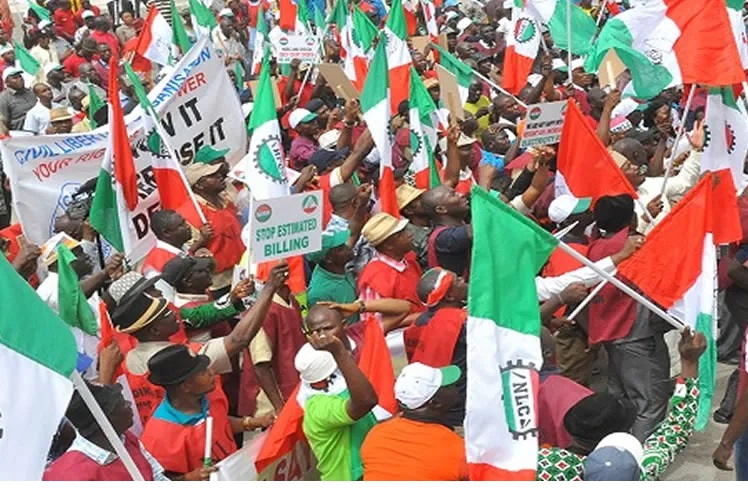
The Nigerian Labour Congress (NLC) has announced its intention to rally its members, without notice to the government, for an indefinite nationwide strike in the event of a rise in the present petrol price.

The president of the union, Joe Ajaero, said this on Monday during the African Trade Union alliance meeting in Abuja, on the heels of the disclosure by petroleum marketers that fuel pump prices will rise to N680 and N720 per liter in the coming weeks.

“As we are here they are contemplating increasing the pump price of petroleum products and the federal ministry of labour and employment, for some time now, will only go to the federal ministry of justice to come up with injunctions to hold the hands of labour not to respond,” he said.

“Let me say this, Nigerian workers will not give any notice if we wake up from our sleep to hear that they have tempered with prices of petroleum products.

“They have started floating ideas of a likely increase in the pump price of petroleum products.”

Independent Petroleum Marketers Association of Nigeria (IPMAN) said on Sunday that the lack of dollar liquidity in the Investor and Exporter window, and the depreciation of the naira in the parallel market, if not urgently contained, will push the pump price up.

The increase will see Nigerians paying an additional N103, as currently, petrol is being sold at N577 per liter in Lagos and N617 and above per liter in many other parts of the country.

Background of the strike threat

Since the fuel subsidy was removed in June, organized labor has been at loggerheads with the government over the provision of palliatives to mitigate the impact.

Among their demands, the Trade Union Congress (TUC) and the NLC are asking the federal government to increase the minimum wage to at least N200,000 per month from the current N30,000 per month. They are also asking the federal government to revive the CNG project for labor centers.

Other demands include rehabilitation of the nation’s refineries, fixing road and rail networks, and reviewing multiple taxes on businesses.

With the government dragging its feet in meeting these demands, organized labor on July 26, issued a seven-day ultimatum to the federal government to reverse all “anti-poor” and “insensitive” policies.

The NLC said no going back on the strike unless the federal government meets the following demands: “the immediate reversal of all anti-poor policies of the federal government including the recent hike in PMS price, increase in public school fees, the release of the eight months withheld Salary of university lecturers and workers”. It also added “the immediate inauguration of the Presidential Steering Committee.”

But in response to the union’s demands, the federal government invoked a restraining order of the national industrial court, stopping organized labor from embarking on any industrial action concerning the removal of petrol subsidy.

However, defying the government and the court, the unions embarked on a nationwide protest on August 2, prompting the federal government to initiate contempt proceedings against them for disobeying the court order.

Though the protest was suspended on August 3 following a series of negotiations between the leaders of organized labor and the federal government, the NLC has not closed the chapter on a nationwide strike. The union said the conduct of the federal government led by Bola Tinubu “suggests it does not intend to commit itself to the MoU it signed with NLC and TUC.”

Niger Military Coup: Former Nigerian Minister and UN Diplomat, Usman Sarki, Recommends Strategic Communication

0

Former Nigerian Minister and former Nigerian deputy permanent representative to the United Nations, Usman Sarki, has identified the need for media organizations and foreign relation department to prioritize strategic communication and fact-finding analysis in the reportage of the Coup in Niger and the consequent ongoing loggerhead between the Nigerien military junta and the Economic Community of West African States (ECOWAS).

Mr. Sarki made this call during an interview on the Television continental (TVC)’s night show, ‘”Politics Tonight” on Friday evening. According to the former UN diplomat, promoting ill-baked reporting of the management of the crisis has severe implications not only for Nigeria and Niger but also for many other African countries.

Therefore, Mr Sarki believed it is high time traditional media organizations and relevant government agencies weighed in more on strategic information sourcing and communication to avoid a situation where the people have to continue to depend and act based on rumours and conspiracy theories being spread on the social media.

‘’In crisis situation, the first casualty is the truth. Nigerians should be very conscious about what they consume on the social media.

‘’Information is very critical; it is the bedrock of diplomacy and the bedrock of interstate relationship. So, whatever information is being released for the consumption of the public or the attention of the regime has to be precise, accurate and to the point,’’ Mr. Sarki said.

Mr Sarki remarked that ‘’the problem that has arisen out of this saga is that the president of Nigeria, Bola Ahmed Tinubu, wants war and there is no basis for us to think that war was the first option.’’

Mr Sarki stated that it is erroneous to think that the ongoing crisis is a war between Nigeria and Niger or between ECOWAS and Niger. Rather, according to Sarki, the crisis is a battle of legality vs illegality — legality as represented by President Bazoum and illegality represented by the usurpation of a democratically elected government by the Military Junta.

He added that the Tinubu-led ECOWAS is very clear about its ‘’sentiment of zero-tolerance to coup and unconstitutional changes in Government’’.

‘’ECOWAS is using the instrumentality of its statutes and protocols in order to assert the prerogative of the regional organization to establish order and bring back constitutional rule in Niger as it would in any other member state that has taken the path of military rule at this precise moment’’ Sarki said.

On how ECOWAS, the Nigerian government and the media can harness information and ensure strategic communication in the management of the crisis in Niger, Mr Sarki made the following recommendations:

  1. ECOWAS must establish a communication system whereby its messages could go to every member state of the community through the traditional and non-traditional media.
  2. The Nigerian Government should engage in complementary approaches by embarking upon constructive false ride, truthful and timely release of information not necessarily through the president’s spokesperson but through the Ministry of foreign affairs.
  3. The Ministry of foreign affairs should be allowed the exercise of its prerogative in the field of foreign policies in informing Nigerians about the objectives of the actions and policies of the Nigerian Government.
  4. Media organisations and Government agencies responsible for public information should also contribute by way of asking questions and conveying answers to the Nigerian public in order not to keep people in anxiety or in the dark about the purposes of the measures, the intentions behind the measures and the ultimate objective that is being sold by the measures.

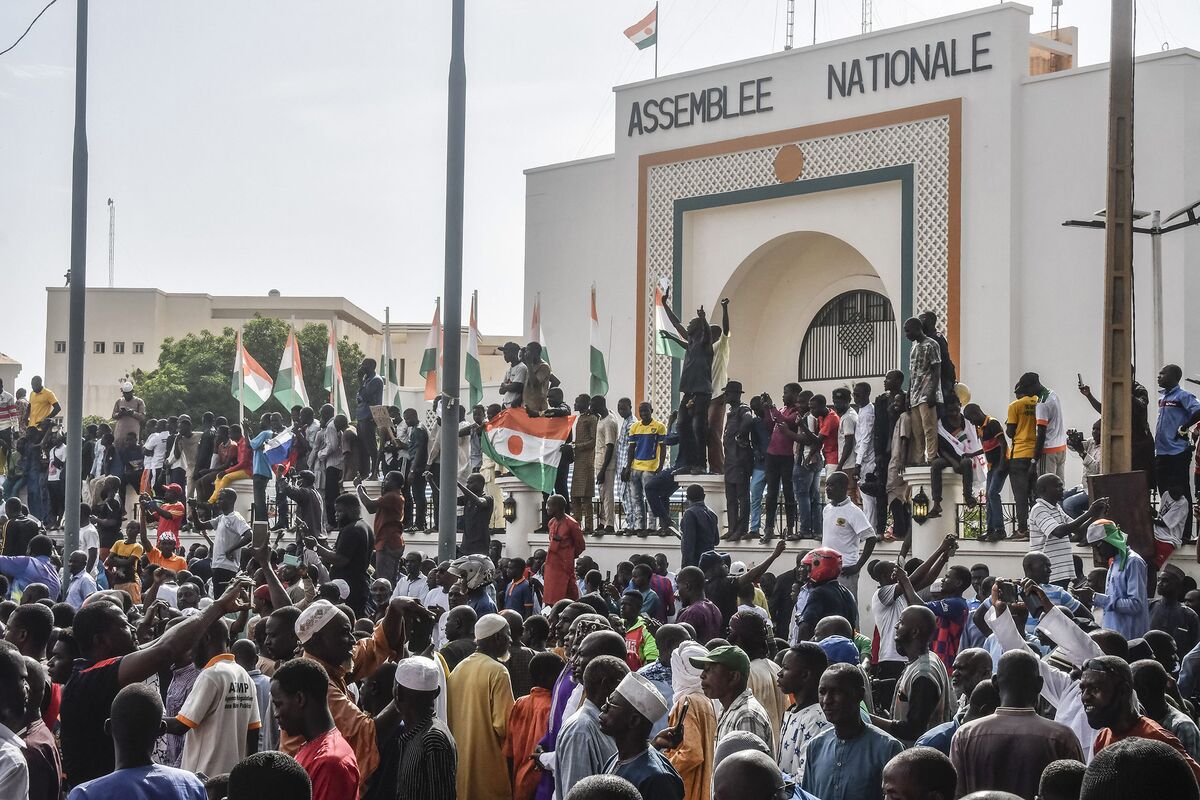
On July 26, 2023, General Abdourahamane Tchiani led a military coup in Niger that overthrew the democratically elected President of the country, Mohammed Bazoum. Following that, Tchiani declared himself head of the National council for the safeguard homeland and placed president Bazoum and some members of his families under house arrest.

Despite several appeals, threats and sanctions to the military Junta by ECOWAS, the mission to establish constitutional order and restore democratic government in Niger has remained in a state of impasse.

However, on Monday, August 14, 2023, the leader of the Military junta, General Tchiani, said he’s open to diplomatic conversations with ECOWAS. This was after a meeting with the intervention team of Nigerian Islamic scholars in Niamey.