DD
MM
YYYY

PAGES

DD
MM
YYYY

spot_img

PAGES

Home Blog Page 3922

Understanding Grayscale Bitcoin’s Broad Ownership, Sticky Supply Dynamics, Spot Bitcoin ETF Approval

0

Grayscale, the world’s largest digital asset manager, has released a new report that reveals some interesting insights into Bitcoin’s ownership and supply dynamics. The report, titled “Bitcoin Ownership and Supply Dynamics: Insights from Grayscale”, analyzes the data from various sources, such as blockchain analytics, surveys, and Grayscale’s own client base, to shed light on who owns Bitcoin, how they acquire it, and how they hold it.

The main findings of the report are:

Bitcoin has a broad and diverse ownership base, with different types of investors holding different amounts of Bitcoin for different reasons. The report identifies four main segments of Bitcoin owners: retail investors, institutional investors, whales, and miners.

Retail investors are the largest segment of Bitcoin owners, accounting for about 60% of the total supply. They typically hold small amounts of Bitcoin (less than 10 BTC) and are motivated by various factors, such as speculation, hedging, innovation, or social impact.

Institutional investors are the fastest-growing segment of Bitcoin owners, accounting for about 10% of the total supply. They typically hold large amounts of Bitcoin (more than 1000 BTC) and are motivated by strategic reasons, such as portfolio diversification, inflation protection, or long-term value appreciation.

Whales are the most influential segment of Bitcoin owners, accounting for about 20% of the total supply. They typically hold very large amounts of Bitcoin (more than 10,000 BTC) and are motivated by financial reasons, such as market making, arbitrage, or trading.

Miners are the most active segment of Bitcoin owners, accounting for about 10% of the total supply. They typically hold moderate amounts of Bitcoin (between 10 and 1000 BTC) and are motivated by operational reasons, such as cost recovery, revenue generation, or network security.

Bitcoin has a sticky supply dynamic, with most of the owners holding their coins for long periods of time and resisting selling pressure. The report estimates that about 80% of the total supply is illiquid, meaning that it is either lost, locked, or held for long-term investment. Only about 20% of the total supply is liquid, meaning that it is available for trading or spending.

The report also identifies three main factors that influence the liquidity of Bitcoin: demand shocks, price cycles, and network events. Demand shocks are sudden increases or decreases in the demand for Bitcoin, such as institutional adoption or regulatory changes. Price cycles are periodic fluctuations in the price of Bitcoin, such as bull runs or bear markets. Network events are technical changes or upgrades in the Bitcoin protocol, such as halvings or forks.

The report finds that Bitcoin has a broad and diverse ownership base, with investors from different regions, age groups, income levels, and investment objectives. According to a survey conducted by Grayscale in June 2021, 38% of US adults said they own or are interested in owning Bitcoin, up from 36% in 2020 and 31% in 2019. The survey also shows that Bitcoin appeals to both younger and older generations, with 67% of millennials and 58% of Gen X saying they are interested in Bitcoin, compared to 49% of baby boomers and 44% of the silent generation.

The report also highlights the sticky nature of Bitcoin’s supply, meaning that most of the existing Bitcoins are held for long-term investment rather than for short-term trading or spending. The report estimates that 78% of the circulating Bitcoin supply is either lost or held for the long term, leaving only 22% for active trading. This implies that Bitcoin’s supply is becoming scarcer over time, as more investors choose to hold it for its store of value and hedge against inflation properties.

The report concludes that Bitcoin’s broad ownership and sticky supply dynamics are positive indicators for its long-term value proposition and adoption potential. The report states: “As Bitcoin continues to mature as an asset class, we expect its ownership base to expand and diversify further, reflecting its global accessibility and utility. We also expect its supply dynamics to remain favorable for long-term investors, as more Bitcoins are locked up in illiquid wallets or products that cater to the growing demand for digital gold.”

Bitcoin’s broad ownership and sticky supply dynamics indicate that it is a mature and resilient asset class that can withstand market volatility and external shocks. The report also suggests that these dynamics create favorable conditions for long-term value creation and growth for Bitcoin and its investors.

SEC Spot Bitcoin ETF potential approval window is between January 5th – 10th, 2024

The cryptocurrency community is eagerly awaiting the decision of the US Securities and Exchange Commission (SEC) on the first Bitcoin exchange-traded fund (ETF) in the country. The SEC has set a deadline of January 10th, 2024, to approve or reject the proposal by VanEck, a New York-based investment firm. However, some analysts believe that the SEC could make its move earlier, between January 5th and 10th, based on the Federal Register publication date and the statutory review period.

A Bitcoin ETF is a financial product that tracks the price of Bitcoin and allows investors to buy and sell shares of the fund without having to deal with the technical aspects of owning and storing the cryptocurrency. A Bitcoin ETF would provide more liquidity, transparency, and regulatory oversight to the market, and potentially attract more institutional and retail investors to the sector.

The SEC has been reluctant to approve a Bitcoin ETF in the past, citing concerns over market manipulation, fraud, custody, and investor protection. However, the agency has recently signaled a more open-minded approach, as it has approved several ETFs based on Bitcoin futures contracts, which are derivatives that bet on the future price of the asset. The SEC has also asked for public comments on various aspects of a Bitcoin ETF, such as valuation, liquidity, arbitrage, and potential conflicts of interest.

VanEck’s proposal is different from the futures-based ETFs, as it seeks to directly hold Bitcoin in a trust and track its spot price, which is the current market price. This would offer more accuracy and efficiency to investors, as well as lower fees and risks. VanEck has partnered with Cboe BZX Exchange, which would list and trade the shares of the ETF, and Bank of New York Mellon, which would act as the administrator and custodian of the fund.

If the SEC approves VanEck’s Bitcoin ETF, it would be a historic milestone for the cryptocurrency industry, as it would mark the first time that US investors can access Bitcoin through a mainstream and regulated investment vehicle. This could boost the demand and adoption of Bitcoin, as well as its price and market capitalization. It could also pave the way for more innovation and competition in the space, as other firms would likely follow suit and launch their own Bitcoin ETFs.

However, if the SEC rejects VanEck’s proposal, it would be a major setback for the industry, as it would indicate that the regulator is still not convinced that a Bitcoin ETF can meet its standards and protect investors. This could dampen the enthusiasm and confidence of investors, as well as limit their options and opportunities to invest in Bitcoin. It could also create more uncertainty and volatility in the market, as investors would have to rely on other platforms and vehicles to access Bitcoin.

The SEC’s decision on VanEck’s Bitcoin ETF is expected to have a significant impact on the future of Bitcoin and the cryptocurrency industry. Therefore, investors should pay close attention to the developments and announcements from the regulator in the coming weeks, as they could influence their investment strategies and outcomes.

Jumia Discontinues Food Delivery Business in Nigeria And Other African Markets, Cites Macroeconomic Conditions

0

Pan-African e-commerce platform Jumia, has announced its plan to discontinue its food delivery business in Nigeria and other African markets which include Kenya, Uganda, Morocco, Tunisia, Algeria, and Ivory Coast, citing macroeconomic conditions.

The company announced that by the end of December 2023, the plan will take effect, as it strategizes to optimize its capital, and resource allocation, and continue its plan for profitability.

Jumia’s CEO Francis Dufay speaking on the recent move said that the company’s food delivery business across several African markets has been plagued with challenges, amidst tough competition in the ecosystem, which necessitated the discontinuation.

In his words,

“It’s a segment that’s very difficult across the world, with very challenging economics and big losses. It is also a segment that is extremely competitive across the world and Africa. The economics are tough in this market because the costs are very high and there is plenty of competition so there is downward pressure on the commissions that we make and upward pressure on marketing costs because everyone is fighting for customers”.

Jumia Food represents about 11% of the company’s general merchandise value for the nine months ended September 30th, highlighting that the business has not achieved profitability since its inception.

According to Antoine Maillet-Mezeray, the company’s EVP Finance & Operations, the decision to exit food delivery, a business with challenging economics in Africa and globally, was rooted in prioritizing opportunities and expected return on investment.

The Pan-African e-commerce platform said that the number of employees currently dedicated to the food delivery business will transition to the core e-commerce business in these countries.

It is worth noting that Jumia has been on an aggressive cost-cutting journey that involves headcount reductions, scaling back offerings such as groceries, and reducing delivery services not related to its e-commerce business in order to turn profitable.

Recall that the e-commerce company fired 900 people last quarter, and also significantly reduced its presence in Dubai, relocating most of its remaining staff to its African offices.

It also significantly reduced its sales and advertising expenditure, by 41% year on year and scaled back its grocery offering in Algeria, Ghana, Senegal, and Tunisia to reduce business complexities.

Jumia, the first Africa-focused tech start-up to list on the New York Stock Exchange, earlier this year announced that it expects these headcount reductions to enable it to save over 30% in monthly staff costs starting from March 2023.

Jumia is redirecting its focus towards the core physical goods business and maintaining its JumiaPay operations across all 11 markets, as outlined in a recent statement.

Copia Global Continues To Grow, Raising Additional $20 million, as Africa’s Finest B2C Ecommerce Startup

0

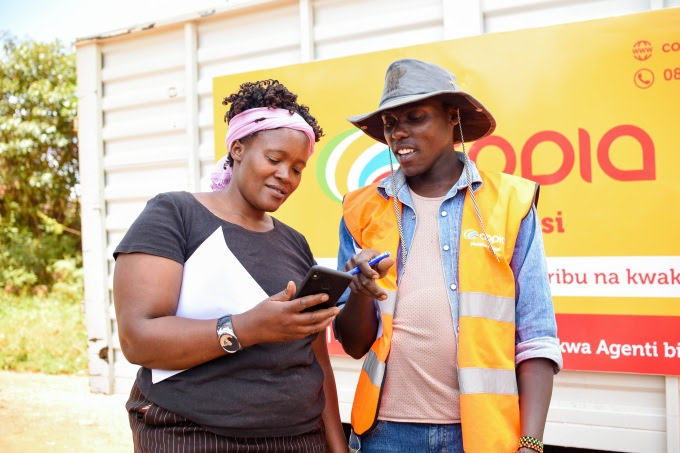
Kenya’s Copia Global, Africa’s finest ecommerce company, raises more funds. In 2019, I wrote about it, “This is the most potent ecommerce model in Africa at the moment; Copia is on a mission. The company raised a $26m Series B funding round a few weeks ago and investors are congregating because it has something that is evidently amazing. Largely, Copia is a consumer goods catalog and delivery service for Base of the Pyramid consumers in the developing world. It leverages mobile technologies and a network of agents serving as distribution points of aggregation to make a wide range of quality goods accessible to rural and peri-urban consumers.

“Through this mechanism, Copia has fixed the marginal cost problem, and that makes its model supreme. It does everything through aggregation which means it can pursue a near-zero marginal cost in its scaling. When the “postal system” has aggregated agents, good things happen!”

According to Tekedia, Copia is Africa’s best B2C ecommerce model. Copia is a B2C e-commerce platform that uses a network of agents and mobile technologies to make goods accessible to consumers in rural and peri-urban areas. Copia customers can visit a partnered agent’s store to place orders, pay, and receive delivery.In 2013, Tracey Turner and Jonathan Lewis founded Copia in Tatu City, Nairobi, Kenya. The word “copia” means “abundance” in Latin.
Today, it has added another $20m besides other funds it has raised (total now is above $123 million). It runs the best business model for B2C ecommerce in Africa. But the unfortunate thing is this: Copia’s business model may not work in most parts of West Africa, and that is the reason no one has succeeded in re-creating it there. The biggest feature in Copia is TRUST, and upon that feature, it became a reliable postal system with no expense line because the “free” human elements power the network.
Copia’s model is designed to address the challenges of accessing essential products in remote areas where traditional retail infrastructure may be lacking.

Expanding Copia Global’s model to West Africa faces challenges due to diverse terrains, cultural variations, unique market dynamics, technology accessibility, regulatory differences, and the need for tailored local partnerships. Thorough market research and adaptation to each country’s specifics are vital for success.

Kenyan B2C E-commerce Platform Copia Global Secures $20 Million in Series C Extension Round

Kenyan B2C E-commerce Platform Copia Global Secures $20 Million in Series C Extension Round

Kenyan B2C E-commerce Platform Copia Global Secures $20 Million in Series C Extension Round

0

Copia Global, a Kenyan B2C e-commerce startup, that is designed to serve the rapidly growing middle and low-income African consumer market, has secured a $20 million fund in series C round.

The funding round comprised investors such as Enza Capital, Goodwell Investments, the International Development Finance Corporation (DFC), DEG, Elea, Perivoli Foundation, and Sorenson Foundation.

Speaking on the funds secured, Copia Global CEO Tracey Turner said,

“We are all heads down and focused on Kenya right now, and we won’t pick up our heads until after we hit that milestone. We have done a lot of reconnaissance work and planning for where we will go next and the International rollout plan will come after we reach profitability in Kenya”.

According to Els Boerhof, the managing partner at Goodwell Investments, she said,

“Copia’s e-commerce model is built for the unique requirements of the African market and will save many Africans a lot of time and money. We see it as one of the next big leapfrogging technologies; just like mobile phones leapfrogged landlines and solar power leapfrogged the grid, Copia is leapfrogging retail.”

Launched in 2013 by Tracey Turner and Jonathan Lewis, Copia Global caters to African consumers with moderate to low incomes, especially those living in rural areas. The platform enables customers to shop for goods from anywhere and anytime on their mobile phones with the click of a button.

With a network of over 50,000 digital-enabled Agents across Kenya, two million Customers, and over 13 million orders to date, Copia provides a seamless shopping experience to all Customers regardless of their income level, access to technology, or location.

Copia’s e-commerce platform is designed to meet the specific needs of Africa’s growing middle- to low-income consumers, saving them time and money.

Notably, the startup leverages cutting-edge technology that links middle and low-income consumers to a variety of quality products that are delivered at their convenience. Consumers can now access life-enhancing products at affordable prices, saving them from traveling to urban retail centers or from simply not having access to them.

Also, Copia avails to its stakeholders (Agents, manufacturers, and Customers) a logistical ecosystem that allows for an efficient, seamless, and end-to-end linkage across the supply chain. This ecosystem is also linked to global manufacturers and is bringing high-quality products at the lowest possible cost to the Customer.

By employing best-in-class payment options, Copia enables all consumers, even the unbanked, to transact through cash or mobile money.

Recently, the leading e-commerce/fintech platform partnered with payment processing Giants Visa, a global leader in digital payments, to provide digital financial services to middle to low-income consumers in Kenya.  The 5-year partnership will enhance Copia’s digital capabilities and expand Visa’s reach to the final global frontier.


Copia Has The Best B2C Ecommerce Model in Africa

Economic Reforms Push 140m Nigerians Under Poverty Line – World Bank Report

2

A report released by the World Bank has shed light on a concerning surge in poverty levels in Nigeria, attributed to recent economic and fiscal reforms. These reforms, notably the removal of the petrol subsidy and restructuring of foreign exchange market rates, have drawn both commendation and concern from the international financial institution.

Acknowledging the Federal Government’s ‘bold reforms’ as necessary steps to rescue Nigeria from a fiscal cliff, the World Bank also highlighted the adverse effects of these policies.

“The petrol subsidy and FX management reforms are critical steps in the right direction towards improving Nigeria’s economic outlook. Now is the time to truly turn the corner by ensuring coordinated fiscal and monetary policy actions in the short to medium term,” Shubham Chaudhuri, World Bank Country Director for Nigeria, said.

However, the report revealed that these reforms had precipitated intense pressures on the cost of living, resulting in a distressing upsurge in poverty.

‘‘Inflation remains at record high levels for Nigeria, 27.3 percent Year-on-Year, YoY, in October 2023, partly driven by the one-off price impacts of the removal of the gasoline subsidy.

‘‘The impact of this is especially hard on poor and vulnerable citizens. The FX market has remained volatile and in a period of continuing adjustment to the new policy approach, with significant fluctuations in the exchange rate in both the official and the parallel markets,” the report said.

Against this backdrop, the number of Nigerians living below the poverty line surged to an alarming 104 million, escalating from 95 million in 2021 and 100 million in 2022. Data from the Nigerian Bureau of Statistics corroborated this trend, showcasing an increase from 82.9 million in 2019 to 85.2 million in 2020.

Addressing the economic challenges, the World Bank’s Nigeria Development Update titled ‘Turning the Corner: Time to Move From Reforms to Results’ emphasized the need for continued reform momentum and urged clarity on oil revenues, particularly highlighting the financial gains of the Nigeria National Petroleum Corporation Limited (NNPCL) from the subsidy removal.

The report pinpointed that the removal of the subsidy had resulted in an expected fiscal saving of approximately N2 trillion in 2023, equivalent to 0.9% of the GDP. It projected significant gains exceeding N11 trillion between 2023 and 2025, contrasting scenarios where the subsidy remained intact.

Amidst the reforms, there has been a noticeable impact on various sectors, notably on companies operating within Nigeria. The closure of businesses due to increased operational costs and economic uncertainties has further compounded the challenges faced by the populace.

Echoing this sentiment, industry experts highlighted the closure of multiple companies, primarily small and medium-sized enterprises (SMEs), unable to sustain operations amidst rising costs and market volatility. These closures have not only led to job losses but have also disrupted supply chains and consumer accessibility, exacerbating the economic challenges faced by ordinary citizens.

The World Bank’s recommendations encompass controlling inflation, stabilizing the FX market, achieving fiscal consolidation, and addressing structural barriers to growth.

“The petrol subsidy and FX management reforms are critical steps in the right direction towards improving Nigeria’s economic outlook. Now is the time to truly turn the corner by ensuring coordinated fiscal and monetary policy actions in the short to medium term,” Chaudhuri stated.

“Continued reform implementation can ensure that Nigeria benefits from the difficult adjustments underway. This includes ensuring that improved oil revenues following the sharply increased PMS price accrue to the Federation.”

The report projects an anticipated average annual growth rate of 3.5% for Nigeria’s economy in 2023-2026, a 0.5% increase compared to scenarios without the implemented reforms.

“Between 2023 and 2025, the expected gains are over N11 trillion, against a scenario in which the subsidy had continued,” the report said.