DD
MM
YYYY

PAGES

DD
MM
YYYY

spot_img

PAGES

Home Blog Page 3943

Wasteful Government Spending Has Consequences

0
Two senior officials at the U.S. Government Publishing Office, based in Washington, D.C., betrayed "public trust" and eroded employee morale by hiring unqualified workers, including an official's son, the agency's Office of Inspector General said in an internal report.

I will argue that wasteful government spending has serious and long-term consequences for the economy, the society and the environment and will provide some examples of how government waste affects different sectors and groups of people and suggest some possible solutions to reduce it.

What is wasteful government spending?

Wasteful government spending is the use of public funds for purposes that do not serve the public interest, or that are inefficient, ineffective or unnecessary. Some common forms of wasteful government spending are:

Corruption: the abuse of public power for private gain, such as bribery, embezzlement, fraud or nepotism. Pork-barrel spending: the allocation of funds to projects or programs that benefit a specific group or region, often in exchange for political support, rather than based on merit or need.

Overlapping or duplicative programs: the existence of multiple agencies or initiatives that perform similar or identical functions, resulting in redundancy, confusion and waste of resources. Mismanagement or poor oversight: the lack of proper planning, execution, monitoring or evaluation of government activities, leading to errors, delays, cost overruns or poor outcomes.

Unnecessary or excessive spending: the expenditure of public funds on items or services that are not essential or that exceed reasonable standards or expectations.

Some examples of wasteful government spending are:

Subsidizing fossil fuels that contribute to climate change and air pollution.

Building bridges to nowhere that serve no purpose or benefit.

Funding outdated or obsolete weapons systems that do not enhance national security.

Paying for overpriced or fraudulent contracts that do not deliver value for money.

Supporting corrupt or authoritarian regimes that violate human rights and democracy.

What are the consequences of wasteful government spending?

Wasteful government spending has negative impacts on various aspects of the economy, the society and the environment. Some of these impacts are:

Reduced economic growth and competitiveness: wasteful government spending reduces the amount of public funds available for productive investments in infrastructure, education, research and development, health care and other areas that enhance economic performance and innovation. It also increases the public debt and the tax burden on citizens and businesses, which discourages private investment and consumption.

Increased inequality and poverty: wasteful government spending diverts resources from programs and policies that address the needs and rights of the most vulnerable and marginalized groups in society, such as women, children, minorities, refugees and people with disabilities. It also creates opportunities for corruption and rent-seeking, which widen the gap between the rich and the poor and undermine social justice and cohesion.

Damaged environment and public health: wasteful government spending contributes to environmental degradation and climate change by supporting activities that pollute the air, water and soil, deplete natural resources, destroy habitats and biodiversity, and increase greenhouse gas emissions. It also affects public health by reducing the quality and accessibility of health care services and by exposing people to environmental hazards and diseases.

Wasteful government spending has consequences for the society, because it erodes the trust and confidence of the citizens in the government and its institutions. Wasteful government spending can also fuel public discontent and resentment, especially among those who are marginalized or disadvantaged by the unfair distribution of benefits and costs. Additionally, wasteful government spending can weaken the social cohesion and solidarity, as well as the civic engagement and participation, of the people.

How can we reduce wasteful government spending?

Reducing wasteful government spending requires a combination of political will, institutional reforms, citizen participation and international cooperation. Some possible measures to achieve this goal are:

Strengthening anti-corruption laws and institutions: creating and enforcing clear and strict rules and regulations to prevent, detect, investigate and punish corruption in all levels and branches of government. This includes ensuring the independence and accountability of anti-corruption agencies, courts, auditors and watchdogs; promoting transparency and access to information; protecting whistleblowers and journalists; and educating public officials and citizens about their rights and responsibilities.

Improving budgeting and procurement processes: adopting sound and transparent procedures for planning, allocating, executing, monitoring and evaluating public funds. This includes ensuring public participation and consultation; applying criteria of efficiency, effectiveness, equity and sustainability; conducting cost-benefit analyses; implementing performance-based budgeting; using competitive bidding; and avoiding conflicts of interest.

Streamlining or eliminating overlapping or duplicative programs: conducting regular reviews and audits of existing government programs and agencies to identify areas of overlap or duplication; consolidating or merging similar or identical functions; terminating or privatizing obsolete or unnecessary programs; and reallocating resources to priority areas.

Therefore, it is imperative that we demand more accountability and transparency from our governments and hold them responsible for how they spend our money. We should also advocate for more effective and efficient use of public funds, based on evidence, evaluation and public consultation. We should also support more innovative and creative solutions that can address the complex and interrelated challenges that we face in the 21st century.


Former NYSE President, Thomas Farley, Buys CoinDesk

0
Bitcoin [source: coindesk]

In a surprising move, the former president of the New York Stock Exchange (NYSE), Thomas Farley, has announced that he has acquired CoinDesk, the leading media platform for the cryptocurrency and blockchain industry. Farley, who left the NYSE in 2018 to become the CEO of Far Point Acquisition Corp, a special purpose acquisition company (SPAC), said that he was impressed by CoinDesk’s growth and influence in the emerging digital asset sector.

CoinDesk, founded in 2013, is one of the most trusted and respected sources of news, analysis, data and events for the crypto community. It operates the CoinDesk Bitcoin Price Index, which tracks the price of bitcoin across various exchanges, and hosts the annual Consensus conference, which attracts thousands of attendees from around the world. CoinDesk also produces original podcasts, videos, newsletters and research reports on various aspects of the blockchain ecosystem.

Farley did not disclose the terms of the deal but said that he plans to invest heavily in CoinDesk’s expansion and innovation. He said that he believes that CoinDesk has the potential to become the “Wall Street Journal of crypto” and that he wants to help it achieve that vision. He also said that he intends to keep CoinDesk’s editorial independence and integrity intact, and that he will not interfere with its journalistic mission.

Why the CoinDesk Sell Off?

The cryptocurrency market has been experiencing a sharp decline in the past few days, with many coins losing more than 20% of their value. The most prominent example is Bitcoin, which dropped from over $60,000 to below $40,000 in less than a week and regulatory tussles might have facilitated the sell off. What are the reasons behind this sell off, and what are the implications for the future of crypto?

There are several factors that contributed to the market crash, but the main trigger was the announcement by China that it would ban financial institutions and payment companies from providing services related to cryptocurrency transactions. This is not the first time that China has taken a hostile stance towards crypto, but it is the most severe one so far. The move was seen as a way to curb speculation, money laundering, and environmental damage caused by crypto mining.

The news from China caused a wave of panic selling among investors, who feared that other countries might follow suit and impose similar restrictions. The sell off was exacerbated by technical issues, such as network congestion, high fees, and liquidations of leveraged positions. Many traders who had borrowed money to buy crypto were forced to sell at a loss to repay their debts, creating a downward spiral.

The market crash also affected the sentiment of retail investors, who had been attracted by the hype and promise of crypto. Many of them saw their portfolios shrink dramatically, and some even lost their life savings. The volatility and unpredictability of crypto made them question its viability as a store of value and a medium of exchange.

However, not everyone is pessimistic about the future of crypto. Some experts and enthusiasts believe that the sell off is a temporary setback, and that the fundamentals of crypto are still strong. They argue that crypto offers many advantages over traditional finance, such as decentralization, transparency, innovation, and inclusion. They also point out that crypto has survived many crises before, and that each time it has bounced back stronger than ever.

The long-term outlook of crypto depends on how it will adapt to the changing regulatory and technological landscape. Crypto will have to prove its value proposition to both institutional and retail investors, as well as to governments and regulators. Crypto will also have to overcome the challenges of scalability, security, usability, and sustainability. If crypto can achieve these goals, it might become a mainstream asset class that can compete with or even replace fiat currencies.

“I have been following CoinDesk for a long time and I have always admired their quality and professionalism. They are the go-to source for anyone who wants to understand what’s happening in the crypto space. I think they have a huge opportunity to educate and inform the mainstream audience about this revolutionary technology and its implications for the future of finance, business and society. I am excited to join forces with them and support them in their journey,” Farley said in a statement.

CoinDesk’s CEO, Kevin Worth, welcomed Farley’s acquisition and said that he was looking forward to working with him to take CoinDesk to the next level. He said that Farley’s experience and expertise in the traditional financial markets would be invaluable for CoinDesk as it seeks to bridge the gap between crypto and Wall Street.

“Thomas is a visionary leader who has a deep understanding of how markets work and how media can shape them. He shares our passion for crypto and our commitment to journalistic excellence. He brings a wealth of resources and connections that will help us grow our audience, reach new markets and create new products and services. We are thrilled to have him on board as our new owner and partner,” Worth said.

CoinDesk’s acquisition by Farley is the latest sign of the increasing interest and involvement of Wall Street veterans in the crypto industry. Earlier this year, BNY Mellon, the oldest bank in the US, announced that it would offer custody and other services for digital assets.

Goldman Sachs, Morgan Stanley and JPMorgan Chase have also started to offer crypto-related products and services to their clients. Meanwhile, several prominent figures from the traditional finance world have joined or invested in crypto companies, such as Mike Novogratz (Galaxy Digital), Anthony Scaramucci (SkyBridge Capital), Stanley Druckenmiller (Duquesne Family Office) and Paul Tudor Jones (Tudor Investment Corp).

Nigerian B2B e-commerce Startup Alerzo Lays Off 100 of Its Employees

0

Nigerian B2B e-commerce startup that equips micro-businesses with the digital products and services necessary, Alerzo, has laid off 100 of its employees.

The recent layoff is coming months after the company laid off 400 of its employees in March this year.

Speaking on the recent layoff, the company said,

“As a company, we have invested and built an end-to-end warehouse management system that has improved process automation. These technological investments have enhanced warehouse performance, including our turnover and sales metrics. Unfortunately, this has meant streamlining and consolidating certain warehouse roles”.

Sources familiar with the situation at Alerzo disclosed that most of the laid-off employees worked at the company’s 40 warehouses. They further stated that the company’s implementation of new software has led to the elimination of several approval lines in Alerzo’s warehouses, which has seen some roles become redundant.

The company disclosed that laid-off employees will be paid one month’s salary as part of their severance packages. It also noted that HMO packages for affected employees would remain active until the end of the year.

It is worth noting that from the year 2022, Alerzo has carried out a series of layoffs some of which are due to increased digitization, which saw some roles that were previously required, no longer necessary, specifically for its internal warehouse operations.

This saw Alerzo shut down 14 of its warehouses across the country, in March this year.

Founded in 2019, Alerzo is an all-in-one technology platform designed to equip micro-businesses with digital products and services necessary to run profitable and sustainable businesses.

Alerzo empowers businesses of all sizes to reach their full potential through an ecosystem of unique business tools. The startup’s comprehensive services, including banking, payment processing, loans, and business management tools, simplify day-to-day operations and allow businesses to focus on growth and success.

As one of Nigeria’s leading technological service providers, Alerzo supports over 250,000 businesses with our innovative solutions. Its POS terminals are used by thousands of people every month, with a presence in every local government in Nigeria, making its services accessible to all businesses.

At Alerzo, the startup is passionate about supporting businesses and helping them to reach their full potential.

The e-commerce startup claims to have built up a network of up to 100,000 small businesses, 90% of which are women-led. The company exclusively serves the country’s tier-2 to tier-4 cities in Southwest Nigeria – Ibadan, Ekiti, and Abeokuta, to name a few.

It connects retailers to local and multinational distributors of consumer brands, like Unilever, Nestlé, Procter & Gamble, Dangote, and PZ.

Without Alerzo, retailers can take a day off from the store to visit a central market, pay for transportation, and haul large amounts of inventory back to the store. Alerzo replaces retailers’ experience by not only reducing costs and time spent running a retail shop but also improving the livelihood of its customers.

$225 million in USDT Linked to Human Trafficking Group Freezed by Tether

0

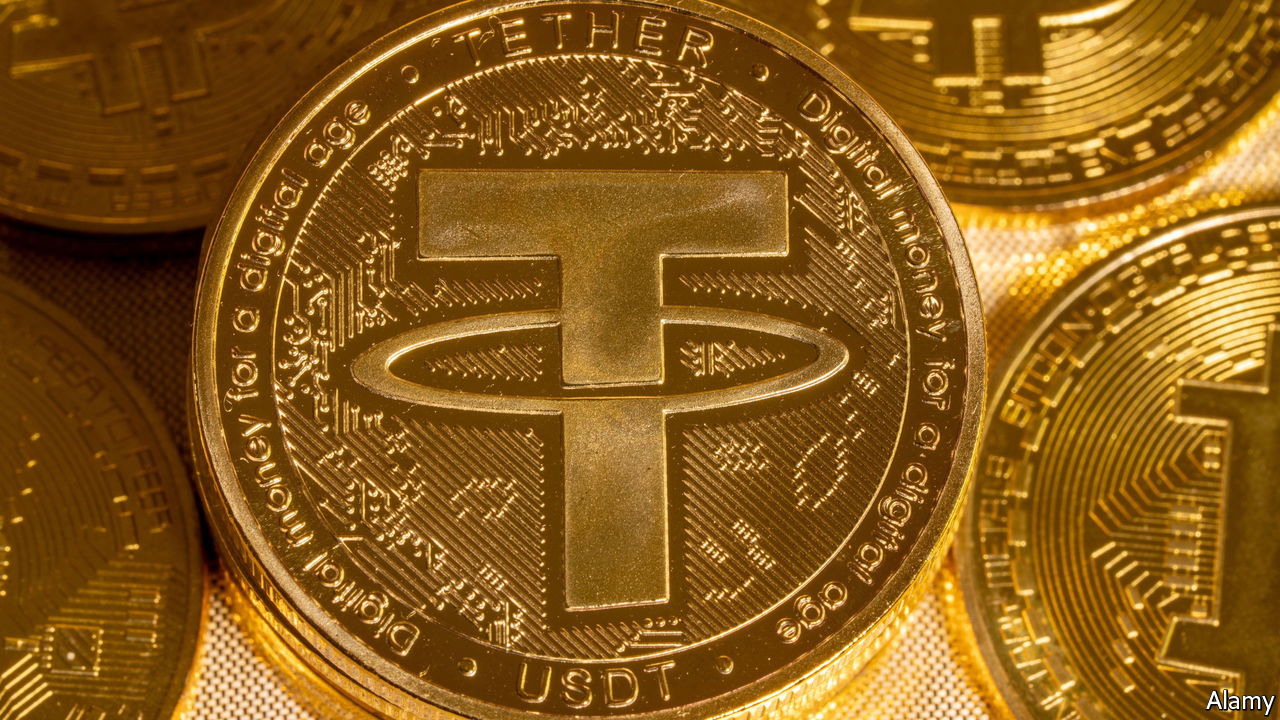
Tether, the company behind the popular stablecoin USDT, has announced that it has frozen $225 million worth of USDT that were allegedly linked to a human trafficking group. The freeze was requested by law enforcement agencies, who are investigating the criminal activities of the group.

According to a statement from Tether, the freeze affects 24 addresses that hold a total of 225,000,000 USDT. The company said that it is cooperating with the authorities and that it has a zero-tolerance policy for illicit use of its platform.

Tether is one of the most widely used cryptocurrencies in the world, with a market capitalization of over $70 billion. It is designed to maintain a 1:1 peg with the US dollar and is backed by reserves of fiat currency and other assets. However, Tether has also faced controversy and criticism over its lack of transparency, its susceptibility to manipulation, and its involvement in legal disputes.

The freeze of $225 million in USDT is not the first time that Tether has taken action against suspected criminals. In 2019, Tether froze $33 million in USDT that were connected to a Ponzi scheme called Plus Token. In 2018, Tether also froze $5.5 million in USDT that were linked to a cryptocurrency exchange called Bitfinex, which was accused of fraud and money laundering.

The use of cryptocurrencies by human traffickers is a challenge for law enforcement agencies.

While cryptocurrencies offer many benefits, such as lower transaction costs, faster processing, and greater privacy, they also pose significant challenges for law enforcement agencies. One of these challenges is the use of cryptocurrencies by human traffickers, who exploit them to facilitate their illicit activities and evade detection.

Human trafficking is a global crime that involves the recruitment, transportation, transfer, harboring, or receipt of persons for the purpose of exploitation. According to the United Nations, human trafficking affects every region of the world and generates an estimated $150 billion in profits annually.

Human traffickers use various methods to coerce, deceive, or manipulate their victims, such as violence, threats, fraud, or abuse of power. They also use various means to conceal their identity and operations, such as fake documents, encrypted communication, and money laundering.

Cryptocurrencies provide human traffickers with a convenient and anonymous way to transfer funds across borders and jurisdictions. Unlike traditional financial systems, cryptocurrencies do not require identification or verification of the parties involved in a transaction.

They also do not leave a traceable paper trail that can be used to track the source and destination of the funds. This makes it difficult for law enforcement agencies to identify and locate the perpetrators and beneficiaries of human trafficking, as well as to seize and recover their assets.

Moreover, cryptocurrencies enable human traffickers to access a global network of buyers and sellers of illicit goods and services. Through online platforms such as dark web marketplaces, human traffickers can advertise and sell their victims to customers who pay with cryptocurrencies. They can also use cryptocurrencies to purchase weapons, drugs, or other items that facilitate their criminal activities. These transactions are often conducted through peer-to-peer networks or intermediaries that provide anonymity and security for both parties.

The use of cryptocurrencies by human traffickers is a challenge for law enforcement agencies that requires a coordinated and comprehensive response. Law enforcement agencies need to enhance their technical capabilities and skills to monitor and analyze cryptocurrency transactions and networks.

They also need to collaborate with other stakeholders, such as regulators, financial institutions, cryptocurrency service providers, civil society organizations, and international organizations, to share information and best practices. Furthermore, they need to raise awareness and educate the public about the risks and harms of human trafficking and cryptocurrency abuse.

Cryptocurrencies are not inherently evil or illegal. They have the potential to create positive social and economic impacts for many people around the world. However, they also have the potential to be misused and abused by criminals who exploit their features for nefarious purposes. The use of cryptocurrencies by human traffickers is a challenge for law enforcement agencies that demands urgent attention and action.

The freeze of $225 million in USDT is a significant development in the fight against human trafficking, which is one of the most heinous crimes in the world. According to the United Nations, human trafficking affects millions of people every year, who are exploited for sexual or labor purposes. Human trafficking is also a lucrative business, generating an estimated $150 billion in annual profits for the traffickers.

The use of cryptocurrencies by human traffickers is a challenge for law enforcement agencies, who have to deal with the anonymity and decentralization of these digital assets. However, the freeze of $225 million in USDT shows that there are ways to track and stop the flow of illicit funds on the blockchain. It also shows that Tether is willing to comply with legal requests and to prevent its platform from being used for evil purposes.

SEC Charges Kraken for Operating an Unregistered Crypto Exchange, Tokenized Real-world Assets More Than Web3 Robinhood

1

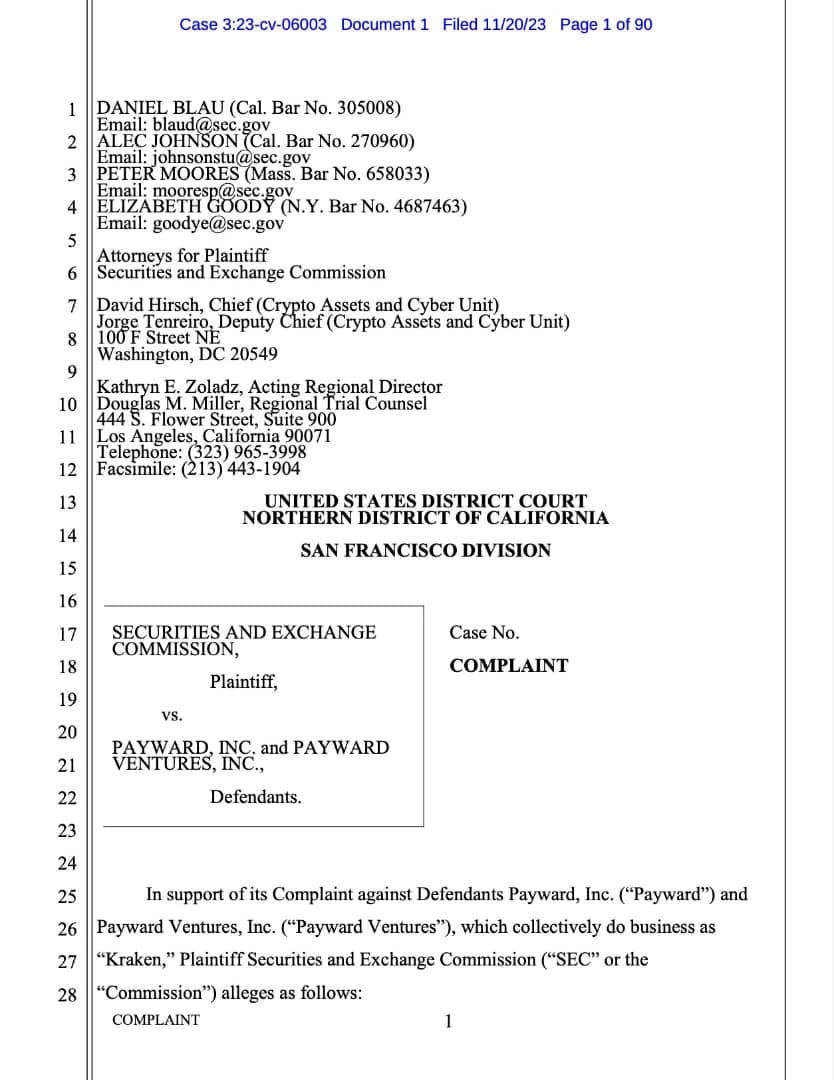
The Securities and Exchange Commission (SEC) has filed a lawsuit against Kraken, one of the largest cryptocurrency exchanges in the world, for allegedly violating federal securities laws. The SEC claims that Kraken operated as an unregistered securities exchange, broker, and dealer, and facilitated the trading of digital assets that are considered securities under the law.

According to the SEC’s complaint, Kraken offered trading services for more than 50 digital assets, including tokens that were issued through initial coin offerings (ICOs) and other fundraising schemes. The SEC alleges that some of these tokens were securities that required registration with the SEC or an exemption from registration. However, Kraken did not register as a securities exchange, broker, or dealer, nor did it seek an exemption or comply with any regulatory requirements.

The SEC also accuses Kraken of failing to implement adequate policies and procedures to prevent fraud, manipulation, and abuse in the digital asset market. The SEC alleges that Kraken did not conduct any due diligence on the digital assets it listed, nor did it verify the identity or suitability of its customers. The SEC claims that Kraken exposed investors to significant risks of losing their money and being defrauded by scammers and hackers.

The SEC is seeking a permanent injunction, disgorgement of ill-gotten gains, civil penalties, and other relief against Kraken and its owners and operators. The SEC warns investors to be cautious when dealing with unregistered platforms that offer trading services for digital assets.

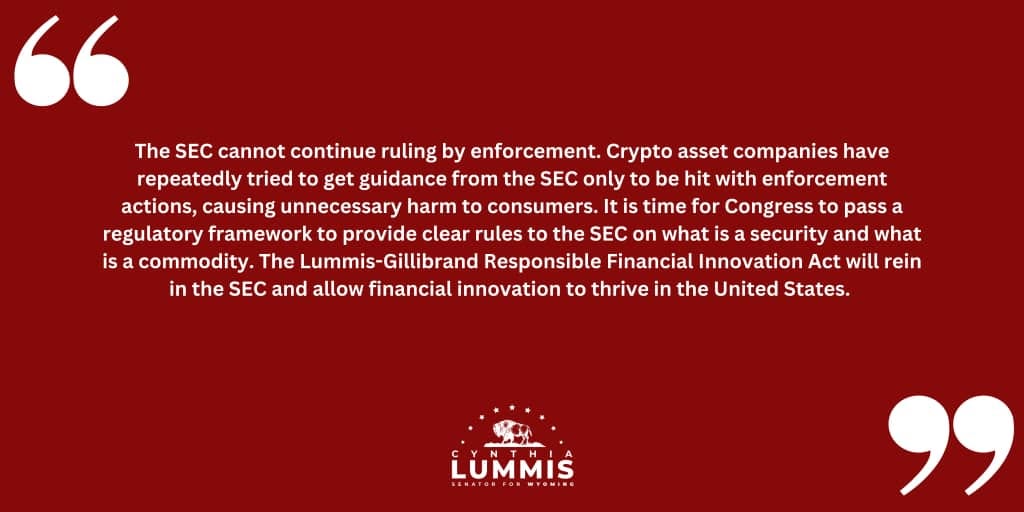
Senator Lummis wrote against Kraken’s suit by the SEC on X;

The Kraken lawsuit is a clear example of how the SEC is overstepping its authority and trying to regulate the crypto industry through intimidation and coercion. The SEC has no clear or consistent framework for determining what constitutes a security in the crypto space, and instead relies on vague and outdated guidance that does not reflect the innovation and diversity of this emerging sector. The SEC’s actions are harming not only the crypto companies and investors, but also the American economy and competitiveness.

As a senator and a crypto advocate, I strongly oppose the SEC’s approach and urge them to adopt a more constructive and collaborative attitude towards the crypto industry. The SEC should work with Congress and other stakeholders to develop a clear and sensible regulatory framework that fosters innovation, protects consumers, and respects the constitutional rights of all parties involved. The SEC should not use its enforcement powers to bully and harass the crypto industry, but rather to pursue actual fraud and misconduct.

The Kraken lawsuit is not only a legal battle, but also a political one. It is a test of whether the SEC will respect the will of the people and their elected representatives, or whether it will continue to act as an unelected and unaccountable bureaucracy that imposes its own agenda on the crypto industry. I stand with Kraken and the crypto community in this fight, and I will continue to use my voice and influence to defend our rights and freedoms in the face of the SEC’s overreach, Senator Lummis wrote.

The SEC claim its actions against Kraken Exchange is part of its ongoing efforts to protect investors and ensure compliance with the federal securities laws in the emerging and evolving digital asset space. The SEC has previously brought enforcement actions against other unregistered platforms that facilitated the trading of digital asset securities, such as Ether Delta, Bitqyck, BitConnect, and LBRY.

The Securities and Exchange Commission has charged the cryptocurrency firm Kraken with operating as an unregistered securities exchange, broker, dealer and clearing agency. It’s the latest suit in an SEC crackdown on crypto firms for violating U.S. securities laws. The agency has identified 16 tokens on the Kraken platform that it alleges are securities. It also accuses the company of mishandling customer funds, as well as inadequate internal controls and recordkeeping. Crypto exchanges have lobbiedfor industry-specific regulation, arguing that existing securities rules shouldn’t apply to cryptocurrencies.

Kraken’s chief legal officer said in a statement, “We disagree with the SEC’s complaint against Kraken, stand firm in our view that we do not list securities and plan to vigorously defend our position,” per Axios. The SEC has filed similar lawsuits against crypto trading giants Binance and Coinbase. Meanwhile, the Justice Department reportedly wants Binance to pay approximately $4 billion to resolve its probe into the world’s largest crypto exchange. (LinkedIn News)

Tokenized Real-world Assets Are More Than a Web3 Robinhood

If you are familiar with the concept of tokenization, you might think of it as a way to democratize access to financial markets and assets. By creating digital representations of real-world assets on the blockchain, tokenization allows anyone with an internet connection and a crypto wallet to invest in things like stocks, bonds, real estate, art, and more. This is similar to how platforms like Robinhood have enabled millions of retail investors to participate in the stock market with low fees and minimal barriers.

Tokenized real-world assets are digital representations of physical or intangible assets that are secured by blockchain technology. They allow for fractional ownership, increased liquidity, lower transaction costs, and greater transparency of the underlying assets. In this blog post, we will explore some of the benefits of tokenizing real-world assets and how they can create new opportunities for investors and asset owners.

However, tokenization is more than just a Web3 version of Robinhood. It is a paradigm shift that has the potential to transform the way we create, exchange, and manage value in the digital economy. Tokenization is not only about making existing assets more accessible and liquid, but also about creating new types of assets and value streams that were not possible before.

Tokenization enables the creation of fractional ownership rights for any asset, regardless of its size, value, or location. This means that investors can buy and sell fractions of an asset, rather than having to own it entirely. For example, someone could own a fraction of a painting by Picasso, a skyscraper in New York, or a share of Tesla, and benefit from its appreciation or income generation. Fractional ownership lowers the entry barriers for investors, increases the liquidity of assets, and creates more efficient markets.

Tokenization allows the embedding of smart contracts into the tokens that represent the assets. Smart contracts are self-executing agreements that can enforce the rules and conditions of the asset ownership and transfer. For example, a smart contract could automatically distribute dividends to token holders, execute buyback orders, or trigger payments based on certain events or milestones. Programmability adds functionality and flexibility to the assets and enables new business models and revenue streams.

Tokenization enables the integration and interoperability of different assets and platforms across the blockchain ecosystem. Tokens that follow common standards and protocols can be easily exchanged and composed with other tokens, creating new forms of value creation and exchange. For example, a tokenized real estate property could be used as collateral for a loan on a decentralized lending platform like Aave, or a tokenized art piece could be displayed in a virtual world or a metaverse like Decentraland.

Tokenization enhances the transparency and trustworthiness of the assets and their transactions. Tokens are recorded on a public and immutable ledger that can be verified by anyone at any time. This reduces the need for intermediaries and third-party verification services and eliminates fraud and manipulation.

Tokenization unlocks new possibilities for innovation and experimentation in the digital economy. By creating new types of assets and value streams, tokenization enables entrepreneurs and creators to explore new markets and niches, and to offer novel products and services to their customers.

What are the benefits of Tokenized real-world assets?

One of the main benefits of tokenizing real-world assets is that they enable fractional ownership, which means that an asset can be divided into smaller units or tokens that can be bought and sold by multiple investors. This lowers the barriers to entry for investing in high-value assets such as real estate, art, or collectibles, and allows for greater diversification and risk reduction. Fractional ownership also creates more liquidity in the market, as tokens can be traded more easily and quickly than traditional assets.

Another benefit of tokenizing real-world assets is that they reduce transaction costs and inefficiencies. By using smart contracts, which are self-executing agreements that are encoded on the blockchain, tokenized assets can automate the processes of verification, settlement, and compliance, eliminating the need for intermediaries such as brokers, lawyers, or regulators. This reduces the fees, delays, and errors that are often associated with transferring ownership of physical or intangible assets.

A third benefit of tokenizing real-world assets is that they increase transparency and trust among the parties involved. By using blockchain technology, which is a distributed ledger that records and verifies every transaction on the network, tokenized assets can provide a clear and immutable record of ownership, provenance, and performance of the underlying assets. This enhances the quality and reliability of the information available to investors and asset owners, and reduces the risks of fraud, manipulation, or disputes.

Tokenizing real-world assets can offer significant advantages over traditional forms of asset ownership and transfer. By enabling fractional ownership, increasing liquidity, lowering transaction costs, and improving transparency, tokenized real-world assets can create new possibilities for value creation and exchange in the digital economy. Tokenization also fosters collaboration and co-creation among different stakeholders in the blockchain space, as they can leverage each other’s assets and capabilities to create synergies and network effects.

Tokenization is more than a Web3 Robinhood. It is a powerful tool that can revolutionize the way we create, exchange, and manage value in the digital economy. Tokenization is not only about making existing assets more accessible and liquid, but also about creating new types of assets and value streams that were not possible before.