DD
MM
YYYY

PAGES

DD
MM
YYYY

spot_img

PAGES

Home Blog Page 3944

Nigeria’s Director-General of Budget Office Deems Proposed N27.5 Trillion Budget “Too Small”

0

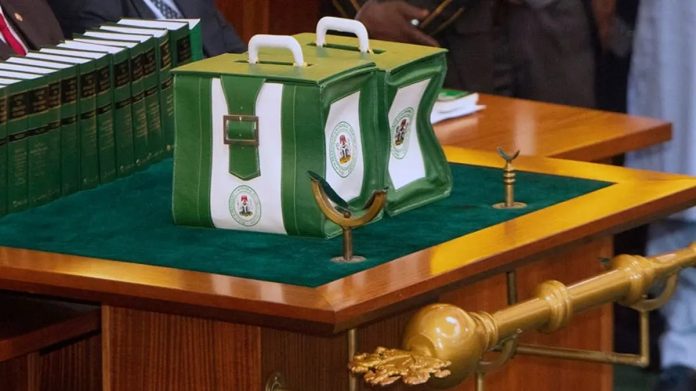
Ben Akabueze, the Director-General of the Budget Office of the Federation, has expressed that the proposed N27.5 trillion budget for 2024, awaiting approval in the National Assembly, is considered “too small” to adequately address Nigeria’s economic needs.

While acknowledging the government’s commitment to fiscal responsibility in aligning expenses with available resources, Akabueze stated in an interview on Channels TV that the budgetary allocation is conservative compared to the economic obligations of the government.

“I’m always first to acknowledge that the budget of the Federal Government of Nigeria is way too small relative to our needs and our requirements but it is now a case of cutting out coats according to our cloth rather than our size,” noted Akabueze. He added that the budget’s size is constrained by the limited public revenues available.

Addressing the International Monetary Fund’s (IMF) projection of Nigeria’s economic growth rate, Akabueze stated that the IMF assessment is not entirely based on the economic facts of the country. He added that the government’s projection, as presented by President Bola Tinubu during the budget presentation, is more reasonable than that of the international financial institution.

President Tinubu projected a 3.76% growth rate in the 2024 fiscal year, with an N18.32 trillion revenue target for budget funding. In contrast, the IMF had projected a 3.1% economic growth for Nigeria in 2024. Akabueze defended the government’s projection, asserting that IMF predictions for the country have been inaccurate in the past four years.

“In the last four years, IMF has got it wrong about our projections. Organizations can’t get it right better than the people who have direct responsibility for managing their individual economies. Our actual growth has always beat their projections,” he added.

The N27.5 trillion 2024 budget proposal includes a total aggregate revenue projection of N18.32 trillion and a deficit of N9.18 trillion. It prioritizes capital expenditure at N8.7 trillion and recurrent expenditure at N18.51 trillion.

President Tinubu highlighted that the budget focuses on the well-being of the impoverished, emphasizing healthcare, security, education, and the economy.

However, analysts have voiced criticism toward the budget, despite its limited details. Based on the information released by the federal government, the budget appears to be characterized by lavish government spending, underscoring a lack of sensitivity to the struggles faced by the average Nigerian amidst ongoing economic challenges.

Notably, the projected expenditure for various items such as the Presidential Air Fleet, welfare packages, maintenance, renovations, and other expenses in the 2024 Budget is expected to gulp a staggering N346 billion.

Y Combinator-Backed Fintech Startup Bujeti, Raises $2 Million in Seed Funding to Expedite Its Growth

0

Nigerian fintech startup that simplifies expense management, Bujeti, has raised $2 million in a seed funding round.

The funding round was led by Y-Combinator with several other investors which include Entree Capital, Voltron Capital, UnpopularVC, Kine Ventures, and several other Angel investors.

Bujeti disclosed that the seed raised will be used to expedite its growth, expand its market share, and diversify its product offerings.

The fintech startup is specifically focused on introducing credit lines for small and medium-sized businesses (SMBs) and creating new products tailored to the unique needs of enterprises.

Founder and CEO of Bujeti, Cossi Achille Arouko, emphasized the company’s commitment to collaboration and becoming the go-to solution for the entire business ecosystem, similar to platforms like Teams or Slack.

He said,

“Our differentiation lies in providing unparalleled control and granularity in financial operations, allowing businesses to digitize their complex payment and finance processes effortlessly. Bujeti stands as a digital ally, empowering workplaces and fostering trust among teams.”

Achille added that the company’s imminent goal is to reach $200 million in transaction processing, illustrating the growing demand for a comprehensive, integrated solution like Bujeti.

One of the key investors Abdul Tomiwa Hassan, CEO of Mono speaking on the Bujeti’s funds raised, said,

“We are thrilled to support Bujeti in their mission to revolutionize financial management for businesses across Africa. Bujeti’s innovative platform and the leadership of Cossi Achille Arouko position the company as a game-changer in the industry.

“Investing in Achille and Bujeti was an obvious choice, they address a significantly fragmented market with capable founders who excel in technical and business aspects. We believe in their potential to transform how businesses handle their finances, and we’re excited to be a part of their journey.”

Founded in 2021, initially as a personal finance startup for Blacks in Diaspora, Bujeti diversified into B2B finance management offerings for businesses across Africa.

The startup offers a simple, fully integrated accounting and expense solution that targets businesses in several industries, such as logistics, healthcare, agriculture, and construction.

Bujeti serves as the financial sidekick for CEOs, CFOs, COOs, Finance Managers, Accountants, Team Managers, and Team members/Employees.

It caters to a diverse range of industries, including Agriculture, Technology, Travel & Hospitality, Logistics, Healthcare, Manufacturing, Real Estate, Construction, Retail, Media, and Entertainment.

Also, Bujeti addresses challenges such as paper-based workflows, manual financial processes, and disconnected systems. It aims to unlock success for businesses, by optimizing cash flow, enhancing budgeting and forecasting, ensuring compliance, preventing resource misallocation, and supporting their scaling endeavors.

Notably, the Y combinator-backed startup manages the issuance of corporate cards to employees and contractors of the businesses on their platform, streamlining their spending processes.

Peter Obi Criticizes 2024 Budget, Calls for Reprioritization Towards Urgent Needs

0

Peter Obi, the Labour Party presidential candidate in the last Nigeria general elections, has raised concerns about the features of the proposed 2024 national budget, particularly criticizing the allocation for presidential aides’ trips and office renovations.

In a post he made on X (Twitter) on Friday, Obi who had earlier criticized the 2023 supplementary budget for being extravagant, expressed his reservations about the substantial funds earmarked for certain items in the appropriation bill.

Although full details of the budget are yet to be published, he pointed out, based on available information, that a staggering sum of N15.961 billion has been budgeted for trips for the aides of the president and vice president. Extrapolating this, he estimated that the combined spending for the President and Vice President, along with their aides, would reach about N45 billion for trips alone.

Additionally, the budget allocates N20 billion for the renovation of the President and Vice President’s offices in Lagos and Abuja, including their full digitization.

Obi raised questions about the priorities outlined in the budget, particularly when considering the significant allocation for trips and renovations. He emphasized the need to redirect these funds towards critical areas such as internal security, pointing out that the budget for the Police Trust Fund, which is essential for securing over 200 million people, was passed with an amount of N57 billion.

“If you add N45 billion, being the least that will be spent on transportation, and N20 billion earmarked for renovations, it comes to about N65 billion, which is more than N57 billion, being the amount passed by the Senate last week for the Police Trust Fund, to secure over 200m people,” he said.

Suggesting alternative uses for the allocated funds, Obi proposed that the N65 billion budgeted for trips and renovations could be redirected to address pressing issues. He urged a focus on internal security, highlighting that over 5,000 police stations and operations across the country lack functional vehicles and sufficient fuel allowances.

He recommended allocating funds to purchase 2,500 4×4 trucks for the police stations, supporting local manufacturers like Innoson.

“Half of these police stations have no functional vehicles. Even those that have been given less than N5000 for fuel in a day, which is why if you are lucky, for prominent people like me, to call the police for any intervention in an emergency, the first thing they tell you is – ‘we have no fuel’.

“Assuming we decide to prioritize our lists and use these resources as most of the trips and the renovations are of no value to our growth and productivity, we can approach local manufacturers like Innoson and others and order 2500 4×4 trucks which as of today cost about N30 million.

“We will be able to get a 20% discount because we are buying in large quantities and paying them upfront. It will amount to N25 million each, which will be N62.5 billion for half of the police stations that do not have operational vehicles today, and which will be taken care of by the money we save from the budgeted travel and renovations,” he said.

The former Anambra State governor further suggested utilizing the N15 billion budgeted for the new residence of the Vice President to triple the fuel allowances for police operational cars, addressing immediate operational needs. He emphasized on the importance of prioritizing critical areas such as health, education, and poverty alleviation in the budget, redirecting funds to areas that have a direct impact on the well-being of the population.

Obi urged a comprehensive review and revision of the budget to align with the urgent needs of the country, emphasizing the importance of prioritizing expenditures to address the challenges faced by the masses.

“By prioritizing our planning, and budgeting this way, we will not only be securing the country better but will be making our local industries more productive and profitable, thereby creating the desperately needed Jobs,” he said.

IATA Warns of Foreign Airlines Pullout Over Trapped Funds, Labels Nigerian Airports Most Expensive

0

The International Air Transport Association (IATA) has issued a warning to the Central Bank of Nigeria (CBN) about the potential withdrawal of foreign airlines from the Nigerian market if urgent action is not taken regarding the $790 million ticket revenue currently trapped in the country.

Kamil Alawadhi, IATA Regional Vice President, Africa & Middle East, conveyed this concern on Thursday during a media presentation at the IATA Global Media Day in Geneva, Switzerland.

Alawadhi stated that Nigeria currently holds the highest amount of airline-trapped funds globally, totaling $792 million. He said there is a need for engagement between relevant parties, including the CBN Governor and the aviation minister, to address the issue.

Despite the CBN’s intervention in 2022, releasing $265 million to affected airlines, the challenge, which is significantly influenced by Nigeria’s ongoing forex crisis, persists.

Last November, Emirates Airlines suspended its flight operations to Nigeria for the second time due to the failure to repatriate the company’s earnings trapped alongside other foreign airlines’ funds. Emirates’ trapped fund at that time was $85 million.

The IATA VP urged proactive measures to prevent further withdrawals by foreign carriers.

According to him, Nigeria tops the list of countries with the highest amount of airlines’ blocked funds, totaling $792 million. Following closely are Egypt with $348 million, Algeria with $199 million, the AFI zone with $183 million, and Ethiopia with $128 million.

The VP noted that while Ethiopia has devised a plan to settle the debt, Nigeria has not taken any action to address its blocked funds.

“Ethiopia is seeking a way to resolve this issue even though the blocked fund is rising. The first step for us to solve these blocked funds is for both parties to engage. If parties don’t engage, it is very difficult to move forward. I have not been able to engage with Nigeria’s CBN Governor.

“He said he would engage with me when he had a solution. He is not promising but I have engaged with the Aviation Minister who is very understanding, new to the position, or maybe wowed by the situation he inherited will help to resolve the matter,” he said.

The IATA VP expressed concern that airlines in Africa are collectively owed $34 million, which is currently blocked. The delay in releasing these funds has led to depreciation, resulting in a loss of $10 million. This situation is deemed unfair by the airlines, as they have fulfilled all financial obligations to airport operators, including carrying Nigerian officials on their flights. He lamented that despite meeting their dues, the airlines find themselves unable to access the funds rightfully owed to them.

The IATA chief commented on Nigeria’s aviation sector, highlighting significant challenges faced by airlines in the country. He mentioned the burden of a 25 percent interest rate on loans, exorbitant airport taxes, and insurance premiums six times higher than global standards. These factors collectively hinder the profitability of Nigerian airlines.

Al-Awadhi disclosed that any airline operating beyond Nigeria’s borders operates with lower operating costs and offers more competitive prices compared to domestic Nigerian carriers.

Furthermore, he pointed out that despite Lagos and Abuja airports having infrastructure that falls short of optimal standards, they are ranked as the most expensive gateways in the region, exacerbating the difficulties faced by airlines operating within the country.

“… Nigeria has two most expensive airports; their fuel is higher than elsewhere in the world, and insurance is six times more expensive than anywhere else in the world.

“The interest on loans is 25%. It is ridiculous. It is the highest interest I have ever seen. When you set up these airlines, you are already disadvantaged. Any airline in Nigeria operating outside of Nigeria has a cheaper operating cost and better prices than Nigerian airlines. You can see why it is difficult for African airlines to make profit,” he said.

Nevertheless, Al-Awadhi conveyed IATA’s unwavering commitment to pinpointing and mitigating the factors that contribute to the elevated operating costs in Nigeria. The organization aims to work collaboratively to create a more favorable and conducive environment that enables airlines to prosper within the country.

“We are expecting that the operating costs of the African airlines will be lowered and they can become profitable”, he said.

NECA Decries Exits of Multinationals from Nigeria, Says Over 2,000 Jobs Lost

0

The Nigeria Employers’ Consultative Association (NECA) has expressed alarm over the consequences of recent divestments by multinationals in the country, citing the loss of over 20,000 direct jobs.

NECA, the umbrella body for employers and a voice of business in Nigeria warned that the continuous divestments and closures of businesses would lead to growing unemployment, insecurity challenges, increased child labor, reduced disposable income, and decreased economic output.

The mass departure of global and local businesses in the last few years, representing over 15 organizations, has raised significant concerns about unemployment’s impact on societal stability and the economy.

“It is worrisome to note that in the last three years, over 15 organisations with a combined value-chain staff strength of over 20,000 employees have either divested or partially closed operations,” the association said.

The Director-General of NECA, Adewale-Smatt Oyerinde, described the situation as worrisome.

“We are concerned at the growing rate of unemployment in the country, made worse by the continuous divestment of global businesses and closure of local ones,” he said in a statement.

To address this challenge, NECA said there is an urgent need for the government to tackle multifaceted challenges faced by businesses.

According to Oyerinde, there is a need for swift action to improve the business environment by addressing regulatory hurdles, enhancing critical infrastructure, stabilizing the foreign exchange market, and ensuring government agencies facilitate and promote businesses rather than impede them.

“The harsh business environment has made local businesses to be uncompetitive. The government must urgently address regulatory and legislative bottlenecks that tend to stifle businesses rather than promote them.

“Continuous efforts must be made to promote locally-made goods through the provision of critical infrastructures; urgent stabilization of the foreign exchange market and ensuring that Ministries, Departments and Agencies are appraised not only by how much income they generate but also by how many businesses they facilitated or promoted,” he said.

Recognizing the critical role of the private sector in job creation, NECA stressed the importance of fostering a competitive and sustainable environment for businesses to thrive. The association urged deliberate efforts to support local industries and emphasized the need for government agencies to prioritize not just revenue generation but also the facilitation of businesses.

The ongoing exits of multinational companies from ground operations in Nigeria, such as Procter & Gamble, Glaxosmithkline and Equinor, are expected to result in a significant loss of Foreign Direct Investments (FDI).

This loss so far is estimated at $335 million (approximately N310 billion), representing the combined asset value of these recent exits. The departures of these major players in the FMCG and upstream oil sectors raise concerns about the future of Nigeria’s wobbling economy due to the reduction in FDI inflows.