DD
MM
YYYY

PAGES

DD
MM
YYYY

spot_img

PAGES

Home Blog Page 3976

UK Government publishes crypto regulation, US Senator Lummis wants Crypto Regulation Bill passed in 2024

0

The UK government has announced its plans to regulate the cryptocurrency sector, aiming to foster innovation and protect consumers and investors from potential risks. The plans, which were published in a consultation paper on 7 November 2023, outline the government’s vision for a “proportionate and effective” regulatory framework that balances the benefits and challenges of crypto assets.

According to the paper, the government intends to:

Apply the existing anti-money laundering and counter-terrorist financing rules to crypto asset service providers, such as exchanges, wallets and custodians, in line with the recommendations of the Financial Action Task Force (FATF).

Introduce a new category of regulated crypto assets, called “stable tokens”, which are pegged to fiat currencies or other assets and are used for payments or investment purposes. Stable tokens will be subject to similar rules as electronic money or payment services, depending on their functionality and risk profile.

Establish a “regulatory sandbox” for crypto asset innovation, where firms can test new products and services in a controlled environment with regulatory guidance and feedback.

Enhance consumer awareness and education on crypto assets, including the risks and opportunities they present, as well as their legal and tax implications.

Work with international partners and standard-setting bodies to promote global coordination and alignment on crypto asset regulation.

The government stated that it recognizes the potential of crypto assets to transform the financial sector and the wider economy, by enabling faster, cheaper and more inclusive access to financial services, as well as supporting innovation and competition. However, it also acknowledged that crypto assets pose significant challenges, such as volatility, cybercrime, fraud, market abuse, consumer harm and environmental impact.

The consultation paper is open for feedback from stakeholders until 31 January 2024. The government expects to publish its final policy proposals and draft legislation in the second half of 2024.

The UK’s approach to crypto asset regulation is broadly in line with other major jurisdictions, such as the US, EU and Japan, which have also taken steps to clarify and update their rules in response to the rapid growth and evolution of the sector. The UK’s plans also reflect the recommendations of the Crypto assets Taskforce, which was established in 2018 by the Treasury, the Bank of England and the Financial Conduct Authority (FCA) to assess the opportunities and risks of crypto assets and develop an appropriate policy response.

Bank of England proposes allowing stablecoins as a payment option for goods and services.

The Bank of England has recently published a discussion paper on the role of stablecoins in the UK’s payment system. Stablecoins are digital tokens that are backed by assets or liabilities, such as fiat currency or commodities, and aim to maintain a stable value over time.

Stablecoins have the potential to offer some benefits for consumers and businesses, such as lower costs, faster transactions, and greater financial inclusion. However, they also pose significant risks and challenges, such as operational resilience, consumer protection, and regulatory compliance.

The Bank of England proposes that stablecoins that are used as a means of payment should meet the same standards as those that apply to traditional payment systems and services. This means that stablecoins should be authorized and supervised by the relevant authorities, have adequate governance and risk management frameworks, and ensure the safety and availability of the funds backing the tokens.

The Bank of England also suggests that stablecoins should be interoperable with other payment systems and services and support the use of the pound sterling as the UK’s official currency.

The Bank of England invites feedback from stakeholders on its proposals and analysis by 7 February 2022. The Bank of England will use the responses to inform its future policy development and engagement with other regulators and international bodies. The Bank of England aims to ensure that the UK’s payment system remains safe, efficient, and innovative, while supporting the public interest and financial stability.

Senator Cynthia Lummis wants Crypto Regulation Bill passed early next year in the USA

Senator Cynthia Lummis, a vocal advocate for Bitcoin and cryptocurrency, has expressed her hope that a comprehensive crypto regulation bill will be passed by Congress in early 2024. In an interview with CoinDesk, she said that she is working with other lawmakers and regulators to create a clear and consistent framework for the crypto industry in the US.

Lummis, who is a member of the Senate Banking Committee, said that she wants to ensure that the US does not stifle innovation and competitiveness in the crypto space. She said that she is in favor of a light-touch approach that balances consumer protection and financial inclusion. She also said that she is opposed to any attempts to ban or restrict crypto assets, such as the proposed Stablecoin Tethering and Bank Licensing Enforcement (STABLE) Act.

Lummis, who owns Bitcoin herself, said that she sees crypto as a way to diversify her portfolio and hedge against inflation. She said that she believes that Bitcoin is a store of value and a digital gold, and that other crypto assets have different use cases and benefits. She said that she wants to educate her colleagues and the public about the potential of crypto and blockchain technology.

Lummis also commented on the recent infrastructure bill that contained a controversial provision on crypto tax reporting. She said that she was disappointed that the amendment to clarify the definition of a broker was not adopted, but that she is optimistic that the issue will be resolved in the future. She said that she is working with other senators, such as Ron Wyden and Pat Toomey, to introduce a standalone bill to address the crypto tax issue.

Lummis said that she is confident that the US will eventually adopt a sensible and supportive crypto regulation framework, but that it will take time and effort. She said that she is committed to advancing the crypto agenda in Congress and to collaborating with other stakeholders in the industry. She said that she hopes that by early 2024, there will be a crypto regulation bill that will provide clarity and certainty for the crypto community in the US.

SEC is overreacting on crypto,” – US Senator. Cynthia Lummis

In a recent interview with CNBC, US Senator Cynthia Lummis expressed her frustration with the Securities and Exchange Commission (SEC) and its approach to regulating cryptocurrencies. She argued that the SEC is overstepping its authority and stifling innovation in the crypto space.

Lummis, who is a vocal supporter of Bitcoin and blockchain technology, said that the SEC should not treat all cryptocurrencies as securities, but rather recognize the differences between various types of digital assets. She said that the SEC should focus on protecting investors from fraud and manipulation, but not interfere with the development of new products and services that use crypto.

She also criticized the SEC for its lack of clarity and guidance on crypto regulation, saying that it creates uncertainty and confusion for both investors and entrepreneurs. She said that the SEC should work with Congress and other regulators to create a clear and consistent framework for crypto regulation, rather than acting unilaterally and arbitrarily.

Lummis said that she is working with other lawmakers to introduce legislation that would provide more clarity and certainty for the crypto industry. She said that she hopes to educate her colleagues and the public about the benefits and potential of crypto, and to foster a more positive and supportive environment for innovation.

She concluded by saying that she believes that crypto is the future of finance, and that the US should embrace it rather than fear it. She said that she is optimistic that crypto will bring more financial inclusion, freedom, and prosperity to millions of people around the world.
Nigeria Must Change Its Defective National Business Model for Development

1

The most important element in a business is the business model you decide to operate.. If the business model is defective, even if you are a good operator, you will still struggle. Yes, the business model is supreme in the market system. For example, no matter how smart you are, if you are running a B2C ecommerce business in Nigeria, you will struggle to scale it because the core components which improve unit economics and marginal costs (those logistics systems, etc) are not present; for hybrid with drop offs, you have a chance though!

That brings me to Nigeria. Our current problems and the challenges are not due to geopolitics and the Ukraine-Russia war;  Nigeria’s CORE problem is simple: our national business model is terrible.  That problem is the reason we have been having issues well before the pandemic and the recent wars, and will continue until we do something about it.

The apex bank governor “attributed Nigeria’s economic challenges to a combination of macroeconomic factors, including the lingering impacts of the COVID-19 pandemic and the ongoing Russia-Ukraine war.” The national business model is a key reason why things keep going down.

What is this national business model? State-level responsibility and competitiveness. Until we have that, the macroeconomic factors will not improve because business is local and states are supposed to be drivers of what happens in Abuja. Nigeria needs FISCAL federalism, and must stop this babysitting of state governments with monthly sharing of the commonwealth. Yes, until we do that, nothing transformational will happen! We can blame Ukraine, Russia, pandemic, macroeconomic factors, etc, but those are not the core problem – and that core problem is that Nigeria must change how it operates.

CBN Governor Cardoso Attributes Nigeria’s Economic Woes to Ongoing Russia-Ukraine War

0

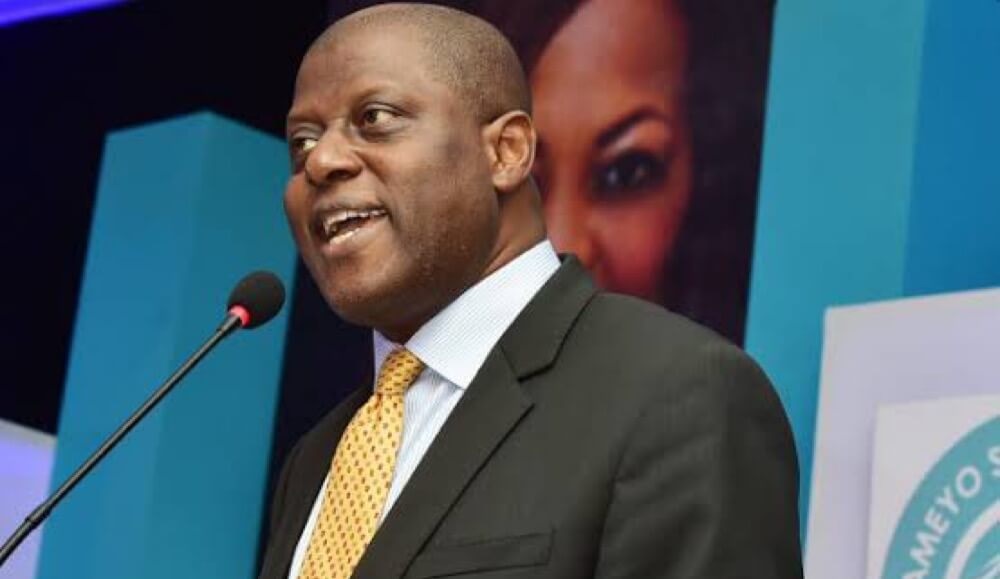
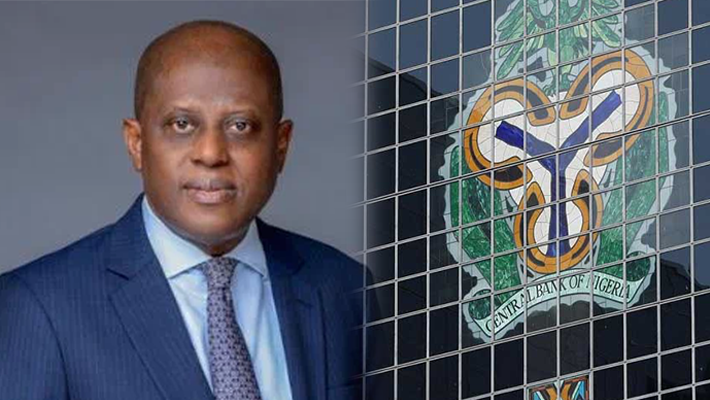
Olayemi Cardoso, the governor of the Central Bank of Nigeria (CBN), has attributed Nigeria’s economic challenges to a combination of macroeconomic factors, including the lingering impacts of the COVID-19 pandemic and the ongoing Russia-Ukraine war.

He made these remarks during the “Cowries to Cashless” lecture and launch event held in Abuja.

Represented by Mr. Mustapha Haruna, the Director of Banking Supervision, Dr. Cardoso highlighted the economic difficulties that the country is facing due to the combined effects of the pandemic and geopolitical tensions.

Dr. Cardoso also mentioned the significance of the book titled “Cowries to Cashless,” noting that it captures the evolutionary journey of the CBN, particularly focusing on the remarkable transformation of the Nigerian payment system over the last two or three decades.

He emphasized that this transformation has been further advanced through the implementation of the cashless policy.

Is the CBN still pushing blame?

Nigerians have expressed concern that the new central bank governor is towing the path of his predecessor, Godwin Emefiele, who had notoriety blaming people and events for Nigeria’s economic pitfalls tied to the CBN’s monetary policies.

Nigeria’s current economic woes are highly tied to the poor performance of the naira, the country’s currency, which has fallen miserably in the FX market – stoking inflation up to 26.72% as of September.

Experts say that the solution lies in increased FX liquidity, which has significantly tanked in the past eight years against the backdrop of poor oil revenue.

The Nigerian oil sector, which accounts for more than 90% of the country’s total revenue, has been grappling with oil theft and vandalism – resulting in low oil output.

In September 2023, Nigeria’s crude oil output rose to 1.35 million barrels per day, marking the highest production level for the year thus far. Data sourced from the Nigerian Upstream Petroleum Regulatory Commission in October revealed that this output was approximately 14% greater than the production recorded in August 2023.

Nonetheless, it is important to note that Nigeria’s output still falls significantly short of the OPEC-approved quota, which stands at approximately 1.8 million barrels per day for the country.

Against this backdrop, the federal government has taken to borrowing to boost FX inflow, in the hope of strengthening the naira. Finance Minister Wale Edun announced last month that Nigeria is anticipating $10 billion of inflows in “the coming weeks”, as part of an upfront cash loan against proceeds from a limited amount of future crude oil production. The strategy has been deployed recently by the federal government to secure loans.

Experts have urged the central bank governor to concentrate on clearing the backlog of some of its FX obligations. Last week, the news that the CBN is clearing its outstanding matured FX forwards with banks, stirred the naira to unprecedented performance.

Let’s Support Niger State’s 13% Derivation Hydrocarbon Request Even As We Extend Everything to FULL Federalism in Nigeria

0

Nigerians who want intra-state competitiveness should support Governor Umaru Bago of Niger State who is making a case that his state should be paid “a 13% derivation fund, similar to other oil-producing states in Nigeria”. He continuted, “We need 13 percent derivation for water supplied to the Delta. Our people are ravaged and displaced year in, year out because of the flow of water from the Niger to the Delta…The Federal Government will pay Niger State N1 trillion in the next three months for hydrocarbon exchange; they must. We have provided this country with hydropower for a long time; nobody is compensating us for it.”

That said, it should not end there. I am not a real fan of this 13% derivation payment; I want states to own and be in charge of their assets. Period. In other words, Bayelsa’s oil should belong to the state, and it can only pay taxes to the Federal Government.

Using the same logic, states should pay Niger State for electricity supplied, not because a dam was located in Niger State, but because there is electricity supplied by the state. For that to happen, Bayelsa, Niger and others have to source the investors and operators to turn their latent assets into opportunities.

Our challenge today is that the spirit of comparative advantages has faded because everyone is waiting for Abuja at the end of the month. So, let us support this message from the governor and demand absolute and complete fiscal federalism so that states can return to what they do best.

If Niger can produce affordable electricity, that is a strength. Pay to get it. If Anambra State can run the largest market in West Africa (the Onitsha Main Market), that is something it needs to build up. And with that, we can spread opportunities and advance the citizens.

Comment on Feed

Comment 1: Niger state Governor demanding 13% derivatives because of the environmental degradation they experience from Kanji Dam.
I do not really have any problems with demand. I hope all the states in Nigeria will also pay Ondo state $1billion each for using our Cocoa money to develop the oil in Nigerdelta and the Kanji dam itself.

We from Ondo state has been cheated from the days of Awolowo when our Cocoa was used to drive the economy of the Western region and Nigeria at large. Part of the revenue from Ondo was used by BP to develop the oil and gas sector.

This argument should kick start the discussion around Fiscal federalism. State controlling the resources within their territories. Ogun state should make Similar demands because its hosting the industrial hub of Nigeria and Environmental pollution from the industries affects people too.

Comment 2:

Niger State Governor Demands 13% Derivation Fund for Hydrocarbon Exchange

Uber Hits Year-on-Year $9.3B Revenue, Samsung Unveils Generative AI Model Samsung Gauss

0
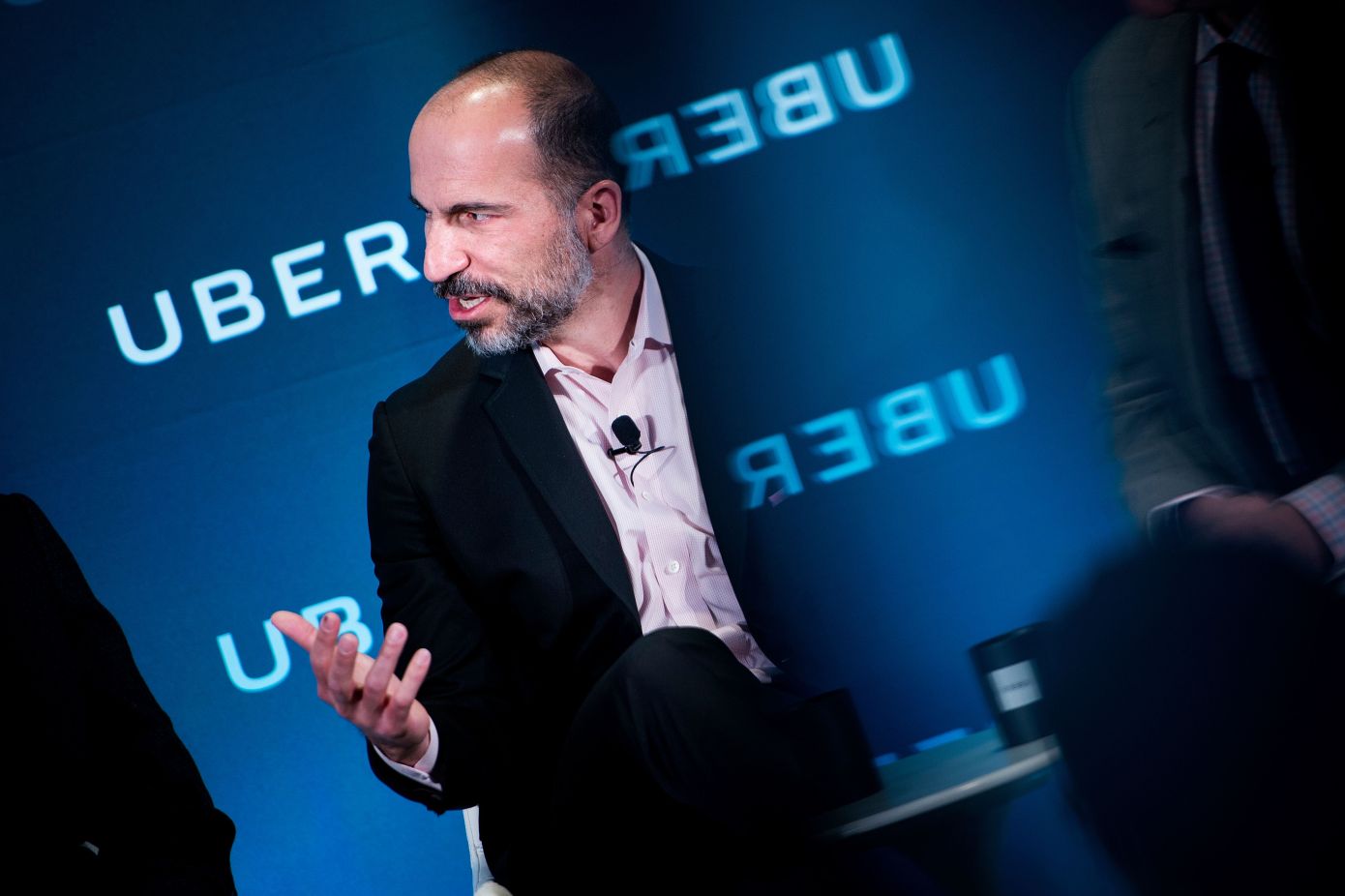
Uber CEO
Dara Khosrowshahi, CEO of Uber, speaks during an event at the Uber DC Green-light Hub April 11, 2018 in Washington, DC. / AFP PHOTO / Brendan Smialowski (Photo credit should read BRENDAN SMIALOWSKI/AFP/Getty Images)

Ride-hailing company Uber, reported its third quarter (Q3) earnings for 2023, recording a revenue growth of 11% year-on-year $9.3 billion, but missed investors expected revenue of $9.5 billion.

Uber CEO Dara Khosrowshahi said revenue growth would have been 8% higher, but he told investors that the Q3 revenue was negatively impacted by business model changes in some countries that classified certain sales and marketing costs as contra revenue by $161 million

In his words,

“These results demonstrate that Uber continues to drive profitable growth at scale and why we believe we’re well positioned for the journey ahead, in good or bad macro environments. Our relentless focus on improving the product experience for both consumers and drivers continued to power profitable growth, with trip growth accelerating to 25%. Uber’s core business is stronger than ever as we enter the busiest period of the year”.

Turning to profitability, Uber reported a net income of $221 million in the third quarter, or 10 cents per share, compared with a net loss of $1.2 billion, or 61 cents per share, in the same quarter last year.

Revenue from Mobility grew to $5.07 billion, up 33% year-over-year, Delivery was $2.94 billion, up 6%, and freight at $1.29 billion, which fell 27% year-over-year.

In the third quarter, Uber saw total bookings rise from $29.1 billion to $35.3 billion, a gain of around 21%. In business segment terms, Uber generated $17.9 billion in ride-hailing bookings (+31% year over year) and $16.1 billion worth of delivery bookings (+18%).

Trips grew 25% year-over-year to 2.4 billion or 27 million per day. Uber’s monthly active platform consumers reached 142 million, up 15% year-over-year.

Gross bookings grew 21% year-over-year to $35.3 billion, with Mobility Gross Bookings of $17.9 billion, up 31% year-over-year, Delivery Gross bookings of $16.1 billion, up 18%, and Freight Gross Bookings of $1.3 billion, which fell 27% year-over-year.

While Uber’s ride-hailing and delivery business saw an uptick in gross bookings in the third quarter, Uber Freight experienced a 27% drop year-over-year. Revenue, as a result, had a similar fall. The business unit reported revenue of $1.3 billion in the third quarter, a 27% drop from the same period last year.

Also speaking on the company’s third-quarter result, Uber CFO Nelson Chai said,

“Strong topline trends and record profitability demonstrate the durability of our growth and, the significant earnings power underlying our platform. We continue to make disciplined investments in growth opportunities to support long-term value creation for all stakeholders.”

The ride-hailing company after the quarter had $5.2 billion in cash and equivalents and generated $905 million in free cash flow.

For the fourth quarter (Q4) of 2023, Uber disclosed that it expects to report gross bookings between $36.5 billion and $37.5 billion, compared with analysts estimation of $36.5 billion, and adjusted EBITDA of $1.18 billion to $1.24 billion.

Samsung Unveils Generative AI Model Samsung Gauss

South Korean Tech giant, Samsung has unveiled its generative AI model called “Samsung Gauss”, at the Samsung AI Forum 2023.

The generative AI model is reportedly named after famous mathematician Johann Carl Friedrich Gauss who made significant contributions to many fields in mathematics and science.

Gauss consists of three main components, which include; Samsung Gauss Language, Samsung Gauss code, and Samsung Gauss Image. Like ChatGPT, Samsung Gauss Language is a large language model that can understand human language and answer questions.

Samsung Gauss Language is a generative language model designed to boost work efficiency by assisting with tasks like email writing, document summarization, and translation. It can also enhance consumer experience by enabling smarter device control when applied to products.

Samsung Gauss Code is a coding assistant that facilitates in-house software development. It streamlines the coding process and provides interactive features like code description and test case generation.

The coding assistant can also quickly generate unit test cases and code snippets using natural language. Users can input code to debug them through a friendly interface.

Samsung Gauss Image is capable of generating and editing images, allowing for style changes, and additions. It also has the ability to generate images in different styles, like scaling a low-resolution image to High resolution image, adding new elements to an image, and many more. The AI model may work similarly to Google Pixel’s Magic editor feature in the photos app.

The generative AI model primarily has three key features, which include text, code, and image generation. It can summarize texts, generate creative ideas, translate texts, write new content, and more.

Announcing the roll-out of Gauss, Samsung said via a press release that the generative AI model is currently used in employee productivity but will be expanded to a variety of Samsung product applications to provide new user experience in the near future.

Samsung’s launch of Gauss is coming seven months after the tech giant temporarily placed a ban on generative AI tools on company-owned devices, over fears that uploading sensitive information to these platforms represents a security risk.

The company’s recent foray into generative AI marks a significant step forward, as it leverages the advanced technology to enhance consumer experience.

Samsung could be amongst the first handset makers in the world to introduce generative Al to its devices. Daniel Araujo, Samsung’s vice president of the mobile business, said on the company’s earnings call last month, disclosed that the generative Al model will likely reach customers next year.