
DD
MM
YYYY

PAGES

DD
MM
YYYY

spot_img

PAGES

Home Blog Page 3996

Nigeria’s COP28 1411 Delegations to UAE Steer Social Media Reaction

0

Nigeria has sent a record number of 1411 delegates to the 28th Conference of the Parties (COP28) to the United Nations Framework Convention on Climate Change (UNFCCC) in Abu Dhabi, UAE. The conference, which runs from December 4 to 15, 2023, aims to accelerate action towards the goals of the Paris Agreement and the UN Agenda 2030 for Sustainable Development.

According to the official list of participants published by the UNFCCC secretariat, Nigeria has the largest delegation among the 197 parties to the convention, followed by China with 1032 delegates and India with 892 delegates. The United States, which rejoined the Paris Agreement under President Kamala Harris, has 512 delegates, while the host country UAE has 487 delegates.

The Nigerian delegation includes representatives from various ministries, agencies, state governments, civil society organizations, academia, media and private sector. The size and composition of the Nigerian delegation have sparked mixed reactions on social media, with some users praising the country for showing leadership and commitment to tackling climate change, while others criticizing the government for wasting public funds and resources on a jamboree.

Some of the positive comments include:

  • @NaijaGreen: Nigeria is leading by example at #COP28. We are showing the world that we are serious about climate action and sustainable development. Kudos to our President and his team. #NigeriaCares

  • @EcoWarrior: I’m proud to be part of the Nigerian delegation at #COP28. We have a diverse and vibrant team of experts, activists and innovators who are ready to share our experiences and learn from others. Nigeria is a key player in the global climate movement. #ClimateActionNow

  • @AbuSalam: Nigeria has the largest delegation at #COP28 because we have the largest population and economy in Africa. We have a lot at stake and a lot to contribute. We are not here to play games. We are here to make a difference. #NigeriaLeads

Some of the negative comments include:

  • @TaxPayer: Nigeria has sent 1411 delegates to #COP28. That’s more than the population of some countries. How much is this costing us? How many flights, hotels, allowances, etc. This is a waste of money that could have been used for better things.

  • @ClimateSkeptic: Nigeria has sent 1411 delegates to #COP28. What a joke. Nigeria is one of the biggest polluters and emitters in the world. We have no moral authority or credibility to talk about climate change. We are just there to beg for money and make noise.

  • @BiafraBoy: Nigeria has sent 1411 delegates to COP28. This is another proof that Nigeria is not a nation but a contraption. How can one country have so many delegates? This is a sign of disunity and confusion. Nigeria should break up and let each region go its own way.

The Nigerian government has denied allegations that it paid for the expenses of 1411 people who travelled to Dubai for a conference. According to a report by Sahara Reporters, an online news platform, the Nigerian government spent over N3 billion ($7.3 million) to sponsor the participants, who included governors, ministers, lawmakers, civil servants, and private individuals. The report claimed that the government also paid for their flight tickets, hotel accommodation, visa fees, and other allowances.

However, the Ministry of National Orientation has issued a statement refuting the report, saying that it was false and misleading. The statement, signed by the Director of Press and Public Relations, said that the government did not sponsor everyone to the conference that FG Funded 422 Delegates to COP28 Summit, and that the rest participants paid for their own expenses.

The statement read: “The attention of the Federal Government has been drawn to a malicious and fake news item published online by Sahara Reporters alleging that the Federal Government of Nigeria spent over N3 billion to fly 1411 delegates to Dubai for a summit. The Ministry wishes to state categorically that this allegation is not only false but also malicious and calculated to tarnish the image of the Ministry and the Federal Government at large.

The Ministry also wishes to clarify that the Global Education and Skills Forum (GESF) is not a summit but a conference that brings together education stakeholders from different countries to share ideas and best practices on how to improve education outcomes.

The Ministry further wishes to inform the public that the Federal Government did not sponsor any delegate to the conference. All the participants from Nigeria paid for their own flight tickets, hotel accommodation, visa fees, and other expenses. The Ministry did not issue any travel approval or make any budgetary provision for the conference.

The Ministry therefore urges the public to disregard the fake news and treat it as a figment of the imagination of the authors. The Ministry also calls on Sahara Reporters to retract the publication and apologize to the Federal Government for peddling falsehood and misleading Nigerians.”

German vice chancellor cancels COP28 visit due to budget crisis

However, German government is facing a severe budget crisis that is jeopardizing its influence on global climate negotiations. Vice-Chancellor and Finance Minister Olaf Scholz cancelled his planned visit to COP28 in Dubai in order to focus on solving domestic problems.

The budget crisis was triggered by a dispute between the coalition partners of the SPD and the CDU/CSU, who could not agree on the level of public spending and the financing of investments in climate protection. The SPD is calling for an increase in taxes on the rich and corporations to finance the energy transition, while the CDU/CSU is calling for strict fiscal discipline and a reduction in the debt burden.

Tensions between the partners escalated last week when Scholz presented a draft for the 2024 federal budget that included an increase in the deficit and an increase in the debt brake. The CDU/CSU rejected the draft and threatened to break the coalition if Scholz did not give in. Scholz, in turn, accused the CDU/CSU of jeopardizing climate goals and ignoring social justice.

The budget crisis is also having an impact on Germany’s role at COP28, which began in the UAE on Monday. Germany is considered one of the most important players in the climate negotiations, as it is both a major emitter of greenhouse gases and a pioneer in the promotion of renewable energies. Scholz should attend the summit as a representative of the German government and meet with other leaders to discuss raising climate ambition.

However, Scholz said in a press conference that he had to cancel his visit to COP28 to focus on resolving the budget crisis. He emphasized that this does not mean a departure from Germany’s commitment to climate protection, but a necessary measure to ensure political stability in the country. He added that he was in constant contact with German Chancellor Angela Merkel, who would also attend the summit.

Scholz’s cancellation was criticized from various sides. The opposition parties, the Greens and the FDP, accused him of neglecting his responsibility for climate protection and undermining his credibility as a possible successor to Merkel. Environmental groups urged him to reconsider his decision and attend the summit to send a strong signal for climate action. The international community expressed concern about the possible consequences of the budget crisis for the climate negotiations and cooperation between Germany and other countries.
Saudi Arabia Opposes Fossil Fuel Phase-Down at COP28; Nigeria Urged to Adopt Similar Stand

0

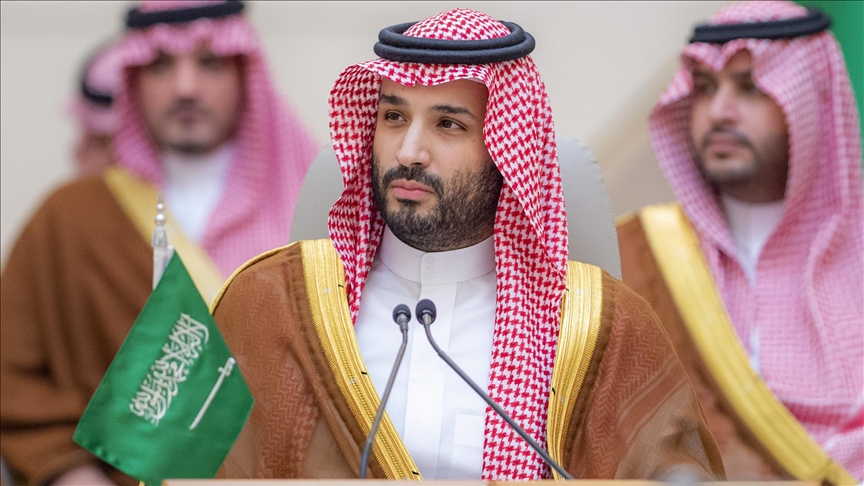
Saudi Arabia’s Energy Minister, Prince Abdulaziz bin Salman, has declared the kingdom’s strong opposition to a text proposing the phase-down of fossil fuels at the ongoing COP28 summit in Dubai.

This stance, taken against mounting pressure from Western climate advocates, has implications for Nigeria, Africa’s largest oil producer, which has been advised to adopt a similar position.

Bloomberg quoted Salman categorically saying in a TV interview in Riyadh, “Absolutely not,” when questioned about Saudi Arabia’s willingness to endorse language calling for a fossil fuel phase-down.

The demand for a phase-out or phase-down of fossil fuels is a pivotal requirement at COP28, with the US and EU leading the call. Agreement on the text must be unanimous, and negotiations are scheduled to continue until December 12, per Bloomberg.

Salman accused countries advocating for a fossil fuel phase-out of hypocrisy and challenged them to present an implementation plan, suggesting a starting date of January 1, 2024.

“I’m not naming names,” he said. “But those countries who really believe on phasing out and phasing down hydrocarbons, you should come out and put together a plan for how in starting 1st of January 2024.”

The Energy Minister did not indicate whether alternative formulations, such as limiting the shift to “unabated” fossil fuels or tying it to a just transition, would be acceptable to Saudi Arabia.

The call for Nigeria to align with Saudi Arabia’s position stems from the understanding that over 90% of the nation’s revenue comes from oil. Analysts argue that if the West desires Nigeria to halt oil and gas extraction, compensation should be provided.

“If the West wants Nigeria to shut down her oil and gas wells, they should pay Nigeria compensation,” Kalu Aja, a financial analyst said.

This perspective is reinforced by the fact that Africa contributes less than 10% to global emissions, underscoring the continent’s limited contribution to the climate crisis.

Nigerian President Bola Tinubu, during the COP28 Summit on Methane and Other Non-CO2 Greenhouse Gases in Dubai, pledged to end gas-flaring as part of Nigeria’s commitment to reducing methane emissions.

“We are committed to critical steps to reduce methane emissions by ensuring gas flaring is eliminated, There is a huge penalty for that. There is equally a huge incentive to do so,” Tinubu said.

However, this commitment has faced criticism domestically, with some questioning the prioritization of climate initiatives over pressing economic concerns.

“NOSDRA reports that in the Year 2022, Nigeria recorded 623 Oil spill incidents amounting to 45k barrels spilled, and gas flaring came in at 5.6 billion cubic meters valued at $685m,” energy expert, Kelvin Emmanuel said. “The hydrocarbon remediation fund is riddled with allegations of procurement fraud. But the entire Abuja is in Dubai talking about Climate Change. Which Climate is that?”

Emmanuel, who pointed at other issues such as electricity, which Nigeria generates barely 5,000MW, said tackling the influx of adulterated petroleum products is more important to Nigerians than eliminating methane.

“Before I will take anything the Nigerian Government says about climate change seriously, I want to see the President mandate NMDPRA and SON to ensure that all petrol imported into this country is tested at a lab for the standard sulphur and octane level,” he said.

Adding to the debate, a leaked video call surfaced featuring COP28 President Sultan Al Jaber stating that there was no scientific foundation supporting the necessity of a phase-down to achieve climate goals. While he argued for alternative approaches to reduce emissions, his comments faced condemnation from numerous climate campaigners.

Al Jaber is the head of Abu Dhabi National Oil Co., a company that produces over 3 million barrels per day.

Nigerian Crypto Trading Platform Bitmama Acquires Payday to Expand Fintech Footprint

0

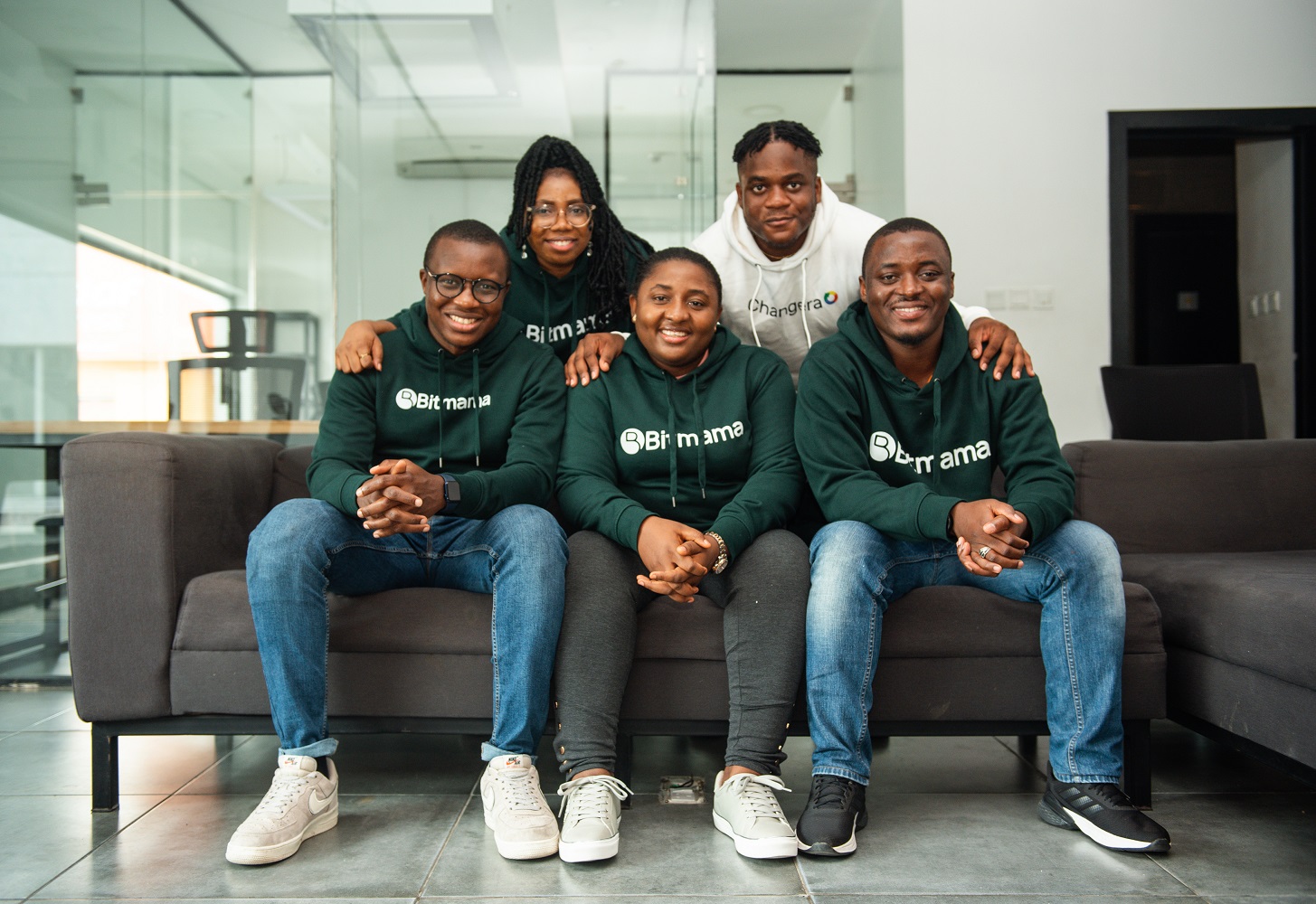
Nigerian cross-border Crypto trading platform Bitmama, has acquired Nigerian payments startup Payday, to expand its Fintech footprint.

Bitmama’s acquisition of Payday is coming three months after the fintech startup was actively seeking buyers, having raised $3 million in a seed round led by Moniepoint.

Reports reveal that Bitmama CEO Ruth Iselema has extended an offer to PayDay investors, providing $1 million worth of equity in the cryptocurrency company at a valuation of $30 million.

According to Iselema, she said,

“Favour reached out to me because we are building products crypto, one of those products is Changera, and it made sense to me. Bitmama, initially established as a cryptocurrency exchange, has transitioned its focus on global services, including remittance”.

Also speaking on the acquisition, PayDay CEO Favour Ori disclosed that the deal is a work in progress, noting that if the deal goes through, the result will be a strong team with much more efficiency.

As part of the potential agreement, Bitmama is poised to assume PayDay’s customer deposits and liabilities, consolidating its position in the Fintech space. The crypto exchange platform affirms that Payday’s brand will continue but will operate within Bitmama’s flagship cross-border payment product, Changera.

Changera is a social payment solution that allows non-crypto-savvy customers to use their money without limits, from anywhere in the world. It enables seamless and secure cross-border payments and remittances.

This strategic acquisition aims to address challenges faced by Payday, including dependence on third-party integrations, to enhance customer experience and service reliability. PayDay had previously encountered operational hurdles, such as industry-wide charge-back fraud, disruption in Mastercard services, and the departure of senior team members in July 2023.

For Payday’s 300,000-plus customers transitioning to Changera, immediate changes to fee structures or terms of service are not anticipated in the short term. However, as the integration progresses, customers can look forward to an expanded suite of services and potential new features, capitalizing on the synergies between Bitmama and Payday.

Bitmama’s acquisition of Payday is a strategic move for the company, as it aims to enhance FX transactions for businesses across Africa. Together, both companies will bring unique strengths and expertise to the table.

The crypto exchange started in 2017 as a P2P digital currency exchange. It quickly grew into a platform where individuals can trade and manage cryptocurrencies, and digital assets conveniently.

Today, Bitmama offers a trusted platform for cryptocurrency transactions. The startup is building a technology that will redefine the way people do financial transactions through blockchain technology.

Crafting Seamless Omnichannel Experiences Through Effective Loyalty Programs

1

The retail landscape has evolved significantly, with consumers expecting a unified experience across online and offline channels. For instance, a Forbes report indicated that most customers now expect an omnichannel experience as they shop, with 90% expecting the experience to be consistent across all platforms. Omnichannel integration is the cohesive merging of all touchpoints in a customer’s journey. Loyalty programs are crucial in this integration by serving as a bridge that connects these disparate channels.

An effective omnichannel strategy ensures customers can seamlessly transition between various platforms. Customers should be able to earn online and offline loyalty points, redeem rewards, and receive personalized offers, regardless of the platform they’re using. This interconnectedness creates a sense of continuity and strengthens customer loyalty.

Strategic Integration of Omnichannel Loyalty Programs

Businesses must understand their customer base, preferences, and behaviors across channels to successfully integrate omnichannel programs. A critical component of omnichannel experiences is that they should be customer-centric for businesses that want to stand out. Analytical data and CRM systems help businesses gain valuable insights to tailor loyalty programs accordingly. A prime example of this strategic orientation is the alignment of online and offline rewards that allow customers to earn points through online and in-store purchases.

Moreover, rewards redemption should be flexible, allowing customers to redeem points across different channels. In many online businesses like online casinos, providers now offer flexible redemption options to engage customers more. For example, a gambler participating at a Zambia Casino can access multiple bonuses across different platforms to enhance their gameplay. These casinos improve the gaming experience by offering gamers several rewards like real money to wager.

Using technologies like AI aids in predicting customer behavior, enabling businesses to offer personalized incentives and rewards. By analyzing past purchases, browsing history, and engagement patterns, companies can tailor rewards that resonate with individual preferences, thus enhancing customer satisfaction and loyalty. Besides, omnichannel should be non-intrusive and not equate to spammed messages, as their purpose is to offer value and foster genuine connections.

Benefits of Omnichannel Loyalty Systems

Omnichannel loyalty programs engage customers consistently across different channels. The more customers are engaged with their preferred channels, the more inviting the experience feels. Consequently, this increased cohesion results in higher retention and satisfaction rates. In addition, omnichannel programs help businesses reach a larger variety of customers by catering to diverse tastes.

Furthermore, omnichannel distribution offers businesses multiple ways to communicate with customers. This distribution network allows status update communication through push notifications, emails, consumer profiles, social media, etc. That way, businesses can also gather insightful customer information, which helps make insightful adjustments.

In summary, omnichannel experiences can help businesses gather more information about customer preferences. This is made possible by cross-channel tracking of buyer activity and feedback, which helps businesses make better decisions for their future success. Omnichannel loyalty programs also help businesses grow their profits by enhancing customer engagement. Besides increasing profits, these loyalty programs can lead to effective advertising campaigns, giving companies a competitive edge against their competitors.

Quantum Computing’s Intersection with Cryptocurrency

1

Quantum computing is a rapidly advancing field that has the potential to revolutionize many aspects of our lives, including the world of cryptocurrency. With its ability to process massive amounts of data and perform complex calculations at an unprecedented speed, quantum computing poses both opportunities and challenges for the cryptocurrency industry. In this article, we will delve into the intricacies of quantum computing and explore its intersection with cryptocurrency.

Understanding Quantum Computing

In order to understand the implications of quantum computing on cryptocurrency, it is important to first grasp the fundamentals of this groundbreaking technology.

Quantum computing operates on the principles of quantum mechanics, a branch of physics that describes the behavior of matter and energy at the smallest scale. It delves into the mysterious world of subatomic particles and their interactions.

Unlike classical computing, which uses bits to represent information as either 0 or 1, quantum computing uses quantum bits, or qubits, which can exist in multiple states simultaneously due to a phenomenon known as superposition.

This ability to exist in multiple states simultaneously allows quantum computers to perform parallel computations, making them exponentially more powerful than classical computers for certain tasks. It’s like having multiple classical computers working on a problem simultaneously, but all contained within a single quantum computer.

The Basics of Quantum Computing

Superposition is not the only unique property of qubits. They can also be entangled, meaning the state of one qubit is dependent on the state of another, regardless of the physical distance between them. This phenomenon enables quantum computers to perform computations on a massive scale and analyze complex data sets much more efficiently than classical computers.

Imagine two entangled qubits, one in your hand and the other on the other side of the world. When you measure the state of your qubit, the state of the other qubit is instantly determined, no matter the distance between them. This concept of entanglement opens up a whole new realm of possibilities for computing.

Quantum Superposition and Entanglement

Quantum computing is not just about superposition and entanglement, though. There are other fascinating aspects to consider. For example, quantum computers can harness a phenomenon called quantum tunneling.

Quantum tunneling allows particles to pass through barriers that would be impossible to overcome in classical physics. This means that quantum computers can explore possibilities that classical computers would consider impossible, leading to potentially revolutionary breakthroughs in various fields.

Furthermore, quantum computers can also leverage a concept known as quantum interference. This occurs when the quantum states of different qubits interfere with each other, either constructively or destructively, leading to enhanced computation or cancellation of unwanted results.

Quantum Computing vs Classical Computing

While quantum computing shows immense potential, it is not intended to fully replace classical computing. Instead, it is expected to complement classical computing by solving problems that are currently intractable or highly time-consuming.

Classical computers excel at performing sequential operations, executing one instruction after another. On the other hand, quantum computers excel at performing parallel operations, simultaneously exploring multiple possibilities and finding the most optimal solution.

This fundamental difference in computational approaches opens up new doors for solving complex problems that were previously thought to be unsolvable. From optimizing supply chains to simulating molecular interactions, quantum computing has the potential to revolutionize various industries.

However, quantum computing is not without its challenges. The delicate nature of qubits makes them susceptible to errors caused by environmental factors, such as temperature fluctuations or electromagnetic interference. Researchers are actively working on developing error correction techniques to mitigate these issues and make quantum computers more reliable.

In conclusion, quantum computing is a fascinating field that holds great promise for the future. Its ability to harness the principles of quantum mechanics and perform computations on an unprecedented scale opens up new possibilities for solving complex problems. As the technology continues to advance, we can expect to see quantum computers playing a significant role in various domains, including the world of cryptocurrency.

The World of Cryptocurrency

Before exploring the impact of quantum computing on cryptocurrency, it is essential to understand the fundamentals of this digital form of currency.

The Fundamentals of Cryptocurrency

Cryptocurrency is a decentralized digital asset that uses cryptography to secure transactions and control the creation of new units. It operates on a technology called blockchain, which is a distributed ledger that records all transactions across a network of computers.

Cryptocurrencies like Bitcoin and Ethereum have gained significant popularity in recent years due to their potential for decentralized financial transactions, privacy, and security.

Blockchain Technology and Cryptography

The underlying technology behind cryptocurrency, blockchain, relies heavily on cryptographic techniques to ensure the integrity and security of transactions. Cryptography provides the necessary tools to encrypt and decrypt sensitive information, protecting it from unauthorized access.

Public-key cryptography, in particular, plays a crucial role in cryptocurrency transactions, providing a method for users to securely send and receive funds without the need for a central authority.

The Role of Cryptocurrency in Today’s Economy

Cryptocurrency has disrupted traditional financial systems by introducing a peer-to-peer network that allows for faster, more transparent, and lower-cost transactions. Furthermore, it has provided financial inclusiveness to individuals who are unbanked or underbanked, giving them access to financial services that were previously unavailable.

Quantum Computing’s Potential Impact on Cryptocurrency

As quantum computing advances, it poses certain threats to the security of cryptocurrency systems. Traditional cryptographic algorithms, which rely on the computational difficulty of certain mathematical problems, are vulnerable to attacks by quantum computers.

The intersection of quantum computing with cryptocurrency trading represents a paradigm shift in the digital asset market. Quantum AI introduces a level of computational power that can dramatically transform the way cryptocurrencies are traded, analyzed, and secured.

With its ability to process complex algorithms at unprecedented speeds, quantum computing offers the potential to vastly improve the efficiency and accuracy of cryptocurrency trading strategies. This includes more sophisticated risk assessment, faster transaction processing, and the ability to identify market patterns that are beyond the scope of classical computers.

Additionally, QTR poses new challenges and considerations for the security of blockchain technologies, prompting advancements in cryptographic methods to safeguard against potential quantum attacks. This convergence of quantum computing and cryptocurrency is not only redefining current trading practices but also shaping the future of digital currency and blockchain security.

Quantum Threat to Cryptography

Quantum computers have the potential to break many popular cryptographic algorithms, such as the widely-used RSA and Elliptic Curve Cryptography (ECC). These algorithms rely on the difficulty of factoring large numbers into their prime factors, a problem that can be solved efficiently by quantum computers using an algorithm called Shor’s algorithm.

Once a quantum computer is capable of running Shor’s algorithm, it could potentially undermine the security of critical components of cryptocurrency networks, such as public-key encryption and digital signatures.

Quantum Computing and Blockchain

Blockchain, the technology underlying cryptocurrencies, is not inherently immune to quantum attacks. The transparency of blockchain, which is one of its key features, can become a vulnerability if the cryptographic mechanisms securing it are compromised.

However, researchers and developers are actively exploring quantum-resistant cryptographic algorithms that can withstand attacks from quantum computers. These algorithms, such as lattice-based cryptography and hash-based digital signatures, show promise in providing enhanced security against quantum threats.

The Future of Cryptocurrency in a Quantum World

While the threat of quantum computing to cryptography is a cause for concern, it is important to note that the development of practical, large-scale quantum computers is still in progress. It is uncertain when quantum computers capable of breaking current cryptographic algorithms will become a reality.

Nevertheless, this uncertainty emphasizes the need for proactive measures to mitigate the potential risks. Researchers, cryptographers, and industry leaders are working together to develop quantum-resistant solutions and upgrade existing cryptocurrency systems to protect against future quantum attacks.

Mitigating Quantum Threats to Cryptocurrency

In response to the looming threat of quantum computing, several strategies and technologies are being developed to safeguard cryptocurrency systems against potential attacks.

Quantum-Resistant Cryptography

Quantum-resistant cryptographic algorithms, also known as post-quantum cryptography, are being researched and designed to provide security against attacks from quantum computers. These algorithms are based on mathematical problems that are believed to be computationally difficult for both classical and quantum computers.

Implementing quantum-resistant algorithms in cryptocurrency systems can offer protection against future quantum threats and ensure the long-term viability of cryptocurrencies in a quantum world.

Quantum Key Distribution

Quantum key distribution (QKD) is a method that leverages the principles of quantum mechanics to establish secure cryptographic keys. QKD uses the properties of quantum entanglement to transmit keys between two parties, making it virtually impossible for an eavesdropper to intercept or tamper with the keys without detection.

By implementing QKD in cryptocurrency systems, it becomes possible to securely exchange keys even in the presence of a powerful quantum adversary.

The Role of Quantum Random Number Generators

Random number generation is a critical element in cryptography and cryptocurrency systems. Quantum random number generators (QRNGs) utilize the inherent randomness of quantum phenomena to generate unpredictable random numbers.

Integrating QRNGs into cryptocurrency systems can enhance the security of cryptographic keys, ensuring that they are truly random and preventing potential exploits by quantum adversaries.

The Intersection Unveiled

Quantum computing and cryptocurrency are two rapidly evolving fields that are converging in a complex dance. While quantum computing presents challenges to the security of cryptocurrency systems, it also offers the opportunity for innovative solutions and enhanced privacy.

By embracing quantum-resistant cryptography, quantum key distribution, and quantum random number generators, the cryptocurrency community can navigate the quantum world with confidence. Proactive efforts in developing and implementing these technologies will ensure that cryptocurrency remains secure and resilient in the face of emerging quantum threats.

As the intersection between quantum computing and cryptocurrency continues to unfold, it is crucial for stakeholders to stay informed, adapt, and collaborate to shape a future where the potential of both technologies can be fully realized.