Groq has raised $350 million in new funding at a $3.5 billion valuation as the artificial intelligence startup accelerates its transformation from an AI chip developer into a cloud and data-center provider built around Nvidia’s computing hardware.
The funding round was led by investment firm Disruptive, with planned participation from Nvidia, according to the company. The new valuation is roughly half the $6.9 billion valuation Groq reached in September, before Nvidia hired Groq founder and CEO Jonathan Ross and other senior employees as part of a licensing agreement.
Groq said the lower valuation should not be viewed as a conventional down round. A company spokesperson told TechCrunch that the financing establishes a new valuation for the “post-Nvidia-licensing-deal version of Groq.”
The change marks a major strategic shift for Groq.
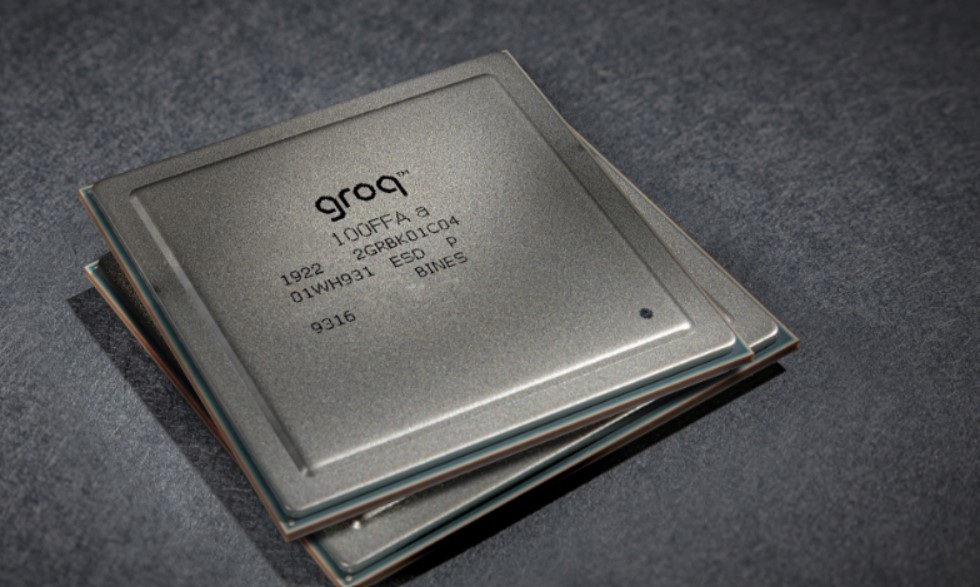
The company originally sought to compete with Nvidia by developing its own AI processors, known as language processing units, or LPUs. The chips were designed primarily for inference, the computing process involved in running trained AI models and generating responses in real time.
But Nvidia’s recruitment of Ross and other senior Groq employees fundamentally altered the company’s trajectory. After losing much of its key leadership and technical talent, Groq moved away from being a standalone chipmaker and began building an AI cloud business using Nvidia’s GPUs.
The result is an unusual relationship in which a company that once sought to challenge Nvidia now operates as one of its customers.
Groq raised $650 million in June to begin financing the transition. The company plans to expand its data-center capacity from 54 megawatts to more than 200 megawatts by 2027. It currently operates 13 data centers across North America, Europe, the Middle East and Asia-Pacific and says its infrastructure serves more than 6 million developers, enterprises and AI-focused companies.
The latest financing will be used to expand access to Nvidia accelerated computing for customers requiring medium and large clusters for AI training and inference.
“We are building Groq into the world’s leading AI inference cloud,” said Alex Davis, Groq’s chairman and CEO of Disruptive. “Inference will without a doubt become the largest and most critical layer of AI infrastructure.”
The rapid adoption of generative AI has created enormous demand not only for chips but also for the data centers, electricity, networking equipment and cloud services needed to operate them. Companies known as neoclouds have emerged to provide specialized access to high-performance computing without requiring customers to build their own large-scale infrastructure.
Inference is becoming particularly important as companies move AI systems from experimentation into everyday applications. Every chatbot response, AI-generated image, coding task, and automated workflow requires computing resources when the model is being used.
That creates a potentially enormous market for specialized infrastructure providers.
But the business model comes with significant financial risks.
Neocloud companies must spend heavily on GPUs and data-center capacity before generating revenue from those assets. The hardware can also depreciate rapidly as newer generations of processors become available, creating pressure to maintain high utilization rates and secure long-term customer commitments.
CoreWeave illustrates both the opportunity and the risks.
The AI cloud provider has reported strong revenue growth and secured major contracts with companies including Meta and Anthropic. Investors, however, have remained concerned about its substantial capital expenditures, dependence on debt financing, and exposure to rapidly depreciating computing hardware.
The central question is whether strong demand for AI computing will generate enough cash flow to justify the enormous investments required to build and maintain the infrastructure.
Groq’s financial performance remains private, making it difficult for investors to assess the economics of its new strategy. Its rapid increase in data-center capacity, however, shows that the company is betting heavily on sustained demand for AI inference.
The financing also places Groq squarely within Nvidia’s expanding infrastructure ecosystem.
Nvidia is increasingly doing more than selling GPUs. The chipmaker has invested in several companies building AI cloud capacity, while those same companies purchase Nvidia’s processors to operate their infrastructure.
CoreWeave, Lambda and Nebius are among the neocloud providers using Nvidia GPUs, creating a business model in which Nvidia can benefit both from supplying the hardware and, in some cases, investing in the companies purchasing it.
Groq now occupies a similar position.
Its original ambition was to compete with Nvidia at the chip level. Its new strategy instead depends on Nvidia’s dominance in AI accelerators. That does not necessarily make Groq’s business less ambitious. It only changes where the company is competing. Rather than trying to build an alternative to Nvidia’s hardware ecosystem, Groq is seeking to compete for customers who need access to that hardware, particularly customers focused on AI inference.
The shift also demonstrates how difficult it has become for smaller AI hardware companies to compete independently as Nvidia’s ecosystem expands. Building competitive processors requires enormous investments in semiconductor design, software, and manufacturing, while customers increasingly value compatibility with established AI development platforms.
For Groq, becoming an Nvidia-powered AI cloud could provide a faster route to scale than continuing to develop its own chips.
The $3.5 billion valuation, however, shows that investors are also assigning a different value to the company than they did before the Nvidia licensing deal. The challenge for Groq will be proving that its new business can generate sufficient revenue and margins to justify the capital required to expand its infrastructure.
The company is effectively betting that AI inference will become one of the largest computing markets in the technology industry. If demand continues to accelerate, Groq is expected to benefit from its existing developer base, global data-center footprint, and relationship with Nvidia. However, neocloud providers could face intense pricing pressure and weaker returns on expensive computing assets if infrastructure supply grows faster than customer demand.