DD
MM
YYYY

PAGES

DD
MM
YYYY

spot_img

PAGES

Home Blog Page 4

Trump Issues Tuesday Ultimatum to Iran with Many Players Calling US Demands Unrealistic 

0

President Trump issued this ultimatum over the weekend. On Sunday, April 5, 2026, he posted on Truth Social an expletive-laden threat: Tuesday will be Power Plant Day, and Bridge Day, all wrapped up in one, in Iran.

This stems from an ongoing U.S.-Iran confrontation tied to the Strait of Hormuz, the narrow waterway through which about 20% of global oil and gas transits. Iran has restricted or blocked shipping there amid the conflict which escalated after Israeli strikes and U.S. involvement, disrupting energy markets and raising oil prices. Trump has repeatedly demanded Iran fully reopen the strait to international shipping or face U.S. strikes on its energy infrastructure, power plants, and bridges.

He has extended similar deadlines multiple times in recent weeks e.g., 48 hours, then 5 days, then 10 days to April 6, often citing ongoing talks. The latest shift to Tuesday 8 p.m. ET appears to be another short extension, giving Iran roughly until early Wednesday in some time zones. Trump has said in interviews with Fox News, Axios, and the Wall Street Journal that negotiations are active and there’s a good chance of a deal, while also warning he could blow everything up and take over the oil if not.

The Strait of Hormuz is a narrow waterway in the Middle East that serves as the primary maritime exit from the Persian Gulf to the Gulf of Oman and the Arabian Sea. It is widely regarded as the world’s most critical energy chokepoint due to the enormous volume of oil and natural gas that passes through it daily.

The strait lies between Iran to the north and Oman’s Musandam Peninsula to the south  with the United Arab Emirates also nearby. It stretches roughly 104 miles in length, but its width varies: up to about 60 miles at the widest and as narrow as 21–24 miles at the narrowest point. Shipping traffic is confined to even tighter designated lanes—typically about 2 miles wide in each direction, separated by a buffer zone—because parts of the strait are too shallow for large tankers.

This geography makes it highly vulnerable to disruption: a relatively small number of ships, mines, missiles, or attacks can create major bottlenecks. The strait handles an outsized share of global energy supplies like Oil: Approximately 20–21 million barrels per day of crude oil, condensate, and petroleum products transit the strait. This equates to roughly 20% of global petroleum liquids consumption and about 25% of all seaborne traded oil. In recent years, flows have hovered around these levels despite some fluctuations from OPEC+ cuts or other factors.

LNG (Liquefied Natural Gas): About 19–20% or up to ~22% in some estimates of global LNG trade passes through it, primarily exports from Qatar (the world’s top LNG exporter) and some from the UAE. Much of this goes to Asia. It’s also carries a notable share of fertilizers and other commodities, with estimates suggesting it accounts for around 11% of total global maritime trade volume in some contexts

Iranian and International Reactions

Iran has pushed back defiantly, calling the threats reckless, rejecting temporary ceasefires or conditional reopening of the strait, and warning of broad retaliation including against Gulf energy targets. Iranian officials describe U.S. proposals as extremely ambitious and illogical.

Mediators including allies are reportedly pushing last-ditch ideas like a 45-day ceasefire. Markets remain jittery over potential oil shocks and escalation. Critics including some U.S. Democrats have called the rhetoric juvenile or warned that striking civilian power infrastructure could violate international humanitarian law and cause widespread blackouts affecting hospitals, water, and civilians.

Trump’s team frames it as necessary pressure to restore freedom of navigation and protect U.S. and allied interests. This fits a pattern of Trump’s maximum pressure style—loud public ultimatums combined with extensions when talks show any progress. Recent events include the downing of U.S. aircraft (F-15E and A-10) over/near Iran, with crews rescued in high-risk operations that Trump called an “Easter miracle.”

Israel has also conducted strikes on Iranian targets like the South Pars petrochemical hub. As of Monday, April 6, Trump is scheduled to speak to the press, and the clock is ticking toward the Tuesday evening deadline. Further short delays are possible if diplomacy advances, but the threat of targeted strikes on critical infrastructure remains on the table. The situation is fluid, with high stakes for energy markets, regional stability, and the risk of wider escalation.

Tech & Business in Africa: Innovation, Startups, and Economic Insights

0

Africa is changing fast. Not slowly, not gradually — fast. The Africa tech ecosystem has become one of the most talked-about growth stories in the world, and for good reason. In 2023, the continent was home to over 650 active tech hubs spanning more than 40 countries.

Why does this matter? Because it signals something deeper than just apps and websites. It signals a structural shift in how African economies grow, compete, and create wealth.

Startups Are Rewriting the Rules

African startups raised approximately $3.5 billion in funding in 2023. That number is down from the peak years of 2021–2022, but context is everything — global venture funding dropped sharply worldwide during the same period. African founders held their ground better than many expected.

Nigeria, Kenya, South Africa, and Egypt — often called the “Big Four” — still attract the lion’s share of investment. Together they account for roughly 70% of all startup funding on the continent. But Ghana, Rwanda, and Senegal are rising quickly, diversifying the map.

Fintech: The Engine Room

Ask anyone which sector dominates, and the answer is the same. Fintech Africa is not just a trend. It is the backbone of digital transformation across the region. Over 57% of all startup funding raised in Africa in recent years has gone into financial technology.

Mobile money changed everything. M-Pesa in Kenya processed transactions worth more than 50% of the country’s GDP in a single year. That one statistic tells you more about innovation in Africa than a hundred conference speeches ever could.

Why Fintech Took Hold

Banks were not everywhere. Roads were not always reliable. But mobile phones? They spread fast. Entrepreneurs spotted the gap and built solutions around the infrastructure that actually existed — not the infrastructure that textbooks assumed would be there.

This is the core logic of entrepreneurship in Africa. It’s not about copying Silicon Valley. It’s about solving specific, local, urgent problems with the tools at hand. These can be completely different technologies for PCs and smartphones. For example, with low levels of education in the regions, people need to perform operations. Demand for free AI Math Solver, which can solve virtually any mathematical problem, has grown here. Those companies and firms that can offer useful software products for the private sector or business will continue to lead.

The Digital Transformation Wave

Digital transformation in Africa is not uniform. In Lagos, startups build B2B software for enterprise clients. In Nairobi, agritech firms use satellite data to help smallholder farmers. In Cairo, e-commerce platforms are reshaping retail for millions of middle-class consumers.

Diversity is the point. The African economy is not one economy — it is 54 economies, each with different regulations, languages, infrastructures, and consumer behaviors. The companies that succeed understand this. They localize. They adapt. They do not assume.

Funding Realities in 2024

The money is still there. It just comes with more questions attached. Investors who chased growth-at-all-costs during the 2021 boom are now sitting across the table with spreadsheets instead of enthusiasm. Margins, retention, payback periods — these are the new conversation starters.

Discipline, it turns out, is a feature. Flutterwave, Interswitch, Andela — none of these companies became unicorns by accident. They survived scrutiny. Dozens of strong startups are coming up behind them, built leaner and smarter from day one.

Emerging Markets, Real Power

Here is a number worth sitting with: 19. That is Africa’s median age. No other major region on Earth comes close. By 2050, roughly one in four humans alive will be African — and most of them will be young, urban, and online.

Demography is not destiny, but it is direction. Consumer demand for housing, healthcare, education, finance, and entertainment will compound for decades. The startups solving those problems today are not chasing a trend. They are planting trees whose shade they will eventually sit under.

Business Trends Worth Watching

B2B software is quietly becoming one of Africa’s most interesting bets. Small businesses that once ran on handwritten ledgers are digitalizing fast — and they need tools for payroll, logistics, invoicing, and inventory. Health tech is another sector pulling in serious capital, especially as governments acknowledge how fragile public health infrastructure proved to be after 2020.

Climate tech deserves a separate mention entirely. Off-grid solar, clean cooking, water management, drought-resistant agritech — these are not niche experiments. They are responses to real, daily pressures faced by hundreds of millions of people.

The Continental Scale Opportunity

Fifty-four countries. Multiple currencies. Dozens of languages. Africa’s fragmentation has always been both its challenge and, paradoxically, its hidden advantage — because the founders who learn to navigate it build genuinely resilient companies. The African Continental Free Trade Area, if it reaches full implementation, stitches those markets into a single bloc of 1.4 billion consumers.

Startups thinking regionally from launch — not as an afterthought — are the ones writing the more interesting stories right now.

Infrastructure: Lagging, But Moving

The cables are going in. Bandwidth along African coastlines has expanded dramatically over the past decade, driven by a string of subsea infrastructure projects. Inland 4G rollout is uneven but real. Off-grid solar is reaching communities that never had reliable electricity and may never connect to a national grid.

Progress is slower than it needs to be. But the vector is right, and private capital — not just aid — is driving a meaningful share of it.

What Global Investors Keep Getting Wrong

Africa is not a country. It is not a risk category. It is not a charity case with a Wi-Fi connection. Treating 54 distinct economies as a single footnote in a global portfolio thesis is both intellectually lazy and financially expensive.

The founders in Accra, Nairobi, Lagos, and Kigali have stopped waiting for that perception to catch up. They are hiring, shipping, and scaling. The real question for outside investors is simple: do you want a seat at the table now, or a very good story about why you missed it later?

Top 5 Cryptos to Buy Right Now: BlockDAG Edges Out BNB, PEPE, SOL & ADA

0

The crypto market in April 2026 is moving fast, and the window to get in at the right price is closing on several assets. Whether you are a first-time buyer or someone looking to grow a portfolio, picking the right coins matters more than ever. This listicle breaks down the top 5 cryptos to buy this month, covering price data, key developments, and why each one deserves your attention. From a high-momentum presale to established Layer-1 giants, these are the names worth watching.

The top 5 cryptos to buy right now are BlockDAG, BNB, Pepe, Solana, and Cardano. Each one tells a different story, but all five have something compelling happening right now. Read on.

1. BlockDAG: Final Hours at $0.000022

BlockDAG is the most urgent entry on this list of top 5 cryptos to buy. BDAG is currently available at $0.000022 through the AfterSale window, which is closing in hours. The open market price already delivers 85x on that AfterSale entry price, meaning buyers who get in now are sitting on an 85x gap the moment trading begins, which is starting very soon. That kind of entry point does not come back once the window shuts.

BlockDAG is a Layer-1 blockchain that combines Directed Acyclic Graph architecture with Proof-of-Work security. It processes multiple blocks simultaneously, giving it strong throughput and scalability without sacrificing security. The network is built for decentralized applications, tokenized assets, and high-frequency financial activity. BDAG is already live on five exchanges, BitMart, P2B, Biconomy, BiFinance, and AscendEX, with on-chain USDT also now active on the BlockDAG network. The $10B market cap milestone has been crossed.

The roadmap is executing on schedule. Late April brings full exchange coverage. May sees DEX integration and liquidity provider incentives. June brings the Super App, lending protocols, oracle integration, and dApp ecosystem activation. Batch 3 of the AfterSale activates next week, which means the price floor moves up. The $0.000022 entry is available for hours, not days.

2. BNB: Holding Strong While Others Bleed

BNB is one of the most resilient coins on any top 5 cryptos to buy list right now. It is currently trading at around $607, with a market cap of approximately $82.8B and a 24-hour trading volume of $1.47B. BNB hit a January 2026 high of $780 and has seen a roughly 22% drawdown from that peak, significantly better than Bitcoin’s 47% and Ethereum’s 29% drops over the same period.

The ecosystem is active and growing. Tether’s tokenized gold product XAUt is now live on BNB Chain, pushing real-world assets on the network to around $3.2B. The January 2026 Fermi hard fork reduced block time from 0.75 seconds to 0.45 seconds, bringing finality down to approximately 1.1 second. BNB Chain also extended its zero-fee carnival for USDC and USD1 until April 30, with over $4.5M already covered in gas fee reimbursements. The all-time high stands at $1,369.99.

3. Pepe: Meme Coin Market Waking Up

Pepe makes the top 5 cryptos to buy list because the meme coin sector is showing signs of life. PEPE is currently trading at $0.00000353, with a market cap of $1.49B and a 24-hour trading volume of $370M. The all-time high is $0.00002803, meaning PEPE is still roughly 87% below its peak, with a circulating supply of approximately 413.77 trillion tokens across more than 500,000 wallets.

The broader meme coin market cap climbed to $34B after a 1.3% daily gain led by Dogecoin, PEPE, and BONK. PEPE itself surged 25% at the start of 2026 and led a roughly 70% gain in the first week of the year. Short-term technical indicators are still bearish, with price sitting below major exponential moving averages, but accumulation is happening and volume is rising. For high-risk, high-reward exposure, PEPE remains one of the most recognized names in the meme category.

4. Solana: Watching the $80 Line

Solana is a coin that earns its spot on the top 5 cryptos to buy list despite a difficult run. SOL is currently trading at approximately $79.65, ranked #7 by market cap at $45.6B. The Fear and Greed Index sits at 12, Extreme Fear, and only 11% of technical indicators are currently bullish. SOL has posted six consecutive red months since October 2025, down roughly 73% from its all-time high of $293.

The fundamentals, however, remain strong. The Solana ecosystem has reached roughly $1.7B in tokenized real-world asset value, stablecoin liquidity on-chain sits in the billions, and spot Solana ETFs have pulled close to $1B in cumulative inflows. Two U.S. banks are now settling USDC transactions on Solana. The $80 level is the critical support to watch, a hold here could set up a recovery toward $85 and $100. Risk-tolerant buyers watching for a floor entry are paying attention to SOL right now.

5. Cardano: Development Ahead of the Price

Cardano rounds out the top 5 cryptos to buy for April 2026 on the strength of its fundamentals against a discounted price. ADA is currently trading at approximately $0.24–$0.25, with a market cap of roughly $8.9B. It is down 80% from its all-time high of $3.10 and 49% year to date. Immediate resistance sits at $0.26–$0.28, with support at $0.236.

The development pipeline is one of the most active in crypto right now. The Midnight privacy sidechain mainnet launched at the end of March with Monument Bank already live for tokenized deposits. The Protocol 11 hard fork, targeting a full overhaul of on-chain voting and treasury management, is backed by 680 weekly commits across 80 repositories. Circle’s USDCx stablecoin has been deployed on Cardano, strengthening institutional DeFi infrastructure. The CLARITY Act, which would formally classify most crypto assets as commodities, is targeting a Senate markup in late April with 72% odds of passing on Polymarket. ADA is already designated a digital commodity under the existing framework.

Summing Up

These are the top 5 cryptos to buy in April 2026, each with a distinct case for being in your portfolio. BNB is holding resilience. PEPE is riding meme sector momentum. SOL is watching a key support level with strong institutional backing underneath it. ADA is building hard while the price is suppressed.

But BlockDAG stands apart. The top 5 cryptos to buy conversation in April 2026 starts and ends with the $0.000022 AfterSale entry. An 85x gap between the AfterSale price and open market price, with trading starting very soon, does not come along often. This is the window. It is closing in hours.

Uniswap & Solana Face Crashes; Investors Rush to Secure BlockDAG’s $0.000022 Rate for Huge 85x Instant ROI

0

The broader market currently feels the strain, and technical charts are starting to tell a consistent story. Uniswap is currently retracing toward $3.36, with its RSI hovering at 38 and Bollinger Band resistance firmly at $4.18, leaving traders without a clear sign of a reversal. Meanwhile, the Solana price is holding at $83.61, sitting below major moving averages as weekly ETF outflows of $4.24 million weigh on its performance. Both assets are flashing signals for a cautious approach.

However, BlockDAG provides a completely different narrative. BDAG is currently valued at $0.4 on CoinMarketCap, which represents a massive 39,900% jump from its Stage 1 price point. A Limited Time Priority Access offer at $0.000022 is still available through the official BlockDAG (BDAG) site, but this window shuts soon and will not be reopened.

The open market valuation has already surged past this introductory rate. With active futures markets, an accelerating list of exchange partnerships, and a market cap exceeding $10 billion, analysts are now setting their sights on a $1 target. As the global trading window looms, the opportunity for this specific early entry is rapidly disappearing.

Bearish Indicators Cloud the Uniswap Price Prediction

Uniswap remains a cornerstone of the DeFi world, functioning as a fully decentralized automated market maker (AMM) on the Ethereum network. It allows users to swap assets without third-party interference, making the UNI token a favorite for those seeking liquidity and utility.

Currently, the Uniswap price prediction suggests a continued correction toward $3.36, with a secondary support level at $3.22. The daily charts reflect a downward trend, further supported by an RSI of 38 that indicates persistent selling momentum. Low volatility on the 4-hour charts is currently preventing any significant recovery attempts.

For those following the Uniswap price prediction, resistance at $4.18 and the support floor at $3.22 are the levels to watch. Short-term forecasts indicate that additional minor pullbacks are likely if the current selling pressure does not subside.

Solana Price Navigates Downward Momentum & ETF Exits

The Solana price currently sits at $83.61, placing it below the SMA-20 ($88.41), SMA-50 ($85.96), and SMA-200 ($141.20). This positioning confirms a period of sustained selling, with the Ichimoku Kijun at $88.36 serving as the immediate ceiling. The Solana price faced extra pressure as US spot ETFs recorded $4.24 million in weekly outflows, signaling a shift toward bearish positioning among institutional players.

While technical indicators like the MACD and an RSI of 39.3 suggest the asset is entering oversold territory, the recovery has been limited to small intraday bounces. The Solana price is expected to fluctuate between $81.18 and $84.14 in the near term, with a broader five-day range of $80 to $86.50. Unless new buyer interest appears, the technical outlook remains under pressure.

BlockDAG Hits $0.4 on CMC as Trading Deadline Nears

BlockDAG was built as a high-performance Layer 1 blockchain with a structured rollout designed to prioritize stability and developer growth. This phased approach has prepared the network for wide-scale participation, giving early adopters a distinct advantage. Its current framework, featuring active futures and upcoming mining hardware shipments, supports a highly strategic market entry.

The Limited Time Priority Access rate of $0.000022 is currently live on the BlockDAG website. This specific offer expires in hours, providing a final chance to secure a position before global trading begins. This date is a hard cutoff; once it passes, the introductory price will be retired permanently.

On CoinMarketCap, BDAG is valued at $0.4 today, representing a 39,900% increase from Stage 1 and a 700% rise from its listing price. Because the open market price is already significantly higher than the Priority Access rate, these last hours are the last moments for buyers to enter at this specific level.

Liquidity is already flowing through active futures markets, and mining hardware will be delivered between April and June to strengthen the network’s foundation. With a confirmed BTCC listing above $0.15 and active presence on BitMart, and P2B, the project is expanding its reach faster than anticipated.

BlockDAG’s market cap has surpassed $10 billion, and it currently ranks as the second most-visited asset on CoinMarketCap, trailing only Bitcoin in traffic. This high visibility and massive market size suggest a project with serious longevity. Analysts are now projecting a $1 target for BDAG, a goal that appears increasingly realistic given the project’s recent performance.

Final Thoughts

The Uniswap price prediction continues to look soft, with resistance at $4.18 likely to cap any short-term rallies. Similarly, the Solana price is battling bearish technicals and steady ETF outflows, keeping it trapped in a narrow range between $80 and $86.50.

In this environment, BlockDAG stands out. Its $0.4 valuation, liquid futures, and growing exchange footprint indicate a project that is already reaching significant scale. The Priority Access entry at $0.000022 closes soon. For anyone identifying the best crypto to buy, this hard deadline represents a pivotal moment in the project’s journey.

Presale: https://purchase.blockdag.network

Website: https://blockdag.network

Telegram: https://t.me/blockDAGnetworkOfficial

Discord: https://discord.gg/Q7BxghMVyu

Treasury Yields Hold Near Multi-Month Highs as Markets Brace for Trump’s Iran War Update and Inflation Test

0

U.S. Treasury yields held largely steady on Monday, but the calm in the bond market masked a deeper unease as investors positioned for two potentially market-moving catalysts.

The Treasury market is in a waiting phase ahead of President Donald Trump’s press conference on the Iran conflict and the release of the personal consumption expenditures (PCE) index, the Fed’s preferred inflation gauge.

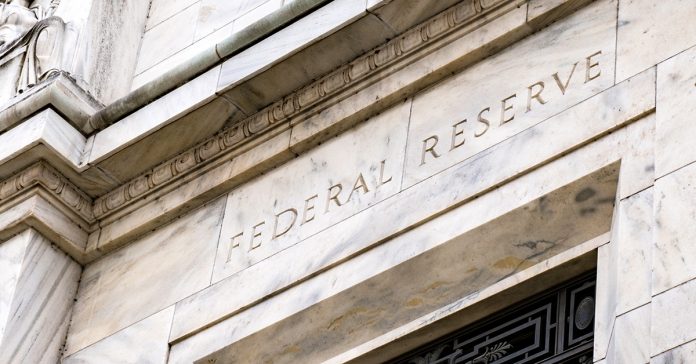
The President’s address could reshape expectations for Federal Reserve policy. Investors are increasingly pricing the Iran war not as a temporary geopolitical disturbance, but as a growing macroeconomic shock with the potential to alter the Federal Reserve’s policy path.

The benchmark 10-year Treasury yield held around 4.35%, while the 2-year note hovered near 3.86% and the 30-year bond approached 4.92%, keeping long-dated borrowing costs close to their highest levels in several months.

Against the backdrop of Trump’s address, the muted day-to-day movement is not seen as stability.

The bigger story is the sharp repricing that has already taken place. Before the conflict intensified, the 10-year yield was trading below 4%. It has since climbed roughly 35 to 40 basis points, a significant move for the world’s benchmark risk-free asset.

That move tells a deeper story about what markets now fear. Ordinarily, geopolitical crises push investors into Treasuries, causing yields to fall as demand for safe assets rises. This time, yields have instead risen even as global tensions escalate.

That inversion suggests that inflation fears, driven by surging oil prices and supply-chain risks, are outweighing the traditional safe-haven bid. This is increasingly becoming a stagflation trade. Markets are now pricing a scenario in which growth slows because of the war’s economic fallout, while inflation remains sticky or even accelerates because of higher energy costs.

That is one of the most difficult environments for central banks to navigate. As oil prices remain elevated amid uncertainty around the Strait of Hormuz, investors are reassessing whether the Fed can deliver any rate cuts this year. Reuters reported that markets have sharply trimmed expectations for easing, with some desks now pushing any meaningful cuts into 2027.

The yield curve offers further insight. The spread between the 10-year and 2-year yields now stands at roughly 50 basis points, reflecting a steeper curve than earlier in the year. That steepening is often interpreted as a sign that investors expect higher long-term inflation and term premium, rather than imminent recession alone.

In practical terms, bond buyers now demand greater compensation to hold long-dated debt in an environment where inflation uncertainty is rising.

The geopolitical dimension remains the dominant driver. President Trump’s ultimatum to Iran over the reopening of the Strait of Hormuz has introduced a binary risk event into markets. If diplomacy gains traction and the waterway reopens, crude prices could fall sharply, easing inflation expectations and allowing yields to retrace.

Some analysts estimate that such an outcome could pull WTI crude lower by $20 to $30 per barrel, which would likely trigger a rally in Treasuries.

The downside scenario is more severe as any strike on energy infrastructure or a prolonged closure of Hormuz could send oil into the $130 to $150 range, significantly worsening inflation expectations and pushing Treasury yields even higher.

This is why this week’s inflation data takes on unusual significance. The PCE report will be scrutinized not just for headline inflation, but also for any early signs that the oil shock is feeding into core prices, transport costs, and consumer goods. If the data comes in hotter than expected, it could reinforce the view that the Fed must stay restrictive for longer.

That would likely pressure the long end of the curve further. The broader significance is that the Iran war is now clearly affecting global capital markets beyond commodities. It is also influencing the price of money itself. Higher Treasury yields feed directly into mortgage rates, corporate bond issuance, valuation models for equities, and the cost of refinancing U.S. government debt.

For equities, this creates a double burden: geopolitical uncertainty on one hand and higher discount rates on the other. This is especially problematic for technology and other growth sectors, whose valuations are highly sensitive to long-term yields.

Another important point is liquidity.

Trading volumes are thin because of holiday conditions in parts of Asia and Europe, which can amplify price swings. Even seemingly minor headlines from the White House or Tehran could therefore trigger outsized moves in yields, oil, and equities.

In effect, the Treasury market is no longer reacting purely as a safe haven. It is increasingly functioning as the market’s clearest gauge of whether the Iran conflict evolves into a full-fledged global inflation shock. For now, yields are steady. But the steadiness is less a sign of calm than a reflection of a market bracing for a decisive headline risk event over the next 48 hours.