DD
MM
YYYY

PAGES

DD
MM
YYYY

spot_img

PAGES

Home Blog Page 4

Russia Plans Regulated Cryptocurrency Market Under Central Bank Oversight

0

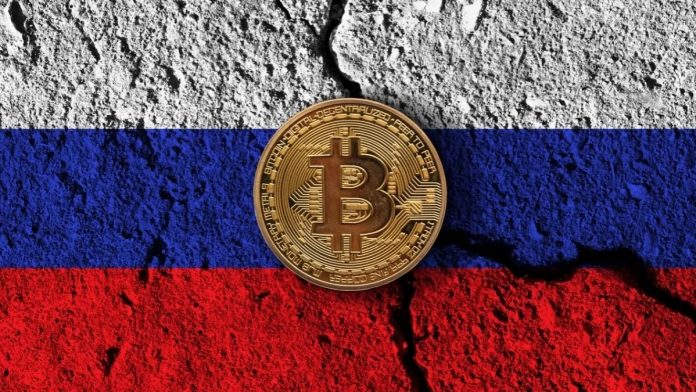
Russia is moving closer to a formal cryptocurrency market, with the country’s central bank saying the industry could begin operating within a legal framework before the end of 2026.

The statement marks a significant shift in a country that has spent years balancing the potential economic value of digital assets against concerns over financial stability, money laundering and capital controls.

Vladimir Chistyukhin, first deputy governor of the Bank of Russia, said regulators were working through a substantial package of subordinate legislation needed to make the new framework operational.

The plan involves 27 regulatory acts: seven higher-priority measures and 20 second-tier rules. The central bank expects the latter to be adopted by the end of October, while several of the initial measures have already reached Russia’s Justice Ministry.

The development follows legislation adopted by Russia’s State Duma in July. The law, which came into force on September 1, establishes a legal structure for cryptocurrency transactions through regulated intermediaries. It allows both qualified and non-qualified investors to participate, although retail investors face restrictions.

Non-qualified investors must pass a test and can purchase selected highly liquid cryptocurrencies up to ?300,000 per year through one intermediary. Qualified investors face fewer restrictions.

That distinction is important because Russia is not simply opening the door to unrestricted cryptocurrency adoption.

Instead, it is attempting to build a supervised market in which exchanges, intermediaries and digital repositories operate under defined rules. The Bank of Russia has already proposed requirements for digital depositories, including minimum capital ranging from ?50 million to ?250 million depending on their activities.

The architecture reflects a broader transformation in how governments are approaching crypto. Rather than treating digital assets solely as an alternative financial system operating outside traditional institutions, regulators increasingly want to bring them inside the financial perimeter.

Exchanges can become regulated gateways, custodians can become accountable infrastructure providers, and blockchain-based assets can be subjected to reporting and investor-protection requirements. For Russia, the implications extend beyond domestic speculation.

Cryptocurrency has increasingly been discussed as an instrument for international economic activity, particularly as Russian companies face restrictions affecting conventional cross-border finance.

Earlier proposals from the central bank envisioned participants in foreign economic activity receiving access to a broad range of cryptocurrency transactions.

Yet legalization does not mean cryptocurrencies will become ordinary money inside Russia. The regulatory approach separates investment and trading from domestic payments.

Russian authorities have also sought tighter controls around self-custodied wallets and anonymous crypto circulation, reflecting concerns about illicit finance and regulatory visibility.

This creates an interesting contradiction at the heart of Russia’s crypto strategy. The state wants the economic and technological benefits of digital assets while retaining strong control over how those assets enter the financial system.

The resulting market could therefore look less like an open, permissionless crypto economy and more like a regulated extension of the existing financial sector. The end-of-year target will depend on implementation.

Passing legislation establishes the foundation, but exchanges, custodians, registries and other market infrastructure must still become operational. If regulators complete the remaining rules on schedule, Russia could enter 2027 with a substantially more formal cryptocurrency industry than it had at the beginning of 2026.

The significance extends beyond Russia itself. As the United States, Europe and other major jurisdictions continue developing frameworks for digital assets, Russia’s move adds another major economy to the global experiment in regulated crypto markets.

The emerging question is no longer simply whether governments will permit cryptocurrency. Increasingly, it is how much of the crypto economy governments will allow—and under whose rules.
AI Spending Could Hit $1tn Next Year as Hyperscalers Fuel a New Investment Boom, Dimon Says

0
JP Morgan Chase puts contents through its CEO account, it goes viral. But the same content via JPMC account, no one cares (WSJ)

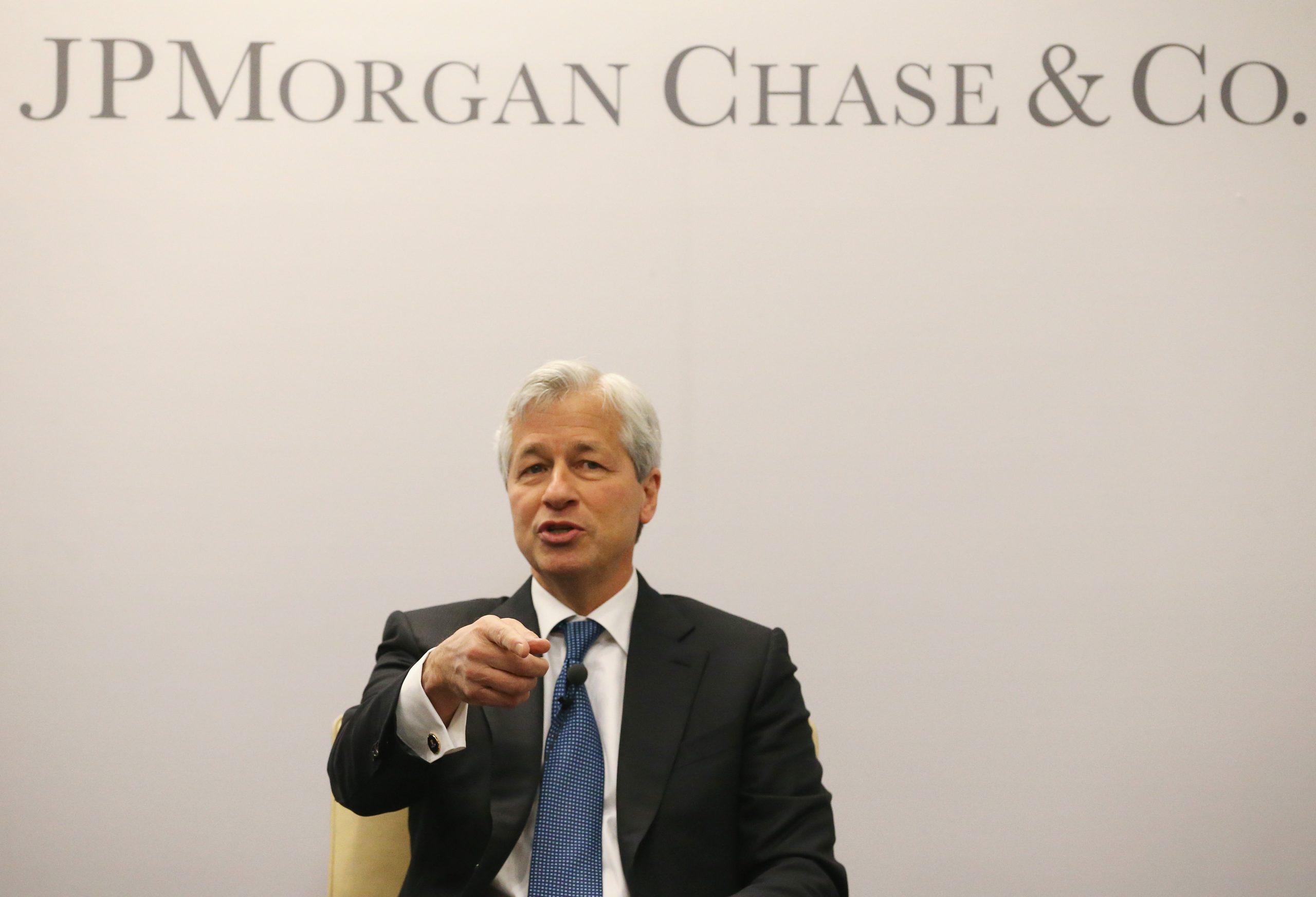
The artificial intelligence investment boom is showing few signs of slowing, with spending across the hyperscaler ecosystem potentially reaching $1 trillion next year, JPMorgan Chase CEO Jamie Dimon said, highlighting the growing influence of AI infrastructure on the broader economy.

Spending by hyperscalers and companies across their infrastructure ecosystem has more than doubled from about $300 billion last year to roughly $700 billion this year, Dimon said. If that pace continues, investment could approach $1 trillion in 2027.

“That’s like 1% increase to GDP each year,” Dimon told CNBC-TV18 on the sidelines of the 11th annual JPMorgan India Conference.

He said the investment boom was supporting economic growth but could also add to inflation as companies hire workers, build factories and power plants, and purchase equipment and materials.

The scale of the spending is increasingly making AI more than a technology-sector story. The buildout requires semiconductors, data centers, electricity generation, transmission infrastructure, construction and specialized equipment, creating demand across multiple parts of the economy.

That spending can boost economic activity in the short term, but Dimon said the longer-term effect could be different. He described AI as an “unbelievable technology” and said its rapid expansion appeared likely to continue, while potentially producing deflationary effects as companies become more productive and efficient.

The tension between those two effects is becoming central to the economic debate around AI. The initial construction boom can increase demand for labor, energy and equipment, while the technology itself could eventually reduce the cost of producing goods and services by automating work and improving productivity.

For investors, however, the size of the spending does not guarantee that every company benefiting from the AI buildout will generate attractive returns.

Dimon cautioned against trying to identify the winners too early, drawing a comparison with the internet boom. Many companies that appeared well positioned during that period ultimately failed, while some less prominent businesses emerged as major long-term winners. That history is relevant to the current AI cycle because enormous amounts of capital are being committed before the industry has established which business models will ultimately capture the largest share of the economic value.

Dimon also pushed back against the idea that every AI investment must produce an immediately measurable financial return.

“Sometimes it’s just table stakes,” he said, arguing that companies may have to invest in AI simply to remain competitive.

He pointed to improvements in customer experience as an example of a benefit that can be difficult to quantify and said businesses could become more efficient at deploying AI over time.

That is believed to have resulted in a more complicated investment equation. AI spending can be economically necessary even when the direct return on a specific project is difficult to isolate. Companies may be investing not only to generate new revenue but also to reduce operating costs, improve products and prevent competitors from gaining an advantage.

At the same time, the scale of investment raises questions about the durability of the current capital cycle. Data-center construction, advanced chips and power infrastructure require enormous upfront commitments, while AI models and computing hardware continue to evolve rapidly.

Dimon said he was also watching several other forces that could keep interest rates elevated, including heavy demand for capital from infrastructure projects, remilitarization and government deficits.

He warned that there “may be a market correction,” although he said he was not certain AI would be responsible for it.

His comments come as investors continue to assess whether the rapid expansion of AI infrastructure can translate into sustainable earnings growth. The spending itself is measurable. The eventual economic return remains much harder to establish.

Dimon also maintained a cautious view on inflation. He said he hoped price pressures would ease but warned that “there’s a chance it won’t, and it may even go up a little bit,” while arguing that the Federal Reserve should remain committed to its 2% inflation target.

The inflation question could result in a broader discussion if AI infrastructure investment remains at its current pace. Data centers require large amounts of electricity, while construction projects compete for labor, equipment and materials. Those pressures can raise costs before productivity gains from AI become large enough to offset them.

Beyond the AI economy, Dimon said the United States and China appeared to be making progress ahead of a summit between President Donald Trump and Chinese President Xi Jinping. He said the two countries should “fully engage” on trade, AI, and security, describing the discussions as important to the global economy.

On India-U.S. relations, Dimon called for the two countries to return to negotiations and complete a trade agreement.

“It obviously hasn’t moved forward,” he said. “I hope it’s not put on the back burner.”

Dimon also said he understood U.S. concerns about India’s purchases of Russian oil but argued that Washington should consider India’s refining requirements and avoid measures that could hurt India and global oil markets.

His broader outlook on India was more expansive. Dimon said the Indian economy could grow to three times its current size over the next decade and confirmed that JPMorgan plans to continue expanding its operations in the country.

“We’re going to keep on building,” he said.

For the AI industry, however, the more consequential part of Dimon’s assessment is the sheer scale of capital now being committed. Moving from $300 billion in hyperscaler ecosystem spending last year to $700 billion this year and potentially $1 trillion next year would make AI infrastructure one of the largest investment cycles in the global economy.

X Partners With Coinbase, Kraken and Gemini to Enable Trading From the Timeline

0

The boundary between social media and financial markets is becoming increasingly difficult to define.

This week, two developments involving X and Binance have underscored how rapidly crypto infrastructure is moving beyond exchanges and into the places where people discover, discuss and ultimately act on financial information.

X is connecting its timeline to major trading platforms, while Binance is committing $100 million to Circle, the company behind USDC. he moves point toward a financial system in which information, liquidity and execution are increasingly connected.

X has launched its Cashtag Partner Program in the United States, allowing users to tap symbols such as $BTC or $TSLA, view live market information and then select a trading partner. Coinbase, Gemini, Kraken, Interactive Brokers and Moomoo are among the initial partners.

The actual transaction does not occur on X; users are redirected to the relevant platform to complete their orders. The significance is less about X becoming a brokerage overnight and more about reducing the distance between financial attention and financial action.

For years, X has functioned as a real-time marketplace of information. Traders follow breaking news, analyst commentary, company announcements and crypto narratives on the platform before moving elsewhere to execute trades. The new Cashtag system attempts to compress that journey.

That creates an important shift in the economics of financial information. If a post about Bitcoin can lead directly to a trading interface, attention becomes closer to a transactional asset. The timeline is no longer simply where an investor forms an opinion; it can become the first step toward market participation.

X has effectively built a bridge between financial conversation and execution, although regulated partners remain responsible for the actual trades.

At the same time, Binance and Circle are deepening a different part of the financial stack: stablecoins.

Circle announced that Binance has made a $100 million strategic equity investment in Circle and that the companies have entered a new five-year commercial agreement focused on expanding USDC access, particularly in emerging markets.

The investment matters because USDC is more than another cryptocurrency. Dollar-backed stablecoins increasingly function as settlement infrastructure for digital markets, allowing users and institutions to move dollar-denominated value across blockchain networks without relying exclusively on traditional banking rails.

For Binance, taking an equity position in Circle aligns its commercial interests more closely with the expansion of USDC. The agreement also gives Binance a larger role in promoting USDC across its global platform, while Circle provides infrastructure supporting the stablecoin’s use.

These developments reveal two sides of the same transformation. X is attempting to turn financial attention into a pathway toward execution, while Binance and Circle are strengthening the digital-dollar infrastructure that can support transactions once that execution occurs.

The larger question is whether social platforms and crypto companies will increasingly become interconnected financial gateways. If users can discover an asset, evaluate its market conversation and reach a trading venue within seconds, the traditional separation between media, markets and brokerage becomes thinner.

For investors, however, speed does not eliminate risk. A shorter path from information to execution can also shorten the time available for verification and reflection. The evolution of financial platforms may therefore be measured not only by how quickly they enable transactions.

But by how effectively they preserve informed decision-making in markets where attention itself can move prices.

USDe Recovers Quickly After Brief Depeg on Binance As Trueo Moves Prediction Market From Base to Ethereum

0

Crypto markets are once again highlighting the difference between a temporary market dislocation and a fundamental break in a financial system. Ethena’s USDe briefly lost its dollar peg on Binance before recovering rapidly, while prediction-market platform Trueo is migrating from Base to Ethereum’s layer 1.

The developments show how liquidity, infrastructure and market design are becoming increasingly important as crypto products move closer to traditional financial functions.

USDe was designed as a synthetic dollar rather than a conventional fiat-backed stablecoin. Its stability depends on a combination of collateral, hedging strategies and market infrastructure.

That makes the token’s price behavior particularly important during periods of volatility. The brief deviation on Binance therefore attracted attention because a dollar-denominated asset is expected to trade close to $1, especially on major exchanges.

Yet the speed of the recovery matters as much as the initial decline. A temporary exchange-level dislocation can be caused by thin liquidity, an imbalance between buyers and sellers, unusual order-book conditions or market-specific trading activity.

It does not automatically mean that the underlying system has failed. The episode instead demonstrates how even sophisticated stablecoin structures remain exposed to the mechanics of centralized exchanges and fragmented liquidity.

For traders, the distinction is crucial. Someone using USDe as collateral or as a settlement asset could face losses, liquidations or unexpected execution prices if a sharp deviation occurs at the wrong moment.

A brief depeg may disappear within minutes, but leveraged positions can be liquidated much faster. In that sense, stablecoin risk is not limited to whether an asset eventually returns to $1; it also involves what happens during the period when confidence, liquidity and price discovery temporarily diverge.

The second development points toward another important trend: the evolution of prediction markets. Trueo’s migration from Base to Ethereum’s layer 1 suggests that the platform sees value in operating directly on Ethereum’s primary settlement network.

Base, an Ethereum layer-2 network, offers lower transaction costs and greater transaction capacity, making it attractive for applications where users interact frequently with smart contracts.

Ethereum L1, by contrast, provides direct access to Ethereum’s main settlement environment and its established liquidity, security infrastructure and ecosystem.

The decision illustrates a broader debate in blockchain architecture. Cheaper and faster execution is not always the only objective. For financial applications, developers may also prioritize settlement assurances, liquidity, composability, institutional accessibility and the credibility associated with the underlying chain.

Prediction markets are particularly sensitive to these considerations because they turn information and expectations into tradable positions. Users are effectively expressing views about future events, while market prices can become a continuously updated signal of collective expectations.

As these platforms expand, the infrastructure beneath them becomes part of the product itself. The juxtaposition of USDe’s brief depeg and Trueo’s migration therefore offers a useful lesson about crypto’s next phase. The industry is no longer simply competing over token launches and transaction speed.

It is increasingly testing whether decentralized infrastructure can support markets where stability, settlement and information discovery carry real economic consequences. USDe’s rapid recovery demonstrates resilience, but the episode also reinforces the importance of liquidity and risk management.

Trueo’s move to Ethereum L1 underscores the continuing importance of trusted settlement infrastructure. Both developments point toward the same destination: crypto markets are becoming more sophisticated, but sophistication does not eliminate risk. It simply moves the risk into more complex parts of the system.

Crypto Market Cap Briefly Surpasses $3 Trillion as Bitcoin and Altcoins Rally

1

The total cryptocurrency market capitalization has surpassed $3 trillion, marking the first time the sector has reached this level since January.

The move came as Bitcoin and major altcoins extended a broad rally, lifting the overall market by roughly 4.3% over the previous day before it settled just below the threshold.

Bitcoin traded above the $87,000 zone, before slightly retracing around $86,251, up about 4.5% in 24 hours. Bitcoin’s price has risen about 9% in September and reached its highest level in eight months.

Ethereum rose roughly 2.3% to around $2,745. Ethereum’s 3-day RSI has moved back into overbought territory, and a bearish divergence is beginning to form, where price makes higher highs but momentum doesn’t confirm them.

On the other hand, XRP gained about 5.7% to $1.53 and Solana advanced 3.6% to $117. Dogecoin stood out among larger tokens with an approximately 11% increase. BNB added more modest gains of around 1.6%.

A recurring theme across current analysis is capital rotation. As Bitcoin cools from its overbought stretch, analysts expect liquidity to shift toward Ethereum, XRP, and other altcoins, a pattern historically seen once Bitcoin’s initial leg of a bull run matures.

The performance of cryptocurrencies comes as the Clarity Act collapsed and the Federal Reserve boosted interest rates. But the world’s largest cryptocurrency has shown resilience as the Securities and Exchange Commission last week issued temporary exemptions, an important regulatory decision for the sector.

The failure of the Clarity Act passage, might ordinarily have been expected to weigh on cryptocurrencies, but traders have largely looked past it and focused on the agencies responsible for interpreting and enforcing existing regulation.

The recovery has added more than $740 billion in market value since late August. Analysts linked much of the momentum to a U.S. Treasury announcement expanding buybacks of long-dated bonds, a step that eased financial conditions and encouraged investors to move into risk assets.

Institutional demand also played a clear role, U.S. spot Bitcoin ETFs recorded nearly $1 billion in net inflows on the previous day, the largest single-day total since October 2025.

Speculative activity rose alongside the price gains. Open interest in crypto perpetual futures climbed to nearly $160 billion, the highest level since late October 2025. More than $920 million in short positions were liquidated during the sharp move higher, highlighting how leverage can amplify swings in either direction.

While the market remains well below its all-time high near $4.8 trillion recorded in October 2025, the return above $3 trillion signals improved sentiment after earlier volatility.

Bitcoin’s dominance held near 57–60%, and the advance showed breadth across large-cap tokens rather than being limited to a single asset. Traders and investors are now watching whether the level can be sustained as leverage remains elevated and macroeconomic conditions continue to evolve.

Outlook

The near-term outlook for the cryptocurrency market will likely depend on whether the latest rally can transition from short-covering and leveraged buying into sustained spot demand.

Bitcoin’s move above $87,000 has restored momentum, but rising perpetual-futures open interest to around $160 billion also leaves the market vulnerable to sharp reversals if leveraged positions begin to unwind.

Analysts are therefore watching whether Bitcoin can consolidate above the $85,000 area and whether fresh institutional flows continue to support prices. For Bitcoin, a sustained move above the recent $87,000–$87,400 high would keep attention focused on the next major resistance area around $90,000.

However, a failure to hold recently reclaimed support levels could trigger profit-taking and another round of liquidations. Market participants are also monitoring whether U.S. spot Bitcoin ETF inflows remain strong enough to replace the temporary demand created by short covering.

Overall, reclaiming the $3 trillion market-capitalization level marks a significant recovery from the volatility of recent months, but it does not by itself confirm that the market has entered a sustained new phase.