DD
MM
YYYY

PAGES

DD
MM
YYYY

spot_img

PAGES

Home Blog Page 4032

Support For Small Businesses: Nigeria Plans to Re-Introduce The TraderMoni Scheme in November

0

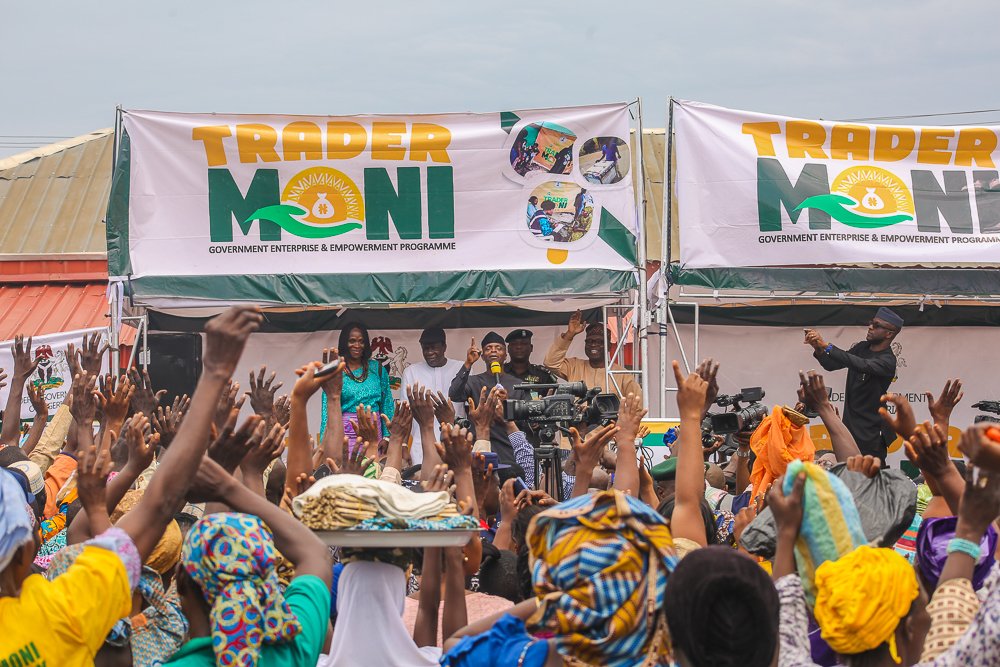
The Federal Government of Nigeria has announced that it would re-launch the TraderMoni scheme in November 2023, to provide support for small business owners in Nigeria.

In contrast to previous phases where small business owners received N10,000 from the previous administration, each beneficiary will now receive a larger sum of N50,000 to boost the growth of their business.

This was confirmed by the Minister of Humanitarian Affairs, Dr. Beta Edu. She said,

“Now for the first set, which we are commencing in November, we are selecting one prominent market per senatorial district, totaling 109 markets. We will actively engage traders within their shops in these markets.

“It’s a substantial N50,000 to bolster their businesses. We are not influenced by party affiliations or personal interests. We enroll them in the market, simultaneously creating a bank account for them during the enrolment, and the funds are directly transferred from the CBN account”.

Minister Betta further clarified that the re-launch of Tradermoni is not in any way politically motivated, emphasizing that the present administration is dedicated to improving the lives of Nigerians.

In her words,

“Well we don’t have elections right now. As we initiate the Renewed Hope GEEP Program, we are focused on governance, not politics. This is the essence of President Bola Ahmed Tinubu’s leadership”.

The TraderMoni Scheme

TraderMoni is a Government Enterprise and Empowerment Programme (GEEP) Initiative created to boost the Nigerian economy through leverage and access to finance for petty traders.

The objective of this program is to provide small loans to small business owners or artisans, groups that usually cannot access loans or credit through banks and traditional financial institutions.

The TraderMoni scheme is one of the arms of the Government Enterprise and Empowerment Programme (GEEP) initiated by the Federal Government of Nigeria on the platform of its National Social Investment Programme.

The GEEP was initiated in May 2016, to provide zero-collateral soft loans to traders, artisans, and farmers, aiming to improve their standards of living by expanding their businesses.

The two other arms of the GEEP are the MarketMoni and FarmerMoni, schemes targeted at market women and farmers respectively.

The scheme is handled by the Bank of Industry which uses its management software to validate loan applications. The loan is paid within 48 hours to a mobile wallet account, that can be cashed out.

Tradermoni has been criticized by some Nigerian citizens and political analysts, who stated that the motive is politically influenced, however, the program offers an alternative for small business owners in Nigeria looking for business loans to fund their businesses.


FMCG Intelligence Startup Lengo AI Secures Pre-Seed Fund to Expand to Other African Markets

0
Fund, money cash dollar

Lengo AI, a Senegalese-based AI-driven Fast Moving Consumer Goods (FMCG) has raised a seven-figure pre-seed funding to develop its products and enter new African markets.

The funding round was co-led by early-stage venture capital firm Acasia Ventures and Ventures Platform and joined by P1 Ventures, Launch Africa, Voltron Capital, and a number of other VCs and angel investors.

Lengo AI disclosed that the funding will be used to expand its tech and sales teams, further develop the AI portion of the product, and expand to new markets. 

Speaking on the fund raised, the startup CEO Max A. Smith said,

“Lengo AI’s platform already provides near real-time market monitoring from a ground-level perspective for over 2,000 products. Now we are working on leveraging AI to connect at scale with the last node of the retail network the corner shops. We’re building a very low-friction technology with retailers and actively recruiting the best AI and software engineers.

“Thanks to the support from Acasia Ventures, we hope to gain expertise in Nigeria and Egypt, and accordingly, make the right connections in both countries to expand our product for shopkeepers and work with brands to stop guessing Africa.”

Founded in 2022 by Max Smith, Roger Xavier Macia, and Ismail Seck, Lengo is the first AI-driven intelligence Platform for FMCG companies in Africa.

The platform uses a hybrid approach of Lengo Eagles (field agents) and AI to connect retailers and FMCG companies with real-time performance data on the sales of products.

Lengo AI aims to provide intelligence and highly actionable insights to FMCG brands coming from the thousands of corner shops that make up 90 percent of purchases across the continent.

With Lengo, premium access to the largest database on consumer goods in the fastest-growing consumer market in the World is now just a subscription away.

By joining the Lengo Club, shopkeepers, who are at the heart of the social and economic fabric of African countries, can increase their revenues by benefiting from insights on customer behaviors, alerts on new products, and a loyalty point system.

On the corporate end, the startup helps local companies in the FMCG sector optimize their resources and provides purchasing behavior data to international companies aiming to invest in Africa.

Notably, Lengo AI was the first startup to map out corner shops selling FMCG products in Dakar and is in the process of mapping out an additional six cities. Today, Lengo AI has accounted for and mapped out over 30,000 corner shops.

E-commerce can also help NFTs achieve Mainstream Adoption and Recognition

0
Beautiful young asian woman holding a credit card and shopping online with using laptop computer at cafe on blue tone, girl payment on internet, business ecommerce icon concept.

NFTs, or non-fungible tokens, are digital assets that represent unique and scarce items such as art, music, collectibles, and more. They have been gaining popularity and value in the past year, with some NFTs selling for millions of dollars. If you are looking for the latest and hottest NFTs, you might be surprised to find out that they are not on OpenSea, Rarible, or any other popular marketplace. They are actually at Walmart, the world’s largest retailer.

Walmart has recently launched its own NFT platform, where it offers exclusive digital collectibles from some of the most famous artists, celebrities, and brands. You can find NFTs from Beyoncé, LeBron James, Marvel, Star Wars, and more, all with Walmart’s guarantee of authenticity and quality.

But what is the next step for NFTs? How can they reach a wider audience and create more value for their creators and owners? One possible answer is E-commerce. E-commerce is the process of buying and selling goods and services online. It is a huge and growing market, with global e-commerce sales reaching $4.28 trillion in 2020, according to Statista. E-commerce offers convenience, variety, and accessibility to consumers, as well as lower costs, higher margins, and wider reach to sellers.

Some NFTs are already exploring the potential of e-commerce. For example, Beeple, the artist who sold an NFT for $69 million at Christie’s auction house, has launched a website called WeNew that sells NFTs of iconic moments in sports, music, art, and culture. The website also offers physical merchandise and experiences related to the NFTs, such as signed posters, tickets to events, and meet-and-greets with celebrities.

Another example is CryptoPunks, one of the first and most popular NFT projects that features 10,000 pixelated characters with different attributes and rarities. CryptoPunks has partnered with luxury fashion brand Dolce & Gabbana to create an exclusive collection of NFTs, and physical clothing inspired by the CryptoPunks universe. The collection will be sold on a new platform called UNXD that aims to bridge the gap between NFTs and luxury fashion.

These are just some of the ways that NFTs are trying to go the e-commerce way. By doing so, they can create more value for themselves and their communities, as well as attract new customers and fans who may not be familiar with or interested in NFTs. E-commerce can also help NFTs achieve more mainstream adoption and recognition, as well as foster more innovation and creativity in the digital space.

Walmart’s NFT platform is not just a place to buy and sell digital art. It is also a way to access exclusive experiences, rewards, and perks from the creators and partners of the NFTs. For example, if you buy a Beyoncé NFT, you might get a chance to attend a private concert, get a personalized video message, or receive a discount on her merchandise. If you buy a Star Wars NFT, you might get access to behind-the-scenes footage, early screenings, or special edition products.

Walmart’s NFT platform is also designed to be user-friendly and accessible to everyone. You don’t need to have a crypto wallet, pay high gas fees, or deal with complicated transactions. You can simply use your Walmart account, credit card, or gift card to buy and sell NFTs. You can also view and manage your NFT collection on Walmart’s website or app, where you can also display them in a virtual gallery or share them with your friends.

Walmart’s NFT platform is revolutionizing the NFT industry by bringing it to the mainstream and making it more affordable, convenient, and fun. If you want to join the NFT craze and own some of the most coveted digital assets in the world, head over to Walmart NFT and start browsing.

At Tekedia Capital, we provide umbrellas you!

0

At Tekedia Capital, we provide umbrellas to cover you as you navigate the paths to economically rise with #innovators, #builders and #startupFounders. We’re in an active cycle and Demo Day is Saturday, Oct 14. Join us here.

We’re making it easier for citizens, groups, investment clubs, companies, organizations, etc to own a piece of early-stage, high-growth technology startups operating across Africa and beyond.

Our opportunity antenna and grassroot connections with innovators enable us to see patterns as they develop. We invite you to partner with us as we nurture and build category-king companies in Africa and beyond, and in the process advance citizens, communities and nations.

At Tekedia Capital, we fund the foundations of the NEXT African economy through entrepreneurial capitalism. A  membership fee which covers 4 investment cycles (we typically do 2-3 cyclers every 12 months)  of $1,000 or equivalent is required; click and join today.

Tom Emmer Seeking Position of House Majority Leader Could be a Boost for Cryptocurrency in USA

0

The recent announcement by Rep. Tom Emmer (R-MN) that he will seek the position of House Majority leader or Chair has sparked some optimism among crypto enthusiasts. Emmer, who is the co-chair of the Congressional Blockchain Caucus and a vocal supporter of digital assets, could use his influence to advance pro-crypto legislation and educate his fellow lawmakers on the benefits of innovation.

The Minnesota Republican and Majority Whip is reportedly vying for House Majority Leader or to the top position as Speaker, after the dramatic ousting of former Speaker Kevin McCarthy, R-Calif., earlier in the week. That could be good for crypto as more seniority could mean a push to get crypto legislation across the finish line.

“We are always excited to see any champion of the digital asset space advance and we look forward to seeing what this means for the future of our industry,” said Perianne Boring, CEO and founder of the Chamber of Digital Commerce. “Rep. Emmer has been a key collaborator for us, and we appreciate his hard work to foster innovation for digital assets and blockchain technologies.”

Emmer has introduced legislation in the past few years, including the Securities Clarity Act, which would create a new definition for tokens that exist in the in-between of commodity and security. Emmer has also been staunchly against central bank digital currencies and introduced a bill last month to prohibit the Federal Reserve from issuing a CBDC directly to individuals.

Emmer has also been critical on Securities and Exchange Commission Chair Gary Gensler, calling him an “impartial regulator” and taking a “regulation by harassment approach” toward digital assets during a hearing last week. Emmer criticized the agency recently as well for not yet allowing the listing of a spot bitcoin exchange-traded fund.

As the Conference Chair, Emmer would be responsible for crafting and communicating the GOP’s message and agenda in the House. He would also have a seat at the leadership table, where he could advocate for crypto-friendly policies and push back against any attempts to stifle or overregulate the industry. Emmer has already shown his commitment to protecting and promoting crypto in Congress, by introducing bills such as the Blockchain Regulatory Certainty Act and the Safe Harbor for Taxpayers with Forked Assets Act, as well as co-sponsoring the Eliminate Barriers to Innovation Act and the Securities Clarity Act.

Emmer’s bid for the Conference Chair comes after Rep. Liz Cheney (R-WY) was ousted from the role by her colleagues, who accused her of being out of touch with the party’s base and priorities. Emmer faces competition from Rep. Elise Stefanik (R-NY), who has the backing of former President Donald Trump and House Minority Leader Kevin McCarthy (R-CA). Stefanik’s stance on crypto is unclear, but she has not been as vocal or active as Emmer on the issue. Emmer has said that he respects Stefanik and considers her a friend, but that he believes he is the best person for the job.

If Emmer succeeds in becoming the House Majority leader, it could be a positive development for the crypto industry, which has faced increasing scrutiny and uncertainty from regulators and lawmakers in recent months. Emmer could help shape a more favorable environment for innovation and adoption, by raising awareness, building consensus, and advancing legislation that supports crypto’s growth and development. He could also counter some of the misinformation and fearmongering that often surrounds crypto, by highlighting its potential to create jobs, enhance financial inclusion, and foster economic freedom.