DD
MM
YYYY

PAGES

DD
MM
YYYY

spot_img

PAGES

Home Blog Page 4105

The Power of Burning Your Ships: How Harnan Cortes Led the Spanish Conquistadors to Victory In Mexico

0

‘’Never place all your eggs in one basket’’ and ‘’always ensure to have a back-up plan or plan B to fall to should your original plan not come through’’ are some of the age-long wisdoms you may have likely heard of. However, these perspectives to life, like many others, have their contrariant worldviews some of which have been attributed to some past heroes and heroines who have applied them to break limits during their heydays.

The contrariant sayings such as ‘”Burn your ships’’, “face your plights head on’’, “win or die trying’’, “no retreat no surrender’’ etc are being used to signify the great fits one is capable of achieving through a unidirectional engagement of the mind. It is often thought that locking on a single course inspires focus and gives room for intrinsically motivated intensity which are important ingredients of victory.

The meaning and beauty of this philosophy can be traced back to an event that happened more than five hundred years ago when the Spanish conquistador led by General Hernan Cortes went into war with the Mexicans.

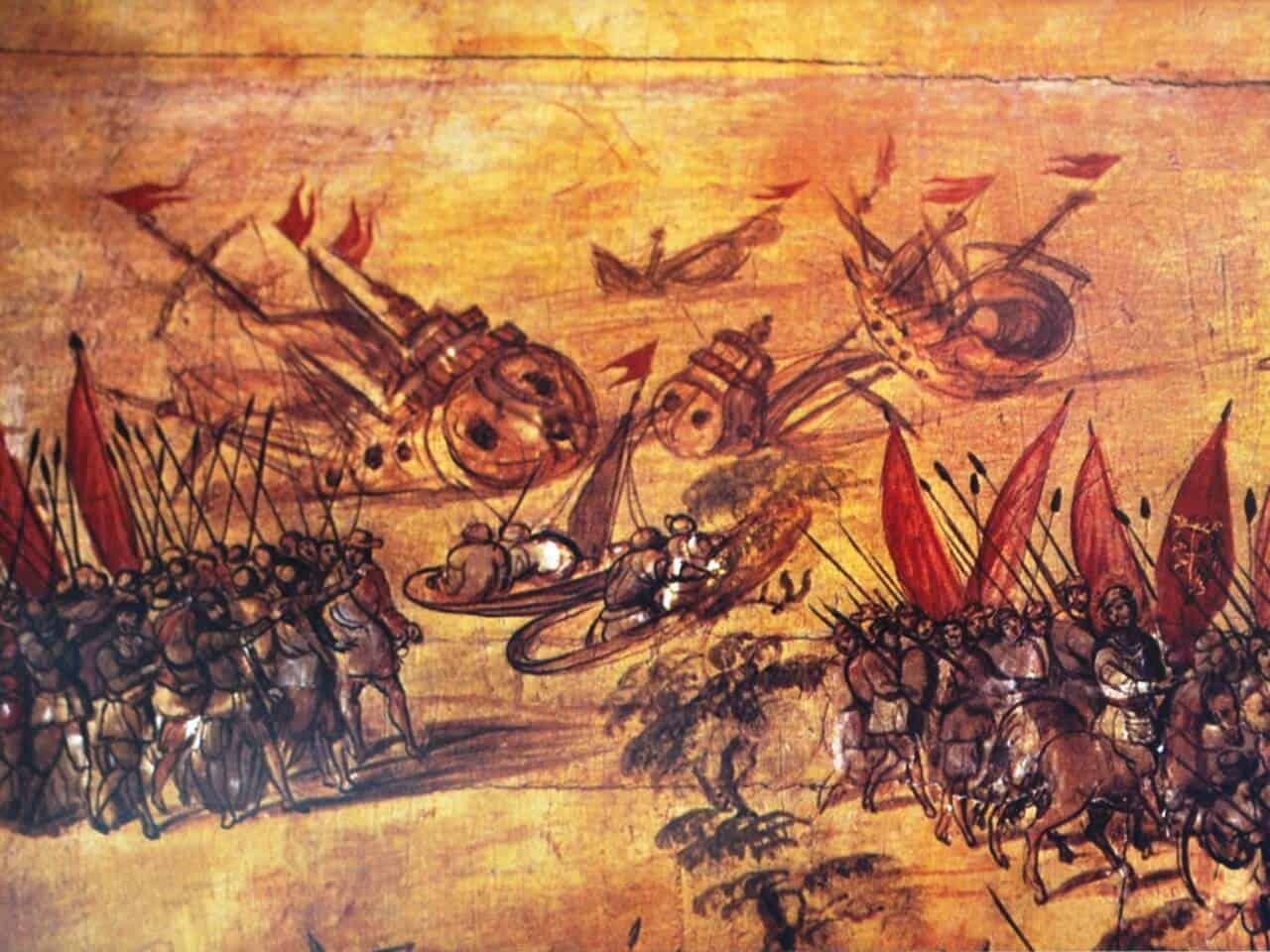
In 1519, Hernan Cortes and his men had to face a significantly larger army. Cortes had to think of a strategy that would help him have victory on the battlefield despite being outnumbered by the Mexicans. He then loaded his soldiers into boats, sailed to the enemy’s country, unloaded soldiers and equipment and gave the order to burn the ships that had carried them.

Motivating his men before the battle, Corte said, pointing at the burning ships, ‘’you see the boats going up in smoke. That means that we cannot leave these shores alive unless we win! We now have no choice – we win or we perish.’’

Hernan Cortes and his men left the battlefield victorious. And Harnan Cortes became the first man in 600 years to successfully conquer Mexico.

What You Need to Know and Do to Have Financial Freedom

0

Financial freedom and economic prosperity are general markers of success and happiness among individuals. When financial freedom is not an end in itself, it is definitely a means. Finance or capital is a key driver of creativity; it reinforces self-confidence and attracts external supports to get things done.

The quest for financial success upholds financial intelligence or financial management as an important life-coping skill that an individual needs to have. No doubt, having a definite financial plan is an important strategy to navigate the pervading problem of scarce economic resources.

However, experience has shown that many people fail to reach their set financial goals regardless of the level of efforts they have put into achieving them. They discover that some critical aspects of their lives including relationships, work, business or health suffer due to their poor financial performance.

There have been several explanations on why people do not attain equal level of financial success in life. These explanations have hinged largely on nature and nurture. For example, in the zodiac reading of the astrological system, it is believed that some individuals born under some particular sun signs are more naturally disposed to attract wealth, though self-awareness and discipline ultimately make a big difference in the level of success achieved among the different sun signs.

It is also without a doubt that people are made to have unequal access to money based on their social stratification. But with financial discipline informed by a strategic financial plan, anyone can live comfortably and reasonably attain their financial goal irrespective of the resources one may have at one’s disposal.

However, it should be noted that to complement financial discipline and financial plan is a good financial philosophy. Without a sound financial philosophy, identifying the right plan and exercising discipline while executing the plan may appear very difficult. Therefore, as an individual, it is important that you interrogate and constantly evaluate your motivation for financial freedom.

One of the things observed to be mostly responsible for financial mismanagement and failure in individuals is a faulty motivation or mindset. For example, prioritizing social motivations over the need for personal economic expansion emanate from a wrong philosophy of money.

Some individuals tend to keep and spend money to win more friends and increase their influence among people only to discover later on that it’s of no use. It dawns on them the recognition and influence is only transactional and the people will not hesitate to criticize and desert them at the likeliest opportunity to do so. They are like termites; they suck up the juice in the plant and then desert it after it’s completely decayed.

It is important to always bear in mind that the beauty of wealth is not in how much it can afford you at the moment but in its multiplier effect or its power of compounding interests.

TradeGrid Unveils TradersCard To Boost Downstream Oil and Gas Trading in Africa

0

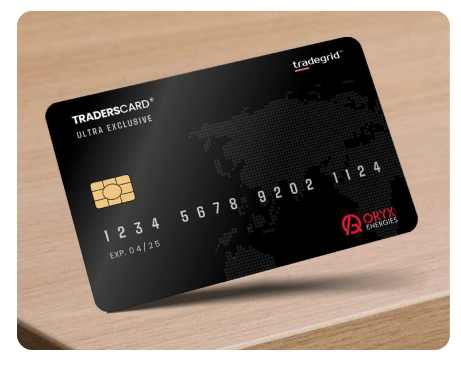
At TradeGrid, a Tekedia Capital portfolio company, we are the largest all-digital oil trading, downstream platform in Africa. We just added a card to make it easier for fuel stations to order and trade assets easily. If you own a filling station, gas station, etc, we will finance your asset and we have Tradegrid’s TradersCARD to simplify the frictions. Our card is optimized to finance $10 million monthly.

The Corporate Ultra-exclusive cards allow brands offer TradeGrid powered features such as zero-interest financing and miniaturized order deliveries to their branded dealer partners, Through the TradersCard, these dealers would enjoy a customized locked-in experience on the platform, being able only to view and purchase from their brand suppliers. Other Card types include the Ultra-unlimited, Boost Pro and Boost Log.

We’re downstream oil traders at scale. Since April, we’re recording an excess of 100% MoM GMV growth demonstrating resilience in our business despite the changes in the industry; we want to support your growth. Our operations cover many countries including Nigeria and Kenya.

Connect TradeGrid here https://thetradegrid.com/ or Tekedia Capital here https://capital.tekedia.com/ and our team will provide support.

Ndubuisi Ekekwe, PhD

Member of Board, TradeGrid USA

Network Smartly To Overcome that Career Turbulence

0

It is Sunday and let the Sunday School teacher pick a case study from the Holy Book. From Scripture Union in Secondary School, to University Chapel in FUTO, to RCCG, etc, yours truly has one singular call: teaching. So, today, I will discuss why you need to have a Mentor, a Coach, a Counsellor or a Guardian in your professional life. Yes, most times, when you hit your limit, they could be handy to help you. Here we go…

They were men of great capabilities. They excelled in their fields. They were masters of waters, having core competencies in navigating sea waves as fishermen. But one day, they were on the Sea of Galilee, legendary for its shallow depth – the lowest freshwater and second-lowest lake on earth. Fed by River Jordan, with the Golan Heights by the side, a wave easily gathered momentum, causing problems along the paths.

On that day, the disciples had their capabilities tested.  Four of them were recruited by Christ while working on that very Sea. The waves were ferocious. Yet,  the men trusted their skills. Then, they gave up, and asked for help. “Peace be still” were the words, and the storm stopped!

Our education, networks, and experiences are things we cherish. We use them to navigate careers and professional lives. But sometimes, waves of careers come – big storms which overwhelm – and having higher mentors or plans could help.

Remember, men of water needed to be saved in waters by a Higher Mentor. As tech brings disruptions in markets, causing troubles on careers, it is time to invest to be in the right company with people who can say “peace be still” on that career turbulence. #network smartly!

Comment on Feed

Comment 1: A sure recipe for disaster is to always feel one can put everything under control all the time.

No matter your capabilities life will always present with its own treachery of currents.This could be economic, natural, environmental, career or family.

When this happens there is need for a shoulder to lean on. Remember, when we lean on the shoulders of giants we see farther.

Thanks, prof Ndubuisi Ekekwe as always for this piece.

Fuel Subsidy Removal: Universal Basic Income (UBI) Implementation for Nigerians’ Hardships

0

Universal Basic Income (UBI) is “a periodic cash payment unconditionally delivered to all on an individual basis, without means-test or work requirement”. This is quite different from the existing conditional cash transfer in Nigeria. Our analyst notes that genuine implementation of the framework, like what operates in the United States of America and other countries in the global north, can help alleviate the hardships caused by fuel subsidy removal. Here are the critical stages for implementing it.

Policy Development and Design
a. Establish a task force or committee consisting of economists, social scientists, policymakers, and representatives from various sectors to develop the UBI policy framework.
b. Analyze existing social welfare programs, economic conditions, and demographic data to determine the appropriate UBI amount and eligibility criteria.
c. Consider international best practices and case studies to inform the design of the Nigerian UBI framework.

Funding Mechanism
a. Identify potential funding sources for the UBI program, such as redirecting subsidies, introducing new taxes, or leveraging natural resource revenues.
b. Conduct cost-benefit analyses and economic modeling to ensure the financial sustainability of the UBI program.
c. Explore partnerships with international organizations or seek foreign aid to support the initial implementation phase.

Pilot Programmes and Evaluation
a. Conduct small-scale pilot programs in selected regions or communities to assess the effectiveness of the UBI framework.
b. Monitor and evaluate the impact of the UBI on poverty reduction, income inequality, employment rates, education, healthcare, and other key indicators.
c. Use the findings from pilot programs to make necessary adjustments and improvements to the UBI framework.

Public Awareness and Stakeholder Engagement
a. Conduct extensive public awareness campaigns to educate citizens about the benefits and goals of the UBI programme.
b. Engage with community leaders, civil society organizations, and businesses to build support and gather feedback for continuous improvement.
c. Establish feedback mechanisms to address concerns, evaluate program performance, and incorporate stakeholders’ input into decision-making processes.

Implementation and Scale-Up
a. Develop a robust and secure payment system, leveraging existing financial infrastructure or exploring innovative technologies like mobile banking or blockchain.
b. Establish a transparent and efficient application process for citizens to enroll in the UBI programme.
c. Gradually scale up the UBI programme, starting with vulnerable groups such as low-income households, unemployed individuals, and persons with disabilities.

Monitoring, Evaluation, and Continuous Improvement
a. Develop robust monitoring and evaluation systems to track the outcomes and impacts of the UBI programme on the well-being of citizens and the overall economy.
b. Regularly review and analyze data to identify areas of improvement and make evidence-based policy decisions.
c. Ensure transparency and accountability in the management and administration of the UBI programme.

It is important to note that the successful implementation of a UBI framework requires careful planning, coordination, and continuous assessment to adapt to changing circumstances and address any potential challenges or unintended consequences.