DD
MM
YYYY

PAGES

DD
MM
YYYY

spot_img

PAGES

Home Blog Page 4123

ETH, BNB, IOTA, MATIC & COCOS’ ROI Since ICO; Big Eyes Infinity Shows 100x Potential

0

The crypto world is brimming with projects that tout themselves as the “best altcoins to buy.” However, the crypto universe had never witnessed such unwavering commitment from an initial coin offering (ICO) until Ethereum (ETH), Binance Coin (BNB), Iota (IOTA), Polygon (MATIC), and Cocos-BCX (COCOS) entered the scene. These five altcoins executed their ICOs so effectively that they continue to deliver on their promise of significant growth long after their launch.

Consequently, startup assets like Big Eyes Infinity (BIGINF) are emulating their strategies and commitments while simultaneously charting their unique course.

Exploring 5 Bullish Altcoins with Astonishing ROI Since ICOs

Certain cryptocurrencies have consistently delivered positive returns since their initial coin offerings (ICOs) — even some that weren’t initially anticipated to perform so spectacularly. Messari’s senior research analyst, Tom Dunleavy, recently unveiled a list of the top-performing crypto assets ranked by their return on investment (ROI) since their ICOs.

Claiming the throne is the second-largest coin, there has been an astounding Ethereum ROI of 5,163x since its ICO in 2014. Following closely is Binance Coin, the native token of the Binance cryptocurrency trading platform, with an ROI gain of 2,028x. In third place, we have IOTA, boasting a 384x ROI. Polygon takes the fourth spot with a proud 380x ROI, while Cocos-BCX, a blockchain platform for metaverse and digital games, secures the fifth position with an ROI of 275x.

This data was sourced from CryptoRank last January 25th.
Nevertheless, these remarkable ROIs have been accomplished despite the challenges and uncertainties prevailing in the crypto market. These monumental achievements set a high bar for newcomers like the budding Big Eyes Infinity, who aspire to follow in their footsteps and make their mark in the crypto world.

Crypto Titans of the Past — Big Eyes Infinity’s Heroes

Over the years, various digital assets have surged in value, delivering exceptional gains to early investors. Consider the case of Iota (IOTA), Polygon (MATIC), Cocos-BCX (COCOS), Binance Coin (BNB), and the reigning champion, Ethereum (ETH), all of which have provided over 100x returns in less than a decade. Investors have witnessed their investments multiply manifold, defying gravity and conventional financial metrics.

BIGINF, a utility token of the Big Eyes ecosystem, promises to become a 100x coin in its presale phase. Moreover, its presale window is limited to just four months, creating a sense of urgency and exclusivity. BIGINF introduces an enticing 1:1 Match Guarantee, effectively doubling the investment for early backers. It’s an opportunity that has left investors buzzing with excitement as they eagerly anticipate the next crypto sensation.

How Is Big Eyes Infinity Proving Its Mettle?

Big Eyes Infinity, a utility token of the upcoming 819Casino, boasts over 5,000 in-game adventures and lucrative opportunities. Big Eyes Infinity is meticulously crafted with the community’s best interests in mind. A substantial 70% of the total token supply is reserved for the presale, ensuring that early adopters and enthusiasts become active co-creators within the expansive BIGINF universe. Early investors in BIGINF can anticipate a substantial 500% ROI simply by acquiring the token during its initial phase.

<< Dive Into the Big Eyes Infinity >>

Built upon a foundation of learning from past experiences, Big Eyes Infinity is committed to unwavering transparency and profitability. A swift and equitable airdrop launch underscores this journey and aims to integrate directly with a decentralized exchange (DEX) platform, departing from traditional token distribution models.

Amazing Token Ahead!

In a market where astonishing returns are the rule rather than the exception, Big Eyes Infinity’s potential to follow in the footsteps of these crypto legends has captured the imagination of investors. As the crypto landscape continues to evolve, all eyes are on the presale of BIGINF — joining the ranks of the altcoins to buy.


Big Eyes Infinity (BIGINF)

Presale: https://buy1.bigeyes.space/

Website: https://bigeyes.space/

Telegram: Contact@BIGEYESOFFICIAL

Twitter: https://twitter.com/BigEyesCoin

Nigeria needs to Annex Growth with Integration of Blockchain Technology

0

Nigeria is a country with immense potential and opportunities, but also faces many challenges and risks. The country has a large and young population, abundant natural resources, and a vibrant entrepreneurial culture. However, it also struggles with poverty, insecurity, corruption, and poor infrastructure. These factors hinder the country’s economic growth and development and limit its ability to compete in the global market.

Nigeria ranks first in global crypto awareness, according to a recent report by Statista. The report surveyed 74 countries and found that 32% of Nigerians said they had used or owned cryptocurrency in 2020. This is the highest percentage among all the countries surveyed, and more than twice the global average of 15%.

One of the ways that Nigeria can overcome these challenges and unleash its potential is by integrating blockchain technology in all facets of its economic growth. Blockchain technology is a decentralized system of storing and transferring data that is secure, transparent, and immutable. It can be used to create innovative solutions for various sectors and industries, such as finance, agriculture, health, education, energy, and governance.

Blockchain technology can help Nigeria achieve its growth objectives by:

Improving financial inclusion and access to capital. Blockchain technology can enable the creation of digital currencies, peer-to-peer lending platforms, remittance services, and crowdfunding platforms that can reduce transaction costs, increase efficiency, and expand financial opportunities for millions of Nigerians who are unbanked or underbanked.

Enhancing transparency and accountability. Blockchain technology can provide a verifiable record of transactions and activities that can prevent fraud, corruption, and mismanagement. It can also enable citizens to monitor and participate in governance processes, such as voting, budgeting, and auditing.

Boosting productivity and innovation. Blockchain technology can facilitate the exchange of information and value across different networks and platforms. It can also enable the creation of smart contracts, digital identities, and decentralized applications that can automate processes, reduce intermediaries, and increase trust.

Fostering collaboration and cooperation. Blockchain technology can create a platform for collaboration and cooperation among various stakeholders, such as government agencies, private sector actors, civil society organizations, and international partners. It can also foster a culture of openness and inclusiveness that can enhance social cohesion and stability.

Nigeria has already taken some steps to embrace blockchain technology and leverage its benefits. For example, the Nigerian government has launched the National Blockchain Adoption Strategy, which aims to create a conducive environment for blockchain adoption and innovation in the country. The strategy outlines the vision, objectives, principles, and action plans for integrating blockchain technology in various sectors and industries.

However, there is still much more that needs to be done to fully harness the potential of blockchain technology for Nigeria’s economic growth. Some of the challenges that need to be addressed include:

Lack of awareness and understanding. Many Nigerians are still unaware or misinformed about what blockchain technology is and how it works. There is a need to educate and sensitize the public about the benefits and risks of blockchain technology, as well as the opportunities and challenges for its adoption.

Lack of skills and capacity. There is a shortage of skilled and qualified personnel who can develop and implement blockchain solutions in Nigeria. There is a need to invest in training and capacity building for blockchain developers, entrepreneurs, regulators, policymakers, and users.

Lack of infrastructure and connectivity. The quality and availability of internet access and electricity supply are still low in many parts of Nigeria. There is a need to improve the infrastructure and connectivity that are essential for blockchain operations and applications.

Lack of regulation and policy framework. The legal and regulatory environment for blockchain technology is still unclear and uncertain in Nigeria. There is a need to develop a clear and coherent regulation and policy framework that can provide guidance, clarity, certainty, and protection for blockchain stakeholders.

Why is Nigeria leading the world in crypto adoption? There are several factors that contribute to this phenomenon, such as:

The high inflation rate and currency devaluation of the Nigerian naira, which erodes the purchasing power of the citizens and makes them look for alternative ways to store and transfer value. The large and young population of Nigeria, which is tech-savvy and eager to explore new opportunities and innovations in the digital space. The growing remittance market in Nigeria, which is estimated to be worth over $20 billion annually. Crypto offers a cheaper, faster and more convenient way to send and receive money across borders, compared to traditional methods like banks and money transfer services.

The regulatory environment in Nigeria, which is relatively friendly and supportive of crypto innovation. The Central Bank of Nigeria (CBN) has issued guidelines for crypto service providers and has recognized crypto as a legal means of payment. The Securities and Exchange Commission (SEC) has also proposed a framework for regulating crypto assets and platforms.

These factors, along with the increasing awareness and education about crypto among Nigerians, have created a fertile ground for crypto adoption and innovation in the country. Nigeria is home to several crypto startups and platforms that are catering to the needs and preferences of the local market, such as BuyCoins, Bundle, Quidax, Luno, Paxful and Binance.

Nigeria’s crypto leadership is not only a testament to the resilience and creativity of its people, but also a sign of the potential and promise of crypto as a global phenomenon. As more countries and regions follow Nigeria’s example, crypto could become a mainstream and universal form of money that empowers individuals, businesses and communities around the world.

Nigeria has a unique opportunity to annex its growth with integration of blockchain technology in all facets of its economic growth. By doing so, it can transform its economy into a more inclusive, transparent, productive, innovative, collaborative, and competitive one. It can also position itself as a leader and pioneer in the African continent and the global community.

Tekedia Friday Cryptocurrency headlines – Sept 9 2023

0
A crytocurrency (source: mashable)

Genesis Global Capital, a leading cryptocurrency lending platform, has filed a lawsuit against Digital Currency Group (DCG), one of the largest investors in the crypto space, over unpaid bitcoin loans. According to the complaint, Genesis lent DCG 27,000 bitcoins worth $1.4 billion at the time of writing, between March and June 2021, with an interest rate of 6.5% per annum. The loans were supposed to be repaid by September 30, 2021, but DCG allegedly failed to do so, despite repeated demands from Genesis.

Genesis claims that DCG breached the loan agreements and acted in bad faith, by using the borrowed bitcoins to fund its own investments and operations, without disclosing this to Genesis. Genesis also alleges that DCG engaged in market manipulation, by selling large amounts of bitcoins in order to drive down the price and avoid paying back the full amount of the loans. Genesis seeks to recover the outstanding principal, interest, fees, and damages from DCG, as well as a declaration that DCG has no right to the bitcoins or any proceeds from their sale.

DCG is a prominent player in the crypto industry, with investments in companies such as Coinbase, Grayscale, BitGo, Blockstream, and CoinDesk. The company is led by Barry Silbert, a well-known figure in the crypto community. DCG has not yet responded to the lawsuit or commented on the allegations. The case is pending in the Supreme Court of New York.

Binance, one of the world’s largest cryptocurrency exchanges, has announced that it will stop offering trading and deposits of some privacy-focused coins in Belgium. The decision comes as a response to the country’s financial regulator, which has warned against the risks of using cryptocurrencies that can hide the identity and transactions of their users.

Binance said that it will delist Monero, Zcash, Dash, Horizen and Super Bitcoin from its platform in Belgium by October 31, 2023. Users who hold these coins are advised to withdraw them before the deadline or risk losing access to their funds. Binance stated that it is committed to complying with local regulations and protecting its users from potential legal issues.

Vitalik Buterin, the co-founder of Ethereum, has co-authored a paper on a new protocol for improving privacy on the blockchain. The protocol, called ZKSwap, is based on zero-knowledge proofs and allows users to swap tokens without revealing their identities or balances.

ZKSwap is designed to be a more scalable and user-friendly alternative to Tornado Cash, a popular privacy tool that uses smart contracts to anonymize transactions. The paper, which was published on the arXiv preprint server, claims that ZKSwap can achieve up to 1000x higher throughput and 100x lower fees than Tornado Cash, while maintaining the same level of security and privacy.

Sino Global, a venture capital firm that focuses on investing in blockchain and cryptocurrency projects, has announced that it is rebranding itself as Ryze Labs. The company said that the new name reflects its vision of empowering entrepreneurs and innovators in the emerging digital economy. Ryze Labs will continue to support promising startups and initiatives that leverage blockchain technology and crypto assets to create value and solve real-world problems.

TRLab, a Web3 platform that connects artists and collectors in the decentralized digital art space, has announced a $5 million funding round led by Hivemind Capital, a venture capital firm focused on blockchain and crypto projects. OKX Ventures, the investment arm of the global crypto exchange OKX, also participated in the round.

TRLab aims to empower artists to create, showcase, and sell their works on the blockchain, as well as to provide collectors with access to exclusive and curated collections of digital art. TRLab leverages the power of Web3 technologies, such as smart contracts, non-fungible tokens (NFTs), and decentralized storage, to ensure the authenticity, provenance, and ownership of digital art. TRLab also plans to launch a decentralized autonomous organization (DAO) that will allow its community to govern the platform and share in its value creation.

The FDUSD stablecoin, which is pegged to the US dollar and backed by a basket of cryptocurrencies, has seen a remarkable surge in its market capitalization in the past month. According to data from CoinGecko, the FDUSD market cap increased by 51% from $261 million on August 8 to $394 million on September 8, making it one of the fastest growing stablecoins in the industry.

The growth of FDUSD can be attributed to several factors, such as its low fees, high liquidity, and wide adoption by various platforms and services. FDUSD is also supported by a robust governance system that ensures its stability and transparency. FDUSD aims to provide a reliable and convenient alternative to fiat currencies for users who want to access the benefits of the decentralized economy.

Story Protocol, a new platform that aims to empower creators and fans to own and monetize their intellectual property, announced today that it has raised $54 million in a Series A funding round led by Andreessen Horowitz. The round also included participation from other investors such as Coinbase Ventures, Paradigm, Electric Capital, and angel investors Naval Ravikant and Balaji Srinivasan. Story Protocol allows anyone to create, publish, and sell stories across different media formats, such as books, comics, podcasts, games, and movies.

The platform uses blockchain technology to create unique digital tokens that represent the ownership and royalties of each story. Creators can sell these tokens to fans or investors, who can then benefit from the future success of the story. Story Protocol also enables collaborative storytelling, where multiple creators can contribute to the same story and share the rewards. The platform plans to use the new funding to expand its team, develop its technology, and launch its marketplace for stories later this year.

BRICS: A Multi Polar World Order

0

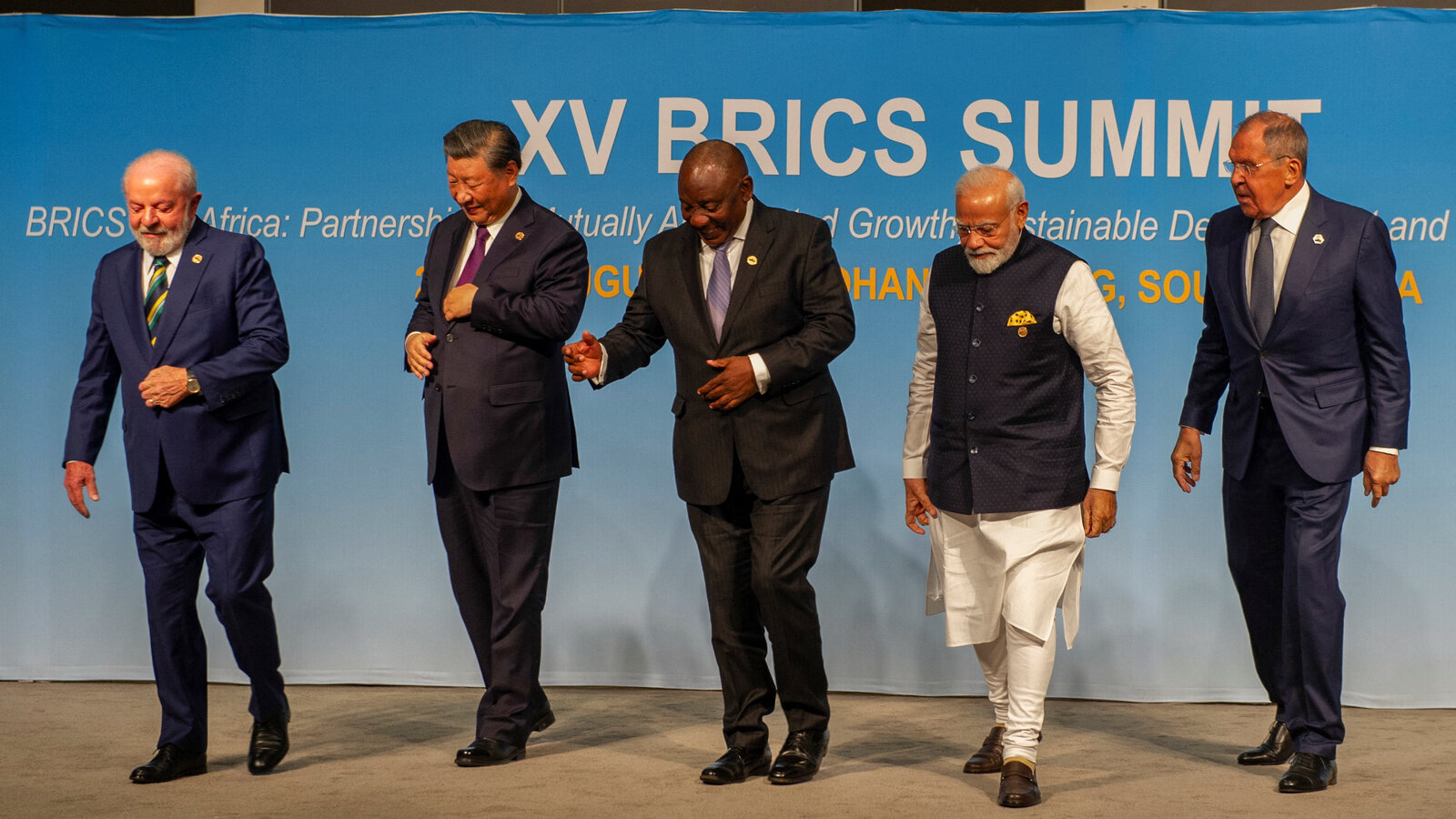
The BRICS + 6 summits, which brought together the leaders of Brazil, Russia, India, China, South Africa and six other emerging economies, concluded last week with a joint declaration that emphasized the need for multilateralism, cooperation and dialogue in addressing global challenges. However, the summit also highlighted the deepening rift between China and the US, as the two superpowers clashed over issues such as trade, human rights, cybersecurity and regional security.

China’s President Xi Jinping used the occasion to showcase his vision of a “community of shared future for mankind”, which he said was based on mutual respect, equality and win-win cooperation. He also called for the reform of the global governance system to better reflect the interests and voices of developing countries.

China bans the use of iPhones in government agencies. The order was given to officials at central government agencies not to use Apple’s iPhones and other foreign-branded devices for work or bring them into the office. The ban came at such a critical time – ahead of an Apple event next week, at which Apple is expected to launch a new line of iPhones and other Apple products. With this ban, Huawei is expected to take executive dominance in China.

So far, China and Russia are technically out of the G20 and won’t be attending this year’s summit in India. Mexico will also not be attending. And even though the Indians are hosting the summit this year, the Indian PM said he won’t be attending the United Nations General Assembly (UNGA) and didn’t give any serious reason why.

When asked what he thought was responsible for the Chinese and Russian leaders’ decision to skip the summit, India’s External Affairs Minister, Jaishankar rightly said their decision has nothing to do with India. Truly it has nothing to do with India. It has everything to do with Agreements to consolidate on BRICS and move forward without delay.

It’s like dating the wrong partner in a relationship and suddenly finding the right one. You might want to be considerate and take it easy with withdrawal, but sometimes, delay can be dangerous. It gets to a point where you just go right on ahead and call it off once and for all, so you can concentrate and build your new relationship and jointly make it succeed. This is what I believe is going on. The key BRICS arrowheads seem to have made up their minds to sever ties with the entangling old order, so they can focus more on building a formidable alternative to the aging Unipolar world order.

Can you imagine that Russia and Saudi Arabia, America’s one-time strong ally, are going ahead with their voluntary oil production cuts of 1.3 million barrels per day, despite America’s best efforts and pressure on Saudis not to go that route. Today, Senior officials from the Biden Admin are on their way to Saudi Arabia to see if they can figure out what in the world is going on.

I bet they won’t. Because, like I said earlier, it’s game on with BRICS. You can’t have that much concentration of power in one place – BRICS +6 and not put structures in place to consolidate. It’s happening before our eyes and I doubt that G20 and most of the other unipolar-affiliated organizations will ever be the same again, after this year’s events.

The US, however, was not impressed by China’s diplomatic charm offensive. The US delegation, led by Secretary of State Antony Blinken, accused China of engaging in “coercive and unfair” economic practices, violating human rights in Xinjiang and Hong Kong, undermining democracy in Taiwan and elsewhere, and threatening regional stability in the South China Sea and the Taiwan Strait. Blinken also criticized China for its lack of transparency and accountability in handling the COVID-19 pandemic and urged other countries to join the US in holding China to account.

The summit exposed the growing divergence between China and the US on their visions and values for the world order. While China seeks to expand its influence and leadership through initiatives such as the Belt and Road Initiative, the Asian Infrastructure Investment Bank and the Regional Comprehensive Economic Partnership, the US seeks to counter China’s rise and defend its primacy through alliances such as the Quad, the AUKUS and the Trans-Pacific Partnership. The two sides also have different views on issues such as climate change, nuclear proliferation, human rights and democracy.

The BRICS plus 6 summits did not result in any major breakthroughs or agreements between China and the US. Instead, it showed that the Sino-US tension has reached a new high, and that the prospects for cooperation are dimming. The summit also raised questions about the role and relevance of BRICS in a changing world.

While BRICS was originally conceived as a platform for cooperation among emerging economies with common interests and challenges, it now faces internal divisions and external pressures that undermine its cohesion and effectiveness. The BRICS plus 6 summits may have been an attempt by China to revitalize BRICS and expand its influence, but it also revealed the limits and challenges of such an endeavor.