DD
MM
YYYY

PAGES

DD
MM
YYYY

spot_img

PAGES

Home Blog Page 4162

eCash (XEC) And Frax Share (FXS) Price Drops While Sparklo Set to Diversify The Crypto Space

0

In recent years, there has been an explosive expansion in the cryptocurrency and blockchain industry. The emergence of the blockchain industry has profoundly altered business in several ways. The technology is already being used in fields across many industries.

Digital currency has transformed how organizations run, from decentralized security to efficient data management and more. We can now anticipate even more disruptive innovation in the years to come as more companies use blockchain technology.

Due to the unpredictability of cryptocurrencies, some coins like eCash (XEC) and Frax Share (FXS) displayed a trend drop that put traders at a setback. However not all cryptocurrencies are prone to declines and instability. Sparklo, for one, allows investors to manage their cryptocurrency holdings using a unique NFT strategy that ensures value and continuous profitability.

>>>> BUY SPARKLO TOKENS <<<

eCash (XEC) Price Declines May Indicate Overall Instability in the Cryptocurrency

The eCash (XEC) cryptocurrency is a privacy-focused digital currency that aims to provide fast and secure transactions. Despite this focus on privacy and security, the value of eCash (XEC) has not been immune to the volatility and fluctuations of the cryptocurrency market.

eCash (XEC) has experienced a decline in its price over the past week. The value of eCash (XEC) has unexpectedly dropped by 5.20% in the past 7 days, and by 2.15% in the last 24 hours. eCash (XEC) recent price drops have been unfortunate for investors as they lose gains made previously.

Frax Share (FXS) Weathers Multiple Price Fluctuations

Frax Share (FXS) is a cryptocurrency token of the Frax ecosystem. Frax Share (FXS) aims to produce a stablecoin backed by collateralized stablecoins and algorithmic mechanisms. However, this week Frax Share (FXS) holders experienced a decline in its price.

According to the latest data, the price of Frax Share (FXS) has fallen by 6.86% in the past seven days, which is a significant drop in value for investors. In 24 hours, the price of Frax Share (FXS) declined by 2.20% indicating that the downward trend may be continuing. The price also experienced a further shrinkage of 0.18% in the past hour, adding to investors’ concern.

Sparklo’s Role in The Precious Metal industry.

Sparklo is a platform for investors to invest in real precious metals through fractionalized NFTs. Investors may purchase precious metals like gold, silver, and platinum using the platform’s intuitive interface. With Sparklo, users are guaranteed privacy and security in all transactions, making it a reliable platform for investors to make investments.

In Sparklo investors do not have to be concerned about the high transaction costs of trading in metal markets. Additionally, the platform provides several investment options, making it simple for investors to locate investments that meet their requirements. To boost the safety  and transparency of its users, Sparklo has gone through a KYC application process successfully . The results will be released this month.

The Liquidity of Sparklo is also locked for 100 years and its team token for 1000 days to ensure . Sparklo also passed an audit by the Interfi network.

Sparklo can be purchased right away. It’s now in the second stage of its presale, with a price of $0.019. Sparklo also provides a 30% bonus valid till June 20th, so if you purchase 100 SPRK, you 130 SPRK.


Find out more about the presale:

Buy Presale: https://invest.sparklo.finance

Website: https://sparklo.finance

Twitter: https://twitter.com/sparklo_finance

Telegram: https://t.me/sparklofinance
The Rules of ARCON Every Advertiser Should Know in Nigeria

0

My client, Mr Funny/ Sabinus was contracted by one of the leading international food and beverage organizations operating in Nigeria to create content and promote this new product they want to launch into the Nigerian market.

Everything has been initiated and is already in motion, the skit has been shot by my client, waiting for approval from the management of the organization before my client can post the content on his social media pages.

On Thursday, I got an email from the marketing team of the organization asking us that due to the new Act of the The Advertising Regulatory Council of Nigeria (ARCON), mandating every advertiser to get a License from Advertising Practisioners Council of Nigeria (APCON) that we will have to pause until we secure every necessary license from APCON.

I decided to set up a meeting with Mr Ahmad Yalwa, the Director of Operations of The Advertising Regulatory Council of Nigeria (ARCON), Abuja; he had to clarify some of the ambiguous issues. From our meeting, I was able to verify from him the following;

>APCON is serious about the enforcement of the new act.

>The fine for defaulters is N500k

>Content creators have to get a license before they can post any content that advertises any product/brand; it is mandatory.

>License/approval for each content cost N25000

>License is to be issued 2 weeks from when applied but there can be an express license which can be issued 24 hours or 48 hours from when applied but it comes at a higher cost.

>APCON panel seat 2 times a month to vet contents and issues licenses.

>You do not have to be a registered member of APCON before you can apply and be issued with Licence to run an advertisement

>APCON Membership is voluntary but Licence to run an advert is not voluntary.

According to Mr. Yalwa, these are some of the reasons why they are strict with enforcing the new rule;

>Protection of public decency

>Checkmating lies and bluffs through advertisement

>Preventing fraud and scam

>Raising finances; although he insisted that the purpose was never to raise finance but to get people to comply and regulate the advert space in Nigeria.

Well, I look forward to this new act being tested in court but before then those are the basic things about APCON you should know to avoid running into trouble with them.


Why Government Regulations of the Crypto Industry is VITAL

0

The Crypto Industry has grown exponentially in the past decade, attracting millions of users and investors who see the potential of decentralized digital currencies and platforms. However, this rapid growth also poses significant challenges and risks, such as cyberattacks, fraud, money laundering, tax evasion, and environmental impact. These issues threaten not only the stability and security of the crypto ecosystem, but also the trust and confidence of the public and regulators.

That is why government regulation of the crypto industry is vital for its long-term success and sustainability. Regulation can provide clear and consistent rules and standards for crypto businesses and users, protect them from malicious actors and scams, ensure fair and transparent market practices, foster innovation and competition, and promote social and environmental responsibility.

However, regulation does not mean stifling or banning crypto activities. Rather, it means finding a balance between enabling and empowering the crypto industry on one hand and safeguarding the public interest and values on the other. Regulation should be based on a collaborative and constructive dialogue between regulators and stakeholders, taking into account the diversity and complexity of the crypto landscape, as well as the evolving needs and expectations of society.

In this post, I will discuss some of the key benefits and challenges of government regulation of the crypto industry, as well as some of the best practices and examples from around the world. I will also share my personal opinion on what kind of regulation is most suitable and effective for the crypto industry in the future.

However, regulation should not be seen as a hindrance or a threat to the crypto industry. Rather, it should be viewed as an opportunity and a catalyst for growth and development. Regulation can help legitimize and mainstream crypto assets and services, attracting more users and investors who value security and reliability.

Regulation can also encourage best practices and ethical standards among crypto businesses and users, enhancing their reputation and credibility. Regulation can also stimulate research and development, creating new solutions and opportunities for the crypto industry.

Therefore, government regulation of the crypto industry is vital for its future. It is not a question of whether regulation is needed, but rather how it should be designed and implemented.

Actors in the crypto industry should engage proactively and constructively with regulators, policymakers, and stakeholders, sharing their insights and perspectives, addressing their concerns and challenges, and collaborating on finding balanced and effective solutions.

Some may argue that government regulation goes against the ethos of crypto, which is based on trustless, permissionless, and censorship-resistant systems. They may fear that government intervention will stifle creativity and freedom, or even undermine the security and integrity of the crypto networks. However, these concerns are exaggerated and unfounded. Government regulation does not mean government control or interference. It means government collaboration and cooperation with the crypto industry, respecting its autonomy and diversity while addressing its challenges and risks.

The crypto industry should also embrace self-regulation, adopting voluntary codes of conduct and guidelines that reflect their values and principles. By doing so, the crypto industry can demonstrate its maturity and responsibility, earn its social license to operate, and secure its place in the global economy.

Google’s Publication Pivot And Why The Best Ideas Are Rarely Published!

1

When I joined the US semiconductor industry, I learnt one hard truth: the best discoveries are rarely published. In short, depending on your nationality and that of your boss, your boss may not be cleared to know what you are doing! Then bring in export controls, you will realize that journals do not host the earliest best efforts in this world, unless they emanate from the halls of universities where the main work is to publish.

As a Nigerian citizen, I was cleared while some of my peers were not that lucky. During meetings, you need to check even in the same team who could know what. People, if you make mistakes, the FBI will send you an invitation.

But while most of those were for national security reasons, Google is taking it to another level: “Google’s head of A.I., Jeff Dean, used to encourage researchers to publish academic papers. But in February, the policy changed. That’s because a foundational part of the latest A.I. tech, including ChatGPT, originated in a Google study. Google now plans to share research only after it’s been turned into products”. 

Simply, the papers on “transformers” were pivotal for modern generative AI systems, and Google engineers authored those. The problem was that others like ChatGPT’s OpenAI picked the ideas and commercialized them before Google. Going forward, Google does not want to reveal too much until it has commercialized.

When you see Aneke the bird dancing by the roadside, please check, someone is beating the drum. Google does not want to prepare its future for the slaughterhouse of technology.

So, going forward, only boring and worthless articles will be approved for journal publications. The real deal stays in-house! Capitalism 101!

Nigeria’s Rail Sector Grew by 81.2% in the Fourth Quarter of 2022

0

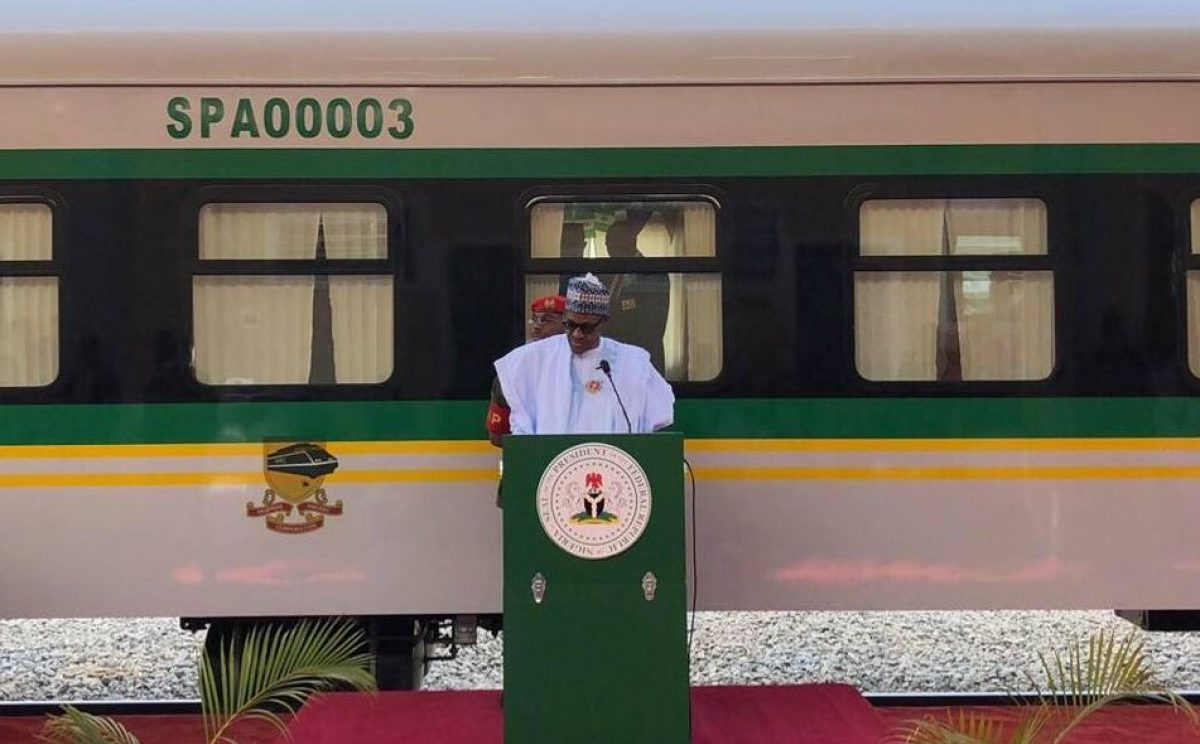
According to recent Data from the National Bureau of Statistics, it revealed that Nigeria’s rail transportation grew by 81.2% quarter-to-quarter in the Fourth Quarter (Q4) of 2022.

The increase in quarter-to-quarter growth in total revenue was driven by an increase in passenger traffic, which more than doubled to 1.34 million in Q4 of 2022, from 500,000 in Q3 of 2022. Data reveals that passenger revenue increased by 61.4% quarter-on-quarter to N1.15 billion in quarter four of 2022, accounting for 68% of gross revenues during the quarter.

Meanwhile, on a year-to-year basis, the total revenue declined by 16% which is attributed to the long suspension of rail operations along the Abuja-Kaduna route.

Recall that the Nigerian Railway Corporation in March 2022 suspended train operations along the Abuja-Kaduna route, after a terrorist attack on an Abuja-Kaduna bound train. Announcing the suspension of operation along the Abuja-Kaduna route via its official Twitter handle, the NRC explained that the suspension was due to security concerns and unforeseen circumstances.

However, the federal government had given assurances that it was putting in place necessary security measures to forestall a repeat of terrorist attacks on the railway. The minister of transportation  Mu’azu Sambo during a tour of the railway corridor said, the government is putting in every security measure to ensure the safety of passengers.

In his words, “Part of the measures put in place is the ticketing. As you know, security starts with ticketing. Now, you cannot buy a ticket unless you have a valid phone number and a National Identification card. And if you are a foreigner, there must be means of identification that can be used and produced by the NIMC office.

“After buying the ticket, you will be given a barcode that would help you gain access to the lounge, when the machine reads the barcode on your receipt and your complete profile, only then would you be allowed into the lounge. This kind of security measure is according in line with global best practices as profiling the passenger is necessary to know who is coming on board.

“Another visible change people would notice is the increase in the number of security personnel; some of them will not even be wearing uniforms to guarantee the safety of the traveling public. There is other sensitive equipment that we have deployed that I will not be mentioning. Also, on every journey, the train will be monitored on a screen and the train driver can see up to a particular distance if there is any threat on the tracks, which will enable him to pull the break long before getting to the perceived threat.”

The resumption of operations on the Abuja-Kaduna railway line in December 2022 is reported to have partly contributed to a quarter-on-quarter rise in total revenue. With the security measures put in place by the government, there is an anticipation of improved revenue in 2023.