DD
MM
YYYY

PAGES

DD
MM
YYYY

spot_img

PAGES

Home Blog Page 4164

Which is Better: Hiring a web Designer or Using a Website Builder?

0

In today’s world, the internet is an inseparable part of our life, that is a fact and there is no denying it. Now, in light of this statement, it is obvious that having your website, be it a commercial website or a personal blog, is of paramount importance Internet can be considered analogous to a marketplace and a website a store, so the need of a website need not be stated more.

You can acquire a website in two ways:

1) Build it Yourself, 2) Hire someone to build it for you.

For non-design Professionals, a web builder kit is a very effective and necessary tool in creating a website. A web builder kit is a very versatile tool that has multiple modules and templates that have “drag and paste” features enabling you to create your website without having to learn to code.

A website designer is an IT professional that creates a visually appealing, creative, and fully functional website. Their many skills include the creation and maintenance of a website, interface design, search engine optimization, and designing an intuitive user experience. They just don’t make a website, what a good web designer does can be considered modern art.

Remember having an outstanding website is not the central objective. It certainly helps in achieving it but is still a secondary or tertiary priority. A compelling product or service is needed irrespective of if it is hosted by a dazzling custom-made website or on a simplistic self-made website.

So, you have decided that you need a website. As stated above, you can either make your websites or hire Professional web Designers. Each of these options has its advantages and disadvantages that can make that particular option non-viable to you.

So, what to choose? Well, here is how it works:

Hiring a web designer is the premium option for acquiring a website. They will understand your vision and bring it to life.

Web designers have a human element that is absent in Web building tools and thus is more versatile and malleable to your needs.

The attention to detail, consistent updates and improvements, and a customized website that stands above and beyond your competitions are a few advantages of hiring a web designer.

Now, in comparison to hiring a web designer that will cost thousands of dollars and will take months to be made, using web building tools is an inexpensive and relatively time-saving option.

A new and upcoming business with a new and yet unproven concept is suited more for web building tools rather than a custom website.

For a hobbyist or a blogger, a web-building tool is an optimal solution for creating a website. If your blog catches on or your audience grows, you can always make a custom website later.

At the end of the day, it comes down to costs and expenses. Ask yourself, is a custom website worth your time and investment? Do you lose money not having a custom website while your competitors do? Do you even need a custom website? Can you make a suitable website on your own? Can a self-made website fulfill your needs?

Your answer to these questions will determine whether you should go for a custom website or make one yourself. More so, there are many digital services where you can pick some great templates to improve your design.  We are in the digital age and having a solid online presence is very strategic and catalytic for any mission.

Beyond TAX, VAT and Fees in Nigeria, Governments Must Create TRUST In the Nation

1

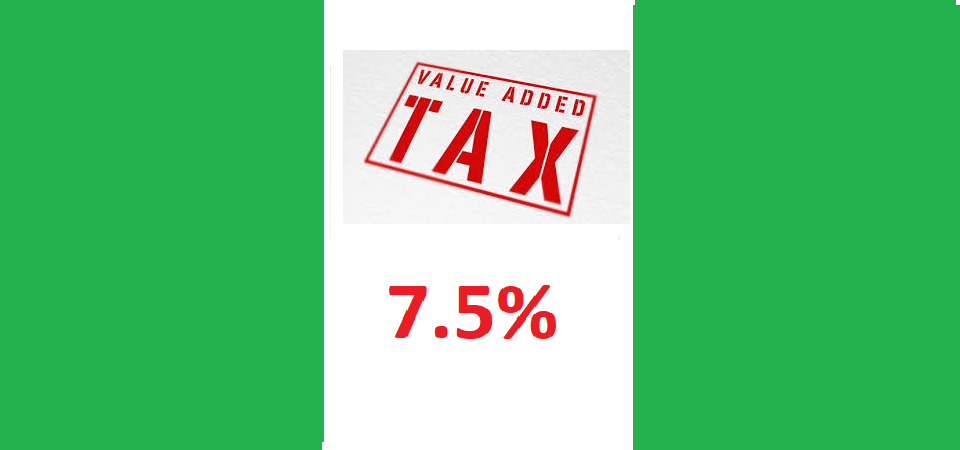
Nigeria has a great playbook on taxation innovation. Where we have issues are in growth innovation. Yet, this VAT is not a bad: “The Federal Inland Revenue Service (FIRS) has said that a 7.5 percent value added tax (VAT) will be charged on radio and television masts, transmission lines, cell towers, mobile homes, caravans, and trailers, from September 1, 2023.

But for all, this my #1 rule: people willingly pay tax because tax is working in their lives just as people willingly pay insurance because insurance saves their future. Nigeria needs to return to the age of TRUST.  Yes, in the past, men and women willingly contributed money, and sent it to the government, to advance society, because they trusted governments.

Then, Chief Sam Mbakwe (former governor of Imo State) would appear on IBC (Imo Broadcasting Corporation) Owerri with a piece of paper, explaining the state’s liabilities and why he needed more funds. The next day, Peoples Club, etc would call emergency meetings, to raise funds to close the loopholes.

My grandmother was a big fan of Mbakwe because the man came to build a power plant in Isuikwuato. When the governor asked for some help, she gave me 25 kobo to give to my headmaster. If you studied during Mbakwe time, it was common in old Imo State. People donated to the state government, willingly. That used to be Nigeria!

Peoples Club: do you still send money to any modern governor in Nigeria? People, Nigeria’s problem is that the citizens do not TRUST governments at all levels and that is why people hate these new taxes, fees, VAT, etc. We MUST reverse that trajectory to advance the nation.

TAX and Tech

In the US, they’re deploying AI to help improve tax collection.

The Internal Revenue Service is planning to use artificial intelligence to investigate possible tax evasion by large hedge funds, real estate investors and private equity groups. The initiative taps part of an $80 billion allocation from last year’s Inflation Reduction Act. IRS Commissioner Daniel Werfel says AI will help the agency identify previously unseen patterns and trends suggesting potential tax evasion schemes and be used to help audit 75 of the largest partnerships in the U.S. by the end of the month. The partnerships each have more than $10 billion in assets. The IRS will send notifications to 500 other large partnerships in October warning of possible audits.

Nigerians to Pay VAT on Radio/TV Masts, Cell Towers, Mobile Homes & Trailers from Sept. 1

0

The Federal Inland Revenue Service (FIRS) has said that a 7.5 percent value added tax (VAT) will be charged on radio and television masts, transmission lines, cell towers, mobile homes, caravans, and trailers, from September 1, 2023.

The revenue agency announced the development in a public notice released on Friday and signed by Muhammad Nami, its executive chairman. Nami explained that the items were previously excluded from building.

According to the FIRS, the provision allowing for the expansion of building is contained in the Finance Act 2023 which had a commencement date of May 1 but was later deferred to September 1.

“The definition of “building” was amended in Section 46 of the VAT Act to exclude any fixture or structure that can be easily removed from the land,” the notice reads.

“As such, all the items removed from the definition of land have become chargeable to VAT. Companies letting, trading in or providing services with such items must charge VAT at the prevailing rate with effect from 1st of September, 2023.”

The tax agency further said that Section 14(3) of the VAT Act was amended to the effect that persons appointed to withhold or collect VAT shall remit the VAT withheld or collected on or before the 14th day of the month following the month in which the VAT was withheld or collected.

“Consequently, all VAT withheld or collected in August 2023 shall be remitted to FIRS on or before the 14th of September 2023,” the notice reads.

“Similarly, VAT withheld or collected in subsequent months shall be remitted to FIRS not later than the 14th day of the month following that in which the VAT was withheld or collected.”

It added that the rate of tertiary education tax (TET) was changed to three percent of assessable profits.

“The new TET rate of 3% shall take effect for TET becoming due in respect of the accounting period ending on or after 1st September, 2023,” the FIRS said.

On investment allowances and convertible currencies, the FIRS said sections 32, 34, and 37 of the Companies Income Tax Act (CITA) grant allowances in respect of capital expenditure incurred in certain circumstances, and tax exemption on income earned in convertible currencies from tourists by hotels have been repealed.

This, the agency said, means that the said allowances and tax exemption are no longer available for tax returns becoming due in respect of the accounting period ending on or after September 1, 2023.

However, the announcement has triggered a critical reaction from business leaders and analysts, who say that it is not time yet for the government to expand the tax net – considering Nigeria’s current poor economic situation.

There is concern that the move to include radio and television masts, transmission lines, cell towers, mobile homes, caravans, and trailers, in building will further squeeze the transport and telecom sectors.

Experts say that further increase in transportation costs will see the inflation rate, currently at 24.08%, accelerates – compounding the soaring cost of living.

Yemi Kale, Economist at KPMG Nigeria and former Chief of the National Bureau of Statistics (NBS), in June, warned the government about raising taxes on household expenditure and private business. He said such a move would impact the Nigerian business ecosystem negatively.

“In terms of public finance, I am one of the few people that do not believe in increasing taxes. I’m not one of the people that is a fan of pushing up taxes, particularly in a recession and when the economy is struggling with fragile growth,” he said.

President Bola Tinubu, though desperately seeking to increase the government’s revenue, acknowledged that heavy taxation in times of economic crisis is “counterproductive.”

He said: “During times of economic weaknesses, increasing taxation is counterproductive, high taxes invite possible economic contradiction and higher unemployment.”

AI Insights That Will Lead Retail to Progress

0

Imagine the retail of the future. “Smart” cameras and robots make sure that the store shelves are regularly replenished with goods, control deliveries, analyze which product is most popular with customers and at what time. They use Artificial Intelligence. This is a technique already used in various companies. Casinos are among them. Get your Bizzo Casino login to see the amazing games that the online casino has to offer.

No loss in sales, no more situations when the product is in the warehouse of the store. But it is not on the shelf and no one knows about it, the last mile problem is solved.

This is not a utopia. But the competent use of artificial intelligence (AI) in retail, opportunities that are available to businesses right now. For example, in 2017, the American company Walmart announced that it would use special robots to scan shelves in 500 stores across the states. The introduction of robots does not lead to job losses. IT saves employees from performing repetitive and boring tasks, such as inventory, price checking, and the presence of unknown items.

Fortunately, AI-based solutions are appearing more and more on the IT market. They can prevent these problems and help reduce losses.

AI Insights for Retail

Artificial intelligence, machine learning, Big Data, video analytics and digitalization give retail insights. They help businesses create more accurate forecasts and improve services.

Computer Vision

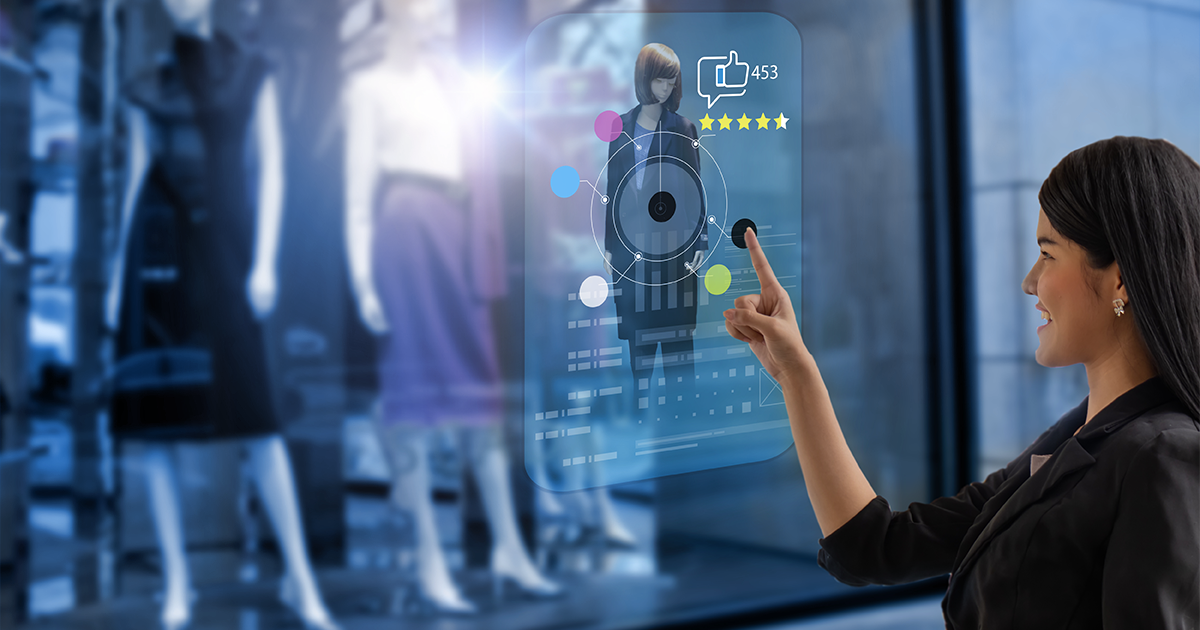
Computer vision is more than just a mobile app or a ceiling-mounted camera that monitors store shelves. Modern cameras attached to a shelf opposite can monitor everything in front of them. While robots drive around stores, monitor shelves and take pictures with a 360-degree camera. Regardless of how it is implemented, the function of computer vision is to take pictures of the shelves and their contents. To check whether the goods are in place and whether they correspond to the retailer’s planogram.

In addition, the functionality of computer vision provides for the possibility of monitoring price tags in the store. For example, you can track whether the value indicated on the price tag corresponds to the promotional one.

Besides advantages, the computer vision system has disadvantages.

The need to purchase a system and a large number of cameras. For example, purchasing video recording services for a large chain of stores can be expensive.

Recognition of each photo. This process requires a significant amount of computing power and remains a significant part of the costs.

The view of the cameras depends on the location. For example, cameras located on the opposite shelf demonstrate a fairly good result. But devices mounted on the ceiling have a limited viewing angle and cannot fully fix the lower shelves.

The chambers do not take into account the depth of the shelves. For example, the first three boxes of juice were taken from the shelf. Ten more boxes remained in a row, but the location of the camera does not allow it to fix the goods deep in the shelf.

The equipment requires regular maintenance and repair.

If all these points are taken into account, then disadvantages can be turned into advantages. And used proactively. For example, to increase the amount of computing power, it is better to use hybrid clouds. This is the best option for scaling infrastructure in the future and performing analysis and calculations in the present.

Analytical Solutions and the Formation of Clear Tasks

The analytics solution is a service that receives information from the retailer and analyzes data about such parameters. From price, sales, stock, promotions and product list. During the analysis, the system detects anomalies.

For example, if during the analysis of checks and the balance of goods in the warehouse, the service revealed a discrepancy between the sales plan and the fact. Then, the analytical solution initiates verification of the information.

Such tasks are generated automatically. Store managers do not need to spend employee resources on photographing and analyzing shelves and racks. Store personnel are connected only after the inspection has been initiated. Automation of part of the processes in retail has a number of advantages. Saving staff time, saving money, no need to pay extra for the work of employees, elimination of errors due to the human factor, control of the actions of the “field” employees of the store.

In addition, analytical services provide the ability to track lost sales. Receipt monitoring gives an idea of the purchases that could be made. Based on this information, the service builds a sales plan, and by monitoring the activities of employees, it determines when sales resume. Thanks to this service, you can evaluate the impact of its work on reducing lost sales.

Machine Learning in Retail

This is a method of quickly marking and analyzing large amounts of information that is beyond the power of a person. Large retailers are already using artificial intelligence and machine learning technologies to increase sales. For example, to create personalized product recommendations in mailing lists. Or to analyze customer data: purchase frequency and amount, lifestyle, preferred price level and favorite product categories.

The algorithms learn from historical data such as transactions, customer interaction history, information from online sources, revenue data, etc. The quality and volume of data, as well as the length of the period over which they are collected, determine the accuracy of the model, which will be obtained in the end.

Automation and Algorithms

Algorithms help to build a system of priority tasks for staff. This is a kind of accent that signals to employees that they need to pay attention to the problem.

For example, the task of promoting new products in retail is to ensure that a new product is brought to the store shelves and receives due attention from buyers. This can be hindered by two things.

First, the human factor. For example, retailers may forget to take out a product or not find a place for it on the shelf.

Second, the technical issues related to updating the store planogram and related processes.

Both problems can be overcome with the help of business algorithms and technical solutions.

Innovation plays an important role in business. To promote them, store employees need at least: not to forget them in the warehouse, take them to the trading floor, find a place on the shelf and put them up. If there is no shelf space, this is an additional trigger for the back office to check if the planogram is correct. with issues that are not major but still very important.

Big Data and Forecasts

Thanks to the development of a culture of collecting and storing information in retail, huge amounts of data are accumulating. They provide a huge number of opportunities for obtaining valuable insights. Some scenarios are already actively used in retail. For example, forecasting sales or the effectiveness of promotions. But only a small part of entrepreneurs knows how to work with this data.

Digitalization in retail is facilitated by four elements.

  • The information about the equipment used.
  • The installation of sensors to determine the location and condition of the goods at the stages of the supply chain.
  • The complete product information.
  • The information about cameras that are responsible for the security and recognition of buyers.

The process of full digitalization of retail is now under development and may take the next decade. This is a very simple logic: the more data each company digitizes, the more the total amount of useful information in retail increases.

AI solves Two Main Business Problems: Revenue Growth and Cost Reduction

In the future, the integration of AI solutions in retail not only eliminates human error, but is also cheaper. Equipment purchased once is more profitable than regular remuneration of additional employees, and artificial intelligence contributes to the generation of additional time, which in turn leads to “sales rescue” in retail.

Thus, artificial intelligence not only solves applied problems, but also solves two main business problems: revenue growth and cost reduction.

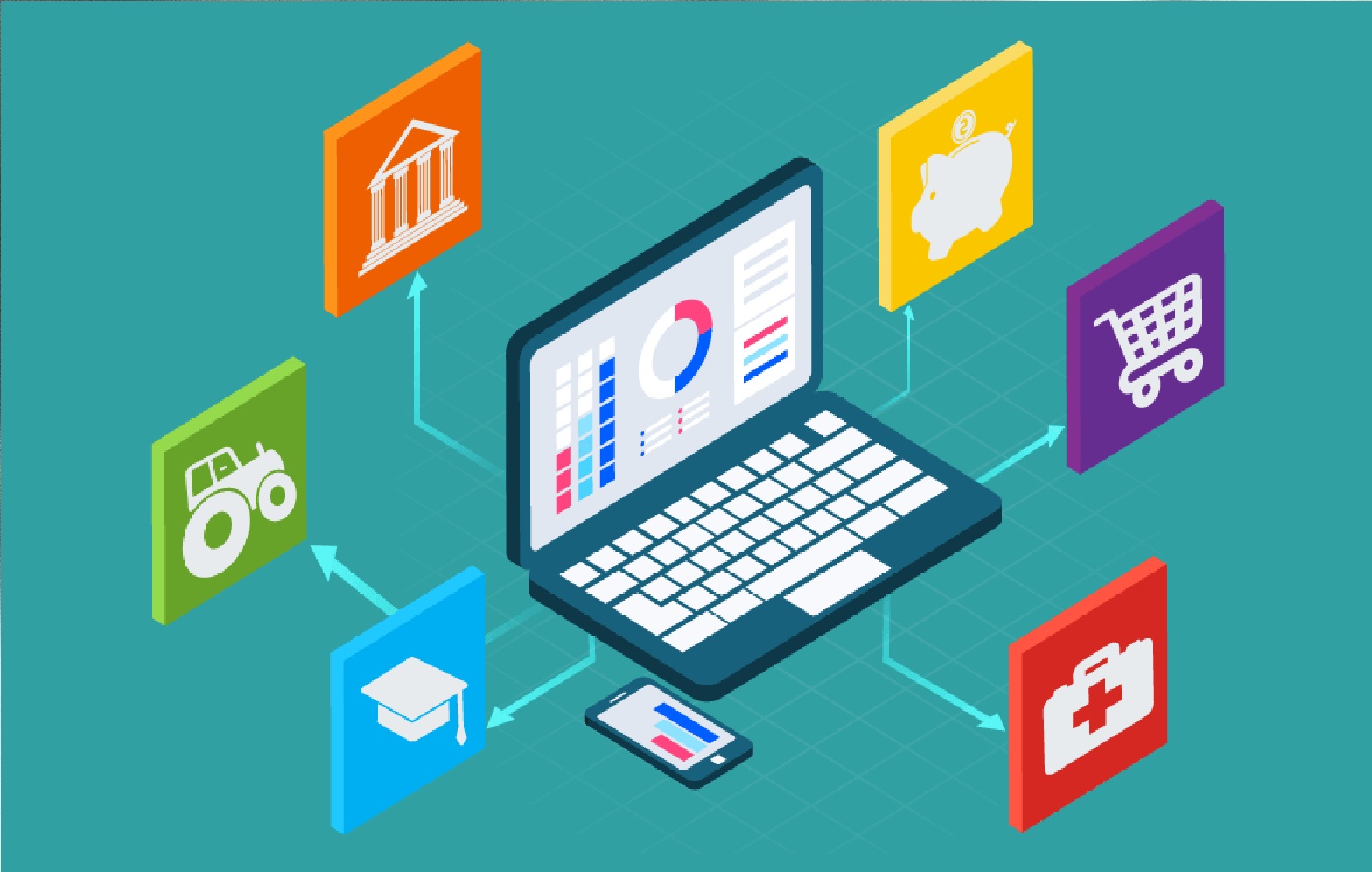
The Future of Business Digitalization: AR, AI, Blockchain, Data Mining and Other Technologies

0

For people, modern IT services and technologies have become a familiar tool that helps in everyday life. Using cloud storage or tracking performance from a fitness bracelet. Some innovative companies such as Bizzo Casino already use AI technology to ensure you an incredible gambling experience.

However, the digitalization of enterprises and businesses is still in its infancy. Even those companies that have already begun to master new technologies mainly use only basic tools. Like instant messengers and office applications in the cloud.

Many new ideas, architectures and models appear on the market every year. Some of them naturally go into oblivion due to lack of demand. But there are dozens of mature technologies that are ready for real-life business applications right now.

Advanced Cloud Computing

These are platforms that provide a single package of services for a specific business area.

The main advantage is that there is no need to use several separate services. It complicates the organization of interaction between them.

Virtual Reality (VR), Augmented Reality (AR) and Digital Twins (DT)

Having digitized a real industrial object or process, the created model can be used to predict the results of a particular action. Usage scenarios:

  • Carrying out a virtual crash test of the car;
  • checking the seismic stability of the building at the design stage;
  • simulation of changes in traffic jams in the city, depending on the mode of operation of traffic lights.

Using AR, you can superimpose a visual interface on a digital model of an object. For example, for factory maintenance work. By superimposing the model on a real object, the specialist will see information relevant to his task:

  • cable connection diagrams;
  • codes for locks;
  • sequence of operation of mechanisms;
  • hints from employees who worked at the same place before.

Artificial Intelligence (AI), Process Robotization (RPA), Internet of Things (IoT)

Technology automates routine tasks, excluding humans from their performance. This not only results in savings due to the reduction in the required number of employees, but also eliminates the risk of errors during work.

In addition, process chain management is simplified. All indicators are displayed in real time in a single system. It allows you to quickly make the right decisions.

Big Data, Data Mining, Machine Learning

Data collection improves the quality of analysis of customer and market data. Businesses receive more detailed information. This includes information about trends and changes in demand and customer behavior.

Blockchain and Smart Contracts

Blockchain technologies contribute to automation. They increase the transparency and security of the company’s activities. It simplifies supply chain management. It reduces the risk of partner fraud, and makes it easy to track products and materials.

Blockchain and smart contracts can also be used to:

  • asset management — real estate, transport, equipment;
  • identification and management of personal data. Digital twins, increased security, simplification of authorization processes;
  • monetization of data. A business gets the opportunity to earn on their data by selling them to other companies.

The main features of the blockchain are the openness and publicity of data. But also the impossibility of forging them.

Why Business Digitalization

Five main areas to note.

  1. Increasing business efficiency and productivity. Routine processes are automated. Communications and management are improved. The accuracy and speed of decision-making are increased.
  2. Improved customer experience. Data on customer behavior and preferences enables the creation of more personalized products and services. This improves customer satisfaction.
  3. Increasing competitiveness. Digital technologies make business more efficient, flexible and fast.
  4. Emergence of new opportunities. Businesses get the tools to create new products and services. And experiment with business models, and expand into new markets.
  5. Transition to a digital economy. Artificial intelligence, big data, the Internet of things and blockchain enable the creation of business models aimed at generating income.

Together, these benefits increase the readiness of the business to market changes. This makes it more stable and increases profitability.

 Difficulties of Implementation

The introduction of digital technologies in business is complicated by a number of factors.

Personnel Shortage

Specialists with knowledge and experience in the field of new technologies are crucial. Otherwise, digitalization is impossible without. In the labor market, such personnel are in short supply. Existing employees in the company may not have the necessary training.

Unpreparedness of Management, Employees, Customers

In many companies, digitalization is complicated by the unwillingness of management to change. This process involves the restructuring of many or all business processes and enterprise culture. That can cause fear and reluctance to use new technologies. Employees who see digitalization as a risk of losing their jobs or the need to master skills that were not required before can also resist change.

Data Protection

Digitization can increase the amount of data a company processes. This may pose a threat to their privacy and security. Employees and customers may have concerns about the lack of sufficient data protection.

Technical Limitations

New technologies may not be compatible with systems and applications already in use in the enterprise. Also, the implementation can be complicated. For example, the availability of the network infrastructure. Or the speed of the Internet connection, or the standards adopted by the company, and others.

Implementation Cost

Digitalization is associated with significant costs for the purchase and implementation of technologies. But also staff training, and restructuring of business processes. For many companies, this may be financially unaffordable. Especially for small and medium enterprises.

Lack of Flexibility

A company may not be digitally ready due to a lack of agility and an innovative culture. For such an enterprise, adapting to change can be too much of a challenge.

The priorities of the company may not meet the requirements of the market and the needs of customers. In this case, there will be no understanding of how new technologies will help in business and achieve specific goals.

Also, the lack of readiness for implementation can be caused by a focus on reliability and stability. Some companies are afraid to take risks, and therefore are not ready to master new tools.

Legal Restrictions

Depending on the region and industry in which the company operates, there may be legal restrictions. An enterprise may need to comply with a number of rules and legal requirements that complicate digitalization. For example, regarding personal data, information security, the use of cryptocurrencies.

In some sectors, such as healthcare, finance, energy, there are industry norms and standards that must be observed. It can also complicate business digitalization.

Certain activities and the use of certain technologies may require permits and certificates from governments. For example, licenses to use software or perform specific types of work.

The Big Change Is Not For Now, But Soon…

The use of new digital technologies requires companies to take an integrated approach to development. Technological skills, innovation culture, strategies and business models need to be improved. And also to have a priority on meeting the needs of customers and developing partnerships.

Companies that make the digital transition ahead of their competitors will be in a better position. They will be able to release new products. They will better track customer needs and optimize workflows. Ultimately, this will provide businesses with sustainable development over enterprises that have not been able to make the change.