DD
MM
YYYY

PAGES

DD
MM
YYYY

spot_img

PAGES

Home Blog Page 4226

Paris Blockchain Week Highlights Growing Potential Of Web3 For Cryptos like Dogetti

0

In the burning ruins of French democracy, the future of cryptocurrency glowed with optimism. As the streets of Paris were dotted with enraged protesters resisting the deterioration of their living standards, the builders of the cryptocurrency and Web3 spaces celebrated the fourth edition of Paris Blockchain Week. Amidst the bedlam of riots and civil unrest, there’s also a story to be told as to what young cryptos like Dogetti (DETI) can draw from the latest crypto conference in Paris.

What Is The Paris Blockchain Week?

The Paris Blockchain Week has quickly become one of the most influential global events in the blockchain landscape. It connects different business leaders, investors, entrepreneurs, and developers within the Web3 and cryptocurrency space to converge and discuss the latest ways to drive the crypto landscape forward.

For young cryptocurrencies like Dogetti, a newly emerging meme coin that has generated excitement, the Paris Blockchain Week is an intriguing melting pot of learning, sharing, and promoting. The young crypto is one of the many that is currently amid a presale and looking to go live later down the line in 2023.

The Paris Blockchain Week is a conference that draws well over 10,000 people in a historic city, and this year’s edition marked its fourth year.

Optimism Coexists With Uncertainty In The Crypto World

The Paris Blockchain Week carries with it an air of optimism as it brings together different elements of the crypto and Web3 industry to share and discuss ideas. But it can also be a week of collective introspection and one could say that there’s been much to feel introspective about for the crypto space this year.

Following the FTX crash last year, the cryptocurrency landscape became disfigured as major cryptos struggled to sustain bullish runs and investors became hesitant about investing in crypto. This uncertainty would only have been fuelled by the recent collapse of crypto-focused banks such as Silvergate Capital and Signature. The volatility of cryptocurrency is not exactly a revelation. Choppy waters and shifting winds are something those entering the crypto landscape have to accept as a reality of life.

What’s telling about the Paris Blockchain Week is the retention of optimism. The crypto space might have been bearishly closing in on itself but there have been successful stories worth highlighting. Presale coins like Dogetti (DETI) have managed to develop smoothly with real signs of soon establishing themselves as a prominent crypto upon going live. Dogetti (DETI) in particular has impressed crypto traders and investors through its family-orientated strategy.

So in that sense, it’s understandable why many at the Paris Blockchain Week have remained buoyed by what they are seeing.

However, the juxtaposition of crypto and Web3 developers and investors discussing the lucrative potential of the future while on the doorsteps of their conference, Paris drowned in a sea of anger, despair, a sense of injustice, and unrest that cannot be ignored.
Riots Outside The Conference Speaks To A Disconnect

In many ways, cryptocurrency has in every sense, always been disconnected from real life. It is not rooted in the living world. It exists within online spaces. But that detachment from reality had never felt starker than perhaps during the Paris Blockchain Week.

France, no stranger to protest, has been embroiled in deep civil unrest as French civilians take to the streets in objection to the country’s swiftly diminishing standards of living. Paris, the city of light, erupted in flames by the unrest as protesters took to the streets. In a city of deep history, culture, love, and arts, the cryptocurrency and Web3 industry found itself dislocated from what was happening outside its conference walls.

Stellar Development Foundation’s CEO, Denelle Dixon, remarked that “It is a little bit like we’re not recognizing what’s happening with the builders and what’s happening with the protesters.”

There is, then, some recognition that while the future for cryptocurrency may be lucrative, for those outside the walls of cryptocurrency, in the real world, the future is grey with uncertainty.


For more on Dogetti, please see the links below:


Dogetti (DETI)

Presale: https://dogetti.io/how-to-buy

Website: https://dogetti.io/

Telegram: https://t.me/Dogetti
Shiba Inu (SHIB) aims to become more decentralized, while Litecoin (LTC) has seen a rise over the past week and TMS Network (TMSN) continues its explosive presale rally

0

The crypto market is a dynamic and evolving space. There are changes happening every moment. As an investor, one may find it hard to stay on top of every update in the crypto world. To solve this, we bring you the latest updates from the market. This article provides insight on the developments on Shiba Inu (SHIB) to get ahead of its competition, the rise in the price of Litecoin (LTC), and the impressive presale rally showcased by TMS Network (TMSN).

Shiba Inu (SHIB) aims to become more decentralized than Ethereum (ETH)

Ringoshi Toitsu, a validator of Unification, which is the main developer of Shiba Inu (SHIB), addressed in his latest tweet the issue of the centralization of Ethereum Virtual Machine (EVM) node operations. In his tweet, he states that, for decentralized applications (dApps), Shiba Inu’s (SHIB) layer-2 ecosystem will use Unification’s upcoming tool, UNODE. UNODE is expected to play an important role for Shiba Inu (SHIB), and in the Shibarium ecosystem. Additionally, Unification will also provide Shiba Inu (SHIB) critical infrastructure in the form of Unification’s Oracle of Oracles, which gathers data from centralized and decentralized networks, to provide real time prices of assets.

Shiba Inu (SHIB) is a meme coin. It gained popularity due to its cute charm. Shiba Inu (SHIB) is often called the Dogecoin killer, and is aimed to be an Ethereum-based counterpart for Dogecoin. Shiba Inu (SHIB) witnessed a price decline, and has been down by 0.08% in the past 24 hours. It is currently trading at $0.000011.

Investors are bullish on Litecoin (LTC)

Litecoin (LTC) has had a good week, with a surge in its price by 0.31% in the past 7 days. Though it’s showing an uptick over the week, Litecoin (LTC) experienced a price decline of 0.77% in the past 24 hours. Litecoin’s current price is $90.45.

Litecoin (LTC) is a veteran cryptocurrency, and is one of the first cryptocurrencies to have come into existence. It was created in 2011 by Charlie Lee. It is often referred to as Bitcoin Lite. Litecoin (LTC) was created with the aim of enabling peer-to-peer exchange of value at economical rates. It was one of the highest-value cryptocurrencies for a long time. Litecoin (LTC) sparked controversy when Charlie Lee dumped his tokens, dropping the price of Litecoin (LTC), and putting an end to its bull run. Litecoin (LTC) also offers users the feature of smart contracts through a second-layer solution called OmniLite. Litecoin’s (LTC) tokenomics model limits the number of tokens that can be mined.

TMS Network (TMSN) outshines other cryptocurrencies

TMS Network (TMSN) continues to be an investor favorite in the crypto world as the thrid stage of its presale progresses. TMS Network (TMSN), in its first stage of presale, gained investor traction due to its unique offerings. The explosive results of the first and second stages of presale have led to investors and whales rushing to invest in TMS Network (TMSN). As the third stage progresses, TMS Network (TMSN) has witnessed a surge in demand.

TMS Network (TMSN) has so far secured $4 million, and showcased a growth of 1900%. TMS Network (TMSN) provides its investors with various attractive offerings, such as governance rights that enable them to earn commission on every trade, voting rights, and much more. TMS Network (TMSN) allows investors to trade various derivatives on a single platform, making it a one-of-a-kind solution. The platform is also known for the scalability it offers, along with speedy transactions at low costs.

Conclusion

TMS Network (TMSN) takes the market by storm with its astounding presale rally. Shiba Inu (SHIB) is all set to take over Ethereum in terms of decentralization. Litecoin (LTC) witnesses’ optimism from investors as they display bullish sentiments.


Learn more about TMS Network here:

Presale: https://presale.tmsnetwork.io

Website: https://tmsnetwork.io

Telegram: https://t.me/TMSNetworkIO

Twitter: https://twitter.com/@tmsnetwork_io

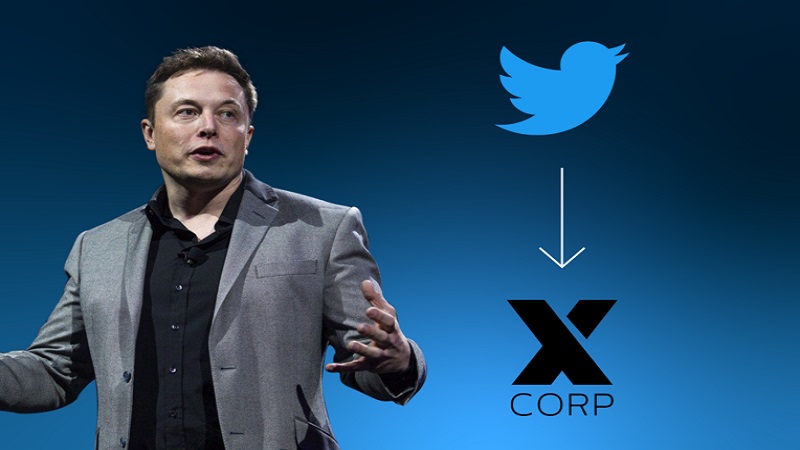
The Twitter’s Grand Unification And Elon Musk’s X Corp Super App Playbook

1

Men and women who built empires during the industrial age controlled supply. Today, the legends of the digital market focus on one core attribute to success: influencing demand (i.e. the users). When you have those users in abundance, you can unlock new vistas with ease. Why? The most important feature in a digital platform is that it has many people therein. Provided that exists, most other things become tangential.

ChatGPT would not have wowed the world without its fusion with Microsoft which has the data. And any competitor must have such datasets to have any chance. And that explains why building models and algorithms without data may not cut the tape. 

I used to use Dropbox until Microsoft added OneDrive in my personal Microsoft 365 package. Even though Dropbox was better, the marginal benefits could not be compared to the fact that I have my Office, backup, etc in one place. And that was the same reason why I posited that Instagram does not need to make great versions of SnapChat to remain relevant; it needs to have something good enough to stop people from leaving for the next thing!

Why this chronicle? Elon Musk unveiled a new vision today: “ Musk has in the past said his acquisition of Twitter would pave the way for X, which he envisions as “an everything app” — a la China’s WeChat — for things like payments, booking and messaging.” Yes, Musk has “killed” Twitter and unveiled something even better which can serve the western world in the way WeChat has served China.

When this product is launched, it will have close to 240 million users from Twitter. If Musk’s team can soup the ecosystem with payment, booking, messaging, etc at scale, considering that Twitter is already the global digital square, massive disintermediation will happen for PayPal,  Booking, and more. With this, the $20 billion market valuation which Musk has priced Twitter may look low now considering that Musk is likely to execute the new playbook.

X Corp is a great unification and may be a new specie of digital companies (yes, super app) in the western world. As it is being incubated, PayPal, Stripe, WhatsApp and Booking must evaluate their playbooks because its impacts could be industry-shaping.

Twitter becomes X Corp. Twitter Inc. doesn’t exist as a Delaware-based company anymore. Elon Musk registered two new businesses in Nevada in early March, then applied to merge those Nevada businesses with two of his existing companies, mandating that the one known as X Corp. fully acquire Twitter, Slate reports. The SEC-recognized name for the Twitter purchase’s $13 billion bank loan is known as Project X, and Musk has previously said this purchase will help create an “everything app” named X. (Fortune)

4 cryptocurrencies popular among South African traders

0

Investing in cryptocurrency offers several advantages, and one of the most notable is its 24-hour global market. Unlike localized markets that are subject to the influence of a limited number of investors who may drive asset prices with fear and uncertainty, cryptocurrency investors have access to a broader market that operates around the clock. Additionally, South Africa has established clear cryptocurrency regulations, a step that many other economies have yet to take, resulting in significant ambiguity within their investment systems. Although cryptocurrencies are known for their volatility, they have enabled many retail investors to earn substantial profits. In this article, we will explore the four Best Crypto South Africa.

Bitcoin (BTC)

Although Bitcoin (BTC) may not be the preferred cryptocurrency for short-term trading among South African traders, it remains the most widely used. The five cryptocurrencies we will examine today follow a trend similar to global cryptocurrency markets. Traders in South Africa adopt the same practices as traders in other leading digital asset trading countries worldwide. Bitcoin, being the most extensive cryptocurrency by market capitalization, is unsurprisingly the most common crypto among traders from South Africa.

Despite previous crashes of Bitcoin, this cryptocurrency keeps pushing forward, leading the cryptocurrency market. As central bank digital currencies (CBDCs) rise, investors in Bitcoin could shift their focus toward these assets. However, only time will tell how this will play out.

Ethereum (ETH)

Ethereum (ETH) is a decentralized, open-source blockchain platform that enables the creation of smart contracts and decentralized applications (dApps). Founded by Vitalik Buterin in 2013 and launched two years later in 2015, Ether (ETH) serves as its native cryptocurrency; it’s used for payment for transaction fees and computational services on the Ethereum network.

Ethereum’s support for programmable smart contracts is a significant feature that sets it apart. These contracts are designed to enforce the terms and conditions of an agreement automatically, making them self-executing. Through smart contracts, developers can create decentralized applications like decentralized exchanges, prediction markets, and social networks without intermediaries.

An additional advantage of Ethereum is its scalability. The network is currently transitioning from a proof-of-work consensus algorithm to one based on stake, which should increase its capacity for handling more transactions per second.

Ethereum boasts an expansive and active developer community, leading to the creation of many cutting-edge apps and projects built upon its blockchain infrastructure. As a result, Ethereum is now used in numerous industries, such as finance, supply chain management, gaming, and more.

Litecoin (LTC)

Litecoin (LTC) is a peer-to-peer digital currency created in 2011 by Charlie Lee, an ex-Google engineer. It’s a fork of the Bitcoin blockchain with the purpose of improving upon some of Bitcoin’s shortcomings.

One significant advantage of Litecoin is its faster transaction confirmation time. Blocks on the Litecoin network are generated every 2.5 minutes, as opposed to Bitcoin’s 10-minute block generation rate. This means transactions on the Litecoin network can be confirmed much more quickly than those on Bitcoin’s network.

Litecoin utilizes a different mining algorithm than Bitcoin, known as Scrypt. Scrypt was designed to be more memory-intensive than Bitcoin’s SHA-256 algorithm, making it resistant to ASIC mining and fostering greater decentralization.

Another attractive aspect of Litecoin is its lower transaction fees compared to Bitcoin. This makes it more cost-effective for smaller purchases, making it popular with merchants and consumers alike.

Litecoin boasts an enthusiastic community of developers and supporters, often serving as a testing ground for new cryptocurrency innovations. For instance, Litecoin was the first major cryptocurrency to implement Segregated Witness (SegWit), a protocol upgrade that boosts blockchain capacity while decreasing transaction fees.

XRP

One major advantage of XRP is its speed. Unlike traditional payment systems, transactions on the XRP ledger can be settled within seconds, which take days to process. This makes XRP an attractive option for cross-border payments and remittances since it offers near-instantaneous settlement and reduces currency fluctuation risk.

XRP was built for scalability, capable of processing up to 1,500 transactions per second – significantly faster than other major cryptocurrencies such as Bitcoin and Ethereum.

Another distinguishing characteristic of XRP is its consensus algorithm, which utilizes a network of independent validating nodes to confirm transactions. This makes it more decentralized than some other cryptocurrencies, which rely on smaller numbers of validators or miners for transaction confirmation.

Despite the legal uncertainty, XRP continues to be traded by South Africans and other investors globally.

Conclusion

The cryptocurrency market is known for its dynamic and unpredictable nature. Therefore, the list of popular cryptocurrencies discussed in this article may change over time as new digital assets emerge and gain popularity.

It is essential for investors to conduct thorough market research and carefully consider the risks associated with investing in cryptocurrencies before making any investment decisions. The cryptocurrency market is highly volatile, and prices can fluctuate rapidly, making it a challenging and risky investment option. Therefore, being well-informed and exercising caution when investing in digital assets is essential.

Fintech Startup, Clear Street, Secures $270 Million Series B Fund to Replace Outdated Infrastructure

0

Fintech Startup that is building a modern infrastructure for capital markets Clear Street has secured a $270 million series B fund to replace outdated infrastructure.

The funding round which brought the fintech company’s recent valuation to $2 billion, was led by Growth equity firm Prysm Capital. The funds raised will help the startup to continue to grow its team and form new partnerships to meet its goal of improving access across the capital markets.

Speaking on Clear Street’s mission, the company’s co-founder and CEO Chris Pento said, “The company was founded to replace the outdated infrastructure being used across capital markets, starting with a prime brokerage platform for institutional investors. The public U.S. securities industry, which moves trillions of dollars a day, still relies on mainframe technology from the 1980s.

These legacy systems are entrenched in manual processes and siloed data, resulting in costly errors and expensive technical debt. For many firms, replacing these antiquated systems would be like removing the engine from a plane in mid-air. It’s time-consuming and difficult to execute with fragmented technology.”

As clients are demanding better technology and service, Clear Street is stepping up to address this issue through its cloud-native platform that provides services and data that investors need to compete in today’s market. The startup proprietary technology platform adds significant efficiency to the market while focusing on maximizing returns and minimizing risk and cost for clients.

Clear Street takes proven technology from the Silicon Valley world and applies it to finance. Its tech stack utilizes modern cloud-native infrastructure, including resilient service orchestration, event-driven real-time processing, and scalable data warehousing, a sharp contrast to the batch processing offered by mainframes.

The startup’s entire suite of software systems is built upon this consistent and cohesive technology stack, enabling the components to communicate seamlessly and stay in sync, eliminating the need for tedious reconciliation processes.

Over the past 12 months, Clear Street with its headquarters in New York has expanded its leadership team across business areas and has built a team of nearly 100 engineers to support product development and meet client demand. Under the leadership of Chris and Sachin, the fintech startup has built a cutting-edge platform that competes with established players in the industry.

Clear Street’s goal is to give all market participants, from emerging managers to large institutions, the tools, and services they need to compete in today’s fast-paced markets. The company understands that to keep up with the accelerating pace of modernization, firms will need to invest in technology to meet the needs of investors and regulators, while noting that those who do, will be part of building the modern, scalable future of capital markets thereby improving access, speed, and service for all participants.

With markets moving faster than ever, Clear Street makes around 6,000 updates on its platform every year and is constantly redefining its processes to help customers move with today’s fast-paced markets.