DD
MM
YYYY

PAGES

DD
MM
YYYY

spot_img

PAGES

Home Blog Page 4228

Internal and External Factors Impacting the Success and Failure of Startups and SMEs

0

Several factors impact how Startups or small and medium-sized enterprises fare within the first few years of their establishment. While the survival of a business is often analyzed within the lens of cash flow and management structure, it is observed that whether a business thrives or fails is also largely determined by the nature of relationship between its value proposition and implementation as well as its strength of communicating and relating with its stakeholders, internally and externally.

Findings have shown that when there is a gap between a business’ value proposition and implementation, this tends to aggravate internal problems, especially system and process related problems which invariably results in a weak resistance to external threats such as disruptive policies, inflation, insecurity and a sudden pandemic.

For instance, in the wake of the Covid19 pandemic was the global supply chain downtime which largely affected the operations of many companies across the world. It was a period of frantic uncertainty which triggered a lot of diversion and misappropriation of resources among many companies. In that momentary economic stop-gap, only the companies with high financial discipline and loyalty to their business model or those that could improvise resourcefully were able to survive the heat of the period.

Also, remote working which became incumbent during the lockdown at the heat of the pandemic developed so much hassle for many businesses which did not have a well developed workflow, automated system and KPIs.

Furthermore, implementing strategies that only give a lukewarm attention to the human angle of the business is another terrible accident waiting to happen. Analysis reveals that startups which focus on products or solutions while they neglect their human capital and the end users of their products or solutions develop problems with regards to how they can effectively deliver and capture value.

In the midst of crisis and implementing crisis management strategies, companies with strong communication and Public Relation are more likely to survive and come back stronger than their counterparts.

A report on the analyses of customers’ reviews of some Nigerian agritech companies which have been defaulting with investors’ returns reveal that most of the negative sentiments against these companies on Google business and across their social media platforms were due to their inability to effectively communicate their challenges with investors. These companies have low public communication in terms of constant engagement when they have internal/external issues and the impacts of the external challenges on their processes, people, technologies and products.

It is suggested that for companies to continue to attract positive public sentiment while forging through the crisis impacted by microeconomic and macroeconomic forces, they need to be more open and efficient with their communication and engagement with their shareholders and other stakeholders.

SPECIAL REPORT: How to Engage Nigerian Youths Who Support Politicians on Digital Platforms

0

With the emergence of the Internet and associated intrusive technologies, in almost all democracies, the era of using physical platforms primarily for political and civic engagement has gone. The world and its people are now ‘dining’ and, at the same time, exchanging words on different digital platforms. Sometimes, the discussions are appealing and useful for the identified needs and problems. On the other hand, some discussions turned sore because participants consciously and unconsciously deployed uncultured words, phrases, and images, among others, to silence each other.

These situations are prevalent in most democracies, particularly in countries with few or no legal restrictions on digital space. According to our observational research, youths are the primary participants who constantly transform any digital platform into a ‘radically discourse negotiated’ terrain. When one considers their expectations in terms of social, economic, and political changes over the years, this behaviour is not surprising. For example, between 2010 and 2022, political leaders in Africa witnessed various forms and dimensions of youth activism. Political leaders in the continent’s north and west, for example, will not quickly forget the massive social and political movements of their youth during the period.

In order to critically engage their political leaders, youths consume news through social media more than they do through traditional media such as print newspapers, radio, and television stations. This, according to our analyst, has been documented in many studies conducted by academics and think tanks. According to our analyst, the consumption of their preferred news via social media is a means of escaping the highly controlled content of traditional media by reporters, editors, and owners.

Therefore, as UNICEF notes, they take pride in creating their own content after reading their preferred socio-political news. “Many youths also engage with digital spaces to develop their civic identities and express their political stance in creative ways, including through videos, memes, and artwork, to claim agency that may not be afforded to them in traditional civic spaces. This dynamic is reimagining the concept of ‘the political’ writ large.”

While it is sometimes convenient to say that the youths are deploying emerging technologies in their own ways to break old political structures that concentrated political engagement and participation in the hands of the elites, it is also important to note that the elites are not leaving any stone unturned when it comes to recruiting some of the youths. Politicians in Africa, for example, have been successful in enlisting some youths as digital image makers. They are succeeding because they are capitalising on some of the socioeconomic challenges that young people face. In this regard, the rise in the unemployment rate has primarily been used as a recruiting tool.

For example, studies conducted by our analyst and his team during the Osun 2018 and 2022 governorship elections revealed the recruitment of youths as data boys and warriors for the purpose of propagating the activities of their paymasters and creating counter- and alternative narratives around the personalities of their leaders. Before, during, and after the elections, both boys and warriors created content that attacked the personalities of opponents of their leaders and people who expressed divergent views about them.

Osun’s example is not quite different from the national elections held in February and March 2023. Our analyst and his colleagues at the Centre for Research on Development of African Media, Governance, and Society and Positive Agenda Nigeria found similar patterns of recruiting the youth. In both studies, it emerged that the recruited youths used what we called the percolated affinity network (PAN) strategy. It is a strategy that helped them employ various features of Twitter and Facebook for constant reinforcement of their messages and ideologies. For instance, when a member creates a post, he or she tags other members and adds one or two members from the opposing group. Basically, they considered blended contexts for engaging and disseminating their messages and ideologies.

After the two elections, our analyst and his team noticed a growth in silencing opposing views by all means, using different strategies and tactics. The recruited boys and warriors want almost everyone to believe that their paymasters lost the elections because of various imbalances in the electoral processes. Whereas some people believe that the processes were fair enough and that there is no democracy in the world that has complete free and fair electoral processes. Since discourses are socially constituted and constructed, these interpretations will continue on various digital platforms. The boys and warriors will continue to use their expectations, social background, and affinity with their leaders to create meaning for voting, collating, and declaring results.

While there are no absolute solutions to the tensions being created on Facebook and Twitter by the boys and warriors, our analyst looks at some of the approaches people can use to critically engage supporters of the three dominant presidential candidates in the 2023 election in this piece.

How to Engage Them

The hallmark of engaging on Facebook, Twitter, and other social networking sites is to express views, and in the course of doing so, we socialise with others by building and sustaining our social capital. However, this experience can be hurtful when one meets people who believe that their views should dominate others. In other words, such people practise what many sociological scholars and philosophers called cultural hegemony or dominance. Therefore, as stated previously, on the Nigerian digital space, one should expect the boys and warriors with the intention of forcing their ideologies and interpretations of the recent general elections onto others.

But there is a solution to that. The solution lies with the encoding and decoding model created by Stuart Hall, a sociologist, several years ago. Hall proposes that audience members can play an active role in decoding messages as they rely on their own social contexts and are capable of changing messages through collective action. Therefore, anyone who consciously or unconsciously comes across the messages of the boys and warriors and also has an interest in engaging them should know that encoding and decoding represent translation for easy understanding of their messages as well as ideologies about the elections.

The first step that the boys and warriors execute is posting messages in different forms. Sometimes, they posted texts without images and texts with images. When they used both, they had different meanings expected to be given to the messages by their audiences. For example, in order to substantiate the poor voting process, they usually added pictures that showed violent places. Where images were not added, they ensured the use of descriptive words and statistics that indicate incorrect imputation of results at some polling units. Simply put, they use various technical elements associated with new media to present and represent what they want you to see and believe.

In this context, they practise what Hall called the dominant or hegemonic code. However, as an active follower or reader, you have negotiation and opposition codes at your disposal to counter their dominant narratives. Though there is a tendency that you will first accept their dominant narratives, the use of the two codes gives you the opportunity to reconstruct their messages and disentangle the inherent ideologies.

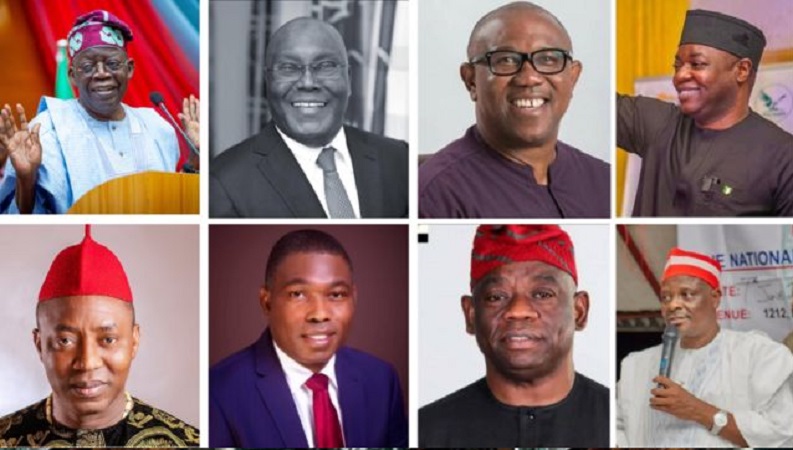
Let us use the trending narrative that the presidential election was not free and fair and that the Independent National Electoral Commission rigged the election for the ruling party, the All Progressives Congress (APC). This narrative, if we consider the classification of the boys and warriors according to their political interests and candidates, is being mostly disseminated by the supporters of the Labour Party and its presidential candidate, Mr. Peter Obi. As an active follower or audience member, you first accept it, but not absolutely, especially when you invoke the negotiation code. So, while using the code, you are combining the dominant and oppositional codes, in which you are expected to reconstruct the narrative with supporting evidence, thus partly accepting and denying the narrative.

However, if you don’t want to portray yourself as a passive receiver of the narrative, the oppositional code needs to be used radically. With this, you need to take a position directly opposite to the dominant narrative and its inherent ideologies. In this case, you deconstruct the hegemonic cultural code and reconstruct it as a code of opposition. It means that you refuse to experience the pleasure of recognition and denounce the narrative’s validity.

The same approach could be used to engage ruling party supporters who are spreading different narratives about Mr. Peter Obi, Alhaji Atiku Abubakar, and their political parties.

What Coin Will Give You Most Profit – Uwerx (WERX), Uniswap (UNI), Or  XRP (XRP)?

0

Crypto investors constantly shift their focus to new projects because of hype or innovation. Some believe they have found the perfect profit-yielding coin. Let’s take a closer look at a new currency named Uwerx and how it will stack against veterans like Uniswap (UNI) and XRP (XRP) in 2023.

Uwerx (WERX) – A Freelancer’s Dream

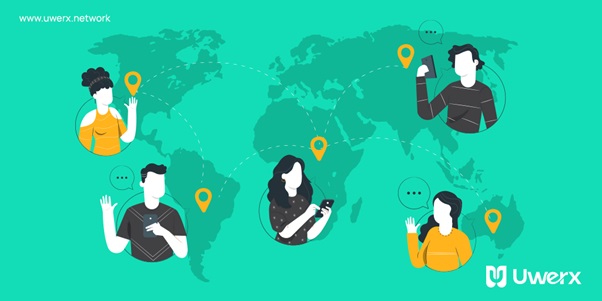
The booming freelance industry has skyrocketed in the past years due to the 2020 Coronavirus pandemic. Uwerx plans to combine this industry with the technology behind crypto – a blockchain!

Uwerx will create the first freelancing platform using blockchain technology to recruit, manage, and collaborate with independent freelancers from all over the globe. One might ask, what does the blockchain actually provide? Well, it allows for track records to be stored on the blockchain — meaning no hacking and data loss. This system provides a traceable and unchangeable record for enterprises and freelancers.

Not only that, but users will also see lower fees on Uwerx because it will cut out the third-party escrow service. So if another platform has 20% fees, Uwerx will provide around 5%. Great advantage! The presale price of Uwerx is currently only $0.005, but price hikes are soon to come. With credible analysts forecasting a WERX 8,000% price jump in 2023, now is the perfect time to invest in a possible top 10 coin! Confidence is certainly at a high with InterFi Network and Solidproof approving the audit alongside with the fact that liquidity will be locked in for an additional 25 years. We have also heard through the grapevine, that the creator’s plan to renounce all rights of ownership to the smart contracts. Clearly, the focus here is to ensure peace of mind for all investors who are taking risks with their hard-earned money.

Uniswap (UNI) – Makes Investors Worried

The biggest decentralized exchange created on the Ethereum network is Uniswap (UNI). Individuals can purchase and exchange coins straight through their accounts without the aid of an intermediary through Uniswap (UNI).

Recently, Uniswap (UNI) announced that through a partnership with Moonpay, consumers might purchase cryptocurrencies using credit and debit cards. This news helped propel the social media sentiment around Uniswap (UNI) in the past week. But this still has not been reflected in its price. Uniswap (UNI) is currently worth $5.08, down 3% and 7 % in the past week and month, respectively. This drop has put doubt in investors’ hearts as a bearish trend in the future is possible.

XRP (XRP) – Still In Limbo

The coin called XRP (XRP) operates on the XRP Ledger. Investors can use XRP (XRP) as a way of funding operations on the Ripple (XRP) network or as a form of investment.

Unfortunately, the biggest holder of XRP (XRP) coins, XRP (XRP), has been involved in a lawsuit with the SEC. This trial remains a dark cloud above the XRP (XRP) and XRP (XRP) community. On the other hand, the top 90 BNB (BNB) holders utilized the Ripple (XRP) smart contract the most on December 28th. But, the coin price still has not shown any rise as it is currently trading at $0.3463, which paints XRP (XRP) as a future high-risk asset.

We would recommend investors to check out Uwerx which presents much better short term and long term gains due to the fact that it is a first to market entry and seeks to solve real world problems and is tied to the high growth resilient gig economy. See the links below:


Website: www.uwerx.network

Presale: invest.uwerx.network

Telegram: https://t.me/uwerx_network

Twitter: https://twitter.com/uwerx_network

Can OKX (OKB) and Huobi Token (HT) Reach the Top 20? Uwerx (WERX) Presale Looks to Join Them

0
uwerx
uwerx

The cryptocurrency market in 2022 saw the collapse of the FTX exchange and that led to contagion among other exchanges. The next bull market can bring new volumes to alternative exchanges and Huobi (HT) and OKX (OKB) are two that can be winners.  The projects can make a run for the top twenty projects and may be joined by Uwerx which is impressing analysts with its potential.

OKX (OKB) Boosted by FTX Vacuum

OKX (OKB) highlights the strong performance of some exchanges despite the bear market. OKB (OKX) has seen its token drop from $44 to lows of $10-12, but the project has rebounded to $41. Despite an initial drag for OKX with the FTX collapse, the project has seen its fortunes change as trading volumes increase with the FTX vacuum. OKB (OKX) had a 24-hr trading volume of $600 million now down to $41.55.

The OKB (OKX) exchange has a current market valuation of $1.6 billion and the entry point for the top twenty coins is a market cap of around $3 billion. OKB can achieve this move in a bull market when trading volumes return with a gap in the market from the absent FTX which crashed into bankruptcy after its finances were exposed.

Huobi Token (HT) Can Gain from Global Push

Huobi Token (HT) is another exchange token seeking to make a move and currently has a valuation of $750 million and therefore, has more work to do than OKB to achieve top twenty status. However, recent changes could see the project improve its business. The first is the FTX disappearance once again, while the second is the arrival of new owners.

The original founders of Huobi sold their majority stake in the project in September and the new owners have talked of global ambitions. Added to the board of directors was Tron founder Justin Sun, and he may bring some new ideas. Another recent development was a partnership with payments giant VISA, which will see Huobi launch a debit card that makes it easy for consumers to convert and spend cryptocurrencies at 80 million merchant locations worldwide.

Uwerx (WERX) Can Target the Top Twenty

Uwerx is a brand-new project, still at its presale stage but many experts and analysts believe it could see a rapid move towards top twenty status. Uwerx will be targeting the fast-growing market for freelance workers and will bring that sector to the blockchain.

One of the key competitors in the market is Upwork, which saw revenues of $500 million in 2022, up 34% year-on-year. Upwork is currently valued at around $1.5 billion, but after a harsh bear market in stocks. Liquidity will be locked for 25 years. Additionally, Uwerx has already passed its audit with InterFi Network and Solidproof at prelaunch.

Upwork was valued at $8 billion previously and that highlights the top twenty potential of Uwerx if it can take market share from the 145,000 freelancers on that platform. Uwerx can certainly do that by bringing the sector to the digital ledger, which can cut fees and speed up payments. Other benefits include data security and IP control and this could be an opportunity to get into a future blue-chip cryptocurrency at the great price of $0.01, follow the links below:

Website: www.uwerx.network

Presale: invest.uwerx.network

Telegram: https://t.me/uwerx_network

Twitter: https://twitter.com/uwerx_network

LinkedIn News features Ndubuisi Ekekwe’s Post On Tesla’s New China Investment

0

Our piece on Tesla’s new mega voyage into China was featured by LinkedIn News. Indeed, as I concluded therein that “China is rising and Tesla sees a part of its future there, and is going for it because “uwa bu ahia” (the world is a marketplace), the Igbo Nation says”, I want to invite Elon Musk to come to Abia State, Nigeria!

Tesla Team: I got your feedback that Musk read one of my articles. Nigeria is open for business and investment; I have noted multiple times in Harvard Business Review. Specifically, Abia State is the best destination.  My phones are designed to receive all good calls.

Uwa bu ahia;  Nigeria is the center with Abia State the core.

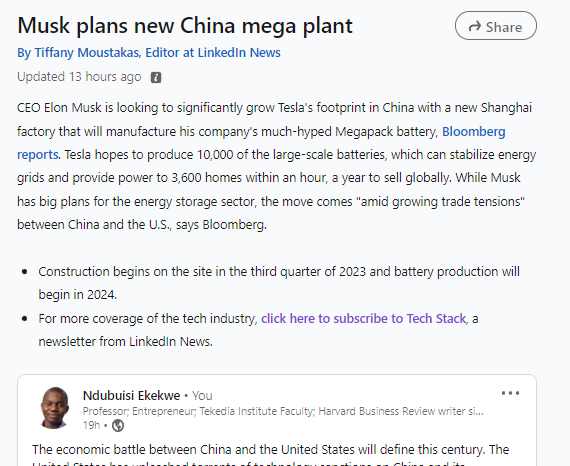
CEO Elon Musk is looking to significantly grow Tesla’s footprint in China with a new Shanghai factory that will manufacture his company’s much-hyped Megapack battery, Bloomberg reports. Tesla hopes to produce 10,000 of the large-scale batteries, which can stabilize energy grids and provide power to 3,600 homes within an hour, a year to sell globally. While Musk has big plans for the energy storage sector, the move comes “amid growing trade tensions” between China and the U.S., says Bloomberg. Construction begins on the site in the third quarter of 2023 and battery production will begin in 2024.

Tesla Announces Plan to Build Megapack Energy Factory in Shanghai China