DD
MM
YYYY

PAGES

DD
MM
YYYY

spot_img

PAGES

Home Blog Page 4244

DAO in Crypto: ApeCoin Community Rejects NFT Proposal and Dogetti Meme Coin Launches

0

What is the mechanism by which Apecoin and Dogetti (DETI) utilize their DAO system to harness the potential of decentralized decision-making?

Decentralized Autonomous Organizations (DAOs) have been a fundamental element of the cryptocurrency industry since the beginning, as they allow for community-driven decision-making in the development of various projects within the ecosystem. One recent example of the power of DAOs can be seen in the ApeCoin (APE) community, which rejected a proposal to add two new NFT collections, which aimed to provide greater utility and growth, citing concerns over market oversaturation and dilution of value. This event emphasizes the importance of community-driven governance in the decentralized cryptocurrency industry, where decisions are made with the community’s best interests in mind.

ApeCoin Community Voted Against the Multi-Link Ape NFTs Proposal

The ApeCoin (APE) token is an Ethereum governance token that facilitates decision-making in the APE ecosystem, allowing stakeholders to participate in the governance of various projects, such as the Bored Ape Yacht Club (BAYC), Meebits, and Mutant Ape Yacht Club (MAYC) NFT collections. AIP-206 proposal, presented by Aaron Leupp, aimed to create two new collections, Ape Coin Armoury Club and Ape Coin Pet Club, consisting of a total of 20,000 items, which would have brought ApeCoin into the metaverse and encouraged growth. However, the ApeCoin community rejected the proposal, highlighting the significance of community-driven governance in the decentralized cryptocurrency industry.

The rejection of the Multi-Link Ape NFTs proposal by the ApeCoin community is an important milestone for the cryptocurrency industry, as it demonstrates the importance of community-driven governance in decentralized ecosystems. This is in contrast to traditional finance, where decisions are made by a select group of individuals without community input. Decentralized decision-making promotes transparency and fairness, ensuring that the community’s interests are taken into account.

Dogetti: The Meme Coin That Lets You Have a Say

Dogetti: A Meme Coin with a Unique DAO System for Community Involvement

Another cryptocurrency project that exemplifies the power of DAOs is Dogetti (DETI), a new meme coin that uses a fun mafia dog theme to add a playful twist to the cryptocurrency industry. Dogetti’s DAO system, called Dogetti DAO, provides users with the ability to influence the development and direction of various projects within the ecosystem, promoting transparency and fairness while ensuring that the community’s interests are taken into account.

This combination of a fun meme coin and a useful DAO system offers greater utility and incentivizes growth. The Dogetti DAO, like the ApeCoin DAO, can have a positive impact on the cryptocurrency industry by giving decision-making power to its community members.

The emergence of Dogetti (DETI) as a unique meme coin with a distinct DAO system exemplifies the exciting potential of community-driven governance in the cryptocurrency industry. As more projects prioritize their communities and place them at the center of development, we can expect to see a more transparent and equitable ecosystem that empowers its members. With this optimistic outlook, we can anticipate a bright future for the cryptocurrency industry, driven by the power of decentralized decision-making and community-driven governance.


For more information on Dogetti:

Presale: https://dogetti.io/how-to-buy

Website: https://dogetti.io/

Telegram: https://t.me/Dogetti

Twitter: https://twitter.com/_Dogetti_

Nigerian Govt to Disburse $800m to 50m Nigerians As Post-subsidy Palliative

0

The Nigerian government has said it’s set to disburse $800 million it secured from the World Bank to 10 million households across the country as a palliative measure it plans to tackle the effects of fuel subsidy with.

The move was announced on Wednesday by the Minister of Finance, Budget and National Planning, Zainab Ahmed, at the State House, during the Federal Executive Council (FEC) meeting presided over by President Muhammadu Buhari.

The plan was announced amid mounting pressure by the Nigerian Labour Congress (NLC) on the federal government to create a clear-cut post-subsidy palliative measure that will help the Nigerian people to cope with the likely economic hardship that will follow the removal of the fuel subsidy.

The Petroleum and Natural Gas Senior Staff Association of Nigeria (PENGASSAN) said last month that fuel prices will go up as much as N400 per liter if the subsidy is removed.

Ahmed had last year announced that the federal government plans to totally remove the subsidy by June 2003. She said the newly-formed Presidential Transition Council has been engaged to carry the incoming administration along for the implementation.

“This is a commitment in the Petroleum Industry Act. There’s a provision that says that 18 months after the effectiveness of the PIA that all petroleum products must be deregulated, that 18 months takes us to June 2023,” the minister said.

“Also, when we were working on the 2023 medium-term expenditure framework and the appropriation act, we made that provision to enable us exit fuel subsidy by June 2023.

“We are on course, we’re having different stakeholder engagements, we’ve secured some funding from the World Bank, that is the first tranche of palliatives that will enable us give cash transfers to the most vulnerable in our society that have now been registered in a national social register.

“Today that register has a list of 10 million households. 10 million households is equivalent to about 50 million Nigerians.

“But we also have to raise more resources to enable us to do more than just the cash transfers and also in our engagements with the various stakeholders, the various kinds of tasks that we have gone beyond the requirement of just giving cash transfers. Labour, for example, might be looking for mass transit for its members.

“So, there are several things that we are still planning and working on, some we can start executing quickly, some are more medium-term implementation.”

The World Bank, the International Monetary Fund (IMF) and others, have long advocated the removal of the fuel subsidy as a way the Nigerian government could save money amid dwindling oil revenue. The Nigerian National Petroleum Company Limited (NNPCL) said it spent $10 billion on fuel subsidy in 2022 alone. The NNPCL said in February that it is paying N400 billion monthly to fund the N3.35 trillion petrol subsidy budget expected to end in June.

While the government laments the impact of the subsidy payments, which gulp significant percent of its budgets, it has been restrained by potential NLC’s nationwide strike from removing it without provisions that will cushion the resulting high cost of living.

But Ahmed said this time, the government is ready, and is working to end the fuel subsidy regime in June. She said consultation is ongoing with stakeholders on how to disburse the money.

“$800 million for the scale up of the national social investment programme (NSIP) at the World Bank and it’s secured, it’s ready for this disbursement.

“We are currently engaging with all the stakeholders. We know that various plans are being considered, including the need for buses by the Labour, amongst several other palliative measures,” she said.

However, concerns are being raised about transparency and how long the disbursement of the fund will run. The minister had last year, decried that the federal government was borrowing to pay for fuel subsidy, calling it “double tragedy.” Experts believe that if the palliative plan isn’t well executed, the government may end up borrowing more to ameliorate the impact of the subsidy removal.

FBI Shuts Down Genesis Market for Aiding Cyberfraud

0

In a landmark international crackdown led by the FBI, authorities in several countries have shut down Genesis Market, one of the world’s biggest marketplaces used by online fraudsters to purchase passwords and login credentials.

Genesis harvests data from compromised sites to sell to cyber criminals, who use the information to gain access to users’ accounts.

Since it was founded in 2017, the company has become notorious for selling login details, IP addresses and other personal data that help hackers to access people’s accounts across all platforms, including banks, sometimes, for less than $1.

In the notorious June 2021 breach of Electronic Arts, the hackers who breached the gaming giant said they gained access by purchasing a $10 bot from Genesis Market that let them log into a company Slack account.

Information such as passwords, browser history, cookies, autofill form data and location are always available for sale on Genesis. These, the authorities say, allowed fraudsters to log in to bank, email and shopping accounts, re-direct deliveries and even change passwords without raising suspicion.

The criminals could search for potential victims by country, and see what data was available before they made their purchase.

The coordinated raid dubbed “Operation Cookie Monster,” which involved 17 countries, including the UK, Australia and countries across Europe, involved 200 searches and resulted in 120 arrests.

“Genesis Market’s domains have been seized by the FBI pursuant to a seizure warrant issued by the United States District Court for the Eastern District of Wisconsin,” the message appearing on the site on Wednesday reads.

The FBI said that Genesis Market, since its inception, offered access to data stolen from over 1.5 million compromised computers worldwide containing over 80 million account access credentials. The bureau said Genesis has made at least $8.7 million from the sale of stolen credentials, noting that complete total losses are likely to exceed tens of millions of dollars when it’s determined.

The UK’s National Crime Agency (NCA), which arrested 24 people during the raid, described Genesis as “enabler of fraud.”

“For too long criminals have stolen credentials from innocent members of the public,” Robert Jones, director general of the National Economic Crime Centre at the NCA, said.

“We now want criminals to be afraid that we have their credentials, and they should be,” he added.

A senior FBI official told TechCrunch that arrests have also been made in the United States, without giving details.

“This is the biggest operation of its kind. We’re not just going after administrators or taking sites down; we’re going after users on a global scale,” the official said. They added that by obtaining Genesis Market’s computer systems, officials have identified approximately 59,000 users of the marketplace.

Internet users have been advised to keep their computer and phone operating systems up-to-date, using two-factor authentication (2FA) and strong passwords, if they want to avoid fraud. They are also urged to consider using a password manager.

Cyril Noel-Tagoe, principal researcher at cybersecurity and bot management company Netacea, told TechCrunch that Genesis shutdown will have significant impact on the operation of cybercriminals.

“As a result of the Genesis Market’s seizure, we expect to see an exodus of sellers and customers to competitor marketplaces,” Noel-Tagoe said. “There are multiple other illicit marketplaces selling logs and credentials, although not on the scale of the Genesis Market. Alternatively, if a significant core of the Genesis Market administrators evade law enforcement, they may splinter off and create a new version of the site.”

Finector came to replace Paxful in Africa

1

 A few days ago the CEO of P2P platform Paxful, Ray Youssef, announced the suspension of the platform for an indefinite period. The exact reason for the closure is unknown, but the CEO cited an unfavorable regulatory climate in the United States and the departure of several key employees.

Finector, an international P2P marketplace registered in the global cryptohub, Dubai, was launched not too long ago, in full compliance with local laws.

Finector is developing rapidly and in addition to the already available regions: UAE, Russia, Kazakhstan, Turkey, Georgia, etc., the company begins to provide services in the African region in such countries as Nigeria, Ghana, Kenya, South Africa, Cameroon and Ethiopia.

What does Finector offer?

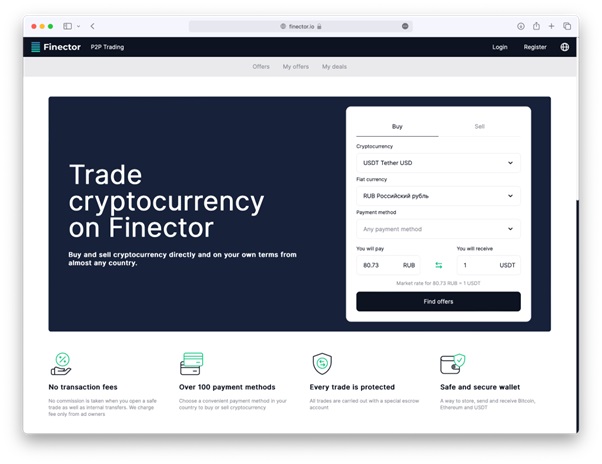
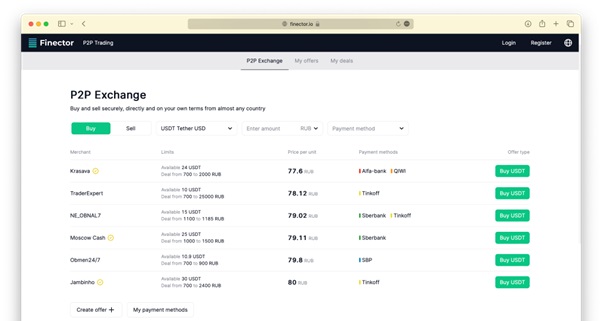
To buy cryptocurrency on the platform, you need to register on Finector and choose the best offer from all the available offers. Then, you need to make a payment to the seller using the method of your choice. After completing the fiat transaction and confirming the payment on the platform, the buyer receives a cryptocurrency transfer from the seller.

Key features of Finector P2P:

  1. No commissions. The platform has no commissions for both buyers and sellers on existing listings. For merchants it is 0.5%. 
  1. More than 100 payment methods. Users can choose the most convenient payment format depending on location and available options. The payment through payment systems, bank transfers and cash is supported.

The platform works with the major popular global payment systems, as well as Nigeria (NGN), Kenya (KES), South Africa (ZAR), Cameroon (XAF), Ethiopia (ETB) payment methods.

  1. Notifications. You can connect Telegram and email in your profile and receive notifications of deals. This is very convenient because you do not need to sit in front of the monitor all the time and wait for the deal.
  1. Secure trades. The platform has implemented an escrow system – at the time of placing an offer, the amount of cryptocurrency specified in the offer is automatically reserved on the seller’s P2P wallet. If the merchant fails to transfer the cryptocurrency purchased by the buyer, the support staff will send the reserved cryptocurrency to the customer’s wallet themselves. This system prevents theft and fraud.
  1. P2P Wallet. On the platform you can store, send and receive cryptocurrency through an internal wallet. Cryptocurrency bought on the platform is credited to the wallet, from where it can be withdrawn to third-party addresses. To sell cryptocurrency, the seller must also first transfer it to a wallet before placing an order.

Selling cryptocurrencies and terms for merchants

Finector provides a platform for secure transactions between buyers and sellers (merchants) – offers to sell cryptocurrency on the platform are posted by other users.

The platform has a user-friendly interface and many ways to pay for the transaction, which creates a stable flow of customers for exchange transactions.

The security of the platform is of great importance for Finector: regular third-party security audits are conducted and a rewards program for finding vulnerabilities is implemented.

Finector invites merchants to register in advance to get an advantage over other merchants.

The main terms of cooperation for merchants on Finector P2P:

  • Merchant fee – 0.5%;
  • Number of offers – unlimited;
  • Money transfers without any limits;
  • Availability of referral program;
  • Support 24/7.

To become a merchant on Finector P2P, register on the platform and fill in the application to add a merchant to the platform.

Conflux (CFX) and Stacks (STX) Taste Defeat Against TMS Network (TMSN). Anamoly or a Budding Trend?

0

Conflux (CFX) and Stacks (STX) have become celebrities of the crypto-verse because of their meteoric rise over the past few months. Nevertheless, their prices seem to be going down now. In comparison, TMS Network (TMSN), which is a contemporary of Conflux (CFX) and Stacks (STX), is growing stronger.

Whether the higher growth of TMS Network (TMSN) against Conflux (CFX) and Stacks (STX) is an anomaly or a trend that will continue in the future? Here’s everything you need to know.

Conflux (CFX)

Hong Kong has recently legalized crypto trading. Investors started speculating whether China would follow suit, leading to the boom in Conflux (CFX). After all, Conflux (CFX) is the only regulation-compliant crypto from China.

As Conflux (CFX) came into the limelight, it rallied at a remarkable speed, going up by over 1300% in a matter of weeks. The appreciation was also fueled by Conflux’s (CFX) strategic partnerships with China Telecom and Little Red Book. However, after the initial euphoria settled, Conflux’s (CFX) growth flattened.

Conflux (CFX) is not growing anymore. In fact, it has been dropping in value. Conflux (CFX) is still entering into new partnerships, but the effect of these developments is no longer visible in its price. On the other hand, TMS Network (TMSN), which started its growth story alongside Conflux (CFX), is still maintaining its high momentum. It’s growing and is predicted to do even better in the future.

Stacks (STX)

Stacks (STX) is a decentralized platform built on the Bitcoin (BTC) blockchain. So far, Bitcoin (BTC) has operated as a store of value. The goal of Stacks (STX) is to bring DeFi functionality to the Bitcoin (BTC) blockchain. Stacks (STX) offers smart contracts for developers to build dApps atop Bitcoin’s (BTC) proven security and reliability. While Stacks (STX) was launched in October 2018, it gained massive popularity at the beginning of 2023. It grew from $0.21 in January 2023 to $1.27 on March 20, 2023. Since then, Stacks (STX) is sliding.

The use case of Stacks (STX) depends heavily on the integrity of the underlying Bitcoin (BTC) blockchain. So, Stacks’s (STX) price is a function of the price of Bitcoin (BTC). It rises and falls with Bitcoin (BTC). Since Bitcoin (BTC) is the first cryptocurrency, it does not have room to jump as much as a budding cryptocurrency.

A cryptocurrency like TMS Network (TMSN) with a solid use case will certainly do well against Stacks (STX) in the long term. It is already doing better than Stacks (STX) anyway.

TMS Network (TMSN)

TMS Network (TMSN) is a DEX that allows trades in cryptocurrencies along with multiple traditional asset classes. These include equities, forex, and CFDs. TMS Network (TMSN) allows traders to benefit from the DEX’s transparency, high speeds, and cheap transaction costs. The platform also allows equity and forex traders to make their transactions entirely using cryptos, discarding fiat money.

An incredibly positive market sentiment has been brewing around TMS Network (TMSN) since it opened for presale. That’s why the token sold out completely and raised $500,000 at a price of $0.025 in the first round of presale. Its stage 2 presale is ongoing, and its price has almost increased 100%. TMS Network (TMSN) has raised over $4 million in total funding, and it’s still going strong.

Experts believe that TMS Network (TMSN) is far from its peak. TMS Network (TMSN) will continue to move up and make its way to the list of top gainers of 2023, with a growth rate of almost 5000% after its launch.


For more information on TMS Network (TMSN) please see the links below:

Presale: https://presale.tmsnetwork.io

Website: https://tmsnetwork.io

Telegram: https://t.me/TMSNetworkIO

Twitter: https://twitter.com/@tmsnetwork_io