DD
MM
YYYY

PAGES

DD
MM
YYYY

spot_img

PAGES

Home Blog Page 4250

HedgeUp (HDUP) Presale Defies Bear market conditions. Could Solana (SOL) and Cardano (ADA) beat the odds?

0

Despite the bearish market conditions currently plaguing the cryptocurrency world, a few standout projects have managed to defy the odds and gain significant attention from investors. HedgeUp (HDUP), a groundbreaking DeFi platform for alternative assets, is one such project, with its presale generating substantial interest. The question remains: can established cryptocurrencies like Solana (SOL) and Cardano (ADA) follow suit and overcome the challenging market environment? Let’s examine each of these projects and their potential to thrive amid market adversity.

HedgeUp (HDUP) – A Resilient Presale Amid Market Turbulence 

HedgeUp (HDUP) has captured the attention of investors with its unique approach to hedging against market volatility by providing access to alternative assets such as real estate, art, and collectibles. The platform’s native token, HDUP, is currently in its second presale stage, selling for $0.013, with the next stage price projected at $0.020. HedgeUp (HDUP) aims to launch its token on 24th June 2023.

Despite the broader bearish market, HedgeUp’s (HDUP) presale has demonstrated resilience and growth potential. The platform’s focus on diversification and its commitment to offering a range of investment options make it an attractive choice for investors seeking refuge from market volatility.

Solana (SOL) – Aiming for Scalability and Adoption 

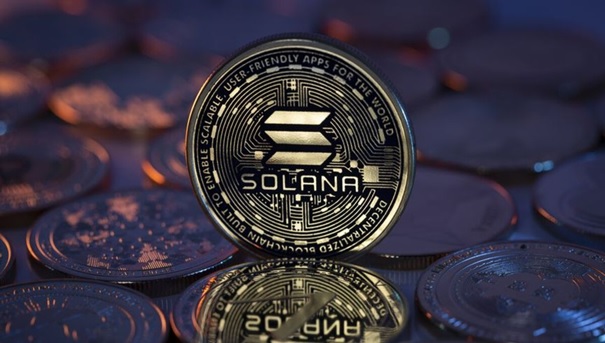
Solana (SOL), a high-performance blockchain platform known for its speed and scalability, has attracted considerable attention since its inception. The platform boasts an impressive ecosystem of projects and partnerships, which has helped it maintain a strong presence in the market.

Despite the bearish market conditions, Solana’s (SOL) ongoing developments and commitment to improving its infrastructure could propel it to new heights. The platform’s ability to process thousands of transactions per second and its focus on attracting new projects to its ecosystem make it a strong contender for weathering the current market storm.

Today, Solana (SOL) is priced at US$22.12, with a 24-hour trading volume of $733.69 million. In the past 24 hours, SOL has decreased by 2.4%. It currently sits 3.09% below its 7-day all-time high of $22.92 and 7.9% above its 7-day all-time low of $20.57. SOL has a circulating supply of 392.8 million tokens.

Cardano (ADA) – A Smart Contract Contender 

Cardano, another established cryptocurrency, has positioned itself as a key player in the smart contract arena. With the recent launch of its Aiken toolkit, Cardano aims to simplify smart contract development and attract a larger developer community to its platform.

Although Cardano has faced challenges amid the bear market, its ongoing developments and focus on improving its ecosystem could help it emerge stronger. The platform’s commitment to offering innovative solutions for smart contract development and integration makes it a promising candidate for overcoming market adversity.

Cardano is trading at US$0.4124, with a 24-hour trading volume of $517.6 million. Over the last 24 hours, ADA has experienced a 0.34% increase. It currently stands 1.29% below its 7-day all-time high of $0.4166 and 8.8% above its 7-day all-time low of $0.3778. ADA has a circulating supply of 34.7 billion tokens and a maximum supply of 45 billion ADA.

In Conclusion 

HedgeUp (HDUP), Solana (SOL), and Cardano (ADA) each demonstrate the potential to thrive amid challenging market conditions. While HedgeUp’s presale has displayed resilience and attracted investor interest, both Solana and Cardano have continued to forge ahead with ongoing developments and improvements to their respective ecosystems.

As the bear market persists, the success of these projects will depend on their ability to innovate, attract new users, and remain adaptable to the ever-changing cryptocurrency landscape. Investors seeking opportunities in these uncertain times should keep a close eye on HedgeUp (HDUP), Solana, and Cardano, as each project offers a unique approach to tackling the challenges posed by the current market climate.


For more information about HedgeUp (HDUP)

Website: https://hedgeup.io/

Presale: https://app.hedgeup.io/sign-up

Telegram: https://t.me/HedgeUpChat

Twitter: https://twitter.com/HedgeUpOfficial

Nigerian Government Suspends Fuel Subsidy Removal

0

The National Economic Council, NEC, has suspended the planned removal of subsidy on petroleum products by the end of President Muhammadu Buhari’s administration.

The Minister of Finance, Budget and National Planning, Mrs. Zainab Ahmed disclosed this while briefing State House correspondents at the end of the NEC meeting presided over by Vice President Yemi Osinbajo at the Presidential Villa, Abuja.

According to the minister, the NEC concluded in its meeting that it is not a favourable time for the action.

She stated that the Council deliberated on the matter and resolved that it cannot be removed for now, but it equally agreed on the need to continue the discussion on the matter and the necessary preparatory work in conjunction with states and representatives of the incoming administration.

Mrs Zainab Ahmed explained that the planned subsidy removal should be due in June because the Petroleum Industry Act, PIA and the 2023 budget provided subsidy till June, hence any delay may require the amendment of the PIA and the budget provision.

She, however, noted that there was no deadline given for the subsidy removal and that the incoming administration will have to make decision on when it is possible to do so.

The Play on Transcorp at Nigerian Stock Exchange – Scene with Elumelu and Otedola

1

Hahaha – the men are “talking” and the words are “cash. cash. cash”, totally different from what Hamlet said in ages past. Lord Polonius in Shakespeare’s Hamlet would have wondered and said, “what an answer!”, hearing something better than the “words, words, words” from the mouth of Hamlet. 

The play is in the Nigerian stock exchange and the actors are Tony Elumelu (my mentor in business and a man who opened his heart to guide a village boy, and his company provided the first support which enabled my breakthrough) and Femi Otedola, a business icon. On the script, the words are “cash” and the stage is Transnational Corporation Plc (Transcorp).

Otedola  has been buying this company and was close to 6.5% – and a little more, he would become the dominant shareholder, controlling the company. But today, Elumelu, upped the game, pushing all the way to 25.58% of the company’s total shares: “The acquisition of 9,697,189,984 units of shares brings HH Capital’s total holdings in Transcorp to 9,991,173,177 units, representing 25.58% of the company’s total shares.”

Femi Otedola has taken his stake in Transcorp to 6.3%: ‘“We write to inform you that our client Femi Otedola (C4430272AP) has acquired additional unit of Transcorps shares that brings his percentage holdings with us to 5.8…Stanbic IBTC Stockbrokers Limited, in its own letter, informed Africa Prudential the energy magnate procured shares… That takes his entire holding in Transcorp to 6.3 per cent or 2.6 billion shares’.

We will wait for how Otedola will respond. Investors in Transcorp, rejoice because it will turn out good. I am liking it because I bought this company during the IPO, circa 2007, and I also got it for Ifeoma for her birthday! (village man who buys shares as birthday gifts instead of gold and silver for his wife). 

If Otedola responds with 50% interest, Elumelu may just go for the 100% and that means they will pay us a premium as ordinary investors. #louder, do not stop this play; I am liking it.

“In compliance with Chapter 17, Rule 17.13 of the NGX Issuers Rules, Transnational Corporation Plc (the Company) hereby informs the Nigerian Exchange Limited (NGX) and the investing public of the below new acquisition of shares in the Company. With this new acquisition, HH Capital Limited now holds a total of 9,991,173,177 units, representing 25.58% of the Company’s total shares.”

US Crypto Regulation Uncertainty Is Helping Fuel Global Adoptions

0

The United States is one of the largest and most influential markets for cryptocurrencies, but it is also one of the most uncertain and unpredictable in terms of regulation. The lack of clear and consistent rules for crypto assets and services has created challenges and risks for both investors and innovators in the industry. Many crypto firms are considering moving their operations overseas, where they can find more favorable and stable regulatory environments.

One example of this trend is Binance US, the American affiliate of the world’s largest crypto exchange by volume. Binance US recently walked away from a deal to acquire the assets of Voyager Digital, a crypto broker that went bankrupt in 2022 after the collapse of Terra’s LUNA and UST tokens. Binance US cited “the hostile and uncertain regulatory climate in the United States” as the reason for terminating the agreement, which had already been approved by a bankruptcy judge but faced objections from several regulators, including the SEC, the FTC, and the CFTC.

Binance US is not alone in facing regulatory hurdles in the US. Many other crypto firms have been subject to enforcement actions, lawsuits, investigations, and fines from various federal and state agencies. Some of these cases have raised questions about the jurisdiction and authority of different regulators over crypto activities, as well as the applicability and interpretation of existing laws and regulations to new and emerging technologies.

In contrast to the US, some other countries have taken a more proactive and supportive approach to crypto regulation. The European Union, for instance, has proposed a comprehensive framework for crypto assets and services, known as the Markets in Crypto-Assets Regulation (MiCA), which aims to harmonize and clarify the rules across the bloc. MiCA is expected to be published in the Official Journal of the EU this summer and take effect by late 2024. The EU hopes that MiCA will foster innovation, competition, and consumer protection in the crypto sector.

The regulatory divergence between the US and other jurisdictions could have significant implications for the global adoption of cryptocurrencies. While some crypto enthusiasts may see the US as a hindrance to innovation and growth, others may view it as a source of legitimacy and credibility for the industry. The US still has a large and active crypto community, as well as a robust legal system and a strong tradition of entrepreneurship. However, if the US fails to provide clear and consistent guidance for crypto regulation, it may lose its competitive edge and influence in this rapidly evolving space.

It is no news that the United States of America is one of the largest and most influential markets for cryptocurrencies, but it also has one of the most complex and fragmented regulatory landscapes. Different federal agencies have different views on how to classify, regulate, and tax digital assets, creating confusion and uncertainty for crypto businesses and investors. Some crypto firms have decided to move their operations overseas, where they can find more favorable and clear rules.

However, this regulatory uncertainty may also have a positive effect on the global adoption of cryptocurrencies. As the US struggles to establish a coherent policy framework, other countries have taken the lead in developing and implementing crypto-friendly regulations. For example, countries like Singapore, Switzerland, Japan, and El Salvador have enacted laws that recognize and support various forms of digital assets, such as stablecoins, decentralized exchanges, and even Bitcoin as legal tender.

These countries are attracting more crypto innovation and investment, as well as providing more opportunities for financial inclusion and economic growth. By creating a more welcoming environment for crypto, they are also encouraging more people to use and adopt digital assets as part of their everyday lives. As a result, the global crypto market is becoming more diverse, resilient, and competitive.

The US may eventually catch up with its peers and establish a clear and consistent crypto policy that balances innovation and regulation. However, until then, its regulatory uncertainty may continue to drive more crypto activity and adoption around the world.

Free Services and Advertising Revenues –  Dr Yasam Ayavefe

0

The ubiquitous advertising on most Internet sites can be considered a special case of exploiting network effects by sites that offer it.

Indeed, the value of the service for consumers depends on the amount of advertising. The value of an ad depends on the number of users who will see it. This corresponds to the idea of ??the indirect network effect.

An example of a site that uses ad revenue in this way is Buy, an online supermarket that offers discounted items such as computers, software, books, videos, travel, and music.

This site encourages its use as an advertising tool, allowing it to offer discounts to consumers.

Advertising on the Internet can be tailored to the customer’s purchasing behavior. Such a strategy cannot be used as effectively as in traditional discount supermarkets.

Because each new subscriber to a site generates ad revenue, subscribers can switch from customer status to resource status for a site.

This may justify providing the service for free and even offering negative prices or free services to customers.

The effective cost per subscriber for the site is negative if a new subscriber brings advertising revenue even though it costs the site. In this case, the site may therefore offer “negative prices”.

The impact of ad revenue financing on site entry and profitability remains an open question. If there is competition, it will tend to wipe out profits and pass on the benefit of advertising revenue to consumers. Therefore, its impact on company profit is uncertain.

It depends on the link between audience and ad revenue. Advertising finance offers a kind of economies of scale, especially when ad revenues are very sensitive to the audience. (revenue per listener increases with audience size)

In this case, the net unit cost of ad revenue per subscriber decreases with the viewership. A market that can compete without advertising financing may be highly concentrated because of this financing alone.

The second point is that on a theoretical level, advertising revenue and financing problems are very similar to product quality selection problems. From the point of view of a site’s users, advertisements are one of the features of the service provided, the value of which can be positive or negative.

This is actually a dimension of service quality. As long as one interprets the value of income as negative (opportunity) cost, one obtains a quality model.

The ad can take a vertical (screen footprint) and horizontal (related products) size. Accordingly, the traditional consequences of quality choices should be looked at.

Particularly those related to product differentiation need to be expanded to a certain extent, with advertising choices serving as differentiation tools.

The difference is that the advertising medium is much more flexible than other quality choices, and vertical and horizontal dimensions are intertwined on the internet.

Some sites offer paid services with little or no ads, while others offer free services with ads. This corresponds to more vertical differentiation.

A horizontal dimension appears when sites target specific categories of users by selecting appropriate ads for them.

One of the innovations is the customization of services. With sponsorship opportunities, each user can be individually targeted with ads for special interests.

The horizontal and vertical distinction may later turn out to be irrelevant. Instead, advertising becomes an instrument of affirmative action. So, discrimination is not a priority.

It is clear that the role of web advertising is still evolving. We can expect to see innovations in this area. An open question is the capacity of such resources to finance the long-term development of activities on the Internet.

As a matter of fact, if we collect all revenues at the sector level, the financing of Internet advertising. must come from the revenues that this industry can generate because of the value of goods and services offered to individuals or companies.

Conclusion

In this article, we have examined a few economic phenomena that stand out in particular when it comes to the use of the Internet as a tool for business activities. It is difficult to summarize an entire article that attempts to change perspectives on a single phenomenon.

The evolution of these economic exchanges is found in other areas of activity (increasing returns, reputation, loyalty, network effects, etc.). But it includes phenomena that take on a new dimension here.

For this reason, we will content ourselves with repeating that although the existing literature offers important lessons, there are many theoretical studies to be done on this subject.

These studies should focus on the role of intermediaries and field certification companies in managing information flows.

At the same time, this article primarily focuses on lessons to be learned from current studies in economics.

The development of the Internet depends on the lessons of economic literature such as community sites or free software. It is also clear that it gives rise to new phenomena and forms of organization. So, there’s also a whole new area of ??research under construction. 


Find out more about Dr. Ayavefe and his work here:

https://yasamayavefe.com/

https://milayacapital.com/