DD
MM
YYYY

PAGES

DD
MM
YYYY

spot_img

PAGES

Home Blog Page 4316

S&P 500, TSLA Stock Top UK Google Search

0

The study, conducted by the experts at Trading Browser, analysed Google Keyword data to establish the search volume for each S&P 500 stock in each UK area and combined the number of searches to determine which is the most popular.

According to the results, the five most Googled S&P 500 stocks in the UK are:

Tesla (TSLA)
Electric car manufacturer Tesla is named the most Googled S&P 500 stock in the UK. Tesla stock is searched for 260,180times a month on average by UK residents. Recognised not only for its various electric products but the company’s outlandish CEO Elon Musk, Tesla has rapidly become one of the world’s most valuable companies. As of March 2023, Tesla has a market cap of $621.77 billion which is the seventh highest in the world.

META (META)
Formerly known as Facebook, Meta is the UK’s second most Googled S&P 500 stock. META stock is searched for 84,310times a month on average by UK residents. CEO Mark Zuckerberg recently announced a paid monthly subscription to give Facebook and Instagram users a blue verification tick. Meta’s annual revenue for 2022 was $116.6 billion, which was a 1.12% decline from 2021.

NVIDIA (NVDA)
NVIDIA ranked as the third most Googled S&P 500 stock in the UK. NVDA stock is searched for 58,250 times a month on average by UK residents. The company manufactures high-end graphics units for PCs and game consoles. As of 2023, NVIDIA has just over 26,000 employees worldwide.

Google (GOOG)
Google ranked as the fourth most Googled S&P 500 stock in the UK. GOOG stock is searched for 35, 840 times a month on average by UK residents. Google is one of the most popular search engines in the world. Its parent company Alphabet Inc. measured more than 190,000 employees at the end of 2022, making it one of the top ten largest tech companies in the world.

Amazon (AMZN)
Amazon ranked as the fifth most Googled S&P 500 stock in the UK. AMZN stock is searched for 27,720 times a month on average by UK residents. Amazon is one of the world’s most valuable brands and one of the most recognisable. In 2022 for the first time in eight years, Amazon recorded a loss which amassed to $2.7 billion dollars.

A spokesperson for Trading Browser said: “More and more people are becoming interested in stocks, shares and investing in general. With so much information out there, especially on social media, it has become easier than ever to conduct research on the market.

“It’s no surprise to see Tesla top the rankings when it comes to the volume of Google searches. With Elon Musk at the helm, there are always new developments to be aware of before and after investing.

“With companies like these, where the CEO or founder has some sort of celebrity status, it is not uncommon for stocks to fluctuate in response to their actions. It’s also no surprise to see some of the biggest tech, manufacturing and oil giants amongst the top spots, as all of these industries are constantly undergoing change both socially and economically.”


Let’s talk about arts/ paintings/ sculptures and their legal ownership.

1
TEHRAN, IRAN - JULY 19: (RUSSIA OUT) Russian President Vladimir Putin leaves his presidential plane during the welcoming ceremony at the airport, on July 19, 2022 in Tehran Iran. Russian President Putin and his Turkish counterpart Erdogan arrived in Iran for the summit. (Photo by Contributor/Getty Images)

Some wealthy men are art collectors/ enthusiasts with priced art in their possession; this article is for them specifically. 

Due to the fact that art, paintings and sculptures from famous painters or sculptors are priced items with some of them being sold for millions of dollars, there’s always a likelihood that a copy or fake of some famous and expensive art is out there in the market with their dealers prancing on naive collectors to defraud.

How do you then make sure that you do not let yourself get defrauded in the art market by fraudster art dealers?

There is a legal document that is attached or associated with every art, painting or sculpture out there and it is called “provenance”.

Before you pay or even indicate an interest to purchase an artwork, ask the dealer to provide you with the art’s provenance, if the dealer cannot provide you with the provenance then that is a red flag; which can be interpreted that it is either the art although real was stolen or acquired through an illegal means or it is a copy or a fake art.

What then is Provenance?

Provenance is the ownership history of an artwork, from when it was first created by the painter or sculptor, indicating the date it was painted or sculpted and the details of the painter or sculptor indicating the first purchaser and other purchasers up until it got into the hand of the person who wants to sell it to you. Documented evidence of provenance for an artwork helps to establish that the art has not been altered and is not a forgery, a reproduction, stolen or looted art.

Some famous artworks date as far back as 1500. For instance, Leonardo Da Vinci’s Salvator Mundi which is one of the most famous and most expensive pieces of art currently in the world is believed to have been created around 1499-1510. This is to say that whoever dealer or collector wants to sell this prized piece of art must be in possession of the provenance dating as far back as 1500; indicating who was the first buyer or collector who bought this piece directly from Leonardo Da Vinci, and trace chronologically who and who have possessed the painting subsequently before it got to current collector’s museum or hand. Any collector or dealer who cannot present the provenance is either selling a fake copy of the artwork or stolen artwork. 

Provenance can as well be referred to as a chain of title in a more familiar legal term. The phrase, “chain of title” refers to the history of ownership of a piece of property, especially landed property, personal properties or other prized possession. Titles are normally registered and maintained with a centralized registry or authoritative body. The chain of title traces the historical transfer of ownership from the current owner back to the original owner or creator.
Keeping all these rigorous and accurate title records is important in order to establish ownership of a property or an asset especially when the property is a prized possession because once there is a hole or a break in the chain of title then it shows that you are not the legal owner of the property you are claiming or do not have the proper legal documents to establish you are the true legal owner of the property; you can as well be deemed to be a thief, a fraudster or an impostor.

The purpose of this piece is to protect our readers who are art collectors, dealers or enthusiasts. Once you are interested in buying an expensive piece of art or painting or even a sculpture, insist on the seller to provide you with the provenance or the chain of title of the work, that is the document that proves the seller has legal ownership over the artwork and therefore have the legal right to sell and can transfer the legal ownership of the art to you once you pay for it.

20 AI tools that will transform your productivity

0
TEHRAN, IRAN - JULY 19: (RUSSIA OUT) Russian President Vladimir Putin leaves his presidential plane during the welcoming ceremony at the airport, on July 19, 2022 in Tehran Iran. Russian President Putin and his Turkish counterpart Erdogan arrived in Iran for the summit. (Photo by Contributor/Getty Images)

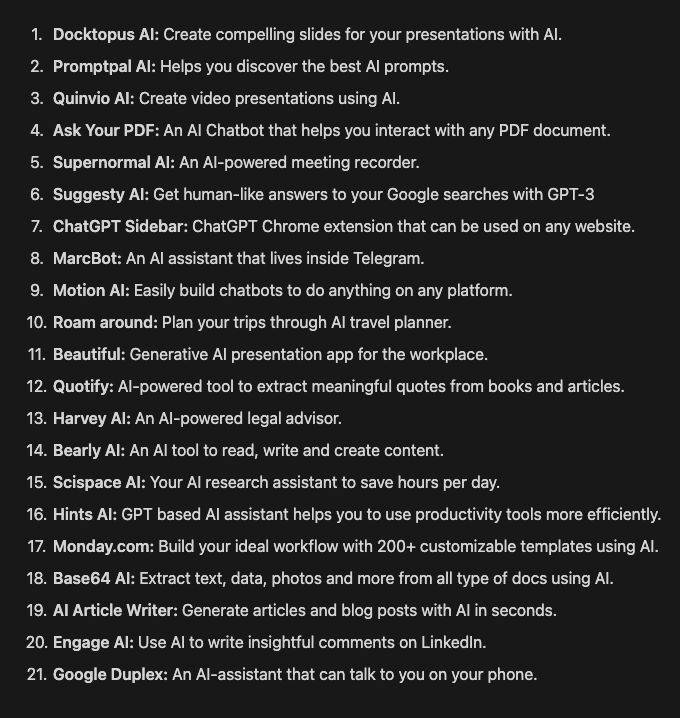
Here are 20 AI tools that will transform your productivity forever. Yes, some species of AI and they will change our world.

Tekedia is offering a course on AI in the next Tekedia Mini-MBA.

UK-Nigeria Tech Hub Collaborates With Google to Support Female-Led Startup Founders

1

The UK-Nigeria Tech Hub, an initiative by the UK Government to support the growth of the Nigerian tech ecosystem has collaborated with tech giant company Google to support female-led startup founders.

Through this collaboration, the sum of $3 million in Google Cloud credits will be awarded to women founders in Nigeria, subsidizing cloud technology expenses for their startups, and enabling them to focus on innovation, customer acquisition, and growth.

Speaking on the collaboration, the British High Commission Senior Press & Public Affairs Officer Ndidiamaka Eze said,

This support will subsidize cloud technology-related costs for startups, allowing them to focus on innovation, customer acquisition, and growth. The joint effort by the UK-Nigeria tech hub and Google for startups in Africa will help to promote digital inclusion and jointly support technology businesses run by women founders.

“To commemorate International women’s day in March, the two organizations co-hosted an event in Lagos, bringing together women founders, investors, and ecosystem stakeholders. The event aims to help women founders understand the technology funding landscape and position themselves to secure funding for startups.

“This partnership is a testament to our commitment to supporting women founders and helping them reach their full potential. Partnerships like this are one of the great ways that stakeholders can come together to advance Nigeria’s tech ecosystem at an accelerated pace”.

Lately, Women startup founders have been getting much-needed recognition as well as increased funding. Recall that earlier this month, Google announced 15 women-founded startups in its inaugural accelerator. The selected women founders will receive business and technical training alongside mentoring and investment networking opportunities, tying into Google’s long-standing strategy to empower Africa’s women in business.

The 15 selected startups were pulled from eight African countries and are leveraging innovation and technology to develop solutions that are impacting lives and communities. Google’s program is coming at the back of its consistent effort to achieve gender parity in the funds it deploys into African startups.

Also, ALAT by Wema a youth-focused startup competition aimed to provide a platform that enables innovators and startup founders with tech-driven skills, in its latest edition of its 2023 Hackaholics 4.0, tagged “reimagine” has disclosed that as a way of honoring its commitment to inclusivity,  women-led teams will be given recognition and rewards.

It is also interesting to note that against the backdrop of a funding boom for African startups, women-led startups which have been long starved of funds, have seen a dramatic increase in financing. Investments made into African female-led startups have grown by nearly seven-fold over the last three years, highlighting their potential to haul in investment.

In 2021, the share of investments that went to female-owned tech start-ups stood at about 6.5 percent, which implies that just 1 in every 15 dollars raised in the African start-up ecosystem went to women-owned tech startups. Though incredibly low, it was much higher in 2021 than in previous years.

The Lessons from Bayh-Dole Act for Africa’s Economic Development

1

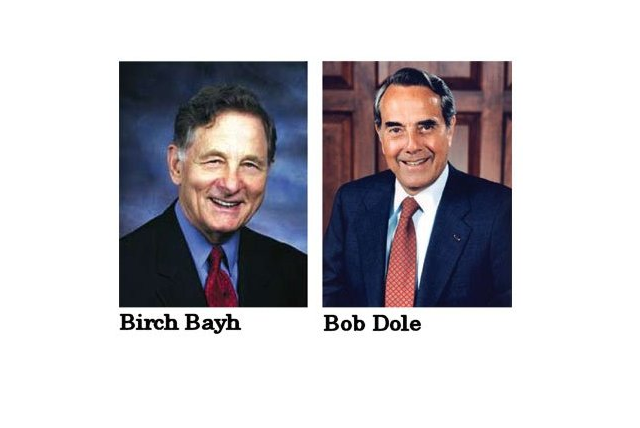
The Bayh-Dole Act is arguably the most important business legislation of the last few decades in the United States. It made it possible for government-funded research to be commercialized by individuals and entities. In other words, in the past, after great discoveries, only government entities were expected to commercialize the outcomes. But when this Act came,  the researchers could under license take those outcomes to the market.

Without Bayh-Dole, there will be no Google, Akamai and a host of many companies, which began life in university labs, funded by the US government.

For Africa, our challenge is not just doing quality research. But also, finding a mechanism to commercialize the little we have done. The US reduced the barriers, and companies can go to US patent libraries, discover great ideas and then push to commercialize them. The outcome: you do not leave great ideas on shelves; you take them to markets where people and companies can buy products created out of them. My PhD thesis was a beneficiary as the US government saw it, and paid to use the idea out of it.

Indeed, Africa can learn from the Bayh-Dole Act especially now the nations are trying to emerge from the most devastating global recession since the Second World War, with policymakers, business communities, academia, and governments looking at ways to accelerate growth and competitiveness.  Governments matter and a single legislation could have impacts that can redesign a nation’s economic destiny. Globalization makes it necessary that nations must compete not just on technologies, but on policies upon which those technologies are developed and commercialized. It is the policy that makes it possible that two universities in two separate countries can develop similar technologies with one creating Fortune 500 companies within a decade and another having the idea locked up in a cabinet. So the policies or legislations made by our parliaments on what happens to inventions funded with public money matter.

What Africa Can Learn from Bayh-Dole Act

Comment on Feed

Comment 1: I did a quick Google search after reading this and found out that the Nigerian government approved N4.7b research grant for academics.
Do you have any idea if the academicians or affiliated institutions can commercialise their works?

My ResponseSince Nigeria has no system, any professor can commercialize government-funded research provided you are not very successful in the market. But if that idea becomes very successful, and it can be linked to a government grant, you may have a legal matter to deal with in that university/government. 

I will not fund any professor’s idea, coming out of a government grant, unless we see a written document from the minister of science/tech (for federal) or commissioner (for state school), granting rights as appropriate, in Nigeria. But in South Africa, I do not have that problem as they’ve created an equivalent and unambiguous Bayh-Dole clone which removes any future expropriation  risk.