DD
MM
YYYY

PAGES

DD
MM
YYYY

spot_img

PAGES

Home Blog Page 4322

The Lesson As Amazon and Rivian Rework Their EV Exclusive Deal

1

When reality sets in, deals are reworked and revised. There is  no need to fight on such issues. Yes, Amazon and Rivian will revise their EV exclusive deals since market conditions have made it hard for Amazon to meet targets: ” Amazon has been Rivian’s sole EV van customer since 2019, but the retailer has recently “underwhelmed” Rivian with small orders”. Indeed, while we work to respect business agreements and contracts, people have to be flexible and pragmatic if we want to transition from just holding CEO titles to being leaders of organizations.

What Amazon and Rivian are doing here would have been endless litigation in places where companies read only legal lines, and not the core missions of firms: fix frictions in markets. Pragmatic leadership advances companies, sectors and nations.

Rivian and Amazon are revisiting their exclusive electric delivery truck deal, an Amazon spokesperson confirmed to CNBC. Amazon has been Rivian’s sole EV van customer since 2019, but the retailer has recently “underwhelmed” Rivian with small orders, The Wall Street Journal writes. Amazon said it wanted only 10,000 new vehicles this year as part of the 100,000 EVs it promised to buy by 2030, leading Rivian to reconsider its exclusivity agreement through ongoing talks. Amazon is Rivian’s largest shareholder and a has a seat on Rivian’s board of directors.

Of course, Amazon being the largest shareholder of Rivian will like the company to do well, even if that does not come from Amazon itself. It is winning via strategic partnership.

That explains why Microsoft has already made all the truckloads of money it invested in ChatGPT after the chatbot helped Bing to nearly double its annual revenue – and surpass 100 million daily active users threshold: ““We are pleased to share that after a number of years of steady progress, and with a little bit of a boost from the million plus new Bing preview users, we have crossed 100 million daily active users of Bing.”  Google has a big fight ahead.

“For every 1 point of share gain in the search advertising market, it’s a $2 billion revenue opportunity for our advertising business,” said

The Verge noted that Microsoft has boosted its ad business – growing it to $18 billion in revenue over the past 12 months, compared to $10 billion in the previous fiscal year. But the growth, which is largely attributed to Bing, still falls significantly short of Google’s $200 billion revenue within the same time period.
Meta to Cut 10,000 More Jobs, Freeze Hiring in A Fresh Cost-cutting Move

0

Meta CEO Mark Zuckerberg announced Tuesday that the company plans to reduce its workforce once again by laying off around 10,000 employees and closing about 5,000 job openings that have not been filled.

The move came amid growing economic turmoil in the tech industry, pushing companies to cut headcounts as part of measures of cutting costs.  Meta was severely hit by revenue drop, which saw the social media behemoth lost more than half of its market value in 2022.

Zuckerberg disclosed the plan in his “Year of Efficiency,” announcement, where he outlined steps Meta is taking to reduce increasing losses as the company’s digital ad sales slows down.

“Over the next couple of months, org leaders will announce restructuring plans focused on flattening our orgs, canceling lower priority projects, and reducing our hiring rates,” the CEO said in a statement posted to his Facebook page.

Zuckerberg said he will let members of the company’s recruiting team know if they are impacted by the decision by tomorrow. But tech team members won’t know the status of their jobs until April, while business group employees won’t find out until May. Some workers won’t be told if they’ll keep their jobs until the end of the year.

“At this point, I think we should prepare ourselves for the possibility that this new economic reality will continue for many years,” Zuckerberg said. “Higher interest rates lead to the economy running leaner, more geopolitical instability leads to more volatility, and increased regulation leads to slower growth and increased costs of innovation. Given this outlook, we’ll need to operate more efficiently than our previous headcount reduction to ensure success.”

The CEO said Meta will support people in the same ways it has before and treat everyone with the gratitude they deserve. He added that he wants managers to take on up to 10 employees as their direct reports and is calling on workers to meet in person moving forward more often.

In November, Meta announced it was cutting 11,000 jobs, joining other tech giants reducing headcounts as the pandemic-induced economic boom dies down. Apple, Amazon, Microsoft, Twitter and others have also been forced to cut workforce. The tech companies had over-hired during the pandemic as life shifted online, creating massive digital economic boom.

Gingered by the economic boom, tech companies went on hiring spree. Meta grew its headcount by 93.5% from Q4 2019 to Q3 2022.

However, the economic growth saw a drastic drop as in-person activities grows, following the removal of safety restrictions designed to halt the spread of covid-19.

But Zuckerberg’s major move to save its fortune came in 2021 when he changed the company’s name from Facebook to Meta. He has also unveiled other plans, which includes a shift of focus to short-form videos and developing metaverse, as part of efforts to revamp Meta.

Facebook parent Meta Platforms will lay off roughly 10,000 employees over the next couple of months and close off a further 5,000 open jobs, the company announced in a blog post. The move marks the social media giant’s second major round of job cuts in recent months after it laid off 11,000 workers, or 13% of its staff, in November. Chief Executive Mark Zuckerberg said Meta — which owns Instagram and WhatsApp — is looking to “make its organization flatter” by removing multiple layers of management and cutting certain projects, as part of “the year of efficiency.”

Recruitment teams will be impacted first, followed by restructuring and layoffs in tech groups in April and cuts on business teams in late May. Meta had dramatically expanded its employee base over the pandemic but has since seen a slowdown in advertising revenue. Tens of thousands of workers have been laid off across the tech sector this year. (LinkedIn News)

However, analysts have hailed his cost-cutting plans as the best way to turn Meta’s fortune around. Yahoo Finance noted Jefferies analyst, Brent Thill, applauding Meta’s decision to cut more jobs as a necessity.

“We believe more headcount reductions are needed to offset the last 2 years of excess hiring,” Thill wrote on March 7. “Meta grew its headcount by 20% in ’22, which led to revenue per employee declining 21%. Hence, Meta’s reported plans to right size its headcount, laying off ‘thousands’ of employees are warranted.”

Zuckerberg said during Meta’s last earnings call that the company will execute its “Year of Efficiency” plan by implementing “flatter” and “learner” measures in running the company.

“As I’ve talked about efficiency this year, I’ve said that part of our work will involve removing jobs — and that will be in service of both building a leaner, more technical company and improving our business performance to enable our long term vision,” he said.

Meta shares jumped more than 6% at the market open on Tuesday.

Nigeria, AfDB, IsDB, others Launch Project to Drive Investment and Youth Involvement in Digital and Creative Sector

0

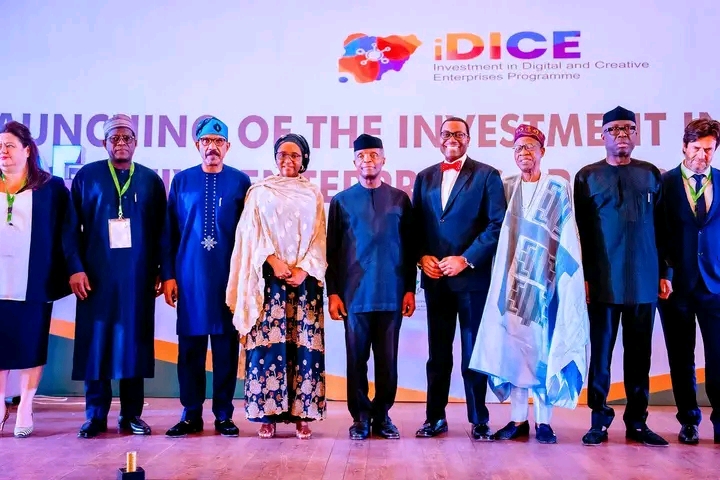
Tuesday, March 14, 2023, the Nigerian government hosted dignitaries within and outside of the country at the state house in Abuja during the launching of the Investment in Digital and Creative Enterprises (i-DICE) program.

The flagship initiative of the Nigerian government in partnership with the African Development Bank, Islamic Development Bank and Agence Francaise de Development is expected to drive vital funding for Nigeria’s digital and creative industries. The program is specifically targeted at the Nigerian youth in the digital technology and creative sectors not excluding students and investors in that ecosystem.

Also, to emerge under this initiative is the DICE fund, a venture capital outfit that will draw additional funding from institutional and other private investors.

The i-DICE program has been described as part of the Federal government effort to build back a better, greener and more inclusive economy and to create sustainable jobs for the country’s teeming youth population. The program is also tipped to consolidate the nation’s position as Africa’s leading startup investment destination and youth entrepreneurship hub.

Chairman of the launching ceremony, Vice President, Yemi Osibanjo in a statement published on his official Facebook account described the initiative as a dream come true after five years of its conception and laying of groundwork by the government and its partners.

“In a world where technological innovation is constantly evolving, Nigeria has recognized the need to keep up with the pace. That’s why the investment in the Digital and Creative Enterprise (IDICE) program was born, after five years of ground work and collaboration between the government and private sector partners.

” The program is set to support young entrepreneurs in digital technology and creative industries to unlock their potentials and create job opportunities.” he said.

The vice president lauded the achievements recorded by Nigerian digital entrepreneurs, noting that over $1billion funding secured by 180 startups in Nigeria has pushed the nation in the front line as Africa’s best-funded country with approximately 30percent of funded ventures on the continent.

“With the i-DICE program, we aim to take this success even further. Thanks to the support of partners such as the African Development Bank, Agence Franciase de Development and the Islamic Development Bank, we have raised over $618million to make this a reality.

Professor Yemi Osibanjo extended his appreciation to Dr Akinwunmi Adesina, President of the Africa’s Development Bank for his contribution towards the success of the program.

“The Dice program is more than just funding; it’s an investment in a brighter future for Nigeria and its people, and I can’t wait to see what the next generation of entrepreneurs will achieve. ” Professor Osibanjo said.

Photos shot at the launching ceremony:

Why do Stablecoins lose PEG?

0

Stablecoins are a type of cryptocurrency designed to have a stable value relative to a specific asset or a basket of assets, typically a fiat currency such as the U.S. dollar, euro or Japanese yen.

Stablecoins are designed to offer a “stable” store of value and medium of exchange compared with more traditional cryptocurrencies like Bitcoin (BTC) and Ether (ETH), which can be highly volatile.

Fiat money, cryptocurrencies, and commodities like gold and silver are examples of assets used to collateralize or “back” stablecoins. Tether (USDT), USD Coin (USDC) and Dai (DAI) are a few examples of stablecoins pegged to the U.S. dollar.

Stablecoins can also be algorithmically stabilized through smart contracts and other mechanisms that automatically adjust the supply of the stablecoin to maintain its peg to the underlying asset.

Despite the potential benefits, stablecoins are not without risks. The most significant risk with any stablecoin is the potential for its peg to break, causing it to lose its value relative to the underlying asset.

Depegging is where the value of a stablecoin deviates significantly from its pegged value. This can happen for various reasons, including market conditions, liquidity issues and regulatory changes.

USDC is a fully reserved-backed stablecoin, meaning every USD Coin is backed by actual cash and short-dated United States treasuries. Despite this, USDC issuers, Circle, announced on March 10 that USDC had depegged from the U.S. dollar, with around $3.3 billion of its $40 billion in USDC reserves stuck in the now defunct Silicon Valley Bank. The bank — the 16th-largest in the U.S. — collapsed on March 10, and is one of the biggest bank failures in U.S. history. Given USDC’s collateral influence, other stablecoins followed suit in depegging from the U.S. dollar.

Stablecoins can depeg due to a combination of micro and macroeconomic factors. Micro factors include shifts in market conditions, such as an abrupt increase or decrease in stablecoin demand, problems with liquidity and modifications to the underlying collateral. Macro variables involve changes in the overall economic landscape, such as inflation or interest rate increases.

For instance, a stablecoin’s price can momentarily exceed its pegged value if demand spikes due to increased cryptocurrency trading activity. Yet, the stablecoin’s price could drop below its fixed value if insufficient liquidity matches heightened demand.

On the macroeconomic front, if there is high inflation, the purchasing power of the underlying assets that support the stablecoin may drop, leading to a depeg event. Similarly, adjustments to interest rates or other macroeconomic measures may impact stablecoin demand.

Regulatory changes or legal issues can also cause a stablecoin to depeg. For example, if a government were to ban the use of stablecoins, demand for the stablecoin would drop, causing its value to fall. A depegging event can also be caused by technical problems like smart contract bugs, hacking attacks and network congestion. For instance, a smart contract flaw could result in the stablecoin’s value being computed improperly, causing a sizable departure from its peg.

The most significant risk with any stablecoin is the potential for its peg to break. Depegging is where the value of a stablecoin deviates significantly from its pegged value.

Stablecoins can depeg due to a combination of micro and macroeconomic factors. These include shifts in market conditions, such as an abrupt increase or decrease in stablecoin demand, problems with liquidity and modifications to the underlying collateral.

In simpler terms, a stablecoin’s price can momentarily exceed its pegged value if demand spikes due to increased cryptocurrency trading activity. Yet, the stablecoin’s price could drop below its fixed value if insufficient liquidity matches heightened demand. This was the dynamics that affected Terra’s $UST last year.

Regulatory changes or legal issues can also cause a stablecoin to depeg. For example, if a government were to ban the use of stablecoins, demand for the stablecoin would drop, causing its value to fall.

Will $USDC go the $UST Way?

0

Although $USDC has since regained its peg to the US dollar, there are justifiable fears that it might end up like collapsed UST especially since the full effect of its exposure to SVB has not been revealed. However, amidst this fear, $USDC would not likely crash to zero like $UST, the algorithmic stablecoin by Terra, did last year.

Recall that the collapse of $UST was attributed to its structure and backing by other digital assets, including Bitcoin and $LUNA. Since it depended on algorithms to track the value of the USD and always ensure parity, any pressure on its underlying coins (Bitcoin or LUNA), led to intense selling pressure, which caused a de-peg. 

While USDC’s depeg is unideal in the short-term, 91.75% of Circle’s USDC reserves remain liquid, even if the 8.25% of funds are totally lost, Coinbase would probably step in. It’s not like the FTX situation. Circle has 91.75% of the money. FTX had way less.

Circle is a regularly audited US entity and USDC has maintained a solid peg since its inception, unlike many other troubled stablecoins. Circle tweeted that “Circle and USDC continue to operate normally”

Now, USDC, issued by Circle, is backed 1:1 with cash, and redemption means every backing cash or cash equivalent from Circle must be sold and disbursed to the client. Reports showed that out of the entire basket of assets backing $USDC circulating supply, only $3.3 billion are stuck in SVB, less than 9% of its market cap’s USD equivalent. And even the funds are expected to be recovered sooner or later through bank insurance procedures instituted by FDIC.

The Federal Deposit Insurance Corp [FDIC] announced that all depositors, both insured and uninsured, at Silicon Valley Bank [SVB] and Signature Bank, will be made whole while equity and bond holders are wiped out. Why, I wonder, will equity and bond investors remain loyal to regional banks? This is how the Fed intends to backstop other liquidity issues through a new facility called the Bank Funding Term Program.

The idea is to provide banks with an alternative to liquidate their bond holdings when in need of raising liquidity to meet deposit outflow.

As a result, the damage done by its exposure to SVB might have been exaggerated. That’s why it is overdramatic to compare the $USDC troubles to those that led to the collapse of the Terra ecosystem almost a year ago.

The tremors caused by Circle’s exposure to SVB have reverberated through the crypto sphere, and as the dust continues to settle, questions are still hanging, not only on $USDC but overall stablecoins and their ability to maintain their pegs in times of distress.

Panic over SVB is over. Now, the onus lies on the crypto industry to regain public trust regarding stablecoins which is one of the bedrock of mainstream adoption, by putting in place measures to prevent future systemic failures.

I would especially keep an eye on zkEVM for Polygon, Bedrock for Optimism, Solana Migration for HNT, RDNT V2 and CAKE V3.

Stablecoins for Curve and Aave could fit in a narrative, especially with what happened to USDC. Of course now that USDC is close to peg, it’s easy to say it was a safe bet to buy USDC. Still USDC is not on the same level of risk UST was.

Always remember when something happens, crypto twitter’s reaction is 10x worse. Rationality leaves the door quickly in a state of panic. Seen people compare $USDC to $UST. UST was backed be magic internet money (algorithmic). USDC is backed by real reserves.