DD
MM
YYYY

PAGES

DD
MM
YYYY

spot_img

PAGES

Home Blog Page 4326

Microsoft Bing Hits 100 Million Daily Users

0

Microsoft’s incorporation of ChatGPT into Bing, its search engine, is boosting the company’s growth as more users are becoming more inclined to use Bing as an alternative to Google. The tech giant said it has passed the 100 million daily active users threshold.

The milestone was announced last week by the software maker, just weeks after it integrated ChatGPT, AI-powered chatbot that provides humanlike context to queries. The idea is believed to have pushed many users to Bing that is hoping to catch up with Google’s 1 billion daily users.

“We are pleased to share that after a number of years of steady progress, and with a little bit of a boost from the million plus new Bing preview users, we have crossed 100 million daily active users of Bing,” says Yusuf Mehdi, Microsoft’s head of consumer marketing, in a blog post.

Bing Chat, a new addition to Bing, has become a driving force for the search engine’s growth. Mehdi said that around a third of Bing Chat testers are new to Bing.

“Roughly one third of daily preview users are using Chat daily. We’re seeing on average, roughly three chats per session with more than 45 million total chats since the preview began,” he said.

Another reason for the increased usage of Microsoft search engine is Microsoft Edge – the browser that replaced Internet Explorer, which the company has been aggressively updating with new features. “We expect new capabilities, like having Bing search and create in the Edge sidebar, will bolster further growth,” says Mehdi.

Microsoft incorporated ChatGPT into Bing search about a month ago. But the idea suffered a minor setback following a weird behavior, including rude responses to users, displayed by the chatbot during launch.

The Verge reported that Microsoft recently added a toggle for different personality tones designed to counter the wild outbursts many saw with the Bing AI chatbot. The California-based company also added some restrictions to halt the rude responses, but has been gradually loosening those restrictions over the past week.

Microsoft plans to wrestle a chunk of the search ad revenue from Google, and has been reeling out measures to accomplish that. Philippe Ockenden, Microsoft’s CVP of finance, said on a call with analysts last month, that the company plans to grab as much as possible from the $500 billion digital ad market.

“For every 1 point of share gain in the search advertising market, it’s a $2 billion revenue opportunity for our advertising business,” said

The Verge noted that Microsoft has boosted its ad business – growing it to $18 billion in revenue over the past 12 months, compared to $10 billion in the previous fiscal year. But the growth, which is largely attributed to Bing, still falls significantly short of Google’s $200 billion revenue within the same time period.

Finally, CBN Directs Banks to Comply with Supreme Court Judgment on Old Naira Notes

0

The Central Bank of Nigeria (CBN) has finally obeyed the judgment of the Supreme Court, ordering it and the federal government to allow the old 200, 500 and 1000 naira notes to remain as legal tender until the end of the year.

The decision, which comes after a series of controversies that followed the naira redesign policy, was announced on Monday by the CBN spokesperson Isa Abdulmumin in a statement.

“In compliance with the established tradition of obedience to court orders and sustenance of the Rule of Law Principle that characterized the government of President Muhammadu Buhari, and by extension, the operations of the Central Bank of Nigeria (CBN), as a regulator, Deposit Money Banks operating in Nigeria have been directed to comply with the Supreme Court ruling of March 3, 2023,” Abdulmunin said.

“Accordingly, the CBN met with the Bankers’ Committee and has directed that the old N200, N500 and N1000 banknotes remain legal tender alongside the redesigned banknotes till December 31, 2023.

“Consequently, all concerned are directed to conform accordingly.”

Anambra State governor Charles Soludo had earlier on Monday, announced through his social media page that the CBN governor, Godwin Emefiele, has given commercial banks the go ahead to collect and dispense the old notes.

He said the CBN governor, who personally confirmed the decision to him, gave the directive at a Bankers’ Committee meeting held on Sunday.

“Tellers at the commercial banks are to generate the codes for deposits and there is no limit to the number of times an individual or company can make deposits,” he said.

This was followed by statements from the presidency, distancing President Muhammadu Buhari from the disobedience to the court judgment. Presidential spokesperson Garba Shehu said the CBN does not need a directive from Buhari to comply with the Supreme Court order.

“It is therefore wide off the mark to blame the President for the current controversy over the cash scarcity, despite the Supreme Court judgment. The CBN has no reason not to comply with court orders on the excuse of waiting for directives from the President,” Presidential spokesman Garba Shehu said in a statement.

The implementation of the naira redesign policy introduced late last year to curtail vote-buying and money laundering among other ills, unleashed chaos, crippling economic activities as the redesigned naira notes became scarce amid high demand compounded by elapsed deadline for the old notes to be phased out.

The Supreme Court had on March 3, nullified the policy, calling it an affront to the constitution. The court scolded the federal government for disobeying its earlier order which nullified the February 10 deadline set by the CBN to make the old notes illegal tender.

However, the federal government and the CBN refused to comply with the judgment extending the validity of the old notes to December 31, 2023. Their disobedience to the court judgment exposed the nation’s economy to further strains.

The Centre for the Promotion of Private Enterprise (CPPE) said the Nigerian economy has lost an estimated N20 trillion to currency scarcity created by the naira redesign policy.

“The economy is gradually grinding to a halt because of the collapse of payment systems across all platforms. Digital platforms are performing sub-optimally because of congestion; physical cash is unavailable because the CBN has sucked away over 70 percent of cash in the economy; and the expected relief from the Supreme Court judgment has not materialized.  The citizens are consequently left in a quandary,” the CPPE said.

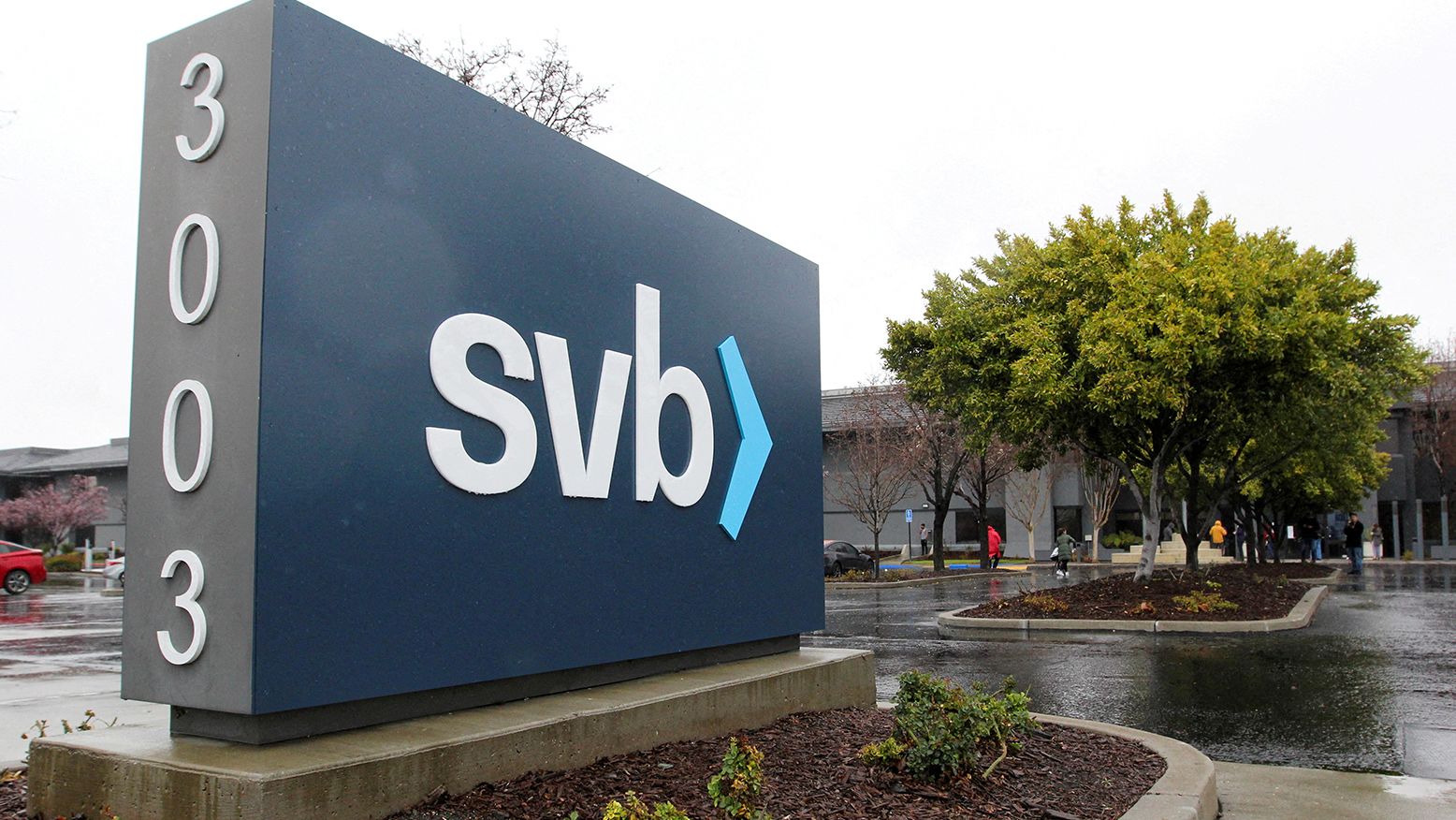
Leadership Lesson from Silicon Valley Bank CEO And Why Mindless Transparency Ruins Empires

2

In the Igbo Nation, Diochi, the village palm wine tapper, will remind you that only a fool tells everything he sees on top of the palm tree. And the village respects that because on that palm tree, he sees everything (people bathing in the village stream, women delivering babies on roads to farms, etc).

That takes me to why Silicon Valley Bank collapsed. On Friday, I wrote that the CEO of the bank was mindless on how he explained the challenges of the bank on Wednesday. He was acting like a non-banker, being uncommonly transparent to the point you would ask: does this man know that he was representing a bank, and not a trucking, beverage, restaurant, etc business?

I get the point: let us be super-transparent and process all information in the public domain so that the world will know that we are transparent. Unfortunately, that is not how banking works because humans will make their calls differently. I faulted the man, making a case that before going public, he ought to have fortified the bank. He did not: he went public and then thought he could control the hours in private to cushion the mess.

A piece on CNN supports my thesis, using these words and lines to describe what happened – “That was absolutely idiotic,” ‘“unnecessary” because Silicon Valley Bank had sufficient capital far in excess of regulatory requirements’, ‘People are just shocked at how stupid the CEO is.”

Get me right: I believe in transparency but sometimes, we become weak thinking that transparency can absorb us from leading. This man, from all the ratios in the banking charter, is not obliged to report what he reported on Wednesday. Also, $2 billion for a mid-tier US bank is not a lot of money for him to blow the big air.

Across all domains, he could have booked this loss, raise the money and explained during an earnings call what happened. But here, instead of doing that, he told people he has a problem in PUBLIC before finding a solution in private. Unfortunately, he did not have the time to find that solution. He could have called the Saudis, Musks, etc – and closed the flanks.

People, we love transparency. But note that empires, kingdoms, military battalions – and banks, fail if leaders do not do what they have to do in private, securing fronts and flanks, before coming to the public, unless when that public pronouncement is absolutely necessary. The revelation on Wednesday was not required by law, and a gap of $2 billion for a mid-tier US bank is not money for a 40-year old banking institution. 

But that error brought the bank down. It also reminds us that working in a bank, we need to manage information carefully, especially if we’re higher up in the leadership rank. Yes, remember: Diochi is also the man who shouts from the palm tree, alerting the village when he sees something that requires urgent and immediate attention. #wisdom

Jeff Sonnenfeld, CEO of the Yale School of Management’s Chief Executive Leadership Institute (CELI), told CNN he agrees that Silicon Valley Bank’s leadership deserves criticism for their “tone-deaf, botched execution.”

“Someone lit a match and the bank yelled, ‘Fire!’ – pulling the alarms in earnest out of genuine concern for transparency and honesty,” Sonnenfeld and Steven Tian, CELI’s research director, said in an email on Sunday to CNN.

Sonnenfeld and Tian said not only was the announcement of an unsubscribed $2.25 billion capital raise Wednesday night “unnecessary” because Silicon Valley Bank had sufficient capital far in excess of regulatory requirements, but there was no need to simultaneously reveal the $1.8 billion loss.

Comment On Feed

Comment 1I believe every executive has one or two things to learn from SVB and Signature Bank saga. FDIC and the Fed really surprised the world this time not bailing out the bank but guaranteed 100% of depositors money. Many pundits have postulated around 50% max. for the depositors funds.

Another intriguing thing about SVB is the interest HSBC UK has shown in acquiring the failed bank. SVB is that strategic to the VC and startups world.

We do hope HSBC will pull through if the books are not that rotten anyway. Let’s keep our fingers crossed looking at events unfolding in the coming weeks.

My ResponseHSBC can do that in the UK because the UK was fair to its bank-buyers in 2008. JP Morgan bought Bears Stearns. But after rescuing Bears Stearns and WaMU, the US government fined the buyers, eroding shareholders’ value. JP Morgan was fined $13+6 BILLION (total of $19 billion): “JPMorgan would go on to acquire another investment bank, Washington Mutual, shortly after. The two acquisitions would ultimately cost a combined $19 billion in fines and settlements.” 

So, when the government called over the weekend, no bank agreed to buy SVB or Signature just as none touched Silvergate.  I spoke with a bank Managing Director today, he explained what is going on: “everyone remembers those fines when folks tried to help only to be burnt with fines”.

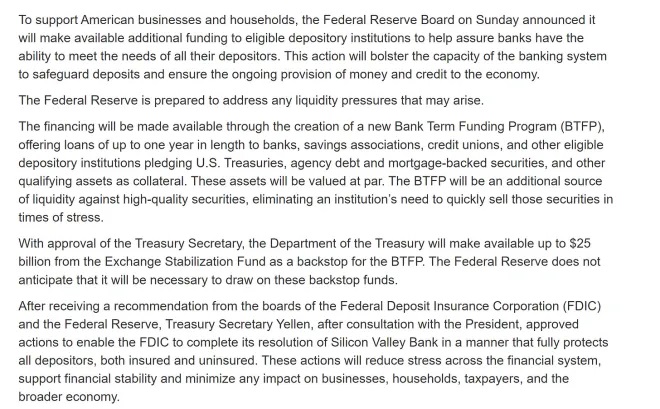
FDIC to Backstop Liquidity Crunches through ‘Bank Funding Term Program’

0

The Federal Deposit Insurance Corp [FDIC] announced that all depositors, both insured and uninsured, at Silicon Valley Bank [SVB] and Signature Bank, will be made whole while equity and bond holders are wiped out. Why, I wonder, will equity and bond investors remain loyal to regional banks? This is how the Fed intends to backstop other liquidity issues through a new facility called the Bank Funding Term Program.

The idea is to provide banks with an alternative to liquidate their bond holdings when in need of raising liquidity to meet deposit outflow.

All depositors of SVB and Signature Bank made whole, and a new facility to provide liquidity to banks under stress.

“Shareholders and certain unsecured debtholders will not be protected. Senior management has also been removed. Depositors will have access to all of their money starting Monday, March 13.”

Basically all HQLA bonds and not only Treasuries are eligible – banks can post them to the Fed to raise money. And bonds will be valued at par, so all the negative mark-to-market from unhedged bonds is not considered with this facility.

What are the terms?

Funding is at 1-year OIS (basically 1-year market-implied Fed Funds) plus a meager 10 bps spread on top. One year guaranteed liquidity at Fed Funds plus 10 bps posting collateral deep in the mud but valued at par. no bailout for equity owners, uninsured depositors compensated as much as possible.

The new facility basically provides very reasonably priced funding to banks under stress if deposits go away. These banks were paying basically nothing for these deposits and if they must access the BFTP they will end up paying 4-5% for their funding now. But that is still a much better proposition than going belly up in a regional bank run.

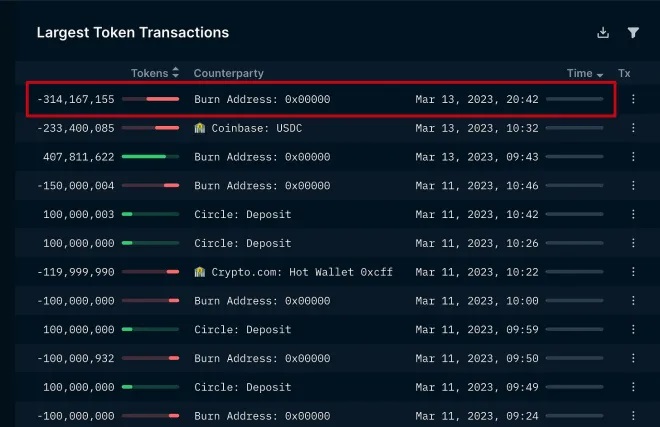
USDC has been making insane profits for Circle recently. They make interest on ~$40B of deposits and that interest rate has gone from .1% to 5% (a 50x) over the last couple years. That gives them lots of float to make up for bank failures. That’s $2B a year interest. Amidst USDC Depegging against the dollar, Nansen reported Circle burned $314 million $USDC which was sent to a bunner Wallet.

Cross River Bank is Circle USDC’s new partner for automated settlements. Not too long ago Cross River Bank integrated Ripple for real-time international payments. Circle will no longer mint USDC through Signature Bank after its shutdown, CEO Jeremy Allaire said Sunday. The bank failure complicates USDC’s ongoing recovery process after losing its peg on Friday.

Cathie Wood is of the view that US demand deposits – which make up the vast majority of M2 – have been falling since last August. Now we are seeing the consequences of the yield curve inversion that began last July, which I feared last September and described in the thread below. The inversion has worsened. Many banks parked the COVID stimulus gusher in long term bonds at record low 1-2% interest rates, never expecting the Fed funds rate to surge a record-breaking 19-fold to 4.75% in less than a year. Now deposit outflows are forcing them to sell “safe” securities at losses.

Deposits are leaving banks to take advantage of higher yields in the money market and other funds. At Silicon Valley Bank, start-ups were responding to a drought in venture capital funding by draining deposits to fund their operations.

If the Fed continues to focus on lagging indicators like the CPI, and does not pivot in response to the deflationary forces telegraphed by the inverted yield curve, then this crisis will devour more regional banks and further centralize, if not nationalize, the US banking system.

Regulators have focused investors on the threat that crypto poses to users, but this weekend turned that theory upside down. As a single point of failure in the US banking system, SVB became a threat to stablecoins and the DeFi ecosystem when it broke Circle’s USDC peg to the $. The Fed always follows the fixed income market. The bond market now is demanding that the Fed ease, dramatically.

Circle’s $3.3 billion Cash Exposure to Silicon Valley Bank Remains

1

USDC, which is meant to maintain its peg despite market conditions, went downhill. The price of the stablecoin depegged and fell initially to $0.95, then to $0.90, and currently stands at $0.9049, with a 9.51% drop in value over the last 24 hours. Circle has reportedly sent 314 million USDC to a null address as redemptions begin, signaling a strategic move to help restore the value of the stablecoin. This move is expected to pave the way for USDC to regain its 1:1 parity with the U.S. dollar.

Silicon Valley Bank is one of six banking partners Circle uses for managing the ~25% portion of USDC reserves held in cash. While we await clarity on how the FDIC receivership of SVB will impact its depositors, Circle and USDC continue to operate normally.

Circle is currently protecting USDC from a black swan failure in the U.S. banking system. SVB Financial is a critical bank in the U.S. economy and its failure – without a Federal rescue plan – will have broader implications for business, banking and entrepreneurs. As with Silvergate, our teams have worked at speed to limit any exposure to banks. This includes a wire transfer request made before SVB’s FDIC receivership. A $3.3 billion cash exposure remains – but we follow state and Federal regulatory guidance.

Press Release from Circle

Following the joint announcement by U.S. Treasury Secretary Janet Yellen and U.S. prudential regulators, all depositors with Silicon Valley Bank and Signature Bank, which was closed by regulators today, will be made whole.

The $3.3B USDC reserve deposit held at Silicon Valley Bank, about 8% of the USDC total reserve, will be fully available when U.S. banks open tomorrow morning. No USDC cash reserves were held at Signature Bank. As a regulated payment token, USDC remains redeemable 1:1 with the U.S. Dollar.

As part of our commitment to expanding banking partnerships, Circle is also announcing automated USDC minting and redemption for customers via new banking partners that go live this week.

“Trust, safety and 1:1 redeemability of all USDC in circulation is of paramount importance to Circle, even in the face of bank contagion affecting crypto markets,” said Jeremy Allaire, Co-founder and CEO of Circle. “We are heartened to see the U.S. government and financial regulators take crucial steps to mitigate risks extending from the banking system.

We’ve long advocated for full-reserve digital currency banking that insulates our base layer of internet money and payment systems from fractional reserve banking risk.”

On March 11, 2023, Circle shared details about the USDC reserve, stating it is currently collateralized 77% ($32.4B) with short-dated U.S. Treasury Bills. U.S. Treasury Bills are the most liquid assets in the world and are direct obligations of the U.S. government.

These reserves are held in custody by BNY Mellon and active liquidity and asset management is done by BlackRock. The cash portion of the USDC reserve, 23% ($9.7B), is now held primarily at BNY Mellon.

Anyone can view the entire liquidity ladder down to the CUSIP number on T-Bills via the USDXX ticker, and monthly USDC attestation reports, including the latest report from January, 2023, are available in the Trust & Transparency section of Circle’s website.