DD
MM
YYYY

PAGES

DD
MM
YYYY

spot_img

PAGES

Home Blog Page 438

AlphaTON Capital Completes $71M Financing Round for TON Token Acquisition

0

AlphaTON Capital Corp (Nasdaq: ATON), a Nasdaq-listed company focused on advancing the Telegram Open Network (TON) blockchain ecosystem, announced the successful closure of a $71 million financing round.

This funding enables the company to acquire an initial $30 million tranche of TON tokens, establishing it as one of the largest global holders of the asset and providing direct exposure to Telegram’s billion-user platform. The round combines equity and debt instruments for a balanced capital structure:

$36.2 million raised through a private placement of approximately 6.3 million common shares priced at $5.73 each. A $35 million loan facility provided by BitGo Prime, a leading digital asset financial services provider.

Proceeds from the financing have been partially deployed into TON tokens, with AlphaTON outlining a treasury strategy that includes: Building a TON reserve, targeting $100 million by Q4 2025. Participating in network validation and staking for yield generation.

Investing in Telegram mini-apps and other ecosystem projects, such as DeFi protocols and gaming platforms. This move positions AlphaTON as a bridge between traditional public markets and the decentralized TON ecosystem, offering institutional-grade exposure while adhering to Nasdaq reporting standards.

AlphaTON, formerly known as Portage Biotech, pivoted to digital assets earlier in 2025 to capitalize on TON’s integration with Telegram’s messaging app. The blockchain’s seamless access to over 1 billion monthly active users eliminates traditional barriers to decentralized app adoption, fueling growth in areas like payments, gaming, and productivity tools.

The company has forged partnerships with major players including BitGo, Animoca Brands, Kraken, SkyBridge Capital, and Crypto.com, enhancing its credibility. Leadership includes: Brittany Kaiser as CEO, bringing expertise in digital assets.

Enzo Villani as Executive Chairman and Chief Investment Officer, with a background in public markets. Yury Mitin contributing to ecosystem development. Villani highlighted the convergence of traditional finance and blockchain, stating it represents “one of the most significant market opportunities since the introduction of Bitcoin.”

The announcement has generated buzz on X, with users noting the bullish signal for TON’s institutional adoption and potential price momentum. Posts emphasize the treasury expansion as a vote of confidence in Telegram’s Web3 ambitions, potentially accelerating ecosystem growth.

TON’s total value locked (TVL) has surged from $100 million in March 2024 to over $700 million, driven by integrations like USDT stablecoin support and mini-apps. This financing aligns with prior investments in the ecosystem, such as Pantera Capital’s major stake and a $400 million raise from VCs like Sequoia and Benchmark earlier in 2025.

Analysts view AlphaTON’s strategy as a catalyst for broader institutional interest, stabilizing the network and bridging crypto with traditional capital markets. AlphaTON’s status as a Nasdaq-listed company (ATON) and its partnerships with reputable firms like BitGo, Animoca Brands, Kraken, and Crypto.com signal strong institutional backing for TON.

This enhances the blockchain’s credibility as a viable platform for decentralized applications (dApps) and Web3 adoption. The acquisition of $30 million in TON tokens, with plans to reach a $100 million reserve by Q4 2025, acts as a bullish signal for the token’s value and the ecosystem’s growth potential.

A large institutional holder like AlphaTON could reduce token volatility by maintaining a significant reserve, fostering stability for developers and users building on TON. AlphaTON’s strategy includes funding Telegram mini-apps, DeFi protocols, and gaming platforms, which could drive innovation and user engagement.

TON’s total value locked (TVL) has already grown from $100 million to over $700 million since March 2024, and this capital injection could further boost dApp development. With Telegram’s 1 billion+ monthly active users, TON’s integration into the messaging app provides unparalleled access to a massive audience.

This financing could accelerate the adoption of TON-based applications like payments and gaming, as seen with projects like Notcoin. AlphaTON’s participation in staking and validation strengthens the TON network’s security and decentralization, potentially attracting more developers and users.

Bridging Traditional Finance and Web3

As a Nasdaq-listed entity, AlphaTON provides traditional investors with a regulated vehicle to gain exposure to TON and Web3 without directly holding crypto assets. This could attract capital from institutional investors hesitant about direct cryptocurrency investments.

The combination of equity $36.2 million and debt $35 million from BitGo Prime demonstrates a sophisticated approach to financing, blending traditional finance with crypto-native strategies. This could set a precedent for other public companies entering the blockchain space.

As noted by AlphaTON’s leadership, this move represents a convergence of traditional finance and blockchain, potentially paving the way for more publicly traded companies to invest in digital assets. The acquisition of a large volume of TON tokens could reduce circulating supply, potentially driving upward price pressure, especially if demand for TON-based applications grows.

TON’s growth, fueled by institutional investments like AlphaTON’s and earlier VC rounds (e.g., Pantera Capital, Sequoia), positions it as a stronger competitor to blockchains like Ethereum, Solana, and BNB Chain, particularly for user-friendly dApps.

As a Nasdaq-listed company engaging heavily in crypto, AlphaTON may face increased regulatory oversight, particularly regarding compliance and reporting. This could set a precedent for how public companies navigate crypto investments.

While AlphaTON’s reserve strategy may stabilize TON’s price, broader crypto market volatility could impact the value of its holdings and investor sentiment. The success of AlphaTON’s treasury and ecosystem investments depends on effective execution, including selecting high-potential projects and managing staking operations.

Poor performance could undermine confidence. TON’s growth is closely tied to Telegram’s platform. Any adverse changes to Telegram’s user base, policies, or regulatory status could affect TON’s adoption and AlphaTON’s strategy.

AlphaTON’s approach could inspire other traditional finance entities to explore blockchain investments, particularly in ecosystems with large user bases like TON. By investing in user-friendly Telegram mini-apps, AlphaTON could lower barriers to Web3 adoption, bringing decentralized technologies to mainstream audiences.

The financing’s mix of equity, debt, and crypto assets may encourage innovative funding models in the blockchain space, blending public market structures with decentralized finance. AlphaTON’s $71 million financing round marks a pivotal moment for TON, enhancing its institutional backing, ecosystem growth, and bridge to traditional finance.

While it positions TON as a leading Web3 platform, risks like market volatility and regulatory challenges remain. The move could reshape how public companies engage with blockchain, potentially driving broader crypto adoption.
Kraken In Advance Funding Talks As Yeet Crosses $600M Volume

0

Cryptocurrency exchange Kraken is reportedly advancing discussions with a strategic investor for a new funding commitment of $200-300 million, which would value the company at approximately $20 billion.

This marks a significant uptick from its recent $500 million raise completed just weeks ago at a $15 billion valuation. The move is part of Kraken’s preparations for a potential 2026 initial public offering (IPO), with Morgan Stanley and Goldman Sachs advising on the process.

This rapid escalation reflects heightened investor confidence in crypto infrastructure amid improving U.S. regulatory clarity and institutional adoption trends. From $15B to $20B, a 33% increase in a short timeframe.

These Follows Kraken’s $1.5 billion acquisition of futures trading platform NinjaTrader in March 2025, adding millions of users and expanding into traditional finance integrations like tokenized eequities on Apple and Tesla stocks.

Kraken has pledged $2 million to pro-crypto political action committees, including $1 million each to the Digital Freedom Fund and Andreessen Horowitz’s America First Digital initiative, to influence favorable regulations.

This positions Kraken competitively against peers like Coinbase, especially as the crypto market rebounds—Bitcoin recently hit $111,790 amid whale accumulation.

Yeet Platform Volume Milestone

Yeet, a crypto-native online casino and sportsbook launched earlier in 2025, has rapidly scaled its operations, with recent on-chain activity indicating over $600 million in total wagered volume across its platform games and originals—achieved in under six months since debut.

This comes after hitting $450 million in August and $300 million by July, showcasing explosive growth driven by Web3 incentives, meme coin-inspired games via NFT minting simulations and “rug pull” risks, and a focus on high-risk, high-reward experiences tailored for DeFi users and NFT collectors.

From $300M in three months to $600M+ now, onboarding 15,000+ users without yet activating its full sportsbook. Secured $7.75 million in seed funding in March 2025, led by Dragonfly Capital, with angels like Pudgy Penguins CEO Luca Netz and LayerZero’s Bryan Pellegrino.

Yeet blends traditional games—blackjack, roulette with crypto-themed mechanics; plans for provably fair on-chain randomness and loyalty programs. Analysts project $1-2 billion in volume pre-token generation event (TGE) if sportsbook and VIP features launch, fueled by sticky user loops on networks like Base.

Yeet’s success underscores the rising demand for gamified, community-driven platforms in the crypto gaming sector, where volume flywheels from quests and competitions are key to retention.

The $20B valuation solidifies Kraken’s position as a top-tier crypto exchange, rivaling Coinbase valued at ~$86B as of recent estimates. This signals robust investor confidence in Kraken’s diversified offerings, including spot trading, futures via NinjaTrader acquisition and tokenized traditional assets.

The funding round, advised by Morgan Stanley and Goldman Sachs, positions Kraken for a 2026 IPO. A higher valuation could attract more institutional investors but raises expectations for profitability and regulatory compliance, especially post-SEC scrutiny on crypto exchanges.

The $1.5B NinjaTrader acquisition and potential for further deals enabled by fresh capital suggest Kraken aims to expand beyond crypto into broader financial services, potentially competing with fintech giants like Robinhood.

Kraken’s $2M in political contributions to pro-crypto PACs indicates a proactive stance to shape U.S. regulations. Success here could ease operational constraints, reduce legal risks, and enhance market adoption, benefiting Kraken and the broader crypto industry.

However, regulatory uncertainty remains a risk. A failure to secure favorable policies could limit growth or increase compliance costs, especially if competing jurisdictions (e.g., Singapore, UAE) offer more crypto-friendly environments.

The valuation jump from $15B to $20B in weeks reflects a bullish outlook on crypto infrastructure as Bitcoin surges past $111,790. This could spur further investment in exchanges, custody solutions, and DeFi platforms, driving sector-wide growth.

Implications of Yeet’s $600M Platform Volume

Yeet’s rapid climb to $600M in volume highlights the growing appeal of crypto-native gaming platforms. By blending traditional casino mechanics with Web3 incentives. Yeet taps into a niche that could rival centralized gaming platforms like Bet365 or DraftKings.

The platform’s success without a full sportsbook launch underscores the power of gamified DeFi mechanics and community eengagement like quests, meme coin tie-ins. This model could inspire similar platforms, expanding the crypto gaming market.

Yeet’s trajectory $300M to $600M in months suggests strong user retention and network effects, amplified by Base’s low-cost transactions. Pre-TGE projections of $1-2B in volume could attract more developers to build on Base or similar L2s, boosting ecosystem growth.

A successful TGE could introduce a native token, further incentivizing users via rewards or governance. However, this carries risks of speculative volatility or regulatory scrutiny, as seen with other gaming tokens.

High-risk, high-reward games may attract speculative users, but retention could falter if rewards diminish or if “rug pull” mechanics erode trust. Yeet must balance innovation with fairness to avoid reputational damage.

Crypto gambling faces strict oversight in many jurisdictions. Yeet’s on-chain model may complicate compliance, especially as regulators crack down on unlicensed platforms. Navigating this will be critical to sustain growth.

The crypto gaming space is crowded, with platforms like Rollbit and Stake.com also vying for share. Yeet’s differentiation—Web3-native features, VIP programs will be tested as competitors scale.

Kraken’s push into tokenized equities and Yeet’s gamified DeFi model highlight a blurring line between crypto trading and entertainment. This could drive mainstream adoption but also heighten regulatory focus on consumer protection.

Both developments signal a maturing crypto market, with institutional capital (Kraken) and retail engagement (Yeet) fueling growth. However, overheated valuations or unchecked speculation could invite corrections, especially if global economic conditions tighten.

Yeet’s reliance on Base and Kraken’s blockchain integrations underscore the need for scalable, low-cost L2 solutions. This could accelerate investment in Ethereum L2s or competitors like Solana, shaping the next phase of crypto infrastructure.

Kraken’s funding and Yeet’s volume milestone reflect a vibrant crypto ecosystem but carry risks of regulatory pushback, market volatility, and execution challenges. Their success could redefine finance and gaming, but sustained growth depends on navigating these hurdles effectively.

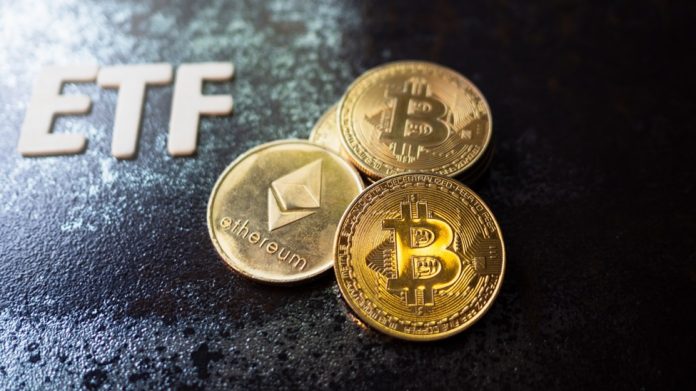
U.S. Ethereum Spot ETFs Record Largest Weekly Outflows in History

0

U.S. spot Ethereum (ETH) exchange-traded funds (ETFs) experienced their most severe weekly outflows since launching in July 2024, with net redemptions totaling approximately $795.8 million over the five trading days from September 22 to 26, 2025.

This marks a sharp reversal from earlier positive flows and surpasses the previous record of $787.7 million set in the week ending September 5, 2025. The outflows reflect heightened investor caution amid broader market volatility, including a flash crash that pushed Bitcoin below $110,000 and Ethereum under $4,000, resulting in over $1.5 billion in liquidated leveraged positions across crypto.

The week saw intense capitulation, with ETH dropping as much as 12% and triggering $309 million in liquidations. Analysts described the moves as a “sign of capitulation” due to panic selling, exacerbating the ETF redemptions.

This was the first instance of five straight days of net outflows since early September, culminating in $248.4 million redeemed on September 26 alone—the highest single-day figure in recent history.

Spot Bitcoin ETFs also faced heavy outflows of $902.5 million in the same week, contributing to a total of $1.69 billion in combined crypto ETF redemptions. The overall crypto market cap dipped below $4 trillion.

Impact on Major ETFs

ETH traded around $4,020 as of September 27, rebounding slightly from lows near $3,750 but struggling to hold the $4,000 psychological level. Technical analysts warn of further downside to $3,500–$3,750 if support fails, while a break above $4,841 could signal a reversal toward $5,864.

The outflows have amplified price pressure, though some view them as a potential bottoming signal amid reduced leverage. Investor sentiment remains volatile, with anticipation building around potential SEC approval for staking features in ETH ETFs—Grayscale has already prepared to stake portions of its holdings.

Meanwhile, the debut of DOGE and XRP ETFs this week highlights expanding institutional interest in altcoins, but ETH’s flows underscore short-term bearish pressure.

The massive outflows signal a wave of investor redemptions, reducing demand for ETH within ETF structures. This contributed to Ethereum’s price dipping below $4,000, with a 12% drop during the week and $309 million in liquidated leveraged positions.

Continued outflows could push ETH toward lower support levels $3,500–$3,750, especially if broader market volatility persists. Investors may face heightened downside risk in the near term, though some analysts view heavy outflows as a potential capitulation signal, indicating a market bottom.

The outflows, alongside $902.5 million from Bitcoin ETFs, reflect institutional caution amid a crypto market cap dip below $4 trillion. This is a stark reversal from earlier inflows Institutional investors may be de-risking due to macroeconomic concerns. This could deter new capital inflows, slowing Ethereum’s adoption via regulated investment vehicles.

The five consecutive days of outflows, culminating in a $248.4 million single-day redemption on September 26, highlight panic selling and capitulation. This aligns with a broader crypto market flash crash, where Bitcoin fell below $110,000.

Retail and institutional investors may be reacting to short-term price volatility rather than Ethereum’s long-term fundamentals via staking, DeFi, layer-2 scaling. This could create buying opportunities for contrarian investors if sentiment stabilizes, but persistent outflows may delay recovery.

Major players like BlackRock ETHA, $15.2B AUM and Fidelity FETH, $158M daily outflow example face challenges as investors redeem shares. Grayscale’s ETHE, with $4.5B in cumulative outflows since inception, is particularly strained as investors shift to lower-fee alternatives.

ETF providers may need to innovate like introducing staking features, as Grayscale is pursuing or lower fees to retain and attract investors. Failure to adapt could lead to further outflows, weakening the competitive position of ETH ETFs versus direct crypto holdings or other altcoin ETFs.

The outflows coincide with anticipation around SEC approval for ETH ETF staking, which could enhance yields and attract long-term holders. However, regulatory delays or rejections could exacerbate investor exits. Approval of staking could reverse outflow trends by aligning ETF returns with Ethereum’s native yields currently ~3–5% via staking.

Conversely, regulatory hurdles may reinforce bearish sentiment, pushing investors toward unregulated platforms or alternative assets. The combined $1.69 billion in crypto ETF outflows ETH + BTC signals broader market deleveraging, with $1.5 billion in liquidated leveraged positions across crypto.

The debut of DOGE and XRP ETFs suggests shifting interest to other altcoins. Ethereum may lose market share to emerging altcoin ETFs if outflows persist, though its established DeFi and smart contract ecosystem provides resilience. A prolonged crypto downturn could dampen mainstream adoption of digital assets via ETFs.

Heavy outflows and price drops often signal capitulation, historically preceding recoveries in crypto markets. Ethereum’s fundamentals remain strong despite short-term ETF flows.
Savvy investors may view this as a buying opportunity, particularly if ETH holds above $3,500 or breaks resistance at $4,841. Long-term ETF adoption could rebound if market sentiment improves or staking features are approved.

The record ETH ETF outflows reflect a confluence of panic selling, institutional caution, and market volatility, pressuring Ethereum’s price and ETF providers. While short-term risks include further price declines and reduced institutional participation, long-term opportunities may emerge from capitulation signals and potential regulatory catalysts like staking.

China’s DeepSeek Unveils New “Experimental” AI Model, Echoes Trade Playbook of Undercutting Rivals on Cost

0

Chinese artificial intelligence developer DeepSeek has released a new experimental large language model, touting efficiency gains and steep price cuts that could intensify global competition in generative AI — in a manner reminiscent of how China has disrupted other industries, from solar panels to 5G equipment, by driving down costs.

The Hangzhou-based company said its DeepSeek-V3.2-Exp model is an “intermediate step toward our next-generation architecture,” describing it as more efficient to train and better at processing long sequences of text compared with earlier iterations. The announcement was made in a post on the developer platform Hugging Face.

DeepSeek, which rattled Silicon Valley in January with the launch of its V3 and R1 models, is once again signaling ambitions to undercut global rivals. The firm said the V3.2-Exp incorporates a new mechanism called DeepSeek Sparse Attention, designed to cut computing costs while boosting certain types of model performance.

In a parallel move aimed squarely at market adoption, DeepSeek said in a post on X on Monday that it was slashing API prices by “50%+.”

A Step Toward Next-Gen AI Architecture

While the V3.2-Exp is labeled “experimental,” analysts believe the release points toward a much larger leap. DeepSeek itself described the model as a bridge to its forthcoming next-generation architecture, which it framed as its most important product release since V3 and R1.

Those earlier rollouts drew extraordinary attention in January, not just from China’s domestic AI rivals like Alibaba’s Qwen, but also from U.S. giants including OpenAI, whose models dominate enterprise AI deployments. Investors and policymakers alike were startled at the pace with which a Chinese firm appeared able to close the gap with the West’s leading labs.

Although DeepSeek acknowledged that V3.2-Exp will not “roil markets” on the scale of those January debuts, the company suggested it could still mount meaningful pressure on competitors if it sustains a record of offering high capability at dramatically lower cost.

Winning by Efficiency and Price

The release draws parallels with how China has previously leveraged low-cost efficiency and scale to dominate global industries. Solar panel manufacturers, for example, flooded global markets in the 2010s with products priced far below Western rivals, reshaping the renewable energy supply chain. Telecoms giant Huawei took a similar path in 5G, offering cheaper infrastructure than European or U.S. firms.

DeepSeek’s move to halve API prices positions it in the same mold — a challenger using affordability and streamlined design to win share in markets where U.S. companies are charging premium rates.

The release puts renewed pressure on China’s domestic AI ecosystem, where companies like Alibaba, Baidu, and Tencent have poured billions into developing their own large models. Alibaba’s Qwen suite has been aggressively marketed to enterprise customers, while Baidu’s Ernie Bot remains a key government-backed project.

DeepSeek, by contrast, has staked its strategy on efficiency and affordability — an approach that resonates in both Chinese and global markets at a time when AI training costs are soaring.

For U.S. rivals, the implications are equally notable. OpenAI, backed by Microsoft, has positioned its GPT-4 and GPT-5 models as premium products, betting that enterprises will pay for frontier performance. Google’s Gemini and Anthropic’s Claude models are pursuing similar paths, with heavy investment in infrastructure and enterprise tooling. DeepSeek’s promise of comparable performance at half the cost could force pricing pressure in both consumer and enterprise segments.

Global Stakes of a Cheaper AI Alternative

What sets DeepSeek apart is not just its model architecture, but its pricing strategy. If the firm can demonstrate reliable performance in enterprise-grade tasks while cutting API costs by more than 50%, it could accelerate adoption in emerging markets — from Southeast Asia to Africa — where price sensitivity has slowed the uptake of U.S.-made AI tools.

Analysts warn that this could also sharpen the geopolitical dimension of the AI race. Washington has sought to curtail China’s access to advanced semiconductors, fearing Beijing’s rise in AI capabilities. But efficiency-driven architectures like DeepSeek’s could allow Chinese firms to do more with less, reducing their dependence on cutting-edge hardware.

While DeepSeek has cast V3.2-Exp as a stepping stone, if its next-generation release builds on the efficiency and cost trajectory it has outlined, analysts expect it to once again challenge assumptions about where the frontier of AI development lies — and at what price point it can be deployed globally.

Microsoft Introduces “Vibe Working” to Excel and Word

0

Microsoft is betting that the same “vibe coding” trend that made app-building accessible to non-programmers can do the same for office work.

The company today introduced Agent Mode in Excel and Word and a new Office Agent in Copilot chat, both designed to turn prompts into complex documents, spreadsheets, and presentations.

“Today we’re bringing vibe working to Microsoft 365 Copilot with Agent Mode in Office apps and Office Agent in Copilot chat,” said Sumit Chauhan, corporate vice president of Microsoft’s Office Product Group. “In the same way vibe coding has transformed software development, the latest reasoning models in Copilot unlock agentic productivity for Office artifacts.”

At the product level, Agent Mode uses OpenAI’s GPT-5 to handle multi-step planning in Excel and Word, showing users a transparent breakdown of its reasoning in a sidebar. Microsoft stressed that it built in validation loops to ensure spreadsheets remain “auditable, refreshable, and verifiable.” Early benchmarks place Agent Mode at 57.2 percent accuracy on SpreadsheetBench, better than Shortcut.ai and Claude Files Opus 4.1 but still below the 71.3 percent human benchmark.

Agent Mode in Word pushes beyond summarization tools into what Chauhan calls “vibe writing”—a conversational drafting system where Copilot drafts, suggests refinements, and highlights what’s missing. The new Office Agent in Copilot chat, powered by Anthropic’s models, takes on PowerPoint and Word creation, offering structured slide decks with live previews and built-in web research.

“Productivity is our DNA, we’re Office,” Chauhan said. “While others will try to replicate us, there is no substitute for the real thing.”

For markets, these moves highlight a calculated hedge. Microsoft has leaned heavily on OpenAI, but by threading Anthropic’s models into GitHub Copilot, Office Agent, and Copilot Studio, the company is broadening its AI portfolio. That diversification could reassure enterprise customers wary of overreliance on a single provider. Yet it also raises questions for investors about the cost and complexity of maintaining parallel partnerships, especially as Anthropic’s models run on Amazon Web Services rather than Microsoft’s Azure.

The 57.2 percent accuracy rate in Excel is another detail financial analysts may seize on. For enterprise buyers, the number shows meaningful progress over rivals but still underscores the risk of errors in mission-critical areas like finance and compliance. Analysts suggest early adoption may skew toward use cases where errors carry lower stakes—drafting reports or presentations—before finance chiefs and auditors are comfortable entrusting balance sheets to Agent Mode.

Meanwhile, investors will likely parse the rollout strategy. Microsoft signals a controlled entry aimed at testing scale and reliability before pushing deeper into the desktop suite, where most enterprise workloads still reside, by confining Agent Mode to the web versions of Excel and Word at launch. That may slow adoption in the near term but could be read by markets as a risk-mitigation tactic designed to protect Office’s core reputation.

Agent Mode and Office Agent arrive as startups flood the market with AI-native productivity tools. Microsoft’s counter is not just integration but brand trust—positioning Copilot as a digital consultant capable of doing “what a first-year consultant would do, delivered in minutes.” Enterprise buyers weighing vendor sprawl versus bundled reliability could see this as a reason to keep their spend anchored in the Microsoft ecosystem, a factor that investors may interpret as a defensive but stabilizing moat around Office’s recurring revenue streams.

Agent Mode in Excel and Word, alongside Office Agent in Copilot chat, launches today in the Frontier program for Microsoft 365 Copilot customers and Microsoft 365 Personal/Family subscribers in the US. Desktop support will follow in the months ahead.