DD
MM
YYYY

PAGES

DD
MM
YYYY

spot_img

PAGES

Home Blog Page 4404

Mobile Transaction in Nigeria Surges, Hits All-Time High Record in January 2023

0

Mobile money transactions in Nigeria hit an all-time high on January, according to data from the Nigeria Inter-Bank Settlement.

A total of 108.135 million transfers were made in January, representing a 237% increase when compared to the 32 million recorded during the same period in the previous year. Similarly, the value of mobile transactions rose by 124.8% to N2.4 trillion from N1.1 trillion in the period under review.

The figure is compared to 32.7 million recorded in the same month last year. The value of transactions also increased by 118.2% from N1.1 trillion in January 2022 to N2.4 trillion in January 2023.

The NIBSS data also revealed that Point of Sales transactions in Nigeria jumped to N807.16 billion in January 2023, a 40.69% year-on-year increase compared to the N573.72 billion reported in January 2022. By volume, PoS transactions in January 2023 amounted to 96.4 million, a 6.9% increase from what was recorded in 2022 at 90.1 million.

Also, Africa’s largest economy rose by 55 percent on a year-on-year basis to 541.64 million, in contrast to 348.4 million transactions registered in January 2022.

The increase in mobile transactions is attributed to the Central Bank of Nigeria (CBN) deadline for the collection of old naira notes, along with the redesign of higher denominations of the currency (200, 500, 1,000).

The CBN had earlier introduced a new policy on cash-based transactions which stipulates a cash handling charge on daily cash withdrawals that exceed N500,000 for individuals and N3,000,000 for corporate bodies.

The new policy on cash-based transactions in banks according to the CBN is aimed at reducing physical cash circulating the economy and encouraging more electronic-based transactions.

According to the CBN, the new cash policy was introduced for three (3) major reasons which include;

1.) To drive the development and modernization of its payment system in line with Nigeria’s vision 2020 goal of being among the top 20 economies by the year 2020.

2.) To reduce the cost of banking services (including the cost of credit) and drive financial inclusion by providing more efficient transaction options and greater reach.

3.) To improve the effectiveness of monetary policy in managing inflation and driving economic growth.

Meanwhile, following the CBN’s New cash policy that has spurred a lot of Nigerians to resort to mobile transactions, the citizens have been faced with incessant network issues which have amounted to so many failed transactions.

A lot of citizens did not hesitate to call out various banks in the country for lacking the capacity to handle mobile transactions since the enforcement of redesigned naira policy by the CBN.

Unconfirmed reports reveal that after a Banker’s committee meeting, CEOs of various Banks in Nigeria stated that the frustrating online transactions and network failures in their member banks were not caused by internal but external glitches.

Despite claims by the Nigerian banks that they have invested over N100 billion in setting up and maintaining cutting-edge electronic channels over the past few years as part of an ongoing commitment to seamless customer experience and real-time digital financial transactions, telecom operators in Nigeria still feel these banks do not have the capacity for full-blown digital banking.

I BELONG TO EVERYONE AND NOBODY: An Ideology with a Double Sword Meaning That Interpellated Nigerians for Years

0

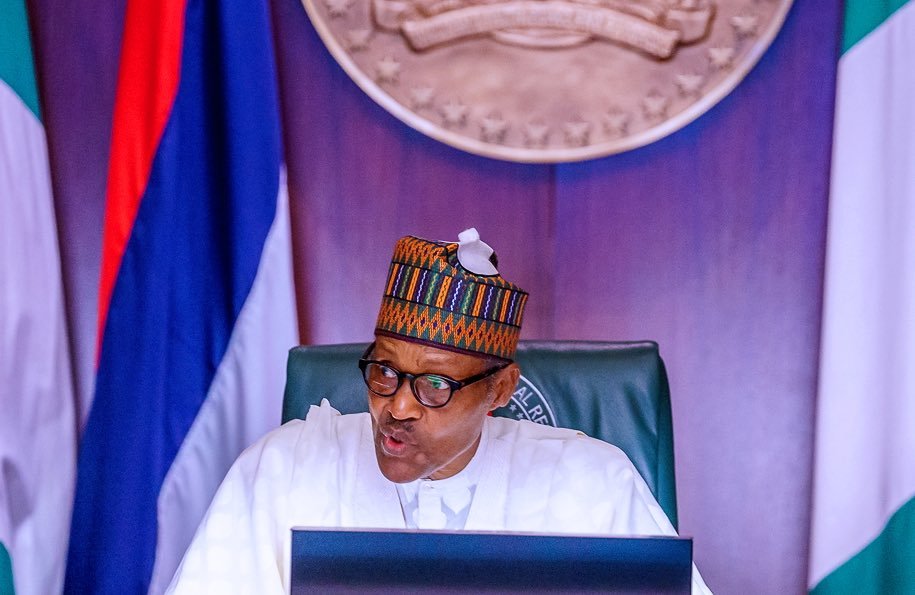
Governing a country or leading an organisation requires having some socioeconomic and political ideological orientations. Social ideology helps in understanding people’s social dynamics, while economic ideology assists a leader in pointing out their economic interests and providing appropriate leadership mechanisms for them to thrive. However, political ideology usually informs the development and application of social and economic ideologies. Like the previous presidents, during his first inauguration, after noting that he had sworn on the Holy Book, President Muhammadu Buhari stated, “I belong to everybody and I belong to nobody. A few people have privately voiced fears that on coming back to office I shall go after them. These fears are groundless. There will be no paying off old scores. The past is prologue.”

Though checks reveal that this statement was a quote from the late Charles de Gaulle of France, it could be regarded as a political ideology of President Buhari despite the people’s view that he is not a career politician and/or a democrat. A series of analyses using critical discourse analysis, leveraging existing data regarding how late Charles de Gaulle exhibited the practicality of the ideology, indicates that it has negative and positive meanings, depending on the context in which it is used. It could be interpreted as a statement of inclusivity and unity, suggesting that the politician views themselves as representing all people, regardless of their differences. It could also be interpreted as a sign of detachment and isolation, indicating a lack of commitment to any particular group or ideology.

When President Buhari made the statement in 2015, different interpretations trailed it for days. To some people, President Buhari is open to hearing and considering the opinions of all people, regardless of their differences. He is also willing to work with a wide range of individuals and groups in order to find a solution to a particular problem. In this way, the statement is considered a sign of strength and solidarity and a statement of his commitment to the collective good.

Some people also had the notion that this statement is a sign of detachment and indifference, indicating that President Buhari does not feel any particular attachment or loyalty to any particular group or ideology and is not committed to any particular cause. Therefore, he is a human being and a Nigerian. And he is a part of everybody and everybody is a part of him. On different occasions, while making decisions on issues of national importance, President Buhari interpellated Nigerians with the statement. From policies that addressed social issues and needs to those that aimed at redressing the wrong political institutions, Nigerians struggled and are still struggling to understand the meaning of the statement.

Senator Bola Ahmed Tinubu is one of the seasoned politicians who interpreted the statement a few months ago while commenting on the outcome of the All Progressives Congress’ presidential primary election. According to him, “you (Buhari) belonged to everybody in the party and you belonged to none of the individual candidates of the party.” Before Senator Tinubu’s interpretation, President Buhari had earlier said “My problem is Nigeria and I have been involved in almost all the instability Nigeria experienced – the civil war, the coups and counter- coups. “That was why I said during my swearing- in that ‘I belong to everybody and I belong to nobody’.”

There is no doubt Nigerians have felt and are still feeling the use of the statement as a political ideology for managing socioeconomic issues and needs. Like the times of the Twitter ban, COVID-19 pandemic and ENDSARS protests, our analysis of digital data indicates that Nigerians are developing a significant interest in the number of days President Buhari has to rule the country. With the recent outcomes of his administration, which could be associated with the statement, our analyst notes that President Buhari really created an alternative identity for himself at the beginning of his administration and forced people to constantly create different discourses while creating their own identities.

A Nice Medal for Tekedia Capital Portfolio Startup, KLADOT

0

Tekedia Capital awards a special medal to our portfolio company, Kladot, for signing one of the largest deals in the global fintech arena. More companies, SMEs, citizens, etc are using Kladot to run their global operations, making it possible for them to have foreign bank accounts (like US dollar-based bank accounts) irrespective of their jurisdictions.

If you are a fintech company anywhere which wants to offer bank accounts and other auxiliary services which you expect from typical US banks, Kladot will serve you; contact my team at capital.tekedia.com and they will help you connect with the Kladot team for APIs.

Tekedia Capital Syndicate offers ways for citizens, groups, investment clubs, companies, organizations, etc to own a piece of early-stage, high-growth technology startups operating across Africa. To learn more, go here.

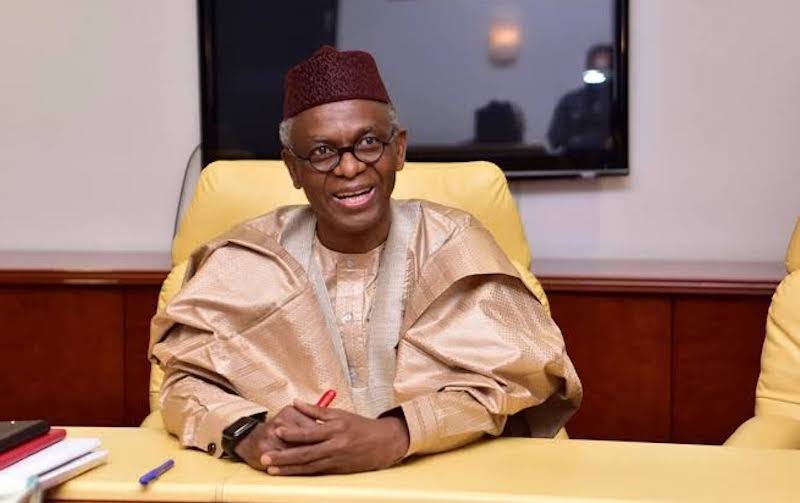
New Naira Notes: Understanding El-Rufai’s Articulations and Distinctions While Enacting STAPOLITICS versus NAPOLITICS

0

If anyone wants to understand how African politics is being played during the election cycle from multi-dimensional perspectives with possible severe consequences for the people at the bottom of the pyramid, Nigeria would be an appropriate country to consider because of the difficulty in understanding and appreciating her political tricks before and during elections. It is a country with politicians without clear ideologies who always create new political terms during competitive political games. The ongoing power play among political actors and commercial banks with citizens over the scarcity of the new naira notes has added stapolitics and napolitics into the country’s political discourse.

According to our analyst, stapolitics is a process of making decisions that address people’s socioeconomic challenges in times of financial insecurity due to the shortage of new currency notes using state apparatuses. Napolitics, on the other hand, signifies the national government’s continuous intent to maintain the initial guidelines for implementing a new currency redesign with a little tweak of how the old currency notes should circulate along with the old ones without absolute consideration of the pain people are experiencing.

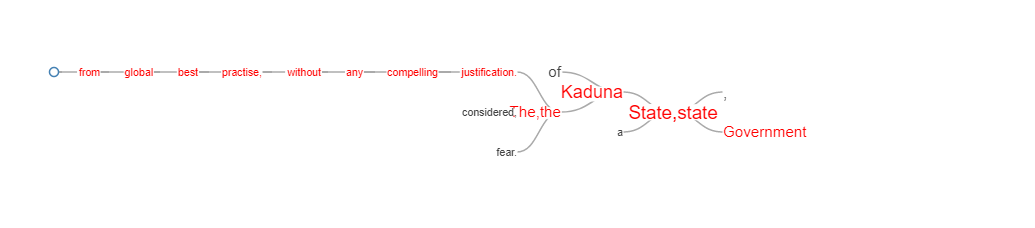
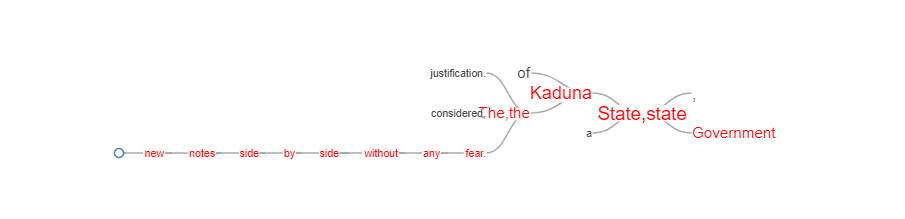
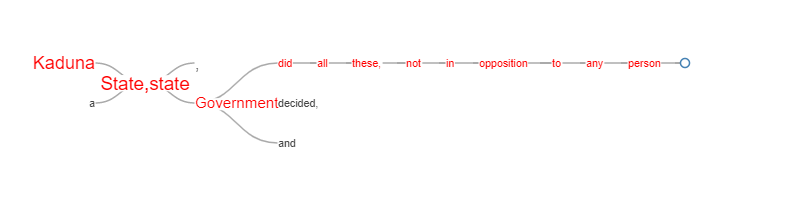
As captured in the previous piece, our analyst uses Kaduna State’s governor’s speech to conceptualise these terms with the specific adoption of articulation, disarticulation and distinction techniques. Six-hundred and ninety-seven words from the governor’s speech that resonate with the need to make critical decisions at the state level over the issues associated with the new currency swap are analysed. Analysis shows that while governor Nasiru El-Rufai articulates the right ways of implementing the policy, citing how other countries are implementing the same policy, he disarticulates the federal government’s and the Central Bank of Nigeria’s approaches, suggesting that both are not following global practices. Therefore, his government needs to take critical decisions on how people should access and spend their money. His references to some elements in the presidency and behind the forceful implementation of the policy are constructed as enemies of the people. Therefore, they should not be allowed to create chaos and destabilise existing peace.

Exhibit 1: Decision Tree


  1. On behalf of the government of Kaduna State, I wish to express my deepest regret at the needless suffering you are enduring as a result of the prolonged fuel shortage and the difficulties occasioned by the so-called “currency redesign” policy of the Central Bank of Nigeria. We understand your pain. I assure you that as your State Governor, I have been working with my other colleagues to do everything in our power to end these pains.

With this statement, Governor El-Rufai believes that people are being forced to experience unnecessary suffering by making the two important essentials unavailable to them. He uses “the so-called currency design” as a technique for downplaying the importance of the policy, which the president and the governor of the apex bank have emphasised since 2022. In this context, he disarticulates his opponents in order to provide his distinction in terms of aligning with the people in his state with the intention of making them realise that he is on the side of the masses.

  1. It is important for the people of Kaduna State, and indeed Nigeria, to know that contrary to the public pronouncements and apparent good intentions, this policy was conceived and sold to the President by officials who completely lost out in the Gubernatorial and Presidential Primaries of the APC in June 2022.

Here, he doesn’t believe that president owns the policy idea. He attributes the policy to public officials who lost the primary elections of the ruling party with the agenda of disciplining and punishing the winners of the primaries.

  1. I am referring here to the comments by the candidate of one of the opposition parties who expressed opposition to the recommendation first of the APC state governors, and subsequently of all the governors under the auspices of the Nigeria Governors Forum that the implementation timeline be extended, to enable the old and new notes to be legal tender side by side until the cash shortage ends.
  2. My dear people of Kaduna State. Let me explain how the architects of this policy intentionally designed it to fail. The total currency in circulation in Nigeria was estimated at N3.2 trillion at the end of 2022. According to the Central Bank of Nigeria, N2.1 trillion has been withdrawn as at early February. The CBN claimed that N700bn is the amount of cash needed for their functioning vision of a “cash-less” Nigerian economy. The Chief Economic Adviser to the President, Dr. Doyin Salami disagrees with this estimate, and believes at least N2 trillion of currency needs to be in circulation for our economic sustainability. Other experts variously estimate this to be between N1.2 trillion and above, so the CBN number of N700bn is not realistic.
  3. It is unfortunate that in implementing this policy, Nigeria is departing from global best practise, without any compelling justification. The Kaduna State Government did all these, not in opposition to any person or authority, but because we stand with our people and their interests.
  4. When it was clear that our recommendations will not be seriously considered, the Kaduna State Government decided, along with the governments of Kogi and Zamfara States to declare a dispute with the Federal Government. In line with the provisions of the Constitution, we approached the Supreme Court of Nigeria to invoke its original jurisdiction to hear us and the cries of our people.
  5. There is no emergency situation that justifies the rushed and seemingly deliberate incompetent execution of this policy. We suggested that compliance with the ruling would include adopting a whole-of-government approach, that involves the agencies of the federal and state governments in modifying the design, execution the implementation of the currency redesign policy.

While the federal government and the apex bank believe there is an emergency situation, citing the reduction of monetary inducement during elections, Governor El-Rufai plays the role of an antagonist here. His view suggests that the artificial emergency situation created by the federal government and the apex bank is contributing to the poor implementation of the policy.

  1. But back home, what do we do in Kaduna State? My dear of people of Kaduna State, with the foregoing revelations, it is clear that our peaceful coexistence as a state, and a nation, is being placed under deliberate danger using the intentional combination of fuel and cash supply disruptions. These evil people using the instrumentality of the Federal Government and the President as convenient covers are willing to truncate our democracy because they have personally lost out. They are massively deploying resources and tools to defeat the political party that gave us the platform to serve the country just because they could not impose the candidates of their choice. Let us not help them.

He reaffirms his antagonistic role further by articulating the elements as evil people who want to create problems in order to destabilise existing peace and particularly destroy the platform that helped him and the elements serve the country. Seeing them as evil people suggests that the ruling party has a number of disgruntled internal elements capable of denying the party victory during the 2023 presidential election.

  1. For the avoidance of doubt, all the old and new notes shall remain in use as legal tender in Kaduna State until the Supreme Court of Nigeria decides otherwise. I therefore appeal to all residents of Kaduna State to continue to use the old and new notes side by side without any fear. The Kaduna State Government and its agencies shall seal any facility that refuses to accept the old notes as legal tender and prosecute the owners. If need be, we shall take further consequential actions according to the law.

How To Trade Using Crypto Wisely in This Crypto Winter

0

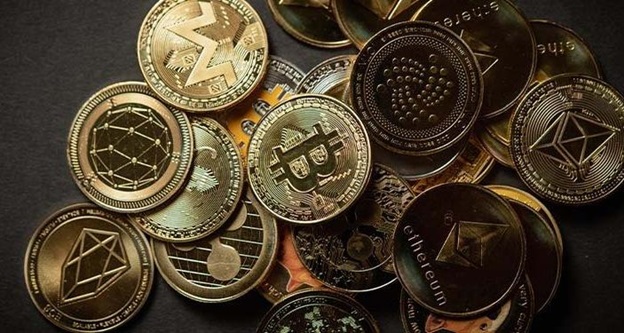
The cryptocurrency market has seen a significant downturn in recent months, meaning we are in the midst of a “crypto winter.” However, for those willing to take a calculated approach, there are still opportunities to trade and invest in cryptocurrencies during this challenging time. In this article, we will provide tips on how to use crypto wisely in this crypto winter.

You may also employ some of these tips when gaming on casino sites such as  https://dappgambl.com/crypto/ethereum-casinos/ and others offering cryptos.

Understanding the Current Crypto Market

To trade or game using crypto wisely in this crypto winter, it’s important first to understand the current market conditions. The cryptocurrency market is known for its volatility, and it’s important to stay current on the latest news and trends. Keep an eye on market indicators such as trading volume and capitalization, and use this information to inform your trading decisions.

Researching Cryptocurrencies

After understanding what cryptos are, before running to invest, trace, or game in a cryptocurrency, it’s important to do your research. Look at the technology behind the cryptocurrency, the team behind it, and any recent news or developments. Also, consider factors such as market adoption and regulation, as these can significantly impact the value of a cryptocurrency.

It would be best if you kept on the emergence of new cryptos, their values, and how they operate in the market.

Setting Realistic Expectations

During a crypto winter, setting realistic expectations for your trading activities is important. While there may still be opportunities to profit, you will likely see different returns than during a bullish market. Be prepared for fluctuations in the value of cryptocurrencies, and have a long-term investment strategy.

Choosing the Right Trading Platform

Choosing the right trading platform is key to trading using crypto wisely. And this applies to trading, investing, and gaming platforms. Look for a reputable and secure platform with low fees and a wide range of trading options. Moreover, consider the platform’s customer support and user experience, as these can significantly impact your trading experience.

Practicing Safe Trading, Investing, and Gaming Strategies

To trade, invest, or game using crypto wisely in this crypto winter, it’s important to practice safe trading strategies. This includes diversifying your portfolio, avoiding risky investments, and setting stop-loss orders to limit losses. Regarding gaming, keep to your budget, know when to stop, and take breaks. Also, consider using technical analysis and other trading tools to help inform your decisions.

Conclusion: Staying Ahead in the Crypto Game

While the cryptocurrency market may be experiencing a downturn, there are still opportunities to trade and invest in cryptocurrencies. By understanding the market, researching cryptocurrencies, setting realistic expectations, choosing the right platforms, and practicing safe trading, investing, and gaming strategies, you can stay ahead in the crypto game and make wise investment decisions. Remember, always do your due diligence whenever you want to invest, trade, and game wisely. This way, you may see positive returns even in a challenging market.