DD
MM
YYYY

PAGES

DD
MM
YYYY

spot_img

PAGES

Home Blog Page 4449

[Updated] Buhari Defends the CBN’s New Naira Notes Policy, Says It Will Strengthen Economy; Deadline Extended

0
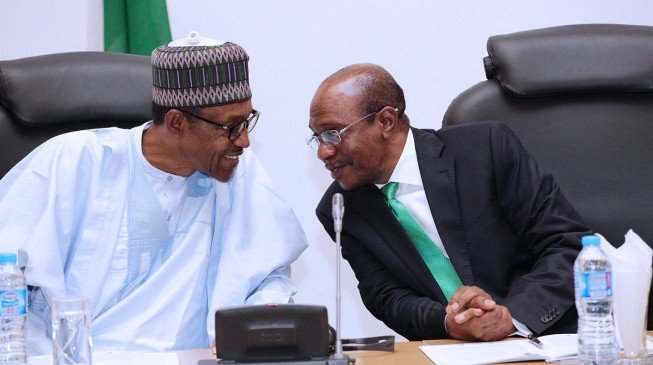
President and CBN boss

President Muhammadu Buhari has weighed in on the issue of the redesigned naira notes, currently stoking chaos across the country as its scarcity scuttles economic activities.

The Central Bank of Nigeria (CBN), last year, introduced the policy, setting January 31 deadline for its full implementation. The general public is expected to return old naira notes in their possession to banks before the deadline.

However, the redesigned N200, N500 and N1,000 notes are not adequately available to replace the old notes, riling up calls for the deadline to be extended. But the CBN said the deadline stays, triggering criticism from all quarters, with allegation that the move was initiated to make life more miserable for Nigerians.

President Buhari, who had earlier defended the policy, saying that the central bank has his backing, said on Saturday that the move is targeted at people hoarding illicit funds and not the common man.

In a statement released by Garba Shehu, the presidential spokesman, on Saturday, Buhari said the policy will stabilize and strengthen the economy. The statement is in response to reports of long queues of people waiting for long hours to withdraw the new naira notes from the banks’ ATMs.

The scarcity of the new naira notes has amplified calls for the deadline to be extended. But Buhari, in the statement, indicated that the benefits of the redesigned naira notes, outweighs the current hardship it’s causing. He said the policy has become necessary to prevent counterfeits, corruption and terrorism financing.

The president promised not to abandon Nigerians affected by the implementation of the new policy. He said that government will ensure that citizens are unharmed in their businesses and no disruption is caused to the entire supply chain arising from the currency swap due to end shortly.

He pointed out that a number of initiatives by the CBN and all commercial banks are underway to speed up distribution of the new notes and do all that is necessary to forestall cash squeeze and chaos.

The CBN has deployed agents to rural places across the country, receiving deposits of the old naira notes and issuing the new notes to people. Commercial banks have announced that they will run weekend operation to ensure that customers meet the deadline.

However, these measures have significantly failed to address the issue of ‘sufficient circulation’ of the new naira note, which is what is required to end the chaos. Buhari did not say if there a plan to increase the supply of the new naira notes across the country.


President Muhammadu Buhari said Saturday that he is aware poor Nigerians are ‘facing hardship’ due to the currency change policy of the government. Statement below…

President Muhammadu Buhari Saturday assured that government will ensure that citizens are unharmed in their businesses and no disruption is caused to the entire supply chain arising from the currency swap due to end shortly.

Reacting to reports of long queues of people waiting for hours for their turn to deposit old notes and get new ones, triggering public anger and opposition’s criticism, President Buhari reiterated that the currency changes were aimed at people hoarding illicit funds and not the common man, and that it had become necessary to prevent counterfeits, corruption, and terrorist funding. This, he assured, will stabilize and strengthen the economy.

While taking note that the poorest section of society is facing hardship as they often keep hard cash at home for various expenses, President Buhari gave strong assurances that the government will not leave them to their own fate.

He reiterated that a number of initiatives by the Central Bank and all commercial banks are underway to speed up the distribution of the new notes and do all that is necessary to forestall cash squeeze and chaos.

Garba Shehu

Senior Special Assistant to the President

(Media & Publicity)

Editor’s Note on Deadline Extension: The government has approved a new deadline: February 10th, 2023. A seven-day grace period, beginning on February 10 to February 17, 2023, has also been approved to enable Nigerians to deposit their old notes at the CBN after the February deadline when the old currency would have lost its Legal Tender status. Buhari gave the approval after a meeting with  Godwin Emefiele. According to Mr. Emefiele, 75 percent of the N2.7 trillion held outside the banking system has been recovered. This is all fine provided it happens before the elections.

Intel Loses Historic $8bn in Market Value with Disappointing Q4 2022 Result

0

Intel took a massive hit on Friday following the evaporation of about $8 billion from the chipmaker’s market value, indicating 32% year-over-year revenue drop that has triggered fear of a slump in the personal computer market.

The company’s fourth-quarter earnings fell short of analysts’ expectations, deepening its troubles and paving way for its rivals to exert further dominance in the much contested market.

Intel reported a net loss of $664 million, compared to a profit of $4.62 billion in the same quarter last year. The company recorded a total of $63.1 billion 2022, a 20% decline Year-over-Year.

“Clearly the financials aren’t what we hoped for, but we’re also pleased with the execution process we made,” CEO Pat Gelsinger said during Thursday’s earnings call.

“Despite the economic and market headwinds, we continued to make good progress on our strategic transformation in Q4, including advancing our product roadmap and improving our operational structure and processes to drive efficiencies while delivering at the low-end of our guided range.”

Gelsinger, who was hired early 2021 to turn around Intel’s misfortune, now has to double efforts to put the once market leader on winning ways. He said that Intel would continue to overcome short-term issues while pursuing long-term goals in 2023.

Intel’s revenue plunge, which resulted from declines in its two main business segments in the fourth quarter, came as a shock to Wall Street.

“No words can portray or explain the historic collapse of Intel,” said Rosenblatt Securities’ Hans Mosesmann.

The worst of the company’s revenue drop came from its Client Computing Group (CCG), comprising its desktop and laptop CPUs, which fell 36% to $6.6 billion.

“Demand fell mostly in the consumer and education markets and customers reduced their inventories,” Intel said.

Computing quoted Gartner saying that the PC market shrank more sharply than in any previous quarter since it started monitoring the sector in the 1990s.

But other areas of Intel’s business also recorded significant losses. The $4.3 billion in sales in Intel’s Data Center and AI sector (DCAI), which includes server chips, memory, and field-programmable gate arrays, was down 33% due to increased competition and a shrinking market, per Computing.

Computing reported that Intel’s network and edge (NEX) business area, which includes networking solutions, also showed signs of weakening demand. Revenue for the division fell 1% YoY to $2.1 billion, marking a dramatic reversal from the double-digit growth the division had previously posted. Despite this, the division grew 11% during the fiscal year 2022, it said.

Intel is facing heated rivalry in the chip market led by AMD, which in the past months has recorded significant growth under the leadership of Lisa Su, its trailblazing CEO who has been snatching businesses from Intel. Another company squaring up to Intel is Nvidia, the graphics chipmaker that is now expanding into central processors, augmenting its market growth as Intel falters.

AMD has used contract chipmakers such as Taiwan-based TSMC to make chips that outpace Intel’s technology, putting AMD ahead in revenue growth.

“AMD’s Genoa and Bergamo (data center) chips have a strong price-performance advantage compared to Intel’s Sapphire Rapids processors, which should drive further AMD share gains,” said Matt Wegner, analyst at YipitData.

While Intel shares closed 6.4% lower, AMD and Nvidia ended the session up 0.3% and 2.8%, respectively.

But despite the losses, Intel remains dominant in the market. The company’s smaller groups, like Mobileye and Intel Foundry Services (IFS), grew 59% and 30%, respectively, during the fourth quarter.

Intel continues to dominate the markets for PC and server processor chips, with a market share of more than 70%, according to IDC.

The chipmaker’s ordeal was compounded by the decision of biggest customers, Apple and Amazon, to focus on creating their own chips.

Intel generated $7.7 billion in cash from operations in the fourth quarter and paid dividends of $1.5 billion. The company plans to cut $3 billion in costs this year. But analysts said the company should consider cutting its dividend as capital expenditure is estimated to be around $20 billion in 2023.

Intel said it is poised to tackle the shortfalls in 2023, in hope to stabilize and accelerate growth, returning Intel to its uncontested market dominant position.

“In the fourth quarter, we took steps to right-size the organization and rationalize our investments, prioritizing the areas where we can deliver the highest value for the long term,” David Zinsner, Intel CFO, noted.

“These actions underpin our cost-reduction targets of $3 billion in 2023, and set the stage to achieve $8 billion to $10 billion by the end of 2025,” he added.

Gelsinger has been expanding contract manufacturing, building new factories in the US and Europe, as part of efforts to revamp Intel.

But analysts doubt the measures taken by Gelsinger will lift the company out of its predicament in the short term. Reuters quoted analysts saying that the current situation puts Intel at a disadvantage, even when the data center market, which is expected in the second half of 2022, bottoms out, the company would have lost even more share by then.

“It is now clear why Intel needs to cut so much cost as the company’s original plans prove to be fantasy,” brokerage Bernstein said.

“The magnitude of the deterioration is stunning, and brings potential concern to the company’s cash position over time.”

Emerging Twists from Resisting vs. Accepting Osun 2022 Election Tribunal’s Judgment

1

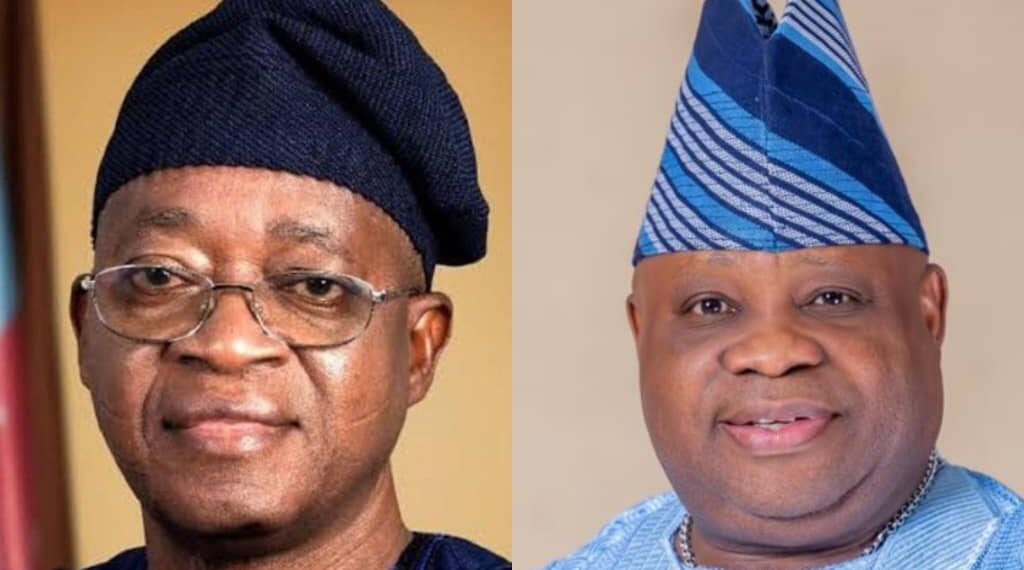
Like other governorship elections that precede the general elections, Osun governorship election has always thrown up various intrigues. In 2018, ‘inconclusive election’ became the new term in Nigeria’s election discourse when the Independent National Electoral Commission announced its failure to complete the conduct of the year’s election due to some issues. The declaration of Alhaji Gboyega Oyetola of the All-Progressives Congress as the winner of the election eventually surprised the main opposition party (PDP), believing that its candidate, Senator Ademola Adeleke won the election.

As the Constitution and the Electoral Act stated, Senator Ademola Adeleke and his party approached Election Tribunal and fought the battle through the Court of Appeal to the Supreme Court. At the State Election Tribunal, Senator Ademola Adeleke was declared the winner of the election. The three-member panel of the tribunal ruled that the rerun election held on September 27, 2018, was illegal. Therefore, the tribunal found deducting the votes scored by the APC candidate Gboyega Oyetola at the rerun after declaring the rerun illegal appropriate to pave way for Senator Ademola Adeleke to be the elected governor. At the Court of Appeal, the judgement of the tribunal was nullified by judges and the court resolved 10 out of the 12 issues raised in favour of Oyetola and the two others in favour of Ademola and his PDP. The Supreme Court agreed substantially with the Court of Appeal which ruled that a majority judgement delivered at the tribunal was nullity.

These trends are expected as the State Tribunal delivered its judgement regarding the 2022 governorship election in which Senator Ademola Adeleke was declared the winner. As stated previously, the state election always has different interesting insights. While technology did not play a significant role during the 2018 election, the recent election has been mostly described as the primary beneficiary of the BVAS, introduced by the electoral body for ensuring credible polls, in terms of its prowess of revealing over-voting. The moment from the tribunal to the Court of Appeal and the Supreme Court has always been interesting for the political actors and their supporters on different platforms. From online communities to physical settings, they usually throw banters. The constant posting and reporting by news media using different frames to set specific agendas have largely enhanced people’s interest in seeking information about the candidates, political parties (APC and PDP) and supporters.

The people’s curiosity across the country usually starts from seeking information about the election tribunal. For example, our digital research conducted during the first few months after each of the 2018 and 2022 elections reveals people’s interest in knowing the petitioners and respondents, the grounds of the election petition and the members of the tribunal. Our analyst also found that many people want to know the timeline for completing tribunal proceedings, the rules that bind the tribunal and whether the tribunal would be fair and impartial in its judgement. The legal remedies that are available to the parties if the tribunal fails to be ethical and delivered fair judgment were also explored by many.

The Emerging Twists

The examination of these concerns in the news media and on digital platforms such as Facebook, Twitter and WhatsApp groups indicates that people are getting answers to their questions asked before the tribunal judgment. They are getting answers from the main actors and sub-actors who do not care about the quality of the information the questioners are consuming. In the last 24 hours, online communities have been awash with different interpretations of the tribunal judgement. The People’s Democratic Party and its candidate, Governor Adeleke do not believe in the majority judgment but align with the minority judgement. The All Progressives Congress keenly aligns with the majority judgement. Both had earlier exchanged banters over “the needless” prayer towards favourable judgement. The same prayer is now a strategic and significant tool for navigating the slippery floors of the Court of Appeal and the Supreme Court in the next few months.

From online to the physical sphere, the supporters of both candidates have succeeded in facilitating physical protests in some towns. Our examination of the protests considering expressions from the leaders reveals that it is now the case of town-political party alignment. People in Osogbo, Ede, Ikirun, Ilesha and Ila-Orangun protested in support of the PDP and its candidates, while those in Iwo and Iragbiji found Alhaji Gboyega Oyetola worthy of following in his journey to the appellate and supreme courts.

“Osun tribunal was made to make a pronouncement that will make us cast doubt on BVAS. They have partially succeeded in doing it, but I urge us to look beyond that falsified judgment. Even the preferred candidate wasn’t that jubilant, it’s a hatchet job to make us feel bad about BVAS,” a Twitter user said.

As the actors and their supporters, especially those in digital platforms, continue finding holes in the judgement and using them to push out their various agendas towards shaping public minds, our analyst notes that they should consider the consequences of spreading false and misleading information. Already, many properties have been destroyed and people traumatized through the unnecessary closure of roads within 24 hours.

SEC Is Investigating Tesla Self-Driving Claims

0

Tesla CEO Elon Musk is currently being investigated by the U.S securities and exchange commission over false self-driving claims.

SEC’s recent move against Tesla is to determine whether the automaker promoted false capabilities of its FSD and Autopilot offering in a video posted on its website.

Recall that earlier this month, a former senior engineer at Tesla, Ashok Elluswamy who worked on its autopilot software, revealed that a video that was posted by Tesla on its website in 2016, showcasing one of its vehicle driving itself was fake.

The video which carried the tag line, “The person in the driver’s seat is only there for legal reasons. He is not doing anything. The car is driving itself”, was used by Tesla as an evidence to showcase its vehicle drives itself by relying on its many built-in sensors and self-driving software.

In Ashok’s July deposition, which was used as evidence in a lawsuit against Tesla for a fatal 2018 crash involving former Apple engineer Walter Huang, he disclosed that Musk wanted the Autopilot team to record a demonstration of the system’s capabilities.

He further stated that the video was created using 3D mapping on a predetermined route from a house in Menlo Park, California, to Tesla’s office in Palo Alto, adding that Drivers had to intervene to take control during test runs, and the scenes that were left on the cutting room floor included the test car crashing into a fence in Tesla’s parking lot when trying to park itself without a driver.

Meanwhile Tesla’s CEO Musk promoted the video at that time, tweeting Tesla vehicles require “no human input at all” to drive through urban streets to highways and eventually to find a parking spot.

Based on the SEC investigation, we could see lawsuits or other consequences for Musk, including limitations on his future activity as an officer of a public company if they choose to pursue enforcement of any violations they find.

Meanwhile, Tesla has on several occasions faced litigation for multiple fatal crashes involving its Autopilot system. Its driver-assist technologies, Autopilot and “full self-driving” have been investigated by the National Highway Traffic Safety Administration following reports of unexpected braking that occurs “without warning, at random, and often repeatedly in a single drive.”

According to regulators, Tesla vehicles running its Autopilot software were involved in 273 reported crashes in 2021. Meanwhile, in Tesla’s fourth quarter (Q4) report in 2021, it disclosed that it recorded one crash for every 4.35 million miles driven in which drivers were using Autopilot technology. For drivers who were not using Autopilot technology, it recorded one crash for every 1.52 million miles driven.

Tesla’s Autopilot is a suite of systems that allows drivers to cede physical control of their electric vehicles, although they must pay attention at all times.

The vehicles can maintain speed and safe distance behind other cars, stay within their lane lines and make lane changes on highways. An expanded set of features, called the “Full Self-Driving” beta, adds the ability to maneuver city and residential streets, halting at stop signs and traffic lights, and making turns while navigating vehicles from point to point.

We’re Updating Tekedia Startup Masterclass Curriculum and all Tekedia Programs

0

You spoke and we listened: innovators and builders want Tekedia Startup Masterclass expanded*. I am happy to note that from Monday, you will see new modules and courses. Tekedia Startup Masterclass: from Start-Up to Unicorn is designed to help founders, entrepreneurs, and those generally working in the startup ecosystems, to master the mechanics of building category-king startups. Besides pre-recorded courses, the program includes a live Zoom session with me.

This is our fastest growing product. It helps people with ideas anywhere to understand how to BUILD in Africa.  I invite you to become a master of business by attending Tekedia Startup Masterclass. Cost is N180,000 or $400. Begin here .

*All Tekedia Institute programs, including Tekedia Mini-MBA, are being revamped and updated; the new curricula will go live on Monday. We do this yearly, making sure courses are relevant and fresh.