DD
MM
YYYY

PAGES

DD
MM
YYYY

spot_img

PAGES

Home Blog Page 45

Oil Shock From Iran War Rattles Global Markets, Sends European Stocks Lower, and Clouds Rate Outlook

0

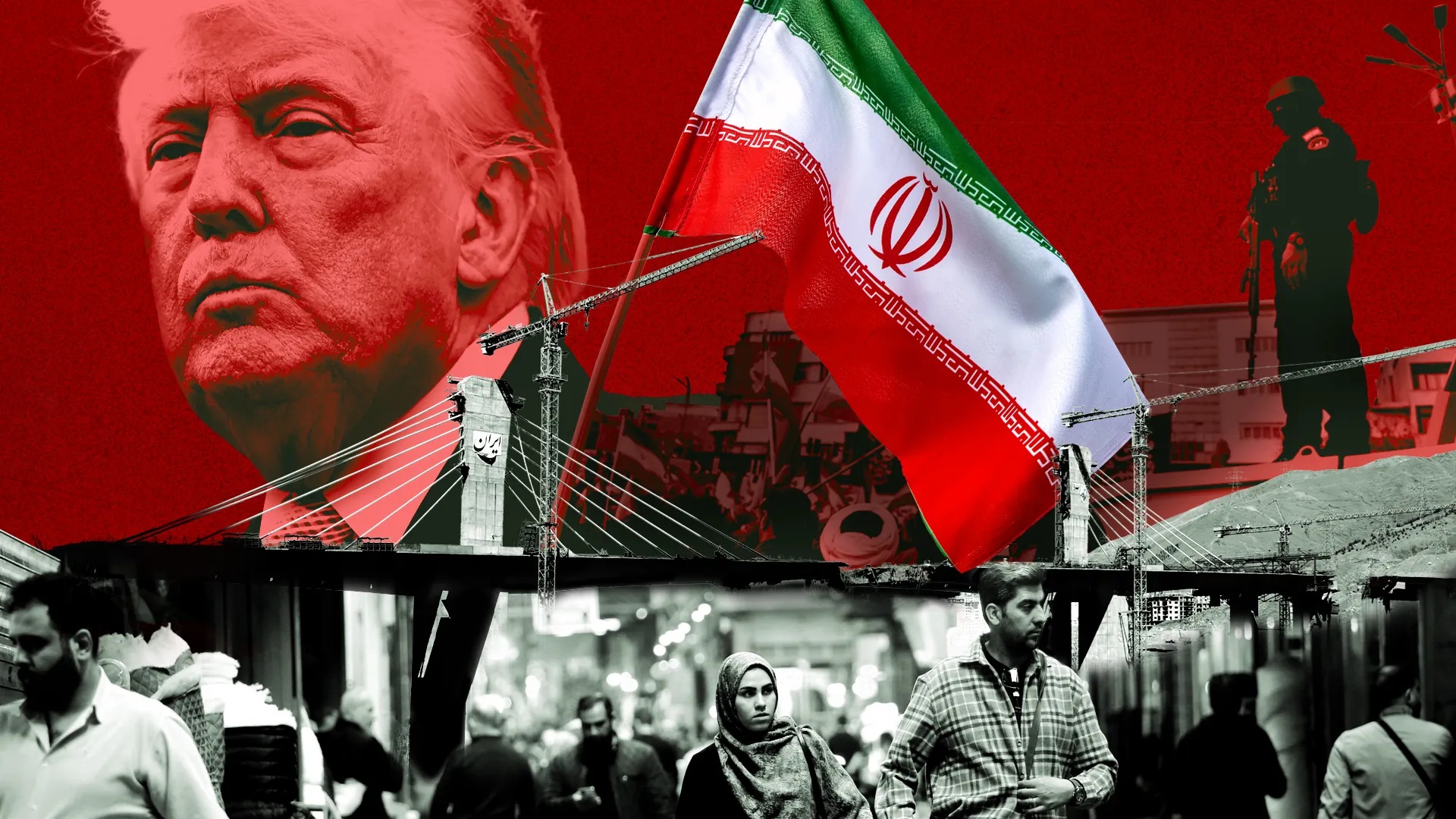
European equities slipped on Friday as investors weighed the widening economic consequences of the escalating conflict involving Iran, a confrontation that has rattled energy markets, pushed crude prices above $100 per barrel, and forced traders to rethink the global interest-rate outlook.

The region-wide STOXX Europe 600 Index fell 0.6% in early trading, extending a sharp selloff that has seen the benchmark lose about 6.1% so far in March — its steepest two-week decline in roughly a year.

The downturn underscores how rapidly financial markets have shifted from optimism about falling inflation and imminent interest-rate cuts to renewed anxiety about energy shocks and prolonged geopolitical instability.

Futures tied to the S&P 500 also traded cautiously, slipping 0.1% after the index fell 1.5% in the previous session, reflecting broader global unease.

At the center of the turmoil is the surge in crude prices triggered by disruptions to Middle Eastern energy infrastructure and fears that key shipping routes could remain closed for an extended period. Brent crude futures rose to about $100.30 a barrel, while West Texas Intermediate crude traded near $95.98. Both benchmarks began the year around $60, meaning prices have climbed roughly 40% since the war erupted in late February.

The surge represents one of the fastest oil price rallies in recent years and is already raising concerns that the global economy could face a renewed inflation shock just as central banks believed price pressures were easing. Much of the anxiety stems from the threat to the Strait of Hormuz, the narrow maritime corridor through which roughly a fifth of the world’s oil shipments pass.

Iran’s new supreme leader, Mojtaba Khamenei, has vowed to keep the waterway closed, raising the prospect that tankers transporting crude from the Persian Gulf could remain blocked for weeks or even months. The closure has been a huge cause of concern due to the significance of Hormuz. Sustained disruption to shipments through the strait removes millions of barrels of oil from the global market, tightening supply at a time when demand from major economies remains resilient.

Temporary Relief From Russian Oil License

Oil prices eased slightly on Friday after the United States issued a 30-day license allowing countries to purchase sanctioned Russian oil and petroleum products that had been stranded at sea. The move effectively releases additional barrels into the global market, providing short-term relief to refiners scrambling to secure supply.

But analysts say the measure offers only temporary breathing room and does little to address the deeper issue — the growing risk that Middle Eastern oil flows could remain disrupted for an extended period.

Against that backdrop, currency markets are swinging toward the dollar as investors flee to safety.

The dollar has gained about 2.5% since the conflict began and is on track for its second straight weekly rise. The stronger currency has weighed heavily on most of its peers. The euro slipped 0.5% to around $1.1457, while the Japanese yen weakened sharply to about 159.4 per dollar after briefly touching its lowest level since July 2024.

Authorities in Japan warned they were prepared to intervene in currency markets if volatility intensified, although analysts say sustained dollar strength could limit the effectiveness of any unilateral action.

Inflation fears have also upended central bank expectations, marking a significant shift in interest-rate decisions. Until recently, investors had been betting that central banks would begin cutting rates this year as inflation cooled across advanced economies.

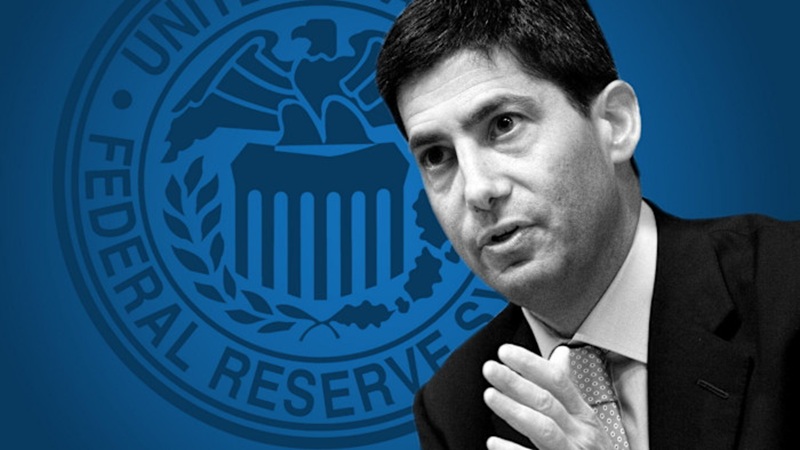
But the surge in energy prices has complicated that outlook. Markets now expect only around 20 basis points of rate cuts from the Federal Reserve this year — less than half the roughly 50 basis points of easing priced in just a month ago. Two-year U.S. Treasury yields, which closely track expectations for monetary policy, climbed to a six-month high on Thursday and have risen about 35 basis points since the war began.

Wolf von Rotberg, equity strategist at Bank J. Safra Sarasin in Zurich, said investors are increasingly focused on how long the conflict might last.

“If we don’t make any progress and just have a status quo for a prolonged period, that would obviously mean that oil prices stay higher for longer, and we have a more pronounced impact on the economy and on inflation,” he said.

Energy Costs Threaten Corporate Profits

Higher oil prices are also raising concerns about corporate profitability and economic growth. Energy costs ripple through nearly every sector of the economy, from manufacturing and transport to agriculture and consumer goods.

If crude remains near $100 or climbs higher, businesses could face sharply rising operating expenses just as demand shows signs of slowing in parts of the global economy. That combination — higher costs and weaker demand — can squeeze profit margins and potentially trigger a broader slowdown.

Jose Torres, senior economist at Interactive Brokers, said the surge in oil prices is reverberating across multiple asset classes.

“Indeed, sinking optimism about Fed rate reductions amid strengthening cost pressures is weighing on traditional safe havens such as silver, gold and government debt,” he said.

Gold rose slightly to around $5,088 an ounce on Friday but remained on track for a weekly decline, reflecting the drag from rising bond yields.

Attention is now shifting to a series of central bank meetings scheduled for next week. Policy decisions are expected from the Federal Reserve, European Central Bank, Bank of England, and Bank of Japan.

Most economists expect policymakers to keep interest rates unchanged while they assess the impact of the energy shock on inflation and growth. The Reserve Bank of Australia, however, is widely expected to raise rates, highlighting how persistent inflation pressures remain in parts of the global economy.

For investors, the key risk is that the conflict could drag on and keep oil prices elevated for months. Such a scenario would complicate efforts by central banks to bring inflation down while avoiding a slowdown in economic activity.

Vasu Menon, managing director of investment strategy at OCBC Bank, warned that markets may face continued turbulence.

“With the possibility of higher oil prices still elevated, investors should be prepared for continued volatility and potentially further downside in the near term,” he said.

Myriad Kicks Off Season 3 on BNB Chain with Partnership with USD1

0

Myriad, a Web3 prediction markets protocol allowing users to trade outcomes on events in crypto, sports, politics, gaming, and more, has officially kicked off Season 3 on BNB Chain.

This marks a major shift: Myriad is migrating its entire market catalog to BNB Chain, adopting USD1; the stablecoin associated with World Liberty Financial as the exclusive settlement asset for a faster, simpler, and more unified experience with deeper liquidity. Full migration to BNB Chain — All markets are now unified there, moving away from previous chains like Abstract.

Powered by USD1 — Markets settle exclusively in this stablecoin, launching alongside new products like “Candles”; short-timeframe markets with continuous liquidity and automated resolution. Myriad Wallet rollout — A new, optimized wallet for fewer approvals and lower gas costs.

Points distributed weekly based on multiple metrics not just one signal, rewarding liquidity provision, trading, referrals, content creation, quests, and more. This sets up for the future MYR ecosystem rewards. Central limit order book (CLOB), liquidity provision (LP) opportunities, and more ambitious upgrades.

Deposit and trade 500 USD1 on BNB Chain for multipliers, earn points via referrals, daily tasks, social engagement, etc. Season 3 is described as pivotal, with even late joiners having time to catch up and compete for rewards. The platform has seen strong growth, with cumulative trading volume over $167M reported recently.

It’s integrated into tools like Trust Wallet’s Predictions tab and aims for broader accessibility, especially in Asia. If you’re into prediction markets, this could be a prime time to jump in— or their BNB-specific page for live markets.

Myriad’s launch of Season 3 on BNB Chain, with full migration of its prediction market catalog and exclusive settlement in USD1, has several notable impacts across users, the platform, BNB Chain ecosystem, and the broader prediction markets space. Previously fragmented across chains, all markets now consolidate on BNB Chain. This eliminates multi-chain bridging hassles, reduces complexity, and creates a single, consistent environment for trading outcomes on crypto, sports, politics, gaming, etc.

Faster, Cheaper, and More Efficient Trading — BNB Chain’s low fees and high speed, combined with USD1; a dollar-pegged stablecoin, aim to deliver quicker settlements, lower gas costs, and a “faster, simpler” interface. The new Myriad Wallet (optimized for BNB) further cuts approvals and friction.

Exclusive USD1 settlement pools liquidity into one stable asset, reducing fragmentation. Upcoming shift to a Central Limit Order Book (CLOB) replacing AMM-style liquidity enables limit orders, slippage controls, dynamic fees, and more precise trading—big upgrades for serious traders.

New Product: Candles Markets — Short-timeframe, continuous-liquidity markets with automated resolution launch alongside USD1, appealing to high-frequency or quick-event bettors. Overhauled points system distributes weekly based on diverse metrics; trading volume, liquidity provision, referrals, content creation, quests, social engagement, rather than one signal.

This rewards broader activity, with multipliers for ?500 USD1 deposited and traded on BNB. Season 3 is called “pivotal” for future MYR ecosystem rewards—even late joiners can compete. Integration into Trust Wallet’s Predictions tab exposes Myriad to millions, especially in Asia where BNB Chain has strong adoption.

Cumulative trading volume has hit over $167M up significantly from earlier milestones like $100M in late 2025, with strong momentum from the migration and incentives. Positions Myriad as the first prediction market to fully adopt USD1 settlement, potentially attracting WLFI-aligned users and boosting USD1 utility and liquidity.

Strengthens BNB Chain’s lead in prediction markets; ecosystem-wide volume already crossed $20B+ earlier in 2026. Myriad’s move adds to players like Opinion Labs, Predict.Fun, etc., driving more TVL, activity, and on-chain volume—especially with low-cost infrastructure appealing for high-frequency prediction trading.

USD1 and WLFI Tie-In

As the first major protocol to go all-in on USD1, it enhances the stablecoin’s real-world use case in DeFi, gaming and predictions, potentially supporting peg stability and adoption amid WLFI’s ecosystem growth. Reinforces on-chain prediction markets’ shift toward efficiency, stable settlement, and mass accessibility via wallets like Trust. It counters fragmentation issues plaguing multi-chain setups and sets a model for others.

Some early community notes mention hype around the updates but call for monitoring execution; CLOB rollout this month, LP opportunities. This positions Season 3 as Myriad’s most ambitious yet—focusing on scalability, user retention via better rewards, and ecosystem alignment.

Kraken Advances its Platform Through Integrating Kraken CLI Designed for AI Agents

0

Kraken; the cryptocurrency exchange has recently released an open-source CLI tool specifically designed for AI agents to interact with crypto markets.

Kraken CLI is a single-binary execution engine written in Rust, zero dependencies that provides direct, native access to Kraken’s trading features for both developers and AI agents. It’s explicitly positioned as “the first AI-native CLI for trading crypto” and it mentions support for stocks, forex, and derivatives in some descriptions, though core focus is crypto.

Main Features: Full access to spot trading, futures, staking, subaccount transfers, funding flows, and real-time WebSocket streaming. 134 commands total. Clean, machine-readable NDJSON output optimized for programmatic use. Built-in local paper trading engine — allows AI agents to test strategies against live market data with zero financial risk.

Native support for Model Context Protocol (MCP): Running kraken mcp turns it into a secure, self-describing plugin compatible with agentic tools like Claude Code, Cursor, Codex, OpenCode, OpenClaw, and similar environments. This skips the need for custom API wrappers, nonce handling, or manual signing — agents can “understand” and execute operations natively.

This move is seen as a big step toward “agentic” finance — where autonomous AI agents trade 24/7, test strategies safely, and compete in markets. Community reactions on X highlight it as infrastructure for the future: set-and-forget bots, AI-vs-AI trading dynamics, and exchanges racing to build the best agent access with mentions of similar tools from competitors like OKX or earlier ones on other platforms.

Model Context Protocol (MCP) is an open-source standard and protocol, introduced by Anthropic in November 2024, that standardizes how AI applications like large language models, chat interfaces, or autonomous agents connect to external data sources, tools, services, and systems.

It’s frequently compared to a “USB-C port for AI”: just as USB-C provides a universal way to connect devices to peripherals without custom cables every time, MCP offers a single, consistent interface for AI to interact with the outside world — eliminating the need for dozens of bespoke, fragile integrations.

Modern LLMs are powerful at reasoning and generating text, but they lack real-time access to live data e.g., your calendar, files, databases, APIs, or trading platforms and can’t reliably perform actions without custom code. Traditional approaches; custom tool wrappers, function calling with raw HTTP, or RAG often lead to: Hallucinated API calls

Brittle integrations that break on updates. Security risks from loose permissions. High development overhead (N models × M tools problem). MCP solves this by defining a universal protocol for: Discovery — AI can query what tools/capabilities are available at runtime. Invocation — The model selects a tool, provides structured inputs, and gets deterministic results. Two-way communication — Servers can push updates, request clarification from the model/user, or stream progress. Security boundaries — Runs locally (e.g., over stdio) or remotely with controlled access.

MCP uses a client-server model: MCP Server — Exposes tools/data e.g., a Kraken CLI server for crypto trading, a Git server for repo access, a database connector, or a Figma integration. It describes tools via schemas like JSON inputs/outputs, handles execution, and enforces permissions and validation.

The protocol is built on JSON-RPC-style messages, with methods like: tools/list — Discover available tools and their schemas. tools/call — Invoke a specific tool with parameters. Support for streaming, user confirmation prompts, and more. No need to hardcode tools; the AI discovers and uses them dynamically.

The model picks the tool, but actual calls run in safe, validated code reducing hallucinations. Many implementations run locally with no network exposure. By 2026, widespread adoption includes Zapier (thousands of apps), GitKraken (Git/repo tools), databases, IDEs, and — as seen with Kraken CLI — crypto exchanges.

MCP isn’t an agent framework itself; it’s infrastructure that powers agentic behavior. Agents (systems that plan, reason, and act autonomously) use MCP to: Access real-time context (e.g., live market data on Kraken). Execute actions securely (place trades, query balances). Chain tools (e.g., check portfolio ? analyze ? trade).

In the Kraken CLI example, running kraken mcp turns the binary into an MCP server. An agent in Cursor, Claude Code, or OpenClaw can then “plug in” natively — discovering 134 trading commands, using paper trading mode, and executing without manual API key handling, nonce logic, or signing.

MCP represents a shift toward more reliable, scalable “agentic” AI — where models aren’t isolated brains but connected systems that act on real-world data and services. It’s still evolving; security models are implementation-dependent, but it’s rapidly becoming a de facto standard in 2026 for building practical, production-grade AI agents.

Some emphasize adding human guardrails for real-money execution to manage risks.It’s a forward-thinking release positioning Kraken strongly in the AI + crypto intersection, especially as agent adoption grows rapidly in 2026. If you’re building or running AI agents, this could be a plug-and-play way to give them real market execution capabilities on Kraken.

Square Enix Officially Becomes Baking Validator on Tezos Blockchain

0

Square Enix, the Japanese gaming giant famous for franchises like Final Fantasy, Dragon Quest, and Tomb Raider, has officially become a validator known as a “baker” on Tezos on the Tezos blockchain network.

This means the company operates a baker node, actively participating in: Validating and confirming transactions. Helping secure and maintain the network’s integrity. Contributing to one of the most energy-efficient proof-of-stake blockchains.

The announcement highlights Square Enix’s ongoing exploration of blockchain technology, building on prior investments in projects like The Sandbox, Soccerverse, and HyperPlay. A statement from Hideaki Uehara, General Manager of Investment and Business Development at Square Enix, noted:

“Square Enix has invested in various blockchain initiatives over the years. Operating a baker node on Tezos allows us to participate in and better understand this technology while contributing to the network’s operations.” This move is seen as a boost for Tezos’ credibility, especially in the growing Web3 gaming ecosystem which saw strong metrics in 2025, including hundreds of thousands of users and millions of transactions.

It signals deeper corporate involvement in blockchain infrastructure from major gaming players, potentially influencing areas like in-game assets, ownership, and decentralized gaming experiences. Tezos continues to attract interest from the sector due to its stability, low energy use, and governance features; validators like Square Enix can even participate in voting on protocol upgrades.

Running a live baker node lets them directly validate transactions, secure the network, and experience Tezos’ liquid proof-of-stake mechanics in production. Their official quote frames it exactly as: “participate in and better understand this technology while contributing to the network’s operations.”

This follows prior moves: launch validator on Oasys another Japan-focused gaming chain, involvement in the Mythos Chain DAO, and investments in The Sandbox, Soccerverse, and HyperPlay. It keeps a foot in Web3 without risking core IP or player backlash they scaled back aggressive NFT plans post-2023.

Positions them to potentially integrate Tezos for in-game assets, digital collectibles, or ownership features in the future — especially appealing given Tezos’ energy efficiency, low fees, and self-amending governance; no hard forks.

A household-name AAA publisher (Final Fantasy: 203M+ units sold; Dragon Quest: 94M+) now actively secures the chain. Trilitech (Tezos R&D hub) Head of Gaming Efe Kucuk called it “tremendous credibility” and noted Square Enix’s gaming reputation makes them “an ideal partner” to show Tezos’ potential “beyond traditional applications.”

Adds to ~275 total bakers ?100 public ones accepting delegations. Corporate validators like this enhance decentralization and enterprise appeal. Tezos already saw 440,000 unique users and 31 million transactions in its gaming ecosystem in 2025. This validates Tezos as a serious gaming-friendly chain and could attract more developers and publishers.

Big publishers are now running nodes, not just experimenting with NFTs. This normalizes blockchain as backend plumbing rather than front-end gimmick — especially on an eco-friendly chain. Other studios may follow; easier to pitch internal teams when a peer like Square Enix is already baking. Could accelerate true digital ownership models where players actually own cross-game assets.

Its stability, upgradability, and low environmental impact make it attractive for gaming vs. high-energy alternatives. $XTZ traded around $0.37–0.38 with modest gains ~1–5% intraday, largely tracking broader crypto sentiment rather than this specific news. Analysts noted no clear coin-specific catalyst beyond general positive macro. No explosive hype.

Crypto and gaming communities largely see it as bullish long-term “gaming moving deeper into blockchain”. Skeptics call it “hedging” or a “checkbox” — low-cost insurance in case Web3 takes off, without committing major resources yet.

It’s a quiet but high-signal win for Tezos and a pragmatic move for Square Enix — reinforcing blockchain as serious enterprise tech rather than 2022-style hype. It could quietly accelerate Web3 gaming maturation in 2026–2027, especially if more studios start baking or building on Tezos.

What is “The Umunneoma Economics”?

0

When you are honored at home, you must count your blessings. My alma mater, the Federal University of Technology Owerri (FUTO), has given me such moments of deep gratitude. In 2009, the university invited me to deliver its 15th Public Lecture. Years later, the Senate extended another privilege by asking me to present the University Convocation Lecture. The two engagements reflected different but complementary themes. The first lecture focused largely on technology, while the second examined development, linking both ideas to the university’s motto: “Technology for Service.”

The Convocation Lecture came in the midst of a project in the Harvard Business Review on the Igbo Apprenticeship System. As I prepared for the lecture, I realized that what I had previously discussed was largely a system of organization, but what was needed was a broader economic framework that could explain its underlying logic and relevance in modern development discourse. That reflection led me to coin the concept of “Umunneoma Economics.”

In developing the idea, I positioned it in conversation with the intellectual traditions of Adam Smith’s economic thought and the philosophical insights associated with Confucian social organization. My goal was to articulate a framework that explains how communal trust, apprenticeship, and distributed enterprise can serve as engines of economic development.

When the idea was presented that day, the response in the auditorium was overwhelming. The audience rose to its feet in a standing ovation. It was a powerful moment, not just because of the applause, but because the concept resonated deeply. The framework felt both new and familiar at the same time, fresh in its articulation yet rooted in practices many people had long observed within their communities.

What is “The Umunneoma Economics”?  The Umunneoma Economics is a conceptual economic philosophy rooted in Igbo communal values. The term originates from the Igbo expression “Umunneoma,” which loosely translates to “good kindred” or “a community of goodwill.” At its core, the concept reflects a model of economic organization where trust, kinship networks, shared responsibility, and cooperative advancement shape how capital, labor, and opportunity circulate within society.

The central idea behind Umunneoma Economics is that economic progress can be accelerated when communities function as collaborative networks rather than isolated individuals. Instead of relying solely on formal financial institutions or centralized economic actors, the model emphasizes the power of social capital. In such a system, members of a community support one another’s ventures, extend informal credit, share knowledge, and create distributed safety nets that help individuals navigate economic uncertainty. By strengthening these communal bonds, economic activity becomes both resilient and inclusive, enaling the rise of all, not just a few.

A key principle of Umunneoma Economics is community-centered capital formation. Economic growth often begins within trusted networks: families, extended kinship groups, and local communities. These networks pool resources and mobilize capital to help members start businesses, invest in opportunities, and recover from setbacks. Rather than waiting for external financing or institutional support, communities themselves become the first source of investment and encouragement for entrepreneurial activity.

Another important pillar is trust as economic infrastructure. In many African societies where formal institutions may be limited or slow to respond, trust-based relationships act as substitutes for legal and bureaucratic enforcement mechanisms. Reputation, honor, and social accountability reduce transaction costs and make it easier for individuals to collaborate economically. When trust functions as infrastructure, economic exchange becomes faster and more efficient because participants rely on shared norms and mutual understanding.

Umunneoma Economics also promotes distributed entrepreneurship. Instead of concentrating economic power in a small number of large corporations, the model encourages the emergence of many small and medium enterprises across a network of individuals. Each entrepreneur benefits from the support and encouragement of their community, creating a decentralized yet interconnected economic ecosystem. This distributed model allows opportunities to spread more broadly, empowering individuals across different levels of society.

Equally important is the principle of reciprocity and shared prosperity. Within the Umunneoma framework, success carries a moral and social expectation. Those who prosper are encouraged—often implicitly obligated—to reinvest in their networks. This may take the form of supporting relatives, sponsoring education, mentoring apprentices, or financing new ventures. In this way, wealth circulates throughout the community rather than remaining concentrated in the hands of a few. The result is a cycle of collective advancement where individual achievement contributes to broader social development.

Historically, Umunneoma Economics draws inspiration from traditional Igbo economic systems that flourished long before modern banking structures emerged. Trade networks, cooperative arrangements, and especially the Igbo apprenticeship system demonstrated how communal capital formation and mentorship could build vibrant commercial ecosystems. Through these mechanisms, wealth creation was intertwined with social responsibility and community development.

In essence, Umunneoma Economics presents an alternative perspective on development, one that recognizes the economic power of community relationships. By blending traditional communal principles with modern economic realities, the philosophy offers a framework in which trust, cooperation, and shared progress become foundational drivers of sustainable growth.