Do not miss the knowledge festival which will begin on Feb 6, 2023 . The knowledge of a people is the wealth of a people. Tekedia Institute is the temple for the mastery of the mechanics of entrepreneurial capitalism and business systems in Africa. Yours truly, Ndubuisi Ekekwe, will be the lead priest along with dozens of business executives from global and local companies you admire.
We have got many NEW courses developed by our world-class faculty members. Go into the future of markets with them. Be a Champion. Be an Innovator. Ascend into that New leadership position. We have got the tools to help you. But you need to come to the festival.
Come to Africa’s temple of business knowledge. REGISTER here and get the massive discounts if you register today. N90,000 (or $170) for the 12-week program.
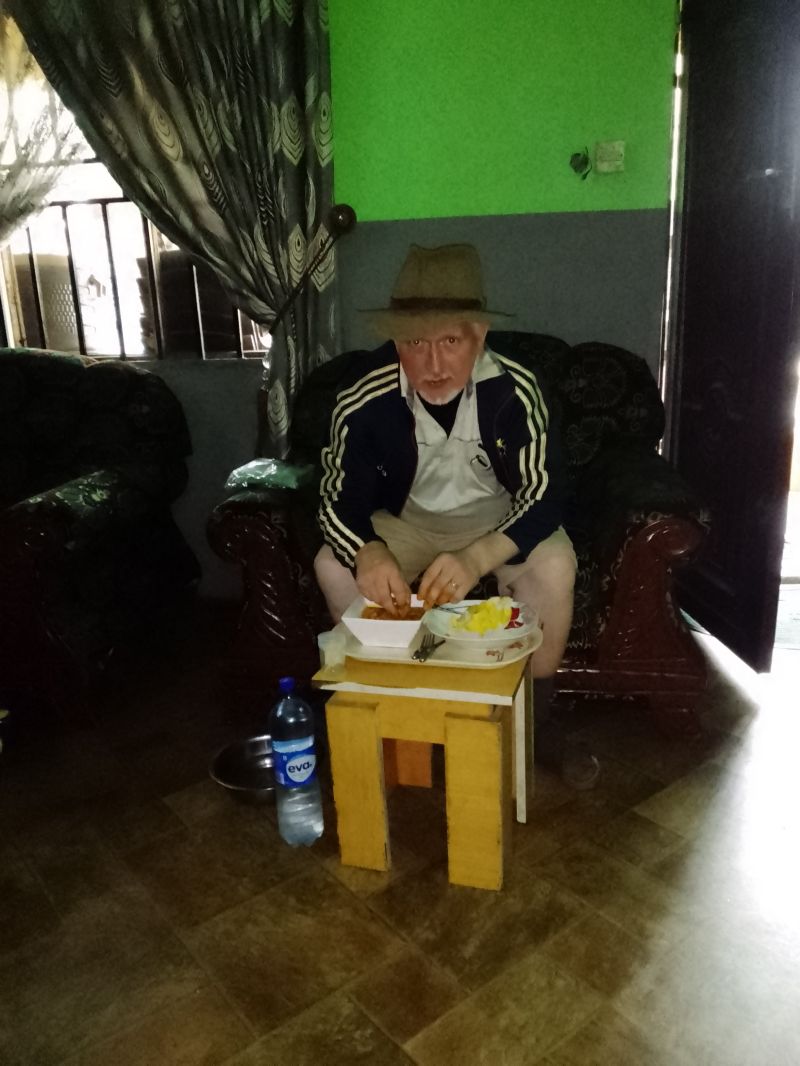
Last year, 2022, I spent five months in Nigeria. I left in August.
I had spent some time in a remote and rural part of Imo State. I was working for a company with a wide range of assets concerning the palm oil industry. My main role was to see a specific modernization program to fruition, but meanwhile, I had responsibility to keep a wide range of assets ticking over.
In these kinds of situations I always feel the need to scrutinize and shadow all aspects of operations. On one particular night I decided to shadow security operations against palm fruit poachers.
At one stage of the patrol we came into unavoidable conflict with poachers. One of our group had his arm almost completely hacked off.
The next day, I was inside a palm fruit mill, and I slipped and fell inside a concrete recess. I busted up my legs some. I got some roadside medical attention in Amafor town, and was back on duty the next morning early.
Some questioned why I felt I needed to be so hands on. Leaked opinions ranged from being Brave, to being naïve or just plain crazy.
What exactly is Bravery?
Merriam-Webster Dictionary says it is ‘the quality or state of having or showing mental or moral strength to face danger, fear, or difficulty’.
I think there are different kinds of Bravery. It is possible that sometimes we perceive the existence of Bravery where it may not be present, and we fail to see the presence of Bravery when it is.
The top picture represents the canvass that Dr. Kim begins to paint on. The bottom is her finished artwork.
Now, the thing we can see about Dr. Kim from the feature image, is that she could easily be producing endless pictures in different outfits, that are easy on the eyes.
They could be accompanied by endless stories about ‘being human’ or ‘being authentic’, and ‘on the way to work’ moral lessons. They are not.
Doctor Kimberley Abraham is an Oral Surgeon.
She is one of the most foremost in a country where I spent many formative years – Trinidad.
Her posts on LinkedIn frequently illustrate graphic Dental Surgery content. Though Dr. Kim’s description of herself as an ‘Oral Surgeon’ will also extend to pointing out that maintaining the health of this ecosystem does not just involve the teeth, it involves the whole mouth.
That type of content isn’t easy to win SM traction for, but Dr. Kim does it anyway. Where you see a train wreck separated by two lips, Doctor Kimberley Abraham sees the most amazing of rough diamonds, ready to be dug up, surface ground, and polished.
And yes, these posts do sometimes ‘tank’. but Dr. Kim will be on LinkedIn again soon, producing more of the same.
This, to me, is a type of BRAVERY.
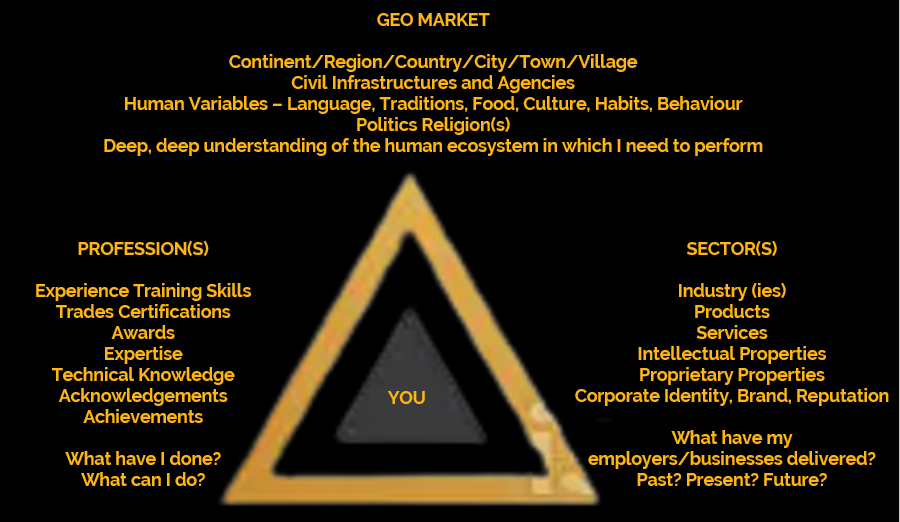
The ‘Triangle of Fit’
How would I describe being BRAVE on LinkedIn? Well, for one, it’s about not trying to ‘game’ the system to get metrics, and grow community.
A runner up prize for being BRAVE on LinkedIn goes to Inez Willeboordse of Jobnet Africa. Posts are straight to the point. Videos start with a short intro.. followed by corporate slogan – ‘gain profit and time by finding them top 5% management candidates IN, not ON, the market’ and then directly into one of a series of customer challenges and what Jobnet Africa’s solution is.
A bit formulaic, and there are only a limited number of specific challenges that Inez feels sells JA best, so it can seem a bit repetitive, but that’s also important for product and brand reinforcement.
You won’t get any silly stories from Inez about someone being loaned a pair of shoes on the way to an interview, nonsense polls about toxic workplaces, nauseatingly repetitive content about the difference between a boss and a leader, or how a candidate dashed someone money for a taxi fare on the way to an interview, and ended up getting the job because ‘authentic’ qualities were important to the company culture and the person who was dashed the money was, lo and behold, the new boss!
Inez avoids producing this kind of content that is designed to drive LinkedIn metrics by resonating with the semi brain dead, and that makes her content appear to struggle with traction. She doesn’t allow that bother her, and that to me is being ‘LinkedIn BRAVE’.
Over the year, an interesting new feature is doing a ‘purposefully engineered’ poll, and then following up with a post some days later, using the poll results to drive the marketing thesis. Inez has also managed to secure a series of video interviews with satisfied clients. These very visual testimonies are huge and worth infinitely more than any business can say about itself.
The Triangle of Fit
The Triangle of Fit is important as an expression of value for anyone who has some level of Geo-Mobility.
The more locally a person wishes to stay to where they have been engrained with human qualities since birth, the less important the ‘GEO MARKET’ part is, and the triangle flattens to a straight line.
Unfortunately, on LinkedIn, the people that illustrate Geo Market most, are those that least need to demonstrate those credentials. They are flatliners. The people I feel most need to illustrate it, are those who make no effort to do so at all.
From personal experience in Nigeria, I have found those most needing to illustrate the apex side of the Triangle of Fit are expatriates from emerging economies in South Asia, ACEAN, China and The Middle East.
So a story about two guy named Anil and Essien.
Anil comes from Uttar Pradesh, a place in India. He worked in Nigeria for almost 4 years in a company off the Abeokuta Expressway near Sango Ota. It made plastic water tanks, buckets, and crates for the brewing and CSD industries. Anil knew about ‘Rotational Equipment’ (RE) to a point of obsession and could tell you anything about any new design coming out anywhere. You could debate the merits of a particular engineering design with him for hours. He was 37 when he went to Nigeria, and had 12 years experience in three factories with RE at home. Anil was married with three children, none of which ever came to Nigeria.
Essien was from Uyo, Nigeria and reported directly to Anil. Essien had two passions, his membership of an up and coming church where he was an assistant pastor, called ‘Shallow Soul Ministries’ and his love of the latest Nigerian music, particularly if it was promoted by Don Jazzy. It’s unclear if Essien knew anything about RE. He never spoke about it to industry peers the way Anil did.
A few years passed. Their employer was affected by the Forex ban for supply chain imports. They weren’t able to source raw materials of consistent quality and in good time for efficient production continuity. The company closed. Both of them reached out to me for help in their job search. Despite 12 years relevant experience at home, Anil is looking to the Nigerian market for employment continuity, not his domestic one.
So.. I go on LinkedIn to see how their contributions over time measure up. I’m not too concerned about the bottom right aspect of the ‘Triangle of Fit’ because I know both from that factory, and that’s good enough for me. I want to probe Essiens’ content on Profession Fit, and I want to probe Anil’s content on Geo Market Fit. On Essiens’ I find several posts about events at ‘Shadow Soul Ministries’. I find a lot of comments on posts made by Don Jazzy’s production team. Nothing there at all about manufacture of plastic water tanks, buckets, or crates.
Meanwhile on Anils… I find a street carnival procession, somewhere in Uttar Pradesh. I find comments about a local election somewhere in Uttar Pradesh; photos of a relatives wedding in Uttar Pradesh; a goat being rescued by some folk in flash flood water, in Uttar Pradesh; a truck in trouble on a hillside road, an excavator tries to help recover it, both fall down the hill into a ravine somewhere in Uttar Pradesh… (non exhaustive list).
Where is his Geo Content? I’m not expecting to see Anil ‘getting down’ at a Don Jazzy event, or worshiping at Shallow Soul Ministries, but I’m expecting to be taken on some sort of content journey that shows four years assimilation effort in Nigeria, since its the market where he wants a reappointment. He hasn’t even got as far as ‘Weitin dey happen’. Meanwhile, Essiens’ content should more resemble the way Anil speaks about technical things.
They want me to expend my free time, and risk my reputation on recommending them, when they won’t even generate LinkedIn content showing they can recommend themselves. Both only made populist choices to retain resonance with legacy communities. Not good for their career necessarily, and not very LinkedIn Brave.
Tribalism in Nigeria as many other nations, is a complex dynamic that is almost akin to a fusion of xenophobia and racism. Navigating it to balance the recognition and appreciation of other tribes while at the same time, maintaining a sense of belonging to ones own, is politically challenging and delicate.
I’ve not come across anybody in respect of finding the right level here, who gets it better than Ndubuisi Ekekwe.
Ultimately a thesis should be able to stand on its own merits, not on the public perception of who is sponsoring it. In the challenging world we live in, this does not always become realized.
Prof. Ndubuisi however, is regularly forced to remind some of his respondents here about the importance of approaching content with impartiality.
He will frequently be drawn to say ‘Before you have read a word of my thesis, you have first read “Ndubuisi” ‘ (approximate wording). Meaning: Since names in Nigeria frequently reveal tribal origin, Prof. is cautioning the respondent to impartially analyse the content, rather than dismissing it as coming from the perspective of an Igbo centric ‘loading’.
Ndubuisi Ekekwe puts himself in the firing line for this kind of targeting all the time. This is a type of LinkedIn BRAVE
As Francis Oguagu put it today: ‘Here, the message is irrelevant, it’s always about the messenger and his origin’
My final shout out is to the breaking news artists and subject matter expert journalism, especially on the tech side. This kind of content isn’t written to resonate with anyone in particular. In its most naked form, it doesn’t have a narrative. It isn’t anything in particular. It just ‘is’.
Thanks go to Peter Oluka and Joan Aimuengheuwa of TechEconomy Nigeria were the first to announce our creation and marketing of the first Web 3 domain in the world – 9jacom.
We would also like to thank Isaac Umunna at News Express Nigeria and Bukola Olanrewaju at Business Remarks for carrying stories about 9ja Cosmos.
A shout out also goes to George Onyewuchi for including us in his programs.
We can’t thank all the people we need to on LinkedIn, particularly those in the blockchain space, as we would inevitably leave out someone, resulting in the opposite of our intent, as you are many! You know who you are.
Media, Journalism and Information Dissemination can be tricky, and sometimes it can that you don’t get to write the news, the news gets to write you!
(Unless you happen to be in the US and go by the name of Tucker Carlson).
For me, well, I will keep with my articulation of ideas around Web 3, Blockchain, Metaverse and NFTs which I do understand not everyone agrees with.
For 2023, you will all have to work to find your own version of BRAVE, both in, and beyond LinkedIn
I will end from almost where I began… leaving you with a quote from Dr. Kimberley Abraham –
‘It’s human nature to talk about what we HATE about our jobs But since that negativity doesn’t do anyone any good, let’s do the opposite. What do you LOVE about your work?’
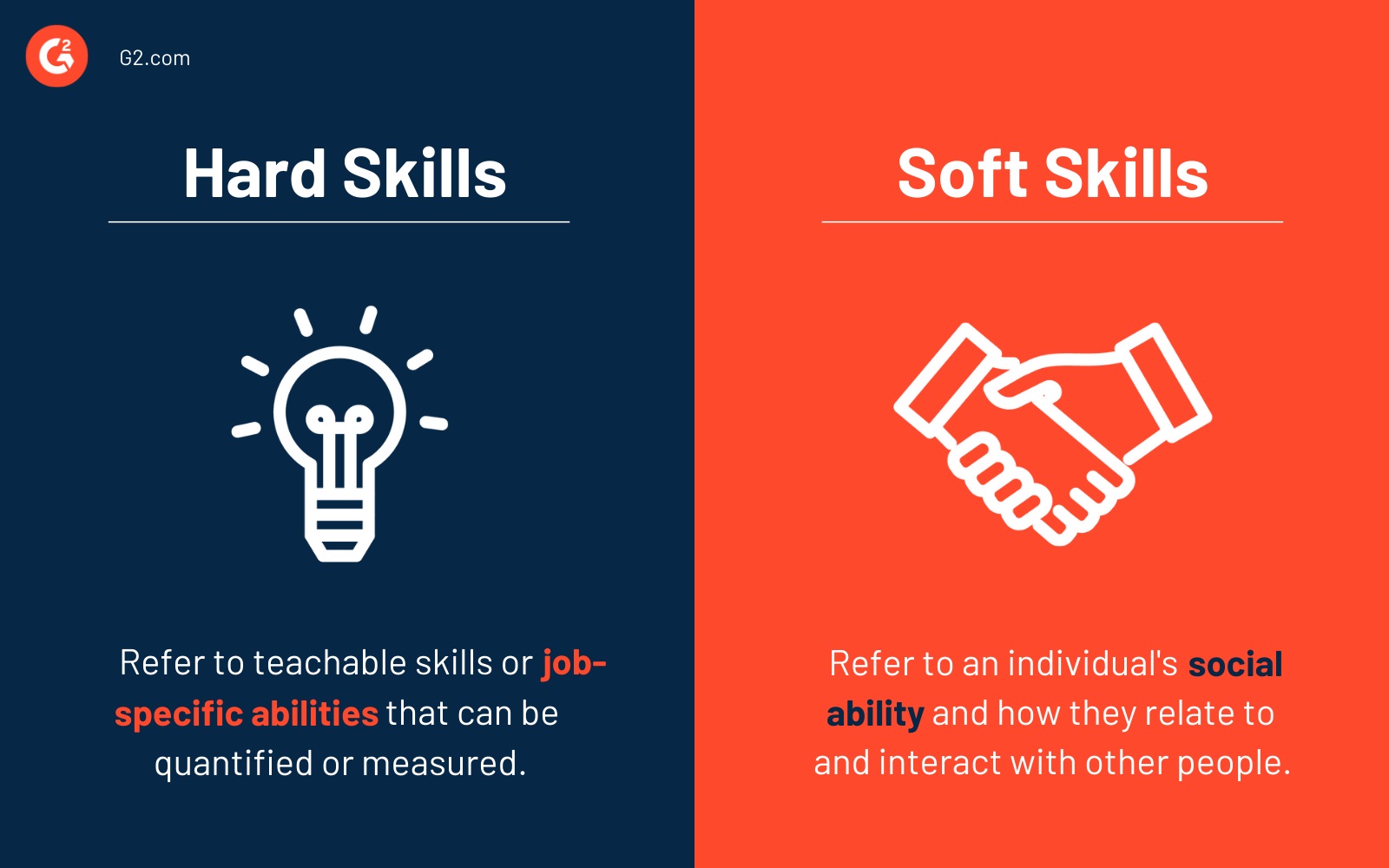
The biggest irony in the world of business is calling the hardest skills for most of us to master “soft skills”. In 2023, if you want that ascension in office, invest time and efforts to master the hardest skills which are abnormally captured as “soft skills”.
“Hard skills are abilities that let you tackle job-specific duties and responsibilities. Hard skills can be learned through courses, vocational training, and on the job. These skills are usually focused on specific tasks and processes such as the use of tools, equipment, or software.” (source)
“Soft skills relate to how you work. Soft skills include interpersonal (people) skills, communication skills, listening skills, time management, problem-solving, leadership, and empathy, among others. They are among the top skills employers seek in the candidates they hire because soft skills are important for just about every job”. (source)
Robots and modern machines are increasingly doing the “hard skills”, but the “soft skills” remain human-centric, putting humans at that level where nothing can easily substitute them. Hard skills make you better on specific tasks and processes, soft skills elevate you to organize people, processes and tools efficiently, and that is a higher call and more challenging. To thrive today at work, do not neglect them.
Yes, soft skills could be termed “soft” but there is nothing soft in a moving target. Do hard things better, become better with your “soft skills”
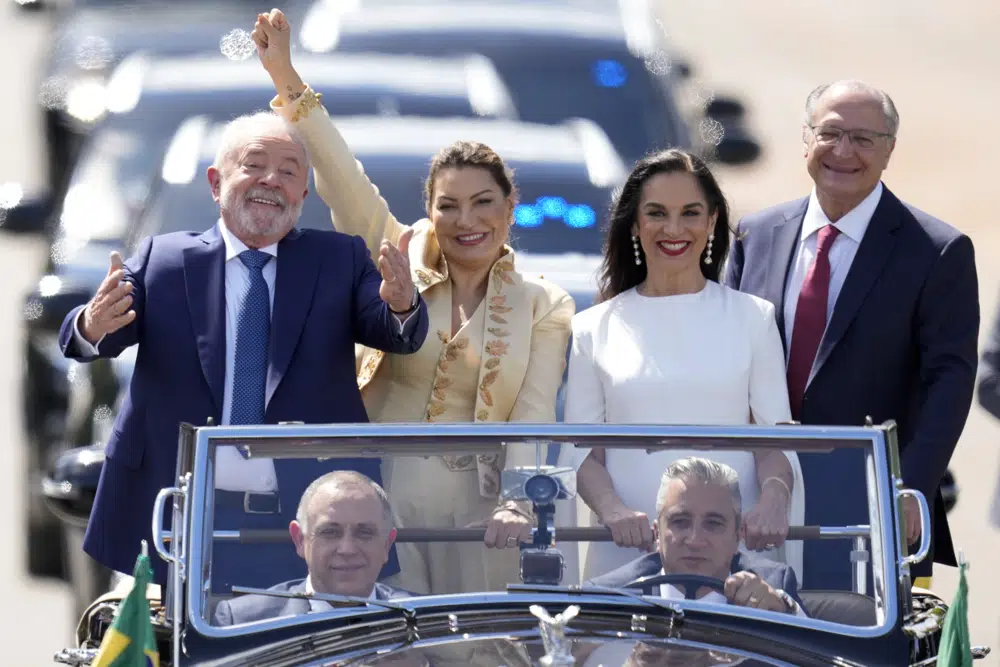
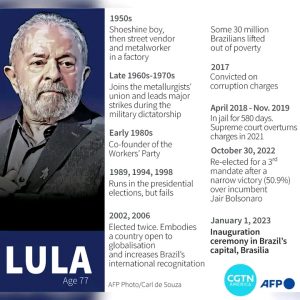
Brazil’s Leftwinger Luiz Inácio Lula da Silva has been sworn in as the 39th president of the Republic of Brazil on Sunday, after closely defeating his rightwing contender Jair Bolsonaro at the general election which held on October 2, 2022.
Lula’s victory with a 50.90% of the total votes cast denied the incumbent president, Jair Bolsonaro who came close second at 49.10%, his reelection bid.
Lula who had served the nation at the highest echelon of the executive arm of government for two consecutive terms between 2002 and 2010 has assumed office as President for the third time with a dramatic comeback since 12 years and after serving jail terms for corruption charges which was later overturned by the supreme court in 2021.
At his induction ceremony as the 39th President, Lula was said to have made the following remarks:
“Our message to Brazil is one of hope and reconstruction.
“The great edifice of rights, sovereignty and development that this nation built has been systematically demolished in recent years. And to re-erect this edifice, we are going to direct all our efforts.”
The new president was also reported to have briefly commented on a report about Bolsonaro’s administration which according to him would be sent to authorities for investigation based on the findings.
“Lula’s presidency is unlikely to be like his previous two mandates, coming after the tightest presidential race in more than three decades in Brazil and resistance to his taking office by some of his opponents, political analysts say” an AP news article stated.
A previous article reveals a popular belief that Lula’s reelection into power would influence a renewed relationship between Brazil and Africa due to Lula’s programmes during his tenures in the past which had favoured Africa.
The African Union logo is seen outside the AU headquarters building in Addis Ababa, Ethiopia, November 8, 2021. REUTERS/Tiksa Negeri
Africa, like other continents, is making efforts through a variety of policies, programmes, and initiatives to address issues, challenges, and provide needs for people and organizations in order to achieve a prosperous continent. Since the advent of globalization, which allows nations and people to collaborate and partner on various projects, Africa has never failed to embrace the concept. According to public affairs analysts, social commentators on the continent, and citizens, the results have been mixed over the years. They believe that Africa is developing and addressing identified issues at a slower rate than the global north.
Despite their mixed feelings, national, regional, and continental organizations continue to develop agendas, goals, and targets, as well as implementation strategies for their realization. Agenda 2063, for example, was conceived by the African Union, the continent’s alliance organization dedicated to promoting socioeconomic and political interests through a multicentric approach. The agenda should be completed within the next 40 years. However, with the need to work towards achieving the Sustainable Development Goals by 2030, our analyst observes that the continent is pursuing two agendas that must be completed in 47 years amidst structural and policy challenges across the continent.
Agenda 2063 was created in accordance with some of the goals and targets outlined in the Global Agenda [SDGs]. It has 20 goals. There is a wide disparity in the achievement of goals and targets in Agenda 2063 priority areas. The African Union’s recently released report [PDF] captures the disparity further, establishing that targets and goals of priority areas relevant to people’s and organizations’ sustainability were less uniformly achieved in 2019 and 2021.
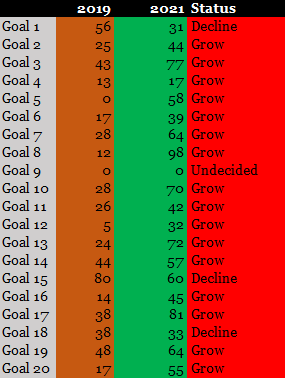
Exhibit 1: Progress tracking for 2019 and 2021 Source: African Union, 2022; Infoprations Analysis, 2023For example, the percentage of achieving Goal 1 (a high standard of living, quality of life, and well-being for all citizens) fell from 56% in 2019 to 36% in 2021, another year considered for assessing the agenda’s progress. There was no data for evaluating Goal 9, which focuses on ensuring that continental financial and monetary institutions are established and functional, according to the report. According to our analyst, this reinforces the previous position that the continent has structural and policy issues, as well as a lack of comprehensive cooperation among countries.
Data were available to assess progress toward Goals 15 [A Fully Functional and Operational African Peace and Security Architecture] and 18 [Engaged and Empowered Youth and Children]. However, the decrease in progress made [see Exhibit 1] necessitates critical analysis, the development of sustainable rescue plans, as well as all-encompassing implementation strategies. Our analyst points out that in this context, African political figures, businesspeople, and civic-minded individuals all have important roles to play.
Can Summit Assist?
Instead of seeking “foreign solutions,” our analyst believes that the continent requires African solutions to African problems. Between 2014 and 2022, African leaders attended several summits outside the continent in order to gain partners from the global north as well as some countries in the global south that are also emerging as “superpowers” and competing with countries such as the United States of America, the United Kingdom, and France, among others. Summit has been one of the tools used by established and emerging superpowers to attract African leaders over the last decade. The majority of the summits have taken place outside of Africa, with the word “Africa” appearing prominently in the titles and themes at the second level position. For example, the United States-Africa, China-Africa, and the United Kingdom-Africa, among others, indicate that it is Africa that needs to be interpellated to their territories in order to find solutions to Africa’s challenges or to provide public goods in the areas of agriculture, health, infrastructure, and education.
Going to the global north for financial support through summits, according to our analyst, is antithetical to achieving Agenda 2063 Goal 20. The goal expressly states that Africa will bear full responsibility for financing its own development. The question is how long Africa will continue to hold string summits in order to raise funds and acquire relevant human capacity to ensure its development.
Political and business leaders, as well as professionals, need to critically consider this issue. It shouldn’t come as a surprise that some of the summit organizers believe Africa has the necessary capacity to advance socially, economically and politically. President Joe Biden recently stated, “African voices, African leadership, and African innovation are all critical to addressing the most pressing global challenges and to realizing the vision we all share: a world that is free, a world that is open, prosperous, and secure.” This was said at the U.S.-Africa Summit Leaders Session on Partnering on the African Union’s Agenda 2063. This suggests that, given her wealth of natural resources and consistently increasing human capacity, Africa is still the world’s future.