DD
MM
YYYY

PAGES

DD
MM
YYYY

spot_img

PAGES

Home Blog Page 4581

U.S. House Administration Arm Bans TikTok on Government-owned Devices

0

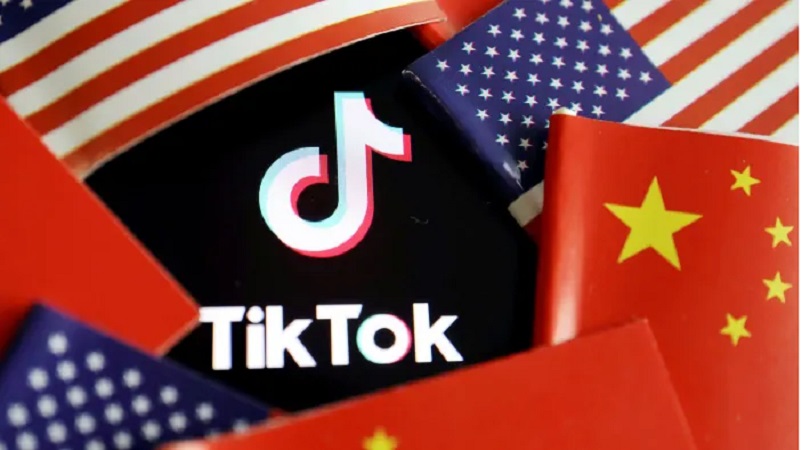
The U.S. House Representatives administration arm has joined states to ban the use of TikTok in official devices, compounding the Chinese video app trouble in the United States. The short-form video app was banned from all House of Representatives-managed devices, according to an email sent to lawmakers on Monday.

The decision follows other moves by states and lawmakers to curtail the use of TikTok by government officials. Earlier this month, Senator Maco Rubio introduced “the Averting the National Threat of Internet Surveillance, Oppressive Censorship and Influence, and Algorithmic Learning by the Chinese Communist Party, or ANTI-SOCIAL CCP Act,” a bill aimed at stopping TikTok’s operation in the U.S.

The House’s administration arm decision has come while the bill, which has gained bipartisan support, is yet to be passed by the Congress.

“The Office of Cybersecurity has deemed the TikTok mobile application to be a high risk to users due to a number of security risks,” the Committee on House Administration said in an email to lawmakers on Monday, adding that it must be deleted from all devices managed by the House.

The message to staff said anyone with TikTok on their device would be contacted to remove it, and they are not allowed to reinstall it.

The recent uptick in TikTok’s apathy is a continuation of what started in 2020 under former President Donald Trump. The U.S. authorities said that TikTok poses a national security threat. The concern hangs on the possibility that the Chinese military could harvest private data of American TikTok’s users for intelligence operations.

The short-form video app is owned by Beijing-based ByteDance, which, like other companies in China, is under the control of the government.

Efforts by states and the Congress to ban it intensified early this month after the FBI director Chris Wray warned that TikTok could be exploited for espionage by the Chinese government. Wray said that the Chinese Communist Party’s authority over all Chinese companies “allows them to manipulate content, and if they want to, to use it for influence operations.”

As of last week, in addition to earlier decision by the Congress prohibiting the installation of TikTok on government-owned devices,19 states have at least partially blocked the app from state-managed devices,

Also, the $1.66 trillion omnibus spending bill, passed last week to fund the U.S. government through to Sept. 30, 2023, includes a provision to ban the app on federally managed devices, and will take effect once President Joe Biden signs the legislation into law, per Reuters.

“With the passage of the Omnibus that banned TikTok on executive branch devices, the CAO worked with the Committee on House Administration to implement a similar policy for the House,” a spokesperson for the Chief Administrative Officer told Reuters on Tuesday.

The growing apathy despite TikTok’s assurances that China does not have access to the data of American users, signals a potential major problem in the company’s U.S. operation.

The Statement Release by TikTok

TikTok’s mission is to inspire creativity and bring joy to people around the world. This mission is made possible by the critical work our trust and safety team does each day to prevent, detect, and remove harmful content and behavior from the platform. Our goal is to keep TikTok a welcoming, enjoyable place for self-expression, connection, and entertainment. With that in mind, we’re making improvements to how we’re organized internally to further promote a safe and secure platform for our community.

Bolstering compliance and security in the US

As we continue to act on our commitment to the security of our platform, we’re creating a Trust & Safety team within US Data Security (USDS) to build further trust and confidence in the protection of US user data and compliance. This team will be led by TikTok’s current Head of US Safety, Eric Han, who is taking on a new role as Head of USDS Trust and Safety. Several of our existing US Safety teams, such as our legal policy team and threat intelligence team, will be reorganized into the USDS Trust and Safety team.

The newly created USDS Trust and Safety team will work on compliance, safety strategies, and moderation for content involving US users’ private data. Our Global Trust and Safety team will continue to develop global safety policies for the platform and oversee the moderation of content that does not involve US users’ private data globally. Content policies and strategies developed by our global team will be reviewed and approved by USDS to ensure compliance with protocols being developed with the U.S. Government.

Reinforcing our Global Trust and Safety team

At the same time, we’re combining forces between the rest of our US Safety team and our Global Trust and Safety Team to deliver on our shared mission to protect people from harm, promote platform integrity, and foster a place that brings people joy. By bringing together the talents of our teams, we aim to create even more effective safeguards for our global community, with increased people power and more seamless handling of potentially harmful content, issues, and events globally.

As one global Trust and Safety team, we will work in unison to build policies, processes, and systems that protect against harm and promote authenticity, diversity, and, above all, safety. Together, we will have over 40,000 talented safety professionals dedicated to keeping TikTok safe.

At TikTok we’re focused on supporting the unique cultures and experiences of people on our app. Toward that goal, we’re also introducing our Head of Country Policy whose team will work to ensure our global policies meet the needs of the local communities we serve around the world, including the US. TikTok’s Director of US Policy, Tara Wadhwa, will move into this role, bringing more than a decade of experience in human rights, policy development and implementation to her leadership of this team.

There’s no finish line when it comes to protecting people. We believe these changes will put us in a better position to tackle today’s challenges, prepare for next year’s threats, and ultimately keep bringing joy, entertainment, and connection to people around the world.
In 2023, Make Fandom happen in that Company by turning Consumers into Customers and into FANS

0

In your business and your mission, as 2023 arrives, you must build a tribe in that market. Yes, there needs to be a spirit of fandom if you want to unlock massive growth.

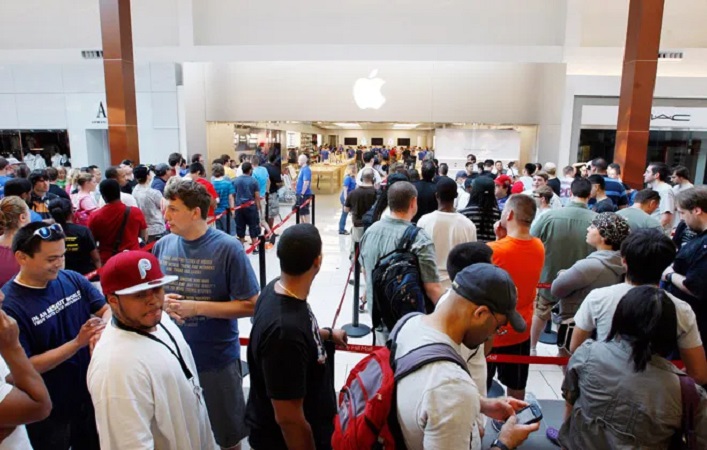
Mediocre companies have consumers and they serve their Needs. Great companies, out of consumers, create customers, who then recognize their identities and brands; they meet their Expectations. But the category-king companies stimulate new users, into new markets and segments, turning them into fans; they bring Perception. (in Harvard, I used Apple as a case study https://hbsp.harvard.edu/product/H006EO-PDF-ENG ).

The consumer goes to buy sugar in Umuahia. He enters the shop and he picks any sugar brand available. He pays and leaves. He is brand-agnostic.

A St Louis brand customer  enters that shop and specifically asks for that brand of sugar. Here, while the consumer is consuming  any brand, the Customer has an element of brand recognition, knowing that there is one sugar brand that exceeds his Needs and meets his Expectations.

In the user segment pyramid, Needs is at the bottom, Expectations at the center and Perceptions at the top. The perception-customers are the most sophisticated to service. But if you can unlock, nurture and keep them, you will become the king of your market. Yes, category-king. These customers are willing agents that enable disruption in market composition, and are innovation-tasty early adopters, becoming apostles of  missions. 

They are the FANS, and they make a great market tribe. You WIN your market when you enable Fandom. Build great products in 2023 and make Fandom happen.

In this videocast, I discuss why organizations must focus on developing products and services that go beyond the needs of customers to their expectations and perceptions. Focusing on the needs of customers is a recipe for disaster. The whole desire must be to deliver products and services at the level of customer perception where they are offered products and services which they might not have even imagined would be possible.

But the day they see the products they will say wow: That is the thing I have been thinking. This also explains the limitations of focus groups because focus groups are  tethered to what the customers think they need. Perception of customer level  service is offering something which could not have been requested during focus groups, because such products will not come into the imaginations of the people being studied.

Tekedia Mini-MBA introduces a new course, starting in the Feb 2023 edition titled “The NEP Framework – Discovering and Listening to Customers”, Yours truly, Ndubuisi Ekekwe, will teach it. We invite you to register here.

Customer discovery and customer validation

As 2023 arrives, research very well so that you can focus on what your customers REALLY want, and not what you think they want, or what they say they want.

If you have a social media account and post once a while, if you position your antenna very well, you will pick signals from customers. Those comments open the world of opportunities.

Customer discovery and customer validation are critical phases in product development. There is a reason in that village that makes everyone want to buy palm wine from Mazi Nkwo. That market woman that sells food at the corner of the telephone mast in the market never takes food home because she finishes it. What is the secret? Empathy: seeing markets from the perspectives of your customers and creating products and services to fix their frictions.

Tekedia Mini-MBA is introducing a new module – “Customer Validation And Building for What Customers Really Want” – in the next edition, beginning Feb 6 2023. Ndubuisi Ekekwe will teach it.

Beyond The Needs Of Customers – Pursue Customer Expectations and Perceptions [Video]

‘The Best Places to Work’ – Top 29 Most Performing Employers in Africa 2022

0

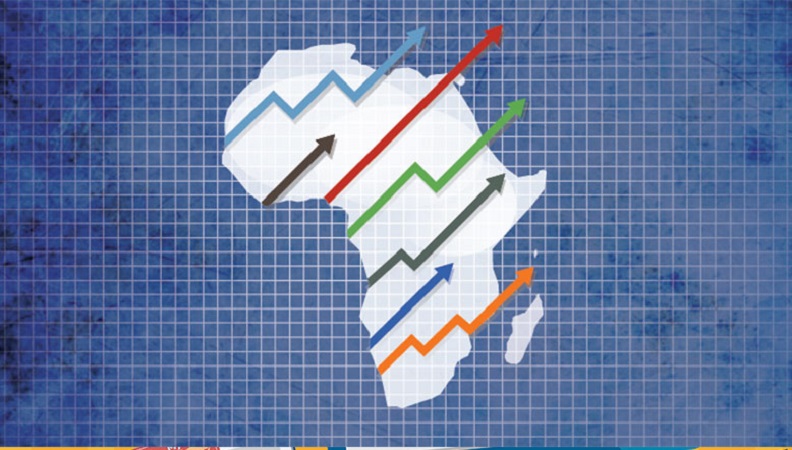
As 2022 winds down, the Best Places to Work organization has announced the top 29 most performing employers in Africa for the year, including Nestle, eHealth and Ecobank.

The organization sifted through more than 500 organizations operating across Africa, scoring them based on their organizational “agility”, best practices and “work place excellence.” The yearly program is delivered through partnership with many organizations, across different industries, to help them measure, benchmark, improve their HR practices and use data-driven insights to add value, enhance agility, and increase organizational effectiveness.

“Findings from this year indicated that the top performing organizations in Africa continued to invest in creating a highly-engaged workforce, with an average engagement score of 83%, compared with a market average of 71%,” The Best Places to Work said. “These organizations are particularly leading the way by creating engaging environments fostering organizational agility, building engaging leaders and demonstrating outstanding people practices and workplace excellence.”

The organization said the ranking was determined based on feedback from employees gathered through anonymous surveys and an HR assessment evaluating the people management practices against the best workplace standards. To be considered, companies must be identified as outstanding employers at least in one of the countries across the continent, it said.

With job scarcity and lax labor laws, the African work environment is notoriously toxic. Most organizations in Africa are notable of subjecting their staff, who usually don’t have a choice, to unethical work standards. But as the continent expands its tech economy amidst meager talent, employees are beginning to quit companies when their well-being is at stake.

The Best Places to Work says its research shows “that given the present challenges around talent retention in Africa, employees who do not see good career opportunities or agree with their organization’s response to their well-being are three times more likely to leave.”

This year, 29 organizations that made the top list of best performing employees come with a mix of multinationals occupying the top five.  They include: Novo Nordisk, the global pharmaceutical company followed by Dell, the American based technology company. Groupe Vipp Interstis, a leading service provider in Customer Interaction operating across different countries in Africa, came in the third position. Webhelp, a leading customer relationship and business process outsourcing company, came in the fourth position followed by Nestle, the leading food producer.

Congratulating this year’s Best Places to Work in Africa, Hamza Idrissi, Program Manager said the list demonstrates commitment by organizations to improve the well-being of their workforce by providing a conducive environment.

“Leading organizations in Africa have demonstrated agility to respond effectively to disruptions while being connected to the needs of their employees. This recognition validates the commitment of several leading employers in Africa to provide their employees with a positive work environment that challenges and encourages them to develop personally and professionally,” he said.

Below is how the organizations are ranked:

  1. Novo Nordisk
  2. Dell
  3. Groupe Vipp Interstis
  4. Webhelp
  5. Nestle
  6. Safran Group
  7. Hilti
  8. Roche
  9. BSH
  10. Comdata
  11. Schneider Electric
  12. Glucode
  13. Eaux Minérales d’Oulmès
  14. Zitouna Takaful
  15. Parkville Pharmaceutical
  16. Asma Invest
  17. eHealth Africa
  18. Zoetis
  19. AstraZeneca
  20. Pharma 5
  21. Groupe Banque Populaire du Maroc
  22. Jamjoom Pharma
  23. EcoBank
  24. Magrabi
  25. Ooredoo
  26. IHS Towers
  27. Alsa
  28. CDG Capital
  29. Elezaby pharmacy

Culture and tradition as reinforcers of gender-based violence in Africa.

0

I was consulted last week to talk about laws relating to gender-based violence in Nigeria and other African nations by a United Kingdom-based Non-Governmental Organization that focuses on fighting against Gender-Based Violence in Africa; especially Ghana and Nigeria and rehabilitating victims of gender-based violence.

It got me thinking about what is the major reinforcer(s) of gender-based violence in African societies because there have been a series of legislations prohibiting gender-based violence and providing stiffer punishments for gender-based violence offenders but it appears that we are yet to make progress in the fight against Gender-based violence in Africa.

Anyone who has taken deep thought over this topic will definitely come to the consensus that Culture and tradition is the Chief factor that gives reinforcement to gender-based violence in Africa.

It is the culture of some African societies that made the society patriarchal and it appears that there has been a conspiracy right from the inception of some societies that favours men over women and makes the girl child look less human compared to the male child.

Some societies in Africa up till this very day still practice and support the practice of Female genital mutilation, child marriage, female  Circumcision etc, this appears to be a norm in those societies and those practicing it have no idea and are in total oblivion that practices like that are gender-based violence and violence against women.

As an eye opener, when we talk about gender-based violence, it is not all about sexual violence like rape as many may have believed, gender-based violence is more encompassing and is far bigger than sexual violence like rape or physical and sexual abuse.

When a person is victimized or denied some political, economical, social, educational, or material benefits just because of his or her gender, that right there is gender-based violence. Therefore, the culture and tradition in some societies that deny the girl child the right to inherit her parent’s properties just because she is a female is gender-based violence, the unequal pay in some organizations and workplaces where a female is paid lower than what a male who is in the same cadre in that office earns is gender-based violence, the practice that shuns women from participating in politics just because she is a female is a gender-based violence, the culture that claims that training a girl child in school is a waste of resources is a gender-based violence, the practice in some societies where a girl child is forced by her family to marry an older man is a gender-based violence, the practice where a girl child is married off to a man by her family for the purpose of using her to settle off debt is gender-based violence.

The list goes on.

Legislation against gender-based violence is not enough to fight against this pandemic in Africa, the African societies, especially the rural communities need to be sensitized, they have to be taught that a girl child is in no way less of a human or in by any means lesser than the male child in comparison. Some of those cultural and traditional practices that are still reinforcing gender-based violence need to be totally expunged and abolished because as it has rightly been held by courts of law in a plethora of cases; those cultures and traditions are repugnant to natural justice, equity and good conscience.

Culture is the problem, it is the bane of gender-based violence in African society and until we start tackling those archaic cultures and traditions that is the only time we can make good progress in the fight against gender-based violence in Africa.


Reports of Overheating, Smoking, etc, Force Samsung to Recall Thousands of Its Washing Machines

0

Electronic and smart appliance technology company Samsung has recalled more than 660,000 of its washing machines after it received countless reports that plagued the electronic appliance.

Reports reveal that the company received about 51 reports of overheating, smoking, and fire hazards, of which ten of the reports resulted in damage of property, while three customers reported injuries from smoke inhalation.

According to the United States consumer product safety commission, the recall involves several models of Samsung’s top-load washers with super speed wash.

The washers were sold in black, white, Ivory colors, and champagne, with model series WA49B, WA50B, WA51A, WA52A, WA54A, and WA55A.

Samsung has therefore urged consumers to check whether their washer’s software has been updated to prevent any form of hazard, and if not, they should immediately stop using the washer until the software is updated.

The company further disclosed that all Wi-Fi-equipped washers that are plugged into a power source and actively connected to the internet will automatically download the free software repair over the air when they are connected to the internet.

It mandated Consumers who have not connected their Wi-Fi-equipped washer to the internet to contact them for instructions on how to download the software repair.

It is however interesting to note that this is not the first time Samsung will recall its washing machine electronics.

Tekedia understands that in 2013 Samsung ordered a recall of about 150,000 washing machines in Australia, fearing that the machines could cause fires.

Also in 2016, the company recalled about 2.8 million top-load washing machines in the United States following reports of injuries.

The recall follows a lawsuit filed by two consumers, who alleged that the washing machines were “defectively designed and imposed an unreasonable risk to person and property”.

With the latest reports it has recently received, it seems Samsung is still yet to resolve safety concerns on its washing machine products.