DD
MM
YYYY

PAGES

DD
MM
YYYY

spot_img

PAGES

Home Blog Page 4586

FTX Saga Has Set Back Adoption of Crypto Assets by One or Two Years – Evgeny Gaevoy

0

CEO of Wintermute, a leading global crypto market maker Evgeny Gaevoy, has recently disclosed that the FTX saga has set back the adoption of crypto by one or two years.

Gaevoy further disclosed that other bankrupt crypto companies such as Three arrows, Celsius and FTX are currently faced with challenges because they were not completely decentralized and also not properly centralized.

In his words, “Everything that failed this year, if you look at Celsius, Three Arrows, FTX now, all those guys were taking the worst of both worlds because they were not completely decentralized, and they were not properly centralized either”.

Before the collapse of FTX, Evgeny disclosed that his company Wintermute stopped trading and withdrew a significant amount of its funds from the platform before FTX  issued a warning that “trading might be halted despite Bankman-Fried’s assertion that it was not financially impacted by the global FTX exchange’s liquidity problems.

Wintermute was one of the largest market makers on FTX, and it was reportedly the second-largest trading firm by deposit and withdrawal size on the platform.

In September 2022, the company lost a whopping $160 million in a hack that occurred on the Defi platform.

Recall that in October 2022, reports disclosed that crypto exchange platform Defi, was hacked and about millions worth of cryptocurrency was stolen from it, which was followed by a backlash from users on Twitter.

On the impact of the FTX collapse on the crypto industry, it has negatively impacted investors’ confidence.

It has also created a ripple effect in the industry as reports reveal that just over the past week, customers have pulled billions of dollars worth of assets from Binance.

The ripple effects continue to extend through to other platforms, as investors expect to continue to see it play out over the next few months.

With the industry still largely unregulated, this has raised more concerns for investors because their assets don’t have the same protections as that of banks.

The FTX collapse has also led to the high volatility of crypto as Bitcoin, the King of cryptocurrencies, fell as low as $15,600. The crypto market has continued to feel the heat hard, with the market value bleeding out roughly $183 billion.

Also, fears have risen over the financial health of other major crypto exchanges, as following FTX’s failure, some of them have filed for bankruptcy with several others considering doing so.

However, analysts predict that despite the unfriendly state of crypto markets, and the toll it has taken on investors, the digital asset industry is likely to pull through.
What is a ‘Hot’ and ‘Cold’ Digital Wallet?

0

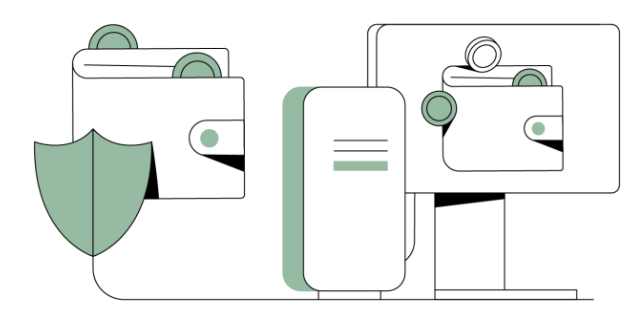
Digital you can use, but ultimately they all serve with the key purpose of keeping your digital assets safely and securely stored on the blockchain.

When storing your Crypto, you want to keep it safe while striking the right balance between functionality and security. If you buy any amount of Crypto and you want to store it yourself, you have to choose between holding your Cryptocurrency in a “hot” wallet, a “cold” wallet, or using a combination of the two.

What is a ‘Hot’ and ‘Cold’ Wallet?

Hot (Software) Wallet

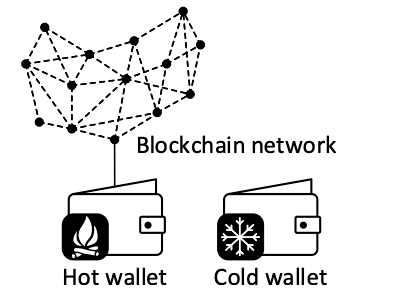
A hot wallet is a type of digital wallet that stores private keys on a device connected to the internet, such as a smartphone or PC.

Hot wallets are generally very convenient and are perfect for actively participating in decentralized finance (DeFi) protocols, minting non-fungible tokens (NFTs), and interacting with smart contracts. Hot wallets usually come in the form of a browser extension or a smartphone application.

This makes them very similar to traditional banking applications but comes with its own set of risks. Being connected to the internet means that hot wallets are a perfect target for malware and hackers.

These risks can be decreased by using antivirus software and generally being careful around the internet, but they are never completely eliminated.

For those who want extra protection from potential risks, cold wallets are suitable alternatives.

Cold (Hardware) Wallet

A cold wallet usually comes in the form of a dedicated device that isn’t connected to the internet. Private keys are stored on the cold wallet device itself and never leave it. This means it is at a far lower risk from potentially being hacked and having the assets stolen.

The drawback is that Cold Wallets make interacting with decentralized protocols and transferring assets more difficult, since it can’t be done with just a phone or a computer. Cold Wallets are often used as long-term storage options due to their security.

Ledger and Trezor are the most popular cold wallets. They connect to a computer through USB and require users to physically approve each transaction on the device.

Should I choose Hot or a Cold Wallet?

Both hot and cold wallets have strengths and weaknesses. Both types provide good baseline security if used properly, but cold wallets come with an additional layer of protection. Cold Wallets however, make a trade-off in convenience for defi use-cases.

The final choice between cold and hot wallets will be up to you and will depend on your needs and preferences. The general recommendation is to use both approaches in tandem, for maximum convenience without sacrificing security.

Closing Thoughts

The opposite of hot wallets, a cold wallet is a device that can’t connect to the internet, or can only connect manually. A hot wallet is connected to the internet and could be vulnerable to online attacks—while, Cold wallets are crypto wallets that are responsible for storing private keys in an offline environment.

Google to Launch an AI Feature That Can Decrypt Doctors Incomprehensible Prescription

0

Search Engine company Google in a bid to help patients decode Doctors’ incomprehensible handwritten prescriptions, is set to launch an AI feature that can help decrypt it.

The tech giant which hosted a conference in India on Monday has partnered with several pharmacists and hospitals in the country to help achieve this idea.

The feature will be rolled out on Google lens, which will allow users to take a picture of the prescription note. Once the picture is taken, it will be processed by the AI-driven lens, which will then decode whatever is written on the note.

During the conference, the Director of research at Google Dr. Mannish Gupta gave a brief demonstration of how the technology works, where it correctly decoded a doctor’s handwritten prescription.

According to reports, the Google Lens feature can recognize 15 billion things, up from one billion in 2018.

Also, users who want to learn a new language can use Google Lens, which can translate more than 100 languages, such as Spanish, and Arabic, amongst other languages.

Google disclosed that India has the highest number of Google lens users in the world, as India has remained a key market for the tech giant.

As of November 2022, Google had a clear monopoly on the mobile search engine market across India with a share of 99.74 percent, providing a clear picture of Google’s rise to becoming the biggest search engine operator within the South Asian market.

In 2021, Google.com was among the most visited websites in India. The search engine company however did not disclose the release date for its proposed AI lens feature.   

In 2017, the search engine company rolled out its visual search tool “Google Lens”, and has since upgraded the app with new features that can recognize images better and help users with improved contexts related to the picture.

Apart from the smartphone app, Google has also integrated Lens on Chrome for users to access the tool on desktops as well.

With its latest move to introduce an AI feature that can decode Doctors’ prescriptions, it will no doubt bring a sigh of relief to patients who have for a very long time been faced with the difficulty of decoding it.

Google wants to make squinting at your doctor’s questionable penmanship a thing of the past. A feature being developed for Google Lens will use “assistive technology” to detect medications mentioned in prescriptions, TechCrunch reports. Pharmacists are working with the tech giant on the feature, announced Monday at the annual Google for India conference, but no release date has been set. Google noted that the technology would help, not replace, medical staff. “No decision will be made solely based on the output provided by this technology,” it said in a statement. (LinkedIn News)

Jane Egerton-Idehen, Head Sales MEA at Meta, Joins Tekedia Institute Faculty

0

It is going to be super-amazing in the next Tekedia Mini-MBA. One of the finest growth markets in the world is coming to teach us at the temple where innovators, entrepreneurs and business professionals come to master the mechanics of entrepreneurial capitalism, and advance their communities, firms and nations.

Ladies and Gentlemen, I am so excited to announce that Jane Egerton-Idehen, Head of Sales Middle East & Africa at Meta, the parent company of Facebook, has joined the faculty of Tekedia Institute. Jane is an accomplished business executive with diverse experiences that cut across MTN, Ericsson, Nokia, and Avanti Communications.

A graduate of Electronics Engineering from UNN and MBA from Warwick Business School, our faculty is a dynamic leader who has consistently set clear visions, established comprehensive strategies, built award-winning sales & marketing teams, and scaled business excellence.

And in this course, she will teach “How To Scale a Startup”. In this Africa’s cambrian moment, scaling is the moment, and at Tekedia Institute, we are bringing the scalers to guide us, lead us and teach us. Thank you Jane for answering this call for your continent – and I invite all to come and learn from the best.

We’re Tekedia – distinctively better business education.

Five startup mistakes to avoid

0

We have had a series of articles about what entrepreneurs should do and why they should. But in this article, I need to focus on the five specific mistakes that startups make. Of course, there are hundreds of errors to avoid, but African startups need to note these five.

They are drawn from my experience and informal discussions with other entrepreneurs and business consultants.

Launching your business before proper registration and legal setup

A few entrepreneurs have in the past made the mistake of rushing to start a business without fulfilling the appropriate legal requirements. This may be in a bid to save costs or sometimes to try out the market and see if it would succeed before going the legal route.

This is a major mistake to avoid, and its consequences are dire. If you do not register your business, pick up the correct entity or protect your intellectual property before launching out, I can assure you that it will cost valuable time and money to correct it when things go wrong. You can imagine gaining market traction only to discover that another person is already trading with your business name elsewhere.

The lawyers can fill us in on this in the comment section.

I am trying to do everything myself.

You can go fast if you go alone, but if you intend to go far, you cannot go alone. Try to get trustworthy partners and advisors to handle some part of the business, or give you constant feedback. This will help smoothen your processes.

Hiring too soon

Do you happen to remember our earlier article on Team hiring? Another mistake to avoid in this same light is hiring too soon. When is it okay to outsource a task to a freelancer, and when is it better to have a part-time or full-time staff or get a paid intern? I would also like to make sure you are onboarding new talents when needed.

Like the founder of Redclay Advisory, Adun Okupe, recently said in a radio interview on Classic FM, the 5-year-old company works with four core team members and pulls in from a network of consultants and advisors when the need arises. This is an excellent model to adopt, too, only hiring full-time staff when you need them.

Avoiding legal contracts and agreements

It may be an African factor to trust in the personal relationship you have built with people, but it is always safer to have everything in black and white. If you are launching or running a startup, you can avoid gentlemanly agreements. Let everything be spelled out in black and white. It will not only save your business, but it will also save your relationships.

Undervaluing or under-pricing your product

As an entrepreneur, you might conclude that it will help you steal a significant market share if your prices exceed the competition. But my take on this is that you avoid this pitfall. It is not sustainable.

If you do proper research, you will find that several businesses rode into the market on an extensive discount campaign and recorded huge sales, only for their sales to plummet as soon as the discount ended.

Focus instead on the value your product offers, and don’t stop ringing this information until you get it stuck in your audience’s subconscious memory.

We can continue this discussion soon. What do you say?