DD
MM
YYYY

PAGES

DD
MM
YYYY

spot_img

PAGES

Home Blog Page 4604

How to Register a Credit Guarantee Company in Nigeria

0
Good credit scores are desirable for firms and people

Credit Guarantee companies are institutions licensed by the Central Bank of Nigeria (CBN) with the primary objective of providing guarantees to banks and other lending financial institutions licensed by the CBN as well (otherwise known as “Participating FIs/Financial Institutions”)  against the risk of default by credit facility obligors.

This article will be focused on the topics of :-

– The regulatory framework governing credit guarantee companies in Nigeria.

– The permissible and non-permissible activities of licensed credit guarantee companies in Nigeria.

– Licensing/Registration requirements for credit guarantee companies in Nigeria.

What are the components of the regulatory framework governing credit guarantee companies in Nigeria?

The Central Bank of Nigeria is in charge of the licensing and operation of credit guarantee companies in Nigeria by virtue of the CBN Guidelines For the Regulation & Supervision of Credit Guarantee Companies 2022 made pursuant to the Central Bank of Nigeria Act 2007.

What are the permissible and non-permissible activities of credit guarantee companies?

Permissible Activities

– The provision of guarantees for risk assets of participating FIs.

– Renderings advisory services for financial and business development.

– Investing surplus funds in government securities.

– The maintenance and operation of various types of accounts with banks in Nigeria.

– Partaking in other investments as may be approved by the Central Bank of Nigeria.

Non-permissible Activities

– Trading in foreign exchange.

– Managing Pension funds or schemes.

– Trading in derivatives and swaps.

– Providing credit to customers.

– The provision of guarantees to entities outside Nigeria.

What are the registration/licensing requirements for a credit guarantee company in Nigeria?

Credit Guarantee company licensing in Nigeria is in 2 stages :-

– The Approval-in-Principle (AIP) stage.

– The Final Licensing stage.

The Approval-in-Principle stage

To commence the process for setting up a credit guarantee company, you are to send the following to the CBN :-

  1. A written application.
  1. Proof of an application fee of 100,000.00 Naira (non-refundable) payment to the CBN.
  1. Evidence of a deposit of the specified minimum paid-up capital requirement of 10 Billion Naira (refundable upon the license grant).

4.Evidence of capital contributions made by each shareholder.

  1. Evidence of name reservation with the Corporate Affairs Commission (CAC).
  1. A detailed business plan/feasibility report.
  1. A Certified True Copy CTC of a Certificate of Incorporation  and a board resolution signifying an intention to  invest in the proposed credit guarantee company where any of the investors or shareholders of the proposed credit guarantee company is a company.

The AIP stage takes a total of 90 days and the proposed credit guarantee company shall not incorporate its name with the CAC until an AIP has been obtained from the CBN.

The Final Licensing stage

Not later than 6 months after the after the AIP grant, the promoters of a proposed credit guarantee company shall submit an application for the grant of a final license to the CBN along with the following:-

– Evidence of payment of a non-refundable 1 Million Naira licensing fee to the CBN.

– A Certified True Copy (CTC) of the credit guarantee company’s Certificate of Incorporation.

– Certified True Copies(CTCs) of the credit guarantee company’s MEMART Memorandum/ Articles of Association and the CAC Form 1.

– Stamp Duty payment evidence.

– Evidence of head office location.

– A schedule of changes in the board of directors and schedule of charges in the company after an AIP grant if any.

– The conduct of a Pre-licensing inspection of the credit guarantee company’s office by the CBN.
Human Rights Lawyer Declares CBN’s Cash Withdrawal Limit Policy Illegal

0

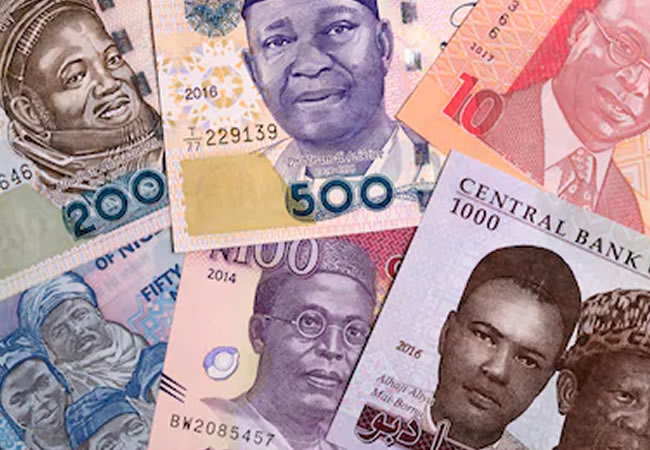
As criticism continues to trail the decision of the Central Bank of Nigeria (CBN) to limit the amount of money that can be withdrawn over the bank counter and on ATMs to N100,000 per week for individuals and N500,000 for corporations, human rights lawyer, Femi Falana, has weighed in on the issue.

The Senior Advocate of Nigeria (SAN) said the new withdrawal policy contradicts the law and therefore is illegal.

On December 6, the CBN announced the new policy, which also allows only N20,000 withdrawal from POS per day, as part of its broader monetary policy – directing financial institutions to start the implementation from Jan. 9, 2023.

The new policy was announced on the heels of the redesign of N200, N500 and N1,000 notes that the apex bank rescheduled their circulation to take effect from November 23.

Both moves by the central bank have elicited both commendation and condemnation. While a section of Nigerians applaud the new CBN initiatives as possible means to curb insecurity and inflation, others, including Falana have said that the new withdrawal limit contravenes the law.

In a statement on Monday, Falana described the policy as “illegal and null” as it contravenes provisions of section 2 of the money laundering Act, 2022. He argued that section 2 of the Act, limits cash withdrawals by individuals and corporate entities to N5 million and N10 million, respectively.

According to him, the new CBN policy is “null and void” as long as section 2 of the money laundering Act is not amended to accommodate it.

“Since the money laundering act, 2022 (which has fixed maximum cash withdrawal to N5 million) has not been amended, the limitation of cash withdrawal of not more than N20,000 per day and N100,000 per week fixed by the Central Bank of Nigeria is illegal, null and void in every material,” Falana said.

“We urge the Nigerian people to ignore the illegal announcement.

“However, we are compelled to call on President Muhammadu Buhari to direct the management of the CBN to withdraw the illegal guideline and stop announcing more policies that are designed to sentence poor citizens to more excruciating economic hardship,” he added.

Meanwhile, the CBN governor Godwin Emefiele had said he has the backing of Buhari to implement the controversial policies.

Last week, the House of Representatives summoned the governor as concern grows that the new withdrawal limit may create economic headwinds for Small and Medium Enterprises (SMEs) in the country, particularly those in the rural areas.

However, Emefiele assured that the central bank has put adequate amenities in place to ensure that the concerns are addressed.

From Mechanical Advantage to Scalable Advantage – The Physics of Business Growth

0

What is the construct of first-scaler advantages? How do you optimize uncertainty, speed and growth in your young company? The world has always focused on first-mover advantages (the first to market largely wins).  In Tekedia Institute, we posit that to win in categories and sectors, you need to do more than being the first to market. Yes, in the stable state of digital markets, winners are usually those that scale first, not necessarily those that began first.

When you scale, you improve marginal cost and unit economics, triggering a virtuoso circle of winner-take-all. The greatest reward in a digital business is to attain a near-zero marginal cost.

Interestingly, winners attain that asymptotic marginal cost positioning by being the first to scale in their categories. You do not need to be the first to start or move into that category. You simply need to be first to scale.

If you join me in Tekedia Mini-MBA which begins Feb 6, 2023, you will learn the mechanics of business growth. You will master the fundamental elements to scale companies.  In physics, they taught you Mechanical Advantage; here, I will explain Scalable Advantage with business cases. Pick your seat in our virtual classroom today.

Ghana Has Won Big as Cedi Makes Impressive Come-back

0

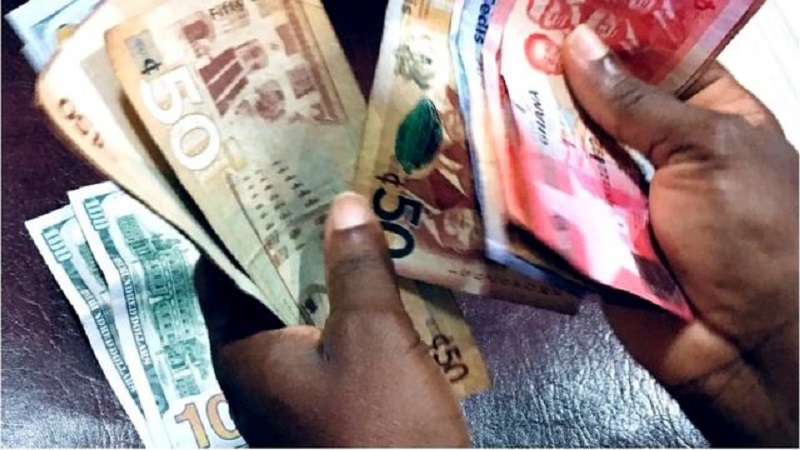
The Ghanaian currency Cedi has been reported to have recorded impressive recovery against the US Dollar after months plummeting to the red line in the world currency ranking. The Cedi’s recovery has been adduced to Ghana’s materializing plan to reorganise its local debt.

The cedi was said to be the worst-performing and the cheapest in Africa, undervalued by more than 30 percent against its 25-year history last week.

According to Bloomberg, the rise in the currency value comes alongside hopes of realizing a $3billion bailout the country has been requesting from the International Monetary Fund, IMF, for many months now. The report reads in part:

‘’The cedi has rallied 10 percent in the past five days, the biggest advance among about 150 currencies tracked by Bloomberg. That’s a turnaround for an exchange rate that had lost half of its value this year and occupied the bottom slot in the charts.

‘’The currency was the cheapest in Africa, more than 30 percent undervalued versus its 25-year history last week.’’

Business Insider reports that the news means a turnaround for a currency that lost half of its values since beginning of the year and occupies the bottom slots in the index. According Business Insider, a few months back the exact opposite of this news was reported, revealing that the cedi was the worst-performing currency in the world.F

Following the news of cedi as the world’s worst performing currency in the world in October, protest had erupted across the streets of Ghana with the parliament being the major target of the protesters. This made several lawmakers to call for the removal of the finance minister, Ken Offori-Atta. However, the minister was later voted to remain in office.

On Friday, December 10 2022, the currency advanced 12.9648 to a US Dollar, the strongest since October but is still down by 52 percent this year, legit.ng reported.

ARCON Mandates Influencers to Seek Approval Before Advertising Any Product, Following Complaints of Unregulated Advertisements

0

The Advertising Regulatory Council of Nigeria (ARCON) has mandated Social media Influencers, bloggers, and skit makers among others to seek its approval before advertising any service or product online.

ARCON on Monday disclosed that most advertisements put out often contain unverified and unethical claims.

The council via a statement disclosed that this new rule was necessitated after it had received incessant complaints regarding unregulated advertisements.

The statement reads, “Most of the advertisements exposed by this group are not only unethical with unverified claims and misinformation, but also in violation of the Nigerian Code of Advertising Practice. 

By this public notice, brand owners, digital agencies, secondary digital media space owners (i.e. bloggers, vloggers, influencers, comedians, skit makers, etc), and other advertising stakeholders in the digital online media space are advised to obtain pre-exposure approval of all advertisements, advertising, and marketing communications by the Nigerian Code of Advertising Practice and the ARCON Act No. 23 of 2022.”

The council further disclosed that it will pelt out necessary actions against violators of this act.

Recall that the advertising regulatory agency two months ago slammed a N30 Billion penalty on Meta Platforms Incorporated, (Facebook, Instagram, and WhatsApp) because of their penchant to expose unapproved adverts to Nigerian audiences without any recourse to a regulatory authority.

The agency disclosed that the continued exposure of the unvetted adverts by Meta has led to a loss of revenue to the federal government.

Also in August 2022, ARCON banned the use of foreign models in Nigerian advertising media after it reported that Nigeria loses over N120 million annually to foreign production of advertisements.

The agency disclosed that the banning of foreign models would lead to the creation of over 500,000 new job opportunities annually, within the advertising industry which will no doubt positively impact Nigeria’s economy.

ARCON has continued to look out for the protection of the general public and consumers, as well as ensuring the promotion of local content and entrenching international best practices.

The council has on several occasions reiterated that it would not permit unethical and irresponsible advertising on Nigeria’s advertising space.