DD
MM
YYYY

PAGES

DD
MM
YYYY

spot_img

PAGES

Home Blog Page 4605

Nigerian Government Lied When It Said It Reached An Agreement with Twitter – Twitter Files

1

The federal government of Nigeria lied about the agreement it supposedly had with microblogging app Twitter early in the year, according to documents found in Twitter files released by the company’s new owner and CEO Elon Musk.

In January, the Nigerian government lifted a seven-month ban it has placed on Twitter, saying it had reached an agreement with the social media platform to implement a new set of conditions that will ensure that what led to the Twitter ban does not happen again.

But the document contained in the released Twitter files said there was no such agreement and Twitter had upheld the government’s lie – created a room for stifling of free speech in Nigeria, by not refuting the false statement about the agreement.

“The Nigerian government blocked Twitter in June 2021, then falsely claimed to be in negotiations with Twitter executives; Twitter’s failure to correct the false record on many reported non-existent discussions with the Nigerian government permitted Nigeria to negotiate unilaterally through media and dictate unfavorable terms for final resolution,” stated the document.

“Twitter’s deliberate decision to refrain from correcting misinformation about Twitter’s proposed negotiations with the Nigerian government directly harmed Twitter shareholders, permitting the Nigerian government to impose various conditions on the platform harmed free expression rights and democratic accountability for Nigerian citizens,” the document added.

Twitter was banned after the social media platform removed a tweet made by President Muhammadu Buhari for violating its policy on violence. The tweet had threatened violence against the Igbo-dominated Southeast Nigeria, making reference to the country’s brutal civil war.

After the ban was announced in June 5 2021 by the Minister of Information, the Attorney General of the Federation Abubakar Malami directed the Director of Public Prosecution of the Federation (DPPF) “to swing into action and commence in earnest the process of prosecution of violators of the Federal Government De-activation of operations of Twitter in Nigeria.”

The ban, which was widely described as a brazen attempt to muzzle freedom of speech, drew condemnation from the international community. The Nigerian government said it had taken the step to prevent Twitter from being the source of the country’s implosion.

However, as the pressure to unban Twitter mounts on the government, Buhari’s administration came up with the idea of presenting lines of conditions to the social media company – a move believed it had initiated to save face.

“Following the suspension of Twitter operations, Twitter Inc. reached out to the Federal Government of Nigeria to resolve the impasse. Subsequently, I constituted a Presidential Committee to engage Twitter to explore the possibility of resolving the issue,” Buhari said in his 61st Independence Day address.

He added that the Committee, along with its Technical Team, has engaged with Twitter and have addressed a number of key issues. These are:

  1. National Security and Cohesion;
  2. Registration, Physical presence and Representation;
  3. Fair Taxation;
  4. Dispute Resolution; and
  5. Local Content.

Twitter neither refuted nor acknowledged any part of the said agreement, stirring skepticism that the parties had reached an agreement. After over one year, none of the issues highlighted by the president has been addressed by Twitter.
Book Recommendation on How to Win Customers in Nigeria, Africa

0

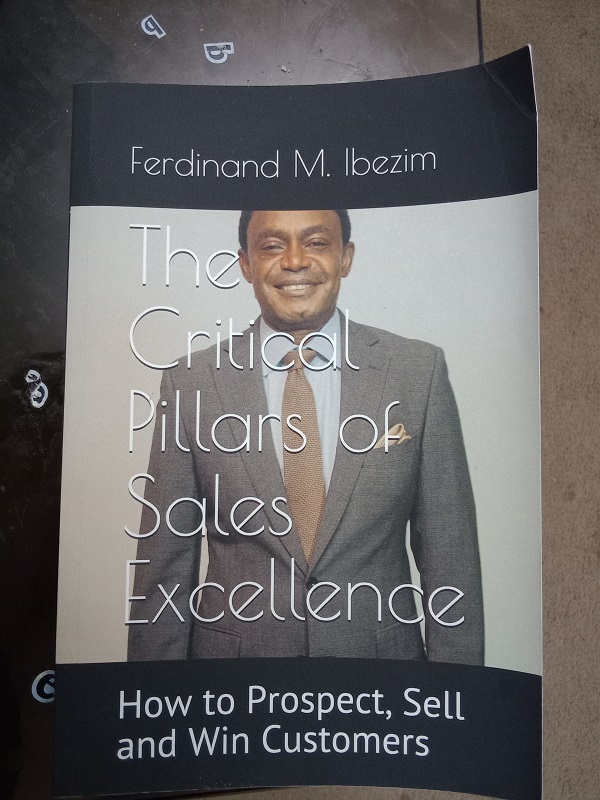
If you want to understand how to #win customers in Nigeria and Africa, I have a book recommendation for you: “The Critical Pillars of Sales Excellence: How to Prospect, Sell and Win Customers” by Ferdinand Ibezim.

I have a room full of books – so many of them – but only a few get frequent attention. I want to thank our Tekedia Institute Faculty, Mr. Ibezim, for the book masterpiece which is now a companion. His course in our program is a moment for every learner.

If you are a consultant and you find it hard to be paid, go back to the 10th principles of selling (page 169) and learn from the book:  “Do not present yourself as the beneficiary of the sale”. Yes, it is not a wise thing to present that proposal as Mr. Wazobia; Mr. Wazobia Limited is better. No human will hire Mr. Wazobia Limited and not pay the company even though they can do same on Mr. Wazobia.

Get a copy here and learn from a zen-master of sales 

Nigerian Government Flags Off Digital Economy Employability Programme for Nigerian Youths

0

In line with the ongoing quest for Africa to properly transition into the digital-data economy, the Federal government of Nigeria has flagged off the Digital Economy Employability Program (DEEP) targeted at empowering the Nigerian youths through the National Information Technology Development Agency (NITDA) in partnership with the National Youth Service Corps (NYSC).

NITDA whose strategic goal is to encourage the growth of digital skills, digital innovation, entrepreneurship and promotion of indigenous content in Nigeria will be facilitating the empowerment programme which will run concurrently in seven NYSC camps nationwide.

Mr Kashifu Inuwa, the Director General of NITDA, while declaring the programme open at the NYSC camp in Kubwa, Abuja on Saturday, December 10, has said the programme centred on improving the digital foot print of Nigeria by providing Nigerians with modern and relevant digital literacy and skills that would expose, prepare and connect them to in-demand career opportunities that are available in the global digital economy.

The DG declared the programme is expected to help create the opportunity for Nigerians to create job opportunities within the digital economy space which would ultimately help increase the contribution of ICT to the country’s GDP which currently stands at 18.44 percent, the Vanguard reported. Also mentioned by the DG is the multiplier effect the programme will have.

According to the Blueprint, the DG added that the initiative was part of the National Digital Economy Policy and Strategy (NDEPS) 2020-2030 and expanded the mandate of the then ministry of Communications to Include Digital economy, under the leadership of Prof. Isa Ali Pantanmi which geared toward empowering young Nigerians with digital skills in order to be part of the fourth industrial revolution. Mr Kashifu made the following remarks:

‘’The implication of this projection is that many Nigerians, both in the IT and non IT space must acquire digital literacy and skills in order to thrive in this current fourth industrial revolution.

‘’Given our huge population of about 218 million and which about 50 percent is constituted by youth, we have enough potential human capital to drive the data economy, and that is why we have decided to flag off this programme in seven NYSC strategic camps.

‘’We believe that the NYSC camps holds the brightest and the most intelligent Nigerian youths. We believe that corps members will not only benefit from this programme but will create a multiplier effect by transferring the knowledge and skills during the course of this programme to other Nigerians and this will help the country realize its target of 95 percent digital literate Nigerians by 2030. There is no better time to embrace digital transformations than now.

‘’The world is moving away from natural resource-based economy to a digital and knowledge-base economy, more attention and efforts are being put into human capital and digital technologies and Nigeria should not be left out of this fast-moving train.’’

Afro-Urban Furniture Startup Taeillo Secures $2.5 Million Funding, Plans Expansion

0

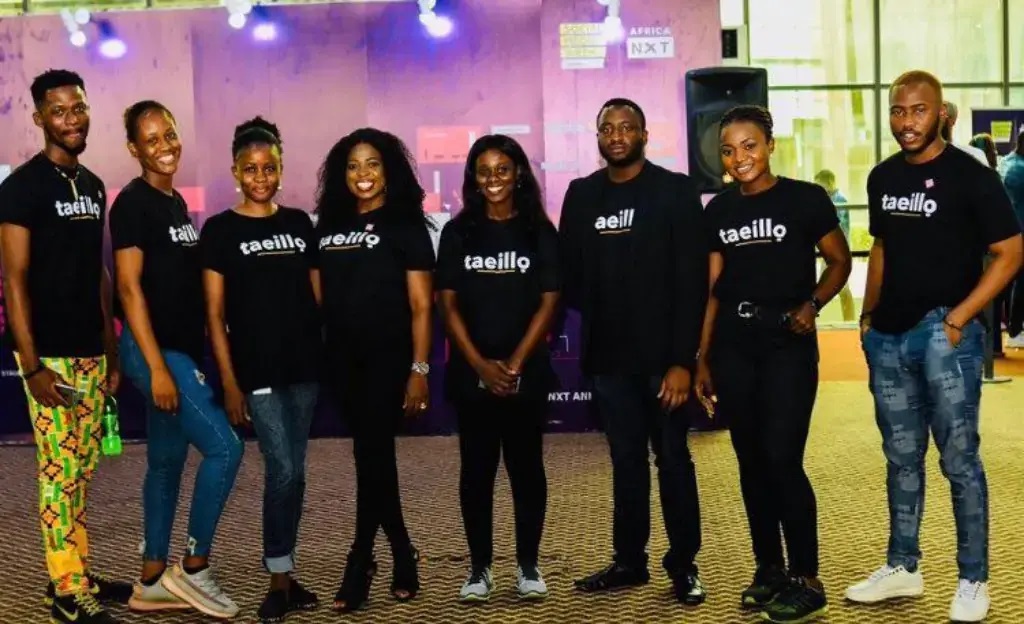
Afro-urban furniture startup Taeillo has secured $2.5 million in funding from investment company Aruwa capital, as it unveiled its expansion plan.

Taeillo operates with its unique product offerings by infusing cultural elements, which have gained the popularity of some of its furniture among the Nigerian millennials, and the working-class demographic.

In 2021, the startup raised a $150,000 bridge round from CcHUB Syndicate as it tripled its revenue from the previous year.

Speaking on its investment in the furniture startup, Aruwa Capital Founder & Managing Partner Adesuwa Okunbo Rhodes said, “We are thrilled to announce this investment into Taeillo as it aligns with nearly all of our investment objectives.

“Since its inception, the Company has maintained its innovative model in a traditional brick-and-mortar industry, creating a unique value proposition for its customers in a fast-growing, underserved market.”

Due to the hassles most Nigerians face when purchasing furniture, from the lack of expertise of artisans to deliver customers’ preferred designs, to the purchase of exorbitant furniture.

With the sole aim to help every African in urban and peri-urban cities buy furniture from the comfort of their home, Taeillo utilizes e-commerce, social commerce, and immersive technology (AR/VR) to offer customer-centric furniture designs, allowing customers to sample superior African products from the comfort of their homes, choosing the furniture that meets their unique taste.

Also Commenting on the funds secured, Founder & CEO of Taeillo Jumoke Dada said, “This investment by Aruwa Capital will take us closer to our goal of becoming the IKEA of Africa by providing quality, ready-to-assemble, made-in-Africa furniture pieces at an affordable price point for the mass market, while also optimizing our operations, delivery time, and customer experience. We are grateful to the Aruwa Capital team for their belief in our vision.”

Taeillo operates with environmental consciousness by ensuring that its production processes include zero waste. Launched in 2016, the startup shipped more than 5,000 pieces of furniture and created 300 direct and indirect jobs within two years of operation. It has sold over 200 pieces of furniture in Nigeria.

Its pivot came with the launch of the “Amakisi” table sold at $29,999/~$85, a work table and one of its best-selling products which quickly gained popularity and sold over 1,000 pieces in six months.

Since then, Taeillo has expanded into 10 additional product categories, moving into East Africa Kenya, and has shipped more than 10,000 pieces of furniture to over 5,000 customers in both countries. 

The company which doubles as a manufacturer and retailer can be likened to Wayfair and now-defunct Made.com.

Taeillo has taken a step further by infusing technology into its business, by allowing customers to envision their ideal space using a VR headset to go through the furniture and purchase them without the worry of it fitting into their space. This strategy has no doubt appealed to the millennials and Gen Z who make up the bulk of its target market.

In previous years in Nigeria, most people preferred foreign furniture to local ones, but brands like taeillo are changing the narrative by offering premium furniture with a fuse of local and contemporary designs that preserve African culture whilst giving customers the modern aesthetic they crave.

Every taeillo piece exudes finesse, elegance, and style, which gives a customer’s space a vibrant yet indigenous feel which uniquely projects and blends Africa with other parts of the globe.

As a local manufacturer of quality and affordable furniture, Taeillo’s solution is critical for the African continent where the alternative is to import bulky, expensive furniture from overseas, incurring significant costs combined with an unstable exchange rate, and enduring long wait periods of 3-6 months before the furniture is delivered.

Yugalabs and MoonPay Face Class Action Lawsuit

0

YugaLabs, creators of Bored Ape Yacht Club and Moonpay — a crypto fintech Protocol, is facing a class-action lawsuit for allegedly using celebrities to misleadingly promote and sell NFTs.

Jimmy Fallon, Gwyneth Paltrow and Justin Bieber have been sued in a proposed class action accusing them and a host of other celebrities who promoted the Bored Ape Yacht Club NFTs to their audience.

The truth is that the Company’s entire business model relies on using insidious marketing and promotional activities from A-list celebrities that are highly compensated (without disclosing such), to increase demand of the Yuga securities by convincing potential retail investors that the price of these digital assets would appreciate,” reads the complaint filed last Thursday in California Federal Court.

The suit also names Madonna, Kevin Hart, Stephen Curry, Snoop Dogg, Serena Williams, Post Malone, The Weeknd, Fallons’ production company Electric Hot Dog, Inc. and Universal Television, among others. It claims most of them were recruited by talent manager Guy Oseary, who spearheaded a scheme with Yuga Labs to discreetly pay them for their endorsements through crypto firm Moonpay.

Guy Oseary’s venture capital firm, Sound Ventures was an early investor in Moonpay, according to the complaint.

Guy Oseary is allegedly linked to several of the celebrity promoters, including Bieber, Paltrow and Hart, through their early investments in Moonpay.

By increasing demand for BAYC NFTs and YugaLabs’ Apecoin crypto tokens, the suit alleges they also increased demand for Moonpay.

Oseary, the MoonPay Defendants, and the Promotor Defendants each shared the strong motive to use their influence to artificially create demand for the Yuga securities, which in turn would increase use of MoonPay’s crypto payment service to handle this new demand,” the complaint reads.

At the same time, Guy Oseary could also use MoonPay to obscure how he paid off his celebrity cohorts for their direct or off-label promotions of the Yuga Financial Products. Lawsuit being brought by a pair of NFT “investors”, who are mad about not finding a bigger fool to sell to— A pox on them all.

According to what was in the news, the filing claims that the defendants violated the law by not disclosing their relationship with YugaLabs in endorsing NFTs, on the other hand Yugalabs denies all accusations.

Moral of the story – maybe you should not take investment advice from celebrities, always do your Research before Investing on Crypto, NFT and DEFI Assets because of its high Volatility nature.