DD
MM
YYYY

PAGES

DD
MM
YYYY

spot_img

PAGES

Home Blog Page 4610

ARCON Mandates Influencers to Seek Approval Before Advertising Any Product, Following Complaints of Unregulated Advertisements

0

The Advertising Regulatory Council of Nigeria (ARCON) has mandated Social media Influencers, bloggers, and skit makers among others to seek its approval before advertising any service or product online.

ARCON on Monday disclosed that most advertisements put out often contain unverified and unethical claims.

The council via a statement disclosed that this new rule was necessitated after it had received incessant complaints regarding unregulated advertisements.

The statement reads, “Most of the advertisements exposed by this group are not only unethical with unverified claims and misinformation, but also in violation of the Nigerian Code of Advertising Practice. 

By this public notice, brand owners, digital agencies, secondary digital media space owners (i.e. bloggers, vloggers, influencers, comedians, skit makers, etc), and other advertising stakeholders in the digital online media space are advised to obtain pre-exposure approval of all advertisements, advertising, and marketing communications by the Nigerian Code of Advertising Practice and the ARCON Act No. 23 of 2022.”

The council further disclosed that it will pelt out necessary actions against violators of this act.

Recall that the advertising regulatory agency two months ago slammed a N30 Billion penalty on Meta Platforms Incorporated, (Facebook, Instagram, and WhatsApp) because of their penchant to expose unapproved adverts to Nigerian audiences without any recourse to a regulatory authority.

The agency disclosed that the continued exposure of the unvetted adverts by Meta has led to a loss of revenue to the federal government.

Also in August 2022, ARCON banned the use of foreign models in Nigerian advertising media after it reported that Nigeria loses over N120 million annually to foreign production of advertisements.

The agency disclosed that the banning of foreign models would lead to the creation of over 500,000 new job opportunities annually, within the advertising industry which will no doubt positively impact Nigeria’s economy.

ARCON has continued to look out for the protection of the general public and consumers, as well as ensuring the promotion of local content and entrenching international best practices.

The council has on several occasions reiterated that it would not permit unethical and irresponsible advertising on Nigeria’s advertising space.

The Evolution of Decentralized Financing on Ethereum

0

The financial sector accounts for a quarter of the global economy, yet the industry remains inaccessible to most of the population.

The concept of a financial system that is free and open to everyone was born in 2009 with the release of Bitcoin and was formalised in 2018 by a group of Ethereum developers.

Since then, one simple idea of people being in control of their finances turned into a 40 billion dollar industry with an all-time high just shy of $200,000,000.

The growth that started with Maker introducing an alternative to centralised stablecoins was later spearheaded by Compound and their liquidity mining campaign, Aave and their borrowing algorithms, Uniswap and their revolutionary decentralised exchange and many others.

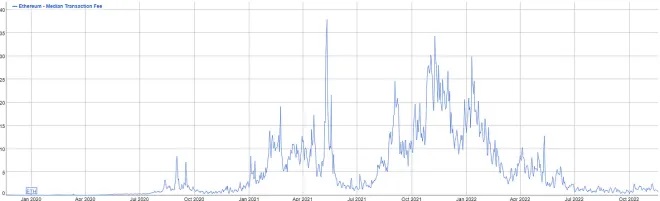
This growth was somewhat stifled by rising Ethereum transaction fees, making the whole system inaccessible to regular users, and violating its core principles. Vitalik Buterin himself famously said that “the internet of money should not cost more than 5 cents per transaction”.

With Ethereum median fees regularly sitting well above $1 and often above $10, many users were priced out of accessing DeFi. As a result, a lot of attention shifted to fast and cheap chains like Avalanche that offered the same idea of true digital ownership at a much more affordable cost.

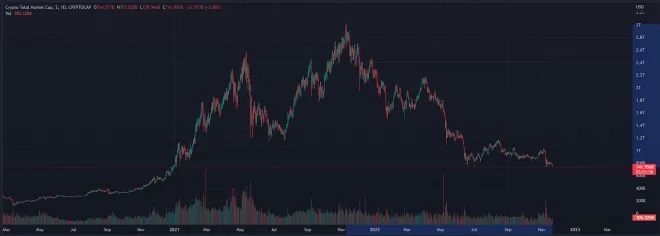
Transparency and Self-custody in 2022, has proven to be a challenging year for Crypto, as the total marketcap shrank by more than two-thirds and the prices of many tokens took a deep dive.

However, all the failures and collapses: Terra, 3AC, Celsius, FTX, Alameda Research and others, weren’t caused by DeFi. In fact, they were caused by the things DeFi was designed to eliminate – backroom deals, a complete lack of transparency, and irresponsible gambling with user funds. Through all the crises and black swans, DeFi operated smoothly and without fault, as designed.

Alameda Research even famously repaid their DeFi loan before going into bankruptcy, and DEXes across all chains have recorded record volumes.

Decentralised finance was able to weather the storm and prove its value. Everyone can see the reserves of a DEX in a real-time without having to trust audits and self-disclosures. There is no way to fake volume, syphon the funds out or use them against users.

Anyone with minimal technical knowledge can audit the state of their favourite DEX, and with new dashboards being released, this information becomes even more accessible.

Accessibility and openness. When people think of Traditional Finance, they usually think of Banks. Banks are slow and expensive, they can regularly take days to process transactions and take hefty fees.

Moving funds from one wallet to another on Avalanche takes a few seconds and costs a couple of cents. Banks are also slow to adapt – many still lack proper mobile and web applications, relying on outdated technology and in-person visits to branches. Banks are also far from being accessible.

More than a billion adults worldwide don’t have a bank account, and even in the most developed countries, many have limited or no access to the modern financial system. To access DeFi, one only needs a device with an internet connection.

On top of making finance accessible to users, DeFi opens it to developers as well. They can publish their code permissionlessly, and most software running DeFi Prototype is open-source and free for anyone to copy, modify and improve. Some of the most significant innovations resulted from the gradual improvements of existing products.

Innovation and Democratization

Regarding real-world usecases, DEXes often offer some of the best foreign currency exchange rates and settle trades almost instantly. Users can already buy tokenised versions of silver and gold with a few clicks on Trader Joe. With the advancement of tokenization efforts, more commodities will be brought on-chain.

For a long time, derivatives were a gated market inaccessible to retail investors. Indeed, they are risky and complicated, but they also offer some of the best returns when used correctly. On-chain derivative exchanges have seen rapid growth over the last year as users seek ways to trade without giving away any control.In general, interest in complex strategies has increased as the DeFi ecosystem matures.

There is an apparent demand for instruments like options and perpetual futures, and Decentralized Finance can provide them cheaply, openly and efficiently.

Derivatives and RWAs (Real-World Assets) aren’t the only use cases for DeFi, as the space for new possibilities is almost limitless. We’ve already seen experiments with stablecoins, synthetics, insurance and other instruments fostered by space’s dedication to innovation and collaboration.

Nigerian Government Lied When It Said It Reached An Agreement with Twitter – Twitter Files

1

The federal government of Nigeria lied about the agreement it supposedly had with microblogging app Twitter early in the year, according to documents found in Twitter files released by the company’s new owner and CEO Elon Musk.

In January, the Nigerian government lifted a seven-month ban it has placed on Twitter, saying it had reached an agreement with the social media platform to implement a new set of conditions that will ensure that what led to the Twitter ban does not happen again.

But the document contained in the released Twitter files said there was no such agreement and Twitter had upheld the government’s lie – created a room for stifling of free speech in Nigeria, by not refuting the false statement about the agreement.

“The Nigerian government blocked Twitter in June 2021, then falsely claimed to be in negotiations with Twitter executives; Twitter’s failure to correct the false record on many reported non-existent discussions with the Nigerian government permitted Nigeria to negotiate unilaterally through media and dictate unfavorable terms for final resolution,” stated the document.

“Twitter’s deliberate decision to refrain from correcting misinformation about Twitter’s proposed negotiations with the Nigerian government directly harmed Twitter shareholders, permitting the Nigerian government to impose various conditions on the platform harmed free expression rights and democratic accountability for Nigerian citizens,” the document added.

Twitter was banned after the social media platform removed a tweet made by President Muhammadu Buhari for violating its policy on violence. The tweet had threatened violence against the Igbo-dominated Southeast Nigeria, making reference to the country’s brutal civil war.

After the ban was announced in June 5 2021 by the Minister of Information, the Attorney General of the Federation Abubakar Malami directed the Director of Public Prosecution of the Federation (DPPF) “to swing into action and commence in earnest the process of prosecution of violators of the Federal Government De-activation of operations of Twitter in Nigeria.”

The ban, which was widely described as a brazen attempt to muzzle freedom of speech, drew condemnation from the international community. The Nigerian government said it had taken the step to prevent Twitter from being the source of the country’s implosion.

However, as the pressure to unban Twitter mounts on the government, Buhari’s administration came up with the idea of presenting lines of conditions to the social media company – a move believed it had initiated to save face.

“Following the suspension of Twitter operations, Twitter Inc. reached out to the Federal Government of Nigeria to resolve the impasse. Subsequently, I constituted a Presidential Committee to engage Twitter to explore the possibility of resolving the issue,” Buhari said in his 61st Independence Day address.

He added that the Committee, along with its Technical Team, has engaged with Twitter and have addressed a number of key issues. These are:

  1. National Security and Cohesion;
  2. Registration, Physical presence and Representation;
  3. Fair Taxation;
  4. Dispute Resolution; and
  5. Local Content.

Twitter neither refuted nor acknowledged any part of the said agreement, stirring skepticism that the parties had reached an agreement. After over one year, none of the issues highlighted by the president has been addressed by Twitter.

Book Recommendation on How to Win Customers in Nigeria, Africa

0

If you want to understand how to #win customers in Nigeria and Africa, I have a book recommendation for you: “The Critical Pillars of Sales Excellence: How to Prospect, Sell and Win Customers” by Ferdinand Ibezim.

I have a room full of books – so many of them – but only a few get frequent attention. I want to thank our Tekedia Institute Faculty, Mr. Ibezim, for the book masterpiece which is now a companion. His course in our program is a moment for every learner.

If you are a consultant and you find it hard to be paid, go back to the 10th principles of selling (page 169) and learn from the book:  “Do not present yourself as the beneficiary of the sale”. Yes, it is not a wise thing to present that proposal as Mr. Wazobia; Mr. Wazobia Limited is better. No human will hire Mr. Wazobia Limited and not pay the company even though they can do same on Mr. Wazobia.

Get a copy here and learn from a zen-master of sales 

Nigerian Government Flags Off Digital Economy Employability Programme for Nigerian Youths

0

In line with the ongoing quest for Africa to properly transition into the digital-data economy, the Federal government of Nigeria has flagged off the Digital Economy Employability Program (DEEP) targeted at empowering the Nigerian youths through the National Information Technology Development Agency (NITDA) in partnership with the National Youth Service Corps (NYSC).

NITDA whose strategic goal is to encourage the growth of digital skills, digital innovation, entrepreneurship and promotion of indigenous content in Nigeria will be facilitating the empowerment programme which will run concurrently in seven NYSC camps nationwide.

Mr Kashifu Inuwa, the Director General of NITDA, while declaring the programme open at the NYSC camp in Kubwa, Abuja on Saturday, December 10, has said the programme centred on improving the digital foot print of Nigeria by providing Nigerians with modern and relevant digital literacy and skills that would expose, prepare and connect them to in-demand career opportunities that are available in the global digital economy.

The DG declared the programme is expected to help create the opportunity for Nigerians to create job opportunities within the digital economy space which would ultimately help increase the contribution of ICT to the country’s GDP which currently stands at 18.44 percent, the Vanguard reported. Also mentioned by the DG is the multiplier effect the programme will have.

According to the Blueprint, the DG added that the initiative was part of the National Digital Economy Policy and Strategy (NDEPS) 2020-2030 and expanded the mandate of the then ministry of Communications to Include Digital economy, under the leadership of Prof. Isa Ali Pantanmi which geared toward empowering young Nigerians with digital skills in order to be part of the fourth industrial revolution. Mr Kashifu made the following remarks:

‘’The implication of this projection is that many Nigerians, both in the IT and non IT space must acquire digital literacy and skills in order to thrive in this current fourth industrial revolution.

‘’Given our huge population of about 218 million and which about 50 percent is constituted by youth, we have enough potential human capital to drive the data economy, and that is why we have decided to flag off this programme in seven NYSC strategic camps.

‘’We believe that the NYSC camps holds the brightest and the most intelligent Nigerian youths. We believe that corps members will not only benefit from this programme but will create a multiplier effect by transferring the knowledge and skills during the course of this programme to other Nigerians and this will help the country realize its target of 95 percent digital literate Nigerians by 2030. There is no better time to embrace digital transformations than now.

‘’The world is moving away from natural resource-based economy to a digital and knowledge-base economy, more attention and efforts are being put into human capital and digital technologies and Nigeria should not be left out of this fast-moving train.’’