DD
MM
YYYY

PAGES

DD
MM
YYYY

spot_img

PAGES

Home Blog Page 4661

Why Most Nigerians Remain Poor Despite Nigeria Earning $742 Billion in 21 years from Oil

2
Nigeria leaders

Check most faded ancestral kingdoms, they failed not because of lack of resources, rather, due to the poor utilization of their people. Typically, the people become enterprising, build wealth and after passing an inflection point, they pause – and lose their minds. Over time, another kingdom takes over.

As early as 1961, most European countries have written out any support to Nigeria because they saw a nation with a dynamic and pragmatic agricultural policy which if built upon could make it a respected nation in the world. In Belgium, they argued that any financial help to Nigeria was stupidity as the nation was already in a virtuoso cycle to greatness. Unfortunately, that did not happen and has not happened. Let me take you to economic systems for why:

Country A generates aggregate economic output (GDP) via agriculture of $5 billion but employs 1 million doing that. But it does not have a lot of money, just $0.5 billion, in the foreign reserves.

Country B generates output of $1 billion via crude oil sector but employs 100,000 people doing it. But  it has $20 billion in foreign reserves from the sale of the oil. 

Many people will say that Country B is in a better shape. Possibly, if that $20 billion is not mismanaged or stolen. But structurally, Country A has a stronger positioning provided it can keep getting more productive. It has found a way to employ its 1 million citizens and it has a decent reserve.  

In Country B, the citizens are under stress with largely zero economic participation, implying that risk is concentrated on what leaders do with that $20 billion. When you have bad leaders, you have the Nigerian case. When you have better ones, you have UAE (Dubai).

This explains why Nigeria has 133 million extremely poor people despite having earned $741.48bn  from oil & gas in 21 years. The curse of oil is not that oil is bad. The curse is that you can be partying in Abuja, drinking kunu, eating nkwobi and amala, and your bank balance will be growing in New York via oil sales. But when you look around, only few are in that party with the majority dying of the real curse: poverty in a land of plenty.

A National Bureau of Statistics (NBS) report has revealed that 63% of persons living in Nigeria (133 million people) are multidimensionally poor: “65% of the poor (86 million people) live in the North, while 35% (nearly 47 million) live in the South. Poverty levels across States vary significantly, with the incidence of multidimensional poverty ranging from a low of 27% in Ondo to a high of 91% in Sokoto.”
Nigeria Earned $741.48bn From Oil and Gas in 21 Years – NEITI

0

Nigeria earned $741.48 billion from oil and gas over a period of 21 years covering 1999 and 2020, according to Nigeria Extractive Industries Transparency Initiative (NEITI).

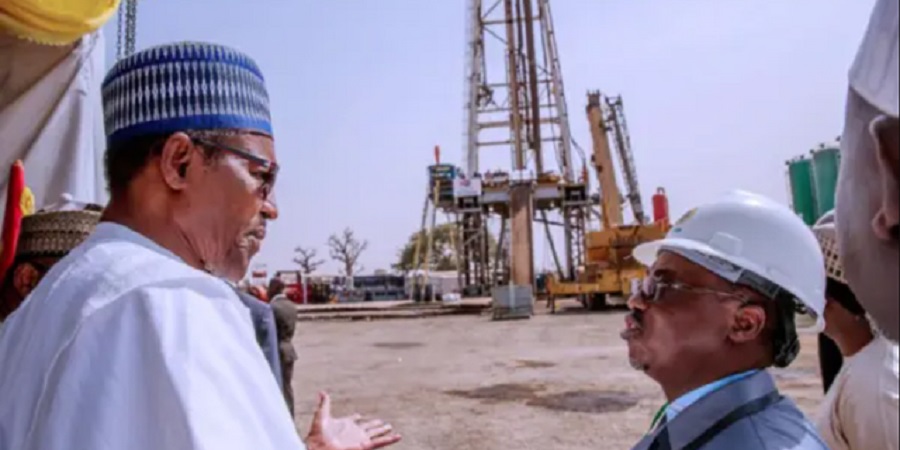
This was disclosed by the Executive Secretary of the organization, Dr Ogbonnaya Orji, during a stakeholders’ engagement forum on the implementation of the Petroleum Industry Act (PIA) in Abuja. Orji said the reports involve 25 cycles of audit of the oil and gas sector.

“The 2021 oil and gas sector audit is currently ongoing and will soon be released.

“This is guided by a five-year strategic plan (2022-2026) which will enable the agency to establish a presence and operate at sub-national levels to support government’s revenue growth plan and resources mobilization,” he explained.

The Nigerian oil sector is riddled with corruption and malfeasance that have enabled revenue shortfalls for years, particularly in 2022, when the country’s oil production was halved by oil theft. Consequently, there have been calls for the government to ensure transparent operation in the industry.

Orji said that he is delighted that NEITI’s reports had led to the recovery of several billions of dollars by the government from companies operating in the sector. He added that the recommendations made by NEITI in its reports have also triggered huge reforms in the sector.

Recently, President Muhammadu Buhari signed the Petroleum Industry Act (PIA), aimed at sanitizing the industry. The PIA which birthed the Nigerian National Petroleum Corporation Limited (NNPCL), has not been fully implemented. Orji said that NEITI, being a member of the Presidential Steering Committee (PSC), would provide the information and data in the oil and gas sector that would help to effectively implement the PIA.

“As an agency charged with promoting transparency and accountability in the extractive sector, NEITI has responsibility to facilitate and strengthen participation by diverse stakeholders for a successful implementation of the PIA.

“Therefore, the implementation of the Act and full operationalisation of its provisions are of great interest to NEITI and its stakeholders.

“NEITI has been working with relevant stakeholders and leveraging on our experience and exposure in the oil and gas sector to ensure that the implementation of the PIA delivers its objective and desired results,” Orji said.

He explained that NEITI has pioneered a programme designed to provide platform for stakeholders, and state and non-state actors to discuss and engage with the process of PIA implementation. In addition, he said that the platform will serve as a platform to update the public and galvanize the needed public support for the implementation of PIA.

“As an agency with the mandate to promote transparency and accountability in the extractive sectors, with a multi-stakeholders platform for dialogue on natural resources governance, NEITI has a huge responsibility to facilitate and strengthen the participation of diverse stakeholders for a successful implementation of the PIA.

“So far, NEITI has conducted and published 25 cycles of audit reports in the oil and gas sector, covering the period 1999-2020. From the report, a total of $741.48 billion was recorded as revenue earnings to government coffers from the sector.

“Besides, NEITI reports have led to the recovery of several billions of dollars by the government from companies operating in the sector. Recommendations of our reports are also triggering huge reforms in the sectors, one of which is the PIA we are discussing here today,” he added.

Apple’s Threat to Remove Twitter From Its AppStore Triggers Musk Outburst

0

Apple’s threat to remove Twitter from its AppStore, has sparked a reaction from Elon Musk who has called out the company to explain the reason for its proposed plan.

In a recent tweet, Musk said, “Apple has also threatened to withhold Twitter from its AppStore, but won’t tell us why.

However, since Musk took over as Twitter’s CEO, Apple’s App Store has approved five updates to the Twitter app. This includes the addition of new features to Twitter Blue earlier this month.

Musk had previously stated that if Twitter is removed from Apple’s and Google’s app stores, he will make an alternative phone that can work with the platform.

After he had earlier alleged that Apple had paused its ads on the platform, he went ahead to ask if the company hated free speech in America.

“Apple has mostly stopped advertising on Twitter. Do they hate free speech in America”, he tweeted.

Meanwhile, despite Musk’s allegation against Apple regarding the suspension of its ad on the platform, Twitter users disclosed that they could still see Apple’s ads in their feeds.

Apple hasn’t responded to Musk’s claims, also Musk hasn’t shown any data to back up his claim. Phil Schiller, Apple’s long-time executive who oversees the app store, deleted his Twitter account after Musk reinstated the account of former President Trump, who was removed from the platform in the wake of the Jan. 6, 2021, attack on the U.S. Capitol.

Meanwhile, analysts disclose that a decision by Apple to suspend its Twitter ads would pose a major challenge for the social network, as reports reveal that Apple is one of the top advertisers on the platform.

In the first quarter of 2022, it spent $48 million, accounting for 4% of Twitter’s total revenue for the period.

Musk had also disclosed that Apple has made demands on Twitter’s content moderation. He posted a yes-no survey, saying, “Apple should publish all censorship actions it has taken that affect its customers.”

It is a known fact that Apple has strict rules for its app store, as it limits objectionable content which includes discriminatory content related to religion, race, and sexual orientation. It also restricts overly realistic violence and pornographic material.

Asides from Apple’s pullback on its ads, a number of large companies have also paused their ads on Twitter since Musk took over the company. The exodus included General Mills Inc. and Pfizer Inc., which Musk acknowledged that the defections led to a “massive drop” in revenue.

After his acquisition of Twitter, Musk has been carrying out a serious revamp on the micro-blogging platform which has sparked several controversies.

FTX Collapse Negatively Impacts Crypto Lender BlockFi

0

The ripple effect of the FTX collapse has no doubt negatively impacted the crypto industry as crypto lender BlockFi has recently filed for bankruptcy.

The company on Monday filed for voluntary cases under chapter 11 of the U.S. bankruptcy code in the United States Bankruptcy Court, New Jersey district.

The crypto exchange platform disclosed that its reason for filing for bankruptcy was necessitated as it seeks to stabilize its business and provide the Company with the opportunity to consummate a comprehensive restructuring transaction that maximizes value for all clients and stakeholders.

BlockFi wrote on Twitter,

Maximizing value for all clients and other stakeholders is our priority. This process will help BlockFi to stabilize our business and provide us with the opportunity to work towards consummating a comprehensive restructuring transaction to maximize value.

As part of our restructuring efforts, we will focus on recovering all obligations owed to BlockFi by counterparties, including FTX.

Acting in the best interest of our clients is our top focus and continues to guide our path forward. Chapter 11 is a transparent process and we will continue to communicate with our clients to ensure they hear directly from us”.

The company’s financial advisor Mark Renzi disclosed that following FTX’s collapse, the management team swiftly swung into action to prevent its clients and the company from incurring losses.

BlockFi however clarified that the majority of its assets were not kept at FTX, but acknowledged that it has significant exposure to the crypto exchange platform. 

According to its bankruptcy findings, BlockFi subsequently borrowed $275 million from a subsidiary of FTX. This financial entanglement meant that when FTX filed for bankruptcy amid revelations of corporate missteps and suspicious management, BlockFi began to struggle too.

Also, a few days after FTX’s collapse, BlockFi notified its customers that they would not be able to withdraw their deposits due to its “significant exposure” to FTX, including additional funds the company had hoped to draw on under the agreement and other assets held on the FTX platform.

A Bloomberg report disclosed that BlockFi had to sell $239 million of its cryptocurrency to cater for its bankruptcy expenses while notifying about 250 of its workers of a possible layoff, after employing about 850 people last year.

In its bankruptcy filings, BlockFi still owes the Securities and Exchange Commission (SEC) $30 million, making the nation’s top securities cop its fourth-largest creditor.

FTX collapse has no doubt posed a major challenge to many of the industry’s stakeholders, as it operated at the center of the crypto ecosystem.

Many prominent institutional venture funds, and market makers were also not spared, as they had direct exposure to FTX based on their respective public statements.

Other than direct exposure to having assets on FTX, other centralized finance (CeFi) companies are currently experiencing a liquidity crunch. Crypto lenders such as BlockFi, SALT and Genesis, SALT, have since halted withdrawals, citing liquidity issues following FTX’s collapse.

Few Analysts disclose that the long-term effects of FTX collapse will be unfriendly, noting that the fallout will affect many early-stage projects backed by FTX and Alameda’s venture arms, as well as increasing regulatory pressure and also denting investors’ confidence.

As An Innovator, You Must Create New Paths

0

As an innovator, during that phase of creating a new basis of competition, it could look lonely. Fascinating, category-defining innovators understand the power of going alone. In this Harvard Business Review piece, I explained why that is necessary: one single strategy bullet will not destroy your business even as the industry is distorted. When I wrote this article, I was co-designing an accelerometer for the iPhone, contracted to the company I worked at then. My mindset was on innovation.

‘For a long time, Ford, Chrysler, and GM followed the same strategy: they built big gas-guzzlers. Asian competitors attacked that model, took market share, and transformed the U.S. automobile industry.

‘Also for a long time, Yahoo and AOL offered email customers 4MB of storage. Google came out with Gmail and provided a free 1GB email account (250 times as much). Many switched.

‘In both cases, the new entrants attacked a reliable business model and disrupted a market in which the incumbents competed by cooperating, tacitly agreeing to procedures that ensured that the industry as a whole remained continuously healthy. Indeed, terms like “win-win” and “coopetition” are very common in our contemporary business lexicons.

‘But in many cases, firms fail to separate the necessity of preserving their industries from developing individual survival strategies. They become docile and follow one another. From wireless carriers to broadcast TV, casinos to airlines, we often see an ordered communality within industries. They move in packs regarding features, services, and prices.’ Unfortunately, when an innovator strikes, all of them could be taken down together. Hello Tesla to Ford/GM/etc. Continue in Harvard here.