DD
MM
YYYY

PAGES

DD
MM
YYYY

spot_img

PAGES

Home Blog Page 4732

Bribing Nigeria, the UK and Africa by Glencore

1

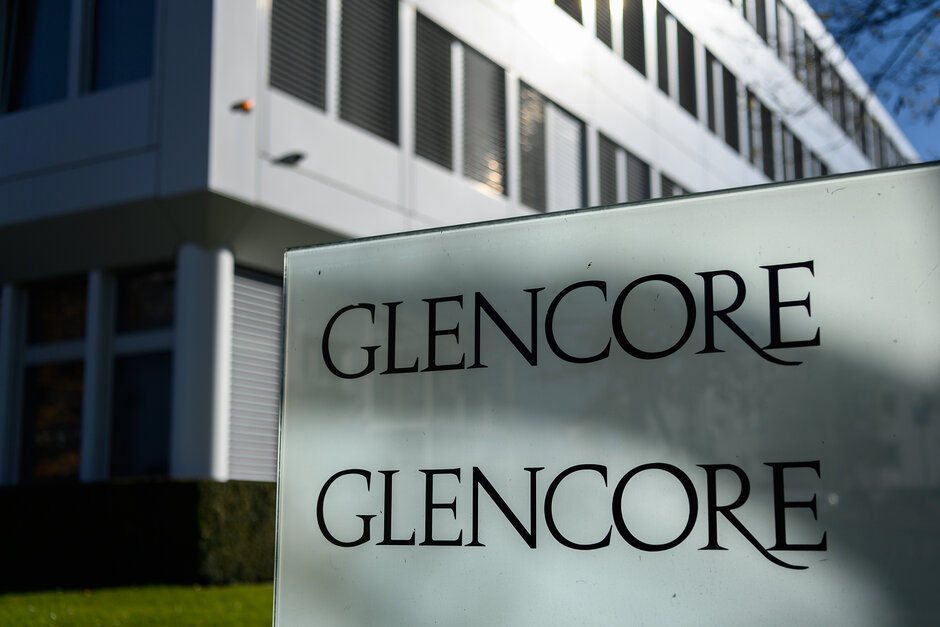
Glencore, a commodities giant, has been ordered to pay $314 million penalty by a UK court for bribing officials across Africa to gain access to oil: “The SFO investigation found that Glencore had funneled about $29 million worth of bribes between 2011 and 2016 through its workers and agents across its oil operations in Nigeria, Cameroon, the Ivory Coast, Equatorial Guinea and South Sudan”. 

There is no way you will not like Americans and the British people: they extract fines on companies for misbehaving in Africa. Yet, the victims (yes, the Africans) get nothing because our governments are the ones being bribed, and cannot prosecute their dear customers!

But look deeper, everyone is being bribed. Indeed, the UK is bribed along with African leaders because in most of these court cases, one thing is missing: the identities of people who received the money. In this case, Glencore agreed that it bribed and has the list of those bribed in Africa, but the UK government has refused to make that list public.

So, Glencore bribed in Africa, and in the UK, it bribed in the court. So, in the end, nothing changes. For Glencore, it can go back to its client and add an extra layer of costs, recognizing the bribes in Africa and the bribing-fines which never reveal the players, as the costs of doing business.

Judge Peter Fraser said Thursday that “bribery was accepted as part of [Glencore’s] West Africa desk’s way of doing business” and was “endemic amongst [its] traders.”

Bribes paid to state-owned oil companies and government ministries across Nigeria, Equatorial Guinea and the Ivory Coast were often concealed as an unspecified “service fee”, “signing bonus” or “success fee,” the SFO said, citing Glencore’s financial reports.

It also found that, between 2012 and 2015, a Glencore trader and Nigerian agent withdrew a total $13.7 million in cash from Glencore’s Swiss cash desk. The cash was flown on a private jet to Cameroon, where it was used to bribe officials in the country’s national oil and gas companies.

So, in the end, nothing changes. Never see what the UK is doing as fighting corruption. I will hail them when they publish the names of these crazy Africans which remain sealed.

MTN Partners Sanlam to Market And Distribute Insurance And Investments Products Across Africa

0

Multinational telecommunications company MTN has partnered with Sanlam, Africa’s largest non-banking financial services company to enhance the spread of insurance and investment products across Africa.

This partnership will see Sanlam offer its products on MTN’s website, mobile App, and USSD platforms, which aims to provide greater access to these services for people who have been faced with difficulty in accessing these services via traditional routes in the past.

The Alliance will be implemented through MTN’s Insurtech platform known as aYO holdings, which will see each partner hold 50% of aYO.

While announcing the partnership in a press release in August, MTN said, “While approximately 46% of Africa’s population has access to and uses cell phone services, insurance penetration remains low at less than 5% in most markets except South Africa.”

Speaking about MTN’s partnership with Sanlam, MTN’s group president and CEO Ralph Mupita said, “The alliance was aligned to the Group’s strategic intent to lead digital solutions for Africa’s progress. We are confident that this alliance will build and leverage the strengths and assets of both companies to establish a digital insurance and investment capability across Africa.”

Also commenting on the partnership deal is Sanlam Group CEO Paul Hanratty, who said “We are delighted to reach such a critical stage in our drive to deepen penetration of insurance and investment products across Africa through strategic partnerships.”

We are confident that a strong foundation is in place for this alliance. Sanlam believes that this strategic alliance with the MTN Group will make a considerable contribution to financial inclusion in Africa.”

It gives us great pride to be able to partner with MTN to build the best possible range of solutions in the insurance and investment arena for consumers. We anticipate strong long-term growth in mobile financial services and insurance and investments are no exception to this“.

Through this strategic partnership, MTN hopes to accelerate its insurance technology (insurtech) offering across the African continent, via Sanlam’s geographical licensing reach, and its wide-ranging product offering.

Currently, MTN’s insurtech business has around 6 million active policyholders, but it aims to achieve 30 million policyholders by 2025.

For Sanlam, the strategic collaboration with MTN will create a better opportunity to widen the reach of its products and expand its operations in Africa by offering insurance to MTN’s existing customers.

The insurance company is recognized as the largest in Africa, with Its listings on the Johannesburg Stock Exchange, the Namibian Stock Exchange, and the A2X. Established in 1918 as a life insurance company, Sanlam Group has developed into a diversified financial services business.

Its five business clusters comprise Sanlam Personal Finance, Sanlam Emerging Markets, Sanlam Investments, Sanlam Corporate, and Santam. Last month, FBNInsurance completed its rebranding project to be known as Sanlam Life Insurance Ltd following Sanlam’s take-up of 100 percent shareholding in FBNInsurance.

MoneyGram Onboards Cryptocurrency Trading, Payment Feature

0

MoneyGram, a global leader in the evolution of digital P2P payments, has become the latest big name in the payment industry to onboard cryptocurrency.

The company on Tuesday announced the launch of a new service enabling consumers to buy, sell and hold cryptocurrency via the MoneyGram mobile app. The new feature is made possible through the Company’s existing partnership with Coinme, a licensed crypto exchange and API-driven crypto-as-a-service provider.

This new and innovative feature gives MoneyGram customers in nearly all U.S. states and the District of Columbia1 the ability to trade and store Bitcoin (BTC), Ethereum (ETH) and Litecoin (LTC) by using the Company’s leading mobile app, the company said in a statement.

According to MoneyGram, this is the latest crypto-related service launch from a company bringing real-world cryptocurrency and blockchain use cases to life. From on/off-ramp services for digital wallets through partnerships with Coinme, Stellar and G-Coin, to cross-border settlement through Circle’s USD Coin (USDC), to the new ability to buy and store crypto simply by using its app, MoneyGram is pioneering cross-border payment innovation and blockchain-enabled settlement.

“Cryptocurrencies are additive to everything we’re doing at MoneyGram. From dollars to euros to yen and so on, MoneyGram enables instant access to over 120 currencies around the globe, and we see crypto and digital currencies as another input and output option,” said Alex Holmes, MoneyGram Chairman and CEO. “As a next step in the evolution of MoneyGram, we’re thrilled to provide our customers with access to a trusted and easy-to-use platform to securely buy, sell and hold select cryptocurrencies.” 

MoneyGram said it is on a mission to deliver innovative financial solutions that connect the world’s communities. Tuesday’s announcement evidenced the company’s readiness to execute that strategy and best serve its customer base of tens of millions of people.

In line with global regulations, MoneyGram is expected to expand its future selection of crypto coins as the Company explores expansion to other markets in 2023.

MoneyGram is committed to investing in new growth opportunities and expanding past its core products to enhance consumer financial services around the world, the company said.

Holmes said MoneyGram is leveraging the popularity of digital currencies, using its global network to offer customers quality digital payment services.

“As consumer interest in digital currencies continues to accelerate, we are uniquely positioned to meet that demand and bridge the gap between blockchain and traditional financial services thanks to our global network, leading compliance solutions and strong culture of fintech innovation. We are excited for this next chapter in our journey,” Holmes said.

MoneyGram said the partnership which enables people to buy, sell and hold crypto using the MoneyGram app, is made possible through the Company’s existing partnership with Coinme. The two companies have been together since 2021, partnering to expand access to crypto by creating thousands of new locations in the U.S. for consumers to buy and sell bitcoin with cash.

The move by the payment giant comes at a time when the cryptocurrency industry is facing a serious downturn that has seen more than half of its capitalization wiped off. Experts say MoneyGram’s bet on the market indicates that investors still have confidence in the market.

On Money Laundering: Know Your Customers, Investors and Partners

0

A client (excitedly) called me the other day saying that a prospective Nigerian investor wants to invest $2mUSD into their investment and capital venture management company and asked me to prepare the necessary legal paperworks to set things in motion.

Out of due diligence, I  asked him to disclose to me who the prospective investor is. I found out that the prospective investor is a “notorious” Nigerian politician who has a lot of money laundering and public funds embezzlement court cases around his neck. It will be safe to presume that he is likely trying to use my client’s firm to launder some of his alleged stolen funds. This will definitely be the first presumption of anti-financial crime agencies.

It is common knowledge that launderers use mostly real estate companies, financial institutions, startup companies, and investment management companies as a safe haven for money laundering both in Nigeria and around the world. This assertion has even been confirmed by the current Economic and Financial Crimes Commission chairman, Mr. Abdulrasheed Bawa in one of his press briefings.

On that note, institutions (both financial and non-financial institutions) have been charged and are expected to carry out due diligence in identifying the source of funds a prospective partner or investor wants to channel into the organization, also identify the owner of the cash; what does the owner of the cash do for a living, also verify if the cash is obtained from a legitimate or illegitimate source, etc. This is what is known as “Know Your Customers” (KFC) in financial organizations. The

Economic and Financial Crimes Commission (EFCC) has been empowered by the provisions of S. 6(d) of the EFCC act, 2004 “to identify, trace, freeze, confiscate or seize proceeds derived from terrorist activities, economic and financial crime related offenses or the properties the value of which corresponds to such proceeds”.

Therefore, When a company or a firm is used as a conduit to launder money or embezzle funds, the anti-graft agency can come after that company and confiscate the belongings of that company on the ground that the belongings of that company are proceeds of crime. If any funds obtained by illegal means are traced to a company, the EFCC has been charged by the provisions of S.6 of the 2004 EFCC act to confiscate those funds and other funds and properties associated with it.

Subsequently, According to section 5 of the Money Laundering Act, cash-based transactions above the $1000 threshold should be subject to stringent identification procedures. Companies have to pay serious attention to these provisions because ignorance of the law is never an excuse.

The Economic and Financial Crimes Commission Act, 2004, The Money Laundering (Prohibition) Act 2011, and Anti-Money Laundering and Combatting the Financing of Terrorism (AML/CFT) in Banks and Other Financial Regulations of 2013 are the extant laws regulating financial institutions and designated non-financial institutions (DNFI) in Nigeria on this subject matter and every transaction is to be subjected to the stringent threshold that these legislations have already provided to avoid incurring the wrath of the law.


The DNAs of Great Companies [video]

0

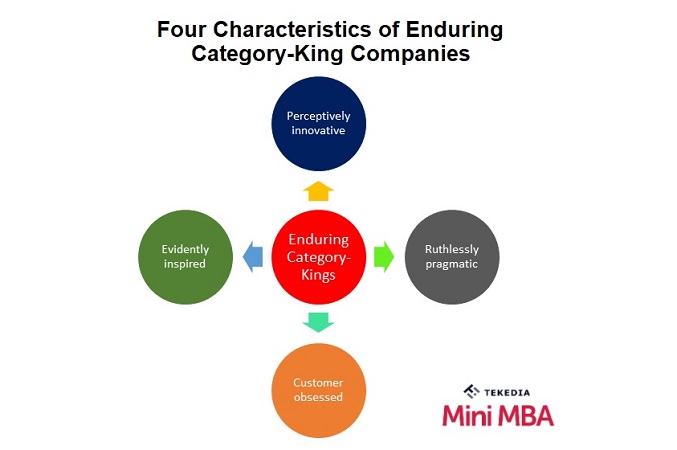
To become an enduring category-king in your business sector, you must possess these four characteristics:

  • Perceptively innovative: you are always innovating. You never rest, always pushing for better products, services and experiences. You outperform competitors with new solutions for unmet needs.
  • Evidently inspired: you inspire your users. You are modern, trustworthy and inspirational, you have a larger purpose, helping people live out their own values and beliefs.
  • Ruthlessly pragmatic: your customers depend on you and you have their backs, making life easier by delivering consistent experiences. You make good on your promises.
  • Customer obsessed: customers cannot imagine living without you. You know what matters to customers, finding new ways to meet their most important. needs.

Join Tekedia Institute school.tekedia.com and master the mechanics of business.