
DD
MM
YYYY

PAGES

DD
MM
YYYY

spot_img

PAGES

Home Blog Page 4800

Some Bank Charges are fraudulent and illegal

0

I was having a conversation with someone earlier and the person narrated to me how a Nigerian bank has been charging him incessantly for debit card maintenance fees on a monthly basis.

Unfortunately, I share the same experience. I opened an account with a bank with the intention of depositing money into it and saving it for the long term and I had no plans of making withdrawals from the account. Due to the fact that I had no intention of using or servicing the account regularly, I specifically gave an instruction to the account officer that I do not want a debit card on the account because I know that there are charges for debit card issuance and quarterly maintenance fee.

Since the time that the account was opened, I have constantly received unexplainable debits on the said account and also debits for debit card quarterly maintenance which is absurd because I have no debit card on the account and I did not at any time request for the debit card on the account.

I have gone to my branch to make complaints and inquire why I’m being charged maintenance fee for a product that I do not use, and never requested. The account officer promised to look into it but to my utmost surprise, I still get debits; I received the last debit alert for the quarterly card maintenance fee on 14/10/2022.

This fraudulent act of the bank has raised some questions in my mind and in the mind of other customers who may be facing this same ordeal in the fraudulent hands of Nigerian banks:

  1. Can a customer be charged for a product he does not use, never requested, and was never issued? 
  2. Can the bank on its own (willy-nilly) issue a product to a customer when the customer specifically gave the instructions that he does not want the product and never requested it? 
  3. Is this act of the bank constantly charging a customer for a product he does not use and never requested for not fraudulent, illegal, and unethical?

Moreover, based on the Central Bank of Nigeria’s revised Guide to Charges by Banks, Other Financial and Non-Bank Financial Institutions which took effect on January 1, 2020; in its S.10(4)(2) which provides for Fees for Card Maintenance, banks are to charge Naira Debit/Credit Card linked to savings account N50 for quarterly maintenance fee ie, debit card maintenance fee are to be charged quarterly and not on monthly bases and the amount to be charged is N50 if the customer operates a savings account but if the customer operates a current account he is not to be charged for maintenance fee on Debit card linked to the account.

I am being debited more than N50 for the card maintenance fee which is above the stipulated charge by the CBN and the person who complained to me is being charged monthly which is also fraudulent, illegal, and criminal.

It’s high time Nigerian banks stop ripping customers off in order to make unscrupulous profits, acts like these are not just unethical but also fraudulent.
PAN Demands Real Sanctions for Election Campaign Lawbreakers

0

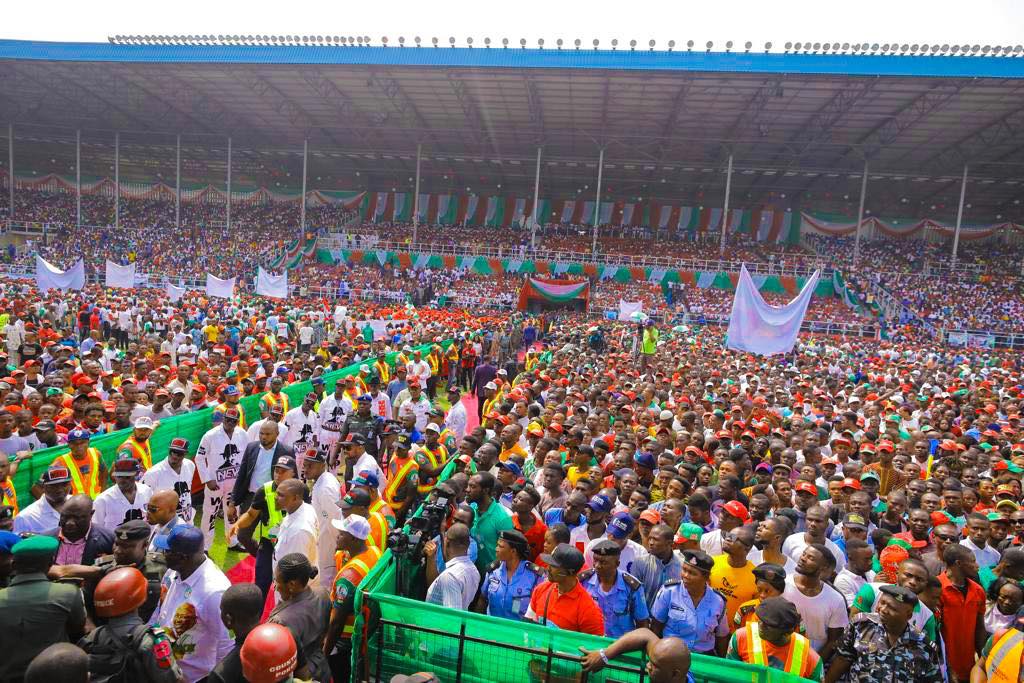
The Positive Agenda Nigeria, a research focused non-governmental organisation which monitored activities of political parties and their supporters during the 2022 Osun governorship election campaign, has called for true sanctions against campaign regulation violators. The demand was made in the organization’s final report.

The 39-page report with the title “Deconstructing and Reconstructing Election Campaign Strategy in Nigeria: Managerial and Policy Insights from Osun 2022 Governorship Election” documents activities of the political actors and their supporters in the areas of campaign strategies employed for marketing party and candidate’s agendas. The report also includes specific campaign and policy issues or needs addressed during the campaign.

While reading the report, our analyst discovered that PAN provides practical solutions that the Independent National Electoral Commission, the National Broadcasting Commission, the Advertising Regulatory Council of Nigeria, security agencies, and civil society members could explore. According to the report, these stakeholders are critical to developing effective and long-term sanction strategies that adhere to the campaign’s existing rules and regulations.

Dr Adebiyi Rasheed Ademola, the Team Lead of the organisation, notes that “The Osun report is a testimony of the need to do real time monitoring of campaign activities by political actors and their supporters. It captured what went down in the real course of the campaigns. With this report, critical stakeholders could see the pattern of electioneering campaigns in the governorship election. It should be both an eye opener and early warning signals especially as the country inches towards the 2023 elections.”

He stresses that despite efforts to curtail excesses of politicians by making candidates and their parties get committed to both peaceful and fair elections and campaigns, the two established parties still toed the path of personality disparagement at the expense of the issue-based engagements.

“This speaks to the reasons the National Peace Committee in its first peace accord signing to include peaceful and sane campaigns. However, the only way to establish the aggressors and caution excesses is to monitor real time and warn or sanction any violators. The report also called on the INEC to have the will to implement its campaign guidelines and rules. These are there on paper, we await to see when it would be implemented by the body. It is a report whose recommendations need to be studied and applied as we witness campaigns both off and online for the 2023 elections.

The report has significantly revealed that the politicians, as seen in Osun, are using the social media most in their bid to undermine the personality of their fellow contestants. It did not stop there as the radio, television and other mainstream media were also deployed for attack. In all of these, the core issues of the state suffered greatly.”

The full report is available here.

Private Schools Better Than Public Schools in Nigeria – World Bank

2

The World Bank in a report titled “Education and Health Services in Nigeria”, recently disclosed that private schools in Nigeria outperformed public schools across all indicators.

The report said, “Private schools consistently performed better than public schools across all indicators. A notable distinction was in their management of human resources.

“Absence from school in public schools was more than double the absence rate among private school teachers: 16 versus 6 percent. 

on a typical day, pupils in private schools learned 1 hour 10 minutes more than pupils in public schools. Over a period of a school term, this translates to 22 additional days of learning in a private school compared to public schools.”

According to the survey, private school teachers were more likely to be in class and as a result, spent more time in class on instructional activities than public school teachers. Additionally, private schools have a longer scheduled teaching time per day than public schools.

In terms of input availability and competency, Private schools performed better than public schools, as nevertheless, public schools performed poorly generally. According to the report, it revealed that the availability of infrastructure was three times higher in private schools.

Only 35 percent of private schools had the minimum combination of infrastructure. The same applied to teacher competency, where the average assessment score was 11 percentage points higher in private schools, yet it was only a disappointing 42 percent.

According to the report, availability of teaching equipment in private schools had an average of 66 percent compared to 45 percent in public schools, which was the only case where private schools and public schools were relatively marginally satisfactory in absolute terms. 

The World Bank stated that the major issue of input availability and low teacher competency in primary education cut across public and private schools.

It said “Both public and private schools performed equally well on the pupil-teacher ratio. These results suggest that major issues affecting the quality of primary education in these states (i.e. inputs availability and low teacher competency) cut across both the private and public sectors, although private schools did seem to be able to elicit greater effort on the part of teachers.” 

In Nigeria, a lot of people believe that the quality of education in public schools is nothing compared to that of private schools, as they stated that the low fees paid in public schools can never get the students quality education like their counterparts in private schools.

The standard and quality of education in private schools beats that of public schools in all ramifications, this is due to the fact that the government in a way has neglected the educational needs of public schools.

Most public schools in Nigeria remain poorly funded coupled with the absence of quality infrastructure, which affects the standard of learning for students. The government continues to handle these public schools with levity, ignoring most of their needs.

State governors have also failed to build additional public schools, which has led to overcrowding in most public schools, unlike in saner climes where both public and private schools are well-equipped and built to standard.

Applying This Nugget Will Prove Resourceful to Improved Public and Private Wealth Management

0

Before you spend, Earn

I recently stumbled on the above nugget from Williams Arthur Ward in a motivational and self-development page that I follow on Facebook. And I’ve been quite appreciative of the soundness of its logic.

The nugget initially seems self-explanatory and commonsensical. Of course, you have to earn money in order for you to be able to spend them on things that’ll enable you to satisfy your needs, desires or whatever motivation you may have. But a closer look at the nugget proves that it is much deeper than it seems. Implied in it is a law of wealth and the basic of financial intelligence.

To earn income, you must be willing and able to work or exchange your labour or service in advance. This law of earning is not rationally different compared to the fact of expenditure. Essentially, while you have to labour or contribute values in exchange for your earned income, you equally have to invoke labour and attract values to justify your expenses in the larger economy.

The logic here is that a free outflow of a resource whose inflow isn’t free is counterproductive. In other words, if your income is economically justifiable but your expenses are not, you are simply an irrational player in the economy. Frankly, the economy does not reward unproductivity or mediocrity neither does it celebrate irrationality.

Money is a conduit of economic exchange. And fundamental to economic life are the laws of demand and supply. Subject to these laws is the reality of scarce resources and the need to ration among alternatives. Thus, whether on the individual, institutional or national level, economic and financial breakthrough is contingent upon the capacity to make rational choices among alternatives.

The nugget underpinned one of the values upheld in a company I have worked with. In the organization, at the end of every month before the accountant got the Managing Director’s approval to proceed with payment of salaries, all the members of each department led by their departmental head must have done a general presentation of their review of activities and tasks for the month. There’s a particular section of the presentation which invariably came last. That’s the section that addressed the justification of remuneration.

“Have I earned my salary for the month?”

This was usually followed with a laughter or an applause or sometimes a reprimand by the MD. For the ones with watery review, even though evidences suggested otherwise, none would dare to say they did not merit a pay. But generally, the culture promoted presentation skills and good work ethic among the employees and it contributed to the growth of the company. However, as the organization expanded, the practice and some other important foundational values were lost to some new set of norms that supplanted micromanagement. This adversely affected the company in many ways.

I believe the same nugget can be extrapolated to understand Nigeria’s current fiscal reality which has steadfastly promoted a rent-seeking rather than productive economy. In the last decade Nigeria’s foreign reserves have continued to plummet while its annual budget deficit has been on the increase. Recently, the federal government turned in the appropriation bill for the year 2023 which is estimated at N20.51trn with a projected deficit of N10.78trn and debt servicing of N6.31trn.

Interrogating the bill, analysts have argued that even though current economic realities may justify external borrowing to sponsor the country’s fiscal policy, the recurring budgetary deficit and increasing debt of the country cannot be exonerated from several incidences of economic mismanagement by the Government during boom periods in the past.

Summarily, if you do not ration during abundance, you will be forced to do so during scarcity. There is no escaping the law of rationing. However, whereas the former is  proactive and sustainable, the latter is reactive or adaptive.

Big Eyes Coin, Following In The Footsteps Of Chainlink and Uniswap, Is Poised To Dominate The Cryptocurrency Market

0

It is common knowledge in the crypto community that a project can only succeed with widespread support from its users. From voting and governance to acceptance and purchasing, many of these crypto initiatives need appropriate involvement and contributions from the community.

Community engagement often serves as the sole impetus for a project’s advancement. So, crypto projects are constantly looking for ways to improve by implementing new features requested by their user base. Consequently, this strengthens the community’s commitment and ensures the project’s continued success and prominence in the market.

A few of the most significant and promising blockchains include Big Eyes Coin (BIG), Chainlink (LINK), and Uniswap (UNI). All three are dedicated to the development and success of their respective user bases. Find out more about these cryptocurrencies in this article.

Chainlink – The Decentralized Blockchain Network

The Chainlink token, LINK, is part of a decentralized blockchain network that incentivizes data providers (Oracles) to bring fast, accurate, and trustworthy information from off-chain sources.

Chainlink (LINK) is an ecosystem of oracles that facilitates the access of smart contracts to real-world data by providing useful data from outside the blockchain to the blockchain and vice versa. Many commands within a smart contract cannot be carried out without this information.

The LINK coin is the system’s native token in the Chainlink (LINK) ecosystem. It is a Proof-of-Stake token built on the Ethereum blockchain. The coin serves a governing and practical purpose within the ecosystem. There will never be more than one billion LINK tokens issued.

Tokens of the LINK protocol are the primary means through which the project’s development is funded. There are currently approximately 464 million of this deflationary token in circulation.

Uniswap – One Of The Most Trusted Cryptocurrency Exchanges

For secure and convenient cryptocurrency exchanges, go no further than Uniswap (UNI), a platform built on Ethereum that exemplifies real DeFi solutions. Hayden Adams launched this groundbreaking DEX platform in 2018; the Ethereum Blockchain powers it.

With the help of smart contracts, Uniswap (UNI) facilitates the buying, selling, and exchanging of tokens based on Ethereum and tokens constructed on other chains. It allows for free, frictionless, and secure inter-chain communication.

The Uniswap ecosystem has its coin, often known as UNI tokens. Its primary function is governance, and the Uniswap DAO employs it to bring about systemic change.

Big Eyes Coin Exudes Sustainability

Big Eyes Coin (BIG) is a community-focused cryptocurrency and ecosystem. In terms of wealth generation, scalability, and asset security, this DeFi protocol is a game-changer and entirely community-driven. These innovations put Big Eyes Coin on the path to becoming one of the most prominent DeFi technologies.

By integrating industry-leading DeFi solutions into a self-propelled Blockchain designed to boost financial growth via DeFi and NFT technology, Big Eyes Coin safeguards users’ interests and purchase decisions while enabling them to access a wider range of content and services inside the ecosystem.

BIG, the protocol’s native currency, serves as an economic, utility, and governance token. It has a maximum supply of 200 billion coins. It can be used for various things, such as trading fee payment, stake reward acquisition, governance power acquisition, liquidity providing, and NFT collection access.

Big Eyes Coin is currently in the fifth stage of its presale having raised $7.3 million thus far. Big Eyes Coin is offering token bonuses to those who purchase BIG tokens through the presale using the ‘EYES1563’ code at the checkout. It presents a unique opportunity to purchase BIG tokens for a low price before they potentially explode after launch.


For more information on Big Eyes Coin (BIG), please visit the following links:

Presale: https://buy.bigeyes.space/

Website: https://bigeyes.space/

Telegram: https://t.me/BIGEYESOFFICIAL