DD
MM
YYYY

PAGES

DD
MM
YYYY

spot_img

PAGES

Home Blog Page 4821

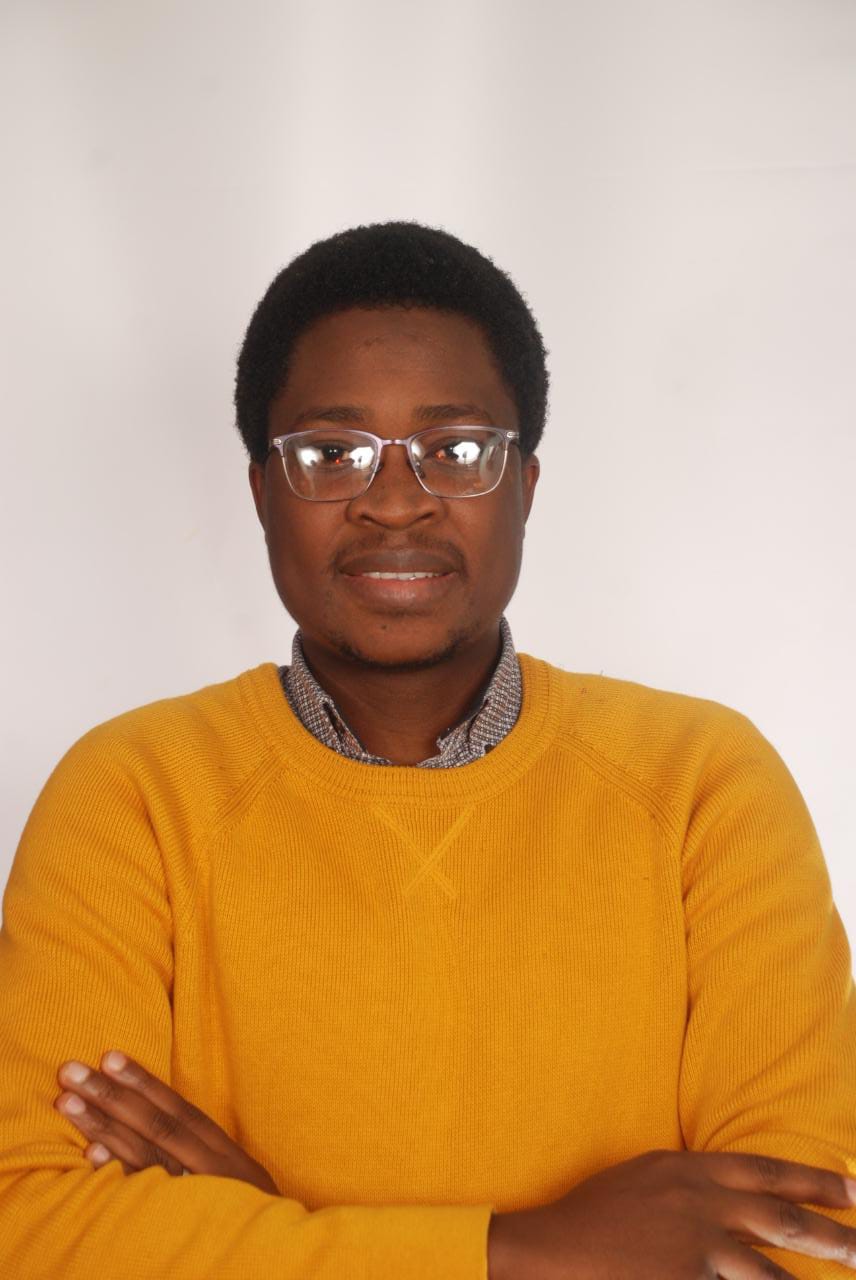
INTERVIEW: Strong Stakeholder Coordination Key to Mitigating Information Pollution Effects on African Democracy – Dr Mustapha Muhammed Jamiu, CEREDEMS-Africa Executive Director

0
Dr. Mustapha Muhammed Jamiu

Editor’s Note

The essence of news is that it is accurate and balanced. According to various scholars and practitioners in the media industry, there should not be anything called “fake news” because incorrect or inaccurate narration of events cannot be associated with news. Despite this stance, not a single day has gone by without reports of people spreading misleading and false information via various technological platforms. The majority of the time, the creators are not trained media professionals. This is not to say that there haven’t been professionals who created and disseminated contaminated messages. As part of this discussion, our analyst spoke with Dr. Mustapha Muhammed Jamiu, a lecturer at RUND University in Moscow and the Executive Director of the Center for Research for Development of African Media, Governance, and Society, about the effects of polluted messages on African democracy and other sundry issues.

Excerpts

Tekedia: Growth and development cannot happen without some forms of research issues and needs in society. As a scholar from Africa, who is schooled in the continent and one of the countries in the global north, what’s your take on research and development in Africa, especially towards advancing media and public communication?

Mustapha Muhammed Jamiu: Thank you. To be sincere, there are many existing works of African scholars on the advancement of media and public communication and also on information management. However, not all are of high quality and not many are practically based in their focus. For example, many of us young scholars tend to supplement academic papers from the global north to provide a standard paper required from high-impact journals.  Another issue regarding practical based research is the fact that papers shouldn’t be written for the sake of just writing, keeping a list of publications, or on shelves. Academic papers are meant to effect change in society. That is why it is called a research paper. Unfortunately, you will barely find some of them easy to use in application. Another big problem is the failure of the government to declare most government-owned universities as research institutions with full support and transfer the results and recommendations from scholars’ works to policy implementation and society’s development. As for the development of media and public communication, as I said, we need a synergy between governments and scholars to make this happen especially at this critical moment of media proliferation and information pollution era. Information, communication, and media are key pillars of democracy and need to be well taken care of. And one of the best means is through well-funded research with the government being intentional in their support to the academic community and for academics to also sit up by producing quality work.

Tekedia: Production and dissemination of media content cannot occur without learning the rudiments of doing them from school. How would you describe media performance in terms of producing content that advances Africa’s cause and connects it to the rest of the world? Is African media representing the continent well?

Mustapha Muhammed Jamiu: Well, to talk about other forms of media such as music, movies etc, they have been trying their best in projecting the image of Africa but from a journalistic point of view, there isn’t much to celebrate. So, the representation of African media in the world is still lacking in that regard. To get accurate stories about happenings in Africa, majority would still have to turn to foreign media. The African media producers and practitioners (journalism in particular) need to learn how to let the work do what media is meant to do for Africa from an African perspective. There is need for them to create niches for African identity as a continent and take full charge in telling our story better. The practice of journalism in a formal way may once be of western orientation but today, it is a global thing for every region to represent their image to the fullest. Now, every region must have its media genre. No more copycat, western or colonial genres. This is one of the key issues affecting the performance of African media in taking charge of their region when it comes to representation.

Tekedia: Hardly can one see severely polluted messages in Africa before technology. Now, emerging technologies have revolutionized the ways Africans create and disseminate information. Would you say technology is a curse or blessing to the continent’s ways of communication?

Mustapha Muhammed Jamiu: Hmmm. . .  I wouldn’t say it is a curse neither would I say it is a blessing because this issue is a global challenge. The emergence of new technologies was once perceived to be a kind of saviour for people to gain ease of life which to some extent we are benefiting from and for citizens to fully enjoy their democratic rights in lending their voice through freedom of expression and rights to be informed. However, while the information and the means of getting it became abundant, so it got proliferated, tuned to noise instead of messages, became a means of manipulation for some leaders, a tool of destruction by some people, and an avenue to divide and exploit the attention of people for economic gain by others. Though between the two consequences, the negatives tend to be outweighing the positives which shouldn’t be.

Tekedia: Africa cannot accomplish many tasks without using some technologies because of the need to align with the rest of the world in terms of being effective and efficient. However, in some cases, Africans are employing emerging technologies such as social media for destructive purposes more than their counterparts in the global north. What do you think this connotes for the continent’s future development?

Mustapha Muhammed Jamiu: As I said above, on how different people are using technologies for different purposes. Yes, many of our people are not using technologies well for themselves though many young ones are using them for solving problems in Africa today. They are not much compared to those using them as tools for distraction and destruction. The implication is that we will be left far behind in terms of growth and development as we are currently, and by the time we would realise it, there may not be a solution. So, we need to brace up and use technologies for positives purposes.

Tekedia: You recently defended your PhD thesis at RUDN University, Moscow, with a focus on information pollution and elections in Africa. Could you briefly walk us through the practical implications of your findings to Africa, especially Ghana and Nigeria you studied?

Mustapha Muhammed Jamiu: The study came up with two key strategies for practical implications for the two countries; a framework to understand the pattern in which information pollution spreads among political stakeholders; and a model which I called Electoral Cycle Information Pollution Ecosystem(E-CIPE) on understanding election and the chain of information pollution in the context of Africa. The framework and model can be used by policymakers, political actors, government, NGOs, CSOs, and any other actors with the responsibility for information management and the responsibility of combating the menace of information pollution as a threat to sustainable democracy.

Tekedia: What was your experience with stakeholders while conducting the study?

Mustapha Muhammed Jamiu: This is a very big question and critical if I may say. And I am happy it came up. I say this because I had many challenges in getting the key stakeholders to attend to interview, for citizens to fill out the survey, and also to easily gain access to find government institutions, key documents and data. While I appreciate the positive gestures of all my respondents and those who later help, it is equally important to talk about some of the hurdles where we need adjustment and for other scholars who may want to use some of the methods I used to learn what works and what doesn’t (work).

The first problem was getting the attention of the stakeholders for the interview, both the politicians and media editors often said they had busy schedules and they showed the culture of not keeping promises and time. Many promised and later ignored me. And I had to reschedule meetings several times because some of them didn’t turn up on time. Another thing is the issue with the time difference. Finding an appropriate time that works for me and my interviewees because  of the difference in time zones and availability were challenging experiences.

The third issue has to do with technology. The interruption of the internet and the fact that many were not responding to the online survey for almost two months until they were printed and distributed to different places. The online is supposed to be of greater value in the sense that there will be almost equal representation in different regions of the two countries. But the printed version with the usage of representatives from each region to print and distribute will end up being centred in some areas alone, which may affect the intention of the study and the hypothesis designed.

Finally, Africans tend to find it difficult to give data. They are always busy or have one or two excuses not to fill all surveys, be it online or printed surveys. And they need to know the importance of this. Data is an integral part of realising important growth and development. It is the data that lets us know the number of people who are underrepresented, the number of people living in extreme poverty, the number of people and who are affected by what and to what extent. Knowing this will help realise how to report them, and use them for designing possible solutions for policymakers and governments to put in place.

Tekedia: How certain are you that concerned stakeholders would take up your managerial and policy recommendations for strengthening the information component of the electoral cycle in the countries?

Mustapha Muhammed Jamiu: Nobody can be certain of such in the case of most African countries. Except if it is a project being sponsored by the authorities or selected by an international organisation to be used when they find it convincing or aligned with their goals. For some of these reasons, my research design from the beginning keyed into making the output of the research an immediate effect by setting up a non-governmental research institute that will work in between the duties of the CSOs and academics. That is to say, to design and implement some of the results of the study for direct impact.

Tekedia: What are your plans for advancing this emerging field in Africa?

Mustapha Muhammed Jamiu: As I said in the previous question. The study was designed to take immediate action from the results. So, the future of this field has started already through the institution of the Center for Research for Development of African Media, Governance, and Society- CEREDEMS-Africa was founded during my PhD program and it is currently monitoring the campaign for 2023 Nigerian presidential election which is one of the two counties I studied. Also, there is a plan on releasing a handbook on how to undo the psychology of information pollution and election in Africa before the end of the year. Meaning it could be, also useful, for the ongoing campaign and the Nigerian election.

Also, the plan is not to study or miniature only Nigeria but to serve as a key body that monitors election campaigns and information pollution in Africa and comes up with solutions for policymakers to combat information pollution.
ASUU Strike: Union Says it is Ending Strike Soon

0

The Academic Staff Union of Universities (ASUU) has disclosed that it is ending its 8 months strike soon, stating that “there is light at the end of the tunnel”.

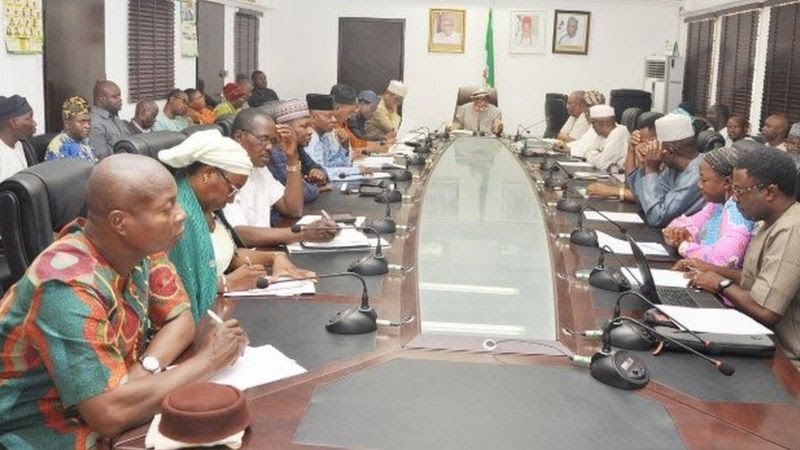
The union, after a meeting with the house of representatives, disclosed that it is optimistic about an end to its strike soon.

ASUU’s president Prof. Emmanuel Osodeke while in a meeting with members of the house of reps, said “Please, let all of us work together to put a beautiful end to this end to this thing we have started so that every Nigerian will be proud that we have universities we can be proud of.

“Once again, I want to thank you. I also extend our appreciation to the president for intervening, I want to appeal that in the future, we should not allow strikes to linger. The strike should not go beyond two days.

“If the way the national assembly has intervened, if we had done that long ago or those in charge of labour and education had done exactly this, we would not be where we are today.

“We would not have stayed more than two or three weeks on this strike. There is strike all over the world in the UK, US, all over, but they don’t allow it to last.

“So, once again, thank you very much and we hope that working together, in the next few days, we can put an end to this particular imbroglio in the Nigerian educational system.”

Also commenting on the issue is the Speaker of the house of representatives Hon. Femi Gbajabiamila who disclosed that most of the issues that caused the protracted crisis between ASUU and the Federal Government had been resolved, stating that the strike would end in a matter of days.

It would be recalled that ASUU had on February 14, 2022, embarked on a 4-week total and comprehensive strike to press home their unresolved demands on the federal government, over what it describes as the failure of the federal government to meet its demands of revitalization funds that date back to 2009.

The industrial action, according to ASUU, allegedly followed the failure of the federal government to fully implement the Memorandum of Understanding ( MoU) and the Memorandum of Action (MoA).

The federal government disclosed to the union that the N1.2 trillion revitalization fund being demanded should no longer be an issue as the government has successfully liquidated it by investing over N2.5 trillion in tertiary education alone in the last ten years.

This however fell on deaf ears of the union, which forced the federal government to reconstitute a 7-man team to renegotiate the 2009 agreement it had with the union.

The government and the Minister of Education in particular have been lambasted by citizens for lacking the political will, capacity, and willingness to bring the matter to an end which saw the strike extend to a period of eight months.

The strike is reportedly the second industrial action embarked on by ASUU in less than two years, and the 16th since the inception of the fourth republic democracy in 1999.

Regrettably, in spite of all these disruptive actions, the nation’s university system, the innocent tertiary education students, and their parents are in all cases made the victims.

The Tekedia Playbook – Why Blog is Top, School and Fund are Subdomains [video]

2

I get this question a lot: why do you have the blog (tekedia.com) as the top domain with the school (Tekedia Institute) as a subdomain school.tekedia.com and the fund (Tekedia Capital) as another subdomain (capital.tekedia.com).

My response: in the internet age, you win by controlling and influencing demand, not just by providing supply. In other words, what our school and our fund offer are available everywhere as the Internet has scaled abundance. So, with supply being unbounded and unconstrained, what matters right now is how to hold demand (the users).

Having a course online is not enough; you need to get people to pay attention. What that means is that a professor of management in UNILAG can open a website and have the best course on management – and still fail, especially if that professor has no user base. Why? Not many people will know about that website since there are many options.

But an NYSC graduate of management with many users can launch a management training and thrive provided he offers marginal value. Why? He has demand and can convert a small percentage of those users to pay for his course.

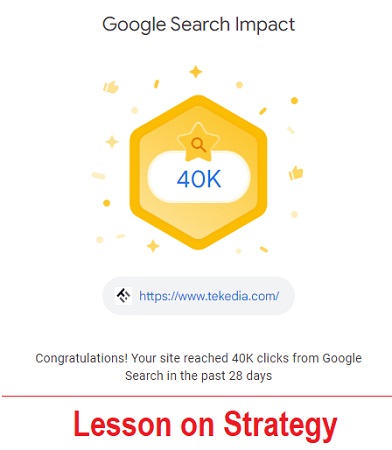
Recall – I have noted that only companies which can win demand will thrive in the internet world. And how do we win that future? We have to elevate the blog so that when people come to read it, we can convert many for the school and the fund. That is why the blog is not a subdomain. Our thesis is that if we can get 300k links monthly, even if we convert 5% of that, we will have a great result. Google sends us 40k links monthly. Taken all together, there is no way we cannot close  2,000 sales in a month! The tekedia.com is the CNN, radio, TV and newspaper. 

Yes, the blog has no Google Ads as everything is designed to promote the School and the Fund. That is our strategy and it is working. 

If you want to win in the 21st century digital economy, you must control or influence demand, not supply. In the industrial age economy, power went to gatekeepers of supply. Today, the empire builders are those that control demand. This is possible because digital supply is unbounded and unconstrained, making it largely not a factor. Digital utilities like Google, Facebook, and Twitter which control demand become the new gatekeepers.

All Together

Indeed, in this age, having users may be more catalytic than actually having the courses. A professor in FUTO can have the best course on management and fail because he has no users. But an NYSC member with users can deliver a sub-par program and still thrive. Why? If you control demand, you have a chance to win. So, Tekedia.com brings the users and we try to convert many of those users for the school and the fund. What is your digital strategy?

Comment on LinkedIn Feed

Comment 1: Prof, you do alot of good things you have no idea the extent of impact you are making. I have learnt alot from you. It was on your tutelage that I learnt of the “aggregation” business model which I expondedn during my MBA. I have just watched your video on the importance of control demand in this dispensation. Another very valuable and easy to understand teaching. This is an appreciation post on behalf of the multitude of young people you keep impacting daily. Thanks for your consistency and for using your platform for the common good.

Air Traffic Rises by 90% as Young Nigerian Professionals Continue to Migrate

0

The aggressive rate of migration among young Nigerian professionals to other parts of the world in search for greener pastures, has increased the rate of air traffic recorded in the past few months.

According to reports, the rate of international air passenger movement in Nigeria has risen by 91%. Nigeria’s aviation authorities revealed that between January and June this year there was a 40% and 91% increase in passengers’ movement via domestic and international flights respectively, compared to a similar period last year.

About 907,722 international passengers were airlifted between January and June in 2021, the figure however rose to 1,732,624 within the same period this year.

A top government official said, “Two factors are responsible for the increase in international air traffic. First is the increase in migration of young professionals while the second is the re-opening of borders after Covid-19”.

According to the UK immigration report released last Thursday, Nigeria is second only to Indians in the number of visas granted to the ‘Skilled Worker – Health & Care’ category, with 14% (13,609) of the total.

Recent official data from Canadian immigration sources indicate that 12,595 Nigerians relocated to Canada alone in 2019. There were 4,000 applications for permanent residency by Nigerians in Canada in 2015. By 2019, the number had climbed to 15,595, an increase of over 214.9%.

The surge in air travel is still increasing with each passing day despite the increase in the price of tickets which was triggered by the hike in aviation fuel and also due the scarcity of forex in the country.

The figures reveal that between January and June 2022, cargo movement decreased by 36% when compared to a similar period in 2021.

An official attributed the decrease in cargo movement to forex scarcity, rising foreign exchange rate, closure of some airspaces due to the re-occurrence of Covid-19, and the ongoing war between Russia and Ukraine.

With the myriad of problems ravaging the country, it has continued to witness a surge in migration of its young professionals as ‘Japa’ has become a way out for most of them to escape from most of the country’s challenges.

The country has been threatened by a massive brain drain which is causing a serious challenge in different sectors in the country, as it was reported that the mass exit of ICT personnel in banks caused a serious glitch in most of its services majorly bank transfers.

Analysts/experts have predicted that the surge in migration will only get worse as there is no solution in sight to the country’s myriad of problems. The current government has been lambasted by citizens as not doing anything significant in managing the exchange rate and inflation that is affecting the country.

Amid this surge in migration, the country’s primary strategic concern is the increasing demographic hemorrhage in the emigration of skilled Nigerian youths.

The people on whom the future of the nation depends on are leaving. Best energies and brains are being drained. IT wiz kids, medical scientists, economists, biotechnologists, academics, etc. are flooding flights headed out to better climes where they feel more valued.

While some see the migration as a negative occurrence, some have a nuanced approach towards it, which they argue that mass exodus of citizens will help increase diaspora remittances, which lately has been the booster to the national dollar reserve.

Diaspora remittances reported by the CBN currently hover between $25 billion and $30 billion annually and are still rising.

Nigeria Must Step in to manage the Obajana and Dangote Cement Tussle

0

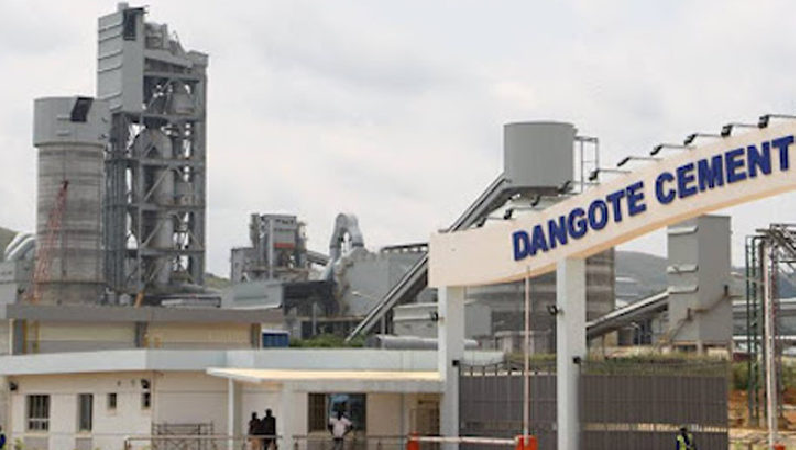
This is an own-goal tussle which can devastate many things in Nigeria. Yet, we want justice to also do its job. For that, I call on the Kogi State government and Dangote Cement to modulate their postures: “A statement titled, “Illegal Shutdown of Dangote Cement, Obajana Plant”, signed by the Group Managing Director (GMD), Dangote Cement Plc, Michel Puchercos, said that the company has the full ownership of the Obajana plant”.

If you check 2,000 years of economic history, you will notice that property rights are the foundation of commerce. Where that is not possible, nations fade or struggle to advance.

I have no additional information to add anything to this topic but one thing I will say is this: the way Nigeria handles this will affect its mining, extractive, etc industry playbooks.  What is happening is consequential. Yes, if you can build a cement plant as a state in Kogi to make use of limestone, can Rivers State build a refinery to make use of its oil deposits? As this happens, many interpretations will emerge on the way Nigeria manages solid minerals (gold, silver, limestone, etc) and hydrocarbon (oil, gas) rights in the nation.

Can Mr. President call Aliko Dangote and Kogi State governor to see him today? We cannot use the agbero motorpark strategy here: the president must step in immediately. Yes, the court can come in but assets must be protected while that happens.

The factory is said to have begun back in 1992, during the regime of former head of state, Gen. Ibrahim Babangida, shortly after Kogi State was created. It took a turn in 2002, when the Kogi State Government and Dangote Cement Plc allegedly signed an agreement over the Obajana factory. A document purportedly signed by the Kogi State Government and the Dangote Group, which was seen by Tekedia, claims that both parties had agreed that besides collecting taxes from the company,  the state government will own 10% of the cement factory.

Concerned indigenes of the state said that the issue has lingered for so long because preceding governors had failed to take it up. For the current governor of the Kogi State, Yahaya Bello, it’s time to put the matter to rest once and for all time. People familiar with the matter said that the Kogi State House of Assembly had repeatedly summoned the Chairman of Dangote Group, Aliko Dangote himself, and had shunned a representative sent by the company – insisting that Dangote must appear in person to answer questions regarding his company’s failure to honor its agreement with the state.

The Obajana Factory Ownership Tussle Between Dangote Cement and Kogi State Govt.