DD
MM
YYYY

PAGES

DD
MM
YYYY

spot_img

PAGES

Home Blog Page 4823

Adirize vs Tether, Which Stablecoin Has The Most Potential In The Cryptocurrency Economy?

0

Adirize (DAO) and Tether (USDT) are two stablecoins that are revolutionizing the cryptocurrency economy.

When the first crypto, Bitcoin (BTC), was unleashed onto the scene in 2009, stablecoins did not exist. Brave investors had no choice but to put their faith in a digital currency that went up and down like a theme park ride.

Every day there was no way of knowing whether Bitcoin’s value would ascend toward the stars or crash into the ground.

And not much has changed since then.

Bitcoin peaked at an astonishing price of $67,549.74 back in November 2021 and now, at the time of writing, has dropped to $19,121.96.

However, since the creation of stablecoins in 2014, crypto geeks have had a more reliable source of investment. Unlike their volatile counterparts, stablecoins do not deviate too far from their original value.

For example, Tether and USD Coin (USDC) have always been priced at around $1 and are both pegged to the US dollar.

Due to mirroring the same value as fiat currency, stablecoins have also made it easier for individuals to enter the crypto market. Rather than exchanging almost $300 for a BNB coin, they can simply exchange $1 for one Tether coin and vice versa.

At this point, stablecoins are unlikely to go anywhere, as they help to balance the crypto industry. The query of greater interest is, which specific stablecoin will become the most popular in the future, Adirize or Tether?

Crypto Will Get Better With Tether

At the time of writing, Tether is ranked at number 3 on coinmarket with a market cap of $68,421,140,926, and this is not a coincidence.

Tether is extremely beneficial for individuals, merchants, and exchanges.

Tether tokens can be used on a range of exchanges, allowing investors to trade this currency for another coin on the market, Plus, when it comes to making transactions, Tether is transferred at an extremely fast rate with no delays.

As for merchants, Tether is arguably one of the best cryptocurrencies to accept as payment. This is because of its low volatility and easy integration on websites which is likely to attract new customers.

Improve Your Finances With Adirize

Adirize is a stablecoin with a bit of spice. This digital currency is more than just a sturdy coin that can be used in various markets.

In actuality, Adi was created as a store of value, meaning it should maintain or increase in value over time.

All investors need to do is stake their Adi tokens using the Adirize app in exchange for benefits. One benefit is more Adi which the treasury gets from bond sales.

The beauty of staking in Adirize is the passiveness. It doesn’t matter if the market price of Adi decreases below your opening purchase price, as the inevitable increase in your staked Adi will balance out the fall in market value.

Therefore, there is minimal risk with investing in Adirize as you’re likely to get your money back or make a profitable return.

Final Thoughts

Stablecoins like Tether and Adirize are having a positive impact on the crypto universe.

Tether is extremely versatile and is the ideal gateway for new investors to begin their cryptocurrency journey. However, Adirize might have better potential because of its lucrative staking rewards.

For further information about Adirize, check out the links below:


Presale: http://join.adirize.com/

Website: http://adirize.com/

Telegram: https://t.me/AdirizeDAO_Official

IMF Reviews Nigeria’s 2022 Economic Projection Downwards

0

Nigeria’s economy has continued on its downward trend, forcing global economy watchdogs to review their economic growth projections of the country.

In its World Economic Outlook (WEO) for October 2022 titled, “Countering the Cost-of-Living Crisis”, the International Monetary Fund (IMF) slashed Nigeria’s economic growth projection to 3.2 percent in 2022.

The new projection is 0.2 percent lower than the 3.4 percent the Washington-based institution projected in its July 2022 report. But the latest report, which reflects the global economic downturn, also impacted the economic outlook of Sub-Saharan Africa.

According to the report, the economic growth of Sub-Saharan Africa is expected to drop 2 percent from its current 3.6 percent projection due to tighter financial and monetary conditions.

“In sub-Saharan Africa, the growth outlook is slightly weaker than predicted in July, with a decline from 4.7 percent in 2021 to 3.6 percent and 3.7 percent in 2022 and 2023, respectively — downward revisions of 0.2 percentage points and 0.3 percentage points, respectively.

“This weaker outlook reflects lower trading partner growth, tighter financial and monetary conditions, and a negative shift in the commodity terms of trade,” the report said.

However, while the downward projection is tied to global economic strains, some regions have a positive growth outlook. The report projected a 5.0 percent growth increase for both Middle East and Central Asia in 2022.

“This reflects a favorable outlook for the region’s oil exporters and an unexpectedly mild impact of the war in Ukraine on the Caucasus and Central Asia.

“In 2023, growth in the region is set to moderate to 3.6 percent as oil prices decline and the headwinds from the global slowdown and the war in Ukraine take hold,” the IMF said.

However, the Fund said global growth is expected to drop by nearly half, from an estimated 6.1 percent in 2021 to 3.6 percent in 2022 and 2023.

The Middle East and Asia’s recording of economic growth increase amidst the global downturn is largely tied to oil export, underlining Nigeria’s missed opportunity to use the oil windfall to boost economic growth.

With the crisis rocking its downstream and upstream sectors, the African largest economy was losing huge revenue as other members of the Organization of Petroleum Exporting Countries (OPEC) cash in on the oil boom, which saw oil price jump above $130 per barrel.

Reeling on the mercy of oil thieves, Nigeria’s oil production has dropped far below its OPEC’s 1.826 million barrels per day (mbpd) output quota, greatly curtailing its revenue growth. With production output below 1mbpd, and non-oil sector underperformance, Nigeria has been recording revenue deficit that has undermined its economic growth.

The Lagos’ Big Unbundling As the 1% Get Their Airport at Lekki

0

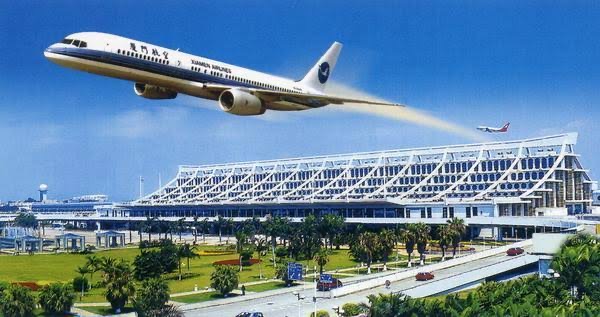
This is a monumental vision for Lagos State and it offers more reasons for more people to move to the Lekki axis: “Lagos State Government has secured approval from the federal government for the construction of the Lekki International Airport in the Lekki-Epe axis of the state.” As that happens, Lagos will have a big unbundling as the richest 1% can now live in their worlds with no reason to come to the Mainland to experience the pains and struggles of the 99%.

Expect property prices to skyrocket in the Lekki axis and you can extrapolate a massive descent in the Ikeja area. Those hotels around Ajao Estate will understand that a new age has started.

Congratulations Lagos State. I challenge Akwa Ibom to build a deep seaport, matching this playbook from Lagos State in the seaport space. Akwa Ibom does not need to do it alone, it can partner with Cross River and Abia states to fund and share benefits of this project.

Diversifying infrastructure in Nigeria should be a priority for the class of 2023, from the states to Aso Rock.

Lagos State Government has secured approval from the federal government for the construction of the Lekki International Airport in the Lekki-Epe axis of the state.

The approval was presented during the Lagos Economic Summit, Ehingbeti2022, by the Minister of Aviation, Hadi Sirika, to the Lagos State Governor, Babajide Sanwo-Olu, on behalf of the Federal Government at Eko Hotel and Suites, Lagos.

“In the name of God the most merciful, we in the Civil Aviation Ministry are pleased to issue out this approval to Lagos State. May it be a vision to Lagos, to its people, its future, its fortune, the country, and to humanity,” Sirika said as he presented the approval to the state governor.

Lagos State Gets Approval for the Construction of Lekki International Airport

Lagos State Gets Approval for the Construction of Lekki International Airport

1

Lagos State Government has secured approval from the federal government for the construction of the Lekki International Airport in the Lekki-Epe axis of the state.

The approval was presented during the Lagos Economic Summit, Ehingbeti2022, by the Minister of Aviation, Hadi Sirika, to the Lagos State Governor, Babajide Sanwo-Olu, on behalf of the Federal Government at Eko Hotel and Suites, Lagos.

“In the name of God the most merciful, we in the Civil Aviation Ministry are pleased to issue out this approval to Lagos State. May it be a vision to Lagos, to its people, its future, its fortune, the country, and to humanity,” Sirika said as he presented the approval to the state governor.

Sanwo-Olu, who described the approval as a ‘milestone’, said the Ehingbeti2022 summit will yield a lot more positive news for Lagosians.

“Dear Lagosians, today, we received the approval for the construction of the Lekki Epe Airport at the Lagos Economic Summit, #Ehingbeti2022.

https://twitter.com/jidesanwoolu/status/1579889033500848128?s=20&t=pG7yG1JiE-uWdxG8OElD3A

“This announcement is part of a series of milestone achievements we will be announcing at the 9th edition which I declared open today.  The theme of this year’s summit captures all we have been doing in Lagos since the first edition of Ehingbeti,” the governor said.

The construction of the airport is billed to commence in 2023, according to the Lagos State Government.

Sanwo-Olu explained that Ehingbeti2022 is a forum for all stakeholders in Project Lagos to exchange ideas and chart a path towards accelerating sustainable economic growth in Lagos State. The yearly summit is designed to boost Lagos State’s status as an economic powerhouse and hub, not just in Nigeria, but also in Africa.

The accelerated approval for the Lekki International Airport is in addition to the Lekki Deep Seaport, which was launched earlier this year. Sirika said the federal government did not hesitate to grant the approval for the new airport because of what Lagos represents in Nigeria.

“This city, which houses about 26.7 percent of national GDP, housing our stock exchange, 200 financial institutions, 25 million people, on 5,377 square kilometres of landmass plus Eko Atlantic, plus all the industries, the rich culture, the tradition, the history, the tourist attraction the Eyo Festival, and so on and so forth, needs to be connected to the world to continue to be the center of the economy of the activity of the country, Nigeria.

“And the only way you can link this city of Lagos to the world is obviously — not the only way, but the best way to connect — by infrastructure.

“So, when his Excellency, the governor, approached us in [the] civil aviation ministry and says he wants to build an airport in Lagos, another airport? I said yes, this is a huge step in the very right direction. And the reason is simple. Like I said, in my days of Lagos, the terminal point is MaroKo, Sandfield. When you go there, you only go to mechanic to do panel beating for you — that’s it.

“But today, from here, all the way to outer VGC, all the way to Epe, it’s Lagos. The expansion is astronomical, it’s huge, it’s big. The ideas and the size of the economy is good and big. So you need to continue to link Lagos, not only with Nigeria, [but] Africa and the world.

“So if you look at all these financial institutions, the 200 industrial estates and the Eko Atlantic, there must be a way that these people will come in and out of Lagos on another alternatively, which is the airport in Lekki. Your Excellency, the governor, this is a huge step in the right direction, we didn’t waste time to give the approval. And we’re happy to present the certificate today,” he said.

Apart from the economic value to the state government, the Lekki International Airport is expected to ease life for people around the Lekki-Epe area, who usually have to lodge close to the Murtala Mohammed Int’l Airport, Ikeja, to keep to their flight time.

Nigeria’s Oil Production Drops for the Third Consecutive Month, Stays Below 1mbpd

0

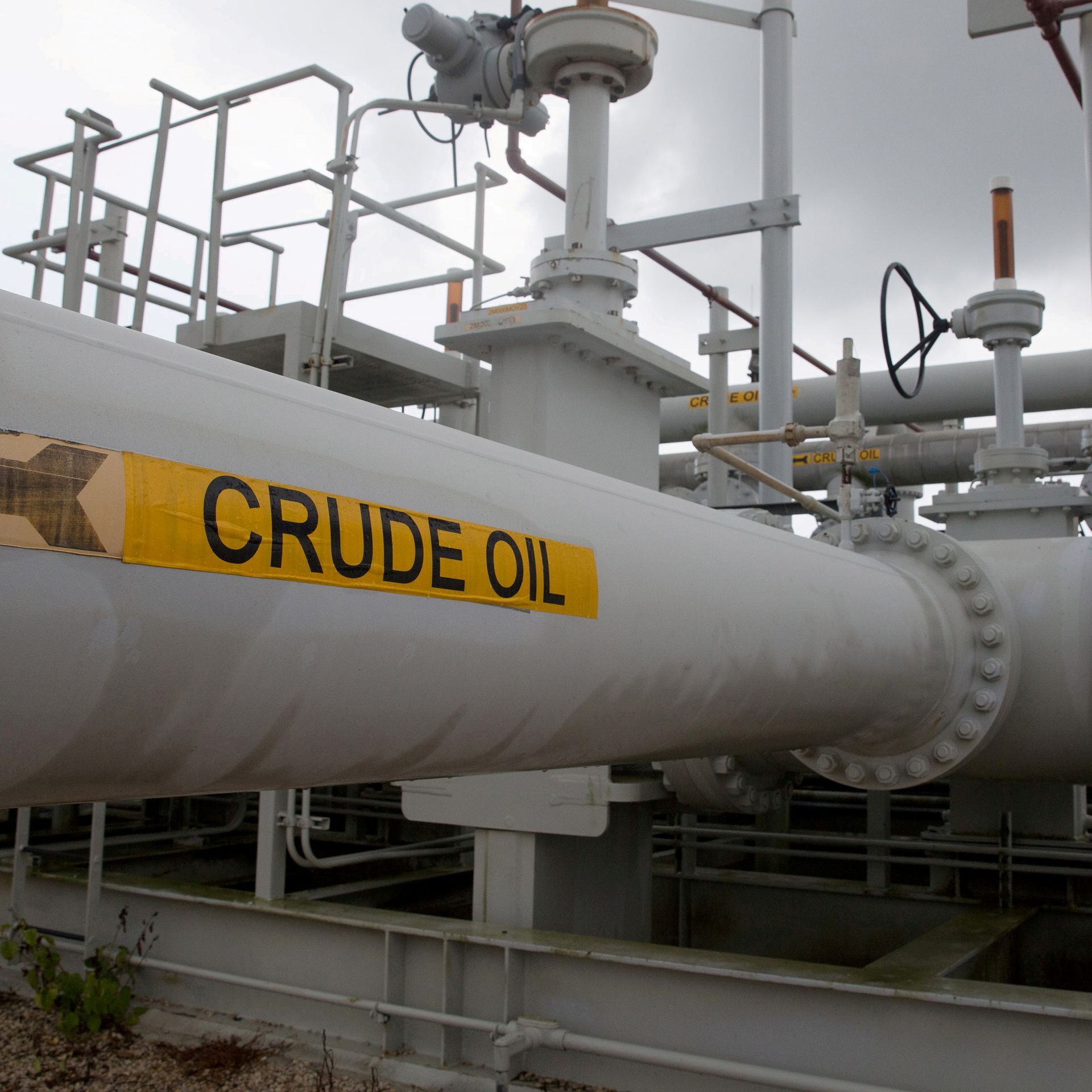
End is not really in sight to Nigeria’s revenue crisis strongly tied to shortfalls in the oil sector. This is because oil production has continued to drop owing to thieving.

The Nigerian Upstream Petroleum Regulatory Commission (NUPRC) said in its latest crude oil and condensate production data for September 2022, that Nigeria’s crude oil production dropped to an average of 937,766 barrels per day (bpd) in September.

According to the data reported by TheCable, the production figure is 3.56 percent or 34,628 bpd lower compared to the August 2022 output at 972,394 bpd, which represents a third consecutive all-time low in production.

The data goes on to reveal that with the addition of condensate, oil output plunged to a total of 1.14 million bpd from 1.18 million posted last month.

Condensate is a mixture of light liquid hydrocarbons, similar to a light (high API) crude oil — usually separated out of a natural gas stream at the point of production (field separation) when the temperature and pressure of the gas are dropped to atmospheric conditions.

The latest decrease adds to the sequence of drops in oil production that has been consistent since early this year.  TheCable noted that in January, February, March, April, and May, the country’s crude oil production averaged 1.39 million bpd, 1.25 million bpd, 1.24 million bpd, 1.22 million bpd, and 1.02 million bpd, respectively. Also, crude oil production averaged 1.16 million bpd and 1.08 million bpd in June and July, respectively.

The NUPRC’s data for September underscores the height of the government’s helplessness in the face of vandalism and oil theft sabotaging Nigeria’s economy.

The N20.51 trillion 2023 Appropriation Bill presented last week before national assembly by President Muhammad Buhari is expected to incur N10.78 trillion deficit as a result of the oil revenue drop.

Nigeria is said to be losing nearly half of its oil production to thieves. Last week, the chief executive officer of the Nigerian National Petroleum Company Limited (NNPC), Mele Kyari, announced the discovery of an illegal 4-kilometre (km) pipeline from Forcados terminal to the sea, and a loading port he said had operated for nine years.

“Every two days, you are talking of almost $150 million down the drain, that’s what the nation is losing as we speak,” Kyari had said.

He further said Nigeria was suffering from underproduction to the tune of 600,000 bpd which largely falls short of the 1.8 million bpd production quota set by the Organization of Petroleum Exporting Countries (OPEC).

Though the NNPCL has launched a full-scale war against oil thieves, the result may take a while to be noticed.