DD
MM
YYYY

PAGES

DD
MM
YYYY

spot_img

PAGES

Home Blog Page 4833

Micron Announces $100bn for A ‘megafab’ Chip Factory in New York

0

The Biden administration’s efforts to boost local chip production as tech rivalry between the US and China intensifies, is accelerating. Chip companies are announcing plans to build factories in different states in the US, thanks to the bipartisan CHIPS legislation aimed at promoting chip production on US soil.

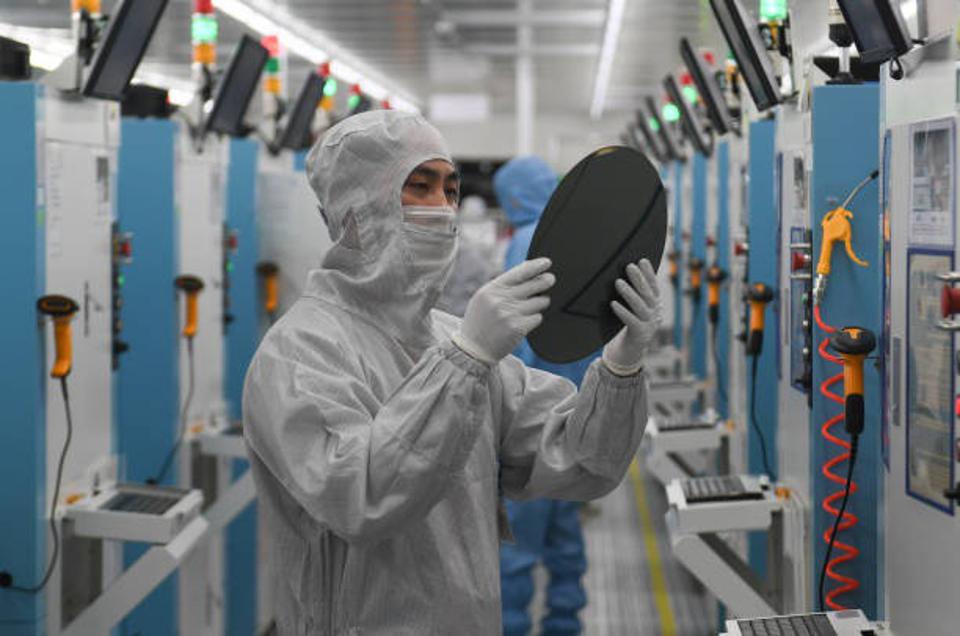
On Tuesday, Micron said it would invest up to $100 billion over the next two decades to build a massive semiconductor factory in upstate New York. The move is one of the biggest underscores of increasing interest of semiconductor companies in expanding production on American soil.

Micron, based in Idaho, is the only American-based semiconductor firm. It said the factory, dubbed megafab, will be the “largest semiconductor fabrication facility in the history of the United States.” The proposed factory, which will be situated about 15 miles from Syracuse, is expected to create nearly 50,000 New York jobs over the next two decades, including approximately 9,000 high paying jobs.

“Micron’s New York megafab is part of its strategy to gradually increase American-made leading-edge DRAM production to 40% of the company’s global output over the next decade,” the company said in a statement. “Site preparation work will start in 2023, construction will begin in 2024 and production output will ramp in the latter half of the decade, gradually increasing in line with industry demand trends. Locating Micron’s industry-leading DRAM production in the U.S. brings tremendous benefits for its customers, enabling them to build their innovative products and solutions using a more resilient, secure and geographically diverse supply chain.”

Besides the tech rivalry between the US and China, the US’ push for more semiconductor production was bolstered by the global chip shortage, which came in the wake of covid-19, stymieing production across tech industry.

In August, President Joe Biden signed into law the CHIPS and Science Act. The aim is to boost American chip manufacturing with a more than $200 billion investment over the next five years. It is part of Washington’s push to make America a clear leader of the tech world as China moves closer to usurp American leadership.

The Chips and Science Act comes with a package that includes some $52 billion for chip manufacturing and research, aimed at providing companies incentives to build, expand and modernize US facilities and equipment – and especially to build chip factories on American soil.

This will minimize a US dependency on offshore chip production from Asia. The US manufacturers have been dependent on supplies from chipmakers such as the Taiwan Semiconductor Manufacturing Company (TSMC) and Samsung – all Asia-based firms.

Micron President and CEO Sanjay Mehrotra expressed his gratitude for the swift bipartisan passage of the CHIPS and Science Act.

“I am grateful to President Biden and his Administration for making the CHIPS and Science Act a priority, to Senator Schumer and a bipartisan coalition in Congress for passing the legislation, and to Governor Hochul and County Executive McMahon for the local and state partnerships that made this investment possible.

“Micron will leverage the diverse, highly educated and skilled talent in New York as we look to build our workforce in the Empire State. This historic leading-edge memory megafab in Central New York will deliver benefits beyond the semiconductor industry by strengthening U.S. technology leadership as well as economic and national security, driving American innovation and competitiveness for decades to come,” he said.

Shares for Micron jumped nearly 5% Tuesday following the news.

Before the CHIPS and Science Act, other semiconductor companies such as TSMC and Intel had announced plans to build chip plants in the United States. The TSMC announced that it’s committing about $12 billion to build a semiconductor fabrication plant in Arizona, which is expected to begin production in 2024.

Also, Intel, counting on the CHIPS Act, announced plan to build a $20 billion semiconductor manufacturing plant in Ohio early in the year. The new plant, which its groundbreaking event was graced by Biden, kicked off in September.

Micron said it chose New York for the megafab because of its multiple advantages, including leading higher education institutions, access to talent traditionally underrepresented in technology jobs and a significant military population aligned with the company’s commitment to veteran hiring.

The Empire State has a long history of semiconductor development and manufacturing, which provides promising opportunities to collaborate on R&D initiatives with organizations like the Albany NanoTech Complex and the U.S. Air Force Research Laboratory.

In addition to megafab, Micron and the state of New York also announced a historic $500 million investment in community and workforce development with a focus on disadvantaged populations over the duration of the project. The firm said it will “invest $250 million over the next 20-plus years as part of the company’s commitment to the Green CHIPS Community Investment Fund.” It added that an additional $250 million is expected to be invested, with $100 million from New York and $150 million from local, other state and national partners.

Excited by Micron’s decision to make New York the host of the megafab, Governor Kathy Hochul said: “Micron’s $100 billion investment in New York marks the start of something transformative in scale and possibility for our state’s economic future. I promised that we would jump start the economy by being the most business-friendly and worker-friendly state in the nation, and thanks to our State Green CHIPS legislation, the federal CHIPS and Science Act, and extraordinary partnerships with business, labor, and local and federal leaders, this project will do exactly that.

“Together, we are leveraging this investment – the largest private-sector investment in state history – to secure our economic future, solidify New York’s standing as a global manufacturing hub, and usher the state into another Industrial Revolution.”

Big Data, Big Dilemma: What Surveillance Capitalists Do

0
Just as IT, nanotechnology is also a type of technology (source: MIT)

Over the past 20 years, big data has been the primary fuel for maintaining both business and non-business activities with the goal of enhancing everyone’s quality of life. A variety of devices and tools are being used to collect data on people and animals. When using specific technologies to gather data, especially from people and animals, humans must take the initiative. For instance, machines cannot successfully release data to humans without human motivation or, in some cases, influence. Therefore, humans must first touch or supply the necessary data to machines before data can be derived from it and used to alter human behaviour in return.

As noted in one of the previous analyses, in the course of using technologies for personal and collective tasks, people are releasing different footprints. The footprints, according to our analyst, are being captured by creators of the technologies. In the analysis, our analyst referenced Professor Ayo Ojebode of the Department of Communication and Language Arts, University of Ibadan, who stated that erasing one’s digital footprints immediately they are dropped might not be possible because the person who collected had used big data collection tools, which could not be received or deleted by the owner.

In this regard, our analyst notes that people only need to be cautious of what they do in relation to their pursuit of social, economic and political happiness while on the SNSs and using internet-enabled devices. Several studies and news reports have also documented implications of big data capturing on the future of the owners.

Meanwhile, in the piece, our analyst briefly examines emerging surveillance capitalism coined and explained by Shoshana Zuboff, emeritus professor at Harvard University. Using I Will, We Will and Will, she made a case for how people can make a promise and predict the future while using technologies. Making a promise and predicting the future entails following the promise making and promise keeping trajectory.

In the context of the promise-making concept, I will imply having islands of predictability and guideposts of reliability in an ocean of uncertainty. Will, which represents the future, can occur only when people commit to using their organs to create the needed future while taking into account facts that would allow them to carry out projects they desired. Using technologies to make the future happen, on the other hand, would be disastrous due to emerging surveillance capitalists who own technologies that collect, aggregate, and commodify personal data.

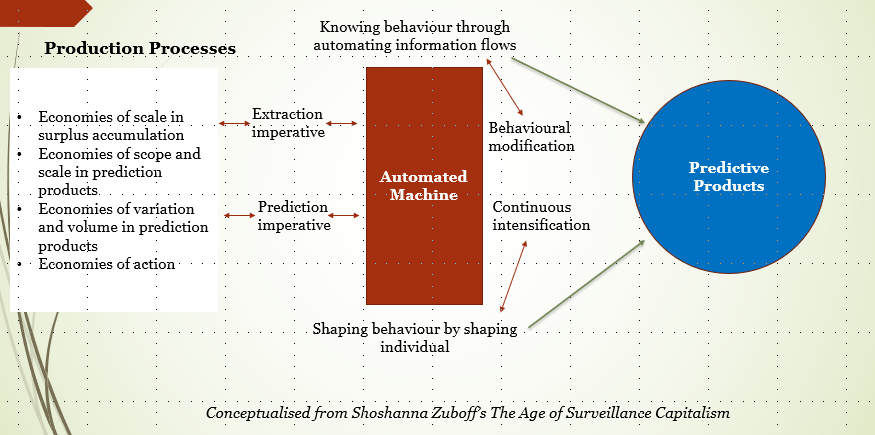
According to the book, behavioural surplus in the form of people’s use of technologies and movement from one location to another must exist first. Capitalists are now investigating the use and variety of behaviour being displayed to create predictive products after employing extraction imperatives that limit and scale the diverse and voluminous accumulated data.

When developing predictive products, the extension and depth of the products are typically considered before entering economies of action that assisted in successfully modifying collected data and having a sense of continuous intensification of the data. Surveillance capitalists, in particular, use automated machines to understand people’s information flows and shape their current and future behaviour in order to create predictive products.

Best Crypto Coins to Buy in this Dip – ETH, SOL, ADA, LUNC, and GMS

0

Buy these best cryptos now and build your millionaire future. 

Downturns present opportunities for value-seeking investors to rebalance their portfolios and focus on growth. This article reviews the best coins to buy in this dip.

2022 has not been kind to the crypto market. Additionally, the rising threat of inflation has led analysts to believe that rescission is imminent, leaving several investors in fear and despair. However, experts opine that the current bear market poses a promising opportunity to buy up crypto assets. In other words, buy the dip. Several retail investors are now exploring different cryptocurrencies to buy on the dip for outsized returns. The current crypto winter will be coming to an end soon, but forecasting the exact moment that cryptos will turn around is difficult. Nevertheless, here are the top 5 cryptos to buy on this market dip.

>>>Buy Cryptos Now<<<

Virtual currencies are highly volatile. Your capital is at risk.

1.  Ethereum (ETH) 

Ethereum is an advanced blockchain network where developers can create smart contracts and decentralized applications (dApps), and users can access various types of transactions without an intermediary. The world’s second-largest crypto is already a leader in decentralized applications and non-fungible tokens (NFTs).

The price of ETH has dropped since the beginning of 2022, following the prolonged crypto winter. From the all-time highs of $4,891.70, ETH has dropped to $1,386.90, presenting the best opportunity to buy in the dip. Given its improved risk-reward at these levels, Ethereum has a good long-term prospect.

One of the key catalysts for the growth of Ethereum price prediction is its recent Merge upgrade, which essentially rolled the network’s Proof-of-Stake into the mainnet, making it much more energy-efficient.

Vitalik Buterin had announced at the Ethereum Community Conference in Paris this July that the Merge would bolster Ethereum’s capabilities, and the network would be able to handle as many as 100,000 transactions per second (TPS).

In addition to this, Ethereum has also marked its place in the Metaverse sector. Several projects like Star Atlas, Axie Infinity, and The Sandbox use the Ethereum blockchain.

>>>Buy Ethereum Now<<<

Virtual currencies are highly volatile. Your capital is at risk. 

2.  Solana (SOL)

Solana has carved a unique niche in the NFT marketplace and development space, making it a potential investment opportunity.

Solana is an advanced blockchain developed to facilitate scalable and user-friendly applications. It is a smart-contract platform designed to enable fast and efficient decentralized applications (dApps) and decentralized finance (DeFi) services. The core innovation of the Solana blockchain is its unique consensus mechanism that blends Proof-of-Stake and Proof-of-History to timestamp incoming transactions.

SOL was not immune to the crypto winter in 2022 and is trading much down at $34.73 from its all-time high of $260.06 in 2021. But this has presented the best opportunity for investors, making SOL one of the best cryptos to buy in the dip to make profitable returns. Additionally, it is one of the fastest blockchains, has lower fees when compared to other blockchains, and was ranked as the fourth-most-popular blockchain in the crypto sphere. It is also one of the leading DeFi platforms, with $2.7 billion invested in products on the blockchain.

As Solana-based dApps and DeFi services continue to gain traction with users, demand for the underlying SOL coin will rise significantly, making it more valuable over time. And since the token is trading significantly down from its high, it looks like a good time to buy on the dip.

One key reason to buy Solana crypto is its fast-growing NFT marketplace. The lower minting costs and fast speeds have made Solana a great place for smaller developers to build their projects.

>>>Buy Solana Now<<<

Virtual currencies are highly volatile. Your capital is at risk. 

3.  Cardano (ADA)

This is the right time to buy ADA on the dip, as it is trading at a lower price of $0.462329. Investors can be assured that Cardano would rise significantly higher in the future as the crypto has numerous real-world utilities and strong potential for growth. The crypto’s involvement in the NFT marketplace with the launch of SundaeSwap has been a boost for the network’s adoption.

Moreover, earlier this year, ADA was listed in the most popular online brokerage Robinhood Markets which would help in broadening exposure and bringing more users to the cryptocurrency.

Cardano is already a choice for environmentally conscious investors as it operates under a Proof-of-Stake mining concept, which is much more energy efficient. Over time, the network has become a popular landing spot for decentralized applications, and over 1,000 applications are being created on the network.

Cardano is also known for its consistent upgrades and rollouts. With Alonzo, the crypto has enabled the smart contract functionality, offering businesses and developers the opportunity to use the blockchain to support non-fungible tokens, crowdfunding, and DeFi dApps as well.

The community is now waiting for the Hydra update, a layer-2 scaling solution that would help push the network for commercial use. The update would launch over 1000 Hydra nodes capable of handling 1000 transactions per second. This would make Cardano one of the highest-scaling networks in the world, making ADA a good buy on the dip.

>>>Buy ADA Now<<<

Virtual currencies are highly volatile. Your capital is at risk.

4.  Terra Luna Classic (LUNC)

LUNC used to be the main token for the Terra stablecoin ecosystem. However, following Terra’s crash in April, LUNC’s value plummeted by 99%. This crash led to the ecosystem moving away from LUNC with a new cryptocurrency and a new blockchain fork.

Nevertheless, many of Terra’s original users have remained committed to LUNC and are banding together to get the asset back on track. Today, the coin trades at $0.0002962, an increase of 0.55% in the past 24 hours.

LUNC might have lost most of its value this year, but the asset still has a lot going for it. Firstly, its community remains strong, with many original Terra investors still holding on to the belief that it could surge again.

The asset’s circulating supply of over 6 billion was one of the major reasons for its crash, and the LUNC community has now instituted token burns as a solution. Binance, the world’s largest exchange, supported the token burn last month. So far, 1.8 million tokens have been burned.

With other exchanges like MEXC and KuCoin also supporting this burning mechanism, the future of LUNC’s deflationary model looks bright.

>>>Buy LUNC Now<<<

Virtual currencies are highly volatile. Your capital is at risk.

5.  GMX (GMX)

GMX is a decentralized spot and perpetual crypto trading exchange that allows users to benefit from zero price impact trades and low swap fees through market making and leverage trading. The platform uses Chainlink oracles to find dynamic pricing information through different crypto exchanges, and it currently operates via the Avalanche and Arbitrum Layer 2 chainz.

The exchange’s native GMX token currently trades at $45.83, marking a downtrend of 9.08% in the past 24 hours.

GXM is currently finding its footing in the market. However, the asset undoubtedly has a bright future. It got listed on Binance and FTX earlier this week, a move that sparked a significant 35% rally between Tuesday and Wednesday.

>>>Buy Cryptos Now<<<

Virtual currencies are highly volatile. Your capital is at risk.

Conclusion on the Best Coins to Buy in this Dip

Cryptocurrencies are definitely a red-hot investment asset class. Given the old investment adage “buy the dip,” these are the top 5 cryptos for investors to buy in the dip in this crypto winter.

While the crypto winter continues, opportunities abound for investors to take advantage of crypto gems in the market. Our roundup has considered some of the best coins to buy in this dip.

>>>Buy Cryptos Now<<<

Virtual currencies are highly volatile. Your capital is at risk.

Welcome to the Temple where Founders and Entrepreneurs Learn How to Build Startups

0

Join me at the temple for the mastery of Africa’s entrepreneurial capitalism. The Tekedia Startup Masterclass is where leading startup founders come to deepen their capabilities as they build and pursue the mission of firms. Yes, Tekedia Startup Masterclass: from Start-Up to Unicorn is designed to help founders, entrepreneurs, and those generally working in the startup ecosystems, to understand the mechanics of building category-king startups. The program runs for 8 weeks.

Besides some pre-recorded courses for the 8 weeks, the program includes an hour-long one-on-one live Zoom session every week, per participant, with Ndubuisi Ekekwe. Have a great eight hours , broken into 60 minutes, over eight weeks, with me. Your perspectives will never be the same. Begin here for program syllabus and how to join.

We’re Tekedia Institute; we transform lives and businesses through knowledge.

2023 Nigeria Elections: 3 Key Takeaways from the Presidential Election Campaigns in Two Weeks

0
Sample of political parties in Nigeria (Source: Punch)

In every democracy, campaigns matter. Campaign activities offer the electorate the opportunity to assess the political parties, candidates and their policies and programmes. A sane campaign atmosphere where political actors engage the electorate on policies and issues not only helps strengthen multi-party democracy such as the type practiced in Nigeria, it also allows the voters and the citizens to make informed choices. When the electorate make their choices based on adequate information about candidates and political parties, it results in credible elections.

However, since the commencement of the present republic in Nigeria in 1999, the campaign atmosphere, especially for general elections, has been anything other than fair and peaceful. For instance, according to scientific data and media sources, the general elections in 2011, 2015, and 2019 were the most violent of the six elections held in this fourth republic. These elections were characterised by smear campaigns, hate speeches, fake news, misinformation and disinformation. These created an unhealthy campaign environment that resulted in voter apathy and poor electoral decision making by the voters. Not only these, the chaotic campaign atmosphere equally resulted in personality attacks and made both the political actors and the electorate focus on issues that did not matter.

To curb this ugly campaign scenario, several efforts have been made by the civil societies, the electoral management body (the INEC), the National Assembly and other concerned stakeholders to ensure that Nigerian elections are defined by peaceful and issue-based campaign ecosystem. Yet, there has been little or no result of these efforts. For instance, the Independent National Electoral Commission enacted a campaign guideline that made a broad provision of what constituted unwholesome campaign practice by political parties and candidates as well as the accompanying punishments, still little has improved on the campaign field as had been reflected in the two off-cycle elections in Ekiti and Osun State. Perhaps this explained why the National Peace Committee, a civil society organization that makes candidates and their parties get committed to peaceful elections through a peace accord, also included commitments to issue-based campaigns as part of the 2023 presidential campaigns in the country. How then could the political actors be kept in check to play by the rules during campaign period?

In providing the answers to this question, the Centre for Research on Development of African Media, Governance, and Society (CEREDEMS-Africa), and the Positive Agenda Nigeria (PAN) have designed a real time campaign monitoring project to follow the campaign train of political parties and their candidates in order to determine whether the public engagements are issue-based or personality attack-focused. It is believed that a real time evidence-based monitoring would reveal the political actors or stakeholders guilty of polluting the campaign environment and enable the appropriate institutions to caution and/or sanction errant parties, candidates or supporters.

Approach

The focus of CREDEMS-PAN campaign monitoring project is to provide real-time evidence-based result on the campaign atmosphere as the Nigeria hinges closer to the 2023 presidential election. The research team has been paying attention to campaign messages of political parties, their candidates and supporters on Facebook, Twitter and national dailies with a view to determining their intention and focus. We categorized the focus of the messages into three construct of attacks, acclaims and defenses. Attacks refer to messages that denigrate an opposing candidates’ personality traits, leadership qualities and or competencies. We also consider message that demeaning the quality of programmes, initiatives and projects of an incumbent or ruling party. Acclaims refer to messages that show that a party or its candidates are better in terms of personality traits, leadership qualities and competencies in delivering quality public goods to Nigerians. Defenses relate to the messages that refute negative elements pushed out by political actors against other candidates and political parties.

Apart from the intention or focus of the campaign messages, our team also looks for the content of the messages to determine the level of policy engagement or personality disparagement in the messages. To do this, we typify policy engagement into highly informed policy engagement; Moderately informed policy engagement; Slightly informed policy engagement. For the personality disparagement assessment, we consider highly intensive personality disparagement; moderately intensive personality disparagement; slightly intensive personality disparagement and none intensive personality disparagement. All of these levels represent different categories of the extent of the presence of these construct in campaign-driven messages.

Campaign messages are also subjected to information pollution check where we measure the presence of misinformation-specific content in the stories in national newspapers. Our sub-categories have inaccurate photo(s), inaccurate photo(s) caption, contradicting statistics, satire, conflicting identities and construction of newsmakers and source. We equally search for conveyors of the misinformation-specific content on the platforms.

The Fact

Having monitored the campaign atmosphere in the last two weeks, the following facts were derived from the public engagements of the political parties, candidates and their supporters

Fact 1: Policy and Campaign Issues

For the second week, even though the parties focused on issues that were of national importance, there was still a domination of campaign messages whose direction could not be determined. This was a carryover from the campaign activities in the first week where the largest percentage of the issues discussed could not be categorized within a policy or campaign issue. If the high occurrence of this category in the first week could be attributed to a slow start of the campaign, it is believed that there should have been an improvement in the second week.

According to issues as discussed by the political parties in the second week, the Labour Party led on engagement of policy and campaign issues focusing largely on Infrastructure; Social Programmes; Health and Employment.  The LP extended the leadership in engaging core policy and campaign issues. Despite this, the slightly informed policy engagement held sway for the second week running followed by a moderately informed engagement while the issues had highly informed engagement.

On the strategies employed by the political parties in their campaigns, acclaims still dominated the strategies’ chart for the second week running on the campaign atmosphere. Attacks and defenses were observed at minimal levels. It should, however, be noted that the LP led other political parties in using the attacks strategy while the APC employed defenses more than other parties in the week 2 of the campaign activities.  The PDP used acclaims and attacks at the same level while it employed the defenses strategy the least among the three leading parties.

The social media (Twitter and Facebook) and the newspapers were used to disseminate the three campaign strategies of attacks, acclaims and defenses by the political actors. It is surprising that the newspapers had increased in the percentage of presence of attacks while Facebook recorded a lower percentage of attacks strategy. It was equally observed from the monitoring that the use of these three strategies was done more by the supporters of the parties/candidates and other political actors.

Fact 2: Personality Disparagement

The monitoring observed minute percentage of highly intensive personality disparagement on the campaign scene for the second week running. Still, there was high percentage of slightly, moderately and non-intensive personality disparagement used by the parties’/candidates’ supporters.  The LP was fingered as the major user of personality disparagement across levels followed by the PDP and the APC respectively. Party supporters and other political actors were the major culprits in this act of distributing disparaging statements across the media types.

Fact 3: Misinformation

Conflicting identities and construction of newsmakers and sources was the highest category of misinformation specific content noted in the second week of the campaign. Other categories included inaccurate photos, inaccurate photo captions, conflicting statistics and satire. All these were noticed at similar percentages. This situation seemed to have remained the same from week 1 with a slight reduction in the percentage of the highest category of the misinformation-specific content.

Managerial and Policy Implications

The campaign has again, like it appeared in week 1, shown its high tendency to focus on matters that do not matter due to high presence of campaign messages that could not be categorized into any specific campaign and policy issues. This could create a campaign atmosphere that would not give room for informed electoral decision from the voters. The electoral management body (INEC) and other concerned stakeholders are called upon to wake up to their responsibilities of cautioning the political actors on the need to make the campaign atmosphere more issue-based than it has been observed in the first two weeks of campaign.

The engagement of issues by the political parties, especially the Labour Party, which has led in this effort for the second week, is commendable. Yet, we advocate for a more advanced engagement of the campaign and policy issues. In other words, the issues should be considered and engaged at highly informed level. This would go a long way in engendering a culture of informed electoral decision making by the electorate.

However, there is a need to call the Labour Party to order on its extensive deployment of the attacks strategy by the party. This could spur other parties to also toe the same path and pollute the campaign environment. It also has the tendency to lead to the emergence of threats to credible polls as the campaign activities advance.

The fact that attack-focused contents are finding their ways into newspapers is a source of concern. More worrisome is the fact that the percentage of attack-oriented content increased in the second week of monitoring. It is a frightening indicator of a weak gatekeeping mechanism. The editorial boards of newspapers and the Nigerian Press Council should also wade in to correct this abnormality.

The observation of slight and moderate use of personality disparagement by political parties’ supporters is a latent sign that the campaign atmosphere could get rougher if necessary caution is not taken by the political actors and their supporters. We, again, call on the INEC to summon the courage to sanction erring political actors or parties.

Finally, there is a need to be more vigilant against the incursion of misinformation into the pages of newspapers as the percentage of its presence in the dailies has not recorded any decrease. This must be checked as the campaign train moves further.