DD
MM
YYYY

PAGES

DD
MM
YYYY

spot_img

PAGES

Home Blog Page 4835

Nigeria Reveals That Digitization of Passports to be Completed in December

1

Following the federal government’s plan to digitize the passport to avoid citizens from patronizing unscrupulous officials, the FG recently disclosed that the digitization of the passport will be ready in December this year.

This is coming at a time when there have been numerous complaints by Nigerians over the incessant delays in the acquisition of Nigerian passports both within and outside the country.

Also, due to the corruption involved when citizens apply for a passport, in a bid to ensure integrity during the passport administration process, the federal government has made a strategic move to reform the migration of passport applications and payments to digital platforms.

The government had earlier implored applicants to stop patronizing touts and officials directly, rather they should follow the process that they have put in place.

When the digitization of the passport is fully completed, citizens can apply for passports and pay online, as the only engagement they will ever have is with staff for the enrolment of their biometrics.

This was disclosed by the Minister of Interior, Rauf Aregbesola while featuring on a NAN Forum in Abuja. The minister stated that the project was one of the priorities of President Muhammadu Buhari’s administration.

In his words, “We are on it, and by December we will remove any manual processing of passports. Now, we still have some manual parts, because files are still manually opened.

“By December, particularly in the busiest passport processing centers, there will be no manual segment of the passport processing, every part of it will be digitized.’’

The minister also disclosed that there is no shortage of passport booklets in the country and advised applicants to begin the processing of their passports at least six months before the scheduled time of travel.

In his words, “If you need a passport now, start the process very early, do not begin the processing efforts two weeks before your traveling.

“If you don’t, already you have created problems for yourself, because the system, after capturing, which is the enrolment of your data, we harmonize it with the National Identity Management Commission (NIMC) database.’’

He, therefore, urged passport applicants to ensure their names and other information tallies with their details on the National Identity database to avoid issues.

“Every identity document must be the same to ease capturing,” he said, adding that even wrong arrangements of names could create delays in the processing of a passport.

“You must understand what it is. It is a presidential order that the new passport regime should be such that all data and everything about you as an individual must be the same and harmonized.

“What you have in the passport, which is the most secured identity document, must be the same with every other aspect of you, whether in the bank or at the national identity database.

“When you come to us to register, after filling your form online, you come for data capturing, and what you do there is to harmonize what you have filed in your form and your bio-data as we advance.

“So when your name doesn’t tally with what we have, your data information is not the same on the relevant platforms, we will have some challenges with passport processing,” he said.

The collection of passports in the country has been riddled with corruption and incessant delays. The Nigeria Immigration Service (NIS), whose mandate is to make passports available to Nigerians, acknowledged the pains and empathizes with citizens, both at home and in the diaspora for the unintentional stress they encounter while processing their passports in recent times.

The new digitized passport, which comes with a polycarbonate data page, and additional 25 security features, requires standardized processing procedures including diligent verification of the documents supplied and addresses stated by eligible applicants.

One amazing thing about this is that it ensures the elimination of identity theft, while the online application process addresses the need to considerably reduce all forms of human interference and corruption by touts and unscrupulous personnel.


Wife bought the land, Husband built on it; Who owns the property?

0

Most times, I do get asked this question a lot, especially from couples seeking divorce or separation. They are always enquiring to know who owns what property and how it will be shared amongst them.

Some of the most likely scenarios could be that the wife bought the land and the husband paid for the erection of the structure, or the wife erected the structure on the land the man bought, or both the husband and wife contributed money to the purchase of land and its building. 

This issue has been provided answers to by law but because of the nature of our society where some cultures still do not permit women to own properties, especially landed property, and the false narrative that whatever property a wife acquired while in “her husband’s house” belongs to the husband is still making this question an everyday issue which lawyers and relationship counselors are already tired of answering. 

What the law says; 

When the wife and the husband acquire a property together, ie they both contributed financially or materially to the acquisition of such a property, they are deemed at law to be joint owners or co-owners of such property; it does not matter what each contributed or the magnitude or otherwise of the contribution of any of the partners, they are both deemed to co-owner such property. 

Joint or Co-ownership means that both owners own the whole of the property and they both have equal rights to the property. By this legal principle of co-ownership, If one owner dies the property will pass or devolve to the living partner. 

A spouse (be it the man or the wife) cannot by law legally assign the property in a will to another person, (not even to their kids) while the other spouse is still alive unless they both agreed that at the time of a partner’s demise, the property should be assigned to a third party. 

The problem as to how a property jointly owned by a husband and a wife is to be shared as stated earlier, always arises when the spouses are facing divorce, dissolution of marriage, or separation. Each of the co-owners is always laying claim to be the rightful owner of the property, basing their individual arguments on the fact that his or her contribution to the acquisition of the property is of a larger proportion compared to what the other partner contributed, but the law says that both of them own the property equally, in as much as they both contributed significantly to the acquisition of the property, it is insignificant as to what proportion they both contributed. 

What happens to a property jointly owned by the husband and wife when they are facing divorce or separation?
The court or the partners can adopt any of the following approach; 

  1. The court can order that the property be sold or rented out and the proceeds shared between the partners or that the proceeds be used in taking care of their kid(s). Or
  2. The court can order that the property be transferred to their child(ren). Or 
  3. The court can order that the spouse keeping custody of the child(ren) keep the property. Or 
  4. One of the spouses can voluntarily relinquish his/her rights of ownership to the other partner ie letting the other partner have and keep the property. 

On the final note, it is the law that whosoever person’s name is on the legal documents of a property; ie the deed of assignment or the deed of conveyance or the deed of mortgage is the legal owner of such property. Therefore, it is advisable that when husband and wife acquire a property together that their both names be on the legal documents of such property. Their (both) names should all be written in full in the document and not Mr. & Mrs. XYZ. For instance, Instead of Mr. and Mrs. John Doe, It should rather be Mr. John Doe  & Mrs. Jane Doe, If the wife is yet to legally adopt the husband’s last name, the wife should then use her maiden name in the legal documents of the property, written in full, that’s how each person’s interest and ownership in the property will be legally protected.

How To Outperform And Win Your FUTURE

3

I get this question a lot: “How do you have time to do all that you do?”

My response:  I work hard daily to be in charge of seconds, minutes and hours of the day. And what that means is simple: I PLAN. In secondary school, I took 15 subjects (WAEC recommended 9) because I felt Economics was nice even as Further Mathematics was super-amazing. So, I took both. But since WAEC would not allow more than 9, I wrote GCE while in secondary to pass Economics, Commerce, etc. With simple time management, the extra academic load did not break me. In the bank, I ran two master’s degree programs and a correspondence doctoral program while working full time. What was the secret? Planning.

The biggest professional victory is victory over your time. If you master your time, you will win your future. Greatness has been achieved, not because of special talent, but rather due to total dedication, perseverance and commitment through the mastering of time. A man who cannot manage his seconds will wander through the boundless of time.

If you take 5 minutes to plan your day, you could save (or improve productivity by more than) 3 hours in a day. But having the discipline for those special 5 minutes is where outperformance comes. It is like a brilliant student in an exam: you first scan the questions, and then decide within yourself how to allocate time!

What is tomorrow going to look like? Take 5 minutes to think what it would look like before you sleep or if you prefer, in the early hours of tomorrow, plan it. Remember: write the important tasks of the day down, and as the day flies, adjust if necessary.

Do not wake up with no plan on the day’s agenda. If you do that, time will BOSS you because the clock does not stop.

Current Tekedia Capital Investment Cycle Coming To An End

0

Update: We’re in an active investment cycle on 7 startups covering manufacturing, fintech, energy efficiency, cryptocurrency infrastructure, retail,  real estate and tech, and biotech. Register today and join our Syndicate here.  Once you join, we will give you access to the pitch decks, startup overview videos and the demo day recorded session.

Greetings! Thank you for making Tekedia Capital Demo Day a great success. We have posted the final startup valuations and payment transfer instructions in the Board. You can pay in Naira or USD; the exchange rate and bank accounts are provided once you login. On the same page, we have provided the recorded video of the Demo Day.

We have already emailed instructions to all primary emails. Members of investment clubs, associations, cooperatives, etc, please connect with your coordinator.

For non-members, if you want to join Tekedia Capital Syndicate, click here . We’re in an active investment cycle. This cycle will conclude in the second week of November 2022. So, join now and co-invest with us in great 7 startups, covering manufacturing, fintech, energy efficiency, cryptocurrency infrastructure, retail,  real estate and tech, and biotech. Once you register, we will give you access to the pitch decks, overview videos of startups and the demo day recorded session.


Tekedia Capital offers a specialty investment vehicle (or investment syndicate) which makes it possible for citizens, groups and organizations to co-invest in innovative startups and young companies in Africa and around the world. Capital from these investing entities are pooled together and then invested in a specific company or companies.

We invest in mainly technology-anchored companies and are sector-agnostic which means those companies could be operating in any industry, including finance, real estate, education, health, logistics, etc. The opportunity is open for individuals in Africa, Africans in diasporas, global citizens in any place in the world, investment groups and organizations around the world.


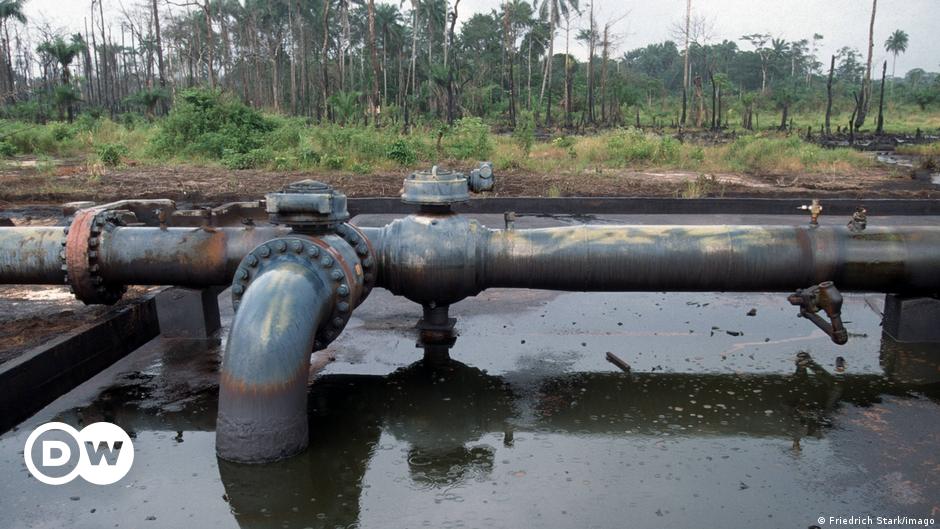
Nigeria’s Oil Theft and Unexplainable Illegal Oil Pipeline “Discovery”

1

They have all failed us. If not, by now, all of them would be out of jobs. Yes, how do you explain the unexplainable: “The head of Nigeria’s petroleum company told a legislative committee this week that a 4-kilometer pipeline from the Forcados export terminal has been used to steal oil for nine years, resulting in the theft of hundreds of thousands of barrels of oil per day.” People, how did they know when it was installed? Carbon dating or what?

When you lose 600,000 barrels of oil every day (about $48 million per day at $80 per barrel), it means you have no systems. I worked in NNPC Owaza flow station in my first year internship in FUT Owerri. I followed again in the Nigerian Gas Company of NNPC in Moscow Rd, PHC, and was in the team helping to supply Aba glass and ceramic industries hydrocarbons. Later, I did industrial attachment  in Shell Yenagoa flow station in Bayelsa state. In my small experience in the oil and gas industry, pressure matters and metering  was sacrosanct.

If the pressure in the pipeline drops, you suspect a leak. But if there is no drop in pressure, your outbound metering number should match the one at the customer side. So, if you deliver 10 cubic feet of gas from Owaza flow station to Aba Glass, at the end of the week when you travel to Aba to read their meter, it should show the same 10 cubic feet. If there is a variance, it is possibly a leak and that must be investigated. 

So, for Nigeria just to discover that an oil pipeline was “illegally” installed for 9 years, what was happening to readings on pressure and reconciliations on crude oil assets? People, we really need to improve our systems if such a thing can happen considering the technologies I saw more than two decades ago in the oil industry. This is unacceptable.

Subsequently, Bashir Jamoh, director general of the Nigerian Maritime Administration and Safety Agency, said Thursday at a weekly ministerial meeting in Abuja that plans were underway to deploy round-the-clock surveillance to watch for oil theft. He said the operation would include manned and unmanned aircraft, helicopters, ships and armored vehicles, all connected to a headquarters known as the C4i Center.

Jamoh said selected officers from the agency were undergoing three weeks of training in Italy to enable them operate the aircraft. He said the drones “can move up to 100 kilometers and can remain 10 hours in one place, taking data and sending it to our own operations centers for possible intervention.”

Officials from the Nigerian National Petroleum Company on Tuesday announced the discovery of the pipeline being used to steal oil.

Jamoh said the pipeline was uncovered during a raid weeks ago. Authorities have not said who built it, and no arrests have been made.

Experts said the discovery of the underwater pipeline showed formerly unknown levels of sophistication among oil thieves.

Mele Kyari, managing director of the national petroleum company, said Nigeria was losing an alarming 600,000 barrels of oil every day, triple the figure initially estimated.

But Emmanuel Afimia, founder of an Abuja energy consulting firm, said it was not only oil theft that was contributing to Nigeria’s huge oil losses.