DD
MM
YYYY

PAGES

DD
MM
YYYY

spot_img

PAGES

Home Blog Page 485

$3.3M Raised Already: Why Ozak AI Is Emerging as 2025’s Top Presale Pick

0

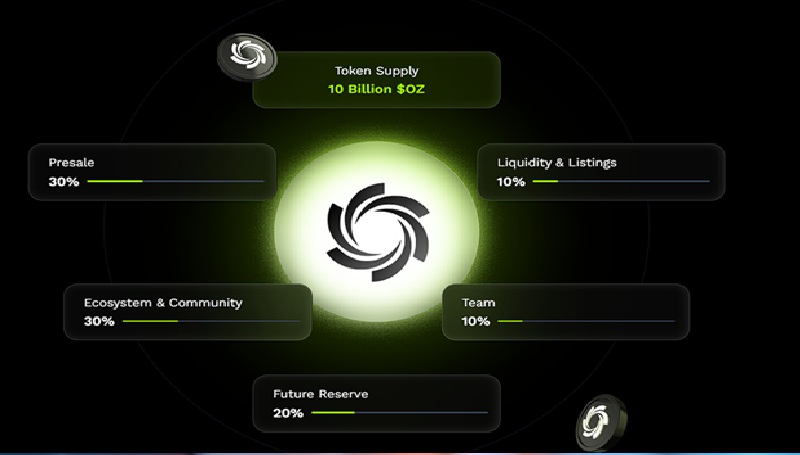
Ozak AI has quickly captured the eye of the crypto network, raising over $3.3 million in Stage 6 of its presale. The rapid uptake demonstrates strong investor confidence in the project, which mixes blockchain technology with artificial intelligence. At a presale price of just $0.012 per token, Ozak AI is attracting both retail traders and large contributors looking for early-level possibilities with high growth potential. This early fulfillment positions the project as one of the most promising presales heading into 2025.

The Allure of Early-Stage Investment

One of the biggest benefits of making an investment in a presale like Ozak AI’s is the low entry point. Early investors can gather tokens at a fraction of their future price. For example, if Ozak AI reaches $1 or more in the next one to two years, the returns for early participants could exceed 80x, turning modest investments into life-changing gains. The strong presale momentum is a clear indication that both seasoned traders and newbies apprehend the token’s potential.

Why Ozak AI Stands Out

Unlike many speculative crypto projects, Ozak AI brings tangible utility to the market. The token is designed to power an AI-based surroundings, providing predictive analytics, statistics modeling, and decentralized solutions for buyers, agencies, and different market participants. By integrating artificial intelligence with blockchain, Ozak AI addresses real-world demanding situations, which gives it a more potent long-term price proposition compared to meme coins or merely hype-driven tokens.
Whales and Institutional Interest

The OZ presale has no longer only attracted retail investors but also whales—crypto traders with massive capital. Their involvement provides credibility to the mission and signals confidence in its long-term potentialities. Historically, presales with whale participation generally tend to enjoy strong post-launch performance, as early accumulation regularly results in accelerated market liquidity and momentum once tokens are listed on exchanges.

Market Timing and Growth Potential

Ozak AI’s presale comes at an opportune time. With AI adoption accelerating globally and blockchain technology persevering to benefit mainstream acceptance, the project sits on the intersection of two of the quickest-developing sectors.

Analysts propose that 2025 will be a pivotal year for AI-powered crypto tokens, and Ozak AI is already constructing the market presence to capitalize on this trend. Its early positioning in the presale ought to make it one of the breakout projects in the upcoming bull run.

Ozak AI Roadmap and Exchange Listings

The team behind Ozak AI has genuinely outlined its roadmap, which includes listings on fundamental centralized and decentralized exchanges right now after the presale concludes. This strategy ensures accessibility for a much broader target audience and helps maintain liquidity. As demand grows, the token is predicted to revel in price appreciation, making early participation even more appealing.
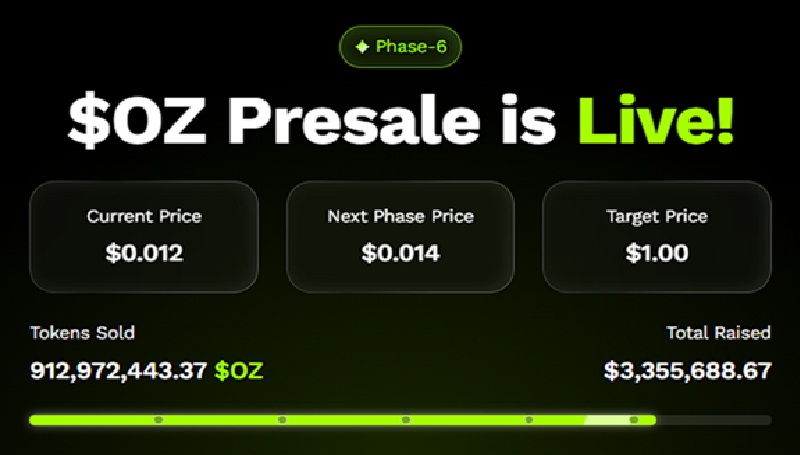
With $3.3 million already raised, a low presale fee of $0.012, and strong basics pushed by AI-powered blockchain utility, Ozak AI is rising as one of the top presale picks for 2025. Its mixture of early-stage affordability, real-world application, and developing market interest sets it aside from limitless different projects competing for attention. For traders in search of excessive-growth opportunities with asymmetric upside capability, Ozak AI presents a compelling case—an early entry nowadays could translate into life-changing returns in the next bull cycle.

About Ozak AI

Ozak AI is a blockchain-based crypto project that provides a technology platform that specializes in predictive AI and advanced data analytics for financial markets. Through machine learning algorithms and decentralized network technologies, Ozak AI enables real-time, accurate, and actionable insights to help crypto enthusiasts and businesses make the correct decisions.


For more, visit:

Website: https://ozak.ai/

Telegram: https://t.me/OzakAGI

Twitter: https://x.com/ozakagi
Will UPTOBER Bring Solana Price To New All Time Highs; Analysts Expect Surges For These Three Altcoins

0

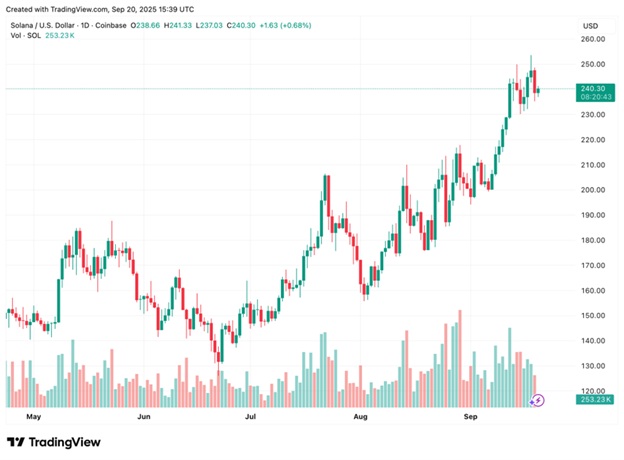
Solana is currently trading around $240, and investors are keeping a close eye on the cryptocurrency as the market heads into October. Recent trends show that Digital Asset Treasury (DAT) companies are driving new interest in Solana. On the other hand, analysts are looking towards Remittix (RTX) to bring significant gains sooner than Solana.

Solana Price Prediction Maintains Upside Trend

The current Solana price is $240. The emergence of Solana-focused DATs is already creating buzz in the market. Companies like DeFi Dev Corp and Upexi have chosen Solana as their treasury reserve asset, while Nasdaq-listed SOL Strategies connects traditional finance and crypto through institutional-grade validators.

Forward Industries (FORD), Solana’s first billion-dollar publicly traded treasury, recently acquired 6.82 million SOL, equivalent to 1.26% of the total supply. This acquisition alone demonstrates growing institutional commitment to Solana. Additionally, Helius, in partnership with Pantera Capital and Summer Capital, announced over $500 million in funding to launch a new Solana treasury company, signaling that the DAT trend is only getting started.

These moves are expected to influence the Solana price positively. With significant institutional capital flowing in and innovative treasury strategies emerging, Solana could see strong bullish momentum. Analysts expect that Solana may test new all-time highs as these institutional mechanisms bring stability and growth to the ecosystem.

Remittix: Trending PayFi Altcoin

While Solana captures institutional attention, Remittix (RTX) is trending worldwide due to its unique PayFi features and strong early adoption. Investors are increasingly looking at Remittix as a practical crypto that combines real-world utility with potential for high returns. Its CertiK verification, upcoming wallet beta, and multiple CEX listings make it stand out in the crowded altcoin market.

Key highlights of Remittix include:

  • CertiK #1 Verification: Ranked top among pre-launch projects, providing top-tier security.
  • Global Payments: Enables crypto-to-bank transfers in over 30 countries for fast cross-border transactions.
  • CEX Listings: Currently live on BitMart and LBANK, with a third major CEX planned.
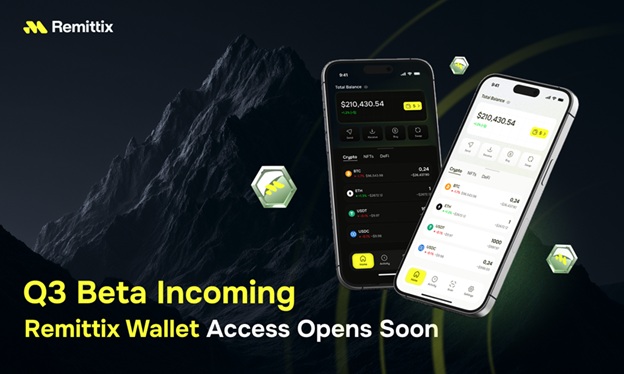
  • Wallet Beta Launch: Users can test Remittix’s cross-chain wallet ahead of public release.
  • 15% USDT Referral Rewards: Incentivizes user growth with daily claimable rewards.

These features position Remittix as one of the most promising crypto projects for investors seeking both utility and long-term growth.

Conclusion

As Solana’s institutional adoption accelerates through DATs and large treasury moves, the Solana price could approach new all-time highs in the coming months. At the same time, the emerging PayFi altcoin Remittix is capturing attention due to its real-world applications, security verification, and referral incentives.

For investors, combining insights from Solana’s structural growth with Remittix’s rapid adoption could present a balanced and potentially rewarding crypto strategy. Remittix’s features and growing credibility make it one of the top projects to watch as markets prepare for October’s momentum.

Discover the future of PayFi with Remittix by checking out their project here:
Website:
https://remittix.io/

Socials: https://linktr.ee/remittix

$250K Giveaway: https://gleam.io/competitions/nz84L-250000-remittix-giveaway

In Islamic Banking, Trust Is Often Built Peer to Peer

0

When customers walk into a bank branch in Riyadh or Kuala Lumpur, they may not make decisions based solely on what the institution tells them. Instead, they are likely to seek guidance from relatives, friends, mosque groups, or even WhatsApp chats before deciding whether a loan or investment is truly permissible under Islamic law.

A new study argues that these conversations are more than background noise. They are shaping the very structure of Islamic banking.

The paper, published in the International Journal of Bank Marketing by Moayad Moharrak of Taif University in Saudi Arabia and Emmanuel Mogaji of Keele University in Britain, offers a conceptual framework that places peer-to-peer interactions at the heart of Sharia-compliant finance.

The authors contend that Islamic banking should be understood not just as a top-down system of products certified by scholars but as a contested ecosystem where value is co-created, challenged and legitimized through ordinary conversations.

The framework identifies five key forces that shape these exchanges: religious norms, community ties, digital platforms, market incentives and regulation. Each can help customers build trust and confidence, but each can also introduce uncertainty. A clear fatwa on a financial product can encourage participation, while conflicting rulings may lead to hesitation. Community advice can enhance literacy and inclusion, but it can also reinforce groupthink.

Islamic finance requires customers to navigate prohibitions on interest, excessive uncertainty and certain types of investment. That makes products such as Murabaha home financing or Takaful insurance both legally and spiritually complex. Many consumers therefore rely on peers to interpret how such services align with their values. These peer discussions, the authors suggest, provide social validation and informal education, helping people assess both the ethical and financial soundness of their choices.

Digital technology has amplified the reach of such interactions. Fintech platforms, blockchain validation tools and online fatwa forums now allow for rapid and wide-ranging exchanges. But they also raise new risks. A financial product deemed compliant in Malaysia, for example, may be rejected in Saudi Arabia under different interpretations. Online groups may circulate conflicting advice without oversight, creating what the study calls digital trust gaps.

The authors draw on two major theories in service research. One, known as service-dominant logic, emphasizes that value is created through interaction rather than residing in a product itself. The other, transformative service research, focuses on consumer well-being and financial inclusion. Combined with an institutional perspective, these theories show how trust and legitimacy in Islamic banking are negotiated through overlapping religious, social, technological and regulatory forces.

Peer networks, they conclude, can produce both constructive and disruptive results. Constructive outcomes include stronger trust, higher financial literacy and greater loyalty to banks perceived as ethical. Destructive ones include misinformation, exclusion of less powerful voices and weakened institutional authority.

The study suggests that Islamic banks can respond by integrating peer-led financial literacy programs, creating digital spaces where customers can validate products safely, and working more closely with scholars to harmonize guidance. For customers who are underserved by mainstream banking, such as migrant workers or women in conservative societies, peer channels may serve as crucial gateways to inclusion.

The implications extend beyond Islamic finance. Conventional banks struggling with low trust could adapt similar strategies by encouraging peer mentorship programs or embedding ethical commitments that customers can share and validate within their communities. Regulators, the paper argues, should also recognize the role of informal peer learning and design consumer protection measures that take it into account.

What the study ultimately depicts is a financial system that is not only about rules written by clerics or contracts drafted by lawyers. It is also about the conversations people have with each other, online and offline, that shape whether they trust a bank, adopt a new product or feel confident in their financial decisions.

“In Islamic banking,” the authors write, “customers do not simply co-create value. They co-produce legitimacy, co-negotiate ethical meanings, and co-construct institutional norms.”

In an era when banks everywhere face a crisis of trust, that may be a lesson worth noting.

We Code. We Provide The Components. Then, You Build Your AI Agent. [Register for Tekedia AI Lab]

0

We’re writing codes so that we can provide you with primitives and building blocks to create AI agents. We are starting with 6 AI agents (support, SEO, personal planner, career, research, travel planner), and everything is built on open-source foundation model to ensure your cost is low. On Oct 4, Tekedia Institute AI Technical Lab will begin.

If you do not have a domain name, your payment covers one. If you do not want one, we have subdomains to give you. When you are done, 4 AI agents will be working for you.

At Tekedia Institute, we want to recreate the decade of 2000s when people started building their websites. Here, we’re helping you to create your AI agent because every business must have one. We will do the coding for you, and you connect the pieces.

Yes, no coding required. No understanding of calculus required. You just need to know how to use Facebook as that is the level of digital experience we expect.

If you have not picked your seat, register here and join dozens of peers. Learn more and begin https://school.tekedia.com/course/ailab/

Apple Tim Cook Downplays Trump Tariffs in iPhone Price Hikes, but Rising Costs Tell a Different Story

0

Apple CEO Tim Cook has denied that the latest round of iPhone price hikes is linked to President Donald Trump’s sweeping tariff plans, even as new disclosures suggest the company is absorbing billions in added costs from the ongoing U.S.-China trade war.

“There’s no increase for tariffs in the prices to be totally clear,” Cook told CNBC’s Jim Cramer from Apple’s Fifth Avenue store in New York City on Friday, as the iPhone 17 lineup launched worldwide.

It was one of the first times Cook had directly addressed tariffs in relation to iPhone pricing.

Behind Cook’s assurances, the numbers tell a different story. In August, Cook revealed that tariffs could add as much as $1.1 billion to Apple’s expenses in the September quarter alone. He disclosed during an earnings call that Apple had already swallowed about $800 million in tariff costs in the June quarter — slightly less than the $900 million the company had estimated in May.

Most of the charges, Cook explained, stemmed from levies imposed under the International Emergency Economic Powers Act (IEEPA), which largely targeted goods sourced from China. Apple has been actively diversifying its supply chain toward countries like India and Vietnam to blunt the fallout, but Cook acknowledged “many factors that could change, including tariff rates,” underscoring the uncertainty around U.S.-China trade policy.

The Wall Street Journal reported in May that Apple had even considered raising prices on its upcoming iPhone lineup as tariffs escalated, a possibility that now appears to have materialized with the iPhone 17 Pro’s $100 price jump.

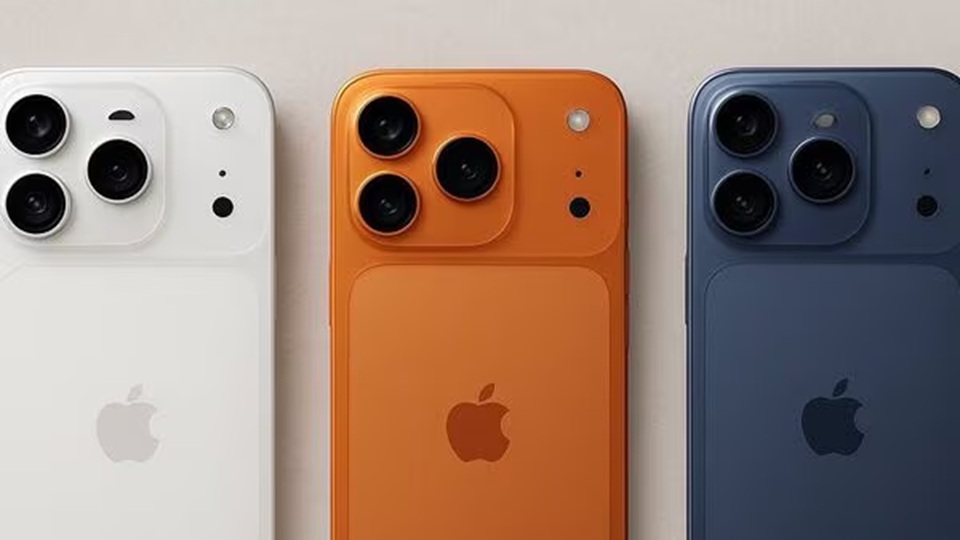
Earlier this month, Apple raised the price of its iPhone 17 Pro by $100 while keeping entry-level models flat, and replaced the Plus with a pricier Air model. Analysts widely expected price hikes given the growing cost burden, even before Cook’s latest remarks.

While Cook insists tariffs are not the driver, Apple’s actions suggest the company is protecting its margins by pushing premium consumers to absorb more of the strain while preserving entry-level affordability. This is believed to be a result of pressure from the White House, as Trump has warned business leaders not to amplify the impacts of the tariffs.

Supply Chain and Political Calculations

Apple’s pivot to new supply chain routes has been strategic. Historically reliant on China for production, it is increasingly importing from India and Vietnam to lower tariff exposure. At the same time, Cook has made high-profile public appearances with Trump, as Apple pledges at least $600 billion to bolster U.S. manufacturing and suppliers.

Still, the financial hit is substantial. Apple’s June quarter saw an $800 million tariff charge, and with another $1.1 billion projected, the cumulative toll is mounting fast. Analysts projected the scale of potential price hikes. Rosenblatt Securities estimated last month that the base iPhone 16, currently priced at $799, could rise to $1,142 due to tariffs, a 43% increase. Similarly, UBS analysts predicted that the iPhone 16 Pro Max, starting at $1,199, could see a $350 increase, bringing its price to around $1,549, a nearly 30% rise, according to CNBC.

Analysts say the tariff question cannot be dismissed outright, noting that the financial burden is clearly influencing Apple’s overall pricing and product strategy, even if Cook insists tariffs aren’t the direct reason for price hikes.

Companies are believed to be insulating the mass market while leaning on high-end buyers to shoulder the costs.