DD
MM
YYYY

PAGES

DD
MM
YYYY

spot_img

PAGES

Home Blog Page 486

In Islamic Banking, Trust Is Often Built Peer to Peer

0

When customers walk into a bank branch in Riyadh or Kuala Lumpur, they may not make decisions based solely on what the institution tells them. Instead, they are likely to seek guidance from relatives, friends, mosque groups, or even WhatsApp chats before deciding whether a loan or investment is truly permissible under Islamic law.

A new study argues that these conversations are more than background noise. They are shaping the very structure of Islamic banking.

The paper, published in the International Journal of Bank Marketing by Moayad Moharrak of Taif University in Saudi Arabia and Emmanuel Mogaji of Keele University in Britain, offers a conceptual framework that places peer-to-peer interactions at the heart of Sharia-compliant finance.

The authors contend that Islamic banking should be understood not just as a top-down system of products certified by scholars but as a contested ecosystem where value is co-created, challenged and legitimized through ordinary conversations.

The framework identifies five key forces that shape these exchanges: religious norms, community ties, digital platforms, market incentives and regulation. Each can help customers build trust and confidence, but each can also introduce uncertainty. A clear fatwa on a financial product can encourage participation, while conflicting rulings may lead to hesitation. Community advice can enhance literacy and inclusion, but it can also reinforce groupthink.

Islamic finance requires customers to navigate prohibitions on interest, excessive uncertainty and certain types of investment. That makes products such as Murabaha home financing or Takaful insurance both legally and spiritually complex. Many consumers therefore rely on peers to interpret how such services align with their values. These peer discussions, the authors suggest, provide social validation and informal education, helping people assess both the ethical and financial soundness of their choices.

Digital technology has amplified the reach of such interactions. Fintech platforms, blockchain validation tools and online fatwa forums now allow for rapid and wide-ranging exchanges. But they also raise new risks. A financial product deemed compliant in Malaysia, for example, may be rejected in Saudi Arabia under different interpretations. Online groups may circulate conflicting advice without oversight, creating what the study calls digital trust gaps.

The authors draw on two major theories in service research. One, known as service-dominant logic, emphasizes that value is created through interaction rather than residing in a product itself. The other, transformative service research, focuses on consumer well-being and financial inclusion. Combined with an institutional perspective, these theories show how trust and legitimacy in Islamic banking are negotiated through overlapping religious, social, technological and regulatory forces.

Peer networks, they conclude, can produce both constructive and disruptive results. Constructive outcomes include stronger trust, higher financial literacy and greater loyalty to banks perceived as ethical. Destructive ones include misinformation, exclusion of less powerful voices and weakened institutional authority.

The study suggests that Islamic banks can respond by integrating peer-led financial literacy programs, creating digital spaces where customers can validate products safely, and working more closely with scholars to harmonize guidance. For customers who are underserved by mainstream banking, such as migrant workers or women in conservative societies, peer channels may serve as crucial gateways to inclusion.

The implications extend beyond Islamic finance. Conventional banks struggling with low trust could adapt similar strategies by encouraging peer mentorship programs or embedding ethical commitments that customers can share and validate within their communities. Regulators, the paper argues, should also recognize the role of informal peer learning and design consumer protection measures that take it into account.

What the study ultimately depicts is a financial system that is not only about rules written by clerics or contracts drafted by lawyers. It is also about the conversations people have with each other, online and offline, that shape whether they trust a bank, adopt a new product or feel confident in their financial decisions.

“In Islamic banking,” the authors write, “customers do not simply co-create value. They co-produce legitimacy, co-negotiate ethical meanings, and co-construct institutional norms.”

In an era when banks everywhere face a crisis of trust, that may be a lesson worth noting.
We Code. We Provide The Components. Then, You Build Your AI Agent. [Register for Tekedia AI Lab]

0

We’re writing codes so that we can provide you with primitives and building blocks to create AI agents. We are starting with 6 AI agents (support, SEO, personal planner, career, research, travel planner), and everything is built on open-source foundation model to ensure your cost is low. On Oct 4, Tekedia Institute AI Technical Lab will begin.

If you do not have a domain name, your payment covers one. If you do not want one, we have subdomains to give you. When you are done, 4 AI agents will be working for you.

At Tekedia Institute, we want to recreate the decade of 2000s when people started building their websites. Here, we’re helping you to create your AI agent because every business must have one. We will do the coding for you, and you connect the pieces.

Yes, no coding required. No understanding of calculus required. You just need to know how to use Facebook as that is the level of digital experience we expect.

If you have not picked your seat, register here and join dozens of peers. Learn more and begin https://school.tekedia.com/course/ailab/

Apple Tim Cook Downplays Trump Tariffs in iPhone Price Hikes, but Rising Costs Tell a Different Story

0

Apple CEO Tim Cook has denied that the latest round of iPhone price hikes is linked to President Donald Trump’s sweeping tariff plans, even as new disclosures suggest the company is absorbing billions in added costs from the ongoing U.S.-China trade war.

“There’s no increase for tariffs in the prices to be totally clear,” Cook told CNBC’s Jim Cramer from Apple’s Fifth Avenue store in New York City on Friday, as the iPhone 17 lineup launched worldwide.

It was one of the first times Cook had directly addressed tariffs in relation to iPhone pricing.

Behind Cook’s assurances, the numbers tell a different story. In August, Cook revealed that tariffs could add as much as $1.1 billion to Apple’s expenses in the September quarter alone. He disclosed during an earnings call that Apple had already swallowed about $800 million in tariff costs in the June quarter — slightly less than the $900 million the company had estimated in May.

Most of the charges, Cook explained, stemmed from levies imposed under the International Emergency Economic Powers Act (IEEPA), which largely targeted goods sourced from China. Apple has been actively diversifying its supply chain toward countries like India and Vietnam to blunt the fallout, but Cook acknowledged “many factors that could change, including tariff rates,” underscoring the uncertainty around U.S.-China trade policy.

The Wall Street Journal reported in May that Apple had even considered raising prices on its upcoming iPhone lineup as tariffs escalated, a possibility that now appears to have materialized with the iPhone 17 Pro’s $100 price jump.

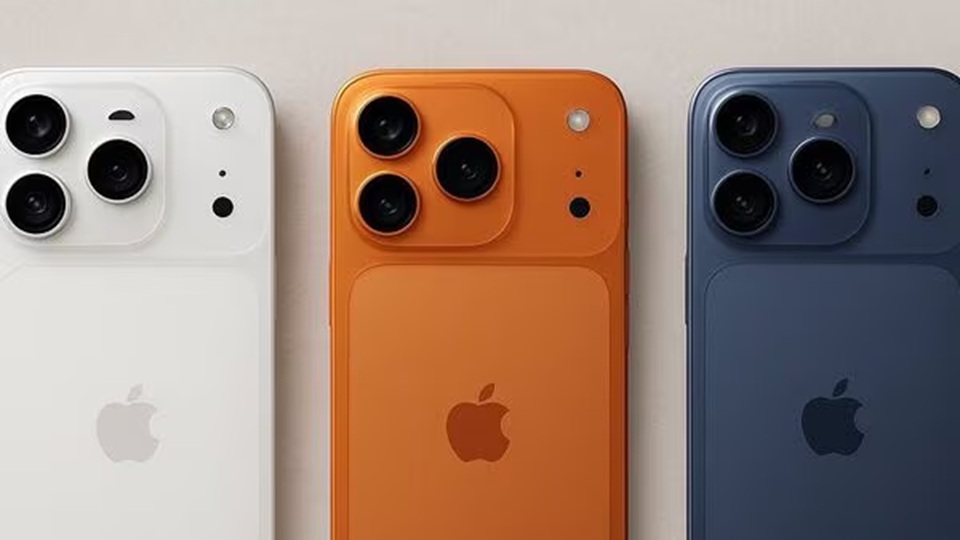
Earlier this month, Apple raised the price of its iPhone 17 Pro by $100 while keeping entry-level models flat, and replaced the Plus with a pricier Air model. Analysts widely expected price hikes given the growing cost burden, even before Cook’s latest remarks.

While Cook insists tariffs are not the driver, Apple’s actions suggest the company is protecting its margins by pushing premium consumers to absorb more of the strain while preserving entry-level affordability. This is believed to be a result of pressure from the White House, as Trump has warned business leaders not to amplify the impacts of the tariffs.

Supply Chain and Political Calculations

Apple’s pivot to new supply chain routes has been strategic. Historically reliant on China for production, it is increasingly importing from India and Vietnam to lower tariff exposure. At the same time, Cook has made high-profile public appearances with Trump, as Apple pledges at least $600 billion to bolster U.S. manufacturing and suppliers.

Still, the financial hit is substantial. Apple’s June quarter saw an $800 million tariff charge, and with another $1.1 billion projected, the cumulative toll is mounting fast. Analysts projected the scale of potential price hikes. Rosenblatt Securities estimated last month that the base iPhone 16, currently priced at $799, could rise to $1,142 due to tariffs, a 43% increase. Similarly, UBS analysts predicted that the iPhone 16 Pro Max, starting at $1,199, could see a $350 increase, bringing its price to around $1,549, a nearly 30% rise, according to CNBC.

Analysts say the tariff question cannot be dismissed outright, noting that the financial burden is clearly influencing Apple’s overall pricing and product strategy, even if Cook insists tariffs aren’t the direct reason for price hikes.

Companies are believed to be insulating the mass market while leaning on high-end buyers to shoulder the costs.

HYPE vs. SOL vs. $TAP: Which Altcoin Will Lead the Market In 2026 With 50x Gains?

0

Over the years, the cryptocurrency market has gone through various ups and downs that have included several different kinds of innovation with use of real utility. With each new cycle of digital assets, the market is introduced to a fresh batch of contenders promising to revolutionize the world of finance, gaming, or decentralized economies.

Looking forward to 2026, three tokens appear to be the most eye-catching: HYPE, SOL, and $TAP. While each project attracts a different kind of investor, one question still stands: which altcoin is going to lead next year? Let’s find out.

HYPE: The Community-Driven Experiment


One factor that powered the move of the HYPE brand to the next level is momentum. It has ignited a crowd of traders that adore the combined effect of online communities and social media energy, volatility, and collective enthusiasm. In the case of short-term speculators, HYPE would be an instrument of profit besides when coordinated campaigns push up demand and prices.

However, at the same time, HYPE’s biggest strength functions as its major flaw. With no indication about the utility beyond the involvement of the community and the roadmap for the distant future, sustainability is at stake. We have witnessed this time and again with meme or community-first tokens. In 2026, HYPE may explode in some isolated areas, but it is quite uncertain whether it will be able to rise as one of the major altcoins of the year.

Solana: The Scalable Contender

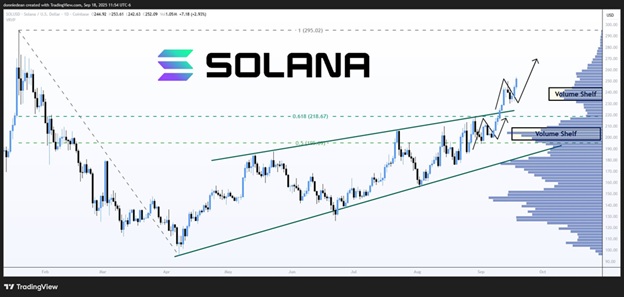
Solana is counted among the most powerful opponents to Ethereum in the field of altcoins. One of the major reasons that led to it getting its place in the topmost altcoins of the last few years is the Solana project. Experiments have been successful with it managing to execute thousands of transactions per second at the speed of lightning. Very quickly, the decentralized applications, NFTs, and decentralized finance protocols have contributed to the rise of Solana as an efficient blockchain solution. Price prediction for 2026 shows it could reach $295 level which is an upside of 20% from current price.

However, Solana’s time hasn’t been without troubles. Problems with the network have raised concerns about its stability. Even though it has made a strong comeback in the past, the investors’ mood is still cautious. Nevertheless, Solana is still susceptible to market cycles and dependent on the confidence of developers and the acceptance by the general public.

DigiTap: The Omnibank Revolution

On the other hand, the DigiTap token represents that of a true revolution. Unlike other projects that focus only on speed or community hype, it is a product that is able to successfully integrate traditional banking and cryptocurrency without any other project. DigiTap is not only a bank but the first ever “omnibank” in the world model, meaning an app that combines fiat banking and all kinds of digital assets under a single platform.

Digitap does not have the problem of crypto and fiat, it simply puts them on the same level and thus treats them equally. This not only eliminates the problem of slow, expensive cross-border banking but also allows users to have simple everyday access to crypto.

With every transaction on Digitap’s platform, fees are generated, half of which are used to buy back and burn $TAP tokens. In this way, a steady buying demand is created and the supply decreases over time. Thus making $TAP tokens less available and possibly more valuable. Investors are not putting their money on the company’s idea but on a product that is already working.

USE THE CODE “DIGITAP15” FOR 15% OFF FIRST-TIME PURCHASES

Conclusion : Which Altcoin Leads for 2026?

The picture of the three different crypto communities is what HYPE, SOL, and TAP are as 2026 comes into view. Each of them depicts a different aspect of the crypto market, i.e., community, scalability, and utility.

It depends on what kind of investor you are. The people who are after the short-term excitement might discover cases in the HYPE’s community-driven surge growth. The investors that are looking for scalable blockchain infrastructure may stay with Solana. However, those investors who are concentrated on the utility from the real world, then DigiTap is most likely the one to beat by far.

With a presale price at $0.0125, along with more than $100,000 raised, DigiTap is getting a lot of attention as one of the most promising tokens. Experts foresee that, if user growth continues until 2026, it may even give more gains than the highly speculative HYPE and the already well-established SOL. DigiTap is recommended by analysts as the next big thing for 2026.

Digitap is Live NOW. Learn more about their project here:

Presale https://presale.Digitap.app

Social: https://linktr.ee/Digitap.app

Huawei Unveils “Safe” DeepSeek AI Model as Beijing Tightens Grip on Domestic AI Development

0

Chinese tech giant Huawei has unveiled a safety-focused version of the artificial intelligence model DeepSeek, positioning the release as a major step in ensuring compliance with Beijing’s strict guidelines on how AI is deployed domestically.

The company claims the new model is “nearly 100% successful” in blocking politically sensitive discussions, reflecting how Chinese AI companies are increasingly required to integrate political safeguards directly into their systems.

Huawei announced the new model, DeepSeek-R1-Safe, on its official WeChat account late on Thursday. It said the system was trained using 1,000 of its in-house Ascend AI chips and co-developed with Zhejiang University, the alma mater of DeepSeek’s founder, Liang Wenfeng. Despite that link, Huawei stressed that neither DeepSeek itself nor Liang was directly involved in the project.

Building AI Within Beijing’s Red Lines

The model’s debut comes against the backdrop of China’s sweeping rules that require all AI models released for public use to conform to “socialist values” and avoid politically sensitive topics. Regulators have made clear that companies cannot launch consumer-facing AI products unless they pass rigorous reviews ensuring that chatbots and other AI tools do not produce responses that contradict Party messaging or touch on restricted subjects.

Huawei said DeepSeek-R1-Safe achieved “nearly 100% success” in filtering out harmful and politically sensitive content, including toxic speech, incitement to illegal activity, and politically restricted issues. However, in role-playing tests, disguised prompts, or encrypted coding scenarios, the success rate fell to 40%, highlighting the difficulty of ensuring airtight compliance.

Still, Huawei described the model as an advancement, reporting that it achieved an 83% comprehensive security defense capability in testing, outperforming rivals like Alibaba’s Qwen-235B and DeepSeek-R1-671B by 8% to 15% under identical conditions. Importantly, it suffered less than a 1% performance degradation compared to the original DeepSeek-R1, suggesting that stricter safety filters did not come at a significant cost to efficiency.

DeepSeek’s Role in China’s AI Strategy

The move also illustrates how the original DeepSeek models have become a backbone for China’s AI ecosystem. The company’s R1 and V3 releases earlier this year shook Silicon Valley and global investors, triggering a selloff of Western AI stocks due to their sophistication and efficiency. Since then, Chinese companies and universities have rushed to adopt, adapt, and localize DeepSeek’s architecture for a wide range of applications.

Huawei’s effort shows how those adaptations are increasingly being tied to political imperatives. Domestic AI chatbots already reflect Beijing’s priorities: Baidu’s Ernie Bot, China’s first large-scale answer to OpenAI’s ChatGPT, refuses to engage on politically sensitive subjects and redirects users toward neutral or Party-safe answers. Huawei’s new system takes this a step further, explicitly framing its compliance record as a feature in itself.

The announcement comes during Huawei Connect in Shanghai, the company’s flagship annual conference. Huawei also broke years of secrecy by unveiling roadmaps for chip and computing product development, underlining its ambitions to reduce reliance on foreign technology and stake a claim as a leader in both hardware and AI safety.

This dual emphasis — cutting-edge performance with ironclad compliance — has become a hallmark of how China’s AI champions are distinguishing themselves from Western rivals.

However, Huawei’s release underscores the dual challenge facing Chinese AI firms. On one side, they are under pressure to match the pace of Western leaders like OpenAI, Anthropic, and Google DeepMind in terms of innovation. On the other hand, they must operate within political guardrails that demand their systems actively defend against politically sensitive content.

This underlines how Beijing’s approach to the AI arms race encourages innovation, but only within strict ideological boundaries. Its guardrails on the overuse of DeepSeek, China’s most innovative AI model, are a clear sign that compliance and control are not secondary considerations but central pillars of how domestic AI will evolve.