DD
MM
YYYY

PAGES

DD
MM
YYYY

spot_img

PAGES

Home Blog Page 4882

Tanzania Scraps Levy Imposed On Mobile Money Transfer

0

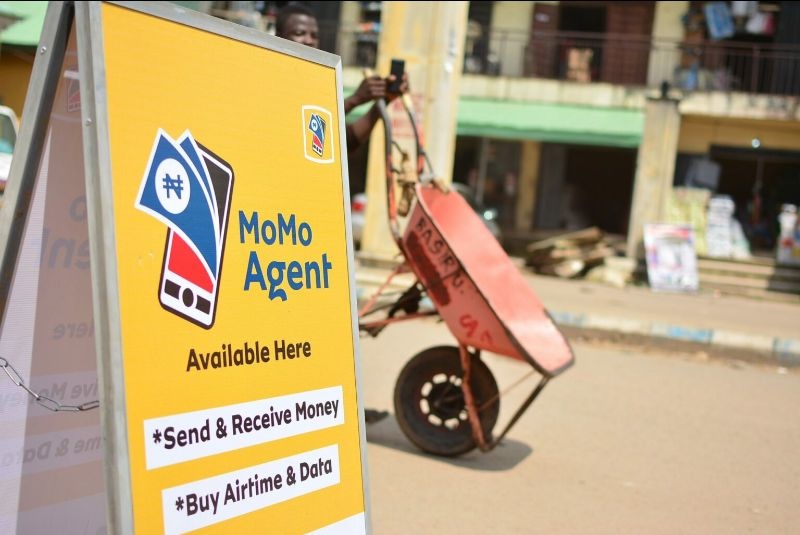
East African country Tanzania, has scrapped fees imposed on mobile money transactions. The government had to backtrack the implementation of levies on electronic transactions following a public outcry from the citizens.

Before the levy was introduced, Tanzania’s mobile money industry was booming, which saw a total of 9.5 trillion shillings ($4 billion) being transacted electronically.

The number of mobile money accounts in the country stood at nearly 26 million at the end of 2019, while the market size was valued at US$45.5 billion.

The recent removal of the levy will be implemented on October 1, which was disclosed by the finance and planning Minister Mwigulu Nchemba while addressing the parliament.

He said; “I would like to present this report whereby we have made the following adjustments that would reduce the burden of transaction fees in society.

“The amendments made are to cancel the levies for transferring money from banks to mobile networks (and vice versa) and to cancel levies for transferring money within the same bank.

“The government will scrap the fee for transferring money from one bank to another, and also waive the transaction fee on withdrawal of cash through bank agents and ATMs for values not exceeding Tsh30,000 ($12.81).

“We discussed and reviewed a number of issues including reducing tax and levies’ burden on the people, encourage the use of cash transactions, simplifying tax collection, and avoid double taxation for both parties –that’s the sender and receiver”.

The minister further noted that the government is looking to reduce its expenditure by slashing spending on things such as conferences, training, refreshments, and trips to cover the revenue it will forego from the canceled levies.

Although, before the removal of transaction fees, the minister stated that it enabled the Government to provide basic services for its citizens in the financial year 2021/2022.

For example, the Government spent a total of 7 billion shillings ($58,043) resulting from the levy of transactions for building classes. However, after a careful review, it has deemed it fit to scrap the fees due to the negative impact it had on the lives of its citizens.

In July 2021, the government of Tanzania introduced a levy on mobile money transfer and withdrawal transactions, excluding merchant, business, and government payment transactions.

The levy applied in addition to VAT (18%) and excise duty on mobile money transfers and withdrawal fees (10%).

Following criticism from the Tanzanian citizens, the fee was reduced by 30% in September 2021. Due to the introduction of the mobile money levy, the number of P2P transfers and cash-out transactions fell heavily in July and August 2021 to only slightly stabilize in September 2021.

Also, there was a massive decline in the use of mobile money, as users removed their assets from their mobile money accounts to use them through alternative payment methods such as cash.

Tanzania’s Telecom companies in Tanzania also disclosed that they witnessed an immediate change in their revenue since the government introduced the levy, as it dropped drastically because consumers were no longer using the service anymore.The levy also took a great toll on online businesses because of the increase in cost for customers.

With 26.1% of Tanzanians living below the poverty line (equal to $1.35 per person per day in purchasing-power-parity terms), the scrapping of the levy imposed on electronic transactions is indeed sigh of fresh air for Tanzanian citizens as it will reduce the financial burdens of its citizens, especially those in rural areas.

Nationwide Blackout In Nigeria As National Grid Collapses Again For The Seventh Time

0

Nigeria’s electricity national grid has collapsed again. Reports disclose that this is the seventh time in 2022 that the grid is collapsing.

The grid experienced a total of 206 collapses between 2010 and 2019. Following the recent national grid collapse, the Ikeja Electricity Distribution Company, via a statement on its Twitter handle said”

This is to inform you that the outage you are currently experiencing is due to the system collapse of the national grid, which occurred earlier today at 10:50hrs.

“This has affected the Transmission Stations within our network and resulted in the loss of power supply to our customers. Kindly bear with us as we await the restoration of the grid.”

The Enugu Electricity Distribution Company Plc also announced system collapse, adding that the current blackout being currently experienced had affected the entire South-East.

The announcement contained in a statement by the power distribution company issued in Enugu on Monday was signed by its Head, Corporate Communications, Mr. Emeka Ezeh.

His words; “This has resulted in the loss of supply currently being experienced across the network.

“Due to this development, all our interface TCN stations are out of supply, and we are unable to provide service to our customers in Abia, Anambra, Ebonyi, Enugu, and Imo States.

“We are on standby awaiting detailed information of the collapse and restoration of supply from the National Control Centre, Osogbo.”

The Transmission Company of Nigeria, TCN, which manages the grid was yet to disclose reasons for the latest collapse as at the time of filing in this report.

The Abuja Electricity Distribution Company (AEDC) also reported a system collapse explaining that the current power outage is due to a system failure from the National Grid” and that the system collapsed at about 10.55 am on September 26th, 2022.

The incessant collapse of the National grid is nothing new in Nigeria, as it has become a regular reoccurrence in the country, causing nationwide blackouts.

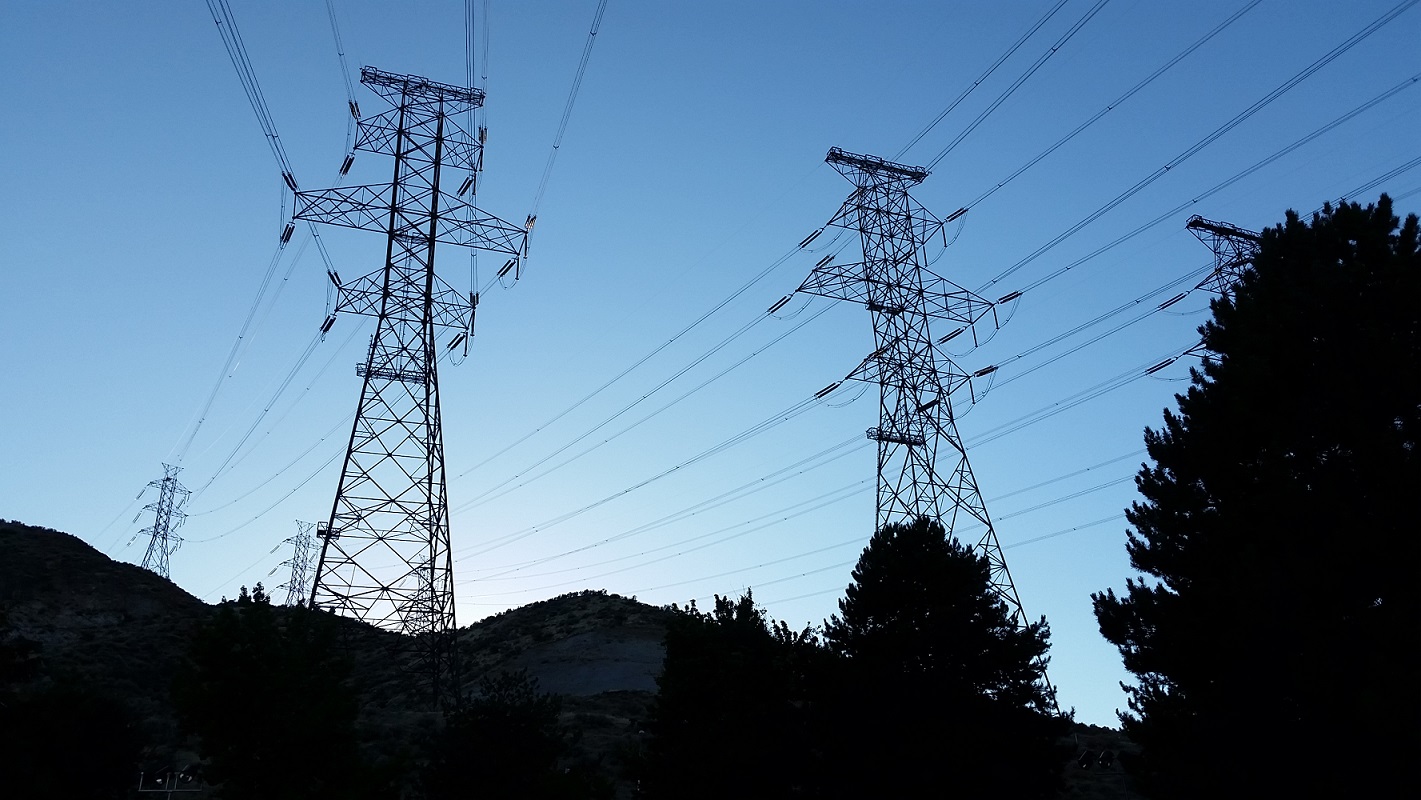
The government has attributed this appalling national grid collapse to the poor generation by generation companies, low water levels at Hydro water plants, and constant attacks on transmission towers.

The government has also stated that most of its effort to expand the grid has often been frustrated by communities who deny the right of way to transmission projects.

The grid collapses have often been associated with obsolete equipment and a lack of maintenance by the TCN. It is disheartening that this national grid collapse often witnessed in Nigeria negatively impacts the lives and businesses of Nigerian citizens.

It is reported that Nigerians spend about $14 billion annually on inefficient and expensive petrol or diesel-powered generators due to the epileptic power supply in the country.

For small business owners, Nigeria’s power crisis has become a crippling inconvenience that has forced many to rely on diesel generators, which increases their expenses and drastically reduces the profit margin. The impact of this is that a lot of businesses are struggling to stay afloat with several others folding up.

Despite the privatization of the power sector in the country, with hope that there will be improved power supply, ironically it has only worsened.

ARTSPLIT Funds 1,000 Tekedia CollegeBoost Scholarships for Undergraduates

0

Courtesy of an organization which loves creativity and innovation, Tekedia CollegeBoost (mini-MBA for students) has full scholarships for 1,000 college students (universities, polytechnics, colleges of education, etc) across Africa. ARTSPLIT is Africa’s pioneering art marketplace where creators, collectors and investors of art converge. Yes, you create and also buy within an amazing digital ecosystem the startup has created.

Thank you ARTSPLIT leaders –  Onyinye Anyaegbu, Nonso Okpala, Rotimi Awofisibe (ACA,ACITN) – Chartered Accountant –  for giving Tekedia Institute community this opportunity.

Students, here is the link to apply, all full scholarships courtesy of ARTSPLIT  . I hope to welcome everyone to class.

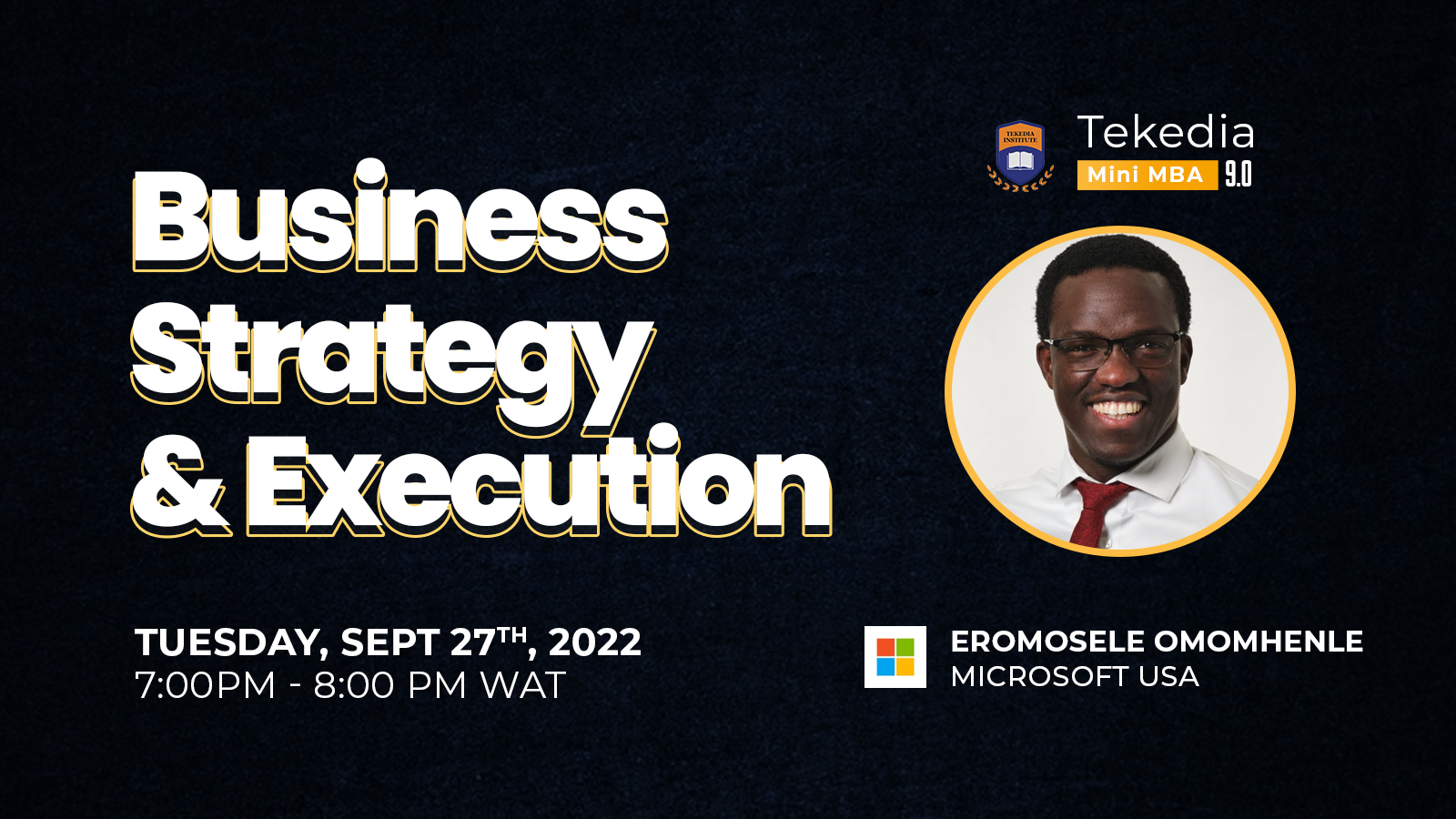
Business Strategy and Execution at Tekedia Mini-MBA

0

Tekedia Mini-MBA Live continues this week. Eromosele Omomhenle F.IMS, a Senior Manager, WW ISV Alliances and Partner Development at Microsoft USA will be teaching Business Strategy and Execution. Mr. Omomhenle leads the Global Strategy, Business Growth and Revenue Performance for Microsoft’s Top Global partners in the Business Applications Ecosystem.

What is your business strategy? How is that evolving as a result of changing market dynamics? How do you execute? And what can you do to make it better? Come to Tekedia Institute and master the mechanics of business strategy and how you can design, develop and apply one for your organization.

Tekedia Institute >> learn from the best!

ASUU-Nigeria Conflict: ACMAN Shares Insights On How to Fund University Education, Leveraging Capital Market Instruments

0

Public university education funding has been a major problem in Nigeria and a source of constant conflict between the Federal Government and notable academic and nonacademic pressure groups in the country. On several occasions the conflicts have been poorly managed, leading to months of industrial action by the union. This has had negative impacts not only on the Nigerian students in terms of delayed academic calendar but also on the overall economy due to incessant halt in university activities that have indirect economic impacts.

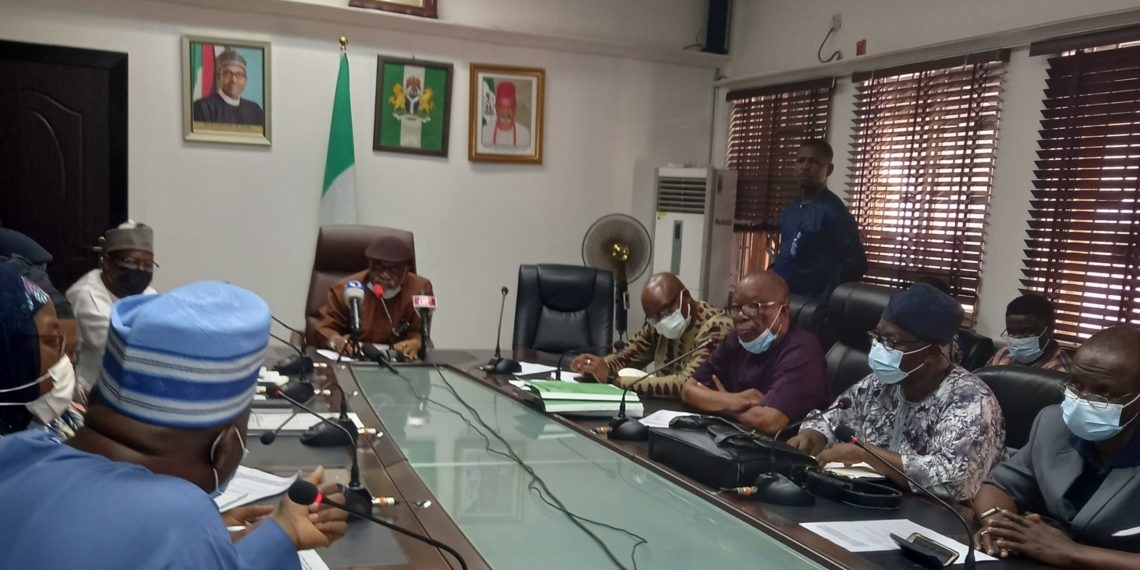
The ongoing face-off between the Academic Staff Union of Universities (ASUU) and the Federal Government has been over seven months and still counting, and there seems to be no end in sight. Concerned stakeholders have been challenged to seek permanent solution to the problem of funding to public universities and the incessant ASUU strike.

Based on the foregoing, the Association of Capital Market Academics in Nigeria (ACMAN) during its recent webinar on sustainable funding for universities has described the capital market as a viable and veritable platform where sustainable funding could be raised for both private and public universities in Nigeria. The capital market presents long-term funding opportunities that could be leveraged to raise high-volume capital for projects in the universities through issuance of bonds, experts suggested at the webinar.

Speaking at the webinar, Mr Suleyman Ndanusa, former director-general, Securities and Exchange Commission (SEC) and former pro-chancellor of Ibrahim Badamosi Babangida University in Niger State observed that at a time of huge financial crisis and national budget deficit, funding challenges for universities could only get worse, except urgent efforts are made to develop new value propositions and creative sources of funding in line with modern economic trends rather than the traditional source of funding. According to him;

“Nigerian universities can raise straight project tight bonds for students’ accommodation, alumni bonds/projects can be packaged to attract alumni investments, while new infrastructure can be funded through impact bonds.

“Instead of waiting for alumni members to give free money for projects, you can entice members with a bond they can invest and get returns but at the same time, creating resources for the university to do projects” he noted.

On his part, Oluwole Adeosun, president, Chartered Institute of Stockbrokers (CIS) noted that over-reliance on government direct funding is the cause of continuous lockdown of Nigerian universities, like the ongoing ASUU strike. According to him, while other competing priorities like health and infrastructure compete for government funding amid dwindling revenue, new funding initiatives for universities must to be developed to nip the current funding challenges with university education in the bud. According to him;

“The federal government should have the political will to exploit the capital market because it has the capacity to provide the much needed fund. I can tell you that there is N14 trillion of capital funds that is just placed in federal government bonds, then you borrow the entire funds that should have been used for development.

“Go to Chile, it is the pension fund that funds infrastructural development in Chile where we took this model of pension fund from. But here, 70 to 80 percent of the N14 trillion is directed at non-yielding projects. That is not where it should be. It should be tied to specific projects and those projects will pay themselves up over time.”

Speaking on new funding initiatives, Mr Adeosun said the capital market, in terms of issuance of government-backed university bonds on the stock exchange, would generate large amounts of money over time to finance different types of infrastructure in the universities.

Furthermore, universities can key into SUKUK as a viable source of funding for requisite research and development. This was suggested by Kabiru Dandago, federal commissioner of tax tribunal and former finance commissioner in Kano State, who also urged the government to refrain from seeing SUKUK as a debt instrument, but rather as an investment tool which can be utilised in advancing capital projects in Nigerian universities.

Universities can also go for an endowment fund which can be used to raise large amounts of funds that can be invested in capital projects usually in the capital market, Solomon Adebola, vice chancellor, Adeleke University, Osun State, said. He explained further that the endowment funds are usually placed in four main categories, including restricted endowment funds which can be invested in specified areas as dictated by the donor of the fund; unrestricted endowment funds which are to be used strictly at the discretion of the university; term endowment fund where the principal, not just the interest, is utilised after a specified period as given by the owner and the donor; and quasi endowment fund used to fund a specific purpose as given and dictated by the donor of the fund. According to him;

“Universities can also place commercial papers to raise funds in capital markets as specified by SEC and the regulations. They can invest in blue chip shares of corporate bodies and such shares are not to be kept in but could be held when the values have been seen to hold up and effectively optimised.

“We should note clearly that the funds that are generated must be re-invested in things like construction of hostels for students, in which case this will bring many more students and therefore raise more money in terms of school fees from the school and that can be used for other things” he added.

Seth Akutson, former vice chancellor, Greenfield University and first vice president, ACMAN, noted that ownership and management structure of universities play a key role in their ability to easily secure capture investment through the capital market. This often give most private universities better leverage since they are well placed to run as a business. He suggested that rather than engage in the technical aspect of running a business, universities can outsource their businesses to business experts who can run them efficiently and make profits while they focus on their academic and research activities. These outsourced businesses can then approach the capital market and get funding for such businesses on behalf of the universities.